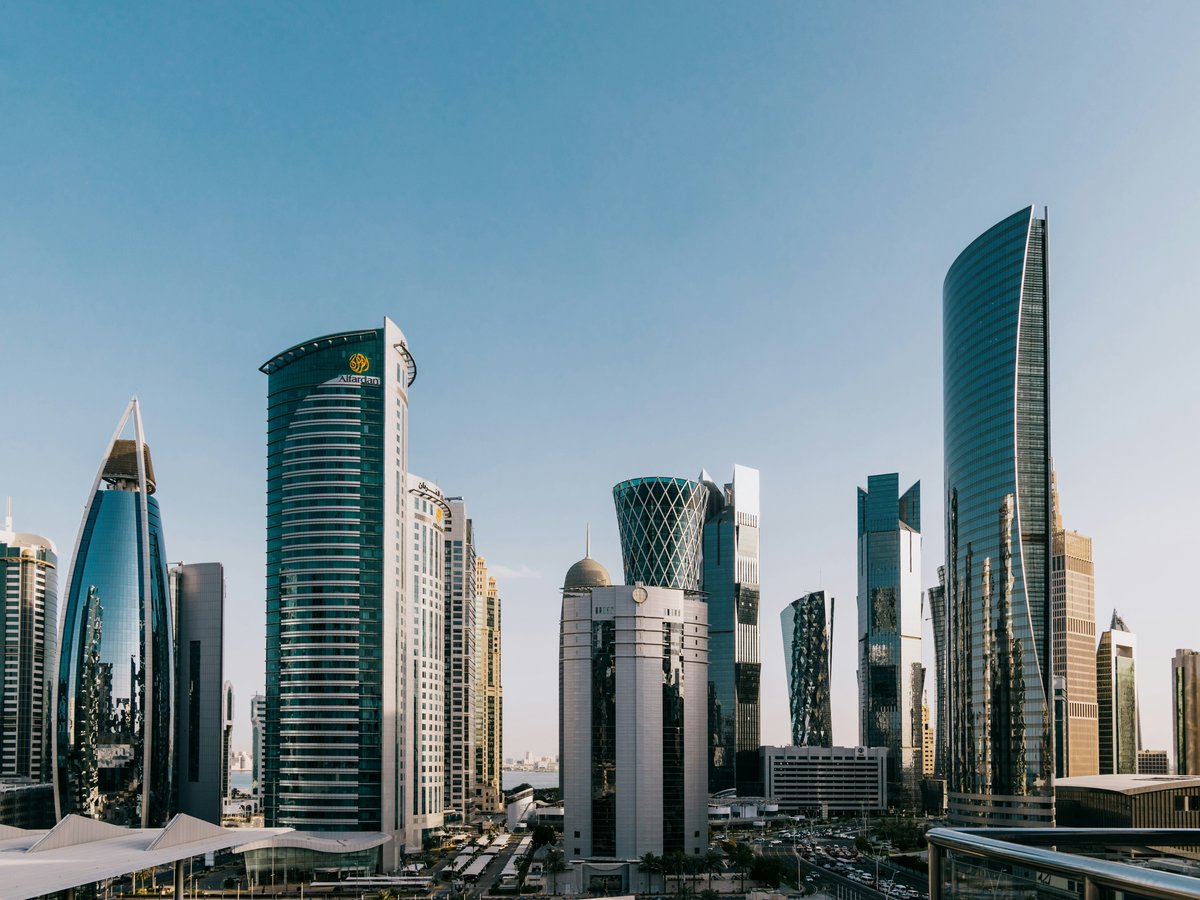
Doha spreads along a curved coastline on the eastern edge of the Qatar peninsula, and most of the city that visitors care about sits within a 15-kilometer strip between the old port and the new developments pushing north toward Lusail. The Corniche, a 7-kilometer waterfront promenade shaped like a crescent, is the spine that connects it all. South of the Corniche you'll find Souq Waqif and the old commercial districts. West Bay fills the northern headland with glass towers. Beyond that, The Pearl-Qatar and Lusail extend the city further north on reclaimed land. Inland neighborhoods like Al Sadd and Al Waab tend to be more residential, with lower buildings and a pace that feels closer to the Doha of 20 years ago. The Doha Metro Red and Gold lines now connect most of these areas, and a taxi from Souq Waqif to West Bay rarely costs more than 20 QAR. Mind you, distances can be deceptive here. What looks like a short hop on the map might involve a 6-lane highway with no pedestrian crossing, so understanding which neighborhoods work on foot matters more than it does in most cities.
Neighborhoods
-
Souq Waqif and Al Jasra
This is the closest Doha gets to feeling old. The souq was rebuilt in the mid-2000s using traditional materials, lime-rendered walls and rough timber beams, and the result feels more authentic than it has any right to. Narrow lanes twist between spice stalls where burlap sacks of turmeric and dried limes sit open to the air. The smell of oud drifts out of perfume shops, and you can hear falcons calling from the Falcon Souq on the eastern side. By 7pm on a winter evening, every restaurant terrace along the main lanes fills up. The pace is slow, almost Mediterranean. Al Jasra sits directly south, a quieter residential pocket where some of the old courtyard houses have been converted into galleries and the Msheireb Museums occupy a cluster of restored heritage buildings on Mohammed Bin Jassim Street.
- Best for
- First-time visitors, couples, anyone who wants to walk out of their hotel into something with texture and noise. Budget travelers will find Souq Waqif's hotel options (Al Jasra Boutique Hotel, Souq Waqif Boutique Hotels) run 400 to 700 QAR per night, which is moderate by Doha standards.
- Key streets
- Al Souq Street is the main commercial artery running through the market. Ali Bin Abdullah Street borders the souq to the north and leads toward the Corniche. For food, the alleys south of the Gold Souq area hold the Iranian and Yemeni restaurants. Wadi Msheireb Street on the western edge connects to Msheireb Downtown.
-
Msheireb Downtown Doha
Msheireb is a 31-hectare urban regeneration project that replaced the old Doha commercial district, and it still feels like it's trying to find its identity. The architecture is all clean sandstone facades, shaded walkways, and carefully planted date palms. The buildings draw on traditional Qatari proportions but everything is new, finished around 2019. On a weekday afternoon, some blocks feel eerily quiet. But the Galleria Al Msheireb shopping area on the lower levels has started to fill with cafés and independent restaurants, and the Msheireb Metro station puts you on the Gold Line. The streets are designed for walking, which in Doha is genuinely unusual. In cooler months, November through March, you can stroll from Msheireb to Souq Waqif in about 8 minutes.
- Best for
- Design-minded travelers, business visitors who want proximity to the financial district without staying in a tower hotel. Families with older kids will appreciate the walkability. The Mandarin Oriental and Park Hyatt here sit in the 1,200 to 2,500 QAR per night range.
- Key streets
- Msheireb High Street runs north-south through the development and has most of the ground-floor retail. Sikkat Al Wadi is the narrower pedestrian lane with smaller cafés. Jassim Bin Mohammed Street borders the eastern side and connects directly to Souq Waqif.
-
West Bay
West Bay is Doha's skyline. The towers went up fast between 2005 and 2015, and the effect is a forest of glass and steel rising from flat reclaimed land. At street level it's a car city. Wide boulevards, elevated roundabouts, construction barriers that linger for months. The wind funnels between buildings and on hot days the pavement radiates heat. That said, the waterfront section along the Corniche's northern end has some of the best views in the Gulf, looking back across the bay to the low-rise old city. The Diplomatic Area sits at the tip of the headland, home to several embassies and the Museum of Islamic Art, which is technically south of West Bay but reachable on foot in 20 minutes along the Corniche. Hotels here tend to be large international chains. The St. Regis, W Doha, and InterContinental sit right on the water.
- Best for
- Business travelers and anyone who wants a big international hotel with a pool and beach club. Not ideal if you want street life or walkable dining. You'll rely on taxis or the Metro to reach restaurants, though the West Bay Metro station on the Red Line is well positioned.
- Key streets
- Corniche Street runs along the waterfront and is the one genuinely pleasant walk in the area. Al Funduq Street and Majlis Al Taawon Street cut through the tower district. City Center Mall sits at the intersection of the Dafna and West Bay areas on the western edge.
-
The Pearl-Qatar
The Pearl is a set of artificial islands covering about 4 million square meters of reclaimed land off West Bay's coast. The main areas are Porto Arabia, a circular marina lined with apartments and restaurants, and Medina Centrale, a lower-rise section with a more Mediterranean feel. The architecture borrows from southern Europe, all terracotta tones and arched colonnades, which can feel disconnected from Qatar but works on its own terms. Porto Arabia's boardwalk is pleasant in the evening. You can smell grilled meat from the Turkish restaurants and the breeze off the marina cuts the humidity. Medina Centrale has more casual spots for coffee. The whole island tends to attract residents and families rather than tourists, which keeps the restaurant scene more honest. Prices are high but not outrageous by Gulf standards. A main course at a marina restaurant typically runs 60 to 120 QAR.
- Best for
- Families with young children who want a self-contained area with flat walkable streets, playgrounds, and waterfront dining. Couples looking for evening options beyond hotel lobbies. Extended-stay visitors, many of the apartments here are available on short-term lease.
- Key streets
- Porto Arabia's circular Boardwalk is the main draw, roughly 1.5 kilometers around the marina. Medina Centrale's main pedestrian street has the coffee shops and ice cream places. Qanat Quartier, modeled loosely on Venice with colored buildings and narrow canals, sits on the northeastern island.
-
Katara Cultural Village
Katara sits on a strip of waterfront between West Bay and The Pearl, and it functions as Doha's dedicated cultural district. The buildings are a mix of neo-Islamic design and amphitheater spaces. There's a public beach, a small cinema, several galleries, and restaurants scattered along a pedestrian promenade. The pace is slow. It's quieter than you'd expect given its size. In the evening, the outdoor amphitheater sometimes hosts concerts and the sound carries across the grounds. The scent of Arabic coffee wafts from the Heritage Village section, where a few traditional-style buildings house craft workshops. The beach has separate sections for families and individuals, with entry at 25 QAR on weekends. During the Doha Jewellery and Watches Exhibition or the Ajyal Film Festival, Katara fills up noticeably, but on ordinary days it absorbs visitors without crowding.
- Best for
- Culture-focused travelers and anyone who wants a beach without the hotel markup. Photographers will find good light along the waterfront in the late afternoon, around 4 to 5pm in winter months.
- Key streets
- The main promenade runs roughly north-south from the amphitheater toward the beach. Cultural Street connects the galleries and exhibition spaces. Al Nakheel Street on the inland side has parking and connects to the Lusail Expressway.
-
Al Sadd
Al Sadd is the center of residential Doha for much of the city's middle class, and it has a layered, slightly chaotic feel that the newer districts lack. The buildings range from 4-story apartment blocks built in the 1990s to newer mixed-use towers. The streets are tighter than West Bay, lined with signage in Arabic, Malayalam, Tagalog, and English. Restaurants here serve the communities that live in Doha. You'll find Filipino bakeries next to Pakistani biryanis next to Lebanese grills, and the prices reflect local incomes, not tourist budgets. A shawarma plate runs 12 to 18 QAR. A full Hyderabadi biryani for 2 costs about 35 QAR. The Al Sadd Sports Club, home to one of Qatar's oldest football teams, sits on the northern edge. Metro access is good, with Al Sadd station on the Gold Line.
- Best for
- Budget travelers, food explorers, anyone who wants to see how Doha lives day to day. Solo travelers comfortable with gritty urban neighborhoods. Hotels here are mostly 3-star, running 200 to 400 QAR per night.
- Key streets
- Al Sadd Street is the main commercial road, running east-west with shops and restaurants on both sides. C Ring Road forms the northern boundary and has more car-oriented retail. Suhaim Bin Hamad Street, sometimes called Al Sadd High Street, has the densest cluster of restaurants.
-
Al Waab and Aspire Zone
Al Waab is a residential suburb that sprawls west of the center, known primarily for the Aspire Zone sports complex built for the 2006 Asian Games. The Aspire Tower, a 300-meter torch-shaped structure, is the visual anchor. Aspire Park, a 88-hectare green space at the base of the tower, is one of the few large parks in Doha with mature trees, a lake, and actual grass you can sit on. On winter evenings the park fills with joggers, families, and groups of friends picnicking. The surrounding streets are villa neighborhoods, quiet and heavily gated, with SUVs parked in driveways. Villaggio Mall, designed to look like a Venetian canal complete with gondola rides, sits on the eastern edge of the zone. The food scene is mostly chain restaurants inside the malls, but a few standalone spots on Al Waab Street serve solid grilled meats.
- Best for
- Families who want green space and sports facilities. Visitors with kids, especially near Aspire Park and the aqua park. Anyone who prioritizes quiet over walkable nightlife.
- Key streets
- Al Waab Street runs north-south and is the main commercial strip. Aspire Zone's internal roads connect the park, the sports facilities, and the mall. Al Furousiya Street connects Al Waab to the Expressway.
-
Lusail
Lusail is Doha's newest district, a planned city about 15 kilometers north of the center on the coast. Much of it was built for the 2022 FIFA World Cup, and the Lusail Stadium, where the final was played, sits on the western edge. The main commercial area is Lusail Boulevard, a wide pedestrian street lined with shops, restaurants, and apartment towers. The buildings are very new, most finished between 2021 and 2023. The effect is striking but slightly hollow, like walking through an architect's model at full scale. The population is growing though, and on weekend evenings the boulevard gets genuinely busy. Place Vendome, one of the largest malls in Qatar at 116,000 square meters of retail, opened in 2022 on the southern end. The Lusail Tram connects the marina to the boulevard and the stadium.
- Best for
- Visitors who want brand-new hotels at slightly lower rates than West Bay, with beach access and modern infrastructure. The tram and Metro Red Line extension make it feasible as a base even though it sits outside the traditional city center.
- Key streets
- Lusail Boulevard is the pedestrian core, about 1.3 kilometers long. Marina Promenade runs along the waterfront on the eastern side. Fox Hills area to the south has more residential towers and a few casual restaurants.
FAQ
Where should I stay in Doha for a first visit of 3 to 4 days?
Souq Waqif or Msheireb Downtown are the strongest choices for a first visit. Both are walkable, centrally located, and within a short Metro ride or 15 QAR taxi to most major sights. Souq Waqif has more street atmosphere and lower hotel prices (400 to 700 QAR per night). Msheireb is quieter and more polished, with higher-end hotels around 1,200 to 2,500 QAR. The Museum of Islamic Art is a 10-minute walk from either area.
Is it possible to get around Doha without a car?
The Doha Metro, which opened in 2019, covers the main tourist areas on 3 lines (Red, Gold, Green). A single ride costs 2 QAR with a rechargeable travel card from any station. Taxis are cheap by Gulf standards, with most cross-city rides running 15 to 30 QAR. That said, some areas like Al Waab and parts of Lusail still have gaps in pedestrian infrastructure, so you might find yourself taking a cab for the last kilometer. Ride-hailing apps Uber and Careem both operate in Doha.
Which neighborhoods have the best food for visitors on a budget?
Al Sadd has the widest range of affordable restaurants in Doha, with full meals commonly running 15 to 40 QAR. The area around Al Sadd Metro station has South Indian vegetarian restaurants, Pakistani grills, and Filipino spots. Souq Waqif also has options on the cheaper end, particularly the Yemeni and Iranian restaurants in the lanes south of the Gold Souq, where a lamb mandi with rice costs about 30 to 40 QAR.
How walkable is Doha compared to other Gulf cities?
More walkable than Riyadh or Abu Dhabi in the central areas, but still fundamentally car-oriented outside Souq Waqif, Msheireb, and The Pearl. Summer temperatures reach 45 degrees Celsius from June through September, which makes even short outdoor walks uncomfortable. November through March is a different story. The Corniche promenade, Katara, and Porto Arabia's boardwalk all work well on foot during the cooler months. Msheireb is currently the only district designed from the ground up for pedestrians.
Is The Pearl-Qatar worth visiting if I am not staying there?
Porto Arabia's boardwalk is a pleasant evening stroll and the restaurants are solid, particularly the Turkish and Lebanese places along the marina. Qanat Quartier with its colored buildings is worth 30 minutes for the novelty. But it's a 25-minute taxi from Souq Waqif and there's no Metro station on the island yet, so factor in the travel time. It works best as a dinner destination rather than a half-day outing.
When is the best time of year to visit Doha for walking and outdoor exploration?
Late November through early March offers daytime highs of 20 to 25 degrees Celsius with minimal rain. December and January tend to have the most pleasant evenings, dropping to around 14 to 17 degrees after sunset. Ramadan dates shift each year but during Ramadan (which falls in February and March in 2026) restaurants close during daylight hours and the city's rhythm changes significantly. The outdoor terraces at Souq Waqif come alive after iftar and stay busy until 1am or later.
Last verified by automated review (v1.7.2) on . What is automated review?