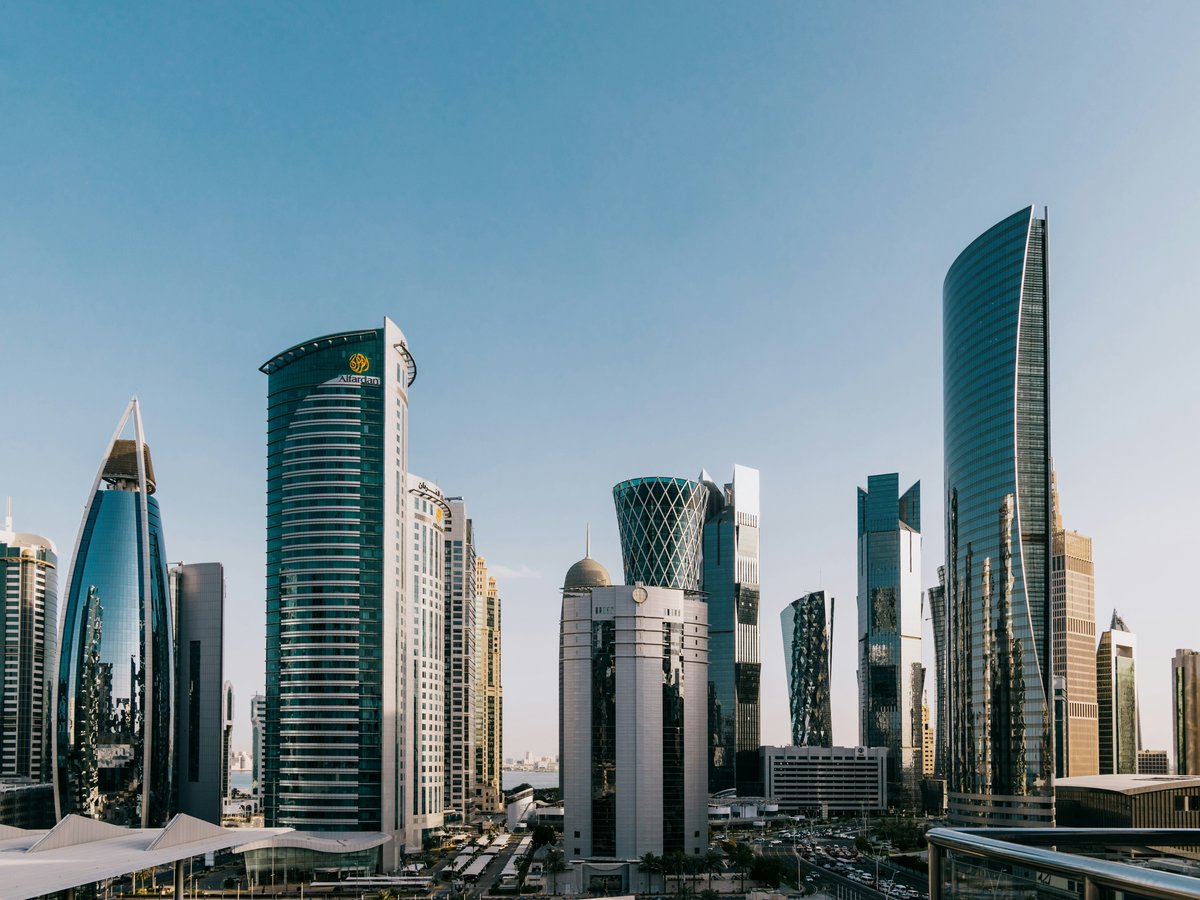
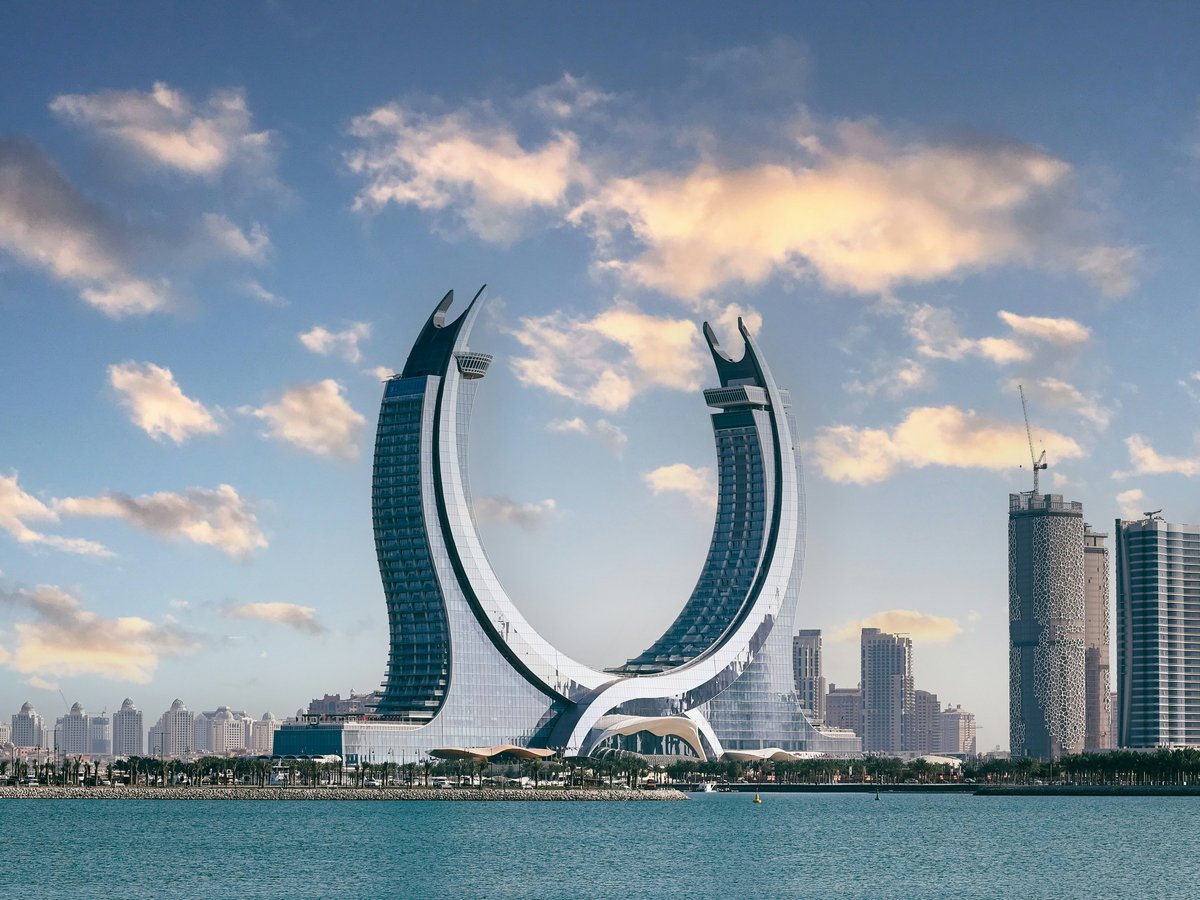
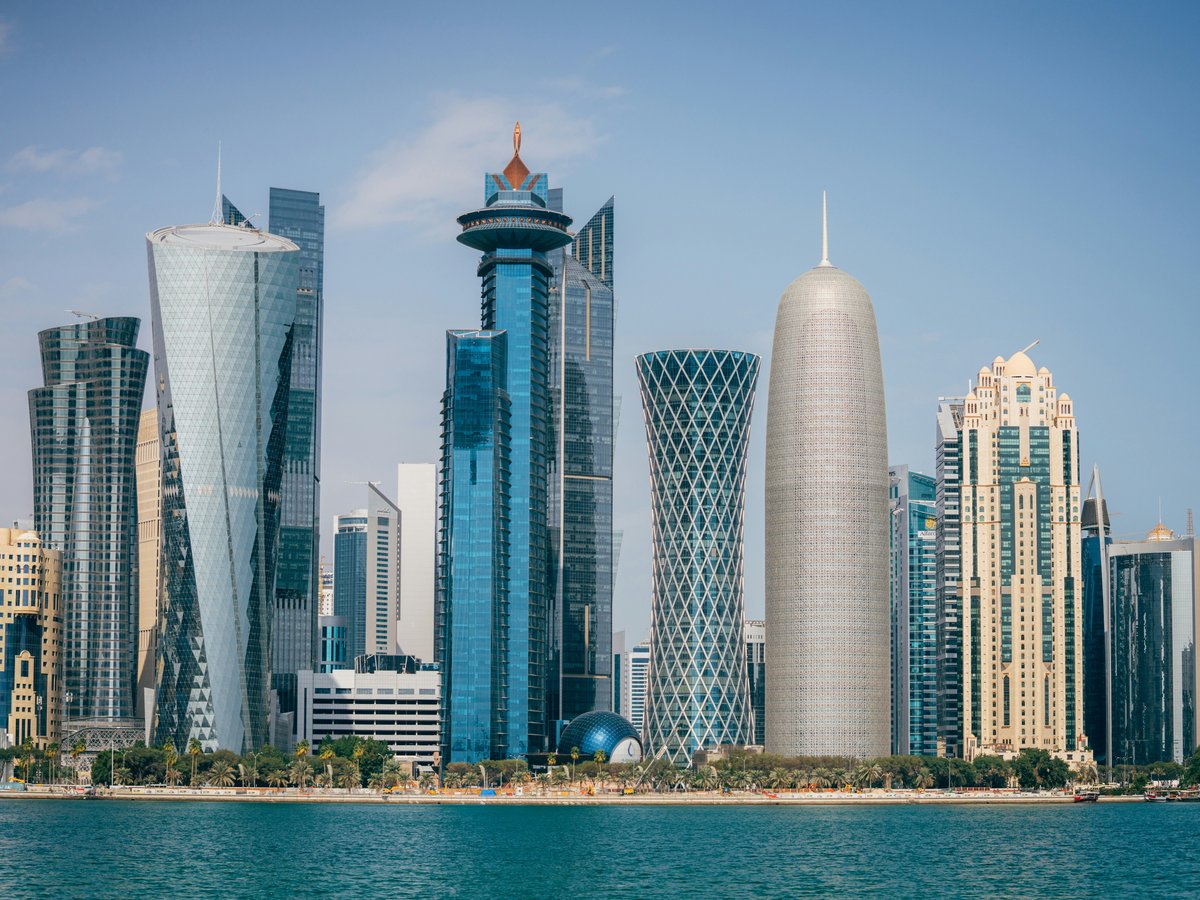
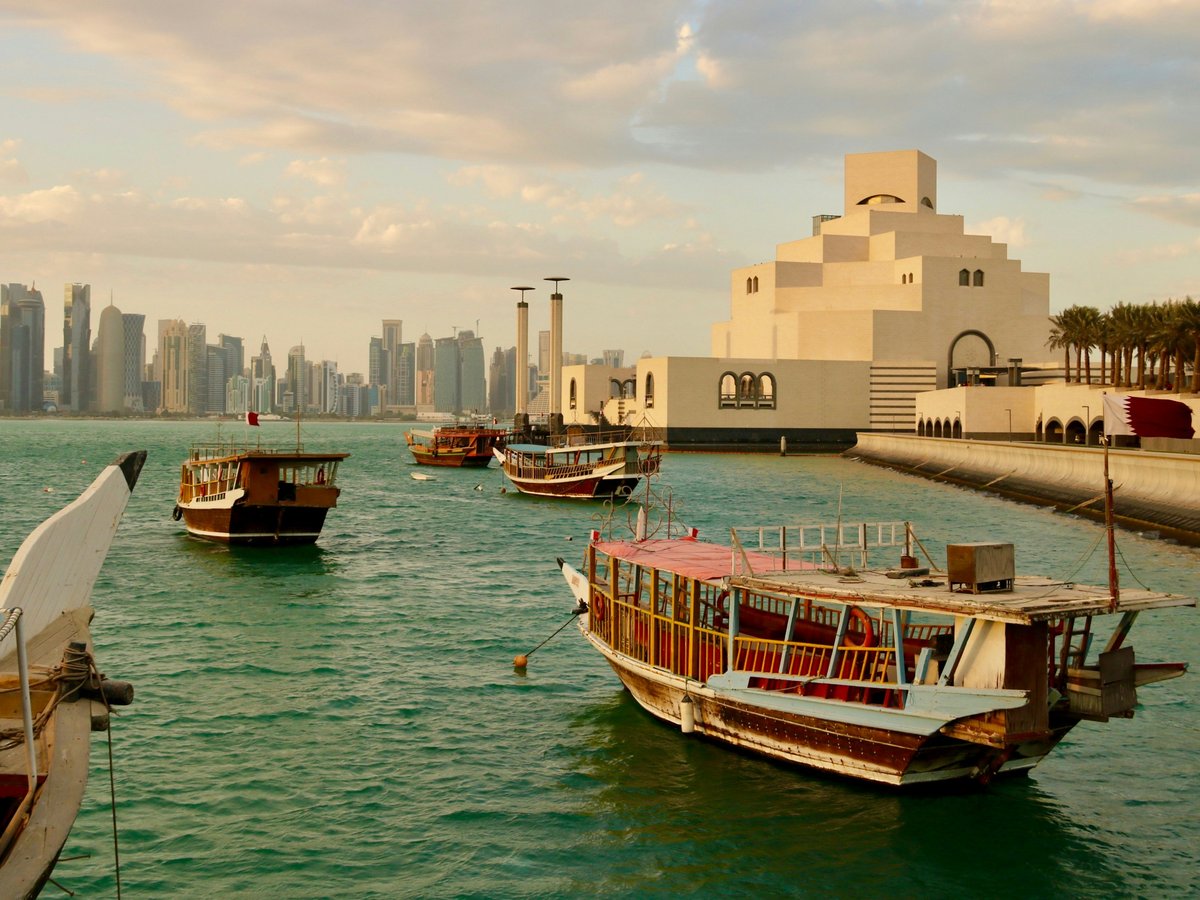
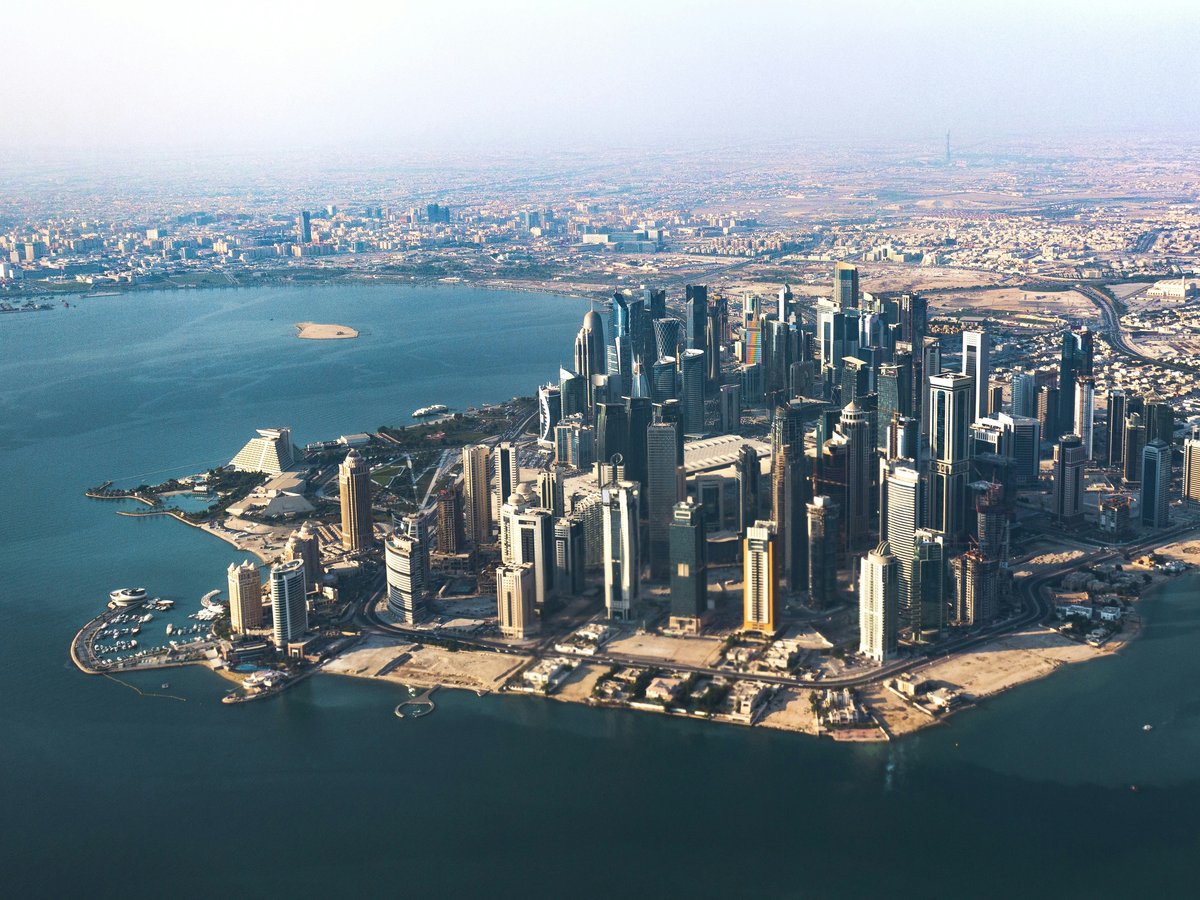
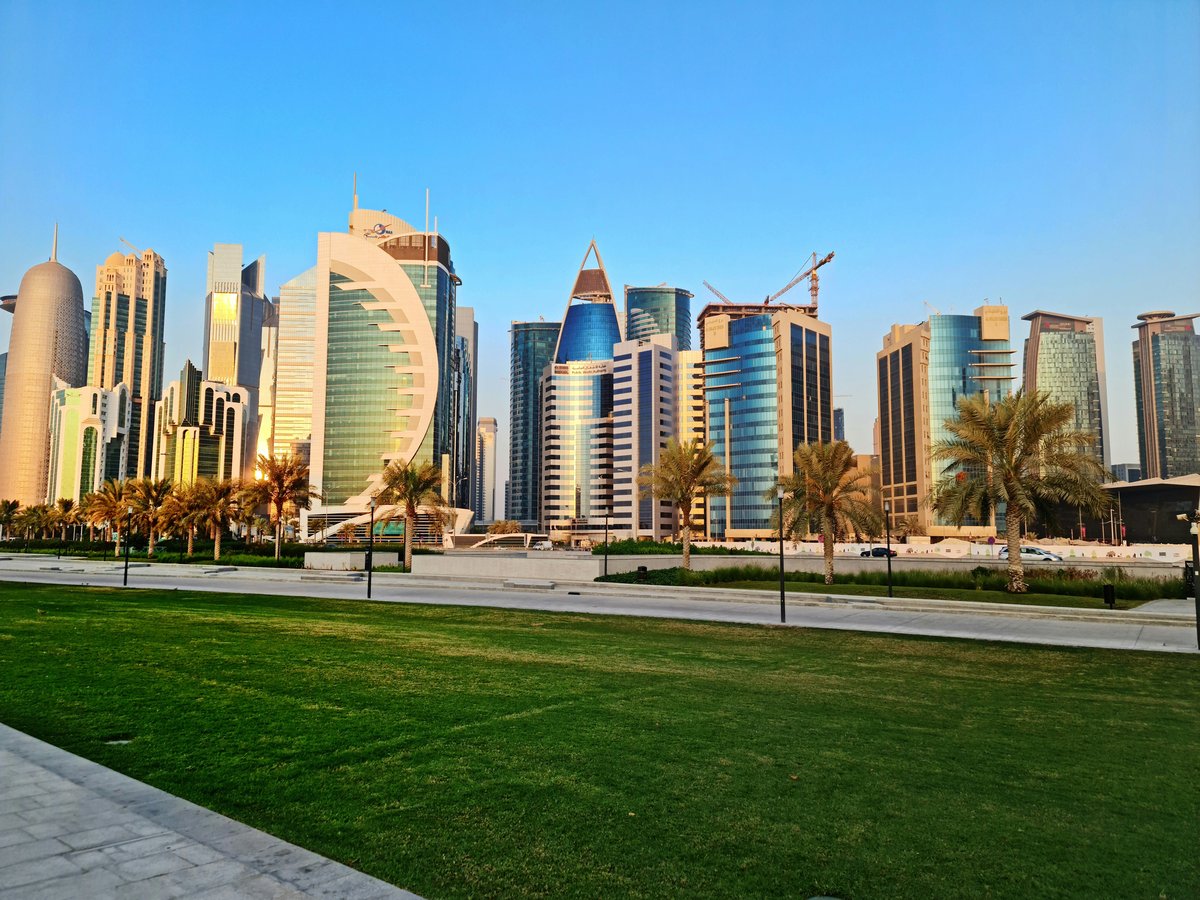
Doha sits on a thumb-shaped peninsula pushing east into the Persian Gulf, a city whose skyline is younger than most people reading this sentence. With roughly 1.2 million residents, it is compact enough to cross from the restored limestone alleyways of Souq Waqif to the waterfront museum district in a ten-minute drive, yet ambitious enough to have built an artificial island shaped like a pearl and filled it with European-branded apartments and marina restaurants. The climate organises your days more than any guidebook: from May through September, midday temperatures regularly exceed 45°C, pushing daily life indoors to the malls of West Bay and the Museum of Islamic Art, which I.M. Pei placed on its own island so nothing could obstruct its atrium views. Come between November and March and the seven-kilometre Corniche waterfront opens up after sunset, families walking the arc while painted dhows sit low in the harbour. The neighbourhoods worth knowing are fewer than you might expect. Al Sadd is the older commercial district where South Asian shopfronts serve biryani and dosa that rival anything in their home cities. The Pearl-Qatar is the reclaimed-land enclave of waterfront cafés and high-end retail. Katara Cultural Village sits on the coast between them, its amphitheatre and public beach functioning as a weekend gathering point for residents across the city. Qatari cuisine itself is a narrow tradition (machboos, a spiced rice dish with fish or lamb, is the standard reference point) but the dining scene runs on Lebanese, Iranian, Filipino, and Indian kitchens, often in modest storefronts in Bin Mahmoud or Al Mansoura. What catches most first-time visitors off guard is how spread out the city feels; Doha is built for driving, and the open desert gaps between its clusters of life make a taxi app less a convenience than a necessity.
Doha in photos
Doha right now
Answers about Doha
-
Airport to city
Take the Doha Metro Red Line from inside Hamad International Airport (DOH) to Msheireb station. The ride takes 20 minutes and costs 2 QAR ($0.55) with a 30 QAR travel card from the station vending machines. After the metro closes around 11pm, Karwa metered taxis to West Bay or Souq Waqif run 50-70 QAR ($14-19).
Read the full answer → -
Best time to visit
November through February. Afternoon highs reach 22-25°C, evenings along the Corniche drop to 15°C, and Gulf water stays warm enough for swimming at Katara Beach. Hotel rates climb 40-60% in late December, but comfortable walking weather and the winter event calendar make the premium worth paying. February offers the best value within the peak window.
Read the full answer → -
Cost per day
Budget travelers can get by on about $65/day in Doha. That covers a QAR 180 ($49) room near Al Sadd, QAR 20 ($5.50) cafeteria meals, and QAR 2 ($0.55) metro rides. The Museum of Islamic Art is free. Alcohol, at QAR 55+ ($15+) per hotel-bar beer, is the budget-killer most guides underplay.
Read the full answer → -
Cultural etiquette
Doha runs on conservative Islamic customs that visitors can navigate with a few concrete rules. Say 'As-salamu alaykum' first, cover knees and shoulders in malls and public buildings, never photograph Qatari women without permission, and avoid eating or drinking in public during Ramadan daylight hours. Alcohol is legal only in licensed hotel venues. Tips of 10% are appreciated but not expected.
Read the full answer → -
Best day trips
The best single-day trips from Doha work in pairs. Khor Al Adaid (Inland Sea, 60 km south) needs a 4x4 but rewards with dunes meeting tidal flats at sunset. Al Zubarah Fort (105 km northwest, UNESCO) is the history half-day. Banana Island Resort sells day passes from QAR 350 per person for couples who want sand without sand in their shoes.
Read the full answer → -
Digital nomads
Doha is a mixed bag for nomads. Ooredoo fiber hits 200-500 Mbps in newer buildings across West Bay and The Pearl, but the coworking scene is thin and monthly costs run $2,800-3,200 all-in. Qatar grants visa-free entry for 80+ nationalities, typically 30 days extendable to 60. Summer heat from May through September confines you to air-conditioned interiors for 5 months of the year.
Read the full answer → -
Family-friendly
Doha scores 7.8/10 for family friendliness (see the TTDI Family-Friendliness Index). Mall-based attractions like KidZania and Gondolania stay cool year-round, and the Museum of Islamic Art park has a shaded playground with changing tables. The catch is summer heat. From June through September, outdoor time with kids shrinks to the hour after sunrise before temperatures pass 40°C.
Read the full answer → -
Food culture
Doha eats late and eats communally. Dinner rarely starts before 9pm, and the best food splits between two poles: the ground-floor restaurants around Souq Waqif serving 15-QAR machboos and the hotel dining rooms in West Bay where a tasting menu runs 500 QAR. Karak chai, a cardamom-heavy milky tea sold for 1 QAR at drive-through windows, connects both worlds.
Read the full answer → -
Getting around
Doha Metro for the spine, Uber or Careem for everything else. The Red Line runs from Hamad International Airport to Lusail in 36 minutes for 2 QAR (0.55 USD). Ride-hailing fills the gaps at 15-35 QAR across central Doha. Walking is not realistic from May through October, when pavement-level temperatures sit above 40°C by mid-morning.
Read the full answer → -
How to get there
Hamad International Airport (DOH), 15 km south of central Doha, is Qatar's sole commercial airport. Qatar Airways flies nonstop from over 170 cities. From New York JFK, direct flights take 13 hours at $800-1,300 round-trip. From London Heathrow, 7 hours on Qatar Airways or British Airways for £400-700. The Doha Metro connects DOH to the city center in 20 minutes for QAR 2.
Read the full answer → -
Is it safe?
Doha is safe for solo travellers, and TTDI scores it 6.8/10 for solo-traveler safety (see the TTDI Solo-Safety Index), with street crime around Souq Waqif, Msheireb and West Bay rare at any hour. The marks come off for desert heat, fast traffic, strict laws on alcohol and relationships, and Gulf regional tension since 2025.
Read the full answer → -
Language basics
Arabic is Qatar's official language, but Doha is likely the easiest Arabic-speaking city for English-only visitors. About 88% of residents are expats, so English functions as the working language in malls, hotels, the Doha Metro, and most restaurants. A handful of Arabic phrases, 'shukran' and 'marhaba' above all, still shift interactions from transactional to personal.
Read the full answer → -
Layover guide
Yes. The Doha Metro Red Line connects Hamad International Airport to central Doha in about 20 minutes. Six hours is the honest floor once you factor in immigration both ways and a generous return buffer. Qatar offers visa-free entry to 80+ nationalities, but verify yours before planning to leave the terminal.
Read the full answer → -
LGBTQ-friendly
Doha scores 0.5/10 for LGBTQ+ friendliness (sourced from TTDI's editorial rubric). Qatar criminalizes same-sex relations with prison penalties. No queer scene exists, no legal protections apply, and public affection between same-sex couples is unsafe. Couples who visit should expect to remain closeted in all public settings throughout their stay.
Read the full answer → -
Where locals go
Qataris and long-term residents tend to split between Souq Waqif's deeper alleys past the spice vendors, the Msheireb Downtown cafes along Sikkat Al Wadi, and the Al Sadd residential strip around C Ring Road. After dark, the Corniche fills with families and shisha smoke from about 8pm. Al Wakra's old fishing harbor, 15km south, draws a weekend crowd that rarely sees a tourist.
Read the full answer → -
Must-see
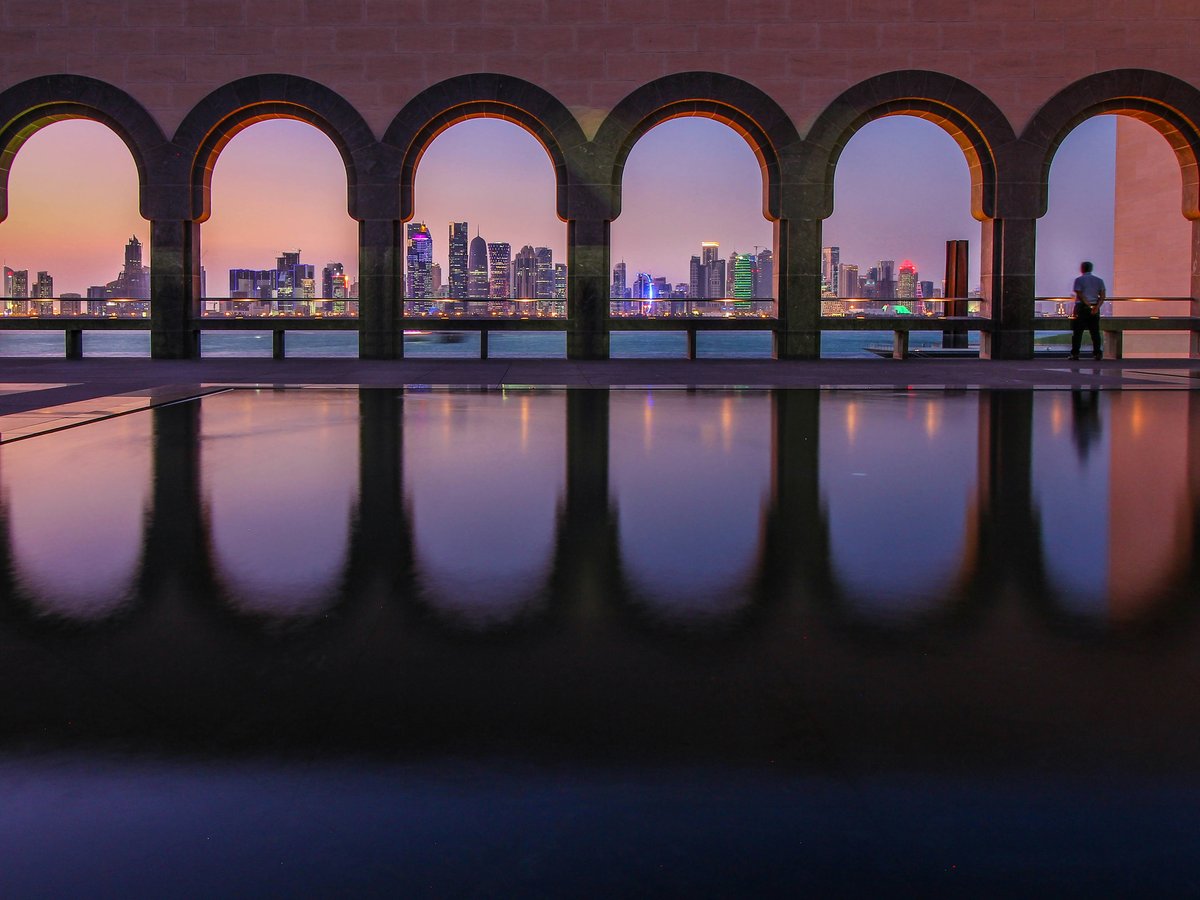
The Museum of Islamic Art, I.M. Pei's last major commission, opened in 2008 on a purpose-built island off Doha's Corniche. The collection spans 1,400 years of work from Spain to China, but the building itself is the real draw. Go at 5pm when the limestone catches the low Gulf light. Free entry on Saturdays.
Read the full answer → -
Solo travel
Doha is physically safe for solo travellers, with near-zero violent crime, but the car-dependent layout and limited hostel scene make day-to-day logistics harder than in Southeast Asian hubs. Souq Waqif and the Corniche are the two walkable cores. Post-2022 World Cup hotel oversupply means most four-stars drop single-supplement charges entirely. Thursday-night hotel bars form the main social circuit for expats and visitors.
Read the full answer → -
This week
Doha's deep-summer week runs after dark. The heat makes the city nocturnal, with outdoor life starting only after sunset. Thursday evening is the social peak at Souq Waqif, and Friday stays quiet through midday for prayers. The Museum of Islamic Art and National Museum of Qatar are the strongest full-day indoor options.
Read the full answer → -
3-day itinerary
Day 1 covers the Corniche, Museum of Islamic Art (free admission), and Souq Waqif. Day 2 heads north to Katara Cultural Village and The Pearl-Qatar. Day 3 visits the National Museum of Qatar (50 QAR) before an afternoon desert trip to Khor Al Adaid. Start outdoor activities before 8 AM in summer, when temperatures reach 39°C by midday.
Read the full answer → -
What to avoid
Skip outdoor plans between 10am and 4pm from May through September, when Doha hits 36-45°C. Avoid overpriced restaurants along The Pearl-Qatar's marina, unlicensed taxi drivers outside Souq Waqif, and any desert safari quoting under 200 QAR per person. Public displays of affection and photographing military installations carry real legal consequences in Qatar.
Read the full answer → -
What to pack
Modest clothing that covers shoulders and knees for mosques and malls, SPF 50+ sunscreen, a Type G plug adapter (UK-style, 240V), and a light cardigan for aggressive air conditioning. Summer temperatures reach 45°C with feels-like readings above 50°C. Skip packing bottled water and basic toiletries. Pharmacies and supermarkets in Doha sell both for less than Western prices.
Read the full answer → -
Where to stay
Stay near Souq Waqif or in West Bay for a first visit to Doha. Souq Waqif puts you within 800 meters of the Museum of Islamic Art and the Corniche, with rooms from $80 per night. West Bay has the big-chain towers at $150-350. Both connect to the Red Line metro, which runs to Hamad International Airport in under 25 minutes.
Read the full answer →
Deep guides for Doha
Curated lists for Doha
accommodation
-
Best boutique hotels
Doha's hotel inventory clusters along a narrow coastal strip running from the old commercial heart south of the Corniche to the reclaimed islands north of West Bay. That geography matters for visitors: the distance between the southern souq districts and the northern Pearl towers is roughly one metro line, but the character of each stop changes completely. The southern neighborhoods around Mushaireb sit within walking distance of Souq Waqif and the National Museum, where the streets are tighter and the architecture older. The central West Bay corridor along Al Dafna is glass towers and conference lobbies, built for business travel and priced accordingly, though a few properties undercut the tier. North of West Bay, the Katara cultural village and Pearl Island reclamation spread the inventory onto waterfronts that feel more resort than city. Every area below carries mid-range inventory scoring above 9.0 on Trip.com, which tells you the floor is high; the question is not quality but fit. A souq walker, a beach swimmer, and a conference commuter want three different postcodes, and Doha is small enough that picking the wrong one costs you a cab ride on every outing.
See the picks → -
Best hostels
Doha's budget accommodation divides into two belts: the heritage corridors near Souq Waqif and the Corniche, and the residential grid stretching inland through Al Sadd and Al Muntazah. The waterfront zone puts you within walking distance of the National Museum, the dhow harbor, and the reconstructed souq lanes, but rates climb the closer you get to the bay. Inland neighborhoods trade views for value, with chain hotels holding Trip.com ratings above 9.0 at prices in the $50 range. The Red Line of the Doha Metro ties these belts together, running from the south through Mushaireb's interchange and north to Lusail; a single ride covers most of the neighborhoods on this list. Doha's summers push daytime temperatures well past comfortable, making metro proximity and indoor-cooled walkways essential rather than optional. The neighborhoods below run from the densest hotel clusters near the Sharg waterfront to quieter residential pockets where rates drop under $30.
See the picks → -
Best luxury hotels
Doha builds its luxury hotels the way it builds everything: fast, with visible ambition, and across a coastline that keeps stretching north. The properties on this list spread from the Diplomatic Area waterfront to The Pearl's island addresses and into the Lusail corridor. Nightly rates in this tier range from around USD 200 to over USD 400, and the amenity sets vary just as widely: some properties run private beaches and full-service spas, others rely on a single strong suit like service culture or transit convenience. What separates one from another is not the tier label; it is the specific combination of neighborhood, amenity set, and in-house culture that makes a given property the right booking for a given trip. The 12 hotels below were selected from Trip.com's luxury tier and grounded in verified guest ratings, published nightly rates, and listed amenities. Each entry earns its slot with something the brand name alone would not tell you.
See the picks → -
Where to stay
Doha's accommodation map splits into two distinct corridors. The waterfront arc runs from the Diplomatic Area's glass towers south through Hilton's Beach and around to the Pearl, where money pools in lobby bars and private beach clubs. Inland, the older quarters cluster around Souq Waqif and the Gold Souq, where rates drop and the walk to heritage sites shortens to minutes. The metro ties both corridors together, with interchange at Msheireb and stations through West Bay and Al Sadd making it possible to stay budget and still reach the Corniche without a taxi. Most visitors default to the waterfront strip, but the best value per square meter of room sits in the heritage belt: Mushaireb, Old Al Ghanim, and the Sharg Zone neighborhoods that ring the souq. Summer rates crater across every tier; winter and event weekends, especially during the Grand Prix or the National Day stretch in December, push even budget rooms past their listed ceilings. Doha rewards a neighborhood bet more than a hotel bet. The city is compact enough that a wrong room in the right area still puts you within walking distance of something worth your evening, while a polished lobby in the wrong zone means a taxi for every meal.
See the picks →
attractions
-
Best museums
The first thing to understand about Doha's museums is how young they are. Every museum on this list that carries a date opened between 2005 and 2019: the Museum of Islamic Art dates from 2008, Mathaf from 2010, and the National Museum of Qatar from 2019. Don't arrive expecting the dusty, inherited collections of older capitals, and don't plan as though you were visiting one. The range here runs from a national museum to an art museum to a museum of modern and contemporary art, so the useful question is what you want to look at, not which name you've heard most. This list is for the traveller with a day or two who would rather see two places properly than five in a blur. Where we have verified hours or an address, we give them; where we don't, we say so and point you to the museum's own website instead of guessing.
See the picks → -
Must-see attractions
Doha's essential sights don't fall into one category, and this list doesn't pretend otherwise. The 5 places below run from a state building in Doha to a Roman Catholic church at the Religious Complex in Abu Hamour, a cultural village, an island, and a group of watchtowers, and what they share is that each tells you something about how Qatar presents itself, whether through government, faith, culture, leisure, or defence. We've kept every paragraph to what the verified record supports, so you'll find map positions and official websites here and no borrowed opening hours or ticket prices. Where an institution publishes its own site, we point you to it and suggest you trust it over anything second-hand. This is a list for visitors who'd rather build a day around a few well-chosen stops than tick off a long one, and who are happy to check the details at the source before setting out.
See the picks →
food
-
Best cafes
Doha drinks its coffee late. Three of the 12 places on this list never close at all, and others pour until 01:00, 02:00 or 02:30; that clock shapes the list more than any roasting philosophy does. The cafes here are places people use: a counter that sells flowers and chocolate alongside the coffee, a hotel lobby in a tower on The Pearl Boulevard, a cafeteria listed for local cooking, a house that puts shisha in its own name. Two global names are included because their hours and addresses earn the place, not their logos. We put this together for the visitor who lands at a strange hour, the resident who needs a table at midnight, and anyone who would rather sit where the city sits than queue for a photograph. Where the verified record on a venue is thin, we say so plainly and tell you how to check before you cross town. We would rather hand you an honest address than a confident guess.
See the picks → -
Best restaurants
The restaurants on this list cluster in a handful of places: hotel dining rooms at the InterContinental Doha and The St. Regis Doha, Katara Cultural Village, Porto Arabia, and two streets, Andalucia Way and Alhambra Street. The cooking runs from Greek and Chinese to Levantine, Lebanese and Indian. What we weighed hardest was the clock: one kitchen never closes, three run past midnight on at least some nights, and one opens at 7:00. This list is for visitors who plan meals around their own day, not around a concierge's suggestions. Where a familiar name appears, it is because the hours or the address earn the place. Every address, hour and phone number below carries a citation, so you can check it before you get in a taxi.
See the picks →
Browse by traveler type
- For foodies
Doha for foodies
- For families with kids
Doha for families
- For digital nomads
Doha for digital nomads
- For solo travelers
Doha for solo travelers
- For couples
Doha for couples
- For budget travelers
Doha on a budget
- For luxury travelers
Doha for luxury travelers
- For first-timers
Doha for first-time visitors
Book experiences in Doha
 Free cancellation
 Qatar Gold Dune Safari, Dune Bashing,Camel Ride,Sand Boarding,Inland Sea Desert
Day trip: 4 hours, free cancellation.
via Viator Free cancellation
 Doha Safari Dune Bashing Camel Ride Sandboarding ATV Option
Day trip: 4.5 hours, free cancellation.
via Viator Free cancellation
 Doha :Half Day Desert Safari | Camel Riding | ATV | Sand Surfing
Outdoor experience: free cancellation.
via Viator Free cancellation
 Doha: Guided City Tour With All Attractions, Pickup/Drop-Off
Day trip: 4 hours, free cancellation.
via Viator Free cancellation
 Private Half Day Desert Safari Tour
Day trip: 4 hours, free cancellation.
via Viator Free cancellation
 Doha Desert Safari Dune Bashing Camel Ride Sandboarding
Outdoor experience: free cancellation.
via Viator Free cancellation
 4 Hour Desert Safari, Camel Ride & Inland Sea Beach
Day trip: 4 hours, free cancellation.
via Viator Free cancellation
 Doha Night Desert Safari: Dune Bashing, Camel Ride & Stargazing
Outdoor experience: 4 hours, free cancellation.
via Viator Free cancellation
 Doha : Half Day Desert Safari With SandBoarding and Camel Ride
Outdoor experience: 4 hours, free cancellation.
via Viator Free cancellation
 Doha: Desert Safari, Sand Boarding, Camel Ride & Inland Sea Tour
Outdoor experience: free cancellation.
via Viator Free cancellation
 Desert Safari with Quad Bike Camel ride ,SandBoarding ,InlandSea
Day trip: 4 hours, free cancellation.
via Viator Free cancellation
 Doha:ATV,Quad or Buggy Dune Bashing,CamelRide & Sandboarding
Outdoor experience: 4 hours, free cancellation.
via ViatorBrowse by interest
Find a flight to Doha
Live fares to Doha appear here once cookies are accepted.
Last verified by automated review (v1.7.2) on . What is automated review?