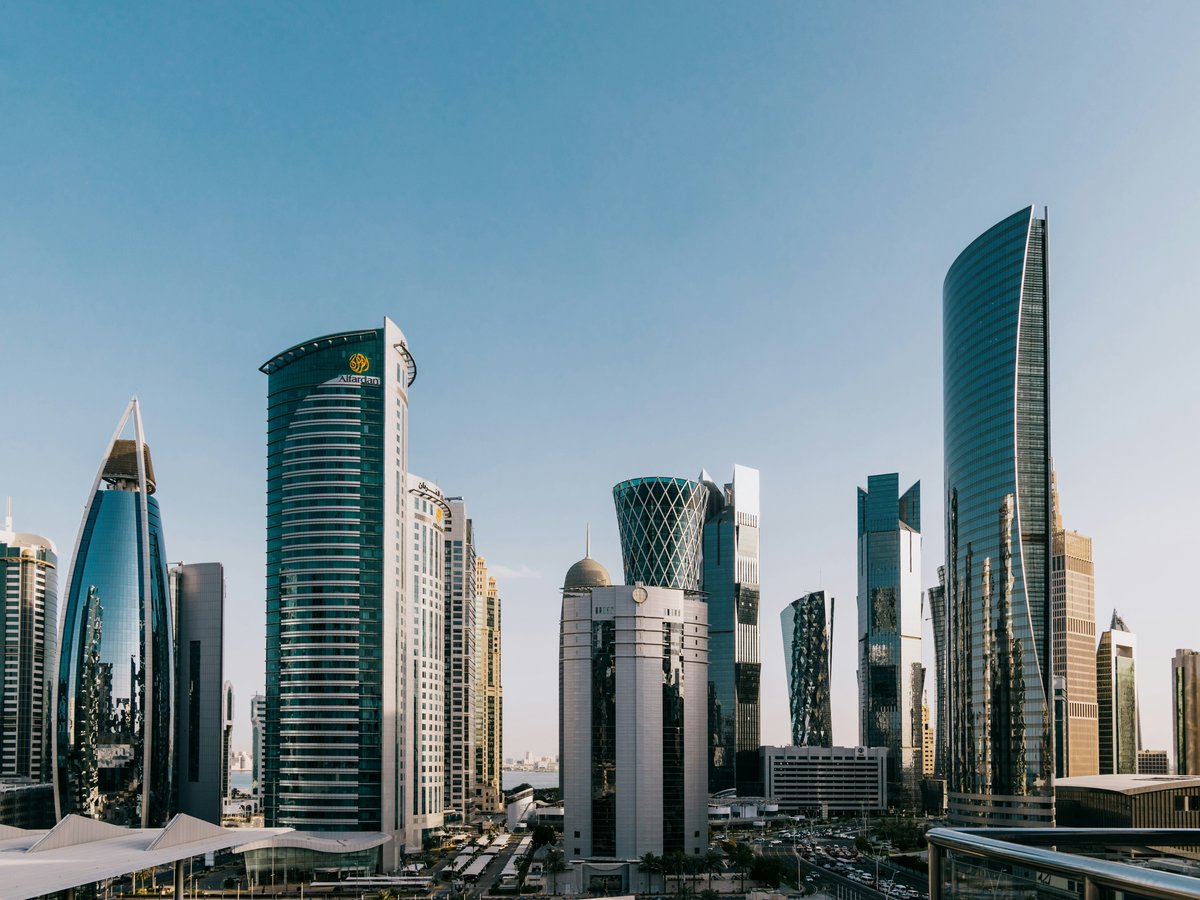
What's the food culture in Doha?
Doha eats late and eats communally. Dinner rarely starts before 9pm, and the best food splits between two poles: the ground-floor restaurants around Souq Waqif serving 15-QAR machboos and the hotel dining rooms in West Bay where a tasting menu runs 500 QAR. Karak chai, a cardamom-heavy milky tea sold for 1 QAR at drive-through windows, connects both worlds.
Doha's eating day starts slow. Breakfast tends to be dates and Arabic coffee, or balaleet, sweetened vermicelli topped with a thin savory omelette, at the traditional restaurants along Souq Waqif's southern alley for about 25 QAR. The souq's ground-floor restaurants open by 11am, and the lunch crowd hits between 1 and 3pm. That said, the real meal is dinner, and it doesn't happen before 9pm. You'll see families arriving at restaurants at 10:30pm on weeknights, later on weekends. The Friday-Saturday weekend shifts the whole rhythm. Thursday night is Doha's going-out night, the way Friday night works in most Western cities, and Souq Waqif's alleyways fill with smoke from grilled kebabs and the sound of shisha pipes by 8pm. In summer, when the temperature still sits above 36°C at sunset, the late schedule makes practical sense. Nobody wants a heavy meal at 6pm in that heat.
Skip the hotel lobby restaurants in West Bay for your first few meals. The best everyday food in Doha comes from the South Asian and Filipino neighborhoods that most travel guides ignore. Al Mansoura, south of the Corniche, has Pakistani and Indian restaurants where a biryani platter runs 18-22 QAR and the naan comes charred and blistered from a tandoor you can see from your table. Bin Mahmoud, a few blocks inland, has Filipino spots serving sinigang and adobo for 15 QAR. The Industrial Area, way out past Hamad International Airport, has the cheapest and most honest subcontinental food in the Gulf, plates for 8-12 QAR, but it's a 30-minute taxi ride and not a neighborhood you'd wander casually. Closer in, try the cafeterias along C Ring Road for shawarma wraps at 5-8 QAR that rival anything in Beirut.
Machboos is the dish you need to eat first. It's Qatar's national plate: spiced rice cooked with dried limes, cardamom, and turmeric, served with lamb, chicken, or shrimp. The best versions use whole pieces of meat slow-cooked until the fat renders into the rice. Shay Al Shamoos in Souq Waqif does a lamb machboos for 35 QAR that's a benchmark. Harees, a porridge of wheat and slow-cooked meat, shows up during Ramadan but the better traditional restaurants serve it year-round. Madrouba is similar but creamier, almost like a savory risotto. Luqaimat, fried dough balls drizzled with date syrup and sesame seeds, are the default dessert at every family gathering and street stall, 10-15 QAR for a generous plate.
The hotel dining scene in West Bay and The Pearl-Qatar is genuinely excellent if you're willing to spend. Nobu Doha, Hakkasan, and Zuma all have outposts, and they're not phoned-in franchises. A dinner for two with drinks at Nobu runs 800-1200 QAR. The newer entries along Lusail Boulevard are more interesting: smaller chef-driven restaurants doing modern Gulf cuisine that draws on Levantine, Persian, and Indian traditions without defaulting to fusion clichés. For a special meal, Jiwan at the National Museum of Qatar serves a tasting menu built entirely around Qatari ingredients and food history, 450 QAR per person, and the dining room overlooks the desert rose architecture of the museum. Book at least a week ahead.
Alcohol is available only in licensed hotel restaurants and bars, not in standalone restaurants or shops. A beer at a hotel bar runs 45-65 QAR, a cocktail 55-80 QAR. The Qatar Distribution Company (QDC) sells alcohol to residents with a permit, but tourists can only drink at hotels. This shapes the dining scene: if you want wine with dinner, you're eating at a hotel restaurant. If you want the best food regardless of drink, you're eating at an independent restaurant with fresh juice or karak chai. Most visitors end up doing both on different nights. During Ramadan, restaurants close during daylight fasting hours and reopen after the iftar cannon at sunset. Non-Muslim visitors can eat discreetly in hotels during the day, but most public restaurants are shuttered until evening.
Signature dishes
-
Machboos
Qatar's national dish. Rice cooked in a tomato-onion-spice broth with dried limes (loomi), then layered with lamb, chicken, or shrimp. The rice absorbs the meat drippings and turns golden with turmeric and baharat. Every family claims theirs is the best version.
-
Harees
Whole wheat slow-cooked with lamb or chicken until it breaks down into a thick, porridge-like paste. Texture sits between oatmeal and polenta. Eaten during Ramadan and at weddings, with a pool of melted ghee and a dusting of cinnamon on top.
-
Luqaimat
Fried dough balls, crisp outside and soft inside, drizzled with date syrup or honey. Sold hot at Souq Waqif stalls for 10-15 QAR. The best ones have a slight cardamom note and a saffron tint in the batter.
-
Balaleet
Sweet vermicelli noodles cooked with sugar, cardamom, and rose water, topped with a thin folded savory omelette. A breakfast dish. The sweet-salty contrast is deliberate and takes a meal or two to appreciate.
-
Karak chai
Black tea boiled hard with evaporated milk, cardamom, and sugar until thick and caramel-colored. Sold at drive-through windows for 1-2 QAR. Doha drinks this the way Istanbul drinks Turkish tea, all day and into the night.
-
Madrouba
Chicken and rice cooked until the grains dissolve into a smooth, creamy consistency, seasoned with turmeric and black pepper. A comfort food eaten at home more than in restaurants, though some Souq Waqif spots serve it during Ramadan.
-
Thareed
Thin flatbread layered at the bottom of a bowl, soaked in a tomato-based lamb or chicken stew until the bread turns soft and almost pasta-like. A Ramadan staple that also appears at family meals year-round.
Meal times
Breakfast 7-9am, lunch 1-3pm, dinner 9-11pm. Friday shifts everything later. Thursday night is the main social dining night. During Ramadan, iftar at sunset and suhoor past midnight reshape the entire schedule.
Tipping
Service charge of 10-15% is added at hotel restaurants. At local spots, tipping is not expected but rounding up or leaving 5-10 QAR is appreciated.
Dietary notes
Halal is the default for all meat. Pork is unavailable outside a few licensed hotel restaurants. Vegetarian options are abundant in South Asian restaurants but limited in traditional Qatari spots. Ask for 'bidoon laham' (without meat).
Go deeper into Doha
Last verified by automated review (v1.7.2) on . What is automated review?