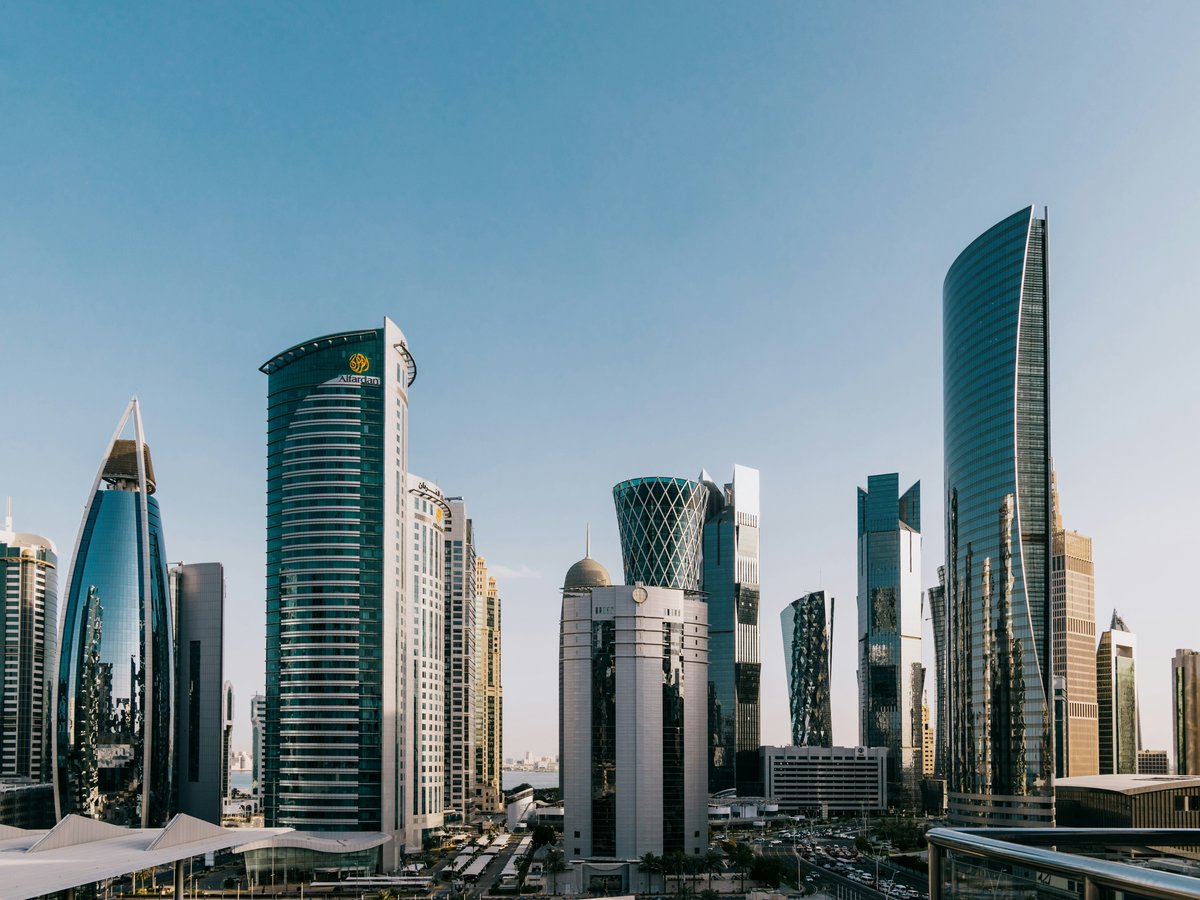
Doha sits on a stubby peninsula poking into the Arabian Gulf, with flat gravel desert behind it and warm, shallow water on three sides. The city itself is heavily built up, all glass towers and reclaimed shoreline, but drive 40 minutes in any direction and you hit raw landscape. Limestone mesas near Zekreet, tidal flats around Al Khor, rolling dunes at the Inland Sea. The catch is obvious. From May through September, daytime temperatures regularly top 45°C, and humidity along the coast can push the heat index past 55°C. That leaves roughly November through March as the real outdoor window, with December and January offering genuinely pleasant 20-25°C days. Even in winter, the sun is fierce and shade is scarce outside the city parks. Qatar has no rivers, no permanent freshwater lakes, and no mountains. What it does have is an underrated coastline, some genuinely strange geological formations, and a desert that reaches the sea in ways you might not expect. The Inland Sea at Khor Al Adaid, about 60 km south of Doha, is one of the few places on earth where dunes spill directly into tidal water. Mind you, the outdoor culture here is still developing. Trail markings are rare, and you will often be navigating by GPS pins shared on WhatsApp groups rather than printed maps.
Outdoor activities
-
Desert cycling on the Al Khor coastal track
A paved cycling path runs along the coast near Al Khor, roughly 64 km north of central Doha. The route is flat and exposed, with views over tidal mudflats where flamingos tend to gather between November and February. The track itself is well maintained, about 10 km one way, and you will share it with joggers and families on weekends. Friday mornings before 8 a.m. are the quietest. Several cycling clubs in Doha run group rides out to Al Khor on the shoulder of the highway, typically a 130 km round trip that starts before dawn.
- Difficulty
- Easy to moderate (flat, but sun exposure is relentless)
- Duration
- 1-2 hours for the coastal path itself
- Best season
- November through February
-
Dune driving and camping at Khor Al Adaid (Inland Sea)
Khor Al Adaid sits at Qatar's southeastern tip, about 60 km from Doha, where crescent dunes roll directly into a shallow tidal inlet. Getting there requires a 4x4 with deflated tires, and the last 15 km are soft sand with no paved road. Most people go with a tour operator or in a convoy, which is the safer call if you have not driven sand before. Overnight camping on the dunes is popular from October through March, when nighttime temperatures drop to a comfortable 12-18°C. The sky out there is noticeably darker than anything you will see near Doha. Worth noting, the area sits near the Saudi border, so stick to established routes.
- Difficulty
- Moderate (requires 4x4 driving skill or a guided tour)
- Duration
- Full day or overnight
- Best season
- October through March
-
Sandboarding near Mesaieed
The dunes south of Mesaieed, about 45 km from Doha, are the closest large sand formations to the city. The faces are steep enough for sandboarding, typically 20-40 meters of vertical drop on the slip faces. You can rent boards from tour operators in the Sealine Beach area. The sand is fine and golden, and after a windy day the faces firm up nicely. Expect to get sand in places you did not know existed. Early morning sessions work best because the sand surface is cooler and slightly more compact.
- Difficulty
- Easy to moderate (walking back up the dunes is the hard part)
- Duration
- 2-3 hours
- Best season
- November through February
-
Trail running at Ras Abrouq (Zekreet)
The limestone plateau at Ras Abrouq, about 80 km west of Doha, has eroded into mushroom-shaped rock pillars and flat-topped mesas that look like they belong on another planet. There are no marked trails, but runners and hikers pick routes across the rocky flats between the formations. The ground is compact limestone and gravel, mostly flat with occasional scrambles over low rock shelves. A GPS watch or phone with downloaded maps is non-negotiable here. The area is remote and cell signal can be spotty. A few running clubs in Doha organize monthly group runs out here, typically 8-15 km loops.
- Difficulty
- Moderate (uneven terrain, no shade, navigation required)
- Duration
- 2-4 hours depending on route
- Best season
- November through February
-
Kitesurfing at Fuwairit Beach
Fuwairit Beach, about 80 km north of Doha, has become the go-to kitesurfing spot in Qatar. The beach is wide and sandy, the water is shallow for 100-200 meters offshore, and the winter shamal winds (north-northwesterly) are consistent enough to plan around. Wind speeds of 15-25 knots are common from November through April. A few schools operate on the beach seasonally. Note that part of Fuwairit is closed from April to July for Hawksbill turtle nesting, so the beach access shrinks during those months.
- Difficulty
- Beginner to advanced (varies by wind conditions)
- Duration
- Half day
- Best season
- November through April
-
Kayaking through Al Thakira mangroves
Al Thakira, about 65 km north of Doha near Al Khor, has the largest natural mangrove forest in Qatar. The Avicennia marina mangroves grow in shallow tidal channels that you can paddle through in a sit-on-top kayak. At high tide, you can weave deep into the root systems. At low tide, some channels become too shallow and you will drag. Several outfitters rent kayaks and run guided tours, typically launching from a small beach area near the mangroves. The water is calm and the paddling is easy, but the sun bounces off the surface relentlessly. Herons, flamingos, and cormorants are common, particularly in the cooler months.
- Difficulty
- Easy
- Duration
- 2-3 hours
- Best season
- October through March
Day hikes
-
Ras Abrouq limestone formations walk
The rock formations at Ras Abrouq, west of Zekreet village about 80 km from Doha, are Qatar's closest thing to a proper hiking landscape. Wind-eroded limestone pillars, some 5-8 meters tall, stand in clusters across a flat gravel plain. You can walk freely between them, picking your own route. Most people park near the abandoned film set (locally called Film City) and explore the plateau on foot for a few hours. The terrain is flat to gently undulating, mostly hard-packed gravel and limestone, with no technical scrambling required. Bring far more water than you think you need. There is no shade, no facilities, and no one around if you get into trouble.
- Difficulty
- Easy to moderate (flat terrain, but remote, exposed, no trail markers)
- Duration
- 2-4 hours
- Best season
- November through February
-
Jebel Jassassiyeh rock carvings
Jebel Jassassiyeh, a low limestone ridge near Al Huwaila on Qatar's northeast coast, has hundreds of ancient rock carvings (petroglyphs) scattered across its surface. The carvings depict boats, rosettes, and cup marks, and likely date back several hundred years, possibly longer. The walk itself is short and easy, essentially a scramble over a rocky ridge that rises maybe 10-15 meters above the surrounding plain. The interest here is archaeological rather than athletic. A 4x4 helps for the access track but is not strictly necessary in dry conditions. The site is unguarded and unfenced, so treat it with respect.
- Difficulty
- Easy (short walk over low rock outcrops)
- Duration
- 1-2 hours
- Best season
- November through March
-
Purple Island (Bin Ghannam Island) loop
Purple Island sits in the mangrove flats near Al Khor, about 64 km north of Doha. Despite the name, it is a peninsula accessible via a causeway. A walking loop of roughly 4-5 km traces the shoreline through mangroves, past tidal pools, and over low rocky ground. The island gets its name from the ancient purple dye industry (murex shells) that once operated here. You will likely see wading birds, crabs, and possibly flamingos in the shallows during winter months. The ground is mostly firm but can be muddy near the mangroves at high tide. Bring insect repellent. Midges appear near the mangroves in the late afternoon.
- Difficulty
- Easy (flat, mostly firm ground, some muddy patches)
- Duration
- 2-3 hours for a full loop
- Best season
- November through March
-
Zekreet Peninsula coastal walk
The western coast of the Zekreet Peninsula, about 85 km from Doha, has low sea cliffs and rocky beaches that you can walk along for several kilometers. The coastline alternates between sandy coves and flat limestone shelves. You might spot ospreys and cormorants along the cliffs. The walking is unstructured. You park where the track meets the coast and walk in whichever direction appeals. Heading north from the peninsula's tip gives you maybe 6-8 km of walkable coastline before the terrain becomes too rocky to be enjoyable. The area is remote, cell coverage is unreliable, and there are no facilities of any kind.
- Difficulty
- Easy to moderate (uneven rocky coastline, remote)
- Duration
- 3-5 hours
- Best season
- November through February
Water activities
-
Kayaking at Al Thakira mangroves
Al Thakira's mangrove channels, about 65 km north of Doha, offer the most interesting paddling in Qatar. The channels are narrow and sheltered, the water is warm and shallow (rarely more than 1.5 meters at high tide), and the mangrove roots create a dense green corridor that feels completely removed from the desert. Several operators rent single and tandem kayaks, with prices typically around 150-250 QAR per person for a guided 2-hour session. Timing your visit for incoming tide makes the paddling easier and opens up channels that dry out at low water.
- Difficulty
- Easy
- Duration
- 2-3 hours
- Best season
- October through March
-
Stand-up paddleboarding at Katara Beach
Katara Beach, on the Doha waterfront near the Cultural Village, rents SUP boards for use in the calm, shallow water along its 1.5 km stretch. The Gulf water here is flat and warm, around 22-24°C in winter and up to 35°C in summer. Winter mornings tend to have the calmest conditions. Beach entry costs around 25 QAR and board rental runs about 100-150 QAR per hour. The beach has changing facilities, showers, and a few food outlets. It gets busy on Fridays and public holidays.
- Difficulty
- Easy (calm, sheltered water)
- Duration
- 1-2 hours
- Best season
- November through April
-
Snorkeling and diving off Al Wakrah coast
The waters off Al Wakrah, about 15 km south of central Doha, have several shallow reef sites where visibility can reach 8-12 meters on calm days. The marine life is modest compared to the Red Sea, but you might see Arabian angelfish, grouper, sea snakes, and green turtles. Several dive operators run boat trips from Al Wakrah and Doha marinas, with a two-tank dive typically costing 400-600 QAR. Water temperatures range from about 20°C in January to 34°C in August. Winter diving requires at least a 3mm wetsuit.
- Difficulty
- Easy (snorkeling) to moderate (diving requires certification)
- Duration
- Half day
- Best season
- March through May and October through November (best visibility)
-
Sailing and dhow cruises from the Corniche
Traditional wooden dhows depart from the Corniche waterfront for sunset cruises along the Doha skyline, typically 1-2 hours, priced around 150-300 QAR per person. For actual sailing, the Doha Sailing Association and a few private clubs offer dinghy and keelboat sailing, with the winter shamal season providing reliable 10-20 knot winds from the north-northwest. Racing regattas run from roughly October through April. The Gulf water is flat by ocean standards, but the wind can build chop quickly in the afternoon.
- Difficulty
- Easy (dhow cruise) to moderate (dinghy sailing in wind)
- Duration
- 1-3 hours
- Best season
- October through April
-
Open-water swimming at Simaisma Beach
Simaisma Beach, about 35 km north of Doha, has a long shallow entry and relatively clean water by Gulf standards. The beach is quiet on weekdays and popular with expat swimming groups who organize weekend morning swims of 1-3 km along the coastline. The water is calm, warm, and shallow. You can wade 50-80 meters out and still be waist-deep. Jellyfish appear sporadically from May onward. There are no lifeguards, so group swimming is strongly advisable. The beach has limited shade from a few scrubby trees, and there are no facilities beyond a small car park.
- Difficulty
- Easy to moderate (depending on distance)
- Duration
- 1-2 hours
- Best season
- November through March
Parks & gardens
-
Aspire Park
FreeDoha's largest public green space covers roughly 88 hectares in the Aspire Zone sports district. The park wraps around an artificial lake, with paved walking loops, scattered picnic areas, and thick plantings of date palms and imported tropical trees. The Aspire Tower (300 meters tall) anchors the skyline from inside the park. On winter evenings, families spread blankets on the grass and the walking paths fill up by 4 p.m. The southern end tends to be quieter. There is a small cafe near the lake, and a dedicated running track loops the perimeter at roughly 3.5 km.
Highlights: Artificial lake with fountains, 3.5 km running loop, Aspire Tower views, children's play areas with rubber surfacing
-
MIA Park (Museum of Islamic Art Park)
FreeThis waterfront park sits on an artificial peninsula next to I.M. Pei's Museum of Islamic Art, with direct views across the Corniche toward West Bay's skyline. The park has wide stone walkways, manicured lawns, a Richard Serra sculpture installation, and a long promenade that catches the evening breeze off the Gulf. It is compact but well designed, and the sunset light on the museum facade is genuinely worth timing your visit around. On Fridays, the park fills with families, kite flyers, and food trucks.
Highlights: Richard Serra's 7 sculpture, Corniche and West Bay skyline views, waterfront cafe, well-lit evening promenade
-
Al Bidda Park
FreeAl Bidda runs along the southwestern stretch of the Corniche, covering about 19 hectares of reclaimed and landscaped land. The park was heavily renovated ahead of the 2022 World Cup and now has paved cycling paths, outdoor fitness stations, a botanical garden section, and a large amphitheater used for public events. The mature trees provide more shade than most Doha parks, which matters. An underground parking garage connects to the Corniche metro station, so access is straightforward without a car.
Highlights: Botanical garden section, shaded walking paths under mature trees, outdoor fitness equipment, metro-accessible via Corniche station
-
Oxygen Park
FreePart of the Education City complex in Al Rayyan, Oxygen Park was designed around a central lake and divided into themed zones. The park covers about 130,000 square meters and includes a running track, cycling paths, and zones labeled for fitness, family, and quiet reflection. The plantings are relatively new and still filling in, so shade is limited in some sections. That said, the design is more thoughtful than most Doha parks, and the lake area has a slightly cooler microclimate in the evenings.
Highlights: Central lake, dedicated cycling and running tracks, proximity to Education City mosques and Qatar National Library, fitness zones with equipment
-
Katara Hills Park
FreeTucked behind the Katara Cultural Village in West Bay, this hilly park opened relatively recently and still feels undervisited compared to Aspire or Al Bidda. The terrain has gentle elevation changes, rare for Doha, with paved paths winding through landscaped hills. The park connects to Katara Beach (paid entry, around 25 QAR) and has views down toward the amphitheater and the Gulf. Evening visits in winter are particularly pleasant, with the cultural village lit up below.
Highlights: Gentle hill terrain with views over Katara Cultural Village, connection to Katara Beach, relatively uncrowded, evening lighting
Practical tips
- Sun protection
- Doha's UV index regularly hits 10-11+ from March through October. Even in December, it hovers around 5-6, enough to burn pale skin in 30 minutes. Wear SPF 50 sunscreen and reapply every 90 minutes. A wide-brimmed hat and UV-rated sunglasses are non-negotiable. Lightweight long sleeves with UPF rating beat bare skin and sunscreen combined, and they dry faster than cotton.
- Hydration
- Carry a minimum of 2 liters per person for any outing under 3 hours. For desert hikes or dune activities, 3-4 liters is safer. Electrolyte tablets (available at most pharmacies in Doha for 15-25 QAR) make a real difference when you are sweating hard. Tap water in Qatar is desalinated and safe to drink, but most people prefer bottled. A 1.5 liter bottle costs about 1-2 QAR at any cold store.
- Footwear and terrain
- Qatar's terrain is mostly flat gravel, packed sand, and limestone. Sturdy trail runners are more practical than heavy hiking boots. For dune activities, go barefoot or wear sandals that strap on firmly. The sand gets scorching hot by 10 a.m. in summer, easily 60°C at the surface, so timing matters. Rocky coastlines near Zekreet and Ras Abrouq have sharp limestone edges that will shred soft-soled shoes.
- Timing your activities
- From November through February, mornings between 7 and 11 a.m. are ideal for outdoor activities. Afternoons warm up but remain manageable at 22-28°C. From March onward, shift everything to before 9 a.m. or after 4 p.m. June through September, restrict outdoor exertion to early morning or evening and keep sessions short. Heat exhaustion is a genuine risk, not a suggestion on a sign.
- Vehicle access and navigation
- Many outdoor sites in Qatar require a 4x4, including the Inland Sea, parts of Ras Abrouq, and some beach access tracks. Renting a 4x4 in Doha costs roughly 300-500 QAR per day. Always deflate tires before driving on sand (15-18 psi works for most vehicles) and carry a portable compressor to re-inflate. Google Maps is mostly reliable on paved roads, but for off-road tracks, download offline maps and check recent GPS coordinates from local 4x4 Facebook groups.
- Cultural considerations
- Qatar is conservative. When hiking or at the beach, avoid overly revealing clothing outside designated resort beaches. Katara Beach and some hotel beaches have more relaxed dress codes. During Ramadan (dates shift yearly), eating and drinking in public during daylight hours is illegal. Carry water but drink discreetly, away from populated areas. Public land access is generally open, but some coastal and desert areas are near military zones. If you see signage in Arabic with red markings, turn around.
FAQ
What is the best time of year for outdoor activities in Doha?
November through February is the prime window. Daytime temperatures sit around 20-28°C, and humidity drops compared to summer. December and January feel genuinely pleasant, sometimes cool enough for a light jacket in the evening. By April, the heat starts building toward the brutal summer months when outdoor activity becomes dangerous between 9 a.m. and 5 p.m.
Are there any actual hiking trails with markings near Doha?
Not in the European or North American sense. Qatar has no maintained, signed trail system. Outdoor routes at Ras Abrouq, Purple Island, and along the Zekreet coast are informal. You navigate by GPS, landmarks, and shared coordinates from local hiking and running groups. The Qatar Natural History Group and several expat Facebook groups post routes and organize group outings, which is the easiest way to learn the terrain.
Do I need a permit to visit Khor Al Adaid (Inland Sea)?
No permit is currently required for Qatari residents or tourists to visit the Inland Sea area. You do need a 4x4, and going with an experienced driver or tour group is strongly recommended. The route crosses soft sand with no road, and getting stuck without recovery equipment in 45°C heat is a serious safety problem. Tour operators in Doha charge around 250-500 QAR per person for a half-day trip.
Is swimming in the Arabian Gulf around Doha safe?
Generally yes, with caveats. The water is warm and calm, with minimal currents along most beaches. Jellyfish appear seasonally, mostly from May through August. Sea snakes are present but rarely aggressive. The bigger concern is boat traffic near marinas and the Pearl-Qatar waterfront. Stick to designated swimming areas, swim with a buddy, and be aware that there are no lifeguards on most public beaches. Water quality at urban beaches along the Corniche is not ideal for swimming. Head north to Simaisma or Al Khor for cleaner water.
Can I rent outdoor gear and bikes in Doha?
Several shops in Doha rent bicycles, kayaks, and camping equipment. Trek Bicycle Store in Aspire Zone and a few smaller shops rent road and mountain bikes starting around 100-150 QAR per day. For kayak rentals, operators at Al Thakira mangroves offer sit-on-top kayaks as part of guided tours. Camping gear including tents, sleeping bags, and portable stoves can be rented from outdoor shops in the Industrial Area or purchased at Decathlon in Villagio Mall or Landmark Mall.
How do I find group outdoor activities and running clubs in Doha?
Doha has an active expat outdoor community organized mostly through social media. The Doha Desert Runners, Qatar Hash House Harriers, and Doha Triathlon Club run regular group events. The Qatar Natural History Group organizes nature walks and bird-watching outings. Most groups post schedules on Facebook or Instagram. Parkrun operates a free weekly 5 km timed run at Aspire Park every Saturday morning at 6:30 a.m., which tends to draw 50-100 runners.
Outdoor experiences in Doha
 Free cancellation
 Doha :Half Day Desert Safari | Camel Riding | ATV | Sand Surfing
Outdoor experience: free cancellation.
via Viator Free cancellation
 Doha Desert Safari Dune Bashing Camel Ride Sandboarding
Outdoor experience: free cancellation.
via Viator Free cancellation
 Doha Night Desert Safari: Dune Bashing, Camel Ride & Stargazing
Outdoor experience: 4 hours, free cancellation.
via Viator Free cancellation
 Doha : Half Day Desert Safari With SandBoarding and Camel Ride
Outdoor experience: 4 hours, free cancellation.
via Viator Free cancellation
 Doha: Desert Safari, Sand Boarding, Camel Ride & Inland Sea Tour
Outdoor experience: free cancellation.
via Viator Free cancellation
 Doha:ATV,Quad or Buggy Dune Bashing,CamelRide & Sandboarding
Outdoor experience: 4 hours, free cancellation.
via Viator Free cancellation
 Doha: Desert Safari | Camel ride | Sand-boarding | Quad Biking
Outdoor experience: 4 hours, free cancellation.
via Viator Free cancellation
 Doha Layover Desert Safari: Dune Bashing, Camel Ride & Inland Sea
Outdoor experience: 4 hours, free cancellation.
via Viator Free cancellation
 Doha Desert Excursion Dune Bashing Sandboarding Camel Ride
Outdoor experience: free cancellation.
via Viator Free cancellation
 Doha Desert Safari, QuadBike,Dune buggy, Sandboarding & CamelRide
Outdoor experience: 4 hours, free cancellation.
via Viator Free cancellation
 (Private) Quickie to the Desert | Sandboarding | Inland Sea
Outdoor experience: 4 hours, free cancellation.
via Viator Free cancellation
 Doha Desert Safari: Sunset,Sunrise,Camel,Sand boarding,Inland Sea
Outdoor experience: 4 hours, free cancellation.
via ViatorLast verified by automated review (v1.7.2) on . What is automated review?