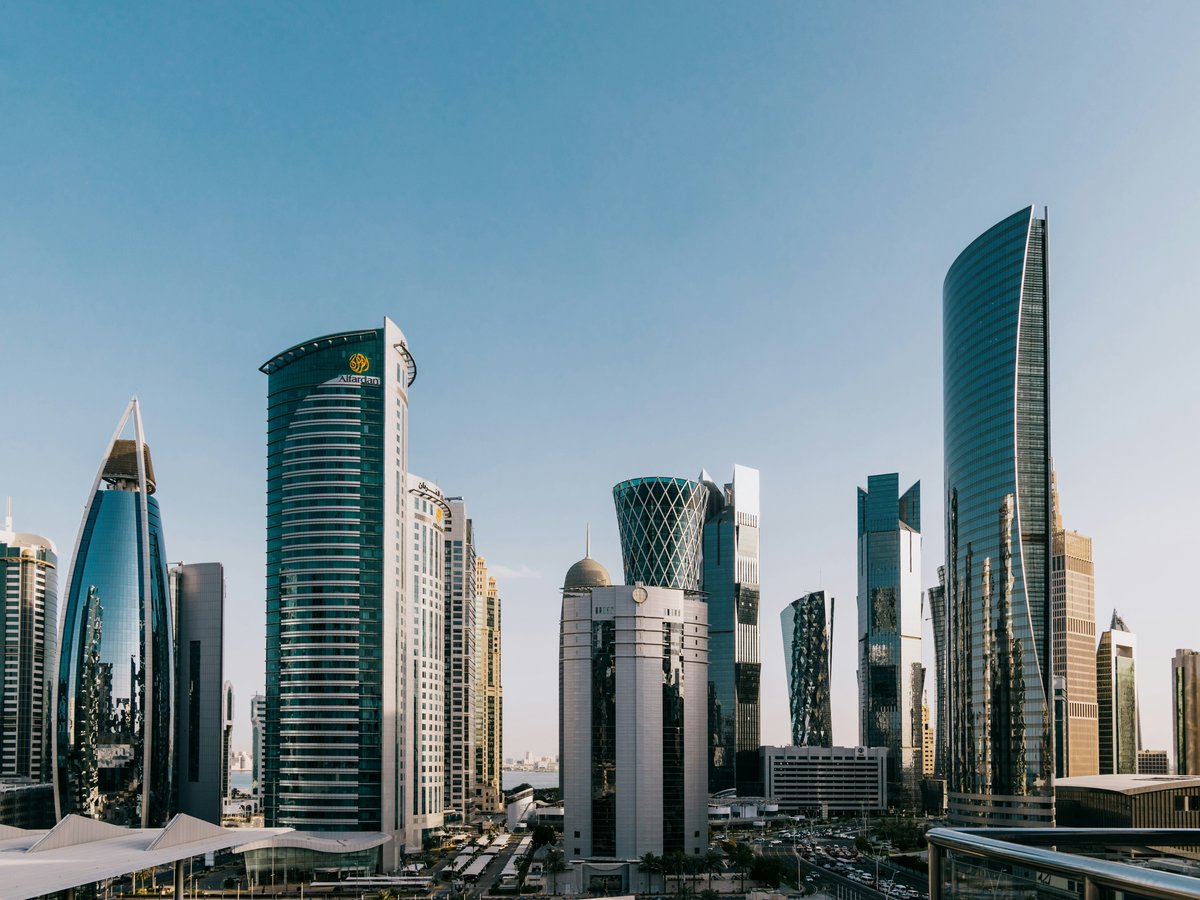
Stay in Doha in January
90 hotels in the Trip.com pool for Doha, from US$24 a night.
Opens Trip.com on Fri 1 Jan to Sun 3 Jan 2027; change the dates there.
January is the single best month to be in Doha. That is the most important thing to know. Daytime temperatures hover around 22.6°C (73°F), nights drop to a comfortable 14.8°C (59°F), and the punishing Gulf summer heat that pushes past 42°C from June through August feels like a different planet entirely. You can walk the Corniche at 2 p.m. without soaking through your shirt. You can sit on a terrace in Katara Cultural Village and eat outdoors without that wall of humidity that defines the other 7 months of the year.
The tradeoff is obvious. Everyone else knows this too. January is firmly peak season, and Doha prices itself accordingly. Hotel rates in West Bay and The Pearl-Qatar climb 40 to 60 percent above the annual average, and the city fills with European and Gulf visitors escaping their respective winters. The Qatar ExxonMobil Open tennis tournament draws sports fans to the Khalifa International Tennis Complex in late January, and the Shop Qatar festival runs promotions across malls from Villaggio to Doha Festival City. You will not have the place to yourself.
On the logistics side, most nationalities get visa-free entry or a visa on arrival for 30 days. Hamad International Airport sits about 15 km southeast of West Bay, and the Red Line metro connects the airport terminal to Msheireb station downtown in roughly 20 minutes for 2 QAR. A taxi into West Bay runs 40-60 QAR metered. For hotels, West Bay puts you near the Corniche and Museum of Islamic Art but tends to feel corporate. The Pearl-Qatar and Lusail offer newer waterfront apartments with kitchen facilities, typically 500-800 QAR per night in January. Msheireb Downtown is the walkable sweet spot, 5 minutes from Souq Waqif and the metro interchange. Budget travelers might look at Al Sadd or Bin Mahmoud, where 3-star options still exist in the 300-400 QAR range even in peak season. A 3-day visit is enough to cover the major museums, souqs, and waterfront districts without feeling rushed.
Why visit in January
- Daytime temperatures around 22.6°C (73°F) make outdoor sightseeing comfortable for the first time since October, with lows near 14.8°C (59°F) cool enough for evening walks along the 7 km Corniche.
- The Qatar ExxonMobil Open, Doha Marathon, and Shop Qatar festival all fall in January, giving the cultural calendar more density than any other month.
- Rainfall averages only 31 mm across roughly 3 days, so rain is unlikely to disrupt plans. Compare that to London's 55 mm or Tokyo's 60 mm in the same month.
- Air quality is noticeably better than during spring shamal dust storms that hit in March and April, when visibility can drop below 2 km.
- The desert surrounding Doha is green from winter rains. The inland sea at Khor Al Adaid looks different in January than in the brown, baked months of summer.
Worth knowing
- Peak-season pricing. A 4-star hotel in West Bay that runs 400-500 QAR per night in August will likely cost 700-900 QAR in January.
- Evenings can be genuinely cool by Gulf standards. Temperatures around 14-15°C (57-59°F) catch visitors off guard when they have packed only shorts and sandals.
- The beach-swimming season is borderline. Water temperatures in the Arabian Gulf drop to about 20-21°C (68-70°F) in January, which is tolerable for some but too cold for a long swim.
- Fridays remain the weekly day off, and many smaller shops and restaurants in older neighborhoods close or open late on Friday mornings. This can frustrate visitors on a tight schedule.
Best for
Think twice if
January is the coolest month in Doha. Daytime highs average 22.6°C (73°F) under mostly clear skies, while overnight lows settle around 14.8°C (59°F). Humidity sits at 67%, which is noticeable in the mornings but nothing like the 85-90% that defines July and August. Rainfall totals about 31 mm spread over roughly 3 days, usually as brief showers that clear within an hour. Wind tends to come from the northwest at 15-20 km/h, occasionally picking up in the afternoon. The sun sets around 5:15 p.m. and rises by 6:20 a.m., giving about 11 hours of daylight.
Year-round climate
Averages from the last 5 years.
| Month | Avg high (°C) | Avg low (°C) | Rainfall (mm) |
|---|---|---|---|
| Jan | 23 | 15 | 31 |
| Feb | 24 | 16 | 8 |
| Mar | 28 | 18 | 10 |
| Apr | 33 | 22 | 6 |
| May | 38 | 27 | 7 |
| Jun | 42 | 29 | 0 |
| Jul | 42 | 31 | 4 |
| Aug | 41 | 32 | 0 |
| Sep | 39 | 29 | 0 |
| Oct | 36 | 26 | 4 |
| Nov | 31 | 22 | 3 |
| Dec | 25 | 17 | 16 |
Headline events
Qatar ExxonMobil Open
Late January (final week)
ATP 250 tennis tournament held at the Khalifa International Tennis Complex in Al Rayyan. The draw typically features 3-5 top-20 players, and the center court holds about 5,000 spectators. Grounds passes start around 100 QAR, with finals tickets reaching 300-500 QAR. The complex sits near Villaggio Mall, accessible via the Green Line metro to Al Riffa station.
Shop Qatar
Mid-January through late February
A city-wide retail festival running 6-8 weeks from mid-January through February, with promotions at major malls including Villaggio, Doha Festival City, Mall of Qatar, and Place Vendôme in Lusail. The draw goes beyond discounts. Raffle prizes include cars and cash, and weekend activations at the malls pull big family crowds on Fridays and Saturdays.
Best things to do in January
Walk the Corniche from the Museum of Islamic Art to West Bay
outdoorThe 7 km waterfront promenade curves along Doha Bay, connecting the MIA park with the West Bay skyline. In January, the full walk takes about 90 minutes at a comfortable pace, and the midday sun feels warm without the punishing heat that makes this route impossible from May through September. The path passes public art installations, the dhow harbor, and several coffee kiosks.
January's 20-23°C afternoons make a midday walk feasible for the first time since late October.Booking tipNo booking needed. Start at MIA Park for the best skyline views heading north.
Desert safari to Khor Al Adaid (Inland Sea)
adventureThe drive from Doha takes about 60 km south through rolling sand dunes to reach the inland sea, where the desert meets tidal waters at the Saudi border. Most tours include dune bashing in a 4x4, a stop at a Bedouin-style camp, and time at the shoreline. The sand in January still holds some green scrub from winter rains, and you might spot oryx at the Al Reem reserve along the way.
Temperatures of 20-25°C make the outdoor portions comfortable rather than survival exercises. Summer tours run only at dawn.Booking tipBook through a licensed operator. Half-day tours run 250-400 QAR per person. Friday morning departures fill up fast in January.
Explore the Museum of Islamic Art
cultureI.M. Pei's geometric limestone building on its own island in Doha Bay holds over 1,400 pieces spanning 1,400 years of Islamic art, from 7th-century Iraqi calligraphy to 17th-century Mughal jade. The ground-floor gallery of metalwork and the top-floor ceramics collection tend to draw the longest pauses. Admission is free for Qatar residents, 50 QAR for visitors.
January crowds are higher than summer but the 22°C walk from Msheireb metro makes the approach pleasant.Booking tipVisit on a weekday morning. The cafe on the top floor has Doha Bay views and serves decent Arabic coffee for 18 QAR.
Souq Waqif evening walk and dinner
cultureDoha's restored traditional market fills 5-6 blocks near Msheireb, with narrow lanes of spice shops, fabric stalls, perfume vendors, and falcon sellers. The smell of oud and bukhoor drifts between the stone corridors. After dark, the restaurants along the main pedestrian streets serve Qatari, Lebanese, Iranian, and Yemeni food. The sounds of live oud music spill out of a few cafes most evenings.
Evening temperatures of 15-17°C make lingering outdoors in the souq comfortable. In summer, the souq empties before 9 p.m. from the heat.Booking tipNo reservation needed for most restaurants. Damasca One and Parisa tend to fill up on Thursday and Friday evenings.
Kayaking or paddleboarding at Katara Beach
outdoorKatara Cultural Village's public beach rents single kayaks for about 100 QAR per hour and stand-up paddleboards for 120 QAR. The water in January is calm, with minimal wind most mornings before 11 a.m. The beach itself has a 15 QAR weekday entry fee (25 QAR on weekends).
The 20-21°C water temperature is brisk but manageable for active watersports. Air temperatures in the low 20s mean you will not overheat while paddling.Booking tipGo before 10 a.m. on weekdays. Friday afternoons get crowded with families.
National Museum of Qatar
cultureJean Nouvel's desert-rose-shaped building in the old palace district tells Qatar's story from geological formation to pearl diving to oil wealth. The immersive gallery rooms use floor-to-ceiling projections and scent diffusers. The pearl-diving hall, with its recorded sounds of divers breathing through bone nose clips, is the most affecting room. Admission is 50 QAR for visitors.
The outdoor heritage village section and surrounding park are pleasant to explore in January's dry warmth rather than the furnace-like conditions of June.Booking tipAllow 2-3 hours. The museum cafe serves the best kunafa in the area for 25 QAR.
Al Zubarah Fort day trip
historyA UNESCO World Heritage Site about 105 km northwest of Doha, Al Zubarah was an 18th-century pearl trading port. The restored fort and excavation site sit on an empty stretch of Qatar's northwest coast. The drive takes about 75 minutes on the Al Shamal Road. No entrance fee.
January is the only month comfortable enough for walking the exposed ruins. The site has no shade structures, and summer temperatures above 45°C make it dangerous.Booking tipBring water and sunscreen. There are no shops at the site. Combine with a stop at the fishing village of Al Ruwais on the way back.
Friday brunch at a West Bay hotel
foodThe Friday brunch is a Gulf institution. West Bay hotels like the Four Seasons, St. Regis, and W Doha run 3-4 hour afternoon spreads with international buffets. Prices typically range from 250 QAR (soft drinks) to 450 QAR (free-flowing drinks). The quality of the seafood stations, live cooking, and dessert spreads tends to be genuinely high.
January brings the fullest brunch calendars. Hotels compete harder during peak tourist season, and some add outdoor terrace seating that is closed in summer.Booking tipReserve by Wednesday. The Four Seasons and St. Regis brunches sell out in January most weeks.
What to eat in January
On menus now
Machboos laham
Qatar's national rice dish, slow-cooked with lamb, dried lime (loomi), and baharat spice blend. The cooler January weather makes this heavy, fragrant plate feel right. Restaurants across Souq Waqif serve it as a lunch staple, typically for 35-55 QAR a plate.
Harees
A slow-cooked porridge of cracked wheat and lamb, beaten until smooth, finished with ghee and a dusting of cinnamon. It is the kind of warming, starchy comfort food that suits January evenings in Doha when temperatures dip below 16°C. You will find it at traditional Qatari restaurants in Al Jasra and Msheireb.
Balaleet
A breakfast dish of sweetened vermicelli noodles topped with a thin savory omelette. The combination of sweet saffron-scented noodles and egg is particular to the Gulf. January mornings at 15-16°C are cool enough to enjoy this warm plate outdoors at Al Adhamiyah or Shay Al Shoomos in the souq area.
Street food peaks
Luqaimat
Fried dough balls drizzled with date syrup (dibs) and sprinkled with sesame seeds. The warm, sticky sweetness pairs well with karak chai. Street vendors in Souq Waqif serve them fresh from the oil, golden and still crackling. A portion typically runs 10-15 QAR.
What to drink
Karak chai
Sweet, thick, cardamom-laced milk tea served in small cups at cafeterias (kafeterias) across the city. Locals drink it year-round, but in January you will see long lines at outdoor karak stands near Souq Waqif and along the Corniche, especially after sunset when the air cools. A cup costs 2-3 QAR.
Fresh dates with Arabic coffee
Qatari coffee (gahwa) is light, cardamom-heavy, and served in tiny handleless cups alongside bowls of fresh khalas or barhi dates. The pairing is offered as a welcome gesture in nearly every traditional setting. In January, look for it at cultural events around Katara and at the date vendors in Souq Waqif.
Regular events in January
Doha Marathon
Full marathon, half marathon, and 10 km races through West Bay and along the Corniche. The flat, sea-level course draws about 4,000 runners. Registration opens several months in advance and typically fills at around 150 QAR for the half marathon.
Second or third Friday of JanuaryKatara International Arabian Horse FestivalFree
A multiday equestrian show at Katara Cultural Village featuring Arabian horse beauty competitions, parades, and a marketplace for saddles, tack, and equestrian art. Free admission to the grounds. The horses are stunning up close, and the grooming rituals are a spectacle on their own.
Late January to early FebruaryDoha Jewelry and Watches ExhibitionFree
An annual luxury trade show at the Doha Exhibition and Convention Center (DECC) in West Bay, featuring Gulf and international jewelers. Open to the public with free entry, though it skews toward high-end buyers and collectors.
Mid-to-late JanuaryBest places this January
Museum of Islamic Art
museumI.M. Pei's limestone masterpiece on a purpose-built island. Over 1,400 artifacts spanning 14 centuries. The park behind the museum hosts outdoor sculptures and has one of the best skyline views in Doha.
MIA ParkSouq Waqif
marketRestored traditional market with spice lanes, falcon vendors, perfume shops, and a dense cluster of restaurants. The smell of oud and roasting meat fills the narrow alleys after dark. A 5-minute walk from Msheireb metro.
MsheirebThe Pearl-Qatar
districtA man-made island with marina-front apartments, restaurants, and shops modeled loosely on Mediterranean port towns. The Qanat Quartier section has pastel Venetian-style buildings along a canal. Good for an evening walk and dinner.
The PearlKatara Cultural Village
cultureA waterfront cultural complex between West Bay and The Pearl with two amphitheaters, galleries, a public beach (15-25 QAR entry), and the golden Katara Mosque. January often brings outdoor art exhibitions and performances.
KataraNational Museum of Qatar
museumJean Nouvel's desert-rose building in the old Amiri Palace compound. Immersive galleries with scent, sound, and floor-to-ceiling video tell Qatar's story from geology to modernity. The pearl-diving hall is the standout.
Corniche SouthMsheireb Downtown Doha
districtQatar's heritage quarter, rebuilt with contemporary architecture on the footprint of the old commercial district. The Msheireb Museums (4 heritage houses) are free to enter and cover Qatari domestic life, slavery abolition, and oil-era change.
MsheirebAl Wakra Souq and Beach
marketA quieter alternative to Souq Waqif, about 15 km south of central Doha. The restored fishing-village souq has seafood restaurants and a public beach. Reachable via the Red Line metro to Al Wakra station, then a short taxi.
Al WakraAspire Zone and Torch Tower
parkDoha's sports district in the Al Waab area, with Aspire Park (the city's largest public green space), the Torch Tower revolving restaurant, and the Khalifa International Stadium. The park is excellent for a January afternoon stroll.
Aspire Zone
Your packing checklist
Tick items off as you pack. Your progress saves in this browser.
All packed — have a great trip.
Insider tips
The Gold Line metro from Msheireb to Katara Cultural Village takes 12 minutes. Most tourists take taxis and sit in traffic along the Lusail Expressway, especially on Thursday evenings. The metro is 2 QAR and faster.
Souq Waqif has two distinct zones. The tourist-facing restaurants line the main pedestrian street, but the better food is in the back alleys near the spice market. Look for the cluster of Yemeni restaurants behind the falcon souq for 25-35 QAR lunch plates.
Doha's Friday brunch culture is the social event of the week. If you only splurge once, the St. Regis or Four Seasons brunches in West Bay are the ones locals rate highest. Book by Wednesday.
The Museum of Islamic Art park behind the museum is free to enter and has the single best view of the Doha skyline, especially after sunset when the West Bay towers light up. The cafe closes at 8 p.m. but the park stays open later.
Uber and Careem both work in Doha and are often cheaper than metered taxis, especially for the airport run. A Careem from Hamad International to West Bay typically costs 35-50 QAR.
Alcohol is served in licensed hotel restaurants and bars but not in standalone restaurants or shops. The Qatar Distribution Company (QDC) in Abu Hamour sells alcohol with a permit, but tourists cannot get a permit. Budget for hotel bar prices, which run 45-65 QAR for a beer.
Avoid these mistakes
- Packing only summer clothes. Visitors from tropical climates especially underestimate how cool 14°C evenings feel after a warm day. A jacket saves a 200 QAR emergency purchase at Villaggio Mall.
- Skipping the metro. Doha's 3-line metro system is clean, fast, and costs 2 QAR per ride. Taxis in January peak-season traffic, especially along the Corniche and near Souq Waqif on weekends, can double the travel time.
- Trying to swim at the beach. The Arabian Gulf water temperature of 20-21°C in January surprises visitors who expect warm Gulf waters year-round. Katara Beach and Sealine Beach are better for walking and kayaking in January than swimming.
- Visiting Souq Waqif on a Friday morning. Many stalls do not open until after Friday prayers (around 1 p.m.). The souq comes alive on Thursday and Friday evenings instead.
- Assuming everything is walkable. Doha is spread across a wide, car-centric footprint. West Bay to Souq Waqif is a 25-minute walk, but The Pearl to Katara or Aspire Zone requires a car or metro. Plan around the metro map.
Practical tips for January
January is Doha's busiest month, so book hotels and the Qatar ExxonMobil Open tickets at least 6 weeks ahead. Most nationalities get visa-free entry or a visa on arrival at Hamad International Airport for 30 days, though GCC residents have separate arrangements. The Doha Metro (Red, Green, Gold lines) runs from 5:30 a.m. to midnight Saturday through Wednesday, with Friday service starting at 2 p.m. after prayers. A rechargeable travel card costs 30 QAR (10 QAR refundable deposit plus 20 QAR credit) and saves queuing at ticket machines. Tipping is not expected but rounding up by 5-10 QAR at restaurants is appreciated. The weekend is Friday-Saturday, not Saturday-Sunday. Government offices, banks, and some businesses close on Friday. Currency is the Qatari riyal (QAR), pegged at 3.64 to the US dollar. ATMs are everywhere, and credit cards are accepted at all malls, hotels, and most restaurants, though smaller souq vendors and kafeterias prefer cash.
FAQ
Is January a good time to visit Doha?
January is widely considered the best month for Doha. Daytime temperatures average 22.6°C (73°F) with minimal rain, making outdoor sightseeing comfortable all day. The tradeoff is peak-season pricing and higher crowd levels at attractions like Souq Waqif and the Museum of Islamic Art.
What should I wear in Doha in January?
Daytime calls for light layers, cotton or linen. Evenings cool to 14-15°C, so bring a jacket or sweater. For mosque visits and Souq Waqif, both men and women should cover shoulders and knees. Doha is more relaxed than Saudi Arabia, but modest dress is appreciated in public spaces outside hotels and malls.
Can you swim in Doha in January?
You can, but the Arabian Gulf water temperature drops to about 20-21°C (68-70°F), which feels cool. Katara Beach and Al Wakra Beach are open, and hotel pools are typically heated. January is better for kayaking or paddleboarding than extended swimming.
How do I get from Hamad International Airport to downtown Doha?
The Red Line metro runs from the airport to Msheireb station (central Doha) in about 20 minutes for 2 QAR. Taxis are metered and cost 40-60 QAR to West Bay. Uber and Careem also operate from the airport pickup zone, often slightly cheaper than taxis.
Do I need a visa to visit Qatar?
Citizens of over 80 countries, including the US, UK, EU, Canada, and Australia, get visa-free entry for 30 days on arrival. GCC nationals enter freely. Check the Qatar Ministry of Interior portal for your specific nationality before traveling.
Is Doha expensive in January?
January is the most expensive month. A 4-star hotel in West Bay typically runs 700-900 QAR per night, compared to 400-500 QAR in the summer low season. Meals range from 25-40 QAR at Souq Waqif casual restaurants to 150-300 QAR at hotel fine dining. The metro at 2 QAR per ride keeps transport costs low.
Things to Do in Doha in January
 Free cancellation
 Qatar Gold Dune Safari, Dune Bashing,Camel Ride,Sand Boarding,Inland Sea Desert
Day trip: 4 hours, free cancellation.
via Viator Free cancellation
 Doha Safari Dune Bashing Camel Ride Sandboarding ATV Option
Day trip: 4.5 hours, free cancellation.
via Viator Free cancellation
 Doha :Half Day Desert Safari | Camel Riding | ATV | Sand Surfing
Outdoor experience: free cancellation.
via Viator Free cancellation
 Doha: Guided City Tour With All Attractions, Pickup/Drop-Off
Day trip: 4 hours, free cancellation.
via Viator Free cancellation
 Doha Desert Safari Dune Bashing Camel Ride Sandboarding
Outdoor experience: free cancellation.
via Viator Free cancellation
 4 Hour Desert Safari, Camel Ride & Inland Sea Beach
Day trip: 4 hours, free cancellation.
via ViatorFind a flight to Doha
Live fares to Doha appear here once cookies are accepted.
Last verified by automated review (v1.7.2) on . What is automated review?