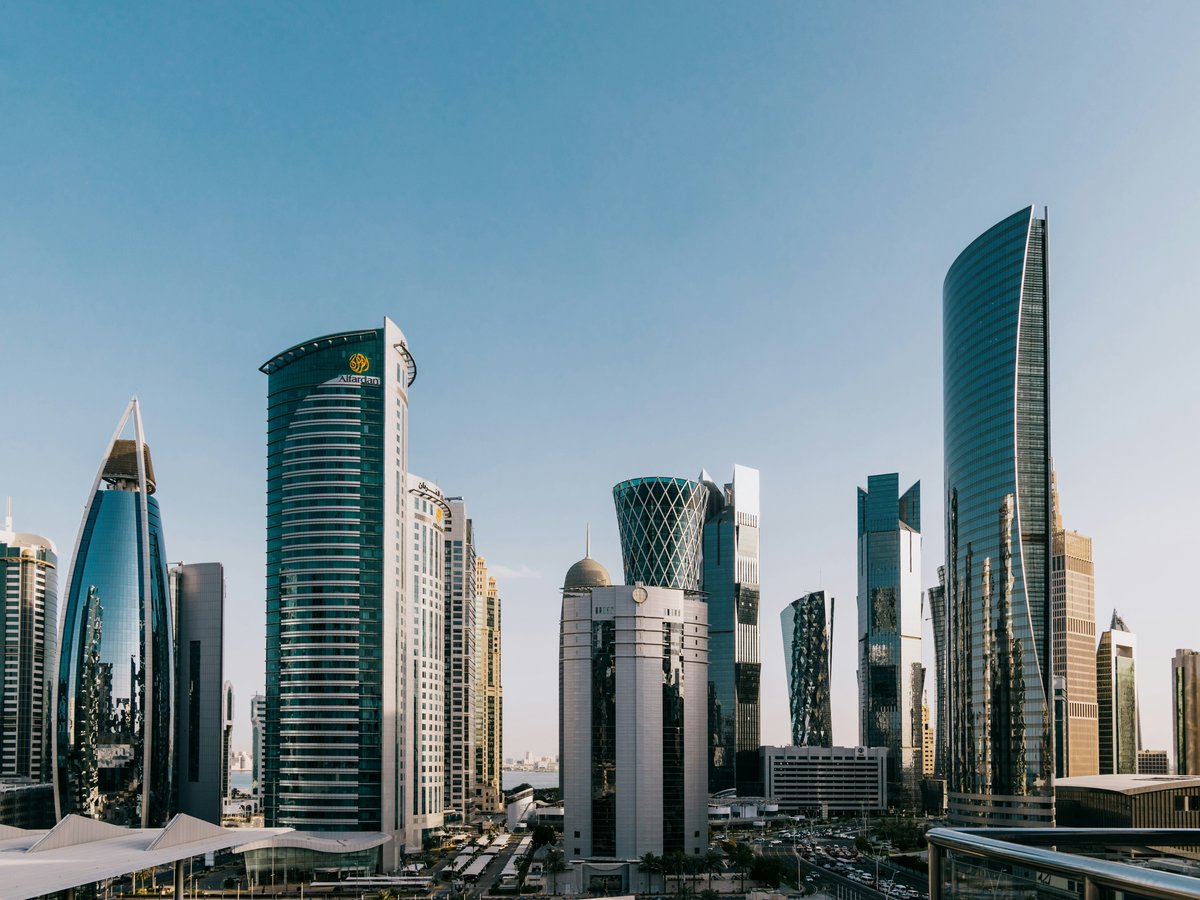
Stay in Doha in July
90 hotels in the Trip.com pool for Doha, from US$24 a night.
Opens Trip.com on Fri 2 Jul to Sun 4 Jul 2027; change the dates there.
July in Doha is, frankly, the hardest month to visit. Average highs reach 41.9°C (107°F), overnight lows sit around 31°C (88°F), and the sun hits with a dry, metallic intensity that makes stepping outside at noon feel like opening an oven door. Most Qatari families and long-term expats leave the country entirely for the summer, heading to London, Tbilisi, or Kuala Lumpur. The streets of West Bay, normally full of suited professionals, thin out noticeably by early July.
That said, Doha doesn't shut down. The Qatar Summer Festival runs through July and August at malls like Doha Festival City and Place Vendôme, with shopping promotions and family entertainment. Museums keep their doors open. The Museum of Islamic Art on the Corniche is likely at its emptiest all year. Hotel rates along the West Bay waterfront tend to drop 40-50% compared to the November-through-March peak, which means properties that normally feel out of reach become surprisingly affordable.
The real adjustment is behavioral. You'll find yourself living nocturnally, as most Doha residents do in summer. Souq Waqif comes alive after 8 p.m., when temperatures start to ease toward a still-warm 35°C (95°F). The Corniche is walkable before 6 a.m. Midday belongs to air-conditioned interiors. If you adapt to that rhythm, the Museum of Islamic Art, National Museum of Qatar, and 3-2-1 Olympic Museum sit within 15 minutes of each other on the Doha Metro, and you'll share them with a fraction of the usual crowds.
Why visit in July
- Hotel rates across Doha drop 40-50% from peak season, with 5-star West Bay properties regularly available at a fraction of their winter pricing
- World-class museums like the Museum of Islamic Art and National Museum of Qatar have minimal crowds, with weekday mornings often seeing fewer than 50 visitors across entire galleries
- The Qatar Summer Festival runs from early July through August across major malls, with retail discounts of 25-75% at Doha Festival City, Place Vendôme, and Mall of Qatar
- No visa required for nationals of over 80 countries, and immigration lines at Hamad International Airport are shorter than during the winter Formula 1 or cultural-festival seasons
Worth knowing
- Outdoor activity is effectively limited to before 6 a.m. and after 8 p.m., cutting roughly 14 hours from each day for sightseeing at places like Al Bidda Park, the Corniche, and Katara Beach
- Average highs of 41.9°C (107°F) with 46% humidity create a heat index that feels closer to 48°C (118°F), making heat exhaustion a genuine medical risk without constant hydration
- Many smaller independent restaurants and cafes in areas like Al Sadd and Bin Mahmoud close for the summer or reduce hours, narrowing the dining scene compared to winter months
- Desert excursions to the Inland Sea (Khor Al Adaid) and Al Zubarah Fort are limited to dawn departures, typically around 4:30 a.m. pickup
Best for
Think twice if
July ties June as Doha's hottest month. Daytime temperatures hold steady around 42°C (107°F) with little day-to-day variation. Nights offer minimal relief at 31°C (88°F). Rainfall is nearly nonexistent at 4mm for the entire month, typically falling in a single brief event if it comes at all. Humidity averages 46%, though early mornings near the Corniche can feel stickier, closer to 60-65%. The combination regularly pushes perceived temperatures above 48°C (118°F) during afternoon hours. Wind tends to blow from the northwest, the Shamal, occasionally carrying fine dust that reduces visibility across the city.
Seasonal caution
- Extreme heat advisory. Daytime temperatures of 41.9°C (107°F) with 46% humidity create dangerous heat-index conditions above 48°C (118°F). Limit outdoor exposure between 10 a.m. and 5 p.m. Every summer, Hamad General Hospital in Doha treats tourists for heat-related illness.
- Occasional Shamal dust storms can reduce visibility and degrade air quality for 1-3 days, typically affecting northern Qatar and the Doha Corniche area. Check forecasts from the Qatar Meteorology Department before planning outdoor activities.
- The temperature differential between air-conditioned interiors (often set to 18-20°C / 64-68°F) and the 42°C (107°F) outdoors is roughly 22°C (40°F). Moving between environments repeatedly without a transition layer can cause dizziness, headaches, and thermal discomfort within a few days.
Year-round climate
Averages from the last 5 years.
| Month | Avg high (°C) | Avg low (°C) | Rainfall (mm) |
|---|---|---|---|
| Jan | 23 | 15 | 31 |
| Feb | 24 | 16 | 8 |
| Mar | 28 | 18 | 10 |
| Apr | 33 | 22 | 6 |
| May | 38 | 27 | 7 |
| Jun | 42 | 29 | 0 |
| Jul | 42 | 31 | 4 |
| Aug | 41 | 32 | 0 |
| Sep | 39 | 29 | 0 |
| Oct | 36 | 26 | 4 |
| Nov | 31 | 22 | 3 |
| Dec | 25 | 17 | 16 |
Best things to do in July
Museum of Islamic Art after dark
cultureThe I.M. Pei-designed museum on its own artificial island keeps extended summer hours, often staying open until 9 p.m. on weekdays. The ground-floor cafe overlooks the Corniche, and the galleries hold over 800 artifacts spanning 1,400 years of Islamic craftsmanship, from 9th-century Iraqi metalwork to Ottoman-era carpets.
July crowds are at their annual low, and the cooled interior makes this the ideal midday refuge from 42°C heat.Booking tipEntry to the permanent collection is free. Temporary exhibitions sometimes charge separately.
Night walk along the Doha Corniche
outdoorThe 7-kilometer waterfront promenade stretches from the Museum of Islamic Art Park to the Sheraton roundabout in West Bay. After 9 p.m., temperatures typically settle around 34-35°C (93-95°F), and the skyline lights reflect off the bay. You'll pass dhow boats, the Corniche Park fountains, and several outdoor cafes that open late in summer.
The only comfortable window for outdoor walking in July falls between about 9 p.m. and 5 a.m., and the Corniche is at its most atmospheric after dark.Booking tipNo booking needed. Water stations are sparse, so bring your own.
Souq Waqif evening exploration
cultureDoha's restored traditional market comes alive after 8 p.m. in summer. The narrow alleyways smell of oud, cardamom, and grilled meat from the restaurants lining Al Souq Street. The falcon section, spice stalls, and textile shops stay open late, and the ambient temperature inside the souq's covered passages tends to feel 2-3°C cooler than the open streets.
Summer evenings bring out a different crowd, mostly residents and Gulf tourists, giving the souq a more local atmosphere than the tour-group-heavy winter months.Booking tipRestaurants fill up after 9 p.m. on Thursdays and Fridays. Walk-ins are easier Sunday through Wednesday.
National Museum of Qatar
cultureJean Nouvel's desert-rose-shaped building in the old Amiri Palace compound traces Qatar's history from geological formation through pearl diving to the oil era. The 1.5-kilometer gallery path winds through 11 interconnected rooms with immersive film installations covering entire walls and ceilings.
The museum's 40,000 square meters of air-conditioned space and minimal July crowds let you spend 3-4 hours without feeling rushed or overheated.Booking tipAllow at least 2 hours. The cafe on the ground floor overlooks the Corniche.
Indoor karting at Lusail
adventureLusail Circuit, which hosted the 2021 Formula 1 Qatar Grand Prix, operates an indoor karting facility with air-conditioned tracks. Sessions run about 15 minutes, and the facility sits next to Place Vendôme mall in Lusail City, about 20 minutes north of central Doha on the Red Line metro.
One of the few physically active options that doesn't require outdoor heat exposure. The facility tends to be quieter in July with fewer corporate bookings.Booking tipBook online at least a day ahead for weekend slots. Weekday afternoons are usually available on walk-in.
Katara Cultural Village galleries
cultureThe Katara complex between West Bay and The Pearl holds over a dozen galleries, an amphitheater modeled on Greek designs, and the Katara Mosque with its blue-and-gold tilework. The galleries rotate exhibitions of Qatari and international contemporary art, and the beachfront restaurants serve until late.
Most gallery spaces are air-conditioned, and the complex's summer programming tends to include family-oriented workshops and film screenings to fill the cultural gap left by the winter festival calendar.Booking tipGallery entry is typically free. Check the Katara website for current exhibition schedules, as shows rotate monthly.
Dhow harbor photography at dawn
outdoorThe traditional wooden dhow boats moored near the MIA Park create one of Doha's most photographed scenes. In July, sunrise falls around 4:50 a.m., and the hour between 4:30 and 5:30 a.m. offers golden light, calm water, and temperatures that briefly dip below 33°C (91°F). You'll have the waterfront largely to yourself.
The extreme early sunrise and empty waterfront create a brief window of tolerable outdoor conditions and dramatic light that you won't find in the more temperate but crowded winter months.Booking tipNo booking needed. The MIA Park parking lot is accessible 24 hours.
What to eat in July
In season: fruit
Rutab (fresh dates)
Qatar's date palm harvest begins in late June and peaks through July. Khalas and Barhi varieties appear at Souq Waqif and the Al Wakrah market, sold loose or boxed. The texture is soft, almost caramel-like, completely different from the dried dates most visitors know from supermarket shelves back home.
South Asian mangoes
Alphonso, Chaunsa, and Sindhri mangoes from India and Pakistan reach peak season in July. Souq Waqif's fruit stalls and Al Meera supermarkets stock them by the crate, and prices tend to drop noticeably by mid-month as supply peaks.
On menus now
Machboos laham
Qatar's national rice dish, slow-cooked with lamb, dried limes (loomi), and a spice blend called bezar. Restaurants in Souq Waqif and Al Wakrah serve it year-round, but July's quieter kitchens sometimes mean more attentive preparation. The dried lime gives it a sour, almost fermented depth.
What to drink
Jallab
A cold drink made from date molasses, grape molasses, and rose water, served over crushed ice with pine nuts floating on top. Cafes around Souq Waqif and Katara serve it year-round, but demand and quality peak during the Gulf summer months when you crave something sweet and icy.
Laban
Cold, salted buttermilk that Qataris and Gulf residents drink daily in summer. Available at every restaurant and supermarket in Doha. The slightly sour, salty tang cuts through the heat better than water alone, and you'll see construction workers and office staff alike carrying cartons of it.
Regular events in July
Qatar Summer FestivalFree
A mall-based shopping and entertainment festival running from early July through August at Doha Festival City, Place Vendôme, and Mall of Qatar. Retail discounts of 25-75%, plus family entertainment, raffles, and food promotions.
Early July through late AugustEid al-Adha (date varies)Free
The 4-day Islamic holiday of sacrifice falls in July some years, depending on the lunar calendar. Souq Waqif hosts special markets, mosques hold dawn prayers, and many restaurants offer Eid-specific menus with lamb and rice dishes. Government offices and some businesses close for 3-5 days.
Varies by lunar calendar, check annuallySummer cinema screenings at Katara
Katara Cultural Village runs indoor film screenings throughout July, typically showing a mix of Arabic-language cinema and international releases in its air-conditioned opera house and drama theater.
Thursdays and Fridays throughout JulyBest places this July
Museum of Islamic Art
museumI.M. Pei's geometric limestone building on its own island, housing over 800 artifacts from across the Islamic world. The 5th-floor cafe has panoramic Corniche views. July means you might have entire galleries to yourself.
MIA Park, CornicheSouq Waqif
marketDoha's restored traditional market with narrow alleys selling spices, textiles, falcons, and oud perfume. The attached restaurants serve Qatari, Lebanese, and Iranian cuisine. Visit after 8 p.m. in July when the souq comes alive and temperatures start to drop.
Al SouqNational Museum of Qatar
museumJean Nouvel's desert-rose building with immersive 11-room gallery tracing Qatar from geological prehistory through the pearl trade to the modern state. The wall-spanning film installations need 2-3 hours minimum.
Old Airport AreaThe Pearl-Qatar
neighborhoodA 4-million-square-meter artificial island with Mediterranean-style architecture, waterfront restaurants, and luxury retail along Porto Arabia's marina boardwalk. The evening breeze off the water makes this one of the more comfortable outdoor spots after 9 p.m.
The Pearl3-2-1 Qatar Olympic and Sports Museum
museumLocated near Khalifa International Stadium in Aspire Zone, this museum covers Olympic history and Qatar's sports ambitions across interactive exhibits. The building's looping design by Joan Sibina wraps around an existing Aspire Tower facade.
Aspire ZoneMathaf: Arab Museum of Modern Art
museumLocated in Education City, Mathaf holds over 9,000 works of modern and contemporary Arab art. The building is a converted school redesigned by Jean-François Bodin. Weekday visits in July are particularly quiet.
Education CityAl Wakrah Souq
marketA smaller, quieter coastal market about 15 kilometers south of central Doha, redesigned with traditional Qatari architectural elements. The waterfront promenade and family park next to it are pleasant for evening walks, and the seafood restaurants serve fresh catch.
Al WakrahPlace Vendôme
shoppingOne of Doha's newer mega-malls in Lusail City, featuring a Venetian-style indoor canal with gondola rides, over 500 stores, and a rooftop park. The air-conditioned interior makes it a practical July destination, and the Qatar Summer Festival brings additional entertainment.
Lusail City
Your packing checklist
Tick items off as you pack. Your progress saves in this browser.
All packed — have a great trip.
Insider tips
The Doha Metro Gold Class carriages cost only about double the standard fare and are noticeably emptier, with wider seats and phone charging ports. In July, the air conditioning feels stronger in Gold Class, which matters after walking to the station in 42°C heat.
Souq Waqif's rooftop restaurants on the upper floors of buildings along Al Souq Street catch a breeze that the ground-level places miss. Ask for rooftop seating after 9 p.m. for a noticeably cooler dinner experience.
Al Meera supermarkets, Qatar's local chain, stock better selections of fresh Gulf dates and South Asian mangoes than the international supermarkets like Carrefour or LuLu. The Al Meera branches in Al Wakrah and Musheireb are particularly good for seasonal produce.
The Museum of Islamic Art Park has free WiFi and shaded benches that stay tolerable until about 8 a.m. in July. It's one of the few outdoor spots where you can sit comfortably in early morning without buying anything.
If Eid al-Adha falls during your visit, expect 3-5 days of modified hours at government offices, banks, and smaller shops. Malls stay open with extended hours, and the atmosphere at Souq Waqif becomes noticeably more festive with temporary food stalls and decorations.
Water taxis between the MIA Park and The Pearl-Qatar run in summer, though schedules can be irregular. The 20-minute ride offers Corniche skyline views and a brief escape from the heat, with covered seating on the boats.
Avoid these mistakes
- Attempting a full day of outdoor sightseeing. Even fit, acclimatized residents avoid being outside between 10 a.m. and 5 p.m. in July. Plan around 2-3 indoor attractions per day with air-conditioned transport between them.
- Underestimating water intake. At 42°C with 46% humidity, your body can lose 1-2 liters of sweat per hour during even moderate outdoor activity. By the time you feel thirsty, you're already mildly dehydrated.
- Wearing shorts and sleeveless tops to Souq Waqif or mosques. Qatar doesn't enforce a strict dress code for tourists, but covering shoulders and knees shows respect and avoids uncomfortable stares, particularly in more traditional areas.
- Booking desert safari tours without checking the departure time. Reputable operators in July schedule pickup at 4:00-4:30 a.m. to reach the dunes near Khor Al Adaid before the heat becomes dangerous. Any operator offering a midday departure in July is not safety-conscious.
- Relying on outdoor dining plans. That rooftop restaurant at The Pearl-Qatar with the marina view is lovely in January. In July, outdoor terraces are typically closed or deserted until well after 9 p.m., and even then the air feels heavy and warm.
Practical tips for July
Doha's daily rhythm shifts by about 4 hours in July compared to winter. Most residents eat dinner between 9 and 11 p.m., and it's common to see families at malls past midnight on weekends (Thursday and Friday nights). The Doha Metro runs from 6 a.m. to 11 p.m. Saturday through Wednesday, and until midnight on Thursday and Friday. Taxis and ride-hailing apps (Uber and Karwa) operate 24 hours but may have longer wait times between 2 and 5 a.m. Dress modestly in public, covering shoulders and knees. Friday is the Islamic holy day, and most malls open later (around 1 p.m.) while museums may have modified hours. Carry cash for Souq Waqif, where some smaller vendors still prefer it, though cards work at most restaurants and all malls. The local SIM cards from Ooredoo and Vodafone Qatar are available at Hamad International Airport arrivals and provide reliable 5G coverage across the city.
FAQ
Is July really the worst month to visit Doha?
It tends to be, yes. July and August consistently rank as Doha's least comfortable months for visitors, with average highs of 41.9°C (107°F) and a heat index that pushes perceived temperatures above 48°C (118°F). That said, if you're visiting for indoor attractions, business, or a transit layover, the low crowds and reduced hotel rates make it workable. You'll need to accept a nocturnal schedule.
Can I still visit the desert in July?
You can, but only at dawn. Operators like Qatar International Adventures and Regatta Travel run Khor Al Adaid (Inland Sea) trips with 4:00-4:30 a.m. pickup to reach the dunes before 7 a.m. By 9 a.m., sand surface temperatures can exceed 70°C (158°F). Overnight desert camping is not offered by reputable operators in July.
Is Ramadan likely to overlap with July?
Ramadan follows the Islamic lunar calendar and shifts roughly 10-11 days earlier each year. Check the predicted dates for your travel year, as Ramadan changes the city's rhythm significantly. During Ramadan, eating, drinking, and smoking in public during daylight hours is prohibited. Restaurants open for iftar (sunset meal) around 6 p.m.
How do I get around Doha without walking outside?
The Doha Metro connects most major attractions. The Red Line links Hamad International Airport to West Bay and Lusail, the Gold Line reaches Education City and Al Wakrah, and the Green Line serves Al Mansoura and the eastern neighborhoods. Metro stations are air-conditioned, and the walk from station to destination is typically under 5 minutes. Uber and Karwa taxis fill the gaps.
Is the sea warm enough for swimming in July?
The Arabian Gulf water temperature near Doha reaches about 34°C (93°F) in July, which is warm enough to feel like bathwater. The issue is not water temperature but air temperature and UV exposure on the beach. If you swim, the early morning window before 7 a.m. at Katara Beach or Simaisma Beach is the practical option. Bring shade and water.
Things to Do in Doha in July
 Free cancellation
 Qatar Gold Dune Safari, Dune Bashing,Camel Ride,Sand Boarding,Inland Sea Desert
Day trip: 4 hours, free cancellation.
via Viator Free cancellation
 Doha Safari Dune Bashing Camel Ride Sandboarding ATV Option
Day trip: 4.5 hours, free cancellation.
via Viator Free cancellation
 Doha :Half Day Desert Safari | Camel Riding | ATV | Sand Surfing
Outdoor experience: free cancellation.
via Viator Free cancellation
 Doha: Guided City Tour With All Attractions, Pickup/Drop-Off
Day trip: 4 hours, free cancellation.
via Viator Free cancellation
 Private Half Day Desert Safari Tour
Day trip: 4 hours, free cancellation.
via Viator Free cancellation
 Doha Desert Safari Dune Bashing Camel Ride Sandboarding
Outdoor experience: free cancellation.
via ViatorFind a flight to Doha
Live fares to Doha appear here once cookies are accepted.
Last verified by automated review (v1.7.2) on . What is automated review?