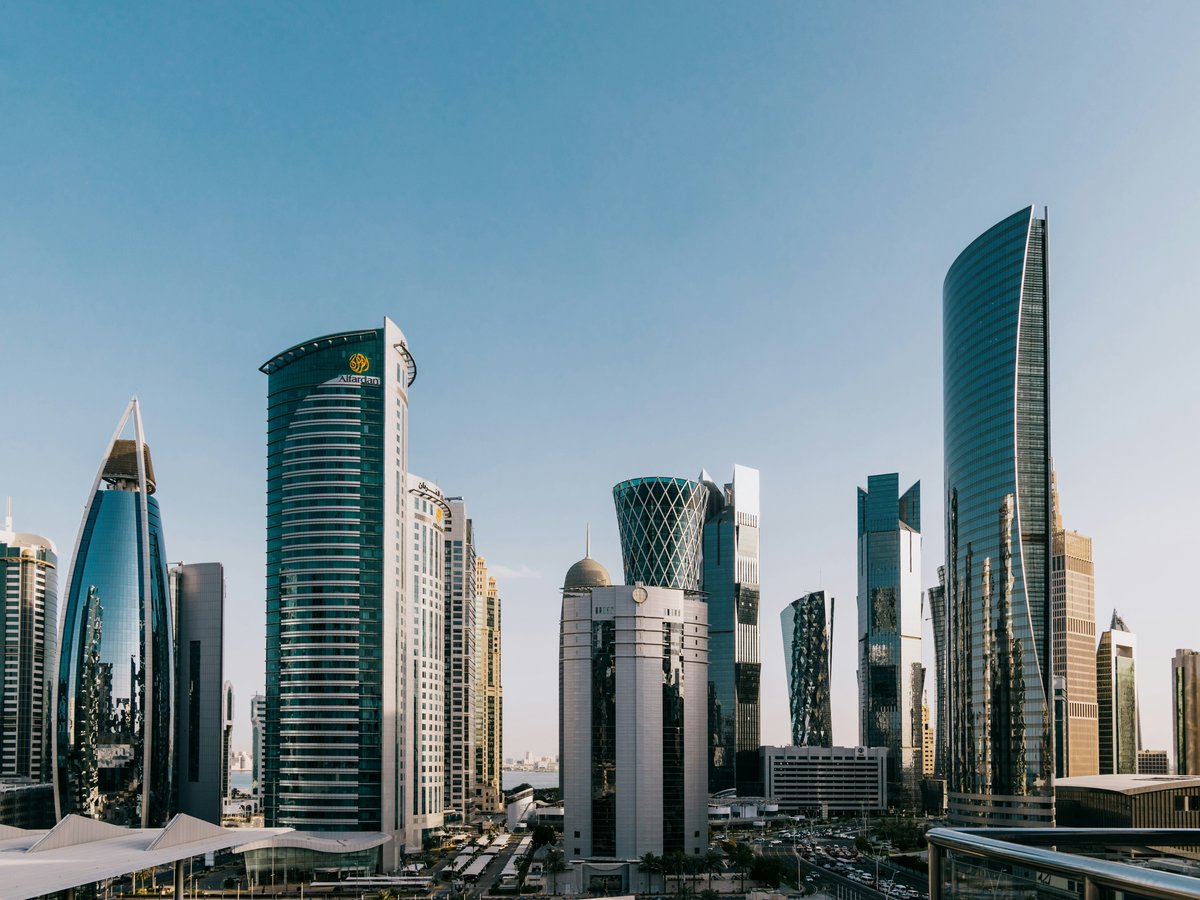
Stay in Doha in February
90 hotels in the Trip.com pool for Doha, from US$24 a night.
Opens Trip.com on Fri 5 Feb to Sun 7 Feb 2027; change the dates there.
February in Doha is, to put it plainly, about as good as Gulf weather gets. Daytime temperatures hover around 24°C (75°F), dropping to a comfortable 16°C (60°F) after dark, and rain is almost nonexistent at 8mm for the entire month. You can sit outside at a Souq Waqif cafe at 9pm in a light jacket and feel genuinely comfortable. That alone separates February from the 6 months of the year when stepping outdoors in Doha feels like walking into a convection oven.
This is also the month of Qatar National Sport Day, a public holiday on the second Tuesday of February when the Corniche closes to traffic and the entire waterfront becomes a free, open-air fitness event. Roads shut down, cycling lanes appear, and you'll see families doing yoga next to the Museum of Islamic Art. It's one of the few days the city feels genuinely pedestrian-friendly, and it tends to catch visitors off guard if they haven't planned for the road closures.
The trade-off is price. February sits in the middle of Doha's peak tourist window, roughly November through March, and hotel rates reflect it. A room at a West Bay tower hotel that might cost 400 QAR per night in August could run 700-900 QAR in February. That said, Doha still tends to be less crowded than Dubai or Abu Dhabi during their own winter peaks. You'll rarely fight for a table at a restaurant in Msheireb, though the popular spots along The Pearl-Qatar's Medina Centrale might need a reservation on Thursday or Friday evenings.
Why visit in February
- Temperatures stay between 16°C and 24°C with virtually no rain, making outdoor sightseeing comfortable from morning through evening for the first time since October.
- Qatar National Sport Day (second Tuesday of February) transforms the 7km Corniche into a car-free promenade with free public activities, a rare chance to experience Doha without traffic.
- Desert excursions to the Inland Sea (Khor Al Adaid) and the sand dunes near Mesaieed are at their most comfortable, with cool mornings ideal for dune bashing and overnight camping.
- Air quality is typically good in February, without the summer dust storms (shamal winds) that reduce visibility and irritate lungs from May onward.
- The cultural calendar picks up. Katara Cultural Village and the National Museum of Qatar both tend to schedule major exhibitions during the winter season when visitor numbers are highest.
Worth knowing
- Hotel and resort prices run 40-60% above the summer average. February falls in the peak November-March tourist window, and rates at properties like Banana Island Resort or the Sharq Village reflect that.
- Weekend crowds concentrate in a few spots. Souq Waqif on a Friday evening can feel genuinely packed, especially around the falcon market and the Al Aker sweets stalls.
- Water temperatures in the Arabian Gulf sit around 19-20°C (66-68°F) in February, which is chilly enough that beach swimming feels bracing rather than inviting. The heated hotel pools get heavy use instead.
- Evenings are cooler than many visitors expect. Sitting on a rooftop terrace in West Bay after sunset without a sweater or light jacket gets uncomfortable by 8pm.
Best for
Think twice if
February in Doha brings the kind of dry, mild weather that the rest of the Gulf region advertises but rarely delivers so consistently. Expect clear skies on 26-27 of 28 days. Mornings start cool, around 15-16°C (60°F), warming to a comfortable 24°C (75°F) by early afternoon. Humidity sits at 64%, which you'll notice mostly at dawn as a slight dampness in the air that burns off by 10am. Rainfall totals around 8mm for the entire month, spread across maybe 2 brief showers. Wind is typically light, 10-15 km/h from the northwest, though the occasional stronger gust can kick up fine sand in open areas near the desert fringe.
Year-round climate
Averages from the last 5 years.
| Month | Avg high (°C) | Avg low (°C) | Rainfall (mm) |
|---|---|---|---|
| Jan | 23 | 15 | 31 |
| Feb | 24 | 16 | 8 |
| Mar | 28 | 18 | 10 |
| Apr | 33 | 22 | 6 |
| May | 38 | 27 | 7 |
| Jun | 42 | 29 | 0 |
| Jul | 42 | 31 | 4 |
| Aug | 41 | 32 | 0 |
| Sep | 39 | 29 | 0 |
| Oct | 36 | 26 | 4 |
| Nov | 31 | 22 | 3 |
| Dec | 25 | 17 | 16 |
Headline events
Qatar National Sport Day
Second Tuesday of February (February 10 in 2026)
A public holiday held on the second Tuesday of February since 2012. The Corniche's 7km waterfront closes to vehicles and opens to runners, cyclists, and yoga groups. Government ministries, schools, and most private businesses shut down. Free activities are staged at Aspire Zone, Katara Beach, Lusail, and along the Corniche itself. It's the single day each year when Doha feels like a pedestrian city.
Best things to do in February
Desert camping at Khor Al Adaid (Inland Sea)
outdoorThe Inland Sea, a UNESCO-recognized tidal inlet where the desert meets the Gulf about 80km south of Doha, is reachable only by 4x4 across rolling dunes near Mesaieed. Overnight camping trips typically include dune bashing, sandboarding, and sleeping under clear skies. The water is shallow and calm, reflecting the dunes at sunrise.
February overnight temperatures in the desert drop to 10-12°C (50-54°F), cool enough for comfortable sleeping in a tent. By April, nights in the sand are already warm and by June the desert is genuinely dangerous for overnight stays.Booking tipBook desert safari packages at least a week ahead for Friday departures. Thursday-Friday is the Qatari weekend and operators fill up fast.
Corniche walk from the Museum of Islamic Art to West Bay
walkingThe 7km Corniche promenade traces the arc of Doha Bay, with the MIA park at the southern end and the West Bay skyline at the north. The path is flat, paved, and runs right along the water. February's evening light turns the glass towers amber around 5pm. Dhow boats are moored along the route, and you'll pass families picnicking on the grass strips.
This walk is genuinely pleasant only from November through March. In February, late-afternoon temperatures sit around 22°C (72°F) with a light breeze off the water. The same walk in July at 42°C with 80% humidity is a health risk, not a leisure activity.Kayaking at Katara Beach or The Pearl-Qatar marina
water sportsBoth Katara Beach and The Pearl-Qatar's canals offer kayak rentals by the hour. Katara's open-water paddling gives views back toward the Doha skyline, while The Pearl's sheltered marina channels wind past moored yachts and the Qanat Quartier's Venice-inspired facades.
Water and air temperatures in February are both in the low 20s°C, making paddling comfortable without the heatstroke risk of summer or the wind chill of rare cold snaps in December. Visibility on the water is typically excellent.Booking tipWeekday morning slots are usually walk-up. Friday afternoons at Katara Beach fill early.
Cycling the Al Khor Coastal Road
cyclingThe road from Doha north to Al Khor (about 50km) passes through flat terrain with the Gulf visible on the right and low scrubland on the left. Several cycling groups run Saturday morning rides along this route, and the shoulder is wide enough to feel safe. Al Khor itself has a small mangrove area worth a stop.
February mornings at 16°C are ideal for a long ride. Qatar National Sport Day also sparks a visible uptick in cycling culture, with temporary lanes and organized group rides appearing across the city.Booking tipRent road bikes from shops in The Pearl-Qatar or Lusail. Availability is best on weekdays.
Exploring Al Zubarah Fort and archaeological site
historyAl Zubarah, a UNESCO World Heritage Site about 100km northwest of Doha, preserves the ruins of an 18th-century pearling and trading town. The restored fort houses a small museum. The site is open, windswept, and largely unshaded, set against flat desert stretching to the coast.
February's mild temperatures make the 90-minute drive and the outdoor exploration of the unshaded ruins comfortable. From May through October, the site bakes in 35-42°C heat with no shelter, and visits drop sharply.Booking tipNo booking needed. Drive yourself or arrange a car. Go early morning for the best light on the fort walls.
Evening at Souq Waqif
cultureDoha's restored traditional market fills a network of narrow alleys in the old center. The spice section smells of saffron and oud. The falcon market displays birds priced from 5,000 QAR to over 100,000 QAR. Restaurants line the outer edges, and live music (often oud and percussion) drifts from the courtyard cafes after 8pm.
February evening temperatures of 16-18°C make lingering outdoors at the souq's open-air restaurants comfortable. The winter tourist season also means more live performances and a fuller, more energetic atmosphere than the quiet summer months.Booking tipThe rooftop restaurants overlooking the souq fill up on Thursday and Friday evenings. Reserve by noon if you want a terrace table.
Museum of Islamic Art and MIA Park
museumI.M. Pei's geometric limestone building sits on its own island off the Corniche. The permanent collection holds 1,400 years of Islamic art, from 7th-century Qurans to Ottoman textiles. The surrounding MIA Park has manicured lawns, a Richard Serra sculpture, and a cafe with skyline views across the bay.
February weather makes the park genuinely usable. Families picnic on the grass, and the outdoor cafe is comfortable all day. The museum itself is climate-controlled year-round, but arriving by walking through the park in pleasant air rather than sprinting from an air-conditioned car changes the experience.Booking tipThe museum is closed on Tuesdays. Aim for weekday mornings to avoid school groups.
Stand-up paddleboarding at Lusail Marina
water sportsLusail, the planned city north of Doha built around the 2022 World Cup stadium, has a marina promenade with calm, sheltered water. Several rental operators offer SUP boards by the hour. The marina is flanked by new residential towers, and the water reflects them on still mornings.
Calm seas and 22-24°C air temperatures make February one of the 3 best months for paddleboarding in Qatar. The water is flat in the marina even when the open Gulf has a light chop.Booking tipGo before 10am when the water is glassiest and the marina is quietest.
What to eat in February
On menus now
Machboos laham
Qatar's national dish of spiced lamb over basmati rice, seasoned with bezar spice mix, dried limes (loomi), and saffron. The cooler February weather makes this heavy, aromatic plate feel appropriate rather than overwhelming. You'll find strong versions at the restaurants along the back alleys of Souq Waqif.
Harees
A slow-cooked porridge of cracked wheat and lamb, blended to a smooth, almost silky consistency and finished with clarified butter (ghee) and a pinch of cinnamon. It's traditionally a cold-weather comfort food in the Gulf, and February is one of the last months it appears regularly on menus before kitchens shift to lighter fare.
Balaleet
Sweet vermicelli noodles cooked with sugar, cardamom, rose water, and saffron, topped with a thin savory egg omelet. The sweet-savory combination seems odd until you try it. It's a traditional Qatari breakfast dish that appears at hotel buffets and local cafes alike during the winter months.
Street food peaks
Luqaimat
Small, crispy fried dough balls drizzled with date syrup (dibs) or honey and sprinkled with sesame seeds. The texture is crunchy outside, pillowy inside. Street vendors in Souq Waqif fry them to order, and the smell of hot oil and date syrup carries 20 meters down the alley.
What to drink
Karak chai
Strong black tea brewed with evaporated milk, cardamom, and sugar, served in small glass cups. Every neighborhood in Doha has a karak stand, and they do brisk business on cool February evenings. The tea stalls near Gate Mall in West Bay and the ones dotting the edges of Souq Waqif stay open well past midnight.
In markets
Fresh Gulf hammour
Hammour (orange-spotted grouper) is the Gulf's signature fish. February falls in the cooler fishing season when catches tend to be good. You'll find it grilled, fried, or in a tomato-based fish stew (saloona) at the fish market restaurants near Al Wakrah's old souq, where the boats still land their catch in the morning.
Regular events in February
Qatar ExxonMobil Open
An ATP 250 tennis tournament held at the Khalifa International Tennis and Squash Complex in Aspire Zone. The draw typically features several top-30 players. Evening sessions under floodlights are the atmosphere pick, with cooler temperatures and a lively crowd.
Mid to late February (dates shift yearly)Katara Cultural Village winter programmingFree
Katara runs a rotating schedule of art exhibitions, film screenings, and outdoor performances throughout the winter season. The amphitheatre hosts concerts, and the galleries along the main boulevard feature regional and international artists. Programming varies year to year, but February is consistently one of the busiest months.
Throughout FebruaryAl Wakrah Heritage FestivalFree
The old fishing village of Al Wakrah, about 15km south of central Doha, hosts a heritage festival during the winter months featuring traditional dhow-building demonstrations, pearl diving reenactments, and Qatari folk music. The old souq and waterfront come alive on weekend evenings.
Weekends in February (schedule varies)Best places this February
Museum of Islamic Art
museumI.M. Pei designed this geometric limestone building on a purpose-built island off the Corniche. The collection spans calligraphy, ceramics, metalwork, and textiles from across the Islamic world. The 2nd-floor galleries have some of the best natural light of any museum in the Gulf. February's mild weather means the walk from the car park across the bridge to the entrance is pleasant rather than punishing.
MIA Park (Corniche)Souq Waqif
marketDoha's restored traditional market is a grid of narrow alleys selling spices, textiles, perfumes, and falcons. The smell of oud and bukhoor (incense) follows you through the covered sections. February evenings bring out street musicians and the outdoor restaurant terraces fill with shisha smoke and conversation. The Gold Souq section and the pet market (birds, rabbits, kittens) are in the eastern wing.
Souq WaqifAspire Park
parkDoha's largest green space, 88 hectares of lawns, a lake, and running paths beneath the Aspire Tower (the 300m torch-shaped structure built for the 2006 Asian Games). February mornings at the park feel almost Mediterranean, with cool air, birdsong, and families exercising around the lake. The 2.8km loop is the city's most popular running circuit.
Aspire ZoneNational Museum of Qatar
museumJean Nouvel's building, shaped like interlocking desert rose crystals, wraps around a restored 19th-century palace. The immersive galleries use floor-to-ceiling video and scent dispensers to tell Qatar's story from geological formation to the oil boom. The outdoor reflecting pools and the museum cafe look across to the Corniche.
Old Airport areaMsheireb Downtown Doha
neighborhoodA 31-hectare urban regeneration project in central Doha, built on the site of the old commercial district. The Msheireb Museums (4 restored heritage houses) cover Qatari domestic life, slavery abolition, and the oil industry. The streets are designed with wind corridors and shade structures, though in February the cooling infrastructure is less critical. Cafes and restaurants line the pedestrian streets.
MsheirebThe Pearl-Qatar and Qanat Quartier
neighborhoodAn artificial island off West Bay with a marina, luxury apartments, and the Qanat Quartier, a district modeled on Venetian canals with colorful facades in pinks, yellows, and blues. February's softer light makes it more photogenic than the bleached-out look it gets under summer sun. The Medina Centrale area has the densest restaurant concentration.
The Pearl-QatarKatara Beach
beachA 1.5km public beach on the Katara Cultural Village waterfront, between West Bay and The Pearl-Qatar. February water temperatures around 19-20°C discourage long swims, but the sand is clean, the beach is well-maintained, and you can rent beach chairs and umbrellas. The cultural village buildings behind the beach give it a more distinctive backdrop than Doha's other beach options.
KataraAl Wakrah Souq and waterfront
marketA restored traditional fishing village souq about 15km south of central Doha. Smaller and quieter than Souq Waqif, with a waterfront promenade where old wooden dhows are still moored. The fish restaurants here serve the day's catch grilled over charcoal. February evenings on the waterfront have a completely different pace than anything in the capital.
Al Wakrah
Your packing checklist
Tick items off as you pack. Your progress saves in this browser.
All packed — have a great trip.
Insider tips
Thursday and Friday are the Qatari weekend, not Saturday and Sunday. Many offices close Thursday afternoon. This means Friday brunch at hotel restaurants is a major social event in Doha, and the popular ones at West Bay and The Pearl-Qatar hotels book out by Wednesday. If you want the brunch experience, plan accordingly.
The free Msheireb Museums in downtown Doha are consistently overlooked by visitors who default to the MIA and National Museum. The 4 restored heritage houses cover Qatari domestic architecture, the company that drilled the first oil well, and the abolition of slavery in Qatar in 1952. Allow 90 minutes and go on a weekday morning when you might be the only visitor.
Karak chai from a roadside stand costs 1-2 QAR. The same tea at a Souq Waqif cafe costs 15-25 QAR. The stand version is usually better. Look for the small metal-shutter shops near petrol stations in areas like Al Sadd or Bin Mahmoud. The tea should be deep orange-brown and arrive in a small glass cup, not a paper one.
On Qatar National Sport Day, the Corniche road closure extends from the MIA roundabout to the West Bay lagoon. If your hotel is in West Bay, plan for significantly longer taxi routes that day, or use the Doha Metro (Gold Line to Corniche station). Better yet, join in. The events are free and you'll see a side of Doha that normal tourist days don't show.
The Doha Metro is modern, air-conditioned, and largely empty outside rush hours. A single ride costs 2 QAR with a rechargeable travel card. The Gold Line connects Souq Waqif to Katara Cultural Village in about 15 minutes, saving a 25-minute taxi ride through West Bay traffic.
Avoid these mistakes
- Underestimating the evening chill. Visitors who packed for a Gulf trip expect heat around the clock. February nights in Doha genuinely feel cool at 15-16°C (60°F), especially with the coastal wind. People end up buying overpriced hoodies from mall shops because they didn't pack a single warm layer.
- Planning a beach-heavy trip. February is not a beach month in Doha. The Gulf water sits around 19-20°C (66-68°F), and while locals might wade in, most visitors find it uncomfortably cold for swimming. Focus on desert excursions, museums, and outdoor dining instead.
- Scheduling outdoor activities between 12pm and 2pm out of habit. Even in mild February, the midday sun in Qatar is strong enough to drain energy quickly, especially at unshaded sites like Al Zubarah Fort. Mornings before 10am and late afternoons after 3pm are far more comfortable for outdoor exploration.
- Ignoring Qatar National Sport Day logistics. The road closures on the second Tuesday of February catch unprepared visitors mid-commute. If you have a flight or a desert safari pickup that morning, confirm alternate routes with your driver or hotel the night before.
Practical tips for February
Book accommodations at least 4-6 weeks ahead for February stays, especially if your dates overlap with the Qatar ExxonMobil Open tennis tournament, which draws spectators and fills Aspire Zone hotels. Most restaurants in Souq Waqif and The Pearl-Qatar accept walk-ins on weeknights but need reservations on Thursday and Friday evenings. Alcohol is available only at licensed hotel restaurants and bars, not at standalone restaurants or shops. Dress modestly in public spaces, covering shoulders and knees at minimum. The Doha Metro operates Saturday through Thursday from 5:30am to midnight, and Friday from 2pm to midnight (the late Friday start catches people off guard). Taxis are metered and reliable. Uber and Careem both operate in Doha. Most attractions accept card payments, but carry some cash (QAR) for souq purchases, karak stands, and smaller shops. Friday is the weekly prayer day, and some shops in traditional areas close from 11:30am to 1:30pm for midday prayers.
FAQ
Is February a good time to visit Doha?
February is likely the single best month to visit Doha. Temperatures average 24°C (75°F) during the day and 16°C (60°F) at night, rain is almost nonexistent at 8mm for the entire month, and the major summer hazards (extreme heat above 40°C, dust storms, oppressive humidity above 80%) are months away. The only real downside is higher hotel prices compared to the summer months, when rates drop significantly because the heat keeps most tourists away.
What is the weather like in Doha in February?
Dry and mild by Gulf standards. Average highs reach 24°C (75°F) and lows sit around 16°C (60°F). Humidity averages 64%, which you'll feel as slight dampness at dawn but not the suffocating wall of moisture that defines Doha's summers. Rain is rare, typically 8mm across maybe 2 brief showers for the whole month. Skies are clear most days. You'll want sunglasses and sunscreen during the day, and a light sweater for evenings.
Is Doha crowded in February?
Moderately. February falls in peak tourist season, so hotel occupancy is high and popular spots like Souq Waqif and the Museum of Islamic Art see their highest visitor numbers. That said, Doha is not a mass-tourism destination on the scale of Dubai or Bangkok. You're unlikely to encounter oppressive crowds anywhere except Souq Waqif on Friday evenings and the Corniche during Qatar National Sport Day. Most museums and cultural sites are comfortable even on weekends.
Can you swim in the sea in Doha in February?
Technically yes, but the Arabian Gulf water temperature in February sits around 19-20°C (66-68°F), which most people find too cool for enjoyable swimming. Hotel pools are typically heated and are the better option. If you want warm-water beach days, plan for May through October instead, though you'll be contending with extreme air temperatures from June onward.
What should I wear in Doha in February?
Light, breathable clothing that covers your shoulders and knees works for both the weather and the local dress expectations. During the day, cotton or linen in the low-to-mid 20s°C feels right. Bring a sweater or light jacket for evenings, especially if you plan to eat outdoors or walk the Corniche after dark. Women need a scarf or shawl for mosque visits. Avoid shorts and tank tops in malls, Souq Waqif, and cultural sites. Swimwear is fine at hotel pools and designated beaches only.
Things to Do in Doha in February
 Free cancellation
 Qatar Gold Dune Safari, Dune Bashing,Camel Ride,Sand Boarding,Inland Sea Desert
Day trip: 4 hours, free cancellation.
via Viator Free cancellation
 Doha Safari Dune Bashing Camel Ride Sandboarding ATV Option
Day trip: 4.5 hours, free cancellation.
via Viator Free cancellation
 Doha :Half Day Desert Safari | Camel Riding | ATV | Sand Surfing
Outdoor experience: free cancellation.
via Viator Free cancellation
 Doha: Guided City Tour With All Attractions, Pickup/Drop-Off
Day trip: 4 hours, free cancellation.
via Viator Free cancellation
 Doha Desert Safari Dune Bashing Camel Ride Sandboarding
Outdoor experience: free cancellation.
via Viator Free cancellation
 4 Hour Desert Safari, Camel Ride & Inland Sea Beach
Day trip: 4 hours, free cancellation.
via ViatorFind a flight to Doha
Live fares to Doha appear here once cookies are accepted.
Last verified by automated review (v1.7.2) on . What is automated review?