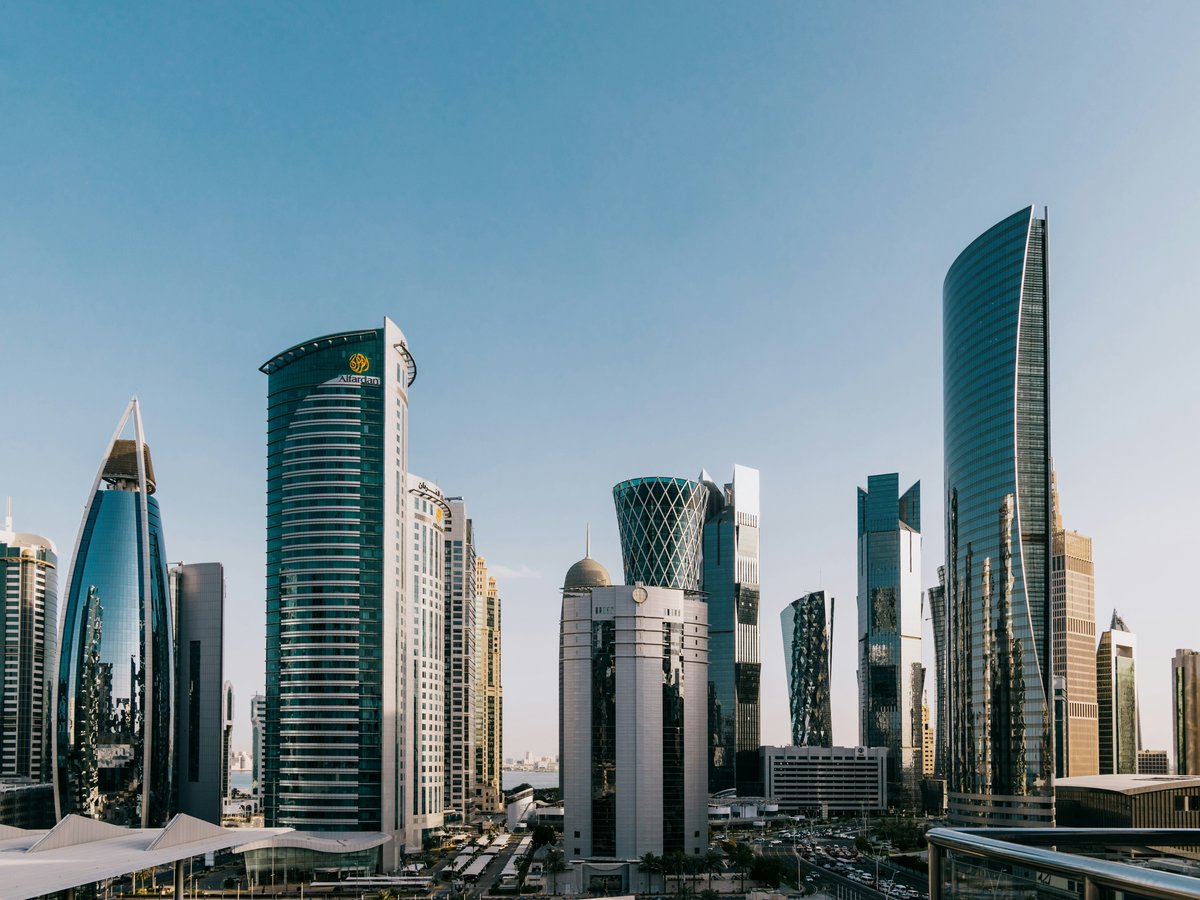
Stay in Doha in September
90 hotels in the Trip.com pool for Doha, from US$24 a night.
Opens Trip.com on Fri 3 Sep to Sun 5 Sep 2027; change the dates there.
September in Doha is still, honestly, summer. The average high sits at 39.4°C (103°F), and while that's a few degrees cooler than the June-July peak of 42°C (108°F), the difference barely registers when you step outside at 2pm. Humidity holds around 55%, the kind that makes 39°C feel heavier than it reads on paper. The city remains in its low-season rhythm, with many outdoor spaces operating on reduced hours and tourist crowds still months away from returning.
That said, September in Doha has its angles. Hotel rates across West Bay and The Pearl-Qatar drop to some of the lowest levels you'll find all year. The malls, which in Doha function as genuine social and architectural destinations rather than afterthoughts, are in peak form. Place Vendôme in Lusail, which opened in 2022 with over 500 shops, feels almost peaceful compared to its winter crowds. And by late September, the cultural calendar at Katara Cultural Village starts showing early signs of life after months of summer dormancy. If you're someone who thrives in air-conditioned museums, who wants to stand alone in front of a 14th-century Mamluk astrolabe at the Museum of Islamic Art, September can work. You'll need to build your days around the cool indoors, not fight against the heat.
The honest assessment is this. Most visitors should wait for November through February, when temperatures fall below 30°C (86°F) and Doha's outdoor character, the Corniche promenade, the dhow harbor at Souq Waqif, the desert excursions, comes alive. September is for the traveler who has a specific reason to be here. A business trip, a stopover, a deep interest in Qatari culture without the crowds. It is not the month to browse for a holiday destination.
Why visit in September
- Hotel rates in West Bay and Lusail drop 40-50% below the November-February peak season average, with 5-star properties sometimes available at a fraction of their winter rates
- World-class indoor attractions like the Museum of Islamic Art, National Museum of Qatar, and 3-2-1 Qatar Olympic and Sports Museum are nearly empty compared to winter months, when tour groups fill the galleries
- The Qatar Stars League football season kicks off in September, and tickets to matches at venues like Al Thumama Stadium and Khalifa International Stadium are easy to get and affordable
- Souq Waqif's narrow alleyways retain shade and the merchants are genuinely happy to chat, the summer quiet means less pressure and more conversation than you'd get in December
Worth knowing
- Daytime temperatures averaging 39.4°C (103°F) make outdoor sightseeing between 9am and 5pm genuinely unpleasant and potentially dangerous without constant hydration and shade
- Humidity at 55% makes the heat feel clinging and heavy, more oppressive than dry desert heat at the same temperature, especially along the Corniche waterfront where the Gulf moisture concentrates
- Many outdoor attractions, desert safari operators, and beach clubs either close entirely or run abbreviated evening-only schedules during September
- The cultural calendar is largely dormant. The major exhibitions, festivals, and international sporting events that define Doha's tourism identity don't begin until October at the earliest
Best for
Think twice if
September marks the tail end of Doha's brutal summer, though calling it the 'end' might be generous. The average high of 39.4°C (103°F) is down from July's 42°C (108°F), but that 3-degree drop hardly counts as relief when you're walking to the car. Nights cool to around 29.2°C (85°F), which means the air never fully resets. Rainfall is effectively zero. You might see a cloud or two, but rain in September is a genuine anomaly in Doha. Humidity sits around 55%, and you'll notice it most in the early morning and late evening, when the air feels thick along the waterfront. By mid-morning the sun burns that moisture off and replaces it with dry, radiant heat.
Seasonal caution
- Sustained outdoor exposure at 39°C (103°F) with 55% humidity creates a heat index that can exceed 45°C (113°F). The Qatar Ministry of Public Health typically advises limiting outdoor activity between 10am and 3pm during September. Carry water at all times.
- The temperature differential between outdoors (39°C) and indoor air conditioning (often set to 18-20°C) is roughly 20 degrees Celsius. This rapid cycling can trigger headaches and respiratory irritation, especially in the first 2-3 days before your body adjusts.
- UV index in Doha during September averages 9-10 on the WHO scale, rated 'very high.' Sunburn can occur within 15 minutes of unprotected midday exposure.
Year-round climate
Averages from the last 5 years.
| Month | Avg high (°C) | Avg low (°C) | Rainfall (mm) |
|---|---|---|---|
| Jan | 23 | 15 | 31 |
| Feb | 24 | 16 | 8 |
| Mar | 28 | 18 | 10 |
| Apr | 33 | 22 | 6 |
| May | 38 | 27 | 7 |
| Jun | 42 | 29 | 0 |
| Jul | 42 | 31 | 4 |
| Aug | 41 | 32 | 0 |
| Sep | 39 | 29 | 0 |
| Oct | 36 | 26 | 4 |
| Nov | 31 | 22 | 3 |
| Dec | 25 | 17 | 16 |
Best things to do in September
Museum of Islamic Art
museumI.M. Pei's geometric limestone masterpiece on its own artificial island in Doha Bay houses over 1,400 artifacts spanning 3 continents and 1,400 years of Islamic civilization. The 14th-century Mamluk astrolabe collection and the Safavid-era carpets are the headline pieces. The building itself, with its 45-meter atrium and views across to West Bay, is half the experience.
September's low crowds mean you might have entire galleries to yourself, a rarity during the November-February peak when tour groups cycle through every 20 minutes.Booking tipVisit after 3pm when the afternoon light fills the atrium. The museum park outside is best after sunset when temperatures drop below 35°C.
National Museum of Qatar
museumJean Nouvel's desert rose building in Al Corniche stretches 430 meters and tells Qatar's story from geological formation to the pearl diving era to the oil boom. The immersive galleries use film, sound, and scent. The pearl diving hall, which smells faintly of brine and old wood, tends to stay with visitors longest.
With the summer heat keeping casual visitors away, September offers the chance to experience the 1.5-kilometer gallery loop at your own pace rather than shuffling through with a crowd.Souq Waqif evening walk
culturalDoha's restored traditional market comes alive after sunset, when temperatures drop toward 33-34°C and the narrow alleyways fill with the smell of oud, roasting nuts, and shisha smoke. The falcon section, where Qatari falconers bring their birds for check-ups and trading, is unique to this souq. The spice stalls sell saffron, dried lime, and baharat blends by weight.
September's thin crowds let you linger at vendor stalls. The merchants have time to talk, and you'll likely be the only tourist in several of the deeper alleyways. The heat means you should arrive after 7pm.Place Vendôme mall, Lusail
shoppingQatar's largest mall, opened in 2022 in Lusail City, holds over 500 retail outlets and a Venice-style indoor canal running through its central atrium. The architecture blends Parisian neoclassical facades with Arabic geometric detailing. The canal boats operate, carrying shoppers between wings of the complex.
September is when Doha's malls are at their best. The indoor canals and temperature-controlled walkways provide all-day comfort, and the summer lull means shorter queues at restaurants and attractions inside.Katara Cultural Village galleries
culturalThe 99-hectare cultural complex on Doha's eastern shore houses a rotating selection of art galleries, a restored 19th-century mosque, an amphitheater modeled on Greek designs, and Katara Beach. The galleries typically feature Qatari and Gulf-region contemporary artists, and the public art installations along the waterfront change seasonally.
Late September tends to mark the start of Katara's fall programming cycle, with new exhibitions opening after the summer break. The outdoor installations are best visited at dusk when temperatures become tolerable.3-2-1 Qatar Olympic and Sports Museum
museumBuilt into Khalifa International Stadium in Aspire Zone, this 7-story museum covers 19,000 square meters and traces 4,000 years of athletic history. The FIFA World Cup 2022 gallery on the top floor displays match-worn jerseys and tournament footage. Interactive zones let visitors test their reaction time and sprint speed against Olympic benchmarks.
September's football season openers at Khalifa International Stadium pair well with a museum visit on the same trip. The low-season quiet means you won't have to queue for the interactive exhibits.Evening dhow cruise on Doha Bay
experienceTraditional wooden dhow boats depart from the Corniche and Old Doha Port for 1-2 hour evening cruises around the bay. The West Bay skyline, with the Tornado Tower and Al Bidda Tower lit up after dark, looks best from the water. Most cruises include Arabic coffee, dates, and a light dinner buffet. The Gulf breeze at night typically brings temperatures down to 32-33°C.
Evening cruises are one of the few outdoor activities that remain comfortable in September. The water temperature hovers around 33°C, and the on-water breeze makes the humidity more bearable than on shore.Al Zubarah Fort day trip
day_tripThe UNESCO World Heritage Site sits about 105 km northwest of Doha on the coast. The 18th-century fort was built to protect Qatar's once-thriving pearl diving and trading settlement. The ruins of the abandoned town stretch across 60 hectares around the fort, and the interior now houses a small museum with archaeological finds from the site.
The drive through Qatar's northern desert is cooler in the early morning than mid-summer, and the site receives almost no visitors in September. Arrive before 9am to explore before the midday heat builds.What to eat in September
In season: fruit
Fresh Khalas dates
September falls at the tail end of Qatar's date harvest. Khalas, the country's prized variety with its caramel-like sweetness and slightly chewy texture, appears fresh at Souq Waqif stalls and Al Aker Sweets. The difference between fresh-harvest and stored dates is significant. Look for the deep amber ones still on the branch.
On menus now
Machboos laham
Qatar's national dish, a heavily spiced rice with slow-cooked lamb, dried lime (loomi), and a bharat spice mix that varies by household. September's indoor dining rhythm means long lunches, and machboos is a 2-hour-lunch kind of dish. Shay Al Shoomos in the Souq Waqif area does a well-regarded version.
Street food peaks
Luqaimat
Golden, crispy dough balls drizzled with date syrup (dibs) or honey, with a cardamom fragrance that hits before the first bite. These tend to appear more frequently at Souq Waqif stalls in September as vendors gear up for the approaching cooler season. The texture sits somewhere between a doughnut hole and a fritter.
What to drink
Karak chai
The sweet, cardamom-heavy milky tea that functions as Doha's social glue. You'll find it at roadside kiosks and cafeterias throughout the city, served in small paper cups. Chapati & Karak near Al Corniche is a popular spot, and the drink costs next to nothing. September's heat makes iced karak a common variation, though purists still take it hot.
Regular events in September
Qatar Stars League season opener
The top tier of Qatari football kicks off in September, with matches played at the 2022 FIFA World Cup venues including Al Thumama Stadium (40,000 capacity) and Ahmad Bin Ali Stadium in Al Rayyan. Teams like Al Sadd, Al Duhail, and Al Rayyan SC draw loyal local crowds.
Early to mid-SeptemberDoha Film Institute screenings
DFI typically resumes its regular screening calendar in September after a summer hiatus, showing independent and arthouse films from the Middle East and North Africa at its Katara Cultural Village cinema. Screenings run 2-3 evenings per week.
Throughout SeptemberBest places this September
Museum of Islamic Art
museumI.M. Pei's final major work, set on a purpose-built island in Doha Bay. The permanent collection spans ceramics, metalwork, textiles, and manuscripts from 3 continents. The 5th-floor restaurant offers unobstructed views of the Doha skyline. September means you can photograph the atrium without a single stranger in frame.
MIA ParkSouq Waqif
marketDoha's restored traditional market, rebuilt on 19th-century foundations using traditional materials. The narrow limestone alleyways house spice sellers, textile merchants, falcon vendors, and over 30 restaurants. The Al Jasra boutique hotel sits above the eastern wing. September evenings bring the souq to life after 7pm once the heat breaks.
Al SouqNational Museum of Qatar
museumJean Nouvel designed the building to resemble a desert rose crystal formation. The 430-meter-long structure wraps around a restored 20th-century palace that served as the ruling Al Thani family's residence. The galleries use no traditional display cases, instead projecting imagery onto sculpted surfaces.
Al CornicheThe Pearl-Qatar
neighborhoodA 400-hectare artificial island off West Bay with Mediterranean-style architecture, marina berths for superyachts, and a mix of residential towers and retail along its Qanat Quartier, which mimics a Venetian canal district with pastel-colored buildings. September's low season means parking is easy and restaurant terraces are half-empty.
West Bay LagoonAspire Zone and Villaggio Mall
entertainmentThe Aspire Zone sports complex surrounds the 300-meter Aspire Tower (the tallest structure in Qatar until 2012) and Khalifa International Stadium. Villaggio Mall, connected to the zone, features an indoor canal with gondola rides and an ice rink. The complex provides a full day of air-conditioned activity in September.
Al WaabMsheireb Downtown Doha
heritageQatar's heritage quarter, rebuilt as the world's first LEED-certified downtown district. The 4 Msheireb Museums, housed in restored heritage buildings, cover Qatari domestic life, slavery abolition, the oil era, and postal history. The pedestrian streets between them are partially shaded, though still hot by 10am in September.
MsheirebKatara Cultural Village
culturalA 99-hectare waterfront cultural complex between West Bay and The Pearl-Qatar. The site includes an opera house, a restored mosque, public art installations, galleries, and a public beach. The architecture blends traditional Qatari elements with contemporary design, and the open-air amphitheater hosts concerts and film screenings as the season picks up in late September.
KataraAl Wakrah Souq
marketAbout 15 km south of central Doha, this restored coastal souq sits on the waterfront near Al Wakrah's old fishing harbor. Less tourist-oriented than Souq Waqif, the market sells traditional textiles, spices, and perfumes. The waterfront promenade is pleasant after sunset, with views across to the industrial skyline of Mesaieed.
Al Wakrah
Your packing checklist
Tick items off as you pack. Your progress saves in this browser.
All packed — have a great trip.
Insider tips
The Doha Metro Gold Line runs from Hamad International Airport to West Bay and Lusail for a flat fare, and September ridership is low enough that you'll likely get a seat in the family car without waiting. The system is clean, modern, and heavily air-conditioned.
Friday brunch is Doha's signature social ritual, and September is the one month when you can often walk into high-end hotel brunches at the Four Seasons, St. Regis, or Mandarin Oriental without a reservation. During peak season, these book out 2-3 weeks ahead.
The Museum of Islamic Art park, which extends along the waterfront behind the museum, is one of the few outdoor spaces worth visiting in September. Go after 6pm when the Richard Serra sculpture '7' catches the sunset light and the sea breeze drops the temperature a few degrees.
Hamad International Airport's Orchard terminal garden and Al Mourjan Business Lounge are themselves tourist-caliber attractions. If you have a long layover, the airport alone can fill 4-5 hours comfortably, and it stays at a cool 22°C regardless of what September is doing outside.
Tap water in Doha is desalinated and technically safe, but locals and long-term residents universally drink bottled water. Grocery stores like Lulu Hypermarket and Carrefour sell large bottles cheaply, and most hotel rooms are stocked daily.
Al Corniche's 7-kilometer waterfront promenade is where Doha residents walk, jog, and cycle, but in September this happens between 8pm and midnight, not during daylight. Time your walk to match the locals.
Avoid these mistakes
- Attempting outdoor sightseeing between 10am and 4pm. The 39°C heat with 55% humidity creates a heat index above 45°C, and even locals avoid extended outdoor exposure during these hours. Plan museum and mall visits for midday and save outdoor activities for after sunset.
- Underestimating the air conditioning chill. Visitors dress for 39°C and then spend most of their time in spaces cooled to 18-20°C. The constant cycling between extremes causes headaches and sore throats in the first 2-3 days.
- Skipping Friday entirely. Friday is the start of the Qatari weekend, and many restaurants and attractions have different hours. The Friday brunch tradition at major hotels is a quintessential Doha experience that visitors often miss by treating Friday like a regular weekday.
- Expecting European or American alcohol availability. Qatar permits alcohol only in licensed hotel restaurants and bars, and prices are significantly higher than in neighboring Dubai or Bahrain. The Qatar Distribution Company is the sole licensed off-sale retailer, and it requires a government-issued permit.
- Leaving Doha for desert excursions without checking operator schedules. Many desert safari companies suspend daytime operations in September due to the extreme heat, offering only sunset or evening departures. Confirm availability at least 48 hours ahead.
Practical tips for September
September in Doha demands a schedule built around air conditioning. Plan indoor activities (museums, malls, hotel dining) for the 10am-5pm heat window, and shift outdoor plans to the 6pm-10pm slot when temperatures drop toward 33-34°C. The Doha Metro is the most comfortable way to move between districts, running from 6am to 11pm Saturday through Wednesday and until midnight Thursday and Friday. Ride-hailing via Uber and Careem works well, and most drivers keep their cars heavily air-conditioned. Taxis are metered. Hydration is critical. Carry water everywhere and drink before you feel thirsty, as the humidity masks sweat evaporation and dehydration can set in faster than you'd expect. Ramadan does not typically fall in September in the mid-2020s, but if it does, expect daytime restaurant closures and adjusted attraction hours. Women should pack at least one outfit with covered shoulders and knees for mosque visits and Souq Waqif, though beachwear is fine at hotel pools and The Pearl-Qatar beach clubs. Friday and Saturday form the Qatari weekend; government offices and some businesses close, but malls and tourist sites extend their hours.
FAQ
Is September a good time to visit Doha?
For most travelers, honestly, no. September is the tail end of Doha's summer with average highs of 39.4°C (103°F) and 55% humidity. Outdoor sightseeing is limited to evening hours. That said, if you're drawn by low hotel rates, empty museums, and you're comfortable building your days around indoor attractions, September has its niche. November through February is when Doha shows its full character.
How hot does Doha get in September?
The average high is 39.4°C (103°F) and nights rarely drop below 29°C (85°F). With 55% humidity, the heat index can push above 45°C (113°F) during midday. The air never fully cools overnight, so the heat feels cumulative over several days. Indoor spaces are aggressively air-conditioned to 18-20°C, which creates its own adjustment challenge.
Are hotels cheaper in Doha during September?
September typically offers the lowest hotel rates of the year in Doha, with properties across West Bay, Lusail, and The Pearl-Qatar discounting 40-50% from their November-February peak rates. Many 5-star hotels run promotions and packages to fill rooms during this quiet period. Worth checking hotel websites directly, as the best low-season deals often appear there rather than on third-party booking platforms.
What is there to do indoors in Doha in September?
Doha has some of the strongest indoor attractions in the Gulf region. The Museum of Islamic Art holds over 1,400 artifacts in I.M. Pei's waterfront building. The National Museum of Qatar spans 430 meters of immersive galleries. Place Vendôme mall in Lusail offers over 500 shops and an indoor canal. The 3-2-1 Qatar Olympic and Sports Museum covers 19,000 square meters across 7 floors inside Khalifa International Stadium. All are heavily air-conditioned.
Can you do desert safaris in Doha in September?
Some operators run evening-only desert excursions in September, departing after 4pm when the sand surface temperature begins to drop from its midday peak of 60°C or higher. Daytime safaris are largely suspended. The Inland Sea (Khor Al Adaid), about 60 km south of Doha, is still accessible but the heat limits comfortable time outdoors to an hour or less. Book at least 48 hours ahead and confirm the operator is running.
Is the sea warm enough for swimming in September?
The Gulf water temperature around Doha in September sits near 33°C (91°F), which is warm enough for swimming but may feel more like a bath than a refreshing dip. Hotel pools, which are typically cooled to around 28°C, tend to be more pleasant. Beach clubs at The Pearl-Qatar and Katara Beach operate in September, though some reduce their hours. Early morning or after-sunset sessions are most comfortable.
Things to Do in Doha in September
 Free cancellation
 Qatar Gold Dune Safari, Dune Bashing,Camel Ride,Sand Boarding,Inland Sea Desert
Day trip: 4 hours, free cancellation.
via Viator Free cancellation
 Doha Safari Dune Bashing Camel Ride Sandboarding ATV Option
Day trip: 4.5 hours, free cancellation.
via Viator Free cancellation
 Doha :Half Day Desert Safari | Camel Riding | ATV | Sand Surfing
Outdoor experience: free cancellation.
via Viator Free cancellation
 Doha: Guided City Tour With All Attractions, Pickup/Drop-Off
Day trip: 4 hours, free cancellation.
via Viator Free cancellation
 Private Half Day Desert Safari Tour
Day trip: 4 hours, free cancellation.
via Viator Free cancellation
 Doha Desert Safari Dune Bashing Camel Ride Sandboarding
Outdoor experience: free cancellation.
via ViatorFind a flight to Doha
Live fares to Doha appear here once cookies are accepted.
Last verified by automated review (v1.7.2) on . What is automated review?