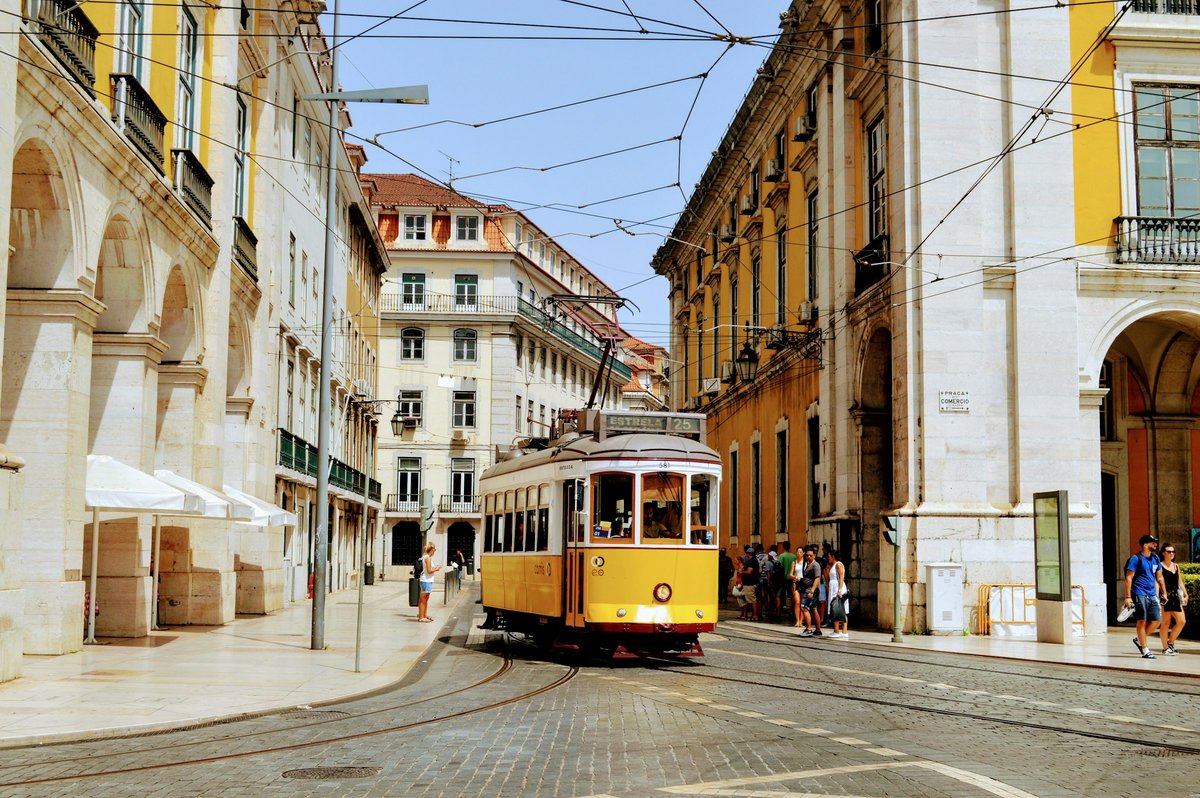
Lisbon is one of those cities that practically dares you to spend money — and then rewards you for not doing it. The whole place is built on seven hills, which means the views come free whether you want them or not. You'll round a corner in Graça and suddenly the Tagus is right there, wide and glinting, with the Cristo Rei statue catching afternoon light across the water. The city's public spaces feel lived-in rather than curated for tourists: old men play cards in Jardim da Estrela, teenagers skateboard through Praça do Comércio at dusk, and the fado you hear drifting out of open windows in Alfama costs nothing to stand still and absorb. Mind you, Lisbon has also made a deliberate effort to keep culture accessible — several major museums are permanently free, others open their doors on Sundays, and the street art scene has turned entire neighborhoods into open-air galleries that nobody charges admission for. The trams cost money, but your legs work fine on the calçada portuguesa, and honestly the walking is half the point.
Free attractions
-
Museu Colecção Berardo
Contemporary and modern art collection housed in the Belém Cultural Centre. Works by Picasso, Warhol, Duchamp, and Bacon sit alongside Portuguese contemporary artists. The permanent collection is always free — temporary exhibitions sometimes carry a charge, so check at the desk. The building itself is worth the visit: clean concrete lines with natural light pouring through the upper galleries.
BelémMuseum -
Miradouro da Senhora do Monte
The highest viewpoint in Lisbon, and somehow still the least crowded of the major miradouros. You get a full panorama: the castle directly ahead, the river curving south, the bridge stretching west toward Almada. Benches under pine trees. Locals bring wine at sunset — the vibe tends to be quieter than Graça's miradouro just below.
GraçaViewpoint -
Miradouro da Graça
Shaded by a large pine tree with a kiosk selling cheap coffee, this terrace next to the Igreja da Graça offers one of the best compositions in the city: the castle walls rising directly to the east, downtown spread below. Gets busy on weekends but still feels neighborhood-casual rather than tourist-polished.
GraçaViewpoint -
Jardim da Estrela
A proper Victorian-era garden across from the Basílica da Estrela, with a wrought-iron bandstand, a duck pond, and enormous old trees — some of them labeled with species names if you're the type who notices. Families with kids gravitate toward the playground area, while the benches near the pond stay calm. The café inside is reasonably priced but you're here for the greenery, not the espresso.
EstrelaPark -
Museu do Design e da Moda (MUDE)
Design and fashion museum on Rua Augusta that reopened after extensive renovation. The collection traces 20th-century design through furniture, fashion, and industrial objects — a lot of Portuguese modernist pieces you won't see elsewhere. Free permanent collection. The building is a former bank, and you can still feel the old vault proportions in some of the gallery spaces.
BaixaMuseum -
Castelo de São Jorge — exterior grounds
The ticketed interior of the castle costs money, but the neighborhood around it — the outer walls, the winding streets of the old Moorish quarter, the views from the approaches — is all free. Worth noting that the sunset views from the western rampart approach are arguably better than what you see from inside the paid section.
CasteloLandmark -
Miradouro de Santa Luzia
A tiled terrace with bougainvillea spilling over the walls and two azulejo panels depicting pre-earthquake Lisbon. The views look directly down over Alfama's terracotta rooftops to the river. Small, intimate, and slightly tucked away despite being on the main tourist trail from the castle down to Baixa.
AlfamaViewpoint -
Parque das Nações waterfront
The whole stretch of reclaimed Expo '98 waterfront is free to walk, from the Vasco da Gama tower down past the Oceanário to the landscaped gardens along the river. The architecture is striking — lots of Santiago Calatrava's Gare do Oriente framing the sky. Flat terrain, which is a novelty in Lisbon. Good for running or cycling if your legs need a break from hills.
Parque das NaçõesPark -
Panteão Nacional exterior and Feira da Ladra approach
The National Pantheon itself has a small entry fee, but the Campo de Santa Clara terrace it sits on is free and offers sweeping views east over the port and river. The surrounding streets have their own character — crumbling facades, laundry lines, the smell of grilled sardines from nearby tascas.
São VicenteLandmark -
Jardim Botânico de Lisboa
The university botanical garden on Rua da Escola Politécnica, with subtropical species crammed into a steep hillside. There's a slightly wild, overgrown quality to parts of it — not manicured like Jardim da Estrela, more like a greenhouse that escaped its walls. Shaded paths descend through palm groves and fern gullies. Currently charges a small fee for the main garden, but the adjacent Jardim Botânico Tropical in Belém has been free on certain days — verify before going as this seems to shift.
Príncipe RealPark -
Praça do Comércio
Lisbon's grand riverside square, still called Terreiro do Paço by locals. The yellow ministerial buildings frame three sides; the Tagus fills the fourth. Walk through the Arco da Rua Augusta for free — the arch observation deck has a fee, but the square itself is the point. Feels enormous and unhurried. The marble steps at the water's edge are where half of Lisbon sits on warm evenings.
BaixaLandmark -
LX Factory grounds
A converted industrial compound under the 25 de Abril bridge filled with studios, bookshops, street art, and weekend food vendors. You'll pay if you eat or shop, but walking through, browsing the murals, and soaking up the atmosphere costs nothing. The Ler Devagar bookshop inside is visually striking — a printing press suspended from the ceiling — and browsing is free. Sundays tend to be liveliest.
AlcântaraCultural space
Free activities
-
Alfama walking route
Start at the Castelo de São Jorge approach and work your way downhill through Alfama's labyrinth of alleys, stairways, and tiny squares. No map needed — getting mildly lost is the point. You'll pass laundry hanging between buildings, hear fado rehearsals through open doors, smell bacalhau frying in someone's kitchen. The route naturally deposits you near the Sé cathedral and Praça do Comércio. Allow two hours minimum; three if you stop at miradouros along the way.
AlfamaWalking route -
Street art trail in Mouraria and Graça
Mouraria has become one of Europe's more interesting street art neighborhoods, partly through municipal programs that commissioned large-scale murals. The work around Escadinhas de São Cristóvão and Largo do Intendente is particularly dense. You might recognize pieces by Vhils — his carved-plaster portrait style is distinctive, chiseled directly into building facades. Self-guided; no fee, no tour needed.
MourariaPublic art -
Feira da Ladra flea market — browsing
Lisbon's flea market spreads across Campo de Santa Clara every Tuesday and Saturday morning. Buying costs money, obviously, but browsing is half the experience — old azulejo tiles, vintage postcards, military surplus, somebody's grandmother's entire cutlery drawer laid out on a blanket. The market has been running since the 13th century in various locations. Gets picked over by midday, so earlier is better.
São VicenteMarket -
Praia de Carcavelos
The closest proper beach to central Lisbon, about 20 minutes on the Cascais train line — the train costs a couple of euros, but the beach itself is free. Wide sand, decent waves for bodyboarding, and a boardwalk with views toward the Serra de Sintra. Water temperature tends to hover around 17-19°C in summer, which is bracing but swimmable. Locals will tell you it's cold. They're not wrong.
Carcavelos (Cascais line)Beach -
Calçada portuguesa patterns in Rossio and Chiado
Lisbon's hand-laid limestone sidewalks are genuinely an art form — the calceteiros who lay them are increasingly rare, and the patterns range from simple wave motifs to elaborate pictorial scenes. Rossio square has the famous undulating wave pattern that photographs so well. The sidewalks around the Câmara Municipal on Praça do Município have some of the most complex figural work. Free, underfoot, easy to miss if nobody tells you to look down.
Baixa / ChiadoPublic art -
Belém waterfront walk
The riverside promenade from Cais do Sodré west to Belém runs about 6 kilometers along the Tagus. You pass MAAT's curved roofline (the rooftop walkway is free), the Padrão dos Descobrimentos, the Torre de Belém (exterior viewing is free; going inside has a ticket), and Belém's manicured gardens. The walk is flat and the light off the water in late afternoon has that warm Atlantic quality.
BelémWalking route -
Mercado da Ribeira — wandering the traditional market side
Everyone knows the Time Out Market food hall, which occupies one wing and charges tourist prices. The other side is still a functioning municipal market where lisboetas buy fish, produce, and flowers. The seafood displays alone are worth a look — stacked crates of percebes, razor clams, and sardines of several sizes, with vendors shouting prices. Free to walk through; open mornings, closed Sundays.
Cais do SodréMarket -
Parque Florestal de Monsanto
Lisbon's largest green space, covering a whole hill west of the city center. Pine and eucalyptus forest with walking and cycling trails, picnic areas, and panoramic viewpoints including the one at Montes Claros. Feels surprisingly rural for being inside the city limits. Under-visited by tourists, which is part of the appeal. Watch for the occasional peacock near the park restaurant — they've been there for years.
MonsantoPark / hiking
Free events
-
Festas de Lisboa / Santos Populares
June, peaking June 12-13Lisbon's biggest popular festival runs through June, peaking on the night of June 12-13 for Santo António. The streets of Alfama, Mouraria, Graça, and Bica fill with sardine grills, pimba music, manjerico basil pots, and crowds dancing until dawn. Technically you pay for the sardines and the beer, but the street party itself is free. The smell of charcoal and grilling fish takes over entire neighborhoods. The decorated street competition in Alfama produces genuinely creative installations.
Alfama, Mouraria, Graça, Bica, and across the city -
Noite dos Museus (Museum Night)
One Saturday in mid-May (annually)Part of the Europe-wide International Museum Night, typically held on a Saturday in mid-May. Most Lisbon museums open free of charge from around 7 PM to 1 AM, with special programming — concerts, guided tours, workshops. MNAA, the Tile Museum, the Coach Museum, and Berardo all usually participate. Queues can be long at popular venues, so having a plan helps.
Various museums across Lisbon -
Free Sunday mornings at national museums
First Sunday of each month, until 2 PMMost Portuguese national museums — including the Museu Nacional de Arte Antiga (MNAA), the Museu Nacional do Azulejo (Tile Museum), and the Museu Nacional dos Coches — offer free admission on the first Sunday of every month until 2 PM. The MNAA alone is worth building a morning around: Bosch's Temptation of St. Anthony triptych lives there, and seeing it in person is a different experience than any reproduction suggests.
MNAA, Museu do Azulejo, Museu dos Coches, and other national museums -
Todos festival
September (typically a long weekend)An intercultural arts festival that takes over the Mouraria and Intendente neighborhoods in September, with free concerts, dance performances, installations, and food from Lisbon's immigrant communities. The programming reflects the neighborhood — Cape Verdean, Bangladeshi, Chinese, Mozambican — and the performances happen in courtyards, squares, and converted spaces. Tends to feel intimate despite the crowd size.
Mouraria and Largo do Intendente -
Gulbenkian outdoor concerts (Jardim Gulbenkian)
Summer months (check seasonal program)The Calouste Gulbenkian Foundation runs a summer season of free outdoor concerts in its garden — classical, jazz, world music. The garden itself is permanently free and worth visiting regardless: designed in the 1960s, lush, with an amphitheater and a lake. Check their program each summer; the schedule varies but something free usually appears between June and September.
Jardim da Fundação Calouste Gulbenkian, São Sebastião -
Lisbon Gallery Weekend
Annually, typically in spring (check each year's dates)An annual long weekend where contemporary galleries across the city coordinate openings, usually with free admission and often with wine. Galleries in Príncipe Real, Chiado, and Marvila's emerging gallery cluster tend to participate. The Marvila venues are particularly interesting — converted industrial spaces along Rua Capitão Leitão that didn't exist five years ago.
Galleries across Chiado, Príncipe Real, Marvila
Viewpoints That Earn Their Climb
Lisbon's miradouros are the closest thing the city has to a free attraction system. There might be fifteen or twenty official ones, depending on who's counting, and each frames the city differently. The popular trio — Miradouro da Graça, Santa Luzia, and Portas do Sol — sit along a natural walking route from the castle downhill through Alfama, and you can hit all three in under an hour. But the ones that tend to stick with people are the less-visited spots. Senhora do Monte, the highest, has a quietness at sunset that the lower viewpoints don't. The view from the garden behind the Igreja de São Pedro de Alcântara looks west toward the bridge and the Cristo Rei, and the geometric hedges give it a slightly formal atmosphere. Then there's the Miradouro do Adamastor in Santa Catarina, where a statue of the sea monster from Os Lusíadas looms over groups of people drinking Sagres tallboys on the grass. That one has the best atmosphere after dark, though it gets loud on warm weekends. To be fair, even the touristy miradouros deliver — you're not going to have a bad time at Portas do Sol with an ice cream watching tram 28 rattle past.
The Azulejo Trail: Free Tile Art Across the City
Portuguese azulejo tile work is everywhere in Lisbon, and the entire city is effectively an open-air ceramics museum. The most concentrated free examples sit inside churches — Igreja de São Roque in Bairro Alto has 17th-century blue-and-gold panels, and the interior is free to enter (the adjacent museum charges). The São Vicente de Fora monastery church is free and its azulejo panels depicting La Fontaine fables are remarkably detailed, covering entire cloister walls in narrative scenes. Down in Alfama, the Miradouro de Santa Luzia has two exterior panels showing Lisbon before the 1755 earthquake — a visual record of a city that no longer exists. The Linha de Sintra metro stations are worth a look too: Oriente station was decorated by different artists for Expo '98, and the tile work feels contemporary rather than historic. You can ride the metro to see them, obviously, but even standing on the platform counts as viewing public art. Mind you, the dedicated Museu Nacional do Azulejo charges admission except on first Sundays — but the free stuff on the streets and in churches could fill an entire day.
Practical Tips for Zero-Budget Days
The biggest daily expense in Lisbon tends to be transport, and you can eliminate most of it by walking. The city is compact — Belém to Alfama is about 8 kilometers along the river, and the hills between Baixa and Bairro Alto are steep but short. Comfortable shoes on the calçada cobblestones matter more than you might expect; the stones get slippery when wet and some stretches are genuinely uneven. Water fountains exist but they're not as common as in some southern European cities, so carrying a bottle is practical. Free public restrooms are scarce — your best bet is ducking into a shopping center like El Corte Inglés or Colombo. For food on a zero budget, well, truly free food is hard to come by, but several churches and community organizations run meal programs. If you're just trying to spend very little, the municipal markets sell fruit cheaply and a bifana sandwich from a neighborhood counter might run you under two euros. The city's free WiFi (Lisboa WiFi) works in major squares and parks, though the connection quality seems to vary by the hour.
Belém's Free Layer
Belém is primarily known for its ticketed monuments — the Tower, the Jerónimos Monastery, the Coach Museum — but there's a significant free layer underneath. The Jardim de Belém and the Praça do Império gardens in front of the monastery are spacious and well-maintained, with fountains and enough lawn space to spread out. MAAT, the riverside art and architecture museum, has a free rooftop walkway that curves over the building and gives you a framing of the bridge and river that feels cinematic. The Padrão dos Descobrimentos is free to view from outside — the interior elevator costs money, but the monument is really about the sculptural figures on the exterior anyway, and you see those best from the waterfront. The Centro Cultural de Belém, which houses the Berardo collection, also has a free public terrace and gardens. Belém's pastéis de nata from Pastéis de Belém will set you back a couple of euros, but eating one warm at the counter while the sugar still glistens is arguably the most cost-effective pleasure in the city. That's technically not free, but the point stands.
Neighborhoods Worth Walking For Atmosphere Alone
Some Lisbon neighborhoods justify a visit purely for the sensory experience of being in them, no entrance fee required. Mouraria is probably the most textured — it's the old Moorish quarter, now home to Lisbon's most multicultural population. The sounds shift as you walk: Cape Verdean music from one doorway, Bollywood from another, fado from a third. The streets around Largo do Intendente have been revitalized over the past decade, and the square itself went from genuinely rough to genuinely interesting. Príncipe Real has a different energy — fashionable, slightly expensive, but the Jardim do Príncipe Real with its enormous cedar tree is free to sit in, and the weekend organic market in the garden adds some life. Madragoa, near Santos, still feels like a village — narrow streets, elderly neighbors chatting from windows, cats everywhere. It hasn't been polished for visitors. That might change, but at the moment it's one of the neighborhoods where the texture hasn't been smoothed out yet.
FAQ
Are there any museums in Lisbon that are always free to visit?
The Museu Colecção Berardo at the Centro Cultural de Belém has a permanently free collection of modern and contemporary art. MUDE, the design and fashion museum in Baixa, also offers free access to its permanent collection. Beyond those, most national museums — including the MNAA, the Tile Museum, and the Coach Museum — charge admission normally but are free on the first Sunday of each month until 2 PM. Several churches with significant art, like Igreja de São Roque, are free to enter as well, though their attached museum sections may charge separately.
Is it safe to walk around Lisbon at night without spending money?
Lisbon is generally considered safe for walking at night, particularly in the central neighborhoods — Baixa, Chiado, Bairro Alto, and the main miradouro areas. The usual urban awareness applies: keep an eye on your belongings in crowded spots, and some quieter streets in Alfama or Mouraria can feel isolated after midnight. The miradouros at sunset and early evening tend to be social, lively spaces. Bairro Alto gets loud and crowded on weekend nights, which is either a feature or a drawback depending on what you're after.
Can you actually visit the beach in Lisbon for free?
The beaches themselves are free — Portugal's coastline is public. What costs money is getting there, since most beaches require a short train ride. Praia de Carcavelos is about 20 minutes on the Cascais line and is probably the most convenient. Costa da Caparica, across the river, has a longer stretch of sand and is popular with locals. The train and ferry fares are modest — a few euros each way — but they're not zero. Once you're on the sand, everything from swimming to sunbathing is free. Water temperatures in the Atlantic here tend to hover around 17-19°C even in summer, so be prepared for that initial shock.
What is the best time of year to enjoy free things in Lisbon?
Late spring through early autumn — roughly May to October — gives you the best conditions for outdoor free activities. The weather is warm and dry, the miradouros are at their best in long evening light, and outdoor events are in full swing. June is particularly strong because of the Santos Populares street festivals. That said, Lisbon's winter is mild by European standards, with temperatures rarely dropping below 8-10°C, and the museums and churches are available year-round. Rainy days do happen from November through March, which can limit the walking-focused activities, but it's rarely the kind of persistent rain that shuts you indoors for days.
Are Lisbon's free walking tours actually free?
The tip-based walking tours that meet at Praça do Comércio or Rossio are free to join in the sense that there's no upfront cost, but guides work for tips and there's a social expectation to contribute something — typically five to ten euros per person. They're a good value if you want structured context for Alfama, Baixa, or Belém, but calling them truly free would be misleading. If you want genuinely zero-cost navigation, the Câmara Municipal de Lisboa's tourism office publishes self-guided walking route maps, and the city's own signage at major viewpoints and landmarks has improved noticeably over the past few years.
How much should I budget per day if I want to do mostly free activities in Lisbon?
If you commit to walking everywhere and visiting only free-admission sites, your unavoidable costs are really just food and accommodation. Accommodation aside, a food budget of roughly fifteen to twenty euros per day keeps you fed decently — a morning coffee and pastel de nata for under two euros, a bifana or prego sandwich for lunch around three to four euros, and a simple dinner at a neighborhood tasca for eight to twelve euros. Transport adds up only if you ride regularly; single metro or tram fares are currently around 1.65 euros with a Viva Viagem card. You could realistically do a full day of miradouros, museums on a free Sunday, street art, and park-sitting for well under twenty euros including meals.
Last verified by automated review (v1.7.1) on May 25, 2026. What is automated review?