Compare every Italy city in September →
Stay in Florence in September
109 hotels in the Trip.com pool for Florence, from US$23 a night.
Opens Trip.com on Fri 3 Sep to Sun 5 Sep 2027; change the dates there.
September might be Florence's most deceptive month. The temperatures drop to a comfortable 27°C (80°F) after the punishing 33°C (91°F) of July and August, and the light over the Arno turns from flat white to warm gold. Mornings in Oltrarno feel almost autumnal, 15°C (60°F) with a crispness that makes a second espresso appealing. But here's what the guidebooks tend to gloss over. September is statistically Florence's wettest month, 136mm of rain spread across roughly 10 days. Those aren't gentle drizzles either. Tuscan September storms tend to arrive as short, heavy afternoon downpours that can flood the narrow streets around Santa Croce for an hour, then vanish into blue sky.
The first two weeks of September still feel like high season. Tour groups that booked summer rates crowd the Galleria degli Uffizi until mid-month, and the queue at the Accademia to see the David can still stretch 90 minutes without a reservation. By the third week, though, something shifts. The study-abroad students have settled in but the summer tourists have left, and you'll notice open tables at restaurants in Santo Spirito that required a 3-day wait in July. The grape harvest is underway in the hills around Greve in Chianti, 30 minutes south of the city, and bakeries across Florence start making schiacciata all'uva, a seasonal grape-studded flatbread that appears only during vendemmia and disappears by late October.
To be fair, September is still not cheap. You'll pay close to summer rates for the first half of the month, though prices begin dropping noticeably after the 15th. If you can time a trip for the last 10 days of September, you'll get near-perfect walking temperatures, thinning crowds, the tail end of the harvest, and hotel rates that have started their autumn slide. You'll also get a meaningful chance of rain on any given day. Worth it, for most people.
Why visit in September
- Daytime temperatures average 27°C (80°F), comfortable for walking the 4km between Palazzo Pitti and the Duomo without the heat exhaustion risk of July-August
- Crowds thin significantly after mid-September, cutting Uffizi wait times roughly in half compared to peak summer
- The Chianti grape harvest (vendemmia) brings seasonal foods found only in September and October, including schiacciata all'uva and fresh mosto in bakeries across San Lorenzo and San Frediano
- Evening temperatures around 15°C (60°F) make outdoor dining in piazzas like Santo Spirito and Santa Croce pleasant without the sweating-through-your-shirt humidity of August
- Cultural programming ramps back up after the August shutdown, with theater, gallery openings, and the Rificolona lantern festival on September 7
Worth knowing
- September is Florence's rainiest month at 136mm across roughly 10 days, and the storms tend to be sudden, heavy afternoon downpours that can disrupt outdoor plans for 1-2 hours
- The first two weeks still carry near-peak-season crowds and pricing, especially at headline sites like the Uffizi, Accademia, and Brunelleschi's dome
- Many smaller restaurants, artisan workshops, and family-run shops in Oltrarno that closed for the August ferie don't reopen until the second week of September
- Hotel rates remain 30-50% above the annual average, particularly before September 15
Best for
Think twice if
September marks the transition from Tuscan summer to autumn, and you can feel it. Mornings start cool at 15°C (60°F), sometimes enough to want a light layer if you're heading out before 8am. By midday the temperature typically reaches 27°C (80°F), warm enough for short sleeves but without the oppressive 33°C peaks of the preceding months. Humidity sits around 72%, noticeable but not the drenching tropical kind. The real story is the rain. At 136mm, September is Florence's wettest month, ahead of even November's 133mm. Rain tends to come as concentrated afternoon or evening thunderstorms rather than all-day grey drizzle. You might get 3-4 hours of heavy downpour followed by clearing skies and that particular post-storm Tuscan light that turns the sandstone facades along the Lungarno a warm amber. Evenings cool down to 15-17°C, pleasant for a passeggiata along the Arno but cool enough that a restaurant terrace might feel brisk after 10pm.
Year-round climate
Averages from the last 5 years.
| Month | Avg high (°C) | Avg low (°C) | Rainfall (mm) |
|---|---|---|---|
| Jan | 11 | 3 | 96 |
| Feb | 13 | 4 | 91 |
| Mar | 16 | 5 | 100 |
| Apr | 19 | 7 | 92 |
| May | 23 | 12 | 104 |
| Jun | 30 | 17 | 45 |
| Jul | 33 | 19 | 34 |
| Aug | 33 | 19 | 60 |
| Sep | 27 | 15 | 136 |
| Oct | 22 | 12 | 115 |
| Nov | 16 | 7 | 133 |
| Dec | 12 | 4 | 119 |
Best things to do in September
Walk the vendemmia harvest in Chianti
food_and_wineThe grape harvest runs from early September through mid-October in the hills between Florence and Siena. Several estates near Greve in Chianti and Panzano allow visitors to participate in picking for a morning, followed by a lunch with the harvest crew. The 30-minute drive south from Florence passes through some of Tuscany's most photographed landscape, with vineyards turning gold at the edges.
The vendemmia begins in September and this is the only month you can see the actual picking and pressing in action at most estatesBooking tipContact estates directly at least 2 weeks ahead. The organized 'harvest experience' days tend to fill by early August for September weekends.
Evening passeggiata along the Arno
culturalThe post-dinner walk is a year-round Florentine tradition, but September evenings at 15-17°C are ideal for it. The route from Ponte Santa Trinita west along the Lungarno Corsini catches the last golden light on the facades of Borgo San Jacopo across the river. The gelato shops along this stretch stay open until 11pm through September.
Evenings finally cool to 15-17°C after summer's 19°C+ nights, making the walk comfortable rather than stickyFesta della Rificolona at Piazza Santissima Annunziata
culturalOn the evening of September 7, Florentines carry handmade paper lanterns through the streets to Piazza Santissima Annunziata. The tradition dates to the 17th century, when peasants from the countryside carried lanterns on their pilgrimage to Florence for the Feast of the Nativity of Mary on September 8. Children carry the lanterns now, and other children try to knock them down with spitball shooters called cerbottane. It's chaotic and genuinely fun. Total chaos.
The Rificolona happens only on September 7, the vigil of the Nativity of the Virgin MaryBooking tipNo booking needed. Arrive at Piazza Santissima Annunziata by 8pm for the main procession.
Giardino di Boboli in early autumn light
outdoorThe Boboli Gardens behind Palazzo Pitti sprawl across 11 acres of Renaissance landscaping. In September, the summer scorch has eased and the cypress alleys are walkable at midday again. The Viottolone, the long cypress-lined avenue that runs downhill from the amphitheater, catches the September afternoon light in a way that the flat summer sun doesn't produce. The lemon trees in the Limonaia are still outside, not yet moved to their winter greenhouse.
Temperatures drop from August's 33°C to September's 27°C, making the largely shadeless upper terraces tolerable againBooking tipBuy a combined Pitti Palace and Boboli ticket online to skip the garden-entrance queue. Monday closures apply.
Uffizi Gallery on a late-September weekday
culturalThe Uffizi in peak season is a different experience than the Uffizi in late September. By the last week of the month, the tour-bus groups have largely moved to Rome, and you can stand in front of Botticelli's Primavera without someone's selfie stick in your field of vision. The west-facing windows in the Botticelli rooms catch the September afternoon sun and throw warm light across the paintings in a way that the overhead fluorescents can't replicate.
Visitor numbers drop substantially after mid-September, and the 4pm golden-hour light through the west windows peaks this monthBooking tipBook timed entry for after 3pm on a Tuesday or Wednesday in the last two weeks of September for the thinnest crowds.
Aperitivo in Santo Spirito
food_and_winePiazza Santo Spirito in Oltrarno is the neighborhood square that Florentines use. The bars on the east side of the piazza set out tables in September's comfortable evenings, and by 7pm the square fills with a mix of locals, students from the nearby design schools, and a manageable number of tourists. A Negroni and a plate of crostini typically runs under 12 euros.
The post-summer crowd drop means you can get a table on the piazza without arriving at 5pm, and the 15°C evenings suit outdoor drinkingMercato di Sant'Ambrogio for seasonal produce
food_and_wineSant'Ambrogio is the market Florentines shop at, located east of Santa Croce. In September the stalls shift visibly from summer tomatoes and peppers to early autumn figs, porcini, and the first persimmons. The indoor section has a few lunch counters that serve tripe sandwiches and pasta at prices aimed at locals, not tourists. The smell of ripe figs and basil at the open-air stalls is dense on a warm September morning.
September is the peak seasonal transition, when summer and autumn produce overlap at the stalls. Fresh figs, porcini, and late-season tomatoes appear side by side for only these 3-4 weeks.Booking tipArrive before 10am on Saturday for the best selection. The market closes at 2pm and is closed Sundays.
Sunset from Piazzale Michelangelo without the summer crowds
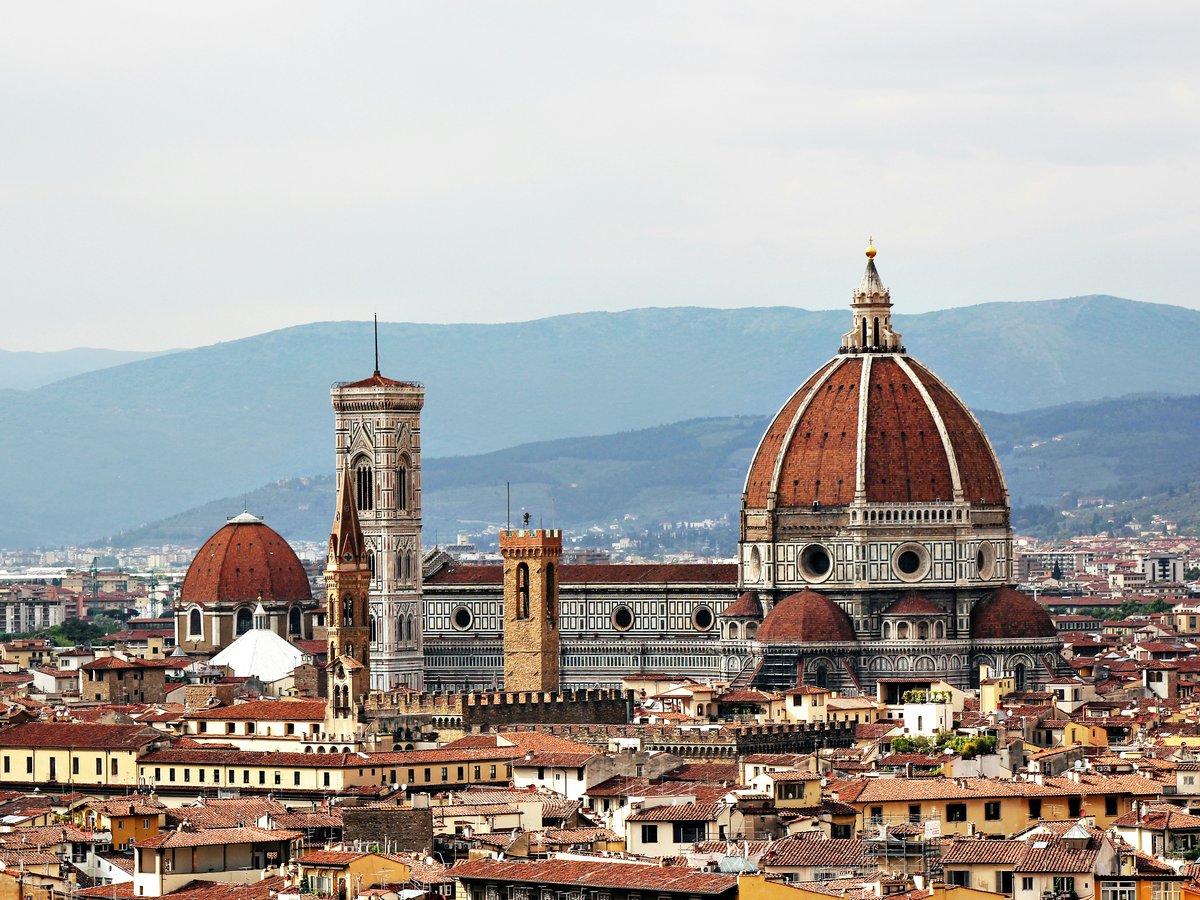
outdoorThe terrace viewpoint above San Niccolò offers the canonical panorama of Florence, the Duomo, Palazzo Vecchio, the Arno bridges. In July and August it's packed shoulder-to-shoulder by 7pm. By late September, the sunset shifts earlier to around 7:15pm, and the terrace is noticeably less crowded on weekday evenings. The 15-minute uphill walk from Ponte alle Grazie warms you up for the cooler evening air at the top.
Summer tourist volume drops after mid-September, and the lower September sun angle produces warmer, more amber light on the city belowWhat to eat in September
In season: fruit
Fichi freschi
Fresh figs hit their peak in September across Tuscany. You'll find deep purple Dottato and green Brogiotto varieties at Mercato di Sant'Ambrogio, often still warm from the morning sun. Restaurants pair them with prosciutto crudo and a drizzle of chestnut honey as an antipasto that appears on menus only during these 6 weeks.
Uva fragola
Strawberry grapes, small and intensely aromatic with a flavor closer to Concord grapes than table varieties. They appear at market stalls in Mercato Centrale and Sant'Ambrogio in September, sold in small bunches. Florentines eat them fresh as a snack or use them in schiacciata when wine grapes aren't available.
On menus now
Peposo dell'Impruneta
A slow-cooked beef stew with black pepper and Chianti wine, originally from the terracotta-kiln town of Impruneta south of Florence. It's available year-round in theory, but September marks the start of the season when Florentine trattorias rotate it back onto menus as the evenings cool. The dish needs hours of braising, and the better restaurants start the pot the night before.
Street food peaks
Schiacciata all'uva
The definitive September food in Florence. This flatbread is made with Canaiolo or Sangiovese wine grapes pressed into sweet dough, baked until the crust crackles and the grape juice caramelizes into sticky, purple pockets. Bakeries across the city start producing it when the vendemmia begins, typically the first or second week of September, and stop when the harvest ends in late October. The version at Forno Top in San Frediano tends to sell out before noon.
What to drink
Mosto
Fresh grape must, the unfiltered, unfermented juice pressed during harvest. It's cloudy, intensely sweet, and available for only a few weeks starting in mid-September. Some wine bars in San Niccolò serve it chilled as a non-alcoholic aperitivo alternative. The flavor is nothing like commercial grape juice, denser and more floral with a slight yeasty tang.
In markets
Porcini mushrooms
The first autumn porcini arrive from the Casentino forests east of Florence in September, smaller and firmer than the October flush. Trattorias in Oltrarno serve them sliced raw with oil and parmigiano, or grilled and piled onto crostini. The quality at this point in the season tends to be very high, before the heavier October rains make them waterlogged.
Regular events in September
Festa della RificolonaFree
Paper lantern procession through Florence's streets to Piazza Santissima Annunziata, a tradition dating to the 17th century. Children carry lanterns, other children try to shoot them down with spitball tubes. The main event centers on Piazza Santissima Annunziata with food stalls and music.
September 7 (evening)Giornate Europee del Patrimonio (European Heritage Days)Free
Normally closed or ticketed palazzi, private chapels, and institutional buildings open their doors for free across Florence and all of Italy. In past years, sites like Palazzo Medici Riccardi's upper floors and private oratories in Oltrarno have participated. The specific roster changes each year but typically includes 15-20 sites in Florence alone.
Last full weekend of September (Saturday-Sunday)Fiera di ImprunetaFree
A large agricultural fair in the town of Impruneta, about 15km south of central Florence. The fair dates back centuries and centers on livestock, local food producers, and the town's famous terracotta. It's a genuine rural Tuscan market, not a tourist event, and the peposo stew served there is considered the benchmark version.
Mid-to-late September (varies, typically a Sunday)Florence French Film Festival (France Odeon)
French-language films screened at the Cinema La Compagnia and other venues in central Florence, with Italian subtitles. Smaller and more intimate than the major Italian film festivals, it tends to draw a local cinephile audience. Some screenings include director Q&A sessions.
Early to mid-SeptemberBest places this September
Piazza Santo Spirito
piazzaThe working neighborhood square of Oltrarno, lined with bars and restaurants on the east side and anchored by Brunelleschi's austere church facade on the south. In September the piazza transitions from summer's tourist-heavy evenings back to a more local feel. A small morning market sells produce and flowers on the second Sunday. The stone benches fill with university students after dark.
OltrarnoMercato di Sant'Ambrogio
marketFlorence's local food market, housed in a 19th-century iron-and-glass structure east of Santa Croce. The outdoor stalls sell seasonal fruit, vegetables, and cheese. September is peak fig and early porcini season here. The indoor lunch counters serve lampredotto sandwiches and simple pasta for 5-8 euros.
Santa CroceSan Niccolò neighborhood
neighborhoodThe quiet residential strip below Piazzale Michelangelo, running along Via San Niccolò and Via de' Bardi. A handful of wine bars and small restaurants have opened here in recent years, and the area stays cooler in September than the stone canyons north of the Arno. The medieval Porta San Niccolò gate tower occasionally opens for free visits.
San NiccolòGiardino Bardini
gardenA less-visited alternative to Boboli, this hillside garden above Costa San Giorgio offers a similar panoramic view of Florence with a fraction of the visitors. The wisteria terrace is famous in April, but in September the baroque staircase garden and the views from the belvedere are the draw. The descent through the garden exits near Ponte alle Grazie.
OltrarnoBasilica di Santa Croce and Piazza
churchThe Franciscan church where Michelangelo, Galileo, and Machiavelli are buried tends to be less crowded in late September than in summer. The piazza outside hosts a market on occasional weekends. The leather school (Scuola del Cuoio) behind the church is a working workshop, not a tourist shop, and reopens after its August break in early September.
Santa CroceLungarno delle Grazie to Ponte Vecchio walk
walkThe south-bank Arno embankment between Ponte alle Grazie and Ponte Vecchio catches the late-afternoon September sun directly on the building facades of Lungarno degli Acciaiuoli across the river. The 800-meter walk takes about 15 minutes at a stroll and passes rowing clubs whose boats are on the water in the cooler September evenings.
San NiccolòPiazzale Michelangelo
viewpointThe signature panoramic terrace above the Arno's south bank. In September the sunset falls around 7:15pm, and weekday evenings are markedly less packed than July's shoulder-to-shoulder scrums. A small cafe sells drinks, or bring a bottle from the enoteca on Via San Niccolò below.
San Niccolò
Your packing checklist
Tick items off as you pack. Your progress saves in this browser.
All packed — have a great trip.
Insider tips
Mercato di Sant'Ambrogio closes at 2pm but the best produce goes by 10am. The indoor tripe stand, Nerbone, is the cheaper alternative to the one in Mercato Centrale, and locals queue at both. If you want lampredotto, the sandwich costs about 4 euros at Sant'Ambrogio versus 5-6 at the more tourist-facing Centrale.
Many restaurants in Oltrarno and Santa Croce that closed for the August ferie reopen on staggered schedules through the first two weeks of September. Check the door for a sign before assuming a restaurant listed on your map is open. Google Maps hours tend to lag behind the actual reopening by several days.
The Palazzo Vecchio tower (Torre di Arnolfo) has a separate, shorter queue from the museum and offers a 360-degree view that rivals Piazzale Michelangelo from a completely different angle. In late September you can often walk in without waiting. It closes when it rains, which matters more this month than in summer.
For schiacciata all'uva, look beyond the famous bakeries near the Duomo. The versions in neighborhood forni (bakeries) in San Frediano and around Via dei Serragli tend to use more grape and less sugar. Ask for it warm from the oven if you arrive before 9am. The grapes should stain your fingers purple.
The free Giornate Europee del Patrimonio on the last weekend of September opens sites that are normally either closed entirely or require expensive private tours. Keep an eye on the Ministero della Cultura website for the specific Florence roster, which typically publishes 2-3 weeks before the event.
Avoid these mistakes
- Booking only outdoor restaurant reservations for a week-long September trip. With 10 rainy days on average and storms that can arrive within 20 minutes, at least half your dinner reservations should have indoor seating or covered terraces. Piazza Santo Spirito is lovely on a dry evening and miserable when a downpour hits mid-antipasto.
- Assuming early September prices and crowds will match late September. The first 10-12 days of the month are effectively still high season at the Uffizi, the Accademia, and popular restaurants. If you're specifically seeking the quieter, cheaper September experience, book your trip for the 18th onward.
- Packing only summer clothes. A visitor who arrives from a 35°C home climate in shorts and a t-shirt will be cold at 15°C on a September evening in Piazzale Michelangelo, and potentially turned away from churches that require covered shoulders.
- Skipping the Chianti day trip because you assume wine tours are a tourist trap. September is the one month when you're visiting during the actual harvest, not a staged tasting-room experience. The difference between a September vendemmia visit and a February wine tour is substantial.
Practical tips for September
Book Uffizi and Accademia timed-entry tickets online at least 1 week ahead for visits before September 15, and 3-4 days ahead for late September. Many Oltrarno shops and restaurants reopen from their August closures on staggered dates through September 1-10, so verify hours directly before walking across the river for a specific destination. Church dress codes (covered shoulders, knees) are enforced year-round at the Duomo, Santa Croce, and Santa Maria Novella. September's train schedule to Chianti towns like Greve and Panzano shifts from the summer timetable around September 10, so check Trenitalia for updated departure times if planning a harvest day trip. Major sites close on Mondays (Uffizi is the exception, closing Tuesdays instead), which matters more in September when you have fewer crowd-free days to choose from. Sunset shifts from about 7:40pm on September 1 to 7:00pm by September 30, so plan Piazzale Michelangelo visits accordingly.
FAQ
Is September a good time to visit Florence?
September is one of the better months, likely ranking in Florence's top 3-4 alongside May and October. The temperatures settle to a very walkable 27°C (80°F) after summer's 33°C, and crowds thin noticeably in the second half of the month. The main drawback is rain. September is Florence's wettest month at 136mm, so you'll want rain gear and flexible plans. Late September, roughly the 18th onward, tends to offer the best combination of lower prices, thinner crowds, and comfortable weather, though you'll still need to account for 2-3 rainy days in any given week.
Does it rain a lot in Florence in September?
Yes, more than most visitors expect. September averages 136mm of rainfall across about 10 days, making it Florence's rainiest month, ahead of even November. The rain typically falls as concentrated afternoon thunderstorms rather than all-day drizzle. A storm might dump 15-20mm in 2 hours and then clear to blue sky. This means mornings are usually dry and good for outdoor sightseeing, but afternoon plans should have a rain backup, whether that's a museum visit or a long lunch.
Is Florence crowded in September?
It depends which week. The first 10-12 days of September still carry summer-level crowds at headline sites like the Uffizi and the Accademia, because many visitors book late-summer trips that overlap with early September. After about September 15, the volume drops noticeably. By the last week of September, the difference from July is significant, with shorter queues, available restaurant tables, and breathing room in the Boboli Gardens. It's not low-season empty, but it's a different experience from peak summer.
What is the weather like in Florence in September?
Warm days and cool evenings with a real chance of rain. Average highs reach 27°C (80°F) and lows sit around 15°C (60°F). Humidity hovers near 72%. The warmth is comfortable rather than oppressive, a clear step down from August's 33°C. Morning light tends to be clear and golden. Afternoon thunderstorms roll through on roughly 1 in 3 days, sometimes heavy but rarely lasting more than a couple of hours. Pack layers for the 12-degree swing between afternoon highs and evening lows.
What food should I try in Florence in September?
Schiacciata all'uva is the one item that exists only in September and October. It's a flatbread made with wine grapes during the harvest, and bakeries across the city produce it fresh each morning during vendemmia. Fresh figs (fichi) peak in September at markets like Sant'Ambrogio and Mercato Centrale. Early porcini mushrooms arrive from the Casentino forests and appear on trattoria menus as carpaccio or grilled crostini. Look for mosto, fresh unfiltered grape juice, at wine bars in San Niccolò. As the evenings cool, peposo, a long-braised beef and black pepper stew from nearby Impruneta, returns to menus across Oltrarno.
Things to Do in Florence in September
 Free cancellation
 Tuscany Day Trip from Florence: Siena, San Gimignano, Pisa and Lunch at a Winery
Day trip: 12 hours, free cancellation.
via Viator Free cancellation
 Pasta Cooking Class with Unlimited Wine in Florence
Cooking class: 2.5 hours, free cancellation.
via Viator Free cancellation
 Cinque Terre Day Trip with Optional Hiking or Pisa from Florence
Outdoor experience: 13 hours, free cancellation.
via Viator Free cancellation
 Small-Group Wine Tasting Experience in the Tuscan Countryside
Cooking class: 4.8 hours, free cancellation.
via Viator Free cancellation
 Florence Pizza or Pasta Class with Gelato & Wine at a Tuscan Farm
Cooking class: 5 hours, free cancellation.
via Viator Free cancellation
 Pisa, Siena, San Gimignano with Lunch & Wine Tasting at a Winery
Day trip: 12 hours, free cancellation.
via ViatorFind a flight to Florence
Live fares to Florence appear here once cookies are accepted.
Last verified by automated review (v1.7.2) on . What is automated review?