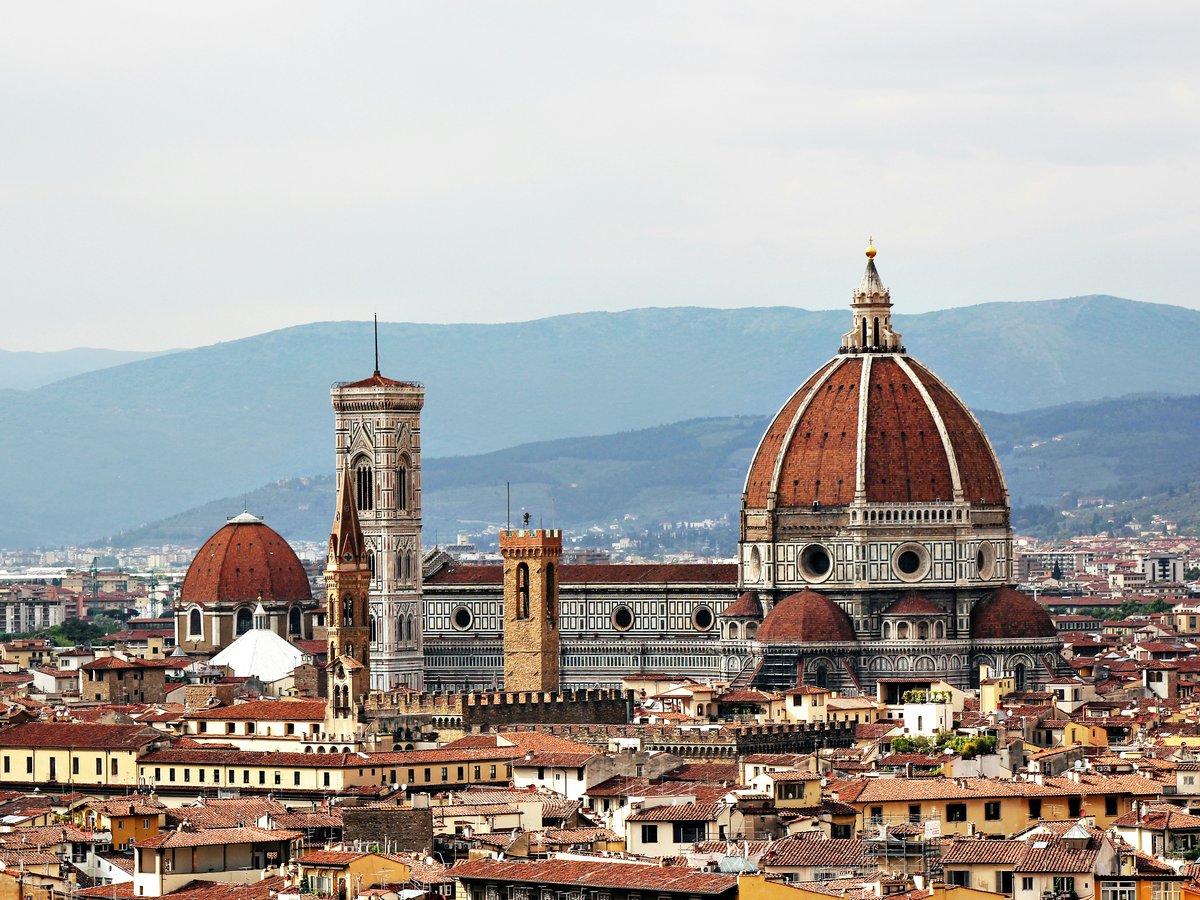
Florence is a city that drinks like it has nowhere to be in the morning. The Negroni likely traces its roots here, to a request made around 1919 or 1920 at a bar on Via de' Tornabuoni, and that leisurely, bitter sensibility still runs through the whole after-dark culture. Aperitivo starts around 6 PM, when locals crowd into bars for a spritz or Negroni Sbagliato alongside trays of crostini, bruschette, and cold pasta. The rhythm tends to be slow. Florentines eat dinner at 9 PM, maybe later in summer, and they might not leave the table until 11. Proper going-out rarely begins before midnight. The city's nightlife sits somewhere between Rome's sprawl and Milan's polish. It feels smaller, more walkable, more wine-stained. The university population, around 50,000 students at the Università degli Studi di Firenze, keeps the scene young and affordable in certain neighborhoods. Meanwhile, the constant flow of international students from American and British study-abroad programs creates a parallel nightlife economy around Santa Croce. Mind you, Florence still largely shuts its doors by 2 or 3 AM. This is not Berlin. The centro storico is compact enough that you'll walk between most spots in 15 minutes, the smell of stone and river water mixing with cigarette smoke on the bridges. That compactness is part of the charm.
The Bar Scene in Florence, from Enotece to Rooftops
Wine bars are the backbone of drinking in Florence. This is Tuscany, after all. You'll find enotece tucked into medieval cellars across the Oltrarno and Santo Spirito, pouring Chianti Classico, Brunello di Montalcino, and Vernaccia di San Gimignano by the glass for 5 to 9 euros. The smell of aged wood and damp stone tends to hang in these places. Many double as small kitchens, serving taglieri of pecorino, finocchiona salami, and schiacciata. The cocktail bar scene has grown considerably since 2015 or so. Florence has leaned into its Negroni heritage, and you'll find bartenders across the centro storico who take the drink seriously, building variations with local amari and small-batch vermouths. A well-made cocktail in Florence currently runs 10 to 14 euros at a proper bar, though the tourist-heavy spots along the Arno might charge 15 or more. Rooftop bars exist, but Florence's building codes and the skyline protected by UNESCO designation since 1982 mean there aren't many. The ones that do operate tend to be attached to hotels near Piazza della Signoria or along the Lungarno. Expect to pay a premium. The real Florentine move is drinking on the steps of a piazza with a bottle of wine from a nearby alimentari. Santo Spirito's piazza fills up this way on warm evenings, with 3-euro bottles of Sangiovese and groups sitting on the church steps until the carabinieri do their nightly pass around midnight. Dive bars are harder to find in the centro storico, but the San Frediano stretch of the Oltrarno has a few scrappy spots where a beer still costs 4 euros and the furniture hasn't been updated since the 1990s.
Clubbing in Florence, a Compact but Committed Scene
Florence's club scene is small compared to Milan or Rome, but it has a stubborn loyalty. The bigger venues tend to sit outside the centro storico, in repurposed industrial spaces near Le Cascine park or along the roads heading toward Scandicci and Rifredi. These are the spots that bring in touring DJs for techno and house nights, usually on Fridays and Saturdays. Cover charges at the larger clubs generally land between 10 and 20 euros, and that typically includes one drink. Things don't really get going until 1 AM or later. Peak energy tends to hit around 2 AM, and some spots stay open until 4 or 5 on weekends. Dress codes are looser than Milan. Clean trainers are usually fine for most places, though a few of the more upscale venues near the centro still enforce a no-shorts, no-flip-flops rule. Thursday nights have become a major going-out night, partly driven by university students who treat it as an unofficial weekend opener. You'll find student-oriented club nights in the Santa Croce area and around Piazza Beccaria, where entry might be free before midnight or with a flyer. The music in these spaces leans toward commercial house, hip-hop, and reggaeton. The underground electronic scene is quieter but persistent. Florence has a small community of local DJs and promoters who organize warehouse-style events and Sunday afternoon sessions, sometimes announced only on Instagram a day or two beforehand. Summer changes the equation. Open-air events pop up in Le Cascine and along the banks of the Arno, sometimes running as part of organized festival programs through June, July, and August.
Live Music Across Florence
Florence has a live music tradition that tends to run through smaller, more intimate rooms rather than arena-scale venues. Jazz has a particularly deep hold on the city. The Università degli Studi has produced jazz musicians for decades, and you'll find small jazz clubs scattered through the Oltrarno and near Santa Croce where groups play 3 or 4 nights a week, usually starting around 9:30 or 10 PM. Cover charges at these places are often 5 to 8 euros, sometimes waived if you're eating. Worth noting, Florence also has a solid singer-songwriter scene rooted in the Italian cantautore tradition. Small venues in San Frediano and Santo Spirito host acoustic nights, usually midweek, Tuesday or Wednesday, where local artists play original material in Italian. The sound tends to blend folk influences with the literary sensibility that Italian songwriting is known for. Rock and indie acts play slightly larger venues near the train station area around Santa Maria Novella or in converted spaces on the city's periphery. International touring acts at the mid-tier level, bands doing 500 to 1,500 capacity rooms, come through Florence fairly regularly, though many bigger tours skip the city in favor of Bologna's larger venue infrastructure about 100 kilometers north. Summer brings the Musart Festival to Piazza della Santissima Annunziata, typically running in July, and various open-air concert series in Le Cascine and the Boboli Garden area. For classical and opera, the Teatro della Pergola has been hosting performances since 1656, and the Teatro del Maggio Musicale Fiorentino runs a season that typically includes opera, ballet, and orchestral concerts from September through June.
Nightlife neighborhoods
-
Santo Spirito and San Frediano (Oltrarno)
The left bank of the Arno feels like a different city after dark. The piazza in front of the Basilica di Santo Spirito fills with locals sitting on stone steps, sharing wine and cigarettes. The surrounding streets have a mix of wine bars, cocktail spots, and late-night restaurants. San Frediano, a few blocks west, is scruffier and tends to draw an artier crowd. You'll hear conversations in Italian here more than English.
- Best for
- Locals, a relaxed pace, wine-focused drinking, and midweek nights when the tourist areas feel hollow
-
Santa Croce and Via de' Benci
The area around Piazza Santa Croce and the bars lining Via de' Benci is where the international student crowd concentrates. The noise level rises around 10 PM and stays high until closing. English is the common language in most spots. The bars here tend to be louder, more crowded, and slightly cheaper, with happy hour deals and 2-for-1 promotions targeting the study-abroad demographic. The smell of spilled beer on warm cobblestones is the defining scent of this strip in summer.
- Best for
- Ages 18 to 25, international students, group nights, and anyone looking for a louder, English-speaking crowd
-
San Niccolò
A quieter pocket of the Oltrarno, near Piazzale Michelangelo. San Niccolò has a handful of bars along Via di San Niccolò that draw a local, slightly older crowd. The pace is slower and the lighting dimmer. Summer evenings here feel warm and unhurried, with the sound of crickets mixing with conversation from open windows.
- Best for
- Date nights, quieter drinks, a more neighborhood feel, especially on weekday evenings
-
Centro Storico (Duomo to Piazza della Repubblica)
The most tourist-dense zone after dark. The bars around Via de' Calzaiuoli and Piazza della Repubblica are often overpriced, though a few hotel rooftop bars near the Duomo offer genuine atmosphere along with the markup. This area is at its best in early evening during aperitivo hour, when the light hits Brunelleschi's dome and the piazzas still have some air in them. By 11 PM the centro feels either too quiet or too rowdy depending on the season.
- Best for
- Early evening aperitivo, hotel bar drinks, visitors who want to stay close to landmarks
-
Le Cascine and the Western Periphery
The Parco delle Cascine, Florence's largest park at about 160 hectares, is where the bigger club nights happen. The area along the park's edge and the streets heading toward the suburbs host the venues that draw touring DJs and larger crowds. The atmosphere here feels more industrial, more intentional. This is where Florentines go when they want a proper night out past 2 AM. In summer, open-air events and temporary bar setups operate along the park's pathways.
- Best for
- Clubbing, electronic music, late nights past 2 AM, and summer open-air events
Safety after dark
Florence is generally a safe city after dark, and walking through the centro storico at 2 AM feels unremarkable. That said, a few things are worth keeping in mind. Pickpocketing rises in crowded nightlife areas around Santa Croce and near the Ponte Vecchio, especially on weekend nights from May through September when tourist density peaks. Keep your phone in a front pocket. Drink spiking is uncommon but not unheard of, particularly in the student bar areas near Via de' Benci. Watch your glass. The Parco delle Cascine gets quieter and less populated as you move deeper into the park at night, and locals tend to avoid the more remote sections after midnight. Taxis are regulated in Florence. Licensed taxis are white, have a meter, and display the city's red lily emblem. There is no Uber ride-hailing service currently operating in Florence, though the FreeNow app works for booking licensed taxis. A taxi from the centro storico to Le Cascine area might run 10 to 15 euros after midnight. The night bus service, operated by ATAF, runs limited routes after the regular buses stop around 1 AM. The N1, N2, and N3 lines cover the main corridors. Scams targeting tourists at night tend to follow a pattern. Unlicensed street vendors selling roses or bracelets near bar areas sometimes work in pairs to create distraction for pickpocketing. Politely declining and walking on is the standard move. If you're staying outside the centro, the walk home is almost always under 30 minutes, and Florence's flat terrain makes it straightforward.
Practical tips
- Aperitivo
- Aperitivo runs from roughly 6 PM to 9 PM across Florence. Most bars charge 8 to 12 euros for a drink that includes access to a buffet of finger food. The quality of the food spread varies enormously. Some places set out full pasta dishes and grilled vegetables, others offer stale bread and olives. The Oltrarno spots tend to be more generous than the tourist-facing places near the Duomo.
- Cover charges
- Most bars do not charge cover. Clubs generally charge 10 to 20 euros on Friday and Saturday nights, usually including one drink. Thursday student nights at smaller venues might be free entry before midnight or 5 euros after. Some clubs offer discounted or free entry if you're on a guest list, which promoters distribute via Instagram and WhatsApp. Asking at your hostel or hotel reception sometimes yields a flyer with a discount.
- Tipping
- Tipping at bars is not expected in Florence. Some places add a coperto (cover charge for table service) of 1 to 2 euros, and a few include a servizio line on the bill. Leaving small change, maybe rounding up to the nearest euro, is appreciated but not required. Bartenders will not look at you strangely for not tipping.
- What locals drink
- The Negroni remains Florence's signature cocktail, and locals still order it regularly. Spritz Aperol is common, especially during aperitivo. Wine by the glass, particularly Chianti Classico and Vermentino, is the default at enotece. Beer from Italian craft breweries has grown in popularity since 2010, and you'll find taps pouring local brews from Tuscan producers in many bars across the Oltrarno. The Cynar-based cocktails have had a quiet resurgence lately.
- Hours and timing
- Most bars in Florence open by 6 PM for aperitivo and close between 1 and 2 AM. Clubs open at midnight and run until 4 or 5 AM on weekends. Sunday and Monday nights are quiet across the city, with many bars closed entirely on Mondays. The busiest nights are Thursday through Saturday. In August, many locally-owned bars close for a 2 to 3 week summer holiday, and the city's nightlife thins out noticeably.
- Language
- English is widely spoken in bars around Santa Croce and the centro storico. In the Oltrarno, particularly Santo Spirito and San Frediano, you'll encounter more Italian-only staff. A basic buonasera and posso avere go a long way. Ordering in Italian, even badly, tends to improve the service you receive.
FAQ
What time do people go out in Florence?
Aperitivo starts around 6 PM and runs until 9. Dinner follows, often lasting until 11 PM or later. Bars fill up between 10 PM and midnight. Clubs don't get busy until 1 AM, with peak energy around 2 to 3 AM on weekends. Thursday nights tend to start earlier because of the university crowd.
Is Florence good for nightlife compared to other Italian cities?
Florence's nightlife is smaller and more intimate than Rome or Milan. You won't find mega-clubs or all-night districts on the same scale. What Florence does well is the aperitivo-to-late-night wine bar arc, the walkability between neighborhoods, and the quality of cocktail culture rooted in its Negroni heritage. If you want a techno marathon, Bologna or Milan are better bets. If you want to drink well and wander between atmospheric spots, Florence holds its own.
Do I need to dress up to go out in Florence?
For bars, no. Clean casual is the norm across nearly all of Florence's bar scene. For clubs, the standard is slightly higher but still relaxed by European standards. Avoid athletic wear, flip-flops, and beachwear. Dark jeans or trousers with a decent shirt or top will get you into any venue in the city. Trainers are fine at most places except the occasional upscale lounge.
Is it safe to walk around Florence at night?
Florence is one of the safer Italian cities for walking at night. The centro storico is well-lit and populated until late, and the bridges over the Arno are busy with foot traffic well past midnight in warmer months. Standard precautions apply in any city. Stay aware in crowded bar areas where pickpockets work, and avoid the deeper sections of Parco delle Cascine after midnight.
Can I get into clubs in Florence under 21?
Italy's legal drinking age is 18, and that's the entry age for clubs and bars in Florence. There is no 21-and-over culture. If you're 18 with valid ID, a passport or EU identity card, you can enter any venue. Some student-oriented nights specifically cater to the 18-to-22 crowd.
Where should I go on a Monday night in Florence?
Monday is the quietest night in Florence. Many bars and restaurants close entirely. The Santa Croce area has a few spots that stay open because of the international student population, but the selection is limited. Your best bet is the Oltrarno, where a handful of wine bars and late-night kitchens around Santo Spirito keep their doors open. To be fair, Monday in Florence is more of a quiet-drink-and-early-bed night than anything resembling a proper night out.
Last verified by automated review (v1.7.2) on . What is automated review?