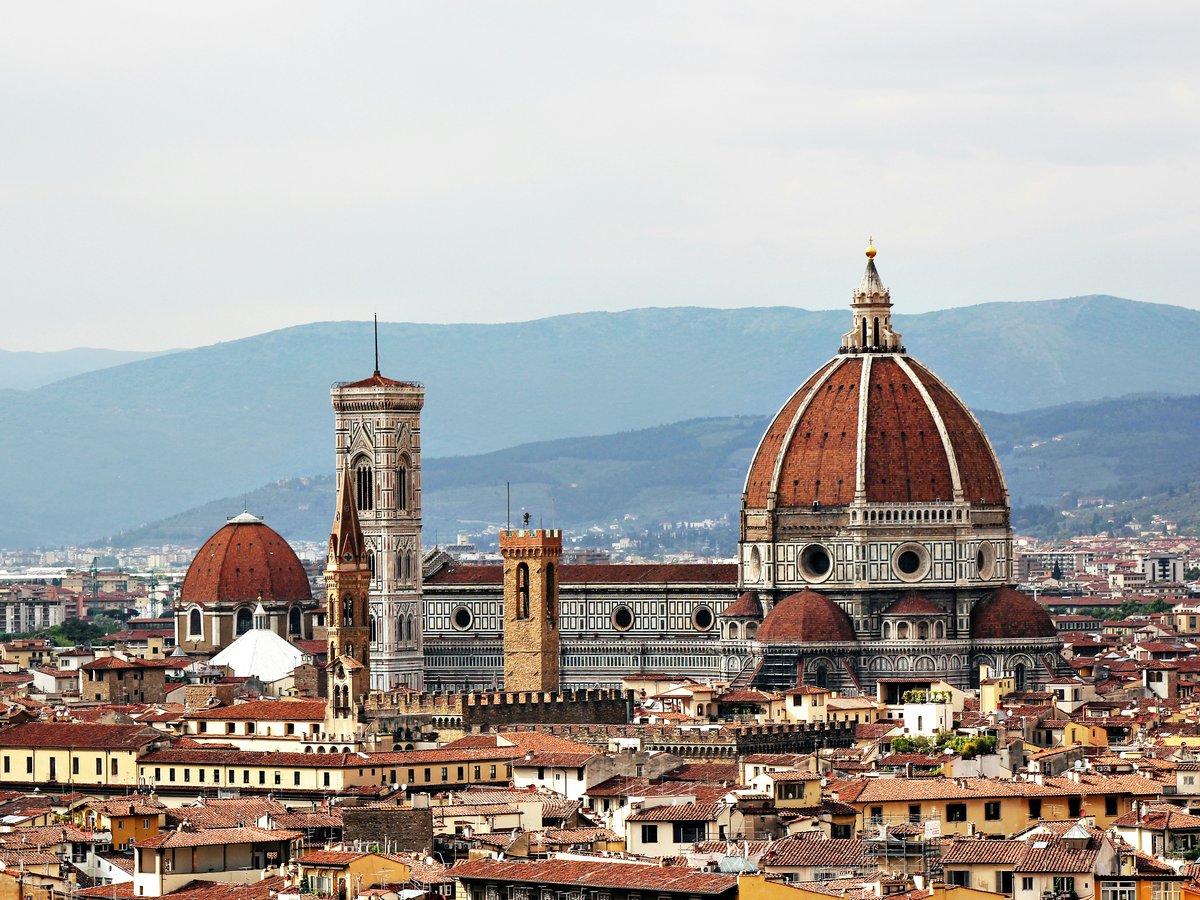
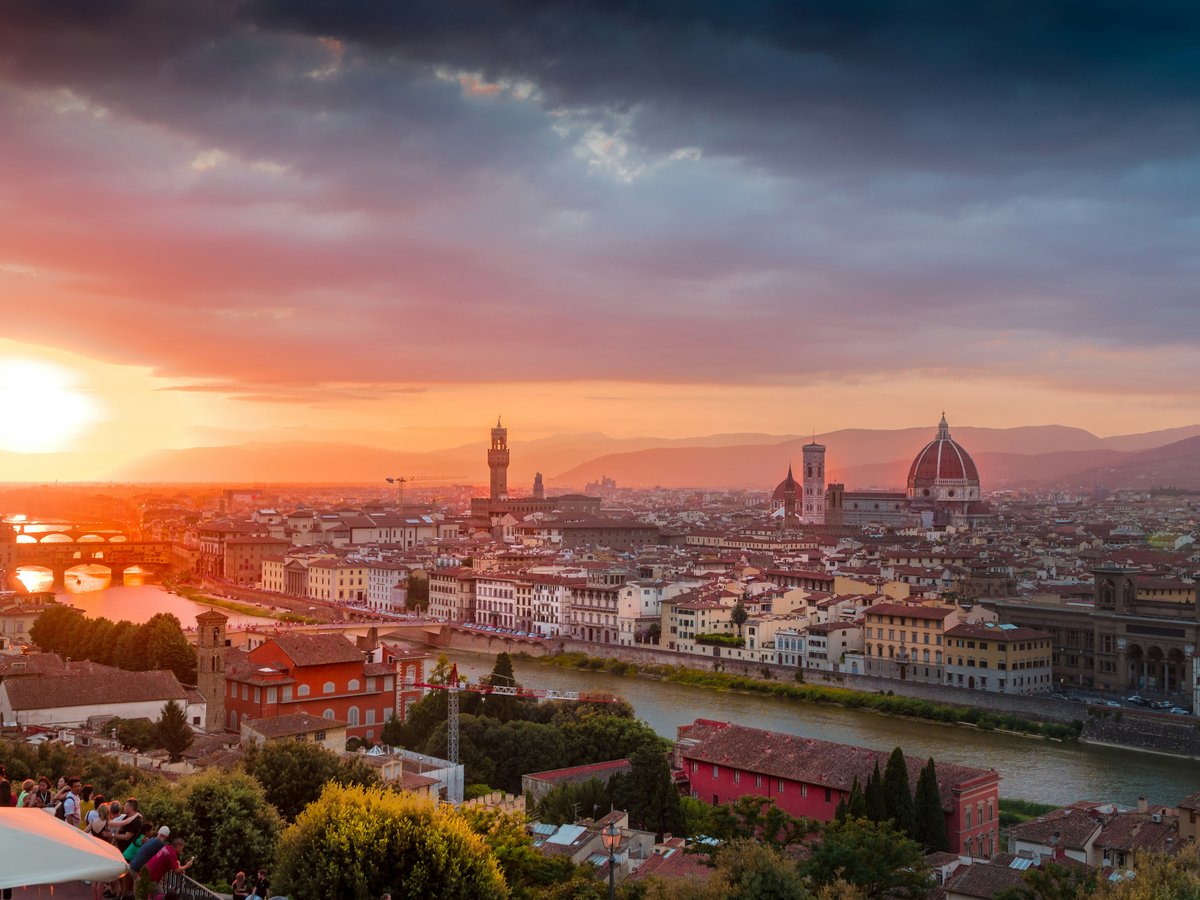
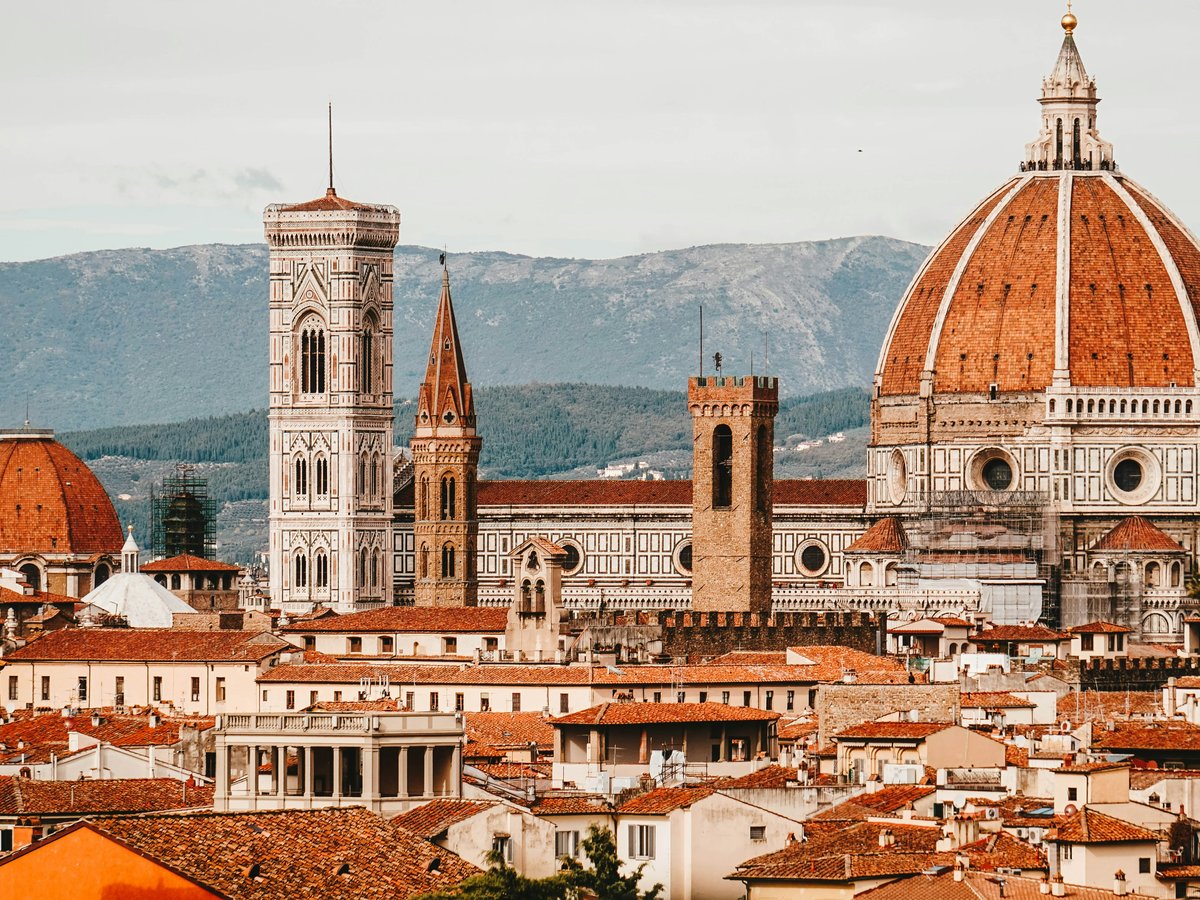
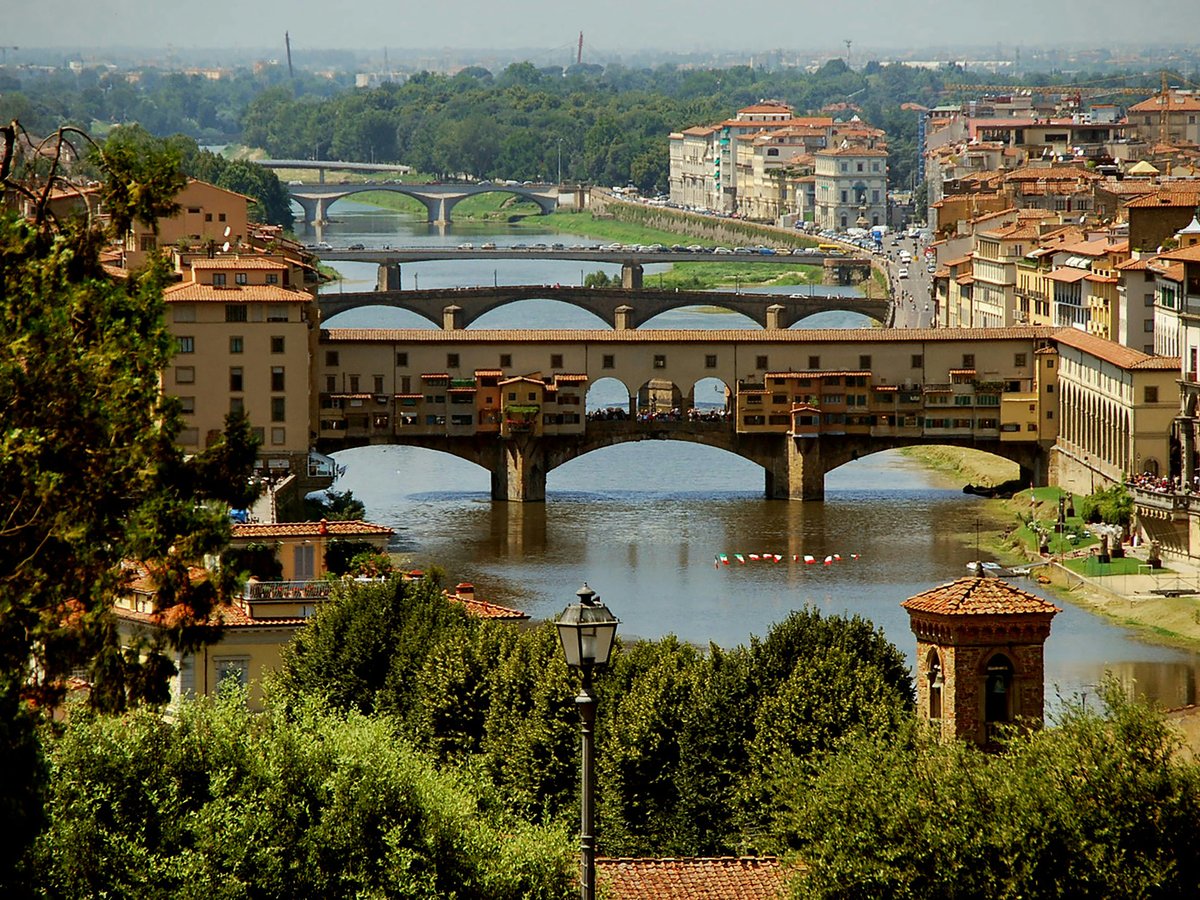
Florence sits in a shallow basin along the Arno, ringed by the hills of Fiesole and Settignano, and on a clear morning you can stand on Piazzale Michelangelo and trace the whole city under the terracotta dome Brunelleschi finished in 1436: still the largest masonry dome ever built, still the thing that orients you when you get lost below. The city is smaller than visitors expect, roughly 383,000 residents in a historic centre barely three kilometres across, walkable end to end in under an hour if you could resist stopping. But you will not resist. The Oltrarno, the neighbourhood south of the river that working Florentines never abandoned even as the north bank tilted toward tourism, runs on its own schedule: furniture restorers and leather workers open their botteghe by eight, and the Santo Spirito piazza fills with locals over coffee long before any museum queue forms across the water. North of the Arno, the concentration of Renaissance art per square metre has no equal (the Uffizi, the Accademia, the Bargello, San Marco) but the city's real education happens between them, in the way a side street off Via dei Calzaiuoli opens onto a thirteenth-century church facade you had no idea existed. Mornings belong to the museums. Afternoons pull you toward the Mercato Centrale or the San Lorenzo food hall, where you eat lampredotto from a stall and wonder why tripe tastes this good only here. Evenings draw you back across the Ponte Vecchio, past goldsmiths who have kept shops on that bridge since the sixteenth century, into Oltrarno bars where a negroni costs what it should. Florence does not sprawl or rush. It compresses five centuries of artistic ambition into a space you can cross on foot before lunch, and then asks you to sit down and eat well.
Florence in photos
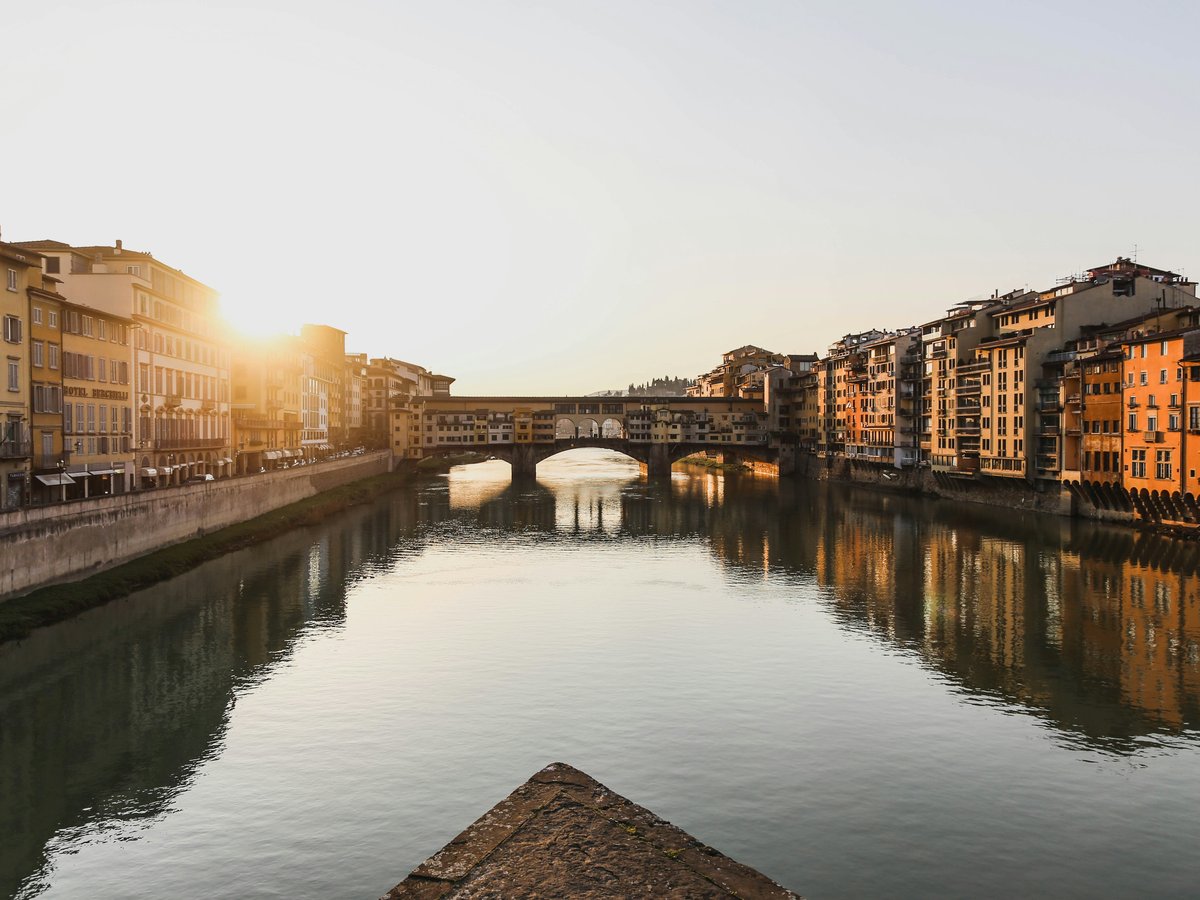
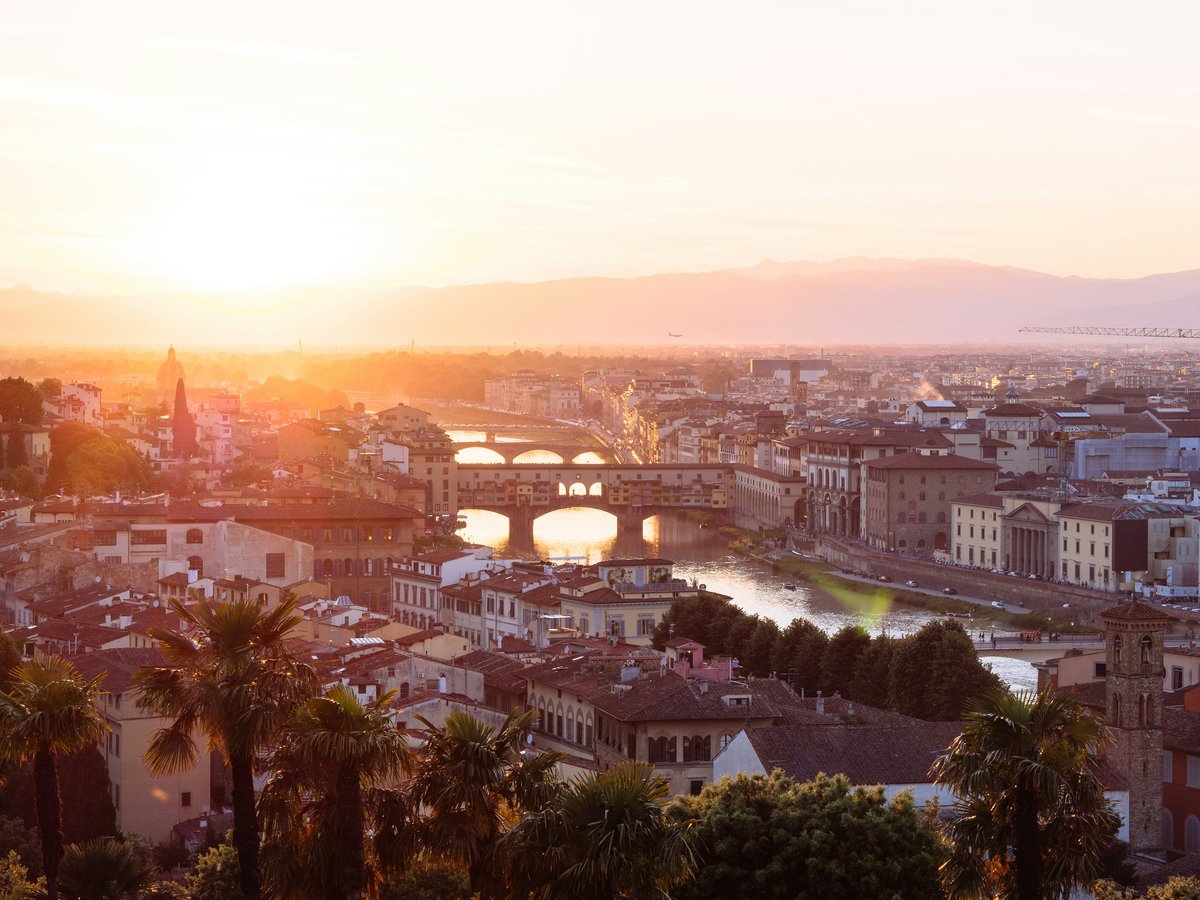
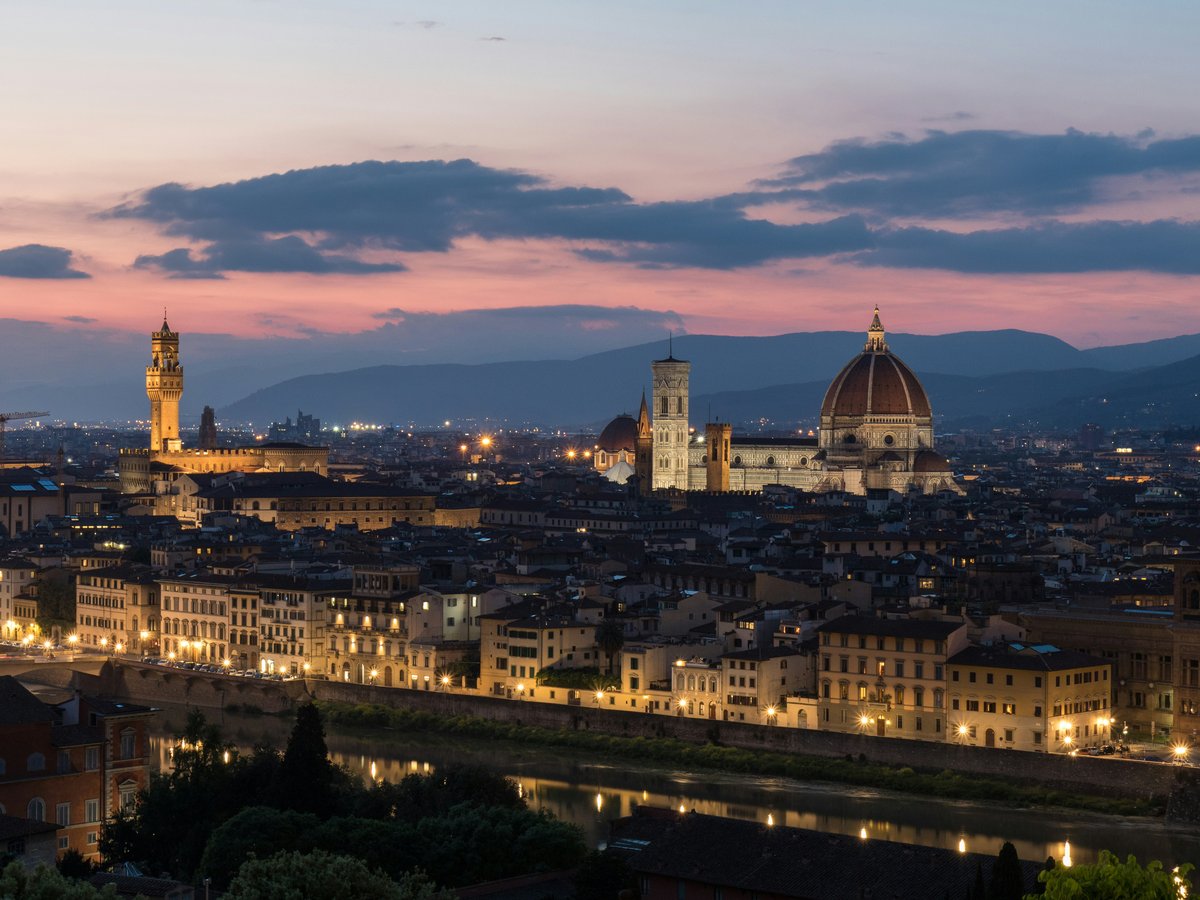
Florence right now
Answers about Florence
-
Airport to city
From Amerigo Vespucci Airport (FLR), take the T2 tramway to Firenze Santa Maria Novella station. It costs €1.70, takes 20 minutes, and runs every 5 minutes until midnight. After midnight, taxis charge a flat €22 to the centro storico. If you flew into Pisa (PSA), take the PisaMover and Trenitalia train, about 70 minutes and €15 total.
Read the full answer → -
Best time to visit
April through May and mid-September through October give you Florence at its best. Daytime highs sit between 18°C and 25°C, the Uffizi queue drops to under 30 minutes on weekday mornings, and hotel rates in Santo Spirito run 30-40% below their June peaks. Shoulder months March and November still work if you pack layers.
Read the full answer → -
Cost per day
A budget day in Florence runs €57/day ($65) for a hostel dorm, schiacciata from All'Antico Vinaio, and walking the 4 km centro storico. Midrange hits €148 ($170) with a three-star hotel and one museum ticket. Watch for the tassa di soggiorno (€1-5.50/night per person) and coperto (€2-3.50) at every restaurant. Neither appears in booking prices.
Read the full answer → -
Cultural etiquette
Say 'buongiorno' before any interaction, and order cappuccino only before 11am. Cover knees and shoulders at every church, including the Duomo and Santa Croce. Tipping is minimal since coperto (€2-3) covers the table charge. Don't sit on church steps or eat near monuments in the centro storico. Florentines are reserved but respond well to basic greetings.
Read the full answer → -
Best day trips
Siena (75 km, 1h15 by bus, €8 each way) is the strongest single-day trip from Florence for history and architecture. Lucca (80 km, 1h20 by train, €7.90) suits couples who want to split the day between cycling the 4.2 km walls and visiting churches. Bologna is 35 minutes by Frecciarossa with the best food. San Gimignano takes half a day with a bus change at Poggibonsi.
Read the full answer → -
Digital nomads
Florence scores 6.8/10 for digital nomads (sourced from TTDI's editorial rubric). Fiber reaches 200-300 Mbps in newer apartments, but centro storico buildings on old copper cap at 30-50 Mbps. Monthly budget runs $2,400 all-in. Italy's Digital Nomad Visa (April 2024) requires €28,000 annual income. Base yourself in Santo Spirito or Campo di Marte for grocery access, laundromats, and fiber connections.
Read the full answer → -
Family-friendly
Florence works well for families, though cobblestones and summer heat above 34°C will test your patience. State museums are free for visitors under 18. Palazzo Vecchio runs dedicated children's workshops from €4. Strollers struggle on uneven pietra serena streets, so bring an all-terrain model or a carrier. Vivoli gelateria (open since 1929) sells a piccolo cup for €2.50.
Read the full answer → -
Food culture
Florence eats Tuscan, not generic Italian. The city's food identity runs on saltless bread, slow-cooked white beans, offal from street carts, and a 1.2kg Chianina T-bone steak aged at least 21 days. Lunch starts at 12:30, dinner at 8pm. The best meals tend to be in Oltrarno and Sant'Ambrogio, not around the Duomo. Budget 12-25€ for a trattoria lunch.
Read the full answer → -
Getting around
Walk. Florence's centro storico measures about 2 km across, and every major sight from the Duomo to Palazzo Pitti falls within a 20-minute stroll of Santa Maria Novella station. Buses and the T1/T2 tramway fill gaps beyond the old walls, with a €1.70 ticket buying 90 minutes on both. Taxis work for after-dark returns. Leave the rental car outside the ZTL or face €80-100 fines per camera.
Read the full answer → -
How to get there
Florence has no transatlantic airport. Fly into Pisa (PSA), 80 km west with Ryanair and easyJet connections, or Amerigo Vespucci (FLR), 5 km from the Duomo with European-only routes. From North America, connect through Rome FCO, Munich, or Amsterdam. High-speed Frecciarossa trains from Rome reach Firenze Santa Maria Novella in 95 minutes for €25-50.
Read the full answer → -
Is it safe?
Florence scores 7.2/10 for solo safety on our index (see the TTDI Solo-Safety Index), and violent crime against visitors is rare. The risks worth knowing are pickpockets around Santa Maria Novella station and the San Lorenzo market, street scams near the Duomo, and Cascine park once the lights go out. Dial 112 for any emergency.
Read the full answer → -
Language basics
Italian. Florence is where modern standard Italian was born, shaped by Dante Alighieri's 14th-century Tuscan dialect. English proficiency in the tourist core around Piazza del Duomo and Piazza della Signoria runs about 6 out of 10 (per EF's English Proficiency Index, adjusted for Florence's tourist density), higher at hotels and the Uffizi, lower at pharmacies and market stalls. The Latin alphabet means every menu and sign is readable.
Read the full answer → -
Layover guide
Yes. Florence's Amerigo Vespucci airport (FLR) is 20 minutes from the Duomo by the T2 tram, making it one of Europe's easiest layover cities. Five hours is the minimum. Below that, immigration and transit eat your free time. With 6-8 hours, you can walk three or four major stops comfortably.
Read the full answer → -
LGBTQ-friendly
Florence is 7.2/10 (sourced from TTDI's editorial rubric). Italy legalized civil unions in 2016, and Florence leans progressive within an uneven national picture. The queer scene clusters in the Santa Croce district, with Crisco Club and YAG Bar as anchors. Same-sex couples hold hands freely in the centro storico, though the nightlife is smaller than Milan's or Rome's.
Read the full answer → -
Where locals go
Florentines avoid the centro storico after 10am. The real social life happens in Oltrarno's Piazza Santo Spirito for aperitivo from 6:30pm, Sant'Ambrogio market mornings before 11am, and San Niccolò's bars on weeknights. Caffè Ricchi does €7 spritzes with food. Skip Mercato Centrale and shop at Sant'Ambrogio instead.
Read the full answer → -
Must-see
Climb Brunelleschi's dome at Florence Cathedral, and book it before anything else in the city. Entry runs on timed slots that tend to sell out days ahead, so you cannot improvise this one. Once you have your slot, build the Uffizi Gallery and the Bargello National Museum around it. The cathedral floor below is free and needs no ticket.
Read the full answer → -
Solo travel
Florence scores 7.2/10 for solo-traveler safety (see the TTDI Solo-Safety Index) and suits solo trips of 5 to 7 days well. The centro storico is walkable enough that you rarely need transit after dark, and the hostel scene around Santa Croce and Oltrarno keeps social options going from March through October.
Read the full answer → -
This week
Florence's week revolves around the Tuesday morning Cascine market, open 7am to 2pm along Viale Abraham Lincoln, Monday museum closures when the Uffizi, Palazzo Pitti, and Accademia all shut, and nightly aperitivo from 7pm in Santo Spirito and San Niccolò. Peak summer temperatures currently hit 35 to 38°C by 2pm, pushing sightseeing to before 9am.
Read the full answer → -
3-day itinerary
Day 1 covers the Duomo dome climb and Uffizi in Centro Storico. Day 2 crosses the Arno to Palazzo Pitti, Boboli Gardens, and the artisan workshops of Oltrarno. Day 3 takes in Santa Croce, the Bargello, and Michelangelo's David at the Accademia. About 28 kilometres of walking total. Pre-book the Uffizi and dome climb at least 2 weeks ahead.
Read the full answer → -
What to avoid
Skip the leather shops clustered around San Lorenzo Market, where sellers quote €200 for bags worth €30. Avoid any restaurant with a photo menu and a tout outside, within 200 meters of the Duomo. Never drive into Florence's ZTL restricted zone. The cameras are automatic, and fines of €80 or more arrive by mail months later.
Read the full answer → -
What to pack
Covered shoulders and knees for Florence's churches, broken-in walking shoes for its pietra serena cobblestones, and a Type C or L plug adapter for Italy's 230V outlets. Summer visitors need sun protection for 33-38°C days with little shade in Piazza della Signoria. Skip packing umbrellas and toiletries. Buy them at any farmacia for less.
Read the full answer → -
Where to stay
Stay in Oltrarno around Piazza Santo Spirito for your first Florence trip. You're 7 minutes on foot from Ponte Vecchio, 12 from the Uffizi, and paying $100-230 per night instead of $180-400 in the Centro Storico. The neighborhood has better restaurants and lower rates than the north bank, with Palazzo Pitti and the Boboli Gardens at your doorstep.
Read the full answer →
Deep guides for Florence
Curated lists for Florence
accommodation
-
Best boutique hotels
Florence folds most of its boutique accommodation into a few square kilometers on either side of the Arno, and the neighborhoods that carry real inventory split along lines that matter: walking distance to the Duomo, quiet after dark, and whether the nearest trattoria serves tourists or residents. The Historic Center clusters the highest density of rooms within the old walls. Cross the Ponte Vecchio south and Oltrarno offers artisan workshops and a slower pace, while San Frediano, its western neighbor, runs cheaper and louder past midnight. North of Santa Maria Novella station, Statuto and San Iacopino trade monument views for lower nightly rates and easier parking. Le Cure and Campo di Marte sit beyond the tourist perimeter on the northeast, residential and quiet, served by bus lines into the center. Rifredi is a university quarter with apartment-style stays. Ricorboli and Bellariva flank the Arno's southeast bend, close enough to walk the old town but priced for longer stays. The picks below anchor each area with ratings and nightly costs drawn from current Trip.com inventory.
See the picks → -
Best hostels
Florence packs most of its hostel inventory within walking distance of the Duomo, but the city's budget beds stretch outward along tram lines and bus corridors into neighborhoods that look nothing like the postcard. The historic center holds the highest density: two distinct clusters cater to different traveler profiles, one near the cathedral with polished social hostels, another on the western fringe in converted industrial spaces at rates that undercut most European capitals. Beyond the old walls, Campo di Marte and San Salvi sit along the rail corridor east of Santa Croce, offering quiet residential streets and some of the lowest dorm prices on the continent. Novoli and San Iacopino flank Santa Maria Novella station to the northwest, practical for travelers arriving late or leaving early. The true outliers, Limite and Pelago, push into the Tuscan countryside: vineyard-view rooms and highway stopovers that serve drivers, not pedestrians. Le Gore sits between suburb and city. Each area trades something for something else; the question is not where Florence is prettiest but whether you want to roll out of bed into the Piazza della Signoria crowd or wake up to silence and catch a bus.
See the picks → -
Best luxury hotels
Florence rewards the traveler who books by address, not by brand. Most of these 12 properties sit in the Florence Historic Center, and the difference between a forgettable stay and a remarkable one comes down to which block, which floor, and which direction your windows face. Nightly rates run from USD 251 to USD 1,032; Trip.com guest ratings span 8.2 to 9.7. The rankings reflect editorial judgment: which property earns its rate, which amenities matter in a city you walk, and which addresses put you where you want to be. Every factual claim below is sourced; the opinions are ours.
See the picks → -
Where to stay
Florence splits into neighborhoods that feel nothing alike, and picking the right one matters more than picking the right hotel. The historic center packs the density: Duomo views, leather-market noise, and prices that range from $25 hostels to $886 palace suites on the same block. Cross the Arno into Oltrarno or San Frediano and the pace drops; artisan workshops replace tour groups, and mid-range rates hold steady. North of the station, Statuto and San Iacopino trade proximity for quiet residential streets and lower nightly costs, while Le Cure sits in a villa belt where the Four Seasons anchors one end and a $90 park hotel anchors the other. Campo di Marte, east along the river, is the local residential pick: trams run to the center in minutes, but the sidewalks belong to residents after dark. Novoli and Ricorboli sit at the outer ring, where rates drop further and the walk to the Duomo stretches past comfort. The ten areas below move from highest hotel count to lowest, so the densest inventory comes first. Each one names its tier picks, the transit it connects to, and the kind of traveler it suits. Florence rewards the visitor who picks the neighborhood before the room.
See the picks →
attractions
-
Best free attractions
Florence charges for a great deal, so this list is built around the hours that ask nothing but your attention. It is an outdoor list: public squares, each recorded simply as a square in Florence, plus one rose garden that keeps posted hours from 09:00. Two entries carry dates, the garden from 1865 and piazzale Michelangelo from 1869; the rest come with an address and no more. We have not padded them with history we cannot source. What we can offer is how to use them: a square is the cheapest seat in any city, and the mistake most visitors make is treating it as a corridor between ticketed sights. This list is for walkers, for travellers on a tight budget, and for anyone who has had enough of queues by the second day. Take the addresses as written, because several differ by a small word from the names people say aloud, and give each place longer than a photograph takes.
See the picks → -
Best museums
Florence's museums seldom stop at being museums. The 12 places on this list include a palace that is also an art museum, a Franciscan church, a park, and an elevated enclosed passageway, with dates running from 1294 at Santa Croce to 1865 at the Bargello. The cathedral, three basilicas, and the Boboli Gardens are each part of a UNESCO World Heritage Site. For a visitor, the skill here is timing more than taste: Monday shuts the Uffizi and the Accademia, and Sunday shuts the cathedral to visitors. This list is for people willing to plan a day around those facts instead of discovering them at a locked door. Where we hold verified hours, we give them in full, and where the record is thin, we say so and point you to the official site, because a confident guess about opening times is worse than no answer at all.
See the picks → -
Must-see attractions
Florence's short list is older than most cities' long one. The twelve places here run from a baptistery dating from 1059 to a theatre dating from 1656, with a bridge from 1335 and a church and municipal building from 1337 in between, and several carry a heritage listing: the Ponte Vecchio is a UNESCO World Heritage Site, and Palazzo Strozzi is Italian national heritage. This is a list for walkers who would sooner stand in front of 12 real addresses than queue for one famous room. We have been strict about what we print: where we hold a verified address, a date or opening hours, you get them with a source, and where we do not, we say so and point you to the venue's own website rather than guessing. Only one entry comes with verified hours, the Florence Baptistery, open from 09:00 to 19:45, so for everything else confirm the day's opening before you set out. Resist fitting all twelve into a single day; pick four, and give each the time it asks for.
See the picks →
food
-
Best cafes
Florence rewards people who choose a cafe by the hour and the address, not by the length of the queue outside. These 12 picks are arranged for that kind of planning. One counter on Piazza della Stazione never closes, a pasticceria in the 50134 opens at 06:00 six days a week, and a gelateria on Via dei Benci keeps scooping until 01:00. In between sit a coffee-and-breakfast specialist on Via dei Neri, a Sicilian address on Viale dei Mille, and a cake-and-coffee room that does not open until 12:00. Not every entry is a cafe in the strict sense: there is a grocer, a bistrot that also does pizza, and a juice bar with bagels. That is deliberate. The list is for visitors who want to know where to be at a given time of day, and what the place is honestly good for once they get there. Where the record is thin, the paragraph says so instead of filling the gap with atmosphere.
See the picks → -
Best restaurants
Florence feeds its visitors in two ways: quickly and badly near the queues, or properly at an address you had to look up. This list is for the second kind of eater. The 12 places here are not all Tuscan, and that is deliberate: one carries a fine dining tag, two are noodle kitchens, one opens for breakfast and closes at 15:00, and one puts steak house, Japanese and cake under a single roof. What we can vouch for is the practical layer: where each door is, when it opens, and when it does not. That matters more here than in most cities. Several of these kitchens split the day into lunch and dinner with a dead stretch between, while others run straight through to midnight. Skip the menus with photographs and a waiter on the pavement. Pick by the hour you are hungry, check the closing day, and walk to the street number.
See the picks →
Browse by traveler type
- For foodies
Florence for foodies
- For families with kids
Florence for families
- For digital nomads
Florence for digital nomads
- For solo travelers
Florence for solo travelers
- For couples
Florence for couples
- For budget travelers
Florence on a budget
- For luxury travelers
Florence for luxury travelers
- For first-timers
Florence for first-time visitors
Book experiences in Florence
 Free cancellation
 Tuscany Day Trip from Florence: Siena, San Gimignano, Pisa and Lunch at a Winery
Day trip: 12 hours, free cancellation.
via Viator Free cancellation
 Pasta Cooking Class with Unlimited Wine in Florence
Cooking class: 2.5 hours, free cancellation.
via Viator Free cancellation
 Cinque Terre Day Trip with Optional Hiking or Pisa from Florence
Outdoor experience: 13 hours, free cancellation.
via Viator Free cancellation
 Small-Group Wine Tasting Experience in the Tuscan Countryside
Cooking class: 4.8 hours, free cancellation.
via Viator Free cancellation
 Florence Pizza or Pasta Class with Gelato Making at a Tuscan Farm
Cooking class: 5 hours, free cancellation.
via Viator Free cancellation
 Pisa, Siena, San Gimignano with Lunch & Wine Tasting at a Winery
Day trip: 12 hours, free cancellation.
via Viator Free cancellation
 SMALL-GROUP Wine Safaris: Tuscany Wine Tasting Tour from Florence
Day trip: free cancellation.
via Viator Free cancellation
 San Gimignano, Siena, Monteriggioni, Chianti Day Trip with Lunch
Day trip: 11 hours, free cancellation.
via Viator Free cancellation
 Pasta & Pesto Class with a View, plus Tiramisù & opt. Market Tour
Cooking class: 5 hours, free cancellation.
via Viator Free cancellation
 Half-Day Chianti Wine Tasting from Florence with Two Wineries
Day trip: 5.5 hours, free cancellation.
via Viator Free cancellation
 Florence Vespa Tour: Tuscan Hills, Food and Chianti Wine
Outdoor experience: 6 hours, free cancellation.
via Viator Free cancellation
 Cinque Terre Day Tour with Optional Pisa from Florence
Day trip: 12.5 hours, free cancellation.
via ViatorBrowse by interest
Compare Florence with
Find a flight to Florence
Live fares to Florence appear here once cookies are accepted.
Last verified by automated review (v1.7.2) on . What is automated review?