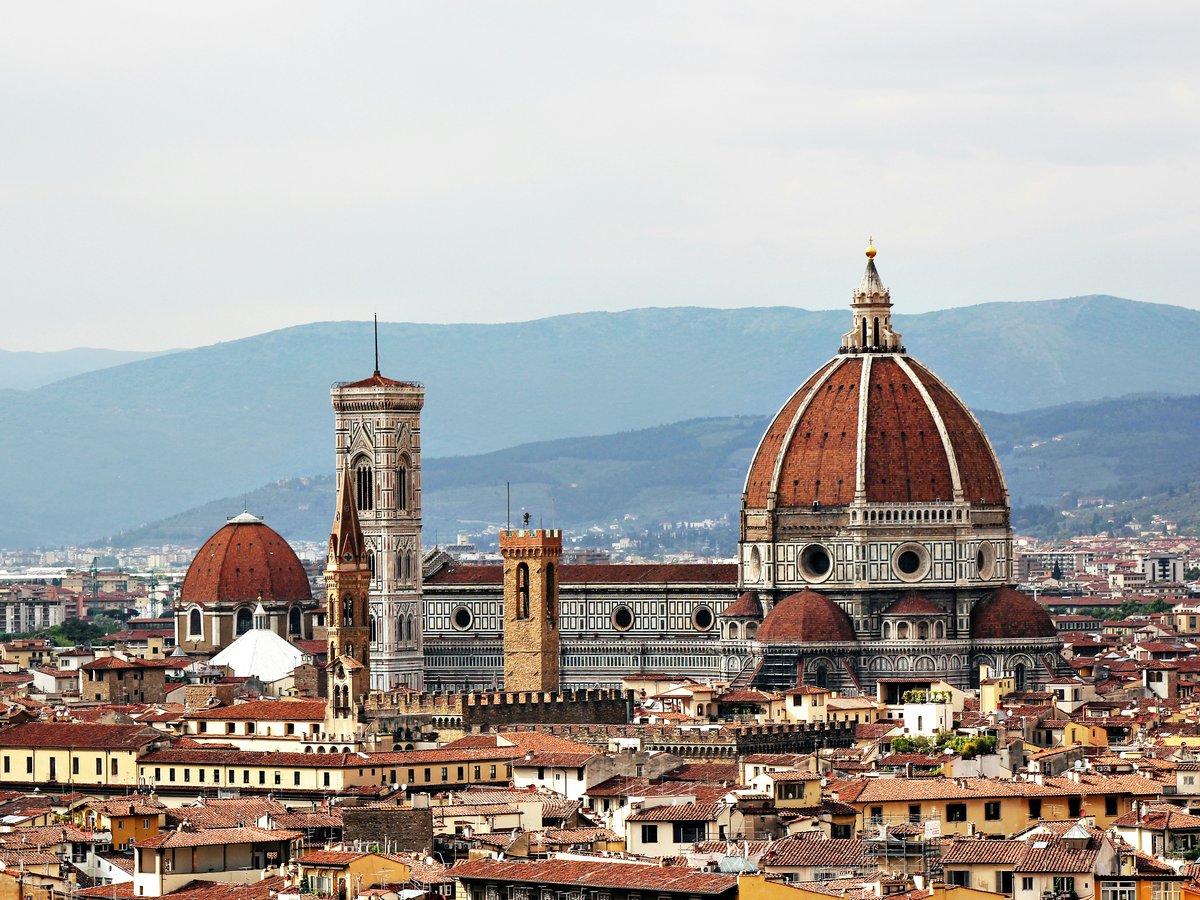
Florence sits in a bowl of hills along the Arno River, roughly 50 meters above sea level, with the Chianti wine country climbing south and the Apennine Mountains rising to over 1,300 meters about 40 kilometers north. The city itself tends to feel urban and dense, all stone and terracotta, but step 15 minutes in any direction and you're on dirt trails through olive groves. That contrast is what makes it work for outdoor types. The summers run hot, often above 35°C in July and August, so spring (mid-March through May) and autumn (September into early November) are the sweet spots for anything strenuous. Worth noting, too, that the surrounding hills are threaded with old pilgrim routes and farmer paths that have been walked for centuries. You'll find trail signage from the CAI (Club Alpino Italiano) on most of them, red and white blazes painted on rocks and tree trunks. The Arno is not particularly clean for swimming in the city center, but the lakes and rivers outside town more than compensate.
Outdoor activities
-
Road cycling through the Chianti hills
The SS222 (Via Chiantigena) from Florence to Greve in Chianti covers about 30 kilometers of rolling vineyard roads, with elevation gains of 400 to 600 meters depending on your route. You might rent a road bike from Florence by Bike near the train station for around €25 to €35 per day. The climbs are steady rather than steep, mostly 4 to 7 percent gradients. Traffic can be heavy on the main road in summer, so early morning starts before 8 a.m. tend to be calmer. The descent back toward Florence on the Via di Collina gives you views across the entire valley. Several rental shops will set you up with GPS routes that avoid the worst of the tourist traffic.
- Difficulty
- Moderate
- Duration
- 4 to 6 hours for the round trip
- Best season
- April through June, September through October
-
Trail running on Monte Ceceri
Monte Ceceri sits above the village of Fiesole, about 8 kilometers northeast of Florence's center. The trails loop through old quarries where pietra serena sandstone was cut for the Duomo and other buildings. You'll run under Mediterranean pines and holm oaks, with the smell of warm resin strong on summer mornings. The main loop is roughly 5 kilometers with about 150 meters of elevation gain. Leonardo da Vinci reportedly tested a flying machine from these slopes in 1506. The footing is packed dirt with some loose gravel sections. Bus 7 from Piazza San Marco gets you to Fiesole in about 25 minutes.
- Difficulty
- Easy to moderate
- Duration
- 45 minutes to 1.5 hours
- Best season
- Year-round, best March through May and September through November
-
Sport climbing at Covigliaia
Covigliaia is a limestone crag near the Futa Pass in the Apennines, about 50 kilometers north of Florence. It has roughly 80 bolted routes across several sectors, ranging from grade 4a up to 7c on the French scale. The rock is compact grey limestone with good friction when dry. The crag faces south, so it gets warm in summer. Locals tend to favor it in spring and autumn. You'll want your own gear or a guided session through a Florence-based guiding outfit. The approach walk from the parking area takes about 10 minutes on a clear path through beech forest.
- Difficulty
- Varies from beginner (4a) to advanced (7c)
- Duration
- Half day to full day
- Best season
- March through May, September through November
-
Mountain biking on Monte Morello
Monte Morello rises to 934 meters directly north of Florence, less than 15 kilometers from the Duomo. A network of fire roads and singletrack runs through pine and chestnut forest on its slopes. The main loop from Sesto Fiorentino climbs about 700 meters over roughly 18 kilometers. Some sections are technical with loose rock and exposed roots. The trails dry out quickly after rain because of the sandy soil. You can reach the trailhead by bus from Florence's center to Sesto in about 20 minutes. The summit gives a clear sightline south to the Chianti ridge on good days.
- Difficulty
- Moderate to challenging
- Duration
- 3 to 5 hours
- Best season
- April through June, September through October
-
Horseback riding in the Chianti countryside
Several agriturismos between Greve in Chianti and Panzano offer guided rides through vineyards and olive groves at around €50 to €80 for a 2-hour session. The terrain is gentle, with wide tracks between estates and occasional stretches of forest. You'll ride past rows of Sangiovese vines and stone farmhouses. The smell of wild rosemary and thyme along the track borders is strong in late spring. Beginners are typically paired with calm, experienced horses. Afternoon rides in autumn often end with a wine tasting at the estate.
- Difficulty
- Easy (beginner rides available)
- Duration
- 2 to 3 hours
- Best season
- April through June, September through October
-
Paragliding from Monte di Sotto near Fiesole
Tandem paragliding flights operate from launch sites in the hills above Fiesole, typically from elevations around 400 to 500 meters. The flight covers the valley toward Florence, and on clear days you can see the Duomo's dome from the air. Flights usually last 15 to 25 minutes and cost between €120 and €180 for a tandem. Wind conditions tend to be best in the morning hours. Operators will generally cancel in strong or gusty conditions. The landing zone is a field in the lower hills. You'll feel the thermal lift shift as you pass over the transition between forest and open ground.
- Difficulty
- No experience needed (tandem)
- Duration
- 15 to 25 minutes airtime, 2 hours total with transport and briefing
- Best season
- May through September
Day hikes
-
Florence to Fiesole via the old path (CAI trail 1)
This classic walk starts from the Piazza delle Cure neighborhood in northern Florence and climbs to the hilltop town of Fiesole, about 5 kilometers one way with roughly 300 meters of elevation gain. The path follows old stone lanes through olive groves and past Renaissance villas, with the sound of church bells carrying across the valley in the morning. The Roman amphitheatre in Fiesole dates to the 1st century BC and makes a good rest stop. You can return by bus 7, which runs every 15 to 20 minutes back to the center. The trail is well-shaded for most of the route.
- Difficulty
- Easy
- Duration
- 1.5 to 2 hours one way
- Best season
- Year-round, though July and August mornings only to avoid the worst heat
-
Settignano loop via Vincigliata Castle
Settignano is a stone village about 7 kilometers east of Florence, reached by bus 10 from Piazza San Marco. The loop trail winds through olive terraces and past the medieval Castello di Vincigliata, rebuilt in the 19th century by the English nobleman John Temple Leader. The route covers roughly 8 to 10 kilometers with about 350 meters of total climbing. You'll pass the church of San Martino and several working farms. The path surface alternates between paved stone lanes and packed dirt. In spring the hillsides are thick with wild poppies and broom. The village piazza in Settignano has a small bar for coffee before or after.
- Difficulty
- Easy to moderate
- Duration
- 3 to 4 hours
- Best season
- March through May, September through November
-
Via degli Dei (Way of the Gods), Florence to San Piero a Sieve section
The full Via degli Dei runs 130 kilometers from Bologna to Florence, but the first stage from Florence north to San Piero a Sieve covers roughly 25 kilometers and can be done as a long day hike or split across 2 days. The trail follows ancient Roman roads over the Apennine foothills through oak and chestnut forest. The climb out of Florence through Fiesole gains about 500 meters in the first 8 kilometers. Mind you, the middle section through Monte Senario (817 meters) can be exposed and hot in summer. CAI red-and-white blazes mark the route. This section feels genuinely wild once you pass the monastery at Monte Senario.
- Difficulty
- Challenging
- Duration
- 8 to 10 hours for the full section, or split into 2 days
- Best season
- April through June, September through October
-
Monte Morello summit from Sesto Fiorentino
Monte Morello (934 meters) is the highest point directly north of Florence. The trail from Sesto Fiorentino follows CAI markers through Mediterranean scrub that transitions to pine forest higher up. Total distance is about 12 kilometers round trip with roughly 700 meters of elevation gain. The upper sections have loose rocky footing in places. From the summit on clear mornings you can see south to the Chianti hills and on exceptional days toward Monte Amiata, over 100 kilometers away. There's a small rifugio (mountain hut) near the top that may or may not be open, so bring your own water and food. The trail is quieter on weekdays.
- Difficulty
- Moderate to challenging
- Duration
- 5 to 6 hours round trip
- Best season
- March through May, October through November
-
Anello del Rinascimento (Renaissance Ring), southern section
The Anello del Rinascimento is a long-distance loop trail encircling Florence through the surrounding hills, totaling about 170 kilometers. The southern section from Porta Romana to Galluzzo and back covers roughly 14 kilometers with about 400 meters of climbing. You pass the Certosa di Firenze, a Carthusian monastery founded in 1341, which is still partially active. The path runs along ridgelines between cypress-lined lanes and sunflower fields in summer. The trail tends to be well-marked with Anello del Rinascimento signs, though a few junctions could use clearer signage. The Certosa offers free guided visits at certain hours.
- Difficulty
- Moderate
- Duration
- 4 to 5 hours
- Best season
- April through June, September through November
Water activities
-
Kayaking the Arno River through Florence
Guided kayak tours depart from the Canottieri Comunali boathouse near the Ponte Vecchio and paddle downstream past the city's historic bridges. The Arno is calm and slow-moving in the city, with minimal current in summer and autumn. Tours typically last about 1.5 to 2 hours and cost €40 to €60 per person. The perspective from water level changes the entire scale of the buildings. You'll paddle under the Ponte Santa Trinita and the Ponte alla Carraia. That said, the water quality in the city is not great for swimming. After heavy rain, tours may be cancelled due to higher water levels and debris.
- Difficulty
- Easy (no experience needed for guided tours)
- Duration
- 1.5 to 2 hours
- Best season
- April through October
-
Swimming at Lago di Bilancino
Lago di Bilancino is a reservoir about 40 kilometers north of Florence in the Mugello valley, created in 1995 by damming the Sieve river. It's the closest proper swimming lake to the city. The designated bathing area at Barberino di Mugello has a sandy beach, and the water is typically clean and tested. Summer water temperatures reach about 22 to 24°C. The drive takes 45 minutes to an hour via the A1 motorway. On weekends in July and August the beach fills up by late morning. Facilities include changing rooms and a small bar. The surrounding hills keep the water relatively sheltered from wind.
- Difficulty
- Easy
- Duration
- Half day to full day
- Best season
- June through September
-
Beach day at Viareggio on the Tyrrhenian coast
Viareggio is the nearest major beach town to Florence, about 100 kilometers west and reachable by direct train in roughly 2 hours. The beach is wide and sandy, stretching for several kilometers along the coast. Most of the shoreline is occupied by stabilimenti balneari (private beach clubs) charging €15 to €30 per day for an umbrella and two loungers. A few free public sections (spiagge libere) sit between the clubs. The water is shallow and calm, suitable for families. The town's Liberty-style architecture along the promenade dates to the early 1900s. The Carnival di Viareggio, held in February, draws large crowds.
- Difficulty
- Easy
- Duration
- Full day trip
- Best season
- June through September
-
River swimming in the Sieve valley
The Sieve River runs through the Mugello valley north of Florence and has several spots where locals swim in natural pools during summer. The water is cleaner than the Arno in the city. The area near Vicchio, about 35 kilometers from Florence, has accessible river banks with gravel beaches. Water levels drop considerably by late July in dry years. The temperature stays cool, usually around 18 to 20°C even in August. You'll want water shoes for the rocky bottom. There are no lifeguards or formal facilities at these spots, so swim at your own judgment. To be fair, the cold water is refreshing after a hot drive through the valley.
- Difficulty
- Easy (but unmonitored, swim at own risk)
- Duration
- Half day
- Best season
- June through August
-
Rowing on the Arno with Canottieri Firenze
The Società Canottieri Firenze, founded in 1886, operates from a boathouse near the Ponte alle Grazie. They offer introductory rowing sessions and short-term memberships for visitors. The stretch of the Arno between Ponte alle Grazie and Ponte San Niccolò is calm and wide enough for sculling. Early morning sessions, starting around 7 a.m., catch the river at its quietest. The light on the water and the reflections of the buildings at that hour are worth the early alarm. Session costs tend to run €20 to €35. The club's atmosphere still has the feel of a 19th-century sporting society.
- Difficulty
- Easy to moderate (some instruction provided)
- Duration
- 1 to 2 hours
- Best season
- April through October
Parks & gardens
-
Giardino di Boboli (Boboli Gardens)
The Boboli Gardens cover about 4.5 hectares behind the Pitti Palace on the south side of the Arno. The Medici commissioned them in 1549, and the layout still follows the Italian Renaissance model with geometric hedges, gravel pathways, and stone statuary. The upper terraces climb the hillside and open up to views north over the city's rooftops. In summer the gravel paths reflect heat, so the shaded corridors along the cypress avenues feel noticeably cooler. The smell of box hedge is everywhere. Expect to spend 1.5 to 2 hours walking the full grounds.
Highlights: The Amphitheatre with its Egyptian obelisk, the Neptune Fountain, the Isolotto island garden, and the Grotta del Buontalenti (a 16th-century artificial cave with sculptures)
-
Parco delle Cascine
FreeFlorence's largest public park stretches about 3.5 kilometers along the north bank of the Arno, west of the historic center. It was originally a Medici hunting ground and dairy farm. The park is flat and shaded by plane trees, elms, and oaks, which makes it the go-to spot for runners and cyclists. There's a public outdoor swimming pool, Le Pavoniere, open from June through September with day passes around €8 to €10. On Tuesday mornings the western end hosts a large open-air market. The eastern section near the Ponte della Vittoria tends to be busier with joggers.
Highlights: Le Pavoniere swimming pool, the Anfiteatro stage for summer concerts, the Tuesday morning market, dedicated cycling and running paths along the Arno bank
-
Giardino Bardini
Giardino Bardini sits on the steep hillside of Costa San Giorgio, across the river from the city center. It's smaller and quieter than Boboli, covering about 4 hectares. The garden was restored and reopened in 2005 after decades of neglect. In April and May, the wisteria tunnel along the upper terrace blooms in long purple clusters. The scent is strong enough to notice from 20 meters away. The Baroque staircase, lined with mottled grey pietra serena, climbs through terraced fruit orchards. The belvedere at the top sits at roughly 100 meters elevation and gives a clean line of sight to the Duomo and Palazzo Vecchio tower.
Highlights: The wisteria pergola (peak bloom in April), the Baroque staircase, the belvedere terrace viewpoint, and the English-style woodland garden on the north slope
-
Giardino dell'Iris (Iris Garden)
FreeThis small garden sits on the hillside below Piazzale Michelangelo, open only from late April to late May each year. Florence adopted the iris (the giglio, technically a stylized iris) as its emblem centuries ago, and this 2.5-hectare garden holds over 1,500 iris varieties from around the world. The Concorso Internazionale dell'Iris competition has run here since 1957, judging new cultivars. Rows of irises in purples, whites, yellows, and near-black line gravel paths on the terraced slope. Admission is free during the open season.
Highlights: Over 1,500 iris varieties, the international iris competition displays, views down to the Arno from the upper terraces
-
Giardino delle Rose (Rose Garden)
FreeAdjacent to the Iris Garden and below Piazzale Michelangelo, the Rose Garden holds around 350 rose varieties across a series of terraces. It's open year-round and free to enter. The roses peak in May and June, when the warm air carries their scent down the path. The city installed 12 bronze and plaster sculptures by Jean-Michel Folon here in 2011, scattered among the flower beds. The garden is rarely crowded even in high season. Stone benches along the lower terrace face north toward the Duomo and Santa Croce.
Highlights: The Folon sculpture collection, over 350 rose varieties, a shaded Japanese garden section with a small pond, and unobstructed city views from the terraced walkways
-
Parco di Villa il Ventaglio
FreeA quieter park on the northeastern slope above Piazza della Libertà, Villa il Ventaglio covers about 3 hectares on a terraced hillside. It's popular with neighborhood residents and rarely appears in guidebooks. The park has mature cedar, magnolia, and cypress trees providing shade on the upper lawn. From the top terrace you can see across to the hills of Fiesole. The paths are gravel and packed earth, winding between stone walls that retain the old agricultural terraces. The park opens at 8 a.m. and closes at sunset.
Highlights: Quiet terraced lawns, mature specimen trees including Lebanese cedars, northern views toward Fiesole and Monte Morello
Practical tips
- Sun protection and heat
- Florence summers regularly reach 35°C or higher, with limited shade on exposed hill trails. Carry at least 1.5 liters of water per person for any hike over 2 hours. High-SPF sunscreen (SPF 50) and a brimmed hat are not optional from May through September. Start hikes before 8 a.m. in July and August to avoid the worst afternoon heat. The humidity in the Arno valley can make the temperature feel 3 to 5 degrees warmer than the reading.
- Footwear and gear
- For trails around Fiesole, Settignano, and the Anello del Rinascimento, sturdy trail shoes with good grip are sufficient. Full hiking boots are worth having for Monte Morello and the Via degli Dei, where rocky sections and loose gravel are common. Sandals are fine for the flat paths in Parco delle Cascine. Bring trekking poles for anything with more than 500 meters of elevation gain, especially on the descent where Tuscan clay soil gets slippery after rain.
- Water refilling
- Florence has public drinking fountains (fontanelle) throughout the centro storico, many of them dispensing treated city water that's perfectly safe. The large green Nasoni-style fountains near major piazzas are reliable refill points. On hill trails outside the city, water sources are scarce. Fill up in the last town before hitting the trail. The rifugi on Monte Morello and Monte Senario are not always staffed, so never count on buying water at altitude.
- Trail conditions and markings
- CAI-marked trails use red and white horizontal stripes painted on rocks, trees, and walls. The signage is generally reliable on major routes like the Via degli Dei and the Anello del Rinascimento. On less-trafficked paths, blazes can fade or be obscured by vegetation, particularly in late summer when growth is dense. After heavy autumn rains, expect muddy sections and occasional downed branches on forest trails. Download offline maps before heading out. Cell coverage drops on the north slopes of Monte Morello and in some Mugello valley sections.
- Getting to trailheads by public transport
- Bus 7 to Fiesole and bus 10 to Settignano run frequently from central Florence and cost €1.50 per ride with a Biglietto 90 minuti ticket bought in advance from tabacchi shops. For Mugello valley destinations, including Lago di Bilancino, regional trains from Santa Maria Novella station serve Barberino di Mugello and Vicchio. The train to Viareggio runs direct from SMN and takes about 2 hours. A car gives more flexibility for Monte Morello and Covigliaia, but parking at trailheads is free and usually available on weekdays.
- Seasonal timing
- Spring (mid-March through May) and autumn (September through early November) are the strongest seasons for outdoor activities around Florence. Summer works for water activities, dawn hikes, and higher-altitude trails, but midday heat limits options in the valley. Winter is mild by European standards, with daytime temperatures of 8 to 12°C, and the trails are quiet. Rain peaks in October and November. The Iris Garden opens only late April to late May, and Le Pavoniere pool runs June through September.
FAQ
Can you swim in the Arno River in Florence?
Swimming in the Arno within the city is not recommended and not officially permitted. The water quality has improved over the decades but still doesn't meet bathing standards in the urban stretch. For river swimming, the Sieve valley north of Florence, about 35 kilometers away, has cleaner water and accessible natural pools. Lago di Bilancino, roughly 40 kilometers north, is the closest monitored swimming lake with tested water quality and beach facilities.
Do you need hiking permits for trails around Florence?
No permits are needed for CAI-marked trails in the hills around Florence, including the Via degli Dei, Monte Morello, and the Anello del Rinascimento. These are public paths maintained by the Club Alpino Italiano and local communes. Some private estates along the trails may have gates, but the right-of-way along marked paths is established. The Boboli Gardens and Giardino Bardini charge entrance fees (currently around €10 to €16 for combined tickets), but they're formal gardens, not hiking trails.
What is the closest beach to Florence?
Viareggio is the most popular beach destination from Florence, about 100 kilometers west on the Tyrrhenian coast, reachable by direct train in roughly 2 hours from Santa Maria Novella station. Forte dei Marmi, slightly further north, is another option with a more upscale feel. Marina di Pisa is technically a bit closer by distance but less accessible by public transport. Return trains run until late evening in summer, making a day trip practical without a car.
Is it safe to hike alone around Florence?
The trails around Fiesole, Settignano, and the closer sections of the Anello del Rinascimento are well-traveled and close to populated areas. Solo hiking on these routes is common and generally considered safe. For more remote trails like the upper Via degli Dei or Monte Morello, it helps to tell someone your plan and carry a charged phone, though cell coverage can be spotty on some north-facing slopes. Wildlife is limited to wild boar (cinghiali), which are shy and unlikely to approach, and the occasional viper on warm rocky trails. Watch where you put your hands and feet in summer.
Are guided outdoor tours available in English in Florence?
Several operators run English-language guided hikes, cycling tours, and kayak trips out of Florence. Cycling tours through Chianti typically cost €70 to €120 per person including bike rental and often a wine tasting stop. Guided kayak tours on the Arno run €40 to €60. Walking tours to Fiesole and Settignano are also available, though these trails are well-marked enough that most people manage without a guide. Booking a day or two in advance is usually sufficient outside of peak weeks in April, May, and September.
What outdoor activities work in Florence during winter?
Winter temperatures in Florence hover between 3°C at night and 10 to 12°C during the day, with occasional drops near freezing. Trail running and hiking on lower routes like the Fiesole path and Settignano loop remain comfortable through December and into February. The trails are much quieter. Cycling is possible on dry days, though roads can be wet and slippery. Higher trails on Monte Morello may see frost or light snow above 700 meters from December through February. The parks and gardens stay open year-round, except the Iris Garden, and Boboli has reduced winter hours.
Outdoor experiences in Florence
 Free cancellation
 Cinque Terre Day Trip with Optional Hiking or Pisa from Florence
Outdoor experience: 13 hours, free cancellation.
via Viator Free cancellation
 Florence Vespa Tour: Tuscan Hills, Food and Chianti Wine
Outdoor experience: 6 hours, free cancellation.
via Viator Free cancellation
 Florence Chianti Vespa Tour with Wine Tasting & Meal
Outdoor experience: 6.5 hours, free cancellation.
via Viator Free cancellation
 Private Self-Guided E-Bike Ride in Tuscany with Vineyard Visit
Outdoor experience: free cancellation.
via Viator Free cancellation
 Tuscan Countryside Vespa Tour from Florence with Wine
Outdoor experience: 5 hours, free cancellation.
via Viator Free cancellation
 Tuscany Vespa & Wine Tour, lunch, medieval villages, wine tasting
Outdoor experience: free cancellation.
via Viator Free cancellation
 Horseback Ride, visit S.Gimignano, Lunch wine Tasting &much more
Outdoor experience: 7 hours, free cancellation.
via Viator Free cancellation
 Cinque Terre Experience From Florence
Outdoor experience: 13.3 hours, free cancellation.
via Viator Free cancellation
 From San Gimignano: Tuscany Vespa Tour, Lunch & Wine Tasting
Outdoor experience: 6 hours, free cancellation.
via Viator Free cancellation
 Hot Air Balloon Ride over Chianti Hills
Outdoor experience: 3 hours, free cancellation.
via Viator Free cancellation
 Tuscany Bike Tour with Wine, Oil and Food in the Florentine Hills
Outdoor experience: 4 hours, free cancellation.
via Viator Free cancellation
 Bike Tour of Florence with Piazzale Michelangelo
Outdoor experience: 2.2 hours, free cancellation.
via ViatorLast verified by automated review (v1.7.2) on . What is automated review?