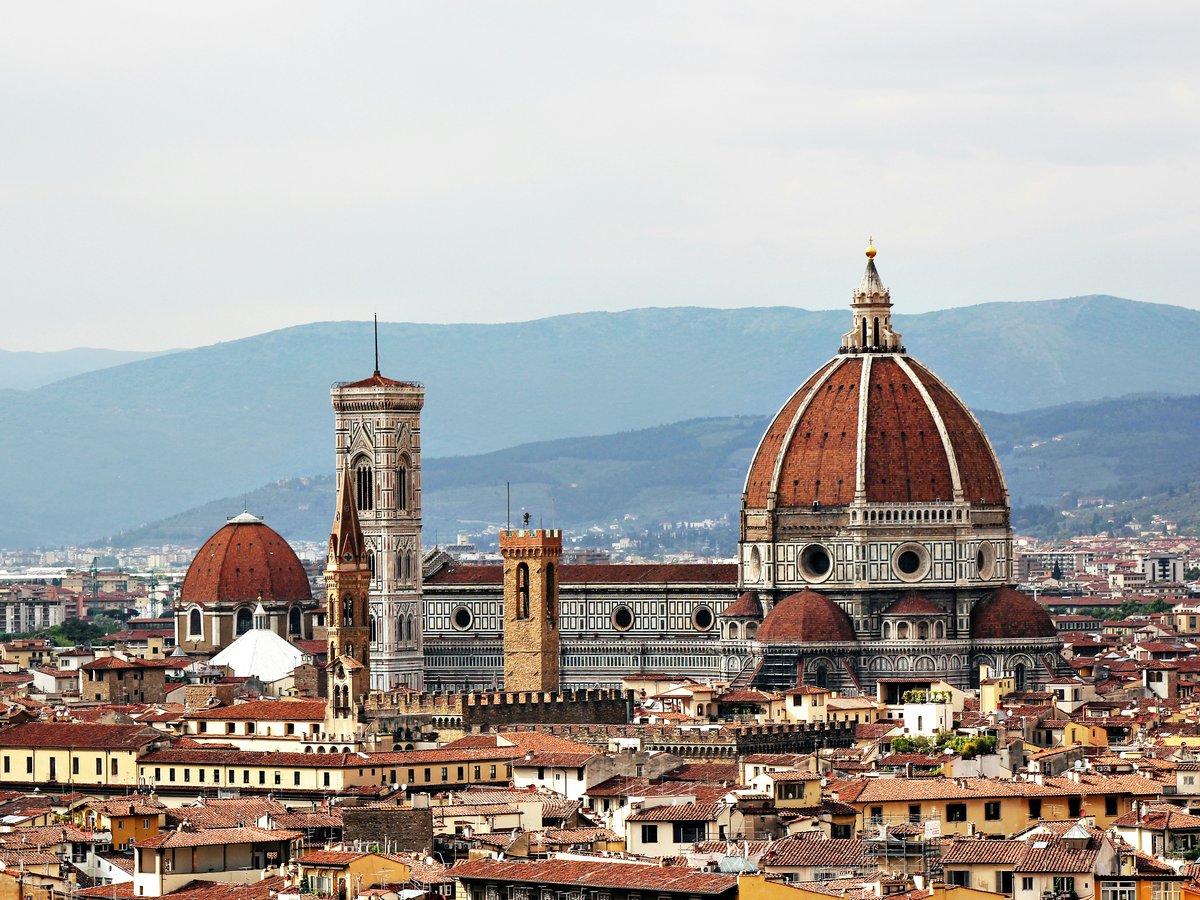
Florence built its wealth on textiles and leather, and 600 years later those trades still define the city's shopping identity. The Arno's south bank, the Oltrarno, remains home to a stubborn concentration of artisan workshops where families have been gilding frames, binding books, and tooling leather since before the Medici bankrolled the Renaissance. You'll find Florentine marbled paper in dozens of small botteghe, hand-stitched leather journals on nearly every block near Santa Croce, and perfumeries mixing scents from recipes that predate modern chemistry. Mind you, the tourist trade has pushed a lot of mass-produced goods into the historic center. Telling genuine Florentine craft from imported imitations takes a little local knowledge. The short version is this: if the shop has a workshop visible in the back and the owner's hands are stained, you're likely in the right place.
Shopping districts
-
Via de' Tornabuoni
luxuryFlorence's luxury spine runs from Piazza Antinori down to the Arno, lined with flagship boutiques from Ferragamo, Gucci, and Roberto Cavalli, all three of which were founded in Florence. The Ferragamo flagship sits inside the medieval Palazzo Spini Feroni. Even the side streets carry high-end names. Via della Vigna Nuova and Via degli Strozzi branch off with more designer labels and a slightly quieter pace. The clientele tends to be international, and the storefronts feel more Milan than Tuscany, but the Florentine roots of many of these houses still show in window displays that reference local craft tradition.
Best for: Italian designer fashion with Florentine heritage, flagship boutiques, fine leather goods
-
Oltrarno (Santo Spirito and San Frediano)
mixedCross the Ponte Vecchio or the Ponte alla Carraia and the atmosphere shifts. The Oltrarno still feels like a neighborhood where people live, not only shop. Via Maggio has antique dealers who've been in the same doorways for decades. Borgo San Frediano and the streets around Piazza Santo Spirito hold a concentration of independent artisan workshops. Bookbinders, gilders, mosaic restorers, ceramicists, and leather workers operate out of ground-floor botteghe with the doors open to the street. Prices range widely. A hand-marbled notebook might run under 20 euros, while a restored antique mirror on Via Maggio could reach several thousand. This is where Florentines themselves tend to commission gifts.
Best for: Artisan workshops, antiques, marbled paper, handmade leather, one-of-a-kind gifts
-
Santa Croce leather district
mid-range to highThe blocks around the Basilica di Santa Croce have been associated with Florentine leather since the Franciscan monks taught tanning techniques centuries ago. The Scuola del Cuoio, the leather school inside the basilica complex, still operates as both a working shop and a training ground. You'll find leather bags, belts, wallets, and jackets in the surrounding streets. That said, quality varies enormously. Some shops sell genuine vegetable-tanned Tuscan leather worked on site. Others sell cheaper imported hides stamped with Florentine branding. A reliable tell is the smell. Vegetable-tanned leather has a warm, slightly sweet scent, while chrome-tanned imports tend to have a sharper chemical edge.
Best for: Leather jackets, bags, wallets, belts, and watching leather worked by hand
-
Via dei Calzaiuoli and Piazza della Repubblica
mid-rangeThe pedestrian corridor between the Duomo and Piazza della Signoria is Florence's high-street shopping strip. International chains like Zara, H&M, and Benetton line the route, mixed with Italian mid-range brands. Piazza della Repubblica's 19th-century arcade hosts the historic Caffè Gilli and a RINASCENTE department store with 5 floors of fashion and a rooftop terrace overlooking Brunelleschi's dome. This area gets packed by mid-morning and stays that way. The shopping is functional rather than distinctive, but the RINASCENTE food hall on the top floor stocks Tuscan olive oils and wines that make decent last-minute gifts.
Best for: High-street fashion, department store shopping, international brands in a central location
-
Ponte Vecchio
highThe medieval bridge has been home to goldsmiths and jewelers since the Medici evicted the butchers in 1593. Today roughly 40 small jewelry shops line both sides, many family-run for generations. Gold here tends toward the traditional Florentine style. Heavy chains, cameo work, and Florentine filigree dominate the cases. Prices are high but not always unreasonable for handmade gold, and some shops still do custom work with short turnaround. The bridge gets so crowded by midday that browsing feels more like shuffling. Early morning or late afternoon is noticeably calmer.
Best for: Gold jewelry, Florentine filigree, cameos, custom metalwork
-
San Lorenzo district
budget to mid-rangeThe streets around the Basilica di San Lorenzo and the Mercato Centrale form Florence's busiest open-air commercial zone. Stalls selling leather goods, scarves, ties, and souvenirs line Via dell'Ariento and the surrounding blocks. Quality is hit-or-miss, and a lot of the leather here is imported despite the Florentine branding. Worth noting, though, that some longtime vendors do stock decent mid-range goods. The trick is to look for heavier-weight leather and check the linings and stitching. This district tends to draw budget-conscious shoppers and has more of a bazaar energy than a boutique one.
Best for: Budget leather goods, scarves, casual browsing, souvenir shopping
Markets
-
Mercato Centrale (ground floor)
foodThe ground floor of this 1874 cast-iron market hall is where Florentines still buy meat, fish, produce, cheese, and dried goods. The trippa stall, where lampredotto and tripe sandwiches are served from a small counter, has been operating in some form for decades. Vendors sell pecorino from the Crete Senesi, fresh porcini in autumn, lardo di Colonnata, and dried Tuscan herbs. The upper floor was renovated into a food court in 2014, but the ground level remains a working market. It tends to be quieter than the tourist-facing upstairs and the prices on produce reflect local norms rather than tourist markups.
Monday through Saturday, typically 7:00 to 14:00 for the ground floor vendors; some stalls close by 13:00. Closed Sundays.
-
Mercato di Sant'Ambrogio
food and householdThis is likely the most local-feeling food market in central Florence. Tucked in Piazza Ghiberti, east of Santa Croce, it draws neighborhood residents rather than tour groups. Inside the covered hall you'll find butchers, fruit vendors, a fishmonger, and a small trattoria where market workers eat lunch. The outdoor stalls sell clothing and household goods at budget prices. It has a rougher, more lived-in quality compared to the polished Mercato Centrale, and that's part of the appeal. The panini from the food counter inside, filled with local meats and cheeses, tend to run a few euros.
Monday through Saturday, roughly 7:00 to 14:00. Closed Sundays.
-
Mercato delle Pulci (Piazza dei Ciompi)
flea and antiquesFlorence's permanent flea market occupies a loggia in Piazza dei Ciompi, east of the Duomo. On ordinary days, a handful of dealers sell vintage prints, old postcards, secondhand books, costume jewelry, and mid-century Italian ceramics. The selection is small but the prices tend to be fair. Once a month the market expands significantly when surrounding streets fill with additional antique and vintage dealers. Old Murano glass, Art Deco lamps, and vintage Italian movie posters turn up with some regularity. Bargaining is expected here, though the permanent vendors tend to be firm on items they know are genuinely old.
Daily for the permanent loggia stalls, roughly 9:00 to 19:00. The larger monthly expansion typically falls on the last Sunday of each month.
-
Mercato di Santo Spirito
organic and artisanPiazza Santo Spirito in the Oltrarno hosts a small morning market on weekdays with fruit, vegetables, and flowers for the neighborhood. On the second Sunday of each month, it transforms into a larger organic and artisan market. Vendors bring Tuscan honeys, handmade soaps, olive oils from small producers, and organic cheeses. The piazza is lined with cafes and bars, so the monthly market has a relaxed, social energy. It feels more like a village fair than a commercial operation.
Weekday mornings for the basic produce market. Organic and artisan market on the second Sunday of each month.
-
Fierucola (Piazza Santo Spirito)
organic farmers' marketFierucola is an organic farmers' market that has been running in Florence since 1984. Producers sell biodynamic bread, raw Tuscan honey, hand-milled flour, heritage-variety produce, and natural wool textiles. Everything is supposed to be grown or made by the person selling it, which gives the market a personal quality. You might end up learning about a small farm's chestnut flour production from the farmer who harvested the chestnuts. It tends to draw a younger, environmentally conscious crowd from the Oltrarno.
Third Sunday of each month in Piazza Santo Spirito, typically from around 9:00 to 19:00.
-
Mercato delle Cascine
general street marketThis massive Tuesday morning market stretches along Viale Abramo Lincoln in the Parco delle Cascine, running for nearly a kilometer. It's where Florentine families come to buy clothing, shoes, kitchenware, fabrics, and food at low prices. The atmosphere is closer to a Southern European street bazaar than to anything in the historic center. Vendors sell Italian-made clothing at steep discounts alongside imported goods. The food section at the far end has stalls with Tuscan cheeses, cured meats, and seasonal produce at prices well below supermarket rates. It is loud, crowded, and not at all curated. Total chaos. Worth it.
Every Tuesday morning, roughly 7:00 to 14:00. Rain or shine.
Souvenirs worth bringing home
The most distinctively Florentine thing you can bring home is marbled paper. Workshops in the Oltrarno still hand-marble sheets using techniques that arrived via Turkey in the 17th century. A single sheet might cost 3 to 8 euros, journals and albums run from 15 to over 100 depending on the binding. Florentine leather is the other obvious choice, but only if it's genuine vegetable-tanned leather from a Tuscan tannery. Santa Croce district workshops using cuoio fiorentino are a safer bet than the street stalls near San Lorenzo. A small hand-stitched wallet typically starts around 30 to 50 euros from a workshop. Tuscan olive oil from a named estate, particularly from areas like Chianti Classico or the hills around Fiesole, travels well and costs less here than abroad. A half-liter of estate-bottled extra virgin might run 8 to 15 euros at a food market. Biscotti di Prato, the hard almond cookies meant for dipping in Vin Santo, come from the nearby town of Prato and are available throughout Florence. Officina Profumo-Farmaceutica di Santa Maria Novella, the Dominican pharmacy operating since 1612, sells perfumes, soaps, and herbal preparations in one of the most beautiful retail spaces in Italy. Their rosewater and potpourri have been made from the same recipes for centuries. Florentine gold filigree from the Ponte Vecchio is genuine local craft, though obviously at a higher price point. For something smaller, ceramic pieces painted in the Tuscan giallo style, with their warm yellows and greens, make distinctive gifts. Avoid anything labeled 'Made in Italy' without further specifics. That label is sometimes applied to goods that were only finished or packaged in Italy.
Practical tips
- Bargaining norms
- Fixed-price shops and boutiques do not bargain, full stop. At outdoor markets like San Lorenzo, Cascine, and the Piazza dei Ciompi flea market, bargaining is normal and expected, especially if you're buying multiple items. A 10 to 20 percent discount is reasonable to ask for. The permanent flea market dealers tend to have firmer prices on genuine antiques but will often move on newer or less rare items. At food markets, prices are generally fixed.
- Tax refunds (Tax Free shopping)
- Non-EU residents can claim a VAT refund on purchases over approximately 154.94 euros from a single shop in a single day. Ask for a Tax Free form at the point of sale. You'll need your passport. Process the refund at Florence airport (Amerigo Vespucci) or at your departure point from the EU. Customs may ask to see the goods, so keep them accessible. Refund companies like Global Blue and Planet Tax Free have different processing fees, so the actual refund is typically 11 to 14 percent rather than the full 22 percent VAT rate.
- Shop opening hours
- Many smaller Florentine shops still observe the traditional midday break, closing from roughly 13:00 to 15:30 or 16:00. This is less common in the heavily touristed center but very much alive in the Oltrarno and residential neighborhoods. Most shops open around 9:30 or 10:00 and close between 19:00 and 19:30. Sunday closures are still widespread, especially for artisan workshops and family-run stores. Monday mornings are also quiet, with some shops staying closed until lunchtime or all day. Department stores and international chains keep continuous hours.
- Payment methods
- Italy requires businesses to accept card payments for any amount, and most shops in Florence now comply. Visa and Mastercard are widely accepted. American Express less reliably so, particularly at smaller workshops and market stalls. That said, carrying some cash is still practical for markets, small artisan purchases, and the occasional older shop. ATMs (bancomat) are plentiful in the center. Avoid the independent currency exchange offices near the Duomo, which tend to have poor rates. Your bank's ATM withdrawal rate is almost always better.
- Sales seasons
- Italian law regulates when shops can hold sales. The winter sales (saldi invernali) typically begin in early January and run through February. Summer sales (saldi estivi) start in early July and run into August. Discounts in the first week tend to be 30 to 40 percent, deepening to 50 or even 70 percent as the season progresses, though sizes and selection thin out quickly. Outside these windows, genuine discounts are rare in traditional shops.
- Spotting genuine Florentine leather
- Look for the Vera Pelle (genuine leather) label, but don't rely on it alone. Vegetable-tanned Tuscan leather has a distinctive warm smell and develops a patina over time. Chrome-tanned leather, which is cheaper and often imported, tends to feel slightly rubbery and has a chemical scent. Workshops that let you watch the craftsperson working are generally trustworthy. Ask whether the hide is concia vegetale (vegetable-tanned). Shops with the Consorzio Vera Pelle Italiana certification or that reference specific Tuscan tanneries like those in the Santa Croce sull'Arno district (the tanning center, not the Florence neighborhood) are a good sign.
FAQ
What are the best areas in Florence for leather shopping?
The Santa Croce neighborhood has the highest concentration of leather workshops, including the Scuola del Cuoio inside the basilica complex. The Oltrarno, particularly around Via Maggio and Borgo San Frediano, has smaller independent leather workers who tend to do custom and bespoke pieces. The San Lorenzo market stalls offer the lowest prices, but the quality is inconsistent and much of the leather is imported. For the best combination of quality and fair pricing, the Oltrarno workshops are likely your strongest bet.
Is it worth buying gold jewelry on the Ponte Vecchio?
The Ponte Vecchio jewelers are legitimate goldsmiths, many with decades of family history on the bridge. Prices reflect the prime location, so you'll pay more per gram than at a jeweler in a quieter neighborhood. That said, the Florentine filigree work and the cameo tradition on the bridge are genuinely local crafts. If you're interested in a specific piece, it's worth comparing with jewelers on Borgo San Jacopo or Via Por Santa Maria nearby. Custom work from bridge jewelers tends to offer better value than their display pieces.
When is the best time of year to shop in Florence?
The January and July sales periods offer the best discounts in boutiques and clothing shops. For artisan goods, pricing is generally consistent year-round since handmade items rarely go on sale. November through early December tends to be quieter, with fewer crowds and normal pricing. The Christmas markets add atmosphere in December, though they're more about food and seasonal items than serious shopping. Avoid mid-August when many family-run workshops close entirely for the Ferragosto holiday period.
Are the San Lorenzo market stalls worth visiting?
They're worth a walk through, but go in with realistic expectations. The leather goods at the San Lorenzo stalls are a mix of decent mid-range Italian products and cheaper imports dressed up with Florentine branding. For a casual leather belt or a simple bag you don't need to last 20 years, the prices can be reasonable after a bit of bargaining. For anything you want to be genuine Tuscan leather, you're better off at a workshop in the Oltrarno or the Santa Croce district where you can see the work being done.
How do I get a VAT refund on my purchases in Florence?
Spend at least 154.94 euros in a single transaction at a participating shop and ask the cashier for a Tax Free form. You'll need to show your passport. When leaving the EU, present the form and goods at customs for a stamp, then submit it to the refund company's counter or drop box at the airport. Florence's Amerigo Vespucci airport handles refunds, but if you're flying out of Rome Fiumicino or Milan Malpensa, you can process there instead. Plan an extra 30 to 45 minutes at the airport for the customs queue, particularly in summer.
What food products from Florence are easy to bring home?
Dried goods travel best. Biscotti di Prato (cantucci), dried porcini mushrooms, Tuscan herb blends, and whole peppercorns or saffron from the Mercato Centrale are lightweight and suitcase-friendly. Sealed bottles of extra virgin olive oil from a named Tuscan estate are worth the luggage weight. Hard cheeses like aged pecorino can usually make it through customs if vacuum-sealed. Vin Santo in a sealed bottle is another strong option. Avoid fresh truffles or soft cheeses unless you're heading straight home, as they don't travel well beyond a day or two.
Last verified by automated review (v1.7.2) on . What is automated review?