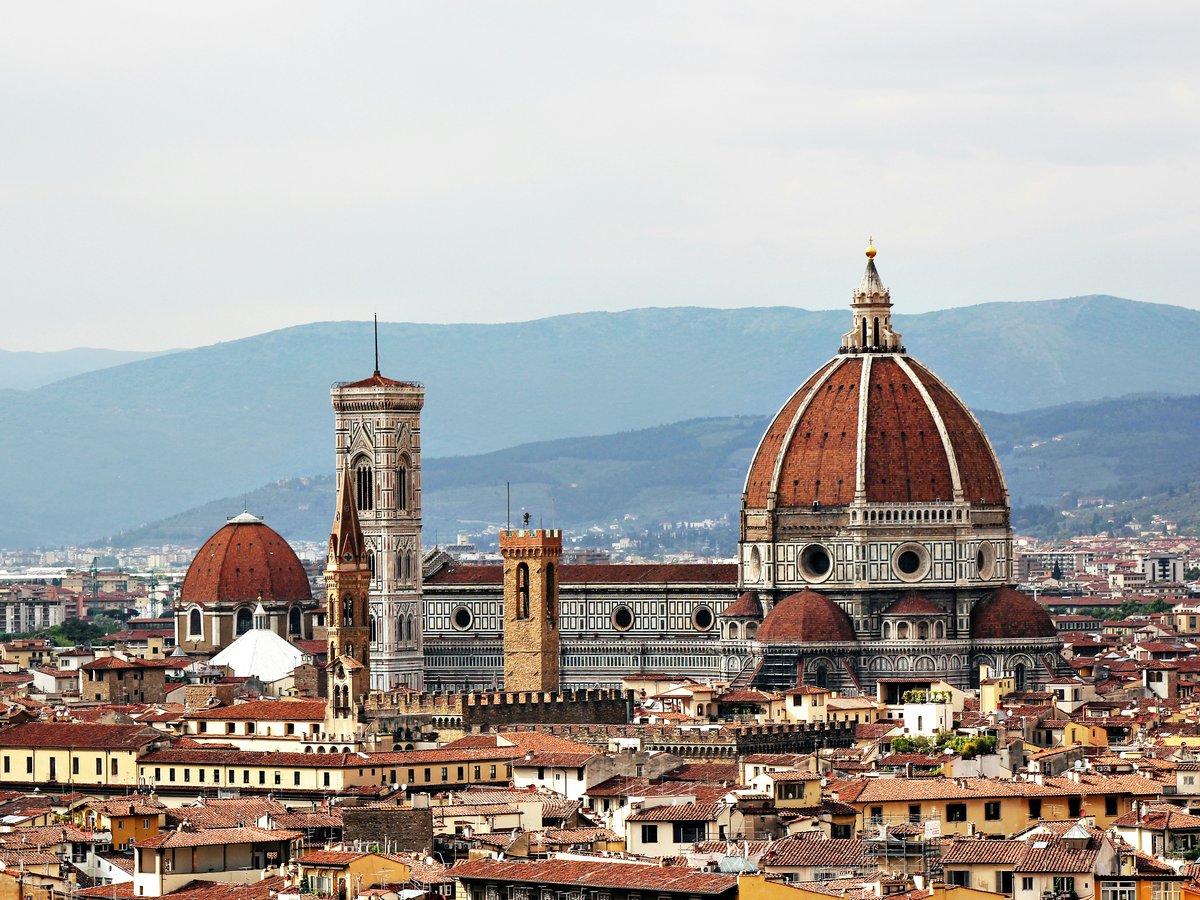
What's the food culture in Florence?
Florence eats Tuscan, not generic Italian. The city's food identity runs on saltless bread, slow-cooked white beans, offal from street carts, and a 1.2kg Chianina T-bone steak aged at least 21 days. Lunch starts at 12:30, dinner at 8pm. The best meals tend to be in Oltrarno and Sant'Ambrogio, not around the Duomo. Budget 12-25€ for a trattoria lunch.
Florence runs on a tighter meal clock than Rome or Naples. Breakfast is a cornetto and caffè at the bar counter, standing, 2-3€ total, done by 8:30am. Lunch service opens at 12:30 and the kitchen closes by 2:30. Show up at 1:45 at Trattoria Mario on Via Rosina and you'll wait 20 minutes for a shared table. Show up at 2:15 and the door is locked. Dinner starts at 7:30 in the tourist zone near Basilica of Santa Croce, but Florentines sit down closer to 8:30 or 9pm. The gap between lunch and dinner belongs to gelato and schiacciata, the flat, olive-oil-heavy bread sold at Forno Top on Via della Spada for 2.50€ a slab. That mid-afternoon schiacciata, warm and crackly on top, soft and salty inside, might be the best single bite in the city.
Two markets, two different experiences. Mercato Centrale near San Lorenzo has operated from the same cast-iron building since 1874. The ground floor still has butchers, cheese vendors, and produce stalls where you can smell aged pecorino before you see it. Perini sells wild-boar salami for about 28€ per kilo and will vacuum-seal it for your flight home. The upstairs food hall, renovated in 2014, is cleaner and pricier at 10-15€ per plate, and feels like a food court. Skip upstairs for meals. Mercato di Sant'Ambrogio in the Santa Croce district is where Florentine cooks shop. It's smaller, louder, and the fish counter smells like the Tyrrhenian Sea at low tide. Trattoria da Rocco operates from a counter inside the market and serves ribollita, the twice-boiled bread-and-kale soup, for 5€ in a plastic bowl. You eat at communal benches. The soup is thick enough to hold a spoon upright. That is the correct texture.
The centro storico between Florence Cathedral and Ponte Vecchio is the worst place to eat in the city. Menus in 6 languages, photos of the dishes laminated on the door, 18€ for spaghetti bolognese, a dish that does not exist in Tuscany. Cross the Arno into Oltrarno and the prices drop by a third or more. Trattoria Sabatino on Via Pisana has served a 3-course pranzo for under 15€ since 1956, wine included. The room smells like yesterday's ragu and the fluorescent lights do nothing for the ambiance, but the peposo, a black-pepper beef stew from Impruneta, is dense and slow-cooked and good enough to forgive the decor. In San Frediano, Il Magazzino serves lampredotto, the fourth stomach of the cow, slow-simmered, in a sit-down setting for about 8€. The texture is slippery and gelatinous. Some people hate it. Order it anyway, because every lampredotto cart between here and Palazzo Vecchio is selling the same cut for 5€ with less care.
Bistecca alla fiorentina is the dish that defines the city, and the one most likely to disappoint if you order it wrong. It is a Chianina-breed T-bone, cut 3 fingers thick at about 5-6cm, cooked rare over oak or olive-wood coals, served by weight. At Da Burde in the Rifredi district, 4km north of the Duomo, expect to pay around 50-55€ per kilo for a 1.2kg steak, so 60-66€ for the cut, enough for 2 people. The steak arrives with no sauce and no garnish, and the crust crackles when you press the flat of your knife against it. Ask for it medium and the kitchen will likely refuse, or give you a look that makes refusal unnecessary. Pair it with a Chianti Classico Riserva from Castellina or Radda, 25-35€ a bottle at restaurant markup. Rosso di Montalcino runs cheaper at 18-22€ and holds up to the char.
Signature dishes
-
Bistecca alla fiorentina
Chianina-breed T-bone steak, cut 5-6cm thick, seared rare over oak coals, and served by weight at 45-55€ per kilo. Shared between 2 people. Ordered rare or not at all in most Florentine kitchens.
-
Lampredotto
The fourth stomach of the cow, slow-simmered in broth with tomato and parsley, served in a bread roll from street carts across the city for 4-5€. The texture is gelatinous and slippery. A Florentine street-food staple since the 15th century.
-
Ribollita
A twice-boiled soup of cavolo nero, cannellini beans, stale Tuscan bread, and olive oil. Thick enough to eat with a fork. A winter staple, though trattorias in Sant'Ambrogio and Oltrarno serve it year-round for 5-8€.
-
Schiacciata
Flat, olive-oil-rich bread with a crackly salt crust, baked in sheet pans and sold by weight at bakeries across Florence for 2-3€ a slab. The grape version, schiacciata con l'uva, appears in September and October during harvest.
-
Pappa al pomodoro
A thick bread-and-tomato soup made with stale Tuscan saltless bread, garlic, basil, and San Marzano tomatoes, finished with raw olive oil. Served warm or at room temperature. About 6-8€ at most trattorias.
-
Crostini neri
Small toasts spread with a warm paste of chicken livers, capers, anchovies, and Vin Santo, served as an antipasto at nearly every traditional Florentine meal. About 5-7€ for a plate of 4-6 pieces.
-
Peposo
Beef stew slow-braised for hours with black peppercorns and Chianti wine, originally from Impruneta where tile-kiln workers cooked it in the cooling ovens. Rich, dark, and peppery. Around 12-14€ at trattorias in Oltrarno.
-
Cantucci con Vin Santo
Hard almond biscotti from Prato, dipped into a small glass of Vin Santo dessert wine. The standard end to a Florentine meal, offered at most trattorias for 5-7€. The biscuits are dry and twice-baked, meant to soften only in the wine.
Meal times
Cornetto and caffè at the bar by 8:30am, standing. Lunch 12:30-2:30pm, kitchens close hard. Dinner from 8-8:30pm for locals, 7:30pm near tourist sites. The 3-5pm gap fills with gelato, schiacciata, and espresso.
Tipping
No tipping expected. A coperto of 1.50-3€ per person appears on every bill automatically. Rounding up by 1-2€ on a 40€ tab is appreciated but optional.
Dietary notes
Vegetarians manage well with ribollita, pappa al pomodoro, and pasta e fagioli, though many soups default to meat broth. Ask for brodo vegetale. Celiac awareness across Italy is high, so most trattorias stock gluten-free pasta. Halal and kosher options are limited to about 5-6 places citywide, concentrated near the synagogue on Via Farini.
Cooking classes in Florence
 Free cancellation
 Pasta Cooking Class with Unlimited Wine in Florence
Cooking class: 2.5 hours, free cancellation.
via Viator Free cancellation
 Small-Group Wine Tasting Experience in the Tuscan Countryside
Cooking class: 4.8 hours, free cancellation.
via Viator Free cancellation
 Florence Pizza or Pasta Class with Gelato Making at a Tuscan Farm
Cooking class: 5 hours, free cancellation.
via Viator Free cancellation
 Pasta & Pesto Class with a View, plus Tiramisù & opt. Market Tour
Cooking class: 5 hours, free cancellation.
via Viator Free cancellation
 Florence Pasta & Tiramisu Cooking Class With Wine - Cooking Italy
Cooking class: 3 hours, free cancellation.
via Viator Free cancellation
 Pastamania 1st Pasta Class in Florence with Museum
Cooking class: 3.5 hours, free cancellation.
via Viator Free cancellation
 Florence Pizza Making Class with Unlimited Gelato & Wine
Cooking class: 3 hours, free cancellation.
via Viator Free cancellation
 Florence Cooking Class: Lasagna, Tiramisu & Market or Pasta Class
Cooking class: 5 hours, free cancellation.
via Viator Free cancellation
 Tagliatelle, Ravioli & Tiramisu Cooking Class with Unlimited Wine
Cooking class: 4.5 hours, free cancellation.
via Viator Free cancellation
 Florence: Pasta Cooking Class with Unlimited Wine
Cooking class: 2.5 hours, free cancellation.
via Viator Free cancellation
 Tuscan Cooking Class and Dinner in Florence
Cooking class: 4 hours, free cancellation.
via Viator Free cancellation
 The Italian Way: Pizza and Gelato Class with Unlimited Wine
Cooking class: 3.5 hours, free cancellation.
via ViatorLast verified by automated review (v1.7.2) on . What is automated review?