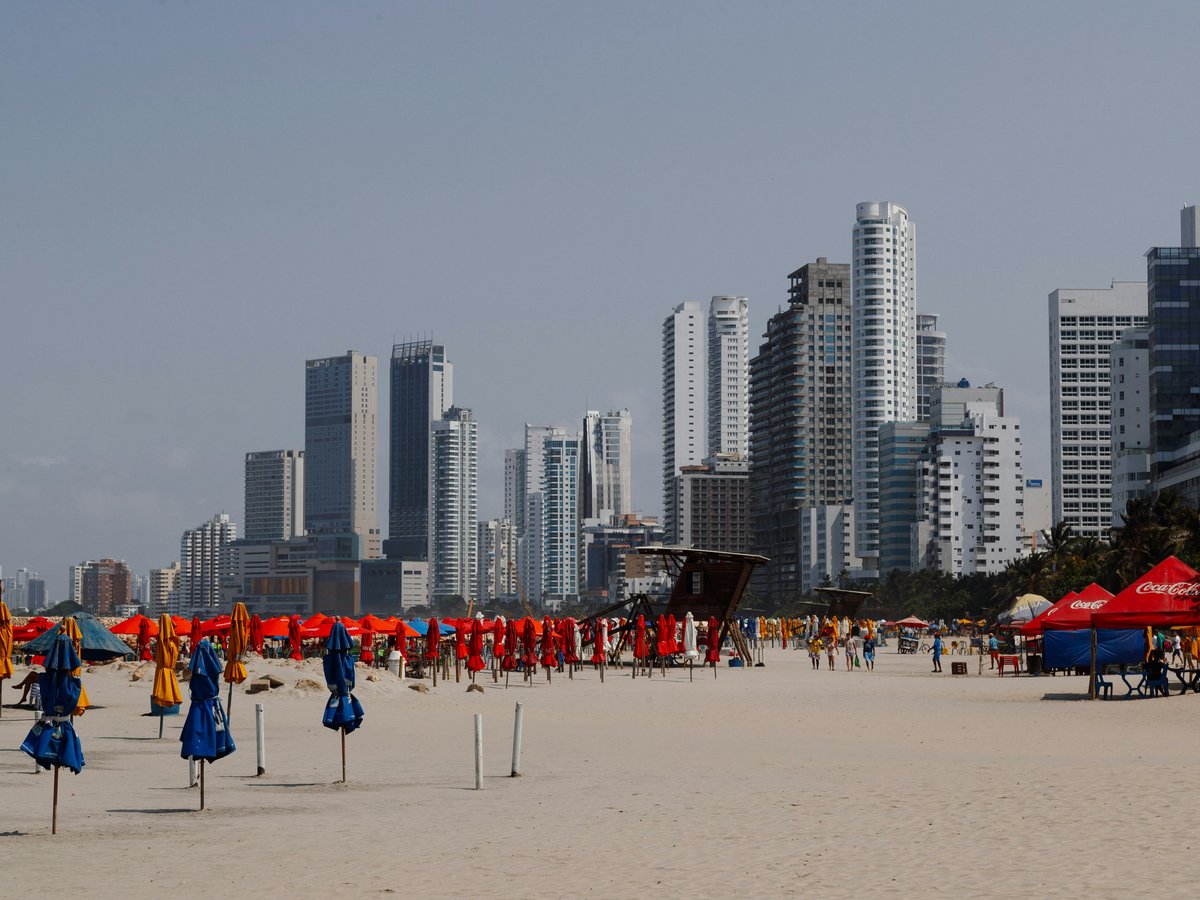
Stay in Cartagena in March
80 hotels in the Trip.com pool for Cartagena, from US$11 a night.
Opens Trip.com on Fri 5 Mar to Sun 7 Mar 2027; change the dates there.
March in Cartagena catches the last weeks of the dry season before April's rains change the equation. Daytime temperatures reach about 32.6°C (91°F) with lows around 24.5°C (76°F), and the month sees only 22mm of total rainfall across roughly 7 rainy days. The Caribbean trade winds, called Los Alisios, still push through the narrow streets of Ciudad Amurallada and Getsemaní. They drop the felt temperature by 3-4°C. Without them, 73% humidity at 32°C would sit closer to 37°C on exposed skin.
The practical advantage of March over January or February comes down to crowds and cost. Peak season runs from mid-December through February, and by early March the winter-escape traffic from North America and Europe has tapered. Boutique hotels in San Diego barrio and guesthouses along Calle del Arsenal tend to have openings that would have required weeks of advance booking in January. The Festival Internacional de Cine de Cartagena de Indias (FICCI), Latin America's oldest film festival, typically runs for about a week in early to mid-March. It fills Teatro Adolfo Mejía and several plaza venues with screenings, panels, and late-night events in Getsemaní.
March is not low season, mind you. Prices in Bocagrande and the Walled City remain 20-30% above the May-November rainy-season floor. The real test is the midday heat between 11am and 3pm, when the stone walls of the colonial center absorb and radiate warmth. Mornings start comfortably around 26°C, and evenings on the city walls near Café del Mar settle to about 27-28°C with a steady sea breeze.
Why visit in March
- Rainfall of 22mm across 7 days makes March one of the 3 driest months alongside January (17mm) and February (14mm). Afternoon showers, when they come, rarely last more than 20 minutes.
- Crowds thin noticeably from the December-February peak. Weekday mornings at Castillo San Felipe de Barajas feel almost quiet compared to January, and restaurant reservations in San Diego barrio are easier to land.
- Caribbean trade winds still blow through March, making 32°C more bearable than the same temperature in the windless months of September and October.
- Calm Caribbean seas around Islas del Rosario offer snorkeling visibility of 15-20 meters, compared to 5-8 meters in the rainy season from June through November.
Worth knowing
- Humidity at 73% makes the 32.6°C average high feel like 36-37°C, especially in the dense streets of La Matuna and Ciudad Amurallada between noon and 3pm.
- Hotel and restaurant prices remain 20-30% above the May-November low-season floor. Some tour operators still charge full high-season rates through the end of March.
- UV index reaches 11-12 at Cartagena's 10°N latitude. Unprotected skin burns in under 20 minutes, and water reflection on boat trips to Islas del Rosario intensifies exposure.
Best for
Think twice if
March sits at the dry tail of Cartagena's calendar, with only 22mm of rain across about 7 days. Most precipitation falls as brief afternoon showers lasting 15-20 minutes. The Caribbean trade winds moderate the 32.6°C highs, but 73% humidity still makes the heat stick, especially in the tight streets of the Walled City between 11am and 3pm. Mornings typically start around 26°C before climbing by 10am. Night temperatures around 24.5°C bring modest relief near the waterfront, though the colonial stone architecture retains heat in narrower streets of Ciudad Amurallada and Getsemaní.
Seasonal caution
- UV index reaches 11-12 at Cartagena's latitude of 10°N. Sunburn happens in under 20 minutes on unprotected skin, especially with water reflection on boat trips to the Rosario Islands and Playa Blanca. Reapply sunscreen after swimming or sweating.
Year-round climate
Averages from the last 5 years.
| Month | Avg high (°C) | Avg low (°C) | Rainfall (mm) |
|---|---|---|---|
| Jan | 32 | 24 | 17 |
| Feb | 32 | 24 | 14 |
| Mar | 33 | 25 | 22 |
| Apr | 32 | 25 | 79 |
| May | 31 | 25 | 159 |
| Jun | 30 | 25 | 202 |
| Jul | 31 | 25 | 142 |
| Aug | 30 | 25 | 171 |
| Sep | 30 | 25 | 150 |
| Oct | 29 | 25 | 207 |
| Nov | 29 | 25 | 191 |
| Dec | 31 | 25 | 35 |
Holidays and festivals in March
Public holidays
- Saint Joseph's Day(Día de San José)22 March 2027
- Maundy Thursday(Jueves Santo)25 March 2027
- Good Friday(Viernes Santo)26 March 2027
Headline events
Festival Internacional de Cine de Cartagena de Indias (FICCI)
Early to mid-March, dates vary annually
Latin America's oldest film festival, founded in 1960. A week of feature films, documentaries, and short-film competitions screened at Teatro Adolfo Mejía and outdoor venues across the Walled City and Getsemaní. Industry panels run during the day, and late-night events spill into the plazas. The festival draws Latin American and international filmmakers, and several screenings are open to the public at accessible ticket prices of roughly 15,000-25,000 COP.
Best things to do in March
Snorkeling at Islas del Rosario
water sportsA boat trip from Muelle de la Bodeguita in Manga takes about 90 minutes to reach the archipelago's 27 coral islands. The reefs sit in 3-15 meters of water with parrotfish, angelfish, and sea fans. Most day trips include a stop at one of the island beach clubs and lunch.
March's calm seas produce 15-20 meters of visibility at the reefs, compared to 5-8 meters in the wet months from June through November. Boat crossings are smooth with minimal swells.Booking tipBook through your hotel or a Muelle de la Bodeguita operator 2-3 days ahead. Walk-up touts at the dock often run lower-quality boats with crowded schedules.
FICCI screenings and filmmaker events
cultureLatin America's oldest film festival runs for about a week in March. Screenings at Teatro Adolfo Mejía showcase Latin American and international cinema. Outdoor projections in Plaza de la Aduana and other public spaces bring film to the open air. Panel discussions and Q&As run during daytime hours.
FICCI runs once a year, typically in early to mid-March. The outdoor screenings are an experience specific to this week of the calendar.Booking tipIndoor tickets go on sale about 2 weeks before the festival via the FICCI website. Outdoor plaza screenings are typically free and first-come-first-seated.
Sunrise walk along the Murallas (city walls)
walkingThe full circuit of Cartagena's colonial-era walls stretches about 4km from the Torre del Reloj clocktower through Santo Domingo and San Diego barrio. The elevated path gives views over the Caribbean, the Bocagrande skyline, and the terra-cotta rooftops of the old town.
March's dry mornings around 26°C make the 6am-7am window comfortable for the full wall circuit before the temperature climbs past 30°C by 10am. December-February crowds are thinner.Booking tipNo booking needed. The walls are publicly accessible at all hours. Start at the Torre del Reloj end for the best sunrise angle.
Day trip to Volcán del Totumo
excursionA small mud volcano about 50km northeast of Cartagena. You climb a wooden staircase to the crater and float in warm, mineral-dense mud about 2-3 meters deep. Local attendants give mud massages. Afterward, you rinse in the adjacent lagoon.
The access road to the volcano gets muddy and occasionally impassable in the wet season. March's dry conditions make the 90-minute drive reliable. The mud itself stays warm year-round, but the surrounding landscape is greener at the tail end of the dry season.Booking tipTours from Cartagena run daily for about 60,000-80,000 COP per person including transport. Departure is usually around 8am with return by early afternoon.
Evening street food walk through Getsemaní
foodThe streets around Plaza de la Trinidad and Calle de la Media Luna fill with food carts after 6pm. Arepa de huevo, empanadas, fresh fruit juices, and grilled corn line the sidewalks. The neighborhood's murals and street art provide a backdrop.
Dry-season evenings at 27-28°C bring the full rotation of vendors. Several cart operators work only during the December-March dry window. Rainy-season evenings (May-November) can shut down the outdoor food scene on short notice.Booking tipNo booking needed. Go between 7pm and 9pm on weekday evenings for a less crowded experience than weekends.
Boat trip to Playa Blanca on Isla Barú
beachA 45-minute boat ride from the Walled City marina reaches this stretch of white sand on the Barú peninsula. The water is shallow and calm, with a turquoise color that photographs well. Beach chairs and palapas are available from local vendors.
March seas are typically flat with minimal swells, making the crossing smooth and the swimming safe. Water clarity peaks in the dry months. By June, choppier conditions sometimes cancel morning departures.Booking tipThe earliest boats leave around 8am and return by 3-4pm. Bring your own water, sunscreen, and snacks. Beach vendor prices run 3-4 times Cartagena city rates.
Photography of Getsemaní street art
photographyThe murals along Calle del Porvenir, Callejón Angosto, and the streets radiating from Plaza de la Trinidad change regularly as artists repaint. Subjects range from Afro-Colombian heritage themes to abstract color work. Some walls carry artist signatures and Instagram handles.
March's dry, bright conditions and lower foot traffic compared to January give unobstructed shots with strong natural light. The 6:30-7:30am window offers soft, warm light and near-empty streets before the day-tour groups arrive.Booking tipSeveral local guides run 2-hour walking art tours of Getsemaní for about 80,000-120,000 COP per person, departing from Plaza de la Trinidad.
What to eat in March
In season: fruit
Mango de azúcar
The small, intensely sweet mango variety from Bolívar department starts appearing at Mercado de Bazurto stalls in March. Vendors stack them in pyramids for about 5,000-8,000 COP per kilo. The season runs through May.
On menus now
Ceviche de camarón
March's calm Caribbean seas bring consistent daily shrimp catches. The ceviche carts along Parque de Bolívar and near Plaza de Santo Domingo dress the shrimp with lime, red onion, and ají from that morning's haul.
Pargo rojo frito
Whole fried red snapper served at the seafood restaurants in Bocagrande and at beach palenques on Isla Barú. March fishing boats go out daily in calm water, so the catch is reliably same-day fresh.
Street food peaks
Cocadas
Chewy coconut-and-panela candies sold by palenqueras along Las Bóvedas and at the entrance to Castillo San Felipe de Barajas. The dry-season batches tend to be firmer and chewier than the softer rainy-season versions.
What to drink
Agua de coco
Coconut water served straight from the shell by vendors on Playa de Bocagrande and at Playa Blanca. At 32°C with 73% humidity, it is the most practical rehydration option after a beach morning.
Regular events in March
Día Internacional de la Mujer eventsFree
Cultural events, panel discussions, and a march through Ciudad Amurallada mark International Women's Day. Several museums and galleries in San Diego barrio offer reduced or free admission for the day.
March 8Día de San José (movable public holiday)Free
Catholic feast day honoring Saint Joseph, observed as a public holiday on the nearest Monday under Colombia's Ley Emiliani. Some businesses outside the tourist zones close for the day. The Iglesia de San Pedro Claver holds a special morning service.
Monday nearest to March 19Semana Santa processions (some years)Free
When Easter falls in late March, Cartagena's colonial churches organize candlelit evening processions through Ciudad Amurallada. The main Thursday and Friday routes depart from the Catedral de Santa Catalina de Alejandría. Easter's date moves between late March and late April. Check the calendar for the specific year.
Late March (movable, check Easter calendar)Best places this March
Castillo San Felipe de Barajas
historic siteThe largest Spanish colonial fortress in the Americas, completed in 1657. The tunnel system beneath the ramparts stays cool even at midday. Go at opening (usually 8am) in March to explore the upper batteries and enjoy unobstructed views over Getsemaní and the bay before tour groups arrive by 10am.
San LázaroMercado de Bazurto
marketCartagena's working-class market, roughly 2km southeast of the Walled City. March brings the season's first mango de azúcar from Bolívar farms, piled high at fruit stalls. The juice vendors blend it fresh for about 3,000 COP. The seafood section is best before 9am.
BazurtoConvento de la Popa
viewpointA hilltop Augustinian monastery at about 150 meters above sea level, dating to 1607. March's dry, clear mornings give the best visibility over the bay, the Rosario Islands on the horizon, and the Bocagrande skyline. The chapel interior has a carved 17th-century altar.
La PopaPlaza de la Trinidad
plazaThe social center of Getsemaní. March evenings see street performers, empanada vendors, and locals gathering on the church steps. The crowds are smaller than in January, and the dry weather keeps the outdoor scene running nightly.
GetsemaníLas Bóvedas
shoppingTwenty-three vaulted chambers built into the city walls in the late 18th century, originally military storage, now housing artisan shops. The thick stone keeps the interior noticeably cooler than the 32°C street. A practical midday escape during March's warmest hours.
San DiegoIglesia de San Pedro Claver
churchA 17th-century Jesuit church honoring the patron saint of enslaved people, with a small museum in the adjacent cloister. The courtyard garden is a quiet refuge from the street heat. The plaza outside fills with artists and performers on weekend evenings.
Ciudad AmuralladaTorre del Reloj (Puerta del Reloj)
landmarkThe main gateway into Ciudad Amurallada, originally built in the early 17th century. The clock tower was added later. In March, the Plaza de los Coches on the other side hosts evening dulce sellers and is the starting point for most walking tours of the Walled City.
Ciudad Amurallada
Your packing checklist
Tick items off as you pack. Your progress saves in this browser.
All packed — have a great trip.
Insider tips
Mercado de Bazurto is best before 9am on weekdays, when the seafood is freshest and the heat inside the market has not yet peaked. Take a taxi both ways. The surrounding streets are poorly signed and not particularly safe for wandering with camera gear.
FICCI outdoor screenings in Plaza de la Aduana and other public spaces are typically free and do not require festival passes. The indoor screenings at Teatro Adolfo Mejía sometimes release same-day tickets at the box office for 15,000-25,000 COP.
The sunset spot most tourists pay for is Café del Mar on the city walls, where cocktails run 30,000-45,000 COP. Walk 200 meters past the café along the wall toward Baluarte de Santo Domingo for the same unobstructed Caribbean view, no purchase required.
Plaza de la Trinidad in Getsemaní gets loud and packed by 9pm on weekends. For a calmer evening in the same neighborhood, the side streets off Calle de la Media Luna have smaller bars and fewer tour-group crowds.
If you are taking a boat to Islas del Rosario, book through your hotel or a reputable operator at Muelle de la Bodeguita rather than the touts at the dock entrance. The price difference is small, but boat quality and included-lunch standards vary widely.
Avoid these mistakes
- Scheduling a full walking tour of Ciudad Amurallada between noon and 3pm. The stone streets trap and radiate heat with almost no shade on the main plazas. Start at 7am or wait until 4pm, when the temperature drops 3-4°C and the light turns golden for photographs.
- Assuming March is shoulder or low season and arriving without hotel reservations. It is still the dry season, still high-demand. Popular guesthouses in Getsemaní and San Diego barrio fill 2-3 weeks ahead, especially for weekend stays.
- Taking a beach day at Playa Blanca without bringing water, snacks, and shade. Beach vendors charge 3-4 times Cartagena city prices for drinks and food, and the available shade under palapa shelters fills by 10am.
- Wearing dark-colored or synthetic clothing during March daytime. The 32°C heat intensifies on dark fabric under direct sun, and synthetic material traps humidity against the skin. Light-colored cotton or linen makes a tangible difference in comfort.
Practical tips for March
March straddles the end of high season, so dinner reservations at restaurants in Ciudad Amurallada and San Diego barrio are worth making 1-2 days ahead on Fridays and Saturdays. Most churches and museums open at 8am and close by 5pm. Air-conditioned taxis from Aeropuerto Rafael Núñez, roughly 5km from the Walled City, should run on meters, but some drivers prefer a flat rate. Use InDriver or DiDi ride-hailing apps as a backup. Dress code is casual everywhere except a few upscale restaurants in Bocagrande and San Diego barrio, where closed-toe shoes and long pants are expected for men at dinner. Tap water is municipally treated, but most locals drink filtered or bottled. Many pharmacies and smaller shops outside the tourist zones close between 12pm and 2pm for lunch. If Semana Santa falls in late March, expect a temporary hotel price bump of 10-25% and some business closures from Thursday through Easter Sunday.
FAQ
Is March a good time to visit Cartagena?
March is one of the 3 best months to visit Cartagena. It falls at the tail end of the dry season, with only 22mm of rainfall, average highs of 32.6°C (91°F), and noticeably fewer tourists than December through February. Hotel prices sit about 15-20% below the holiday peak. The main trade-off is heat and humidity, which can tire you out between 11am and 3pm. But compared to the 200+ mm of rain the city gets monthly from June through November, March is reliably dry and warm.
What is the weather like in Cartagena in March?
Expect average highs of 32.6°C (91°F) and lows of 24.5°C (76°F) with 73% humidity. Total rainfall is low at 22mm across about 7 days, typically arriving as short afternoon showers lasting 15-20 minutes. The Caribbean trade winds help moderate the felt temperature, especially along the waterfront and on the city walls. The UV index runs 11-12, so sunscreen and a hat are not optional for outdoor time.
Is Cartagena crowded in March?
Less crowded than December, January, or February, but still above the May-November baseline. The North American spring break window in mid-to-late March brings a short pulse of younger travelers to Bocagrande and Getsemaní. Weekdays are noticeably calmer at major sites. Castillo San Felipe de Barajas and the Walled City are busiest between 10am and 2pm. FICCI adds a film-festival crowd for about a week, concentrated around Teatro Adolfo Mejía and the Getsemaní bar scene.
What should I pack for Cartagena in March?
Light cotton or linen clothing in light colors, SPF 50+ reef-safe sunscreen, a wide-brimmed hat, a compact umbrella for the rare afternoon shower, reef shoes if you plan to snorkel at Islas del Rosario, insect repellent for evenings near the lagoon, and a 10-liter dry bag for boat trips. Bring electrolyte packets for the first few days as you acclimate to sweating in 73% humidity. Dress code is casual everywhere except a handful of upscale restaurants in San Diego barrio and Bocagrande that expect long pants for dinner.
Is it safe to swim at Cartagena's beaches in March?
March's calm Caribbean seas make swimming generally safe at Playa de Bocagrande, Playa Blanca on Isla Barú, and the island beaches at Islas del Rosario. Rip currents are uncommon in the dry season. Water temperature sits around 27-28°C (81-82°F). Watch for sea urchins near coral at the island beaches, and wear reef shoes when entering the water from rocky or uneven areas.
Things to Do in Cartagena in March
 Free cancellation
 Cartagena 5 Island Hop Tour: Lunch, Snorkel, Beach Clubs, & More
Day trip: 7 hours, free cancellation.
via Viator Free cancellation
 Tour De Palenque, Road to Emancipation.
Day trip: free cancellation.
via Viator Free cancellation
 Private Walking Tour in Cartagena Walled City & Getsemaní
Day trip: free cancellation.
via Viator Free cancellation
 Cartagena's Rosario Islands 5-Site Boat Tour with Lunch & Snorkel
Day trip: 7 hours, free cancellation.
via Viator Free cancellation
 Cartagena ATV Tour
Outdoor experience: 2.5 hours, free cancellation.
via Viator Free cancellation
 Full Day Tour of 5 Must-See Places in the Rosario Islands
Outdoor experience: 7.5 hours, free cancellation.
via ViatorFind a flight to Cartagena
Live fares to Cartagena appear here once cookies are accepted.
Last verified by automated review (v1.7.2) on . What is automated review?