Stay in Cartagena in October
80 hotels in the Trip.com pool for Cartagena, from US$11 a night.
Opens Trip.com on Fri 2 Oct to Sun 4 Oct 2026; change the dates there.
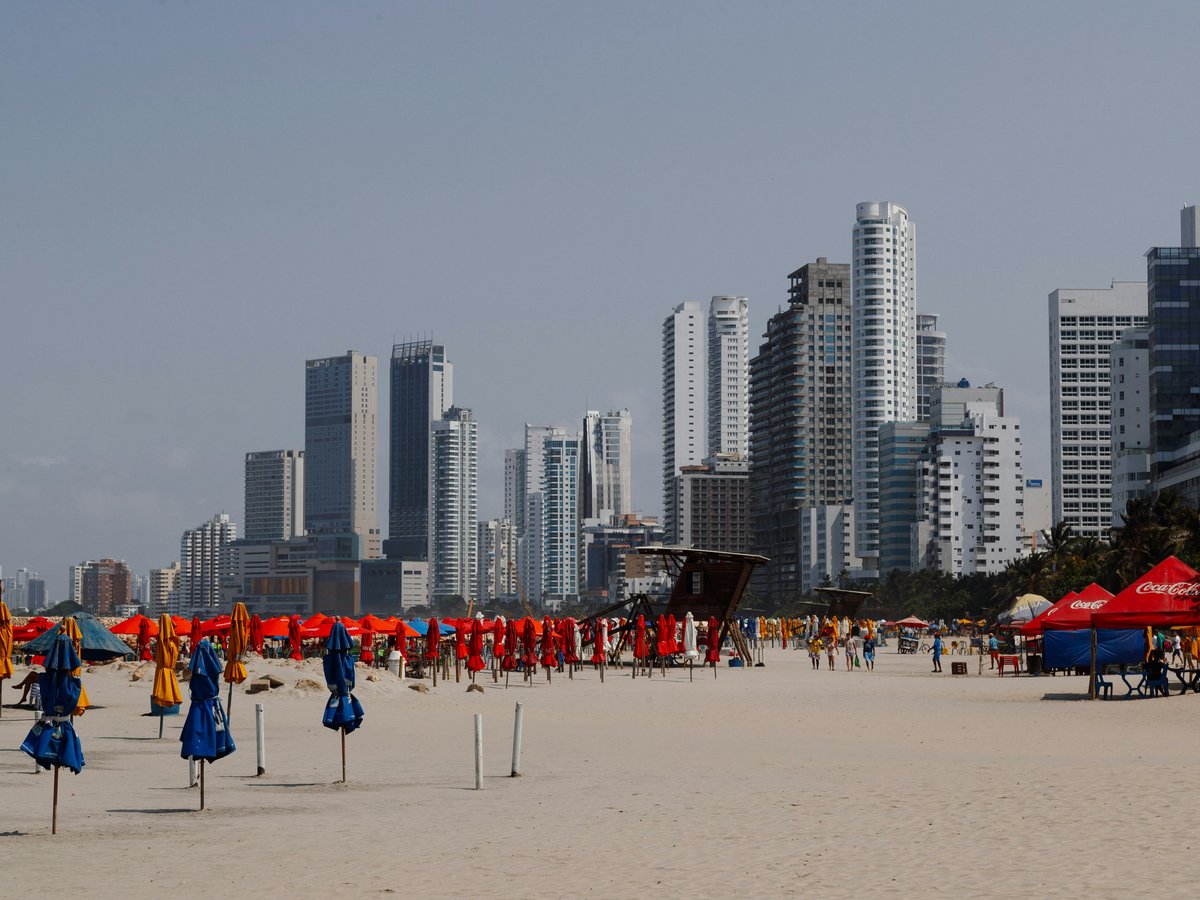
October is the wettest month of the year in Cartagena. That single fact should anchor your decision. The city typically sees around 207mm of rain across 26 days, which means you will get rained on. Not might. Will. The average high sits at 29.4°C (85°F) with lows around 24.8°C (77°F), so the heat is a few degrees milder than the scorching dry-season peaks of January through March. But the humidity holds steady near 84%, the kind that fogs your sunglasses the moment you step outside your hotel in the morning. Afternoon downpours tend to arrive between 2pm and 5pm, often hard and fast, then taper off by evening. You can still eat well, explore the Walled City, and find genuine beauty in the rain-slicked colonial streets of San Diego and Getsemaní. The crowds thin out considerably compared to the December-through-March high season, and hotel rates drop accordingly.
To be fair, Cartagena handles rain better than most tropical cities. The old town drains reasonably well, restaurants and museums stay open, and the rain brings a theatrical quality to the plazas. The cobblestones of Plaza de Santo Domingo glisten, the bougainvillea looks impossibly saturated, and the locals carry on as if nothing has changed, because for them it hasn't. Mind you, boat trips to Islas del Rosario get cancelled with some regularity when seas are rough, and Playa Blanca on Barú can feel more grey than golden. If your entire trip hinges on beach days and island hopping, October will likely frustrate you. If you can flex your plans around the weather and you want Cartagena at its least expensive, this month has a genuine case to make.
Why visit in October
- Hotel rates in Bocagrande and the Walled City drop 30-50% from December-February peaks, making 4-star colonial boutique hotels accessible at 3-star prices
- Cartagena's most popular sites, including Castillo San Felipe de Barajas and the Palacio de la Inquisición, have noticeably shorter queues, and restaurant reservations in Getsemaní are rarely needed
- Afternoon storms cool the city by 3-4°C from its dry-season highs, and evenings on the city walls feel genuinely pleasant at 25°C (77°F)
- Tropical fruit vendors in Mercado de Bazurto stock peak-season zapote and corozo, neither of which you'll find easily in December
Worth knowing
- 207mm of rainfall across 26 days makes October statistically the wettest month, and afternoon downpours can last 1-3 hours
- Boat operators cancel Islas del Rosario trips 2-3 times per week on average due to choppy Caribbean swells
- The 84% humidity is relentless, and mold on leather goods, camera lenses, and clothes left in closets is a real nuisance
- Some outdoor rooftop bars and beach clubs in Castillogrande operate on reduced schedules or close entirely for the low season
Best for
Think twice if
October is Cartagena's wettest month. Daytime highs average 29.4°C (85°F), and nights rarely dip below 24.8°C (77°F). Rainfall reaches 207mm spread across roughly 26 days, usually arriving as intense afternoon storms between 2pm and 5pm. The humidity holds near 84%, which makes the air feel heavier than the thermometer suggests. Mornings tend to be partly cloudy and relatively calm. You might get 3-4 hours of sunshine before the clouds build. Evenings often clear up enough for a walk along the city walls, though you'll want to keep an umbrella within reach at all times.
Seasonal caution
- Monthly rainfall of 207mm exceeds the heavy-rain threshold, with storms occasionally producing localized street flooding in low-lying areas of La Matuna and parts of the Walled City near the old port
- Caribbean swells increase in October, leading to rough seas that regularly disrupt boat service to Islas del Rosario and Barú, and swimming conditions at open-coast beaches can be dangerous due to undertow
Year-round climate
Averages from the last 5 years.
| Month | Avg high (°C) | Avg low (°C) | Rainfall (mm) |
|---|---|---|---|
| Jan | 32 | 24 | 17 |
| Feb | 32 | 24 | 14 |
| Mar | 33 | 25 | 22 |
| Apr | 32 | 25 | 79 |
| May | 31 | 25 | 159 |
| Jun | 30 | 25 | 202 |
| Jul | 31 | 25 | 142 |
| Aug | 30 | 25 | 171 |
| Sep | 30 | 25 | 150 |
| Oct | 29 | 25 | 207 |
| Nov | 29 | 25 | 191 |
| Dec | 31 | 25 | 35 |
Holidays and festivals in October
Public holidays
- Columbus Day(Día de la Raza)12 October 2026
Best things to do in October
Morning walking tour of the Walled City
sightseeingThe colonial core of Cartagena, a UNESCO World Heritage Site since 1984, is best explored in the morning hours before the afternoon rains build. The streets of San Diego and Santo Domingo are quieter in October, and the light through the overcast sky brings out the pastel facades without the harsh shadows of dry-season sun. You'll pass the Catedral de Santa Catalina de Alejandría, the Plaza de Bolívar, and the balconied mansions along Calle de la Factoría.
Morning cloud cover keeps temperatures 2-3°C below dry-season highs, and tourist foot traffic drops significantly, giving you space to photograph and wander at your own pace.Booking tipFree walking tours depart from Plaza de la Trinidad in Getsemaní most mornings at 10am. No booking required, but tip the guide 30,000-50,000 COP.
Explore Mercado de Bazurto
foodCartagena's sprawling, chaotic main market sits in the Alcibia district south of the Walled City. October brings peak supplies of corozo, zapote, and ñame. The fish section is loudest before 9am. You'll hear vallenato blaring from speaker stacks, smell frying empanadas mixing with salt air, and navigate stalls piled high with tropical fruit you may not recognize. This is not a sanitized tourist market.
Late rainy season means peak tropical fruit variety, and the lower tourist numbers mean you're more likely to be the only foreigner in the aisles, which changes the experience entirely.Booking tipGo with a local guide your first time. Several operators in Getsemaní run morning market tours for around 80,000-120,000 COP including tastings.
Castillo San Felipe de Barajas without the crowds
sightseeingThe largest Spanish colonial fortress in the Americas sits on the Cerro de San Lázaro. In October, you can explore the tunnels and ramparts at a pace that the December crowds make impossible. The fortress was built starting in 1536 and expanded through the 1700s. The tunnel system, designed to amplify footsteps as an early-warning system, is worth spending 45 minutes inside.
Visitor numbers drop to roughly a third of peak-season levels. You can linger in the tunnels, which stay cool and dry regardless of rain, and the overcast skies make the rampart walk far more comfortable than under dry-season sun.Booking tipArrive before 9am to beat both school groups and the afternoon rain. Entry is around 33,000 COP for foreigners.
Getsemaní street art walk
cultureThe neighborhood south of the Walled City has become one of the most concentrated street art districts in South America. The murals along Calle de la Sierpe and Callejón Angosto rotate regularly. October's overcast light is surprisingly good for photographing the murals, which wash out in direct equatorial sun. You'll also catch local artists working on new pieces, since the low season is when many walls get refreshed.
Artists tend to paint new murals during the quieter months. October through November is the window when fresh work appears, and the even, diffused light from overcast skies produces better photographs than the harsh midday sun of January.Sunset drinks on the city walls
nightlifeThe stretch of wall between Café del Mar and the Baluarte de Santo Domingo is Cartagena's most iconic sunset spot. In October, the storms typically clear by early evening, and the post-rain sunsets can be spectacular when the low clouds catch orange and pink light over the Caribbean. The air feels noticeably cooler after the rain passes.
Post-storm October sunsets tend to produce more dramatic color than the clear-sky sunsets of the dry season, and the crowd on the wall is a fraction of what you'd fight through in January.Booking tipCafé del Mar charges a minimum consumption of around 40,000-60,000 COP per person. You can skip the venue and sit on the wall itself for free with a beer from a nearby tienda.
Day trip to La Boquilla for canoe and mangroves
natureThe fishing village of La Boquilla, about 20 minutes north of the Walled City, offers canoe trips through the Ciénaga de la Virgen mangrove channels. Local fishermen pole wooden canoes through the narrow waterways. The mangroves are lush and full after months of rain, and bird activity is high. The trip typically lasts 1-2 hours and finishes with fried fish at one of the beachfront shacks.
The rainy season fills the mangrove channels to their fullest navigable depth, and migratory bird species begin arriving in October, making this the best month for birdwatching in the mangroves.Booking tipArrange directly with the fishermen's cooperative in La Boquilla rather than through a Walled City tour agency. Expect to pay 40,000-60,000 COP per person.
Cooking class focused on Caribbean Colombian cuisine
foodSeveral cooking schools in the Walled City and Getsemaní run half-day classes that start with a Mercado de Bazurto shopping trip. October's rain makes indoor activities genuinely appealing by mid-afternoon. You'll likely prepare ceviche cartagenero, arroz con coco, and patacones, and the market trip introduces you to ingredients like ají dulce, suero costeño, and fresh coconut.
Rain turns afternoons into ideal indoor-activity time, and the market shopping component benefits from October's peak tropical fruit season and lower crowds.Booking tipBook 3-5 days ahead. Classes run 4-5 hours and typically cost 200,000-350,000 COP per person including all ingredients and the market trip.
What to eat in October
In season: fruit
Corozo
This small, tart red palm fruit peaks during the late rainy season. Street vendors across Getsemaní and near Plaza de la Trinidad sell corozo juice chilled with ice, and it appears in sorbets at restaurants throughout the Walled City. The flavor sits somewhere between cranberry and sour cherry.
Zapote
Mamey sapote reaches its sweetest in October's heat and rain. The burnt-orange flesh has a creamy, custard-like texture and a flavor that leans toward sweet potato with hints of almond. Vendors at Mercado de Bazurto sell them by the kilo, and several juice stands in the market blend it fresh.
On menus now
Cazuela de mariscos
This coconut-milk seafood stew feels right in October's cooler, rain-dampened evenings. Restaurants in the San Diego neighborhood serve it with rice, and the version at the smaller fondas near Mercado de Bazurto tends to use the freshest catch. The broth carries notes of coconut, garlic, and ají dulce pepper.
Street food peaks
Arepa de huevo
Cartagena's signature street food peaks in the rainy months when vendors set up earlier and fry longer into the afternoon to catch the lunch-and-shelter crowd. The corn shell cracks to reveal a whole fried egg inside, often with a ground-beef filling. The best ones still come from the street carts near the Puerta del Reloj.
Cocadas
Coconut sweets in every color line the trays of palenqueras walking through Plaza de Santo Domingo and along the walls. October's humidity keeps them softer than in the dry season. Traditional varieties include panela-sweetened brown cocadas and the brighter ones tinted with fruit syrups.
Regular events in October
Día de la RazaFree
Colombia's observance of Columbus's arrival, October 12, is a national public holiday. Banks and government offices close. Some museums in the Walled City offer free or discounted entry. The day tends to be quiet rather than festive in Cartagena, though you'll find gatherings and Afro-Colombian cultural performances in Getsemaní's Plaza de la Trinidad.
October 12 (or the following Monday if it falls on a weekend)Halloween in GetsemaníFree
Cartagena has adopted Halloween with enthusiasm, particularly in Getsemaní. The streets around Plaza de la Trinidad and Calle de la Media Luna fill with costumed locals and live music on the evening of October 31. Several bars and hostels in the neighborhood host costume parties. It's more of a local street party than a commercial event.
October 31Pre-Independence rehearsals and bandoFree
Cartagena's Fiestas de la Independencia officially run November 1-11, but neighborhood comparsas (dance troupes) begin rehearsing publicly in late October. You can catch rehearsals in Getsemaní, Torices, and other neighborhoods, with drums and champeta music spilling into the streets. The energy builds noticeably in the last week of the month.
Late October, typically the final 7-10 daysBest places this October
Plaza de la Trinidad
plazaThe social heart of Getsemaní fills with locals every evening. In October, the reduced tourist presence makes this feel more like a neighborhood square than a sightseeing stop. Street food vendors set up along the edges, and you'll hear champeta and reggaeton from competing speakers. The 18th-century Iglesia de la Santísima Trinidad anchors the north side.
GetsemaníMuseo del Oro Zenú
museumThis free museum on Plaza de Bolívar houses pre-Columbian gold and ceramic artifacts from the Zenú people who inhabited the region before Spanish colonization. The collection includes intricate gold nose rings, earrings, and filigree work. In October, this is an ideal afternoon refuge when the rain arrives. The building itself, a colonial-era mansion, stays cool inside.
Centro HistóricoConvento de la Popa
historic siteThe highest point in Cartagena, this 17th-century Augustinian monastery at 150 meters above sea level offers panoramic views of the city, the bay, and the Caribbean. October's cloud formations make the view more dramatic than the flat blue skies of the dry season, though you should go in the morning before storms build. The chapel inside contains a carved wooden image of the Virgen de la Candelaria.
La PopaMercado de Bazurto
marketCartagena's central market is a full-sensory experience. Rows of fish stalls, fruit vendors, juice bars, and lunch counters fill a sprawling complex south of the old city. October brings peak corozo and zapote supplies. The empanada and carimañola vendors near the main entrance fry fresh batches continuously. Arrive before 9am for the fish section at its most active.
AlcibiaParque Centenario
parkThis park between the Walled City and Getsemaní fills with green after the rains. October keeps the canopy thick and the resident iguanas active. The park currently shows its age, but it still functions as a genuine local gathering point. Vendors sell tinto (sweet black coffee) along the perimeter, and the park connects directly to the pedestrian entrance through the Puerta del Reloj.
CentroIglesia de San Pedro Claver
historic siteNamed for the Jesuit priest who ministered to enslaved Africans arriving at Cartagena's port in the 1600s, this church and its attached cloister contain his remains and a small museum. The stone courtyard stays cool and quiet. In October, you'll often have the cloister to yourself, which changes the atmosphere entirely compared to the busy dry season.
Centro HistóricoCafé del Mar on the city walls
barPerched on the Baluarte de Santo Domingo, this bar has the most photographed sunset view in Cartagena. The post-rain October sunsets, when they happen, layer pink and orange across wet stone and dark sea. In low season, you can usually find a seat without a reservation, which is not true in January.
Centro Histórico
Your packing checklist
Tick items off as you pack. Your progress saves in this browser.
All packed — have a great trip.
Insider tips
The afternoon storms in October follow a loose pattern. Watch the clouds building over the bay around 1pm. If they stack tall and dark by 1:30pm, you have about 30-45 minutes before the rain starts. Use that window to get somewhere you want to be stuck for 2 hours. Locals barely glance up.
Mercado de Bazurto's juice stands will blend any combination of fruit you point at for around 3,000-5,000 COP. In October, ask for corozo con zapote, a combination you won't find at tourist-facing juice bars in the Walled City. Point at the fruit if your Spanish is limited.
The free walking tours that depart from Plaza de la Trinidad are significantly better in October because the guides spend less time managing large groups and more time telling stories. Groups of 5-8 people versus 25-30 in January make a real difference in how much you absorb.
Getsemaní's street art changes fastest between October and November, when artists use the low season to repaint walls. If you visited 6 months ago, a third of the murals you saw might be gone. Walk Calle de la Sierpe and Callejón Angosto specifically for the newest work.
Avoid exchanging money at the Puerta del Reloj currency booths, which offer rates 5-8% worse than the ATMs inside the Walled City. Banco de Bogotá and Bancolombia ATMs on Calle Santos de Piedra dispense pesos at the market rate with a flat withdrawal fee.
Avoid these mistakes
- Booking an all-day island trip to Islas del Rosario without a cancellation-flexible option. October swells cancel 2-3 departures per week on average, and non-refundable packages through street-side tour booths rarely honor weather cancellations. Book through your hotel or a reputable operator who offers rain-date flexibility.
- Packing only one pair of shoes. Wet cobblestones, afternoon puddles, and high humidity mean your shoes will not dry overnight in October. Bring at least two pairs, both with non-slip soles, and alternate days.
- Scheduling all outdoor activities after noon. The rain reliably arrives between 2pm and 5pm in October. Front-load your sightseeing before lunch. Castillo San Felipe, the city wall walk, and Convento de la Popa should all be morning plans.
- Assuming Cartagena's Caribbean coast means warm-water swimming everywhere. In October, the beaches north of the city, including Playa de Marbella, can have dangerous rip currents and undertow from the seasonal swells. Check conditions locally before wading in past your knees.
Practical tips for October
Book accommodations with flexible cancellation, as flight delays and route changes increase during the rainy season. Many boutique hotels in the Walled City and Getsemaní offer direct-booking discounts of 15-20% below aggregator prices during October. Restaurants rarely require reservations this month, but confirm operating hours in advance, as some seasonal spots in Bocagrande and Castillogrande reduce their schedules. Taxis in Cartagena do not use meters. Agree on a fare before entering. A ride from the Walled City to Castillo San Felipe should cost around 10,000-15,000 COP. InDriver and Uber apps work in Cartagena and tend to be 20-30% cheaper than street taxis. The Puerta del Reloj entrance to the Walled City floods during the heaviest October downpours. If the rain is torrential, enter through the San Juan de Dios gate instead. Most museums close on Mondays. Plan your indoor-activity days for Tuesday through Sunday.
FAQ
Is October a good time to visit Cartagena?
October is Cartagena's wettest month, with 207mm of rain across 26 days. It's not ideal for beach vacations or island hopping, but it works well for budget-conscious travelers focused on history, food, and architecture. Hotel rates drop 30-50% from the December-February peak, crowds thin significantly, and the colonial city itself is still beautiful between storms. If you can handle afternoon rain and plan your outdoor activities for the morning, October offers genuine value. If you need guaranteed sunshine, January through March is a better bet.
What is the weather like in Cartagena in October?
Expect highs around 29.4°C (85°F) and lows near 24.8°C (77°F), with humidity at 84%. Rain falls on most days, typically arriving as heavy afternoon storms between 2pm and 5pm. Mornings are often partly cloudy and workable for sightseeing. The rain is warm, not cold, and it usually passes within 1-3 hours. Evenings tend to clear. You'll want quick-dry clothing and a good umbrella at all times.
Is Cartagena crowded in October?
No. October is deep low season. You'll notice the difference immediately at sites like Castillo San Felipe de Barajas and the Palacio de la Inquisición, where queues that stretch 30 minutes in January disappear entirely. Restaurants in the Walled City and Getsemaní rarely fill up. Some travelers find the quiet appealing. Others find that a few seasonal businesses closing creates gaps in the nightlife scene, particularly in Bocagrande.
Can you visit Islas del Rosario in October?
You can, but plan for cancellations. Boat operators run trips most days, though rough seas from Caribbean swells cancel departures 2-3 times per week on average. Book with an operator that offers date flexibility or full refunds for weather cancellations. The islands themselves are still beautiful when you reach them, and snorkeling visibility tends to be reasonable. Avoid the cheapest tour packages sold on the street near the Muelle de los Pegasos, as they are the least likely to honor weather-related refunds.
What should I pack for Cartagena in October?
Lightweight, quick-dry fabrics are essential. Skip cotton and denim, which will stay damp in the 84% humidity. Bring a compact umbrella, waterproof sandals with grip for wet cobblestones, reef-safe sunscreen (UV is strong even through clouds at 10°N latitude), insect repellent with DEET or picaridin, and a dry bag for electronics. A light long-sleeve layer handles both mosquitoes at dusk and the aggressive air conditioning in Cartagena's restaurants and malls.
Things to Do in Cartagena in October
 Free cancellation
 Cartagena 5 Island Hop Tour: Lunch, Snorkel, Beach Clubs, & More
Day trip: 7 hours, free cancellation.
via Viator Free cancellation
 Tour De Palenque, Road to Emancipation.
Day trip: free cancellation.
via Viator Free cancellation
 Private Walking Tour in Cartagena Walled City & Getsemaní
Day trip: free cancellation.
via Viator Free cancellation
 Cartagena's Rosario Islands 5-Site Boat Tour with Lunch & Snorkel
Day trip: 7 hours, free cancellation.
via Viator Free cancellation
 Cartagena ATV Tour
Outdoor experience: 2.5 hours, free cancellation.
via Viator Free cancellation
 Full Day Tour of 5 Must-See Places in the Rosario Islands
Outdoor experience: 7.5 hours, free cancellation.
via ViatorFind a flight to Cartagena
Live fares to Cartagena appear here once cookies are accepted.
Last verified by automated review (v1.7.2) on . What is automated review?