Stay in Cartagena in February
80 hotels in the Trip.com pool for Cartagena, from US$11 a night.
Opens Trip.com on Fri 5 Feb to Sun 7 Feb 2027; change the dates there.
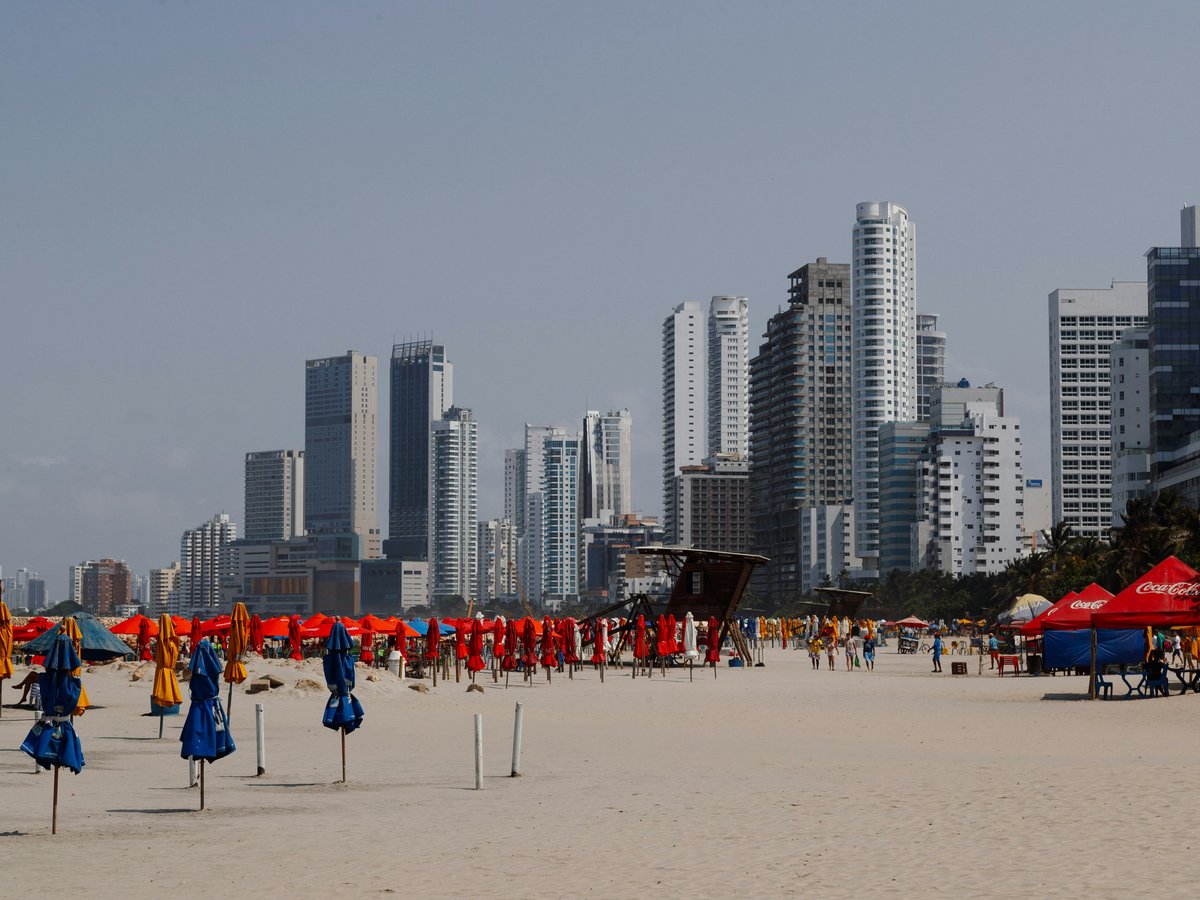
February in Cartagena is peak dry season on the Colombian Caribbean, and the city operates accordingly. Daytime temperatures hover around 32.3°C (90°F) with 72% humidity, which can feel closer to 38°C in direct sun on the stone plazas of the Ciudad Amurallada. Rain is nearly absent. The monthly average is 14mm, spread across about 4 days of brief afternoon showers that rarely last 20 minutes. You could go the entire trip without getting rained on.
This is also peak tourist season. Cartagena fills with European and North American visitors escaping winter, Colombian families taking advantage of school breaks, and cruise ship passengers docking at the terminal in Manga. Hotel rates in the Walled City and Bocagrande reflect it. A room in San Diego that runs 350,000 COP per night in October might reach 600,000 COP or more in February. That said, the tradeoff is clear. You get near-perfect beach weather, calm seas for boat trips to Islas del Rosario, and a city in full social mode. Open-air restaurants stay packed past midnight. Street performers work the corners of Plaza de Santo Domingo until the small hours.
The month also overlaps with Carnaval de Barranquilla, Colombia's largest carnival and a UNESCO Intangible Cultural Heritage event, held about 120km northeast. Many travelers base themselves in Cartagena and make the 2-hour bus ride. Within the city itself, Fiestas de la Candelaria on February 2 brings processions and champeta music to the streets of Getsemaní.
Why visit in February
- Driest month of the year with only 14mm of rainfall, meaning near-guaranteed sunshine for beach days and walking tours of the Ciudad Amurallada
- Calm Caribbean seas make February the best window for boat trips to Islas del Rosario and snorkeling with 15-20m visibility
- Carnaval de Barranquilla, a UNESCO-recognized carnival and one of the largest in the world, is a 2-hour bus ride away and typically falls in mid-to-late February
- Getsemaní's Plaza de la Trinidad has live champeta and salsa music most evenings, and the dry-season breeze makes sitting outside comfortable well past midnight
- Fiestas de la Candelaria on February 2 brings Afro-Colombian dance performances and street processions through the historic center and up to the Convento de la Popa
Worth knowing
- Peak-season pricing. Hotel rates in the Walled City run 40-60% above the annual average, and popular restaurants in San Diego may require reservations 2-3 days ahead.
- The 32°C heat combined with 72% humidity makes midday walking tours between 11:00 and 15:00 genuinely uncomfortable, especially on the exposed ramparts of Castillo San Felipe de Barajas
- Cruise ship days, typically Tuesday through Thursday, flood the Walled City with 3,000-5,000 day-trippers. The narrow streets around Torre del Reloj and Las Bóvedas get congested.
- Mosquitoes remain active despite the dry season. Dengue cases in Bolívar department tend to rise in the early months of the year.
Best for
Think twice if
February is the driest month in Cartagena, edging out January by a few millimeters. The Caribbean trade winds, locally called los Alisios, blow steadily from the northeast. They keep skies mostly clear and provide some relief from the heat. Mornings typically start around 24.3°C (76°F) with a light breeze off the sea. By early afternoon, temperatures reach 32.3°C (90°F). Humidity sits around 72%, which is moderate by Cartagena standards but still noticeable when you step out of an air-conditioned hotel. The 14mm of monthly rainfall usually arrives as short, sharp showers in the late afternoon, rarely lasting more than 20 minutes. Evenings cool slightly to about 26-27°C (79-81°F), making after-dark walking in Getsemaní and the Ciudad Amurallada genuinely pleasant.
Seasonal caution
- UV index regularly reaches 11-12 (extreme) at Cartagena's latitude of 10°N in February. Unprotected midday sun exposure on the water or the fortification walls can cause sunburn in under 15 minutes.
- The combination of 32°C air temperature and 72% humidity pushes the apparent temperature to roughly 38-39°C (100-102°F) in direct sun during midday hours. Hydration breaks and shade are not optional between 11:00 and 15:00.
Year-round climate
Averages from the last 5 years.
| Month | Avg high (°C) | Avg low (°C) | Rainfall (mm) |
|---|---|---|---|
| Jan | 32 | 24 | 17 |
| Feb | 32 | 24 | 14 |
| Mar | 33 | 25 | 22 |
| Apr | 32 | 25 | 79 |
| May | 31 | 25 | 159 |
| Jun | 30 | 25 | 202 |
| Jul | 31 | 25 | 142 |
| Aug | 30 | 25 | 171 |
| Sep | 30 | 25 | 150 |
| Oct | 29 | 25 | 207 |
| Nov | 29 | 25 | 191 |
| Dec | 31 | 25 | 35 |
Headline events
Carnaval de Barranquilla
Saturday through Tuesday before Ash Wednesday, typically mid-to-late February
Colombia's largest carnival and a UNESCO Intangible Cultural Heritage event, held in Barranquilla about 120km northeast of Cartagena. Four days of parades, cumbia, mapalé dancing, and the Batalla de Flores opening procession on Saturday. Over 1.5 million people attend annually. Many Cartagena-based travelers make the 2-hour bus ride for one or more days of the festival.
Best things to do in February
Boat trip to Islas del Rosario
beachThe Rosario Islands sit about 45km southwest of Cartagena, a 1-1.5 hour boat ride from the Muelle de la Bodeguita in the Walled City. The archipelago has 27 islands with coral reefs, clear water, and small beach clubs. February's calm Caribbean seas and minimal rainfall make this the best window for snorkeling. Visibility reaches 15-20 meters, compared to 5-8 meters during the October rainy season.
Calmest seas of the year. Minimal swell means smoother boat rides and 15-20m underwater visibility, which drops to 5-8m in the wet months from Canal del Dique runoff.Booking tipBook through your hotel or a local operator in Getsemaní rather than the touts near Torre del Reloj, who typically charge 30-50% more for the same boat.
Dawn visit to Castillo San Felipe de Barajas
sightseeingThe largest Spanish colonial fortification in the Americas sits on the Cerro de San Lázaro, east of the Walled City. The tunnel system, battlements, and views over the bay are worth the visit, but the exposed stone absorbs heat quickly in February. By 10:00, the ramparts feel like a griddle. The castle opens at 8:00, and the first 90 minutes offer manageable temperatures, fewer tour groups, and soft morning light on the walls.
February's clear skies guarantee views over the bay at dawn, but the 32°C heat makes a midday visit miserable. The 8:00 opening lets you explore the tunnels and ramparts before cruise ship groups arrive around 10:00.Booking tipTickets cost around 33,000 COP for foreigners. Buy online to skip the morning queue.
Getsemaní street art and evening walk
cultureGetsemaní, the neighborhood directly south of the Walled City past the Torre del Reloj, has become Cartagena's creative quarter. The streets around Plaza de la Trinidad, Calle de la Sierpe, and Callejón Angosto are covered in large-scale murals. After dark, the plaza fills with locals, street food vendors, and live champeta or salsa music. February evenings cool to about 26-27°C (79-81°F). Comfortable enough for hours of walking.
Dry-season evenings in the mid-to-upper 20s°C make this neighborhood pleasant to walk rather than sweaty. A steady northeast breeze off the Caribbean picks up after sunset.Day trip to Playa Blanca on Isla Barú
beachPlaya Blanca is a 600-meter stretch of white sand on Isla Barú, about 50km southwest of Cartagena by road or 45 minutes by speedboat. The water is shallow and turquoise for about 30 meters out. February's dry weather and gentle seas make it the peak window. Arrive before 10:00 on weekends. The beach gets crowded by midday when Cartageneros drive down from the city.
No rain, calm seas, and the warmest water temperatures of the year at around 28-29°C (82-84°F). October and November storms can make the boat transfer rough and stir up sediment.Booking tipThe road route (about 1 hour from the Walled City) costs roughly half of the speedboat option and avoids the sometimes choppy open-water crossing.
Mercado de Bazurto food tour
foodCartagena's central market in the La Quinta neighborhood is loud, humid, and local. This is not a sanitized tourist market. Vendors sell fresh fish from the Caribbean that arrived that morning, tropical fruits in tall piles, herbs, and prepared plates of cazuela de mariscos or fried mojarra with arroz con coco for 8,000-15,000 COP. The market runs from early morning to about 14:00.
The dry season means the open-air sections of the market are not flooded or muddy, which is a real problem in October and November. Mango de azúcar and patilla are at peak availability.Booking tipGo with a local guide or a hotel recommendation. The market is safe but disorienting on a first visit. Before 10:00 is best.
Sunset drinks on the murallas
nightlifeThe city walls that ring the Ciudad Amurallada have a walkable stretch between Baluarte de Santo Domingo and Café del Mar that faces due west over the Caribbean. In February, the sun sets around 18:10. The wall-top walkway fills with locals and travelers sitting on the ramparts with beers from nearby tiendas. Café del Mar is the formal option, with cocktails running 35,000-50,000 COP and a DJ set after dark.
February's clear skies mean unobstructed sunsets over the water nearly every evening. In the wet months (September through November), cloud cover frequently blocks the view.Booking tipCafé del Mar fills quickly. Arrive by 17:00 for a table. Or buy a beer from a nearby shop for 3,000 COP and sit on the wall itself. Same sunset.
Cerro de la Popa and Convento de la Popa
sightseeingThe highest point in Cartagena, about 150 meters above sea level. The 17th-century Augustinian convent offers 360-degree views of the bay, the Bocagrande skyline, and the old city below. February 2 draws large crowds for the Fiestas de la Candelaria pilgrimage to the Virgen de la Candelaria. Outside that date, the hilltop is relatively quiet.
The Fiestas de la Candelaria on February 2 center on this convent. On other February mornings, the dry-season clarity gives the sharpest panoramic views of the year, with the Sierra Nevada de Santa Marta occasionally visible to the northeast.Booking tipTake a taxi (30,000-40,000 COP round trip with waiting time). Walking up alone is not advisable for safety reasons, especially on the lower slopes.
Snorkeling at Isla Grande
adventureThe largest island in the Rosario archipelago has several small beach areas with reef systems close to shore. The coral supports parrotfish, angelfish, and barracuda. Several eco-hotels on the island offer day passes with snorkel equipment included.
Peak underwater visibility of 15-20m during the dry season. Water temperature sits around 28°C (82°F). Wet-season runoff from the Canal del Dique reduces visibility from June through November.Booking tipOvernight stays on Isla Grande book out weeks ahead in February. Reserve at least 2 weeks in advance if you want to sleep on the island.
What to eat in February
In season: fruit
Mango de azúcar
The small, intensely sweet sugar mango hits peak season along Colombia's Caribbean coast from January through March. Street vendors in the Walled City and around Mercado de Bazurto sell bags of peeled mango for 3,000-5,000 COP. February catches the fruit at its sweetest, almost honey-like.
Patilla (watermelon)
Watermelon reaches peak harvest along the Colombian Caribbean coast in the early dry months. February vendors sell thick, cold slices from carts near Playa de Bocagrande and inside Mercado de Bazurto for 2,000-3,000 COP. Deeply red and an effective counter to the afternoon heat.
On menus now
Ceviche de camarones cartagenero
Cartagena's shrimp ceviche leans on lime, red onion, and a pink salsa rosada rather than the sharper Peruvian style. The dry season brings calmer seas and more consistent fishing hauls along the Bolívar coast. Street vendors in Bocagrande and near Plaza de los Coches serve it in small cups with saltine crackers for about 8,000-12,000 COP.
Street food peaks
Arepa de huevo
A deep-fried corn arepa with a whole egg sealed inside. Crispy shell, molten center. This is Cartagena's signature street food, sold for 2,000-4,000 COP at stalls near Portal de los Dulces and throughout Getsemaní. February vendors start frying earlier in the morning, before the midday heat makes standing near a vat of oil unbearable.
Cocadas
Coconut candies in flavors from plain to tamarind, papaya, and arequipe (dulce de leche). Palenqueras from San Basilio de Palenque sell them from colorful bowls balanced on their heads throughout the Walled City. A single cocada costs 1,000-2,000 COP. February's tourist traffic means Palenqueras are out in full force, particularly around Plaza de Santo Domingo.
What to drink
Limonada de coco
Lime juice blended with fresh coconut milk over ice. In February's 32°C afternoons, this drink appears on nearly every restaurant menu in the Walled City. Street vendors along Bocagrande beach sell tall glasses for 5,000-8,000 COP. The coconut palms in Bolívar produce year-round, but demand peaks in the dry months.
Regular events in February
Fiestas de Nuestra Señora de la CandelariaFree
Religious processions and Afro-Colombian cultural celebrations centered on the Convento de la Popa. Thousands of pilgrims climb the hill to the Virgen de la Candelaria. The streets of Getsemaní host champeta music, dance performances, and food stalls. A local celebration rather than a tourist-facing event, which makes it worth experiencing.
February 2Hay Festival Cartagena
An international literary and arts festival that typically runs from late January into the first days of February. Events across venues in the Walled City, including the Teatro Adolfo Mejía and the Claustro de Santo Domingo. The program features author talks, film screenings, and music. Some events are free, others ticketed at 20,000-80,000 COP.
Late January through early February (first week)Pre-Carnaval celebrations in GetsemaníFree
In the weeks before Carnaval de Barranquilla, Cartagena's Getsemaní neighborhood hosts its own smaller street celebrations with champeta sound systems, cumbia dancers, and food vendors around Plaza de la Trinidad. These are informal, spontaneous events that build in frequency as the carnival weekend approaches.
Weekends in early-to-mid FebruaryBest places this February
Plaza de la Trinidad
plazaThe social heart of Getsemaní. Evenings here are the best free entertainment in the city. Locals gather on the steps of the Iglesia de la Santísima Trinidad, street food vendors set up along the edges, and champeta plays from portable speakers. In February, the dry-season breeze makes sitting outside comfortable well past midnight.
GetsemaníMercado de Bazurto
marketCartagena's real food market. The fish section in the early morning, around 6:00-7:00, is where the Caribbean catch comes in still glistening with seawater. Fruit vendors pile mangoes, zapotes, and nísperos along the aisles. February's dry conditions mean the unpaved sections are walkable rather than ankle-deep in mud.
La QuintaIglesia de San Pedro Claver
historic siteA 17th-century Jesuit church and cloister on the Plaza de San Pedro Claver, named after the Spanish priest who ministered to enslaved Africans arriving at Cartagena's port. The courtyard has a quiet, shaded cloister that provides real relief from February's midday heat. The stone façade catches clean morning light.
Ciudad AmuralladaBarrio San Diego
neighborhoodThe quieter, more residential corner of the Walled City, northeast of the main tourist areas. Narrower streets, thicker bougainvillea, and a restaurant scene that leans local rather than tourist. Plaza de San Diego makes a good evening stop with less foot traffic than the main plazas. Several of Cartagena's better boutique hotels sit on these blocks.
San DiegoLas Bóvedas
shoppingTwenty-three barrel-vaulted chambers built into the city walls in the late 18th century, originally military storage, later prison cells. Now artisan shops selling leather goods, hammocks, and Colombian crafts. The thick stone walls keep the interior noticeably cooler than the street. In February's 32°C afternoons, stepping inside feels like entering a different climate.
Ciudad AmuralladaPlaya de Castillogrande
beachA less crowded alternative to Bocagrande's main beach strip, on the peninsula south of the naval base. The sand is narrower, but the crowds are thinner, especially on weekdays. February's calm seas make swimming here pleasant. Local families from Castillogrande and Manga use this beach rather than tourists.
CastillograndeConvento de la Popa
viewpointThe highest point in the city at 150 meters above sea level. The 17th-century Augustinian convent offers panoramic views over the bay, the Bocagrande skyline, and on clear February mornings, the distant outline of the Sierra Nevada de Santa Marta to the northeast. Focal point of the February 2 Fiestas de la Candelaria pilgrimage.
La Popa
Your packing checklist
Tick items off as you pack. Your progress saves in this browser.
All packed — have a great trip.
Insider tips
The Palenqueras selling fruit and cocadas near Plaza de Santo Domingo are part of Cartagena's Afro-Colombian cultural heritage, not a photo opportunity. If you photograph them, they will expect 5,000-10,000 COP, which is fair. Negotiate before taking the photo, not after.
Skip the free walking tours that start at Torre del Reloj. They end with aggressive tipping pressure and route you through commission-paying shops. A private guide booked through a Getsemaní or San Diego hotel costs 80,000-120,000 COP for 3 hours and covers neighborhoods the free tours skip.
The cheapest fresh seafood in the city is at the prepared-food stalls inside Mercado de Bazurto. A plate of fried mojarra, arroz con coco, and patacones runs 12,000-18,000 COP. The same meal inside the Walled City costs 45,000-65,000 COP.
For Carnaval de Barranquilla, book bus tickets on Marsol or Berlinas del Fonce from the Terminal de Transportes at least a week ahead. The 2-hour ride costs 25,000-35,000 COP each way, but seats sell out as carnival weekend approaches.
The afternoon trade wind picks up around 15:00-16:00 in February and drops the apparent temperature noticeably. If you have been sheltering from the midday heat, this is the window to walk the murallas or wander Getsemaní before the sunset crowd arrives.
Avoid these mistakes
- Scheduling a walking tour of Castillo San Felipe de Barajas at midday. The fortress is entirely exposed stone with zero shade. In February's 32°C heat and 72% humidity, the apparent temperature on those ramparts reaches 39-40°C. Go at the 8:00 opening or after 16:00.
- Assuming February prices are normal. Travelers who researched Cartagena hotel rates in September or October face 40-60% higher prices when they book for February. The gap is largest for boutique hotels in the Walled City and San Diego.
- Staying only in the Walled City and Bocagrande. Many first-time visitors miss Getsemaní entirely, skipping the neighborhood with the best street art, the liveliest evening scene, and the most affordable restaurants. Plaza de la Trinidad after 20:00 is where Cartagena's social life happens.
- Underestimating water intake. The combination of 32°C, 72% humidity, hot cobblestones underfoot, and afternoon beers in the sun leads to dehydration faster than most visitors expect. Two liters of water per day is the floor, not the ceiling.
Practical tips for February
Book accommodations 3-4 weeks ahead for February, especially in the Ciudad Amurallada and Getsemaní, where boutique hotels have limited rooms and fill early during peak season. Reserve dinner at popular restaurants in San Diego and the Walled City 2-3 days in advance. Taxis do not use meters. Agree on the fare before getting in. A ride from Rafael Núñez airport (about 3km from the Walled City) to the historic center should run 15,000-25,000 COP. Uber and InDriver both operate and tend to cost less. Most restaurants and shops in tourist areas accept credit cards, but Mercado de Bazurto and street vendors are cash-only in Colombian pesos. ATMs inside the Walled City charge withdrawal fees of 15,000-18,000 COP per transaction, so withdraw larger amounts less frequently. Dress code is relaxed nearly everywhere except a few upscale restaurants in San Diego and Bocagrande, where long pants and closed shoes are expected at dinner. Sundays are quieter in the Walled City, with some smaller shops and restaurants closed, though the major sites remain open.
FAQ
Is February a good time to visit Cartagena?
February is one of the 2-3 best months to visit. It falls in the driest stretch of the year, with only 14mm of rainfall across roughly 4 days. Temperatures hold steady at 32°C (90°F) during the day, the Caribbean is calm for boat trips to Islas del Rosario, and the city's outdoor restaurants and rooftop bars run at full capacity. The tradeoff is peak-season pricing and higher tourist numbers, particularly on cruise ship days.
What is the weather like in Cartagena in February?
Daytime highs average 32.3°C (90°F), with nighttime lows near 24.3°C (76°F). Humidity sits around 72%, which makes the heat more noticeable in direct sun. Rainfall is minimal at 14mm for the entire month, typically falling as brief 15-20 minute afternoon showers on about 4 days. A steady northeast trade wind provides some relief, especially along the waterfront and on the city walls in the evening.
Is Cartagena crowded in February?
Yes. February is peak season alongside December and January. The Walled City, Bocagrande, and Playa Blanca all see their highest visitor numbers. Cruise ships dock 3-4 days per week, adding several thousand day-trippers each time. The narrow streets around Torre del Reloj and Plaza de Santo Domingo get congested between 10:00 and 14:00 on those days. Getsemaní and neighborhoods like Manga remain more manageable.
How expensive is Cartagena in February compared to other months?
February is one of the 3 most expensive months. Hotel rates in the Walled City and Bocagrande run 40-60% above the annual average. A mid-range boutique hotel in San Diego might reach 650,000-800,000 COP per night, compared to 400,000 COP in October. Flights from Bogotá are 30-50% higher than in the low season. Budget travelers can still manage by staying in Getsemaní hostels (60,000-100,000 COP per night) and eating at Mercado de Bazurto.
Can I visit Carnaval de Barranquilla from Cartagena?
Yes, and many travelers do exactly this. Barranquilla is about 120km northeast of Cartagena, roughly 2 hours by bus from the Terminal de Transportes. Marsol and Berlinas del Fonce run frequent service for 25,000-35,000 COP each way. The carnival falls the Saturday through Tuesday before Ash Wednesday, typically mid-to-late February. Day trips work well, but book bus tickets at least a week ahead because seats sell out as the weekend approaches.
Things to Do in Cartagena in February
 Free cancellation
 Cartagena 5 Island Hop Tour: Lunch, Snorkel, Beach Clubs, & More
Day trip: 7 hours, free cancellation.
via Viator Free cancellation
 Tour De Palenque, Road to Emancipation.
Day trip: free cancellation.
via Viator Free cancellation
 Private Walking Tour in Cartagena Walled City & Getsemaní
Day trip: free cancellation.
via Viator Free cancellation
 Cartagena's Rosario Islands 5-Site Boat Tour with Lunch & Snorkel
Day trip: 7 hours, free cancellation.
via Viator Free cancellation
 Cartagena ATV Tour
Outdoor experience: 2.5 hours, free cancellation.
via Viator Free cancellation
 Full Day Tour of 5 Must-See Places in the Rosario Islands
Outdoor experience: 7.5 hours, free cancellation.
via ViatorFind a flight to Cartagena
Live fares to Cartagena appear here once cookies are accepted.
Last verified by automated review (v1.7.2) on . What is automated review?