Is Cartagena good for digital nomads in 2026?
Cartagena is a 7.2/10 for digital-nomad suitability (sourced from TTDI's editorial rubric). Fiber reaches 100-150 Mbps in Bocagrande and Manga apartments, though colonial-center buildings often cap at 20 Mbps. Monthly all-in budget runs about $1,500. Colombia's Nómada Digital visa (2022) grants 2 years on proof of COP 3.9M monthly income. The heat is constant. Plan your work hours around it.
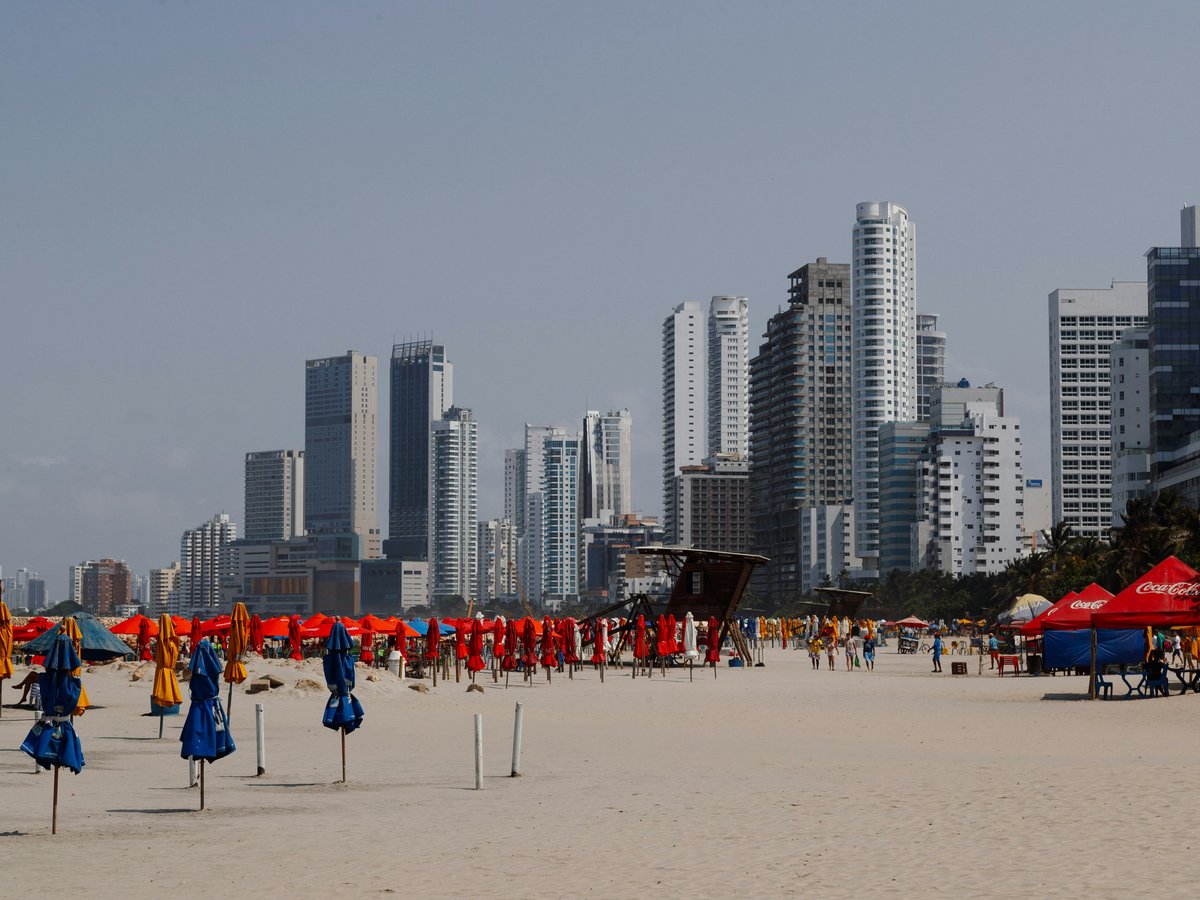
Bocagrande is where most long-stay nomads end up after the first week. The high-rise apartments along Carrera 2 pull 100-150 Mbps from Claro fiber, and there is an Éxito supermarket on Calle 6 plus a laundromat near the Hilton on Carrera 3. Rent for a furnished one-bedroom runs COP 3.5-5 million a month ($850-1,200) through Finca Raíz or local Facebook groups. Airbnb listings in Centro Histórico and Getsemaní often claim '100 Mbps wifi' but test at 15-25 Mbps over old copper lines. Ask for a Speedtest screenshot before booking. Getsemaní looks great on Instagram, but for a month of remote work the bass from Plaza de la Trinidad hits until 2 AM Thursday through Sunday, and the thick colonial walls make routers struggle. Manga is the neighborhood nobody mentions. Quiet after 9 PM, 10 minutes by bike to the walled city. Apartments run COP 2.5-3.5 million ($600-850), and the Carulla on Calle Real stocks imported goods if you cook.
Selina Cartagena in Getsemaní sells day passes at COP 60,000 ($15), but the open-plan layout gets noisy after lunch when the hostel crowd filters downstairs. For a quieter setup, MOI Coworking in Manga charges COP 400,000/month ($97) for a dedicated desk with 80-Mbps symmetric fiber and air conditioning that holds the room at 22°C while 34°C hangs outside the window. Epicentro near Bocagrande runs COP 500,000/month ($120) with meeting rooms and a coffee station. For café workers, Epoca Espresso Bar on Calle de la Iglesia pulls 45 Mbps and won't side-eye a 3-hour session if you order twice. Café del Mural in Getsemaní tolerates laptops before noon but switches to bar service around 1 PM. The public Biblioteca Bartolomé Calvo near Plaza de Bolívar offers free wifi at 15 Mbps and air conditioning. It tends to fill by 10 AM.
The temperature here rarely drops below 28°C, even at 3 AM. Right now in mid-July it reads 28.2°C with 87% humidity, and the feels-like sits at 34.7°C. You notice every degree the moment you step off your apartment's tile floor onto the street, where the air smells like warm asphalt and frying buñuelos. Most nomads who stay past 2 weeks settle into a split schedule. Work from 6 AM to noon in the apartment or coworking space, eat a set lunch for COP 15,000-20,000 at a corrientazo spot, rest during the 1-4 PM heat peak, then do a shorter second block in late afternoon. Power outages hit maybe once or twice a month in Bocagrande, more often in Getsemaní during heavy rain. Keep your laptop above 50% and your phone hotspot ready. Claro 4G prepaid delivers 25-35 Mbps as backup for COP 45,000/month.
Colombia's Nómada Digital visa (Visa tipo V, launched October 2022) requires proof of remote income at 3 times the minimum wage, currently about COP 3.9 million per month ($950). It is valid for 2 years, renewable, and lets you open a local bank account at Bancolombia, which cuts ATM withdrawal fees from COP 15,000 to zero. Processing takes 2-4 weeks through the Cancillería website. If you'd rather test the city first, the standard tourist stamp gives 90 days, extendable once for another 90 at a Migración Colombia office for COP 130,000 ($32). Monthly budget for a single nomad in Bocagrande sits around $1,500. That breaks down to roughly $950 rent, $100 coworking, $300 food with cooking and 3-4 restaurant meals a week at places like La Cocina de Pepina in Getsemaní where a set lunch costs COP 18,000, $50 transport by bus and bike, and $100 miscellaneous.
Between work blocks, the Islas del Rosario sit 45 minutes by lancha from Muelle Turístico La Bodeguita. A day trip with snorkeling runs COP 80,000-120,000 ($20-30). Playa Blanca on Isla Barú is closer at 1 hour by bus, but the vendor pressure is aggressive enough to cancel out the rest. For a quieter Saturday, Volcán del Totumo sits 45 minutes northeast. You float in warm mud at the surface of a small volcanic cone for COP 30,000 ($7), then rinse in the lagoon below. Mind you, 'spa-like' is not the word. It smells like sulfur and feels like wet clay. Worth it. For longer breaks, the town of Mompox lies 7 hours south by road, where the loudest sound at noon is a ceiling fan and hotel rooms run COP 80,000 a night. The 7-hour bus makes it a 2-day trip minimum. Cartagena Bike Tours on Calle Larga rents for COP 40,000/day, with the Bocagrande waterfront loop running about 8 km round trip.
Composite of cafe + coworking download speeds and reliability.
Apartment, coworking membership, food, and transit at a comfortable level.
Coworking spaces
- Selina Cartagena
- MOI Coworking
- Epicentro Coworking
- Epoca Espresso Bar
- Café del Mural
- Biblioteca Bartolomé Calvo
Visa options
Colombia's Nómada Digital visa (Visa tipo V, October 2022) requires proof of remote income at 3x minimum wage, currently ~COP 3.9M/month (~$950). Valid 2 years, renewable. Tourist stamp gives 90 days, extendable once for 90 more at Migración Colombia for COP 130,000 ($32).
Last verified by automated review (v1.7.2) on . What is automated review?