Is Cartagena safe?
Cartagena scores 5.8 out of 10 for solo-traveler safety (see the TTDI Solo-Safety Index). The walled city and Getsemaní are well-patrolled until midnight, but phone snatching from motos is the real daily risk. Skip Bazurto Market alone, stick to lit streets after dark, and save 123 for emergencies.
Cartagena scores 5.8 out of 10 for solo-traveler safety (see the TTDI Solo-Safety Index), putting it below Mexico City and roughly level with Medellín. The headline risk across Ciudad Amurallada is not violent assault. It is raponazo, phone snatching from motorcycles, where two riders grab your device and disappear into traffic within 3 seconds. This peaks along Avenida Venezuela near the Puerta del Reloj and on the road between the walled city and Getsemaní after 10pm. A front zip pocket or anti-theft daypack is non-negotiable for walking the Centro Histórico. Violent crime against tourists remains low compared to Bogotá, but petty theft has been climbing since 2023 per Colombia's national police reporting. The humidity hits 88% this time of year. Near the Bahía de Cartagena, 28°C feels closer to 34°C, and the air carries a faint taste of salt.
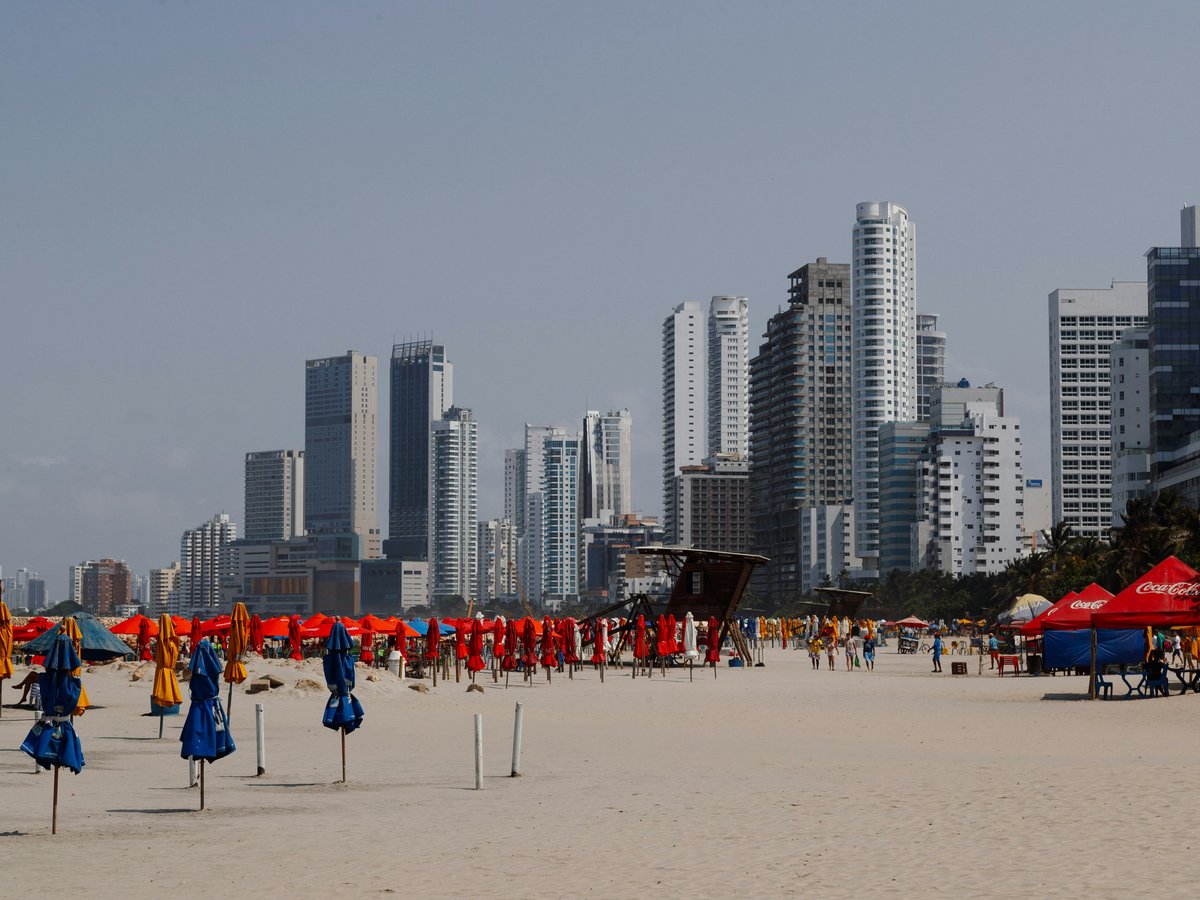
Ciudad Amurallada is the safest zone for solo travelers at night. Police patrol Plaza Santo Domingo and Plaza de Bolívar into the late hours, and the cobblestone streets around the Cartagena Cathedral carry the smell of fried empanadas and frangipani after an evening rain. You'll hear vallenato from open doorways on Calle de la Iglesia past 11pm. Getsemaní, the backpacker quarter south of the wall, feels safe until roughly the same hour. After that, the blocks east of Plaza de la Trinidad empty out quickly. Solo women report that the stretch between Calle de la Sierpe and Calle de la Media Luna grows uncomfortable toward 1am when groups gather on corners. Bocagrande, the high-rise hotel peninsula, stays well-lit along its beachfront road, but vendors grow aggressive along the waterfront after midnight. Manga and the blocks south of Bazurto Market are off-limits for solo travelers after dark, and the market itself is where most tourist thefts happen even in daylight.
Taxi overcharging hits hardest at Rafael Núñez International Airport. The fixed fare to the walled city runs about 25,000 COP, roughly 8 USD at the current rate of 3,076 COP per dollar. Drivers quoting 60,000 COP are trying their luck. InDriver and Uber both operate in Cartagena with fares between 15,000 and 20,000 COP for the same ride. Beach vendors at Bocagrande and on Playa Blanca at Isla Barú will quote massages, braiding, and fruit plates at 3 to 5 times the going rate. Settle on a COP price before anything starts. Drink spiking with scopolamine, locally called burundanga, is a documented risk at bars across the Centro Histórico. Never accept an unmonitored drink, whether at a rooftop on Plaza Santo Domingo or a Getsemaní dive. Reports reach the Policía de Turismo monthly, and solo travelers tend to be targeted because no one is watching their glass.
Solo women should expect persistent cat-calling along Calle del Arsenal and around Plaza de los Coches during the day. It rarely goes beyond words, but the frequency in Cartagena is higher than in Lima or Buenos Aires, and headphones signal disinterest more effectively than engagement. For meeting other travelers on day 1, Getsemaní hostels are the fastest path. Selina Cartagena hosts regular rooftop mixers that pull solo travelers and digital nomads. Media Luna Hostel, steps from Plaza de la Trinidad, runs weekly social nights drawing twentysomethings and solo thirties. Dining alone is straightforward across Ciudad Amurallada. La Cevichería on Calle Stuart serves coconut-broth ceviche from about 35,000 COP with no reservation needed. Carmen on Calle del Cuartel seats single diners at the bar without a supplement. Mind you, Bocagrande restaurants tend to assume couples and may park you near the kitchen.
Colombia's emergency number is 123. The Policía de Turismo maintain a station inside the walled city near Calle de la Factoría and speak enough English to help you file a denuncia after a theft. Private clinics in Bocagrande accept most international travel insurance and have English-speaking staff. Tap water in Cartagena is not safe to drink. Bottled water costs about 2,500 COP for 1.5 liters at any Éxito or D1 store. The September humidity fogs your sunglasses stepping out of any air-conditioned restaurant, and dehydration sneaks up by midday. Carry water and reapply sunscreen every 90 minutes. The Castillo de San Felipe de Barajas, built in 1536 on the Cerro de San Lázaro, has no shade along its upper ramparts, and the stone radiates heat you feel through your shoes by 11am. The Iglesia de San Pedro Claver sits a few blocks downhill with a stone interior that stays noticeably cooler.
Emergency number: 123
Official travel advisories
Reconsider non-essential travel the most cautious of 3 government assessments
- Government of CanadaLevel 2Exercise a high degree of caution View advisory
- UK Foreign OfficeLevel 2FCDO advises against all but essential travel to parts View advisory
- US State DepartmentLevel 3Reconsider Travel View advisory
Verified from the issuing governments' own feeds.
Areas to avoid
- Bazurto Market area, even during daylight
- Nelson Mandela neighborhood
- Olaya Herrera
- El Pozón
- Eastern Getsemaní past Calle de la Media Luna after midnight
- Lo Amador after dark
- Manga south of the canal after dark
Common concerns
- Phone snatching from motorcycles (raponazo), concentrated near the Puerta del Reloj and between the walled city and Getsemaní
- Taxi fare inflation at Rafael Núñez Airport, with drivers quoting double the 25,000 COP standard fare
- Beach vendor overcharging at Bocagrande and Playa Blanca, quoting 3-5x the local rate for services and food
- Drink spiking with scopolamine (burundanga) at bars in the walled city and Getsemaní
- Persistent street harassment directed at solo women along Calle del Arsenal and Plaza de los Coches
- Tap water not reliably safe to drink; bottled water about 2,500 COP per 1.5 liters
- Dehydration from sustained high humidity and 28°C+ temperatures with limited shade at outdoor attractions
Last verified by automated review (v1.7.2) on . What is automated review?