Cartagena doesn't really wake up until the sun goes down. The Old City's colonial walls hold heat well into the evening, and by 9 PM the stone streets of Centro Histórico are slick with humidity, lit by the yellow glow of wrought-iron lanterns. Locals tend to start the night late by most standards. Dinner rarely happens before 8:30 PM, and the first drink of the evening might not land on a table until 10 or 11. Thursday through Saturday are the main going-out nights, though Getsemaní has been building a solid Wednesday scene over the past couple of years. The dominant sound after midnight is champeta, a bass-heavy genre born in Cartagena's Afro-Colombian barrios during the 1970s and 1980s. You'll hear it thumping out of speakers mounted on pickup trucks (picós) in neighborhoods like Bazurto, mixed with reggaetón and vallenato depending on the crowd. The drinking culture leans toward aguardiente (Antioqueño is the popular brand, served in small plastic cups at about 3,000 to 5,000 COP per shot) and rum with Colombiana soda. Craft cocktails have taken hold in the tourist-facing parts of the Walled City, but step two blocks outside and it's still beer in a styrofoam cooler on the sidewalk. That honesty is part of the charm. Cartagena's nightlife doesn't perform for visitors. It exists because cartageneros like to dance, drink, and stay out until 4 AM on a work night.
The Bar Scene, From Rooftops to Sidewalk Coolers
The Walled City concentrates most of Cartagena's cocktail bars within a 10-block radius. You'll find them tucked into restored colonial houses along Calle del Arsenal and Calle de la Iglesia, often with thick wooden doors that hide the interior from street view. Most open around 5 or 6 PM and serve until 1 or 2 AM. Cocktail prices in Centro Histórico currently run between 35,000 and 55,000 COP, though spots on Plaza de Santo Domingo tend to charge closer to 60,000. The cocktail culture here leans tropical. Expect corozo fruit, tamarind, lulo, and coconut water in the mixes, alongside Colombian aguardiente as a base spirit. Worth noting, rum-based drinks outsell gin or vodka by a wide margin in this city. Rooftop bars cluster around the Santa Catalina and San Diego neighborhoods inside the walls. The draw is obvious. From 4 or 5 stories up, you get a clear line of sight across terracotta rooftops to the cathedral dome and, on clear nights, the Bocagrande skyline across the bay. Sunset drinks start around 5 PM. By 9, the rooftops shift to a louder, more party-oriented mood with DJs and bottle service. Expect cover charges of 20,000 to 50,000 COP at the more popular rooftop spots on Friday and Saturday nights. Getsemaní holds the city's dive bar culture. Calle del Porvenir and Calle de la Sierpe have a rotating cast of small bars where a Club Colombia beer runs 5,000 to 8,000 COP and the bartender might also be the owner. Plastic chairs on the sidewalk, salsa from a Bluetooth speaker, maybe a dog asleep under your table. These places don't have Instagram accounts. They open when the owner feels like it and close when the last person leaves. That said, a few wine bars have appeared in San Diego over the past 2 to 3 years, catering to an older Colombian professional crowd. Wine lists lean Chilean and Argentine, with glasses starting around 25,000 COP. The selection is limited compared to Bogotá's wine scene, but the settings (colonial courtyards, candlelight, bougainvillea overhead) make up for it.
Clubs, Sound Systems, and Dancing Until Sunrise
Cartagena's club scene splits along two lines. Inside the Walled City and Getsemaní, you'll find mid-sized clubs that hold 200 to 500 people, playing a rotation of reggaetón, champeta, and crossover Latin pop. These tend to open their doors around 11 PM, but the dance floor stays empty until midnight or later. Peak hours run from about 1 AM to 3:30 AM. Most close at 4 AM, though some push to 5 on Saturdays. Bocagrande, the high-rise beachfront neighborhood about 15 minutes by taxi from the Old City, holds the larger clubs. These are the 1,000-plus capacity venues with proper sound systems, VIP sections, and bottle-service minimums that can run 300,000 to 500,000 COP for a table. The crowd skews younger (18 to 25) and more Colombian-tourist than international. Dress codes here are enforced. Men need closed-toe shoes and long pants. Women have more flexibility, but flip-flops will get you turned away. The Walled City clubs are more relaxed on dress, though you'll still want to avoid looking like you came straight from the beach. Champeta is the local genre to know. It evolved from West African soukous and has a faster, more percussive rhythm than anything else on the Colombian coast. At champeta-focused parties, the picó (a massive speaker stack, sometimes 6 feet tall) is the star, not the DJ. These gatherings happen more in the outer barrios like Olaya Herrera and Nelson Mandela than in the tourist center, and they're worth seeking out if you're comfortable navigating neighborhoods that don't see many foreigners. Cover charges at Walled City clubs typically run 20,000 to 40,000 COP and sometimes include a drink. Bocagrande clubs charge 30,000 to 80,000 COP depending on the night and the headliner.
Live Music, From Champeta Picós to Jazz in Colonial Courtyards
Live music in Cartagena splits between polished venues inside the Walled City and raw, community-driven events in the outer neighborhoods. Centro Histórico has a handful of spots along Calle del Arsenal and near Plaza de la Trinidad where you can catch live salsa, son cubano, or jazz on Thursday through Saturday nights. Sets usually start between 9 and 10 PM. Most of these places seat 50 to 100 people and charge either a cover (15,000 to 30,000 COP) or a one-drink minimum. Vallenato, the accordion-driven genre from Colombia's Caribbean coast, shows up in more casual settings. You might hear a small vallenato group (typically accordion, caja drum, and guacharaca scraper) playing on the sidewalk terraces of Getsemaní on weekend nights. These are often informal. The musicians play for tips and the atmosphere is loose, with locals singing along to classics by Carlos Vives or Diomedes Díaz. The champeta scene is harder to find if you don't know where to look. The big picó events (verbenas) happen in barrios south of the tourist center, often on Friday and Saturday nights. They're advertised by word of mouth and flyers stapled to telephone poles, not on TripAdvisor. The sound is loud enough to feel in your chest from a block away. These gatherings are a core part of Afro-Colombian cultural life in Cartagena and have been since the 1980s. Mind you, they start late (11 PM or later) and the energy builds slowly. If you show up at midnight expecting a packed crowd, you might find yourself waiting another hour. San Diego has also developed a small jazz and blues circuit, with shows tending toward Wednesday and Thursday nights. The crowds are intimate, rarely more than 40 or 50 people, and the musicianship is often strong. Local jazz musicians frequently incorporate cumbia rhythms and Caribbean percussion into standard formats.
Nightlife neighborhoods
-
Getsemaní
Getsemaní has been Cartagena's creative-class nightlife hub for roughly the past decade. The streets around Plaza de la Trinidad fill with sidewalk drinkers, buskers, and food vendors by 8 PM. Street art covers nearly every wall. The smell of fried empanadas mixes with cigarette smoke and the sweetness of fruit cocktails served in plastic cups for 10,000 COP.
- Best for
- Budget-conscious travelers, backpackers, and anyone who prefers a street-party atmosphere over a structured night out. Best on Thursday through Saturday nights.
- Standouts
- Plaza de la Trinidad is the natural gathering point, surrounded by small bars and food carts. Calle del Porvenir and Calle de la Sierpe hold a rotating lineup of dive bars where the beer is cold, the chairs are plastic, and the music shifts from salsa to champeta depending on who's behind the speaker.
-
Centro Histórico
The Walled City's nightlife concentrates along Calle del Arsenal and the streets radiating from Plaza de Santo Domingo. Restored colonial buildings house cocktail bars behind heavy wooden doors, and the warm stone walls seem to amplify every sound. The air smells like jasmine and frying arepas by 9 PM. Cocktails here run 35,000 to 55,000 COP, and the crowd mixes well-dressed Colombian couples with international visitors.
- Best for
- Cocktail-focused evenings, rooftop sunset drinks, and dinner-to-drinks transitions. Friday and Saturday nights draw the biggest crowds, though Thursday has a steadier, more local-leaning feel.
- Standouts
- Rooftop bars in the Santa Catalina and San Diego corners of the Walled City offer cathedral-dome views and DJ sets after 9 PM. The live music spots along Calle del Arsenal tend to feature salsa and son cubano on Thursday through Saturday nights.
-
Bocagrande
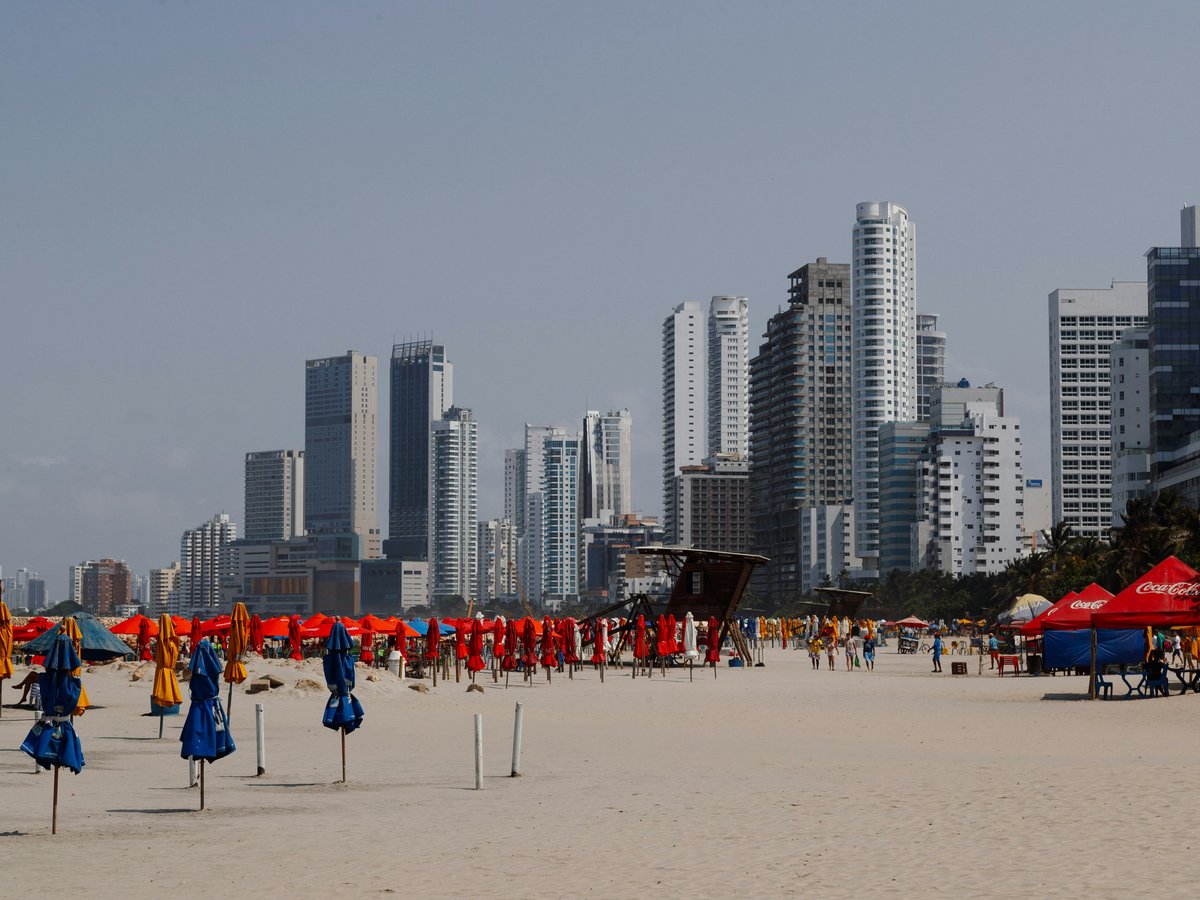
Bocagrande is Cartagena's high-rise beachfront strip, about 15 minutes by taxi from the Old City. The nightlife here is louder, flashier, and younger than the Walled City scene. Clubs with 1,000-plus capacity line the main avenues, pumping reggaetón and electronic music through heavy sound systems. The smell of salt air mixes with cologne, and the sidewalks stay busy with groups heading between venues past 1 AM.
- Best for
- Big-club nights, bottle service, and dancing until 4 or 5 AM. The crowd skews 18 to 25 and leans Colombian-tourist. Dress codes are enforced. Friday and Saturday are the main nights.
- Standouts
- The large clubs along the Bocagrande strip charge 30,000 to 80,000 COP cover depending on the night. Bottle-service minimums run 300,000 to 500,000 COP per table. VIP sections and proper sound engineering set these apart from the more casual Walled City spots.
-
San Diego
San Diego sits in the quieter northeast corner of the Walled City. The streets are narrower, the lighting softer, and the pace noticeably slower than Getsemaní or the Arsenal corridor. Wine bars and jazz spots have taken root here over the past 2 to 3 years, drawing an older Colombian professional crowd. You'll hear muted trumpet lines drifting from open doorways on Wednesday and Thursday nights.
- Best for
- Wine drinkers, jazz listeners, and couples looking for a lower-key evening. Midweek nights (Wednesday and Thursday) tend to have the best live music programming. Glasses of Chilean or Argentine wine start around 25,000 COP.
- Standouts
- Small jazz and blues venues seat 40 to 50 people and feature local musicians blending cumbia rhythms with standard jazz formats. A handful of wine bars occupy colonial courtyards with candlelight and bougainvillea overhead.
Safety after dark
Stick to well-lit streets in Centro Histórico, Getsemaní, and Bocagrande after dark. Taxi apps (InDriver and DiDi are more common than Uber in Cartagena) are the safest way to move between neighborhoods at night. Avoid flagging cabs on the street after midnight, especially in Bocagrande. Keep your phone in a front pocket or crossbody bag in crowded areas like Plaza de la Trinidad on weekend nights. Pickpocketing is the most common issue, not violent crime, but awareness matters. Drink spiking has been reported in tourist-heavy bars, so watch your glass and don't accept drinks from strangers. If you venture to champeta verbenas in the outer barrios, go with someone who knows the neighborhood. Groups of 3 or 4 are better than going solo. The police presence inside the Walled City is noticeable and generally makes the tourist core feel safe until the early hours.
Practical tips
- Timing
- Locals rarely arrive at bars before 10 PM or clubs before midnight. If you show up at a club at 11 PM, expect an empty dance floor. Peak energy hits between 1 and 3:30 AM. Restaurants in the Walled City serve dinner until 10 or 11 PM, so eating late and going out later is standard.
- Currency and Payment
- Most bars and clubs in the Walled City accept credit cards, but Getsemaní dive bars and street vendors are cash-only. ATMs cluster around Plaza de Santo Domingo and the Torre del Reloj entrance. Withdraw Colombian pesos before heading out. Aguardiente shots run 3,000 to 5,000 COP, beers 5,000 to 8,000 COP, and cocktails in the Walled City 35,000 to 55,000 COP.
- Dress Codes
- Bocagrande clubs enforce dress codes. Men need closed-toe shoes and long pants. Women have more flexibility, but flip-flops and beachwear will get you turned away. Walled City bars and clubs are more relaxed, though looking like you walked straight off the beach will still draw looks. Getsemaní has no dress code to speak of.
- Getting Around at Night
- Taxis between the Walled City and Bocagrande run about 10,000 to 15,000 COP at night. InDriver and DiDi tend to be slightly cheaper and let you confirm the price before the ride. Walking between Getsemaní and the Walled City takes about 10 minutes through the Torre del Reloj gate. The walk is well-lit and busy on weekend nights.
- Cover Charges
- Walled City clubs charge 20,000 to 40,000 COP cover, sometimes including one drink. Bocagrande clubs run 30,000 to 80,000 COP depending on the night. Rooftop bars in Centro Histórico charge 20,000 to 50,000 COP on Friday and Saturday. Most Getsemaní bars have no cover at all.
- Language
- English is widely spoken at cocktail bars and restaurants inside the Walled City. In Getsemaní, you'll get by with basic Spanish. Bocagrande clubs and the outer barrios are almost entirely Spanish-speaking. Learning a few phrases for ordering drinks (una cerveza, un aguardiente, la cuenta por favor) goes a long way.
FAQ
What time does nightlife start in Cartagena?
Cartagena runs late. Bars in the Walled City and Getsemaní start filling around 10 PM, but clubs don't hit their stride until 1 AM or later. Dinner typically happens between 8:30 and 10 PM, and most locals treat the pre-midnight hours as warm-up time. If you arrive at a club before midnight, expect a near-empty dance floor.
Is Cartagena's nightlife safe for tourists?
The Walled City, Getsemaní, and Bocagrande are generally safe at night, with visible police presence in the tourist core. Pickpocketing is the primary concern, especially around Plaza de la Trinidad on busy nights. Use taxi apps (InDriver or DiDi) rather than flagging cabs after midnight. Keep valuables in front pockets and stay aware of your surroundings in crowded areas.
What is champeta music and where can I hear it?
Champeta is a bass-heavy dance genre that evolved from West African soukous in Cartagena's Afro-Colombian barrios during the 1970s and 1980s. You'll hear it at picó parties (verbenas) in neighborhoods like Olaya Herrera and Nelson Mandela, usually on Friday and Saturday nights starting around 11 PM. The picó itself is a massive speaker stack, sometimes 6 feet tall, and the events are advertised by word of mouth and neighborhood flyers.
Do I need to dress up for Cartagena's nightlife?
It depends on where you're going. Bocagrande clubs enforce dress codes, requiring closed-toe shoes and long pants for men. The Walled City is more relaxed but still favors a put-together look over beachwear. Getsemaní has no dress code. Flip-flops will get you turned away at Bocagrande venues but won't raise an eyebrow in Getsemaní's sidewalk bars.
What is the local drink to order in Cartagena?
Aguardiente is the default spirit, with Antioqueño being the most common brand. It's anise-flavored, served in small plastic cups, and runs about 3,000 to 5,000 COP per shot. Rum mixed with Colombiana soda is another staple. At cocktail bars in the Walled City, look for drinks built around tropical fruits like corozo, tamarind, and lulo, which are harder to find outside Colombia's Caribbean coast.
Last verified by automated review (v1.7.2) on . What is automated review?