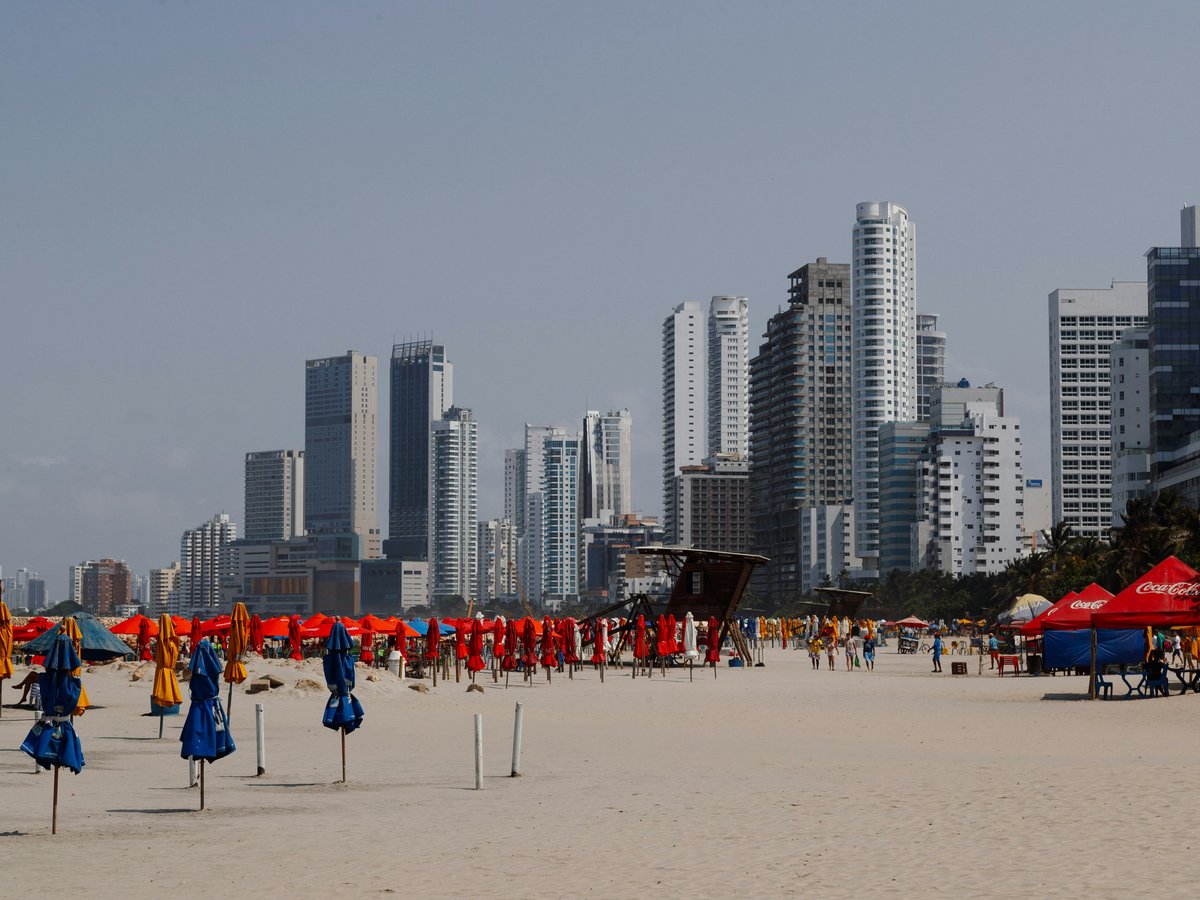
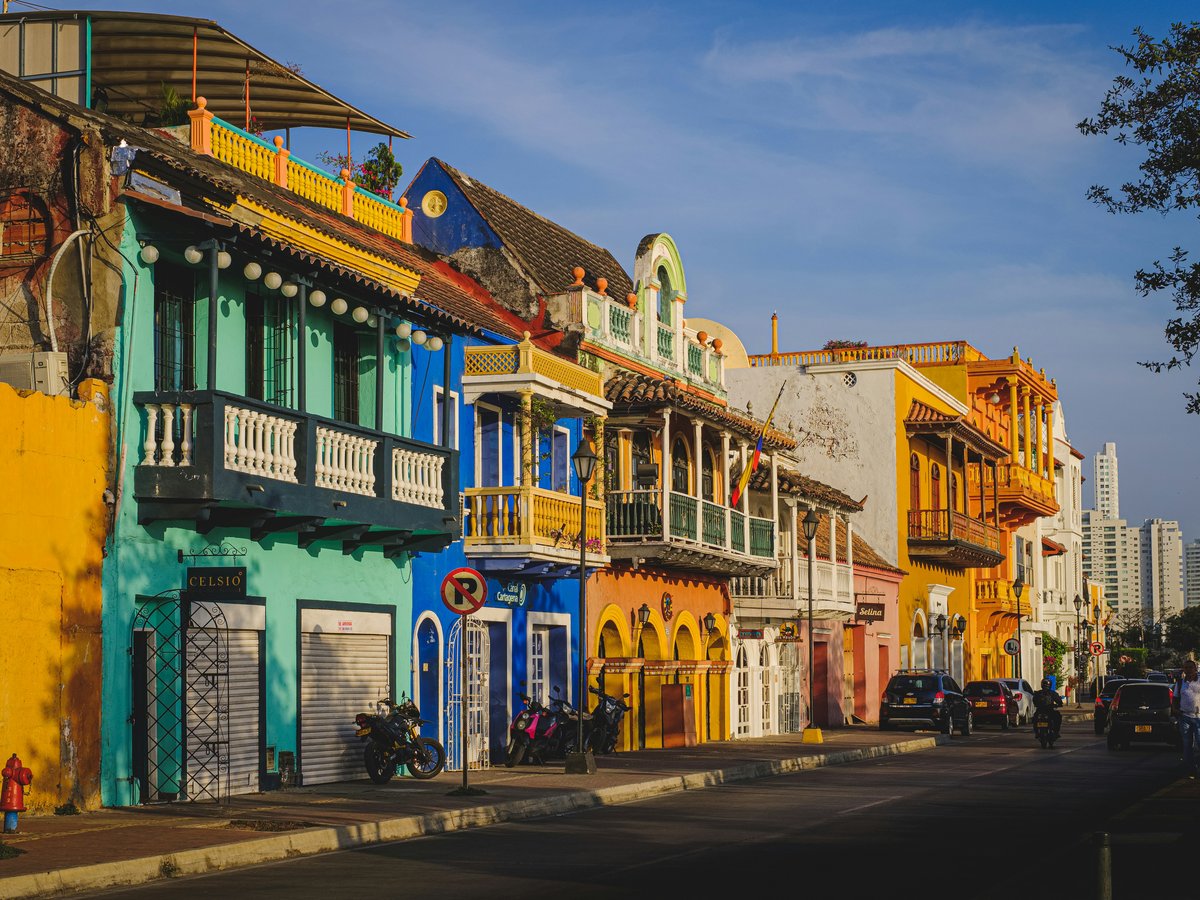
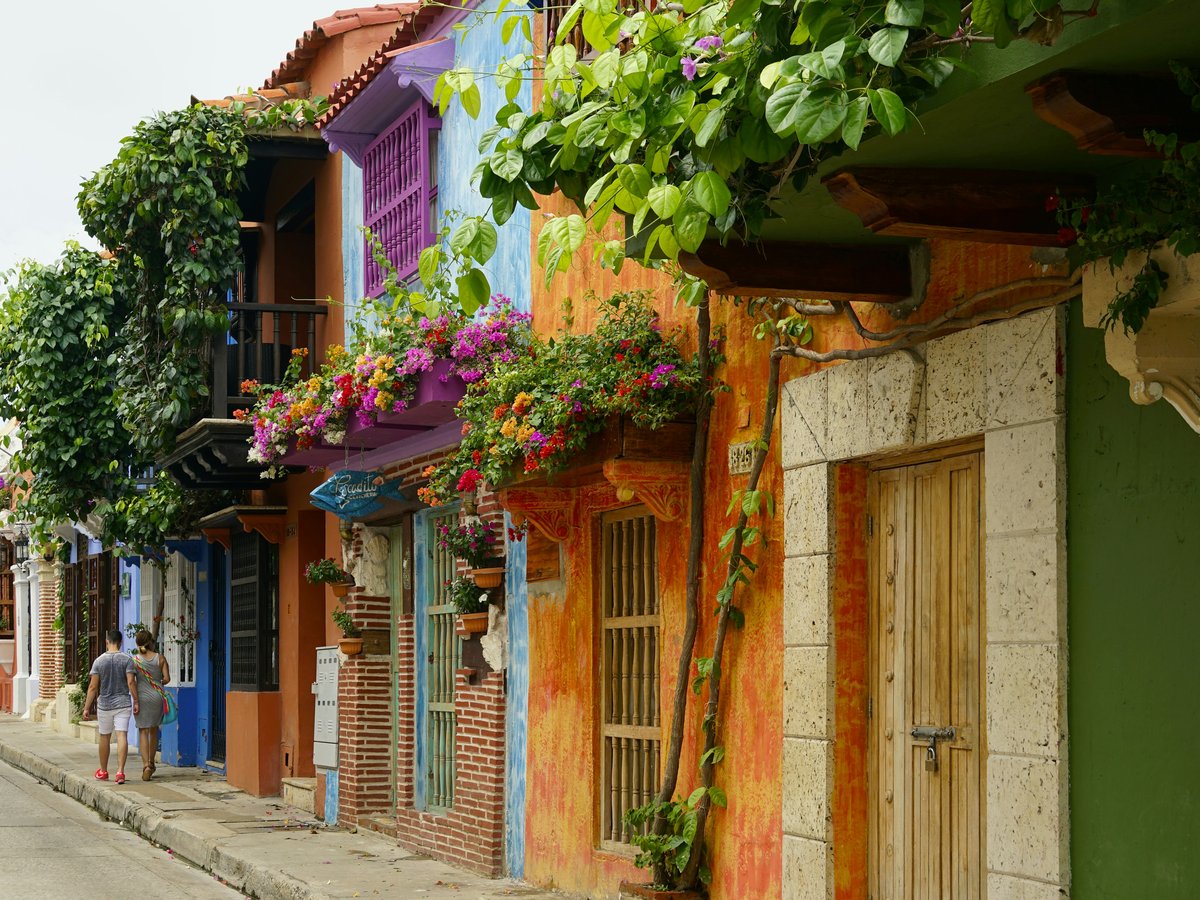
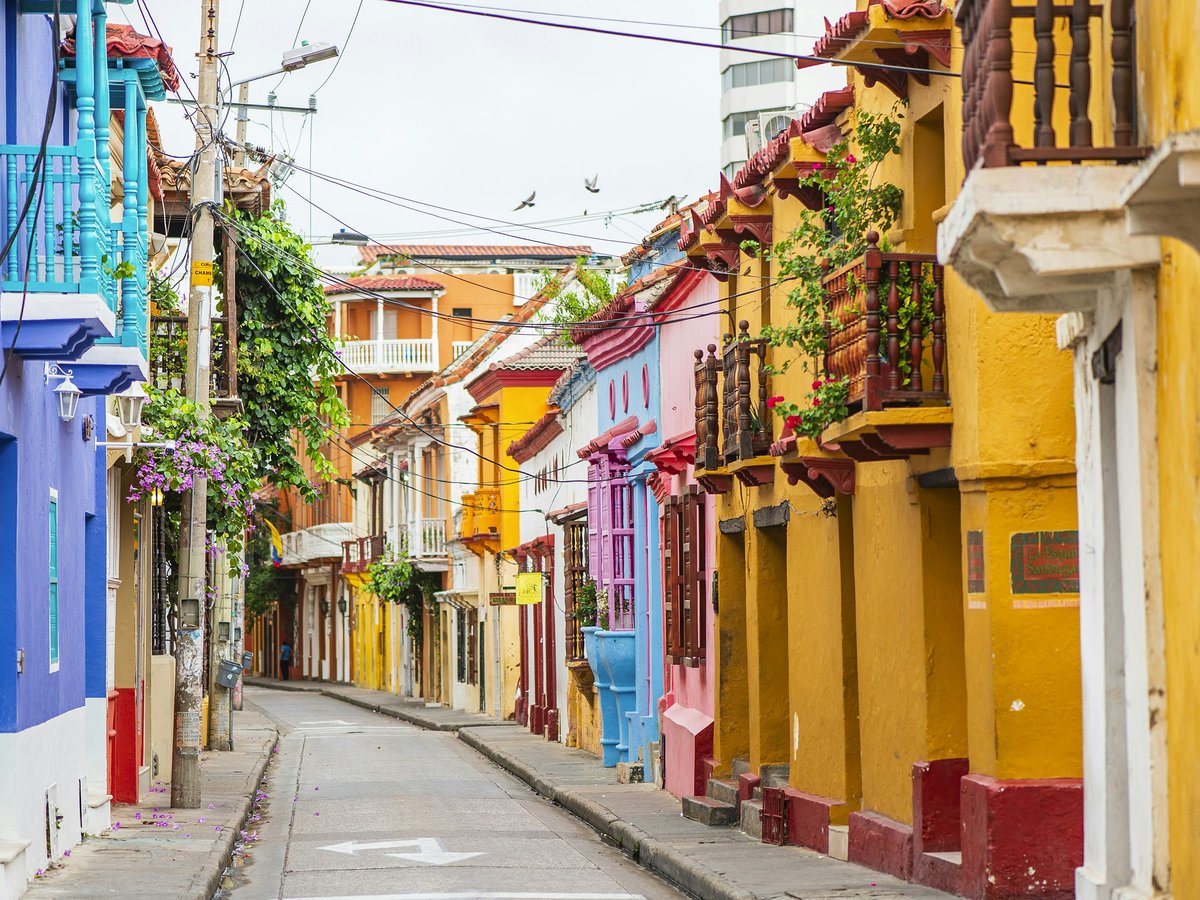
Cartagena de Indias sits on a peninsula between the Caribbean and its sheltered bay, eleven kilometres of colonial walls still ringing the old city the Spanish built to guard their bullion fleet. Those walls (Las Murallas) are wide enough to walk two abreast at sunset, and below them the sea breaks against the same coral stone that Francis Drake's men bombarded in 1586. The city of just over a million people sprawls beyond this fortified core into neighbourhoods that most guidebooks skip: Bazurto, where the central market operates in controlled chaos from before dawn, selling whole red snapper and stacks of ñame alongside bootleg phone chargers; Manga, a residential island connected by a single bridge, its early-twentieth-century Republican mansions slowly being restored; Bocagrande, the high-rise beachfront strip that Colombians themselves use for weekend escapes from Bogotá and Medellín. But the old walled city and its immediate neighbour Getsemaní are where a first visit concentrates. Getsemaní was for decades a working-class barrio that wealthier cartageneros avoided, and its transformation into the city's most walkable, mural-covered quarter is recent enough that longtime residents still sell fruit from their doorways beside converted boutique hotels. The heat is constant: Cartagena rarely drops below twenty-seven degrees Celsius, and the humidity makes midday an indoor affair, which is why the city's rhythm tilts late: restaurants fill at nine, Plaza de la Trinidad comes alive after dark, and the ceviche counters that line the old town usually mean a wait. Castillo San Felipe de Barajas, the largest Spanish-built fortress in the Americas, sits on the hill of San Lázaro, its tunnel system designed so defenders could hear approaching footsteps amplified through the stone. The city keeps Colombian time year-round, no daylight saving, and the practical effect for visitors is that nothing happens early and everything happens warm.
Cartagena in photos
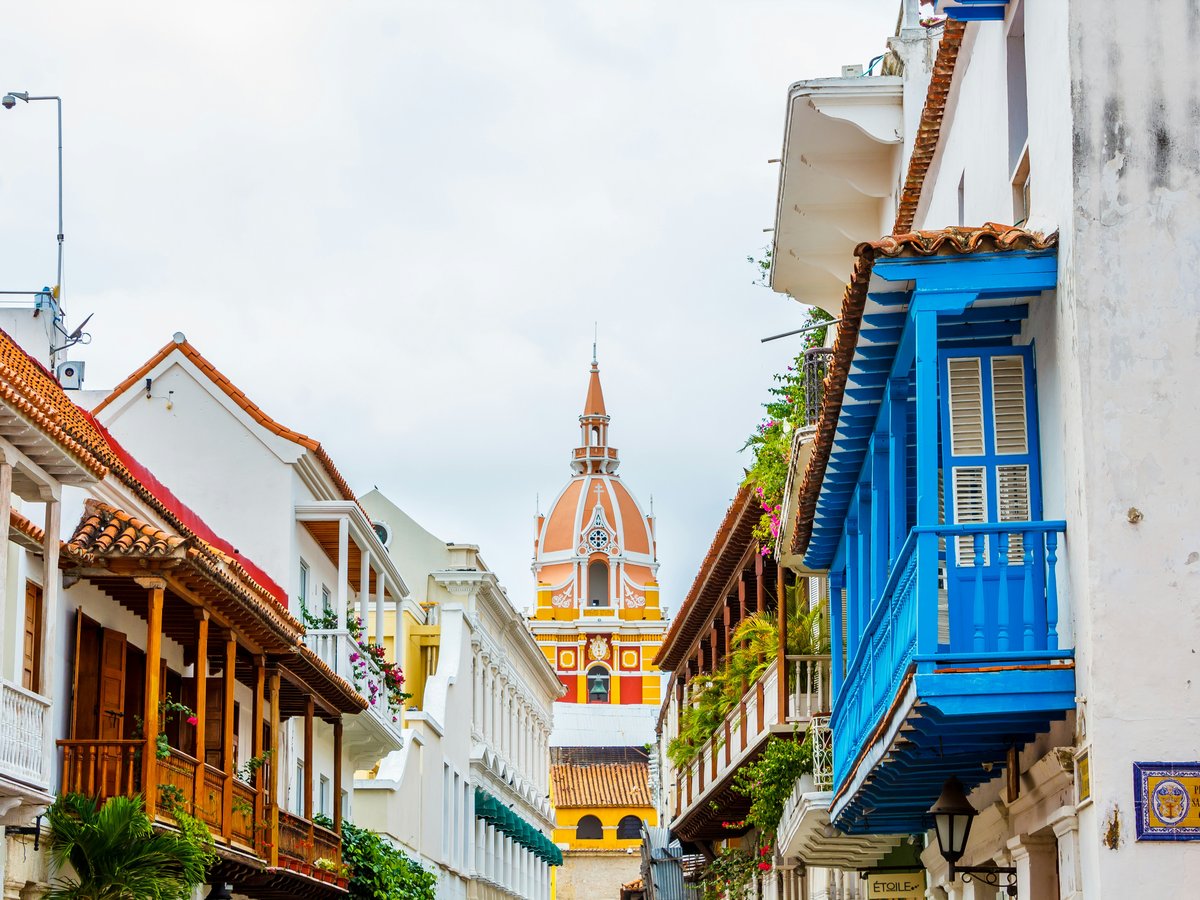
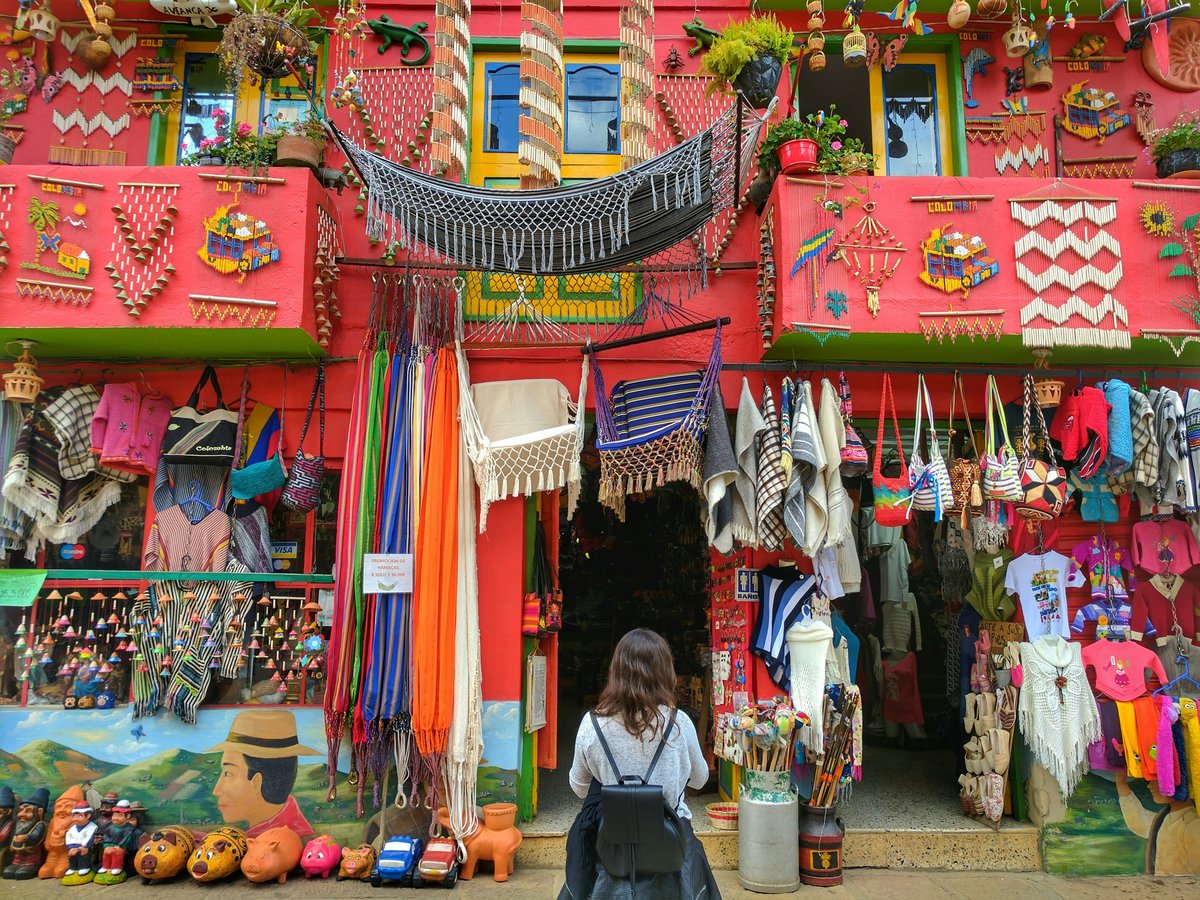
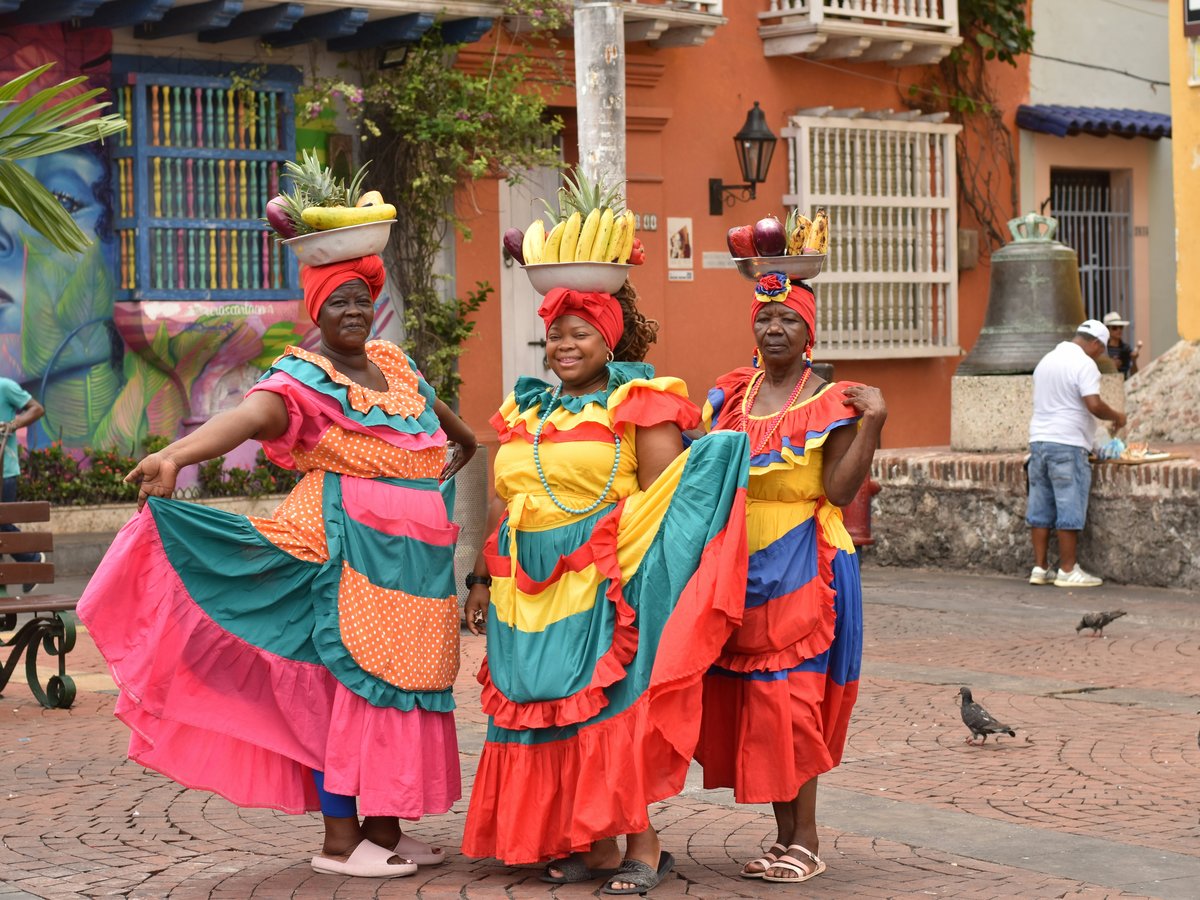
Cartagena right now
Answers about Cartagena
-
Airport to city
Rafael Núñez Airport (CTG) sits 3 km from the walled city. Take an official yellow taxi from the dispatcher stand outside arrivals, 12,000-18,000 COP ($3-$4.50), 10-15 minutes to Centro Histórico. Ride-hailing apps work but cause friction at the curb with taxi unions. The official taxi is the right call here.
Read the full answer → -
Best time to visit
December through March. Cartagena sits at 10°N latitude with year-round heat near 32°C, but those four months bring the lowest rainfall, under 25mm monthly, and humidity in the low 70s rather than the wet-season 85%. The trade-off is peak pricing and crowds at Centro Histórico. July offers a brief dry window at 20-30% lower hotel rates.
Read the full answer → -
Cost per day
Cartagena runs about 92,000 COP ($30) per day on a hostel-and-street-food budget, 230,000 COP ($75) midrange, or $200+ for boutique hotels inside the walls. Getsemaní dorm beds start at 25,000 COP ($8). The biggest budget trap is eating inside the Ciudad Amurallada, where identical plates cost double what Getsemaní and Bazurto charge.
Read the full answer → -
Cultural etiquette
Cartagena runs on warmth and physical proximity. Greet everyone with a single kiss on the right cheek (women) or a firm handshake (men). Tipping 10% is standard at restaurants in Centro Histórico and Getsemaní. Cover shoulders and knees inside Iglesia de San Pedro Claver and Cartagena Cathedral. Never photograph street vendors without asking.
Read the full answer → -
Best day trips
Islas del Rosario by speedboat from Muelle de los Pegasos is the strongest single-day trip for couples visiting Cartagena. The archipelago sits 45 km southwest, 1 hour each way, with full-day packages at 150,000-250,000 COP. Playa Blanca on Isla Barú works for a pure beach day. Volcán del Totumo and San Basilio de Palenque fill a culture-and-adventure split.
Read the full answer → -
Digital nomads
Cartagena is a 7.2/10 for digital-nomad suitability (sourced from TTDI's editorial rubric). Fiber reaches 100-150 Mbps in Bocagrande and Manga apartments, though colonial-center buildings often cap at 20 Mbps. Monthly all-in budget runs about $1,500. Colombia's Nómada Digital visa (2022) grants 2 years on proof of COP 3.9M monthly income. The heat is constant. Plan your work hours around it.
Read the full answer → -
Family-friendly
Cartagena is family-friendly, 7/10, with heat as the defining constraint. The feels-like temperature hits 33°C with 87% humidity, limiting outdoor windows to before 10 AM and after 4 PM. Bocagrande's flat sidewalks accommodate strollers; the walled city's colonial cobblestones do not. Castillo de San Felipe's underground tunnels keep kids 4+ occupied for 90 minutes without sunburn risk.
Read the full answer → -
Food culture
Cartagena eats Caribbean, not Andean. The city runs on coconut rice, fried-fish ceviches dressed in lime and suero costeño, and deep-fried arepas de huevo sold from sidewalk carts in Getsemaní by 7am. Lunch is the main event, served between noon and 2pm. Bazurto Market is the proving ground for serious food travelers.
Read the full answer → -
Getting around
Walk inside the walled city and Getsemaní. Use taxis or InDriver for Bocagrande, La Boquilla, and the airport. TransCaribe buses cover the main corridors but skip the colonial center. No metro. Most taxi fares within the tourist zone run 8,000-15,000 COP. Download InDriver before arrival. Uber's legal status in Colombia remains uncertain.
Read the full answer → -
How to get there
Rafael Núñez International Airport (CTG) sits 3 km from Cartagena's walled city. Direct flights from Miami take 2 hours 40 minutes on JetBlue and Spirit ($250-450 round-trip). From Europe, connect through Bogotá on Avianca or Panama City on Copa Airlines. Low-season fares appear in September through November.
Read the full answer → -
Is it safe?
Cartagena scores 5.8 out of 10 for solo-traveler safety (see the TTDI Solo-Safety Index). The walled city and Getsemaní are well-patrolled until midnight, but phone snatching from motos is the real daily risk. Skip Bazurto Market alone, stick to lit streets after dark, and save 123 for emergencies.
Read the full answer → -
Language basics
Spanish, specifically the Caribbean costeño dialect that drops final consonants and moves twice as fast as the Bogotá accent taught on Duolingo. English proficiency in the Ciudad Amurallada and Bocagrande tourist zones sits around 5 out of 10 (sourced from EF English Proficiency Index). Hotel staff and tour guides speak English well; taxi drivers, Bazurto market vendors, and most restaurant servers outside the walled city don't.
Read the full answer → -
Layover guide
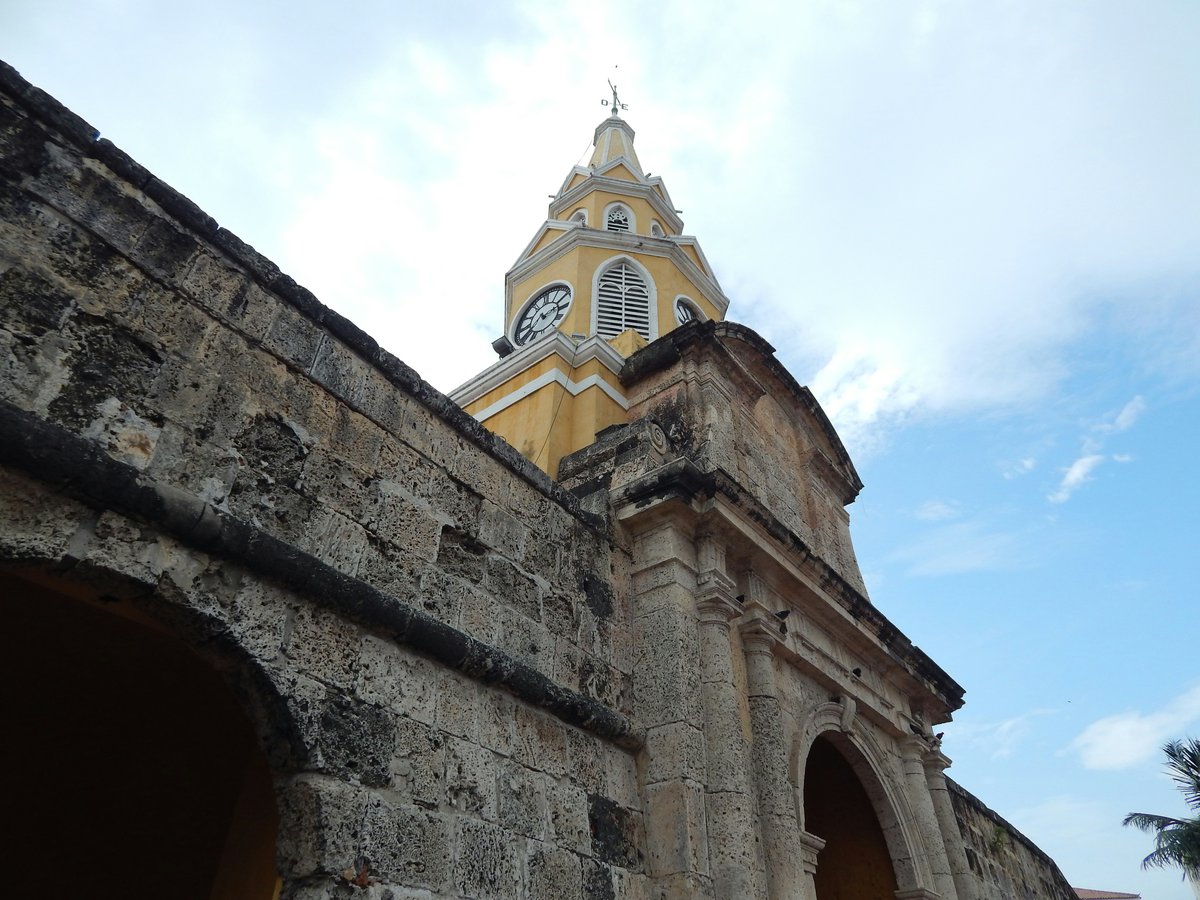
Rafael Núñez Airport sits 15 minutes by taxi from Cartagena's walled city, making it one of the easiest layover runs in South America. You need at least five hours once you factor immigration and a 60-minute return buffer. A short cab ride drops you at Puerta del Reloj with time to walk the colonial center, eat at the Getsemaní food stalls, and still make your gate.
Read the full answer → -
LGBTQ-friendly
Cartagena scores 7.5/10 for LGBTQ+ friendliness (sourced from TTDI's editorial rubric). Colombia's marriage equality law and anti-discrimination protections provide a solid legal floor. The queer scene is small but visible in Getsemaní, and same-sex couples move through the walled city's hotels and restaurants without friction. The Caribbean coast remains more traditional than Bogotá.
Read the full answer → -
Where locals go
Getsemaní's Plaza de la Trinidad after 8pm, Bazurto market before 10am, and the Manga peninsula on any weeknight. Cartageneros avoid the walled city's restaurant strip. They eat ceviche at Bazurto stalls for COP 8,000, drink beer on plastic chairs in Getsemaní, and spend Sundays at Manzanillo del Mar beach, 20 minutes north.
Read the full answer → -
Must-see
Castillo de San Felipe de Barajas, the 1536 fortress on Cerro de San Lázaro. The largest Spanish military structure in the Americas, and the one building in Cartagena where three centuries of colonial defensive engineering become physically obvious. Go at 8am before the heat and tour buses. Entry costs about 33,000 COP.
Read the full answer → -
Solo travel
Cartagena is likely the most approachable solo destination in Colombia. Getsemaní and the Walled City are walkable and safe after dark, with strong hostel social scenes and street food from 5,000 COP ($1.20) that eliminates the dinner-for-one problem. Scopolamine risk is real but manageable with basic drink-safety habits. Single-supplement pricing is rare at most hotels.
Read the full answer → -
This week
Cartagena's week follows a heat-and-rain rhythm. Mornings before 9am and evenings after 5pm are the two usable windows, with daily showers between 2pm and 4pm and temperatures around 30°C. The Walled City is quieter Tuesday through Thursday. Nightlife concentrates Thursday to Saturday in Getsemaní. Bazurto Market peaks Saturday mornings.
Read the full answer → -
3-day itinerary
Day 1 covers Centro Histórico on foot, from Puerta del Reloj to the Cathedral and San Pedro Claver, ending at Restaurante Interno. Day 2 climbs Castillo de San Felipe at 8am then drops into Getsemaní for street art, mote de queso, and cocktails at Alquímico. Day 3 boats to Playa Blanca on Isla Barú. Total walking across all three days sits around 18 kilometres.
Read the full answer → -
What to avoid
Skip the Playa Blanca party boats sold at Muelle de la Bodeguita, the horse carriages parked by Puerta del Reloj, and tout-fronted restaurants on Plaza de Santo Domingo. Agree on every taxi fare before the door closes, and wave off beach massages nobody asked for. In October, plan to be indoors when the afternoon storms roll in, and save the city walls for early morning.
Read the full answer → -
What to pack
Pack lightweight, moisture-wicking clothes for 28-33°C heat and 85%+ humidity. Flat-soled shoes are non-negotiable on the Walled City's colonial cobblestones. Bring reef-safe SPF 50+ sunscreen (double the US price locally), a packable rain shell for afternoon storms, and a waterproof phone pouch. Skip mosquito repellent and aloe. Both cost less at Farmatodo in Getsemaní.
Read the full answer → -
Where to stay
Stay in San Diego, the quieter northern quarter of the Walled City, for a first visit. Budget $100-$280 per night for a colonial boutique hotel with a rooftop pool. Getsemaní, a 5-minute walk south through the Puerta del Reloj, runs $50-$130 and has the better restaurant scene after 9pm. Skip Bocagrande unless you need a beach-resort base.
Read the full answer →
Deep guides for Cartagena
-
Cartagena With Kids: What Works
Cartagena earns a 7.2 out of 10 for family-friendliness. That 2.8 gap is almost entirely heat and one fortress. Here is the day-shape that actually works with kids under 7, the sight to skip until they're older, and the one that redeems everything.
Read the guide → -
Best Time to Visit Cartagena, by Season
Cartagena's 12-month temperature range spans only 3.5°C from peak to trough, but at Caribbean humidity that narrow band separates comfortable walking weather from endurance-test heat. This guide maps each month's verified averages against likely crowd and pricing patterns to name the single best window for five kinds of traveller.
Read the guide →
Curated lists for Cartagena
accommodation
-
Best boutique hotels
Cartagena splits into neighborhoods that serve different kinds of travelers, and the difference between a good trip and a frustrating one often comes down to which side of the old walls you sleep on. The Walled City and Getsemaní hold the colonial architecture and the street life. Bocagrande runs along a modern beachfront strip with high-rise hotels and chain restaurants. Crespo sits near Rafael Núñez International Airport for short stays and early flights. Farther out, La Boquilla faces the Caribbean from a quieter stretch of coast, and La Matuna connects the tourist core to the commercial city. Prices range from $90 a night in La Matuna to $193 in Bocagrande, but the most expensive neighborhood is not always the most interesting one. The ten areas below are ordered by hotel density, starting where the inventory clusters thickest and moving outward toward the thinner, quieter edges of the city.
See the picks → -
Best hostels
Cartagena spreads its hostel inventory across three distinct belts: the walled colonial core and its southern neighbor Getsemani, the high-rise beachfront strip of Bocagrande, and the quieter residential pockets of Manga, Marbella, and La Boquilla at the northern edge. Budget beds inside the walls run from $50 to $59 a night for private rooms; cross into Getsemani and the price drops to $18 for a dorm with privacy curtains and rooftop yoga. The beach strip trades colonial texture for ocean proximity and modern towers, while Manga offers bay-view rooms from $23 a night on a residential island connected to the old quarter by a single bridge. Choosing a neighborhood here means choosing between walking to the clock tower or walking to the sand. Both work, but the gap between them is a taxi ride, not a stroll. The densest hostel clusters line the Bocagrande peninsula and the walled city grid; the strongest value sits in the residential pockets outside them.
See the picks → -
Best luxury hotels
Cartagena's luxury hotels spread across several distinct zones, and the zone you choose will shape the trip as much as the hotel itself. The 11 properties below cover Centro, San Diego, Getsemani, Bocagrande, Bocachica, Gente de Mar, and the broader Cartagena area. Nightly rates span USD 240 to USD 782. Trip.com guest ratings sit between 8.6 and 9.5; the floor is high across the board. Several properties lead with private beaches and ocean views; others lead with spas, executive lounges, and conference rooms. The difference is not quality but emphasis. This list is ranked by the strength of the overall package, not by price.
See the picks → -
Where to stay
Cartagena splits its hotel stock along two spines: the colonial walled city and the high-rise beachfront strip of Bocagrande, linked by a short causeway. Most first-time visitors default to the walls, but the real choice is about rhythm. Centro and Getsemani put you on cobblestone streets where music pours from doorways past midnight. Bocagrande lines you along Avenida San Martin with pool decks, ocean frontage, and lobbies that feel closer to Miami than to a Caribbean port town. Beyond those poles, quieter pockets like Manga, Marbella, and La Boquilla trade proximity for local texture and lower rates. Budget beds start at $18 a night in Getsemani hostels; the luxury ceiling climbs to $782 at a Four Seasons address. The ten neighborhoods below follow hotel density, not editorial preference. The right one depends on whether you want to fall asleep to bass from a plaza bar or to waves hitting a seawall.
See the picks →
food
-
Best cafes
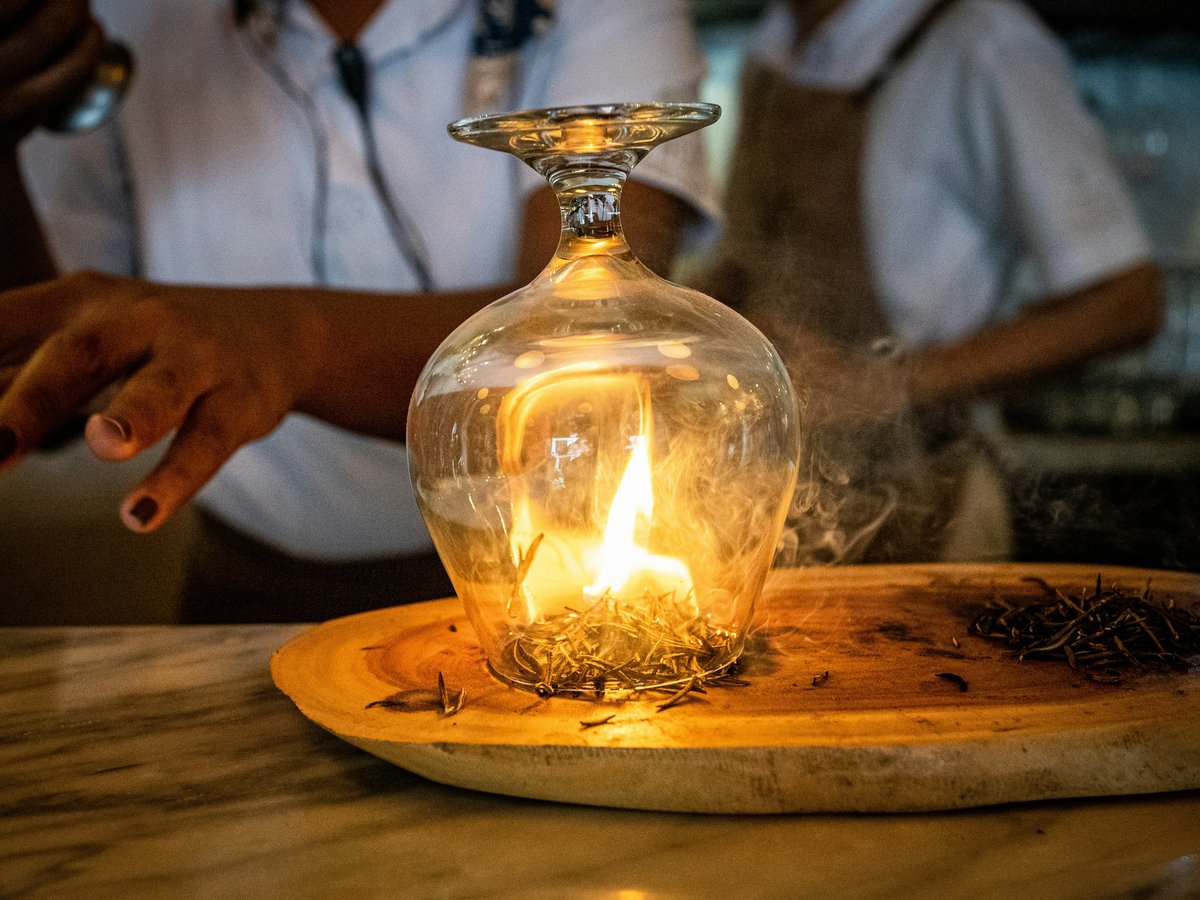
Cartagena's cafes on this list do not run on the same clock. One opens at 08:00 and stays open until 23:00 every day; another does not unlock until 16:00 from Monday to Thursday; one posts a 03:00 start. The menus are just as varied: German plates beside burgers, a kitchen filed under healthy, an ice cream counter. This list is for the visitor who wants a reliable address and a confirmed hour, and who would sooner be told what is unverified than be handed a mood. Where the record is thin, we say so, and one entry, ranked 10, has nothing on file to show that it serves coffee at all. Read the hours, pick by time of day, and phone ahead wherever a number is given.
See the picks → -
Best restaurants
Cartagena's restaurant map is dense with places that answer their own phones and keep the hours they publish. The twelve below were chosen for exactly that: each cross-checked at its official address, website, and phone, and ranked by editorial value rather than by star-count. Expect Caribbean kitchens, Italian pizza, a French-and-fish hotel bistro, Colombian and international standards, arepa counters that keep hours a working eater can plan around, and regional cooking read as a discipline. This list is opinionated. It skips the plaza-facing menus written in four languages, ignores places whose only argument is a rooftop view, and does not reward restaurants that mistake volume for hospitality. What is left is what a local editor would send an out-of-town friend to.
See the picks →
Browse by traveler type
- For foodies
Cartagena for foodies
- For digital nomads
Cartagena for digital nomads
- For solo travelers
Cartagena for solo travelers
- For couples
Cartagena for couples
- For budget travelers
Cartagena on a budget
- For luxury travelers
Cartagena for luxury travelers
- For first-timers
Cartagena for first-time visitors
Book experiences in Cartagena
 Free cancellation
 Cartagena 5 Island Hop Tour: Lunch, Snorkel, Beach Clubs, & More
Day trip: 7 hours, free cancellation.
via Viator Free cancellation
 Tour De Palenque, Road to Emancipation.
Day trip: free cancellation.
via Viator Free cancellation
 Cartagena: Private Walking Tour of the Walled City & Getsemaní
Day trip: free cancellation.
via Viator Free cancellation
 Cartagena's Rosario Islands 5-Site Boat Tour with Lunch & Snorkel
Day trip: 7 hours, free cancellation.
via Viator Free cancellation
 Cartagena ATV Tour
Outdoor experience: 2.5 hours, free cancellation.
via Viator Free cancellation
 Full Day Tour of 5 Must-See Places in the Rosario Islands
Outdoor experience: 7.5 hours, free cancellation.
via Viator Free cancellation
 Island Hopping Party Boat Tour: 5 Stops with Lunch, Cholon & Baru
Outdoor experience: 7 hours, free cancellation.
via Viator Free cancellation
 Cartagena VIP Boat Tour: Rosario Islands & Snorkel
Outdoor experience: 8 hours, free cancellation.
via Viator Free cancellation
 Visit in Cartagena Playa Blanca in Baru Island
Day trip: free cancellation.
via Viator Free cancellation
 ATV Half-Day Tour in Cartagena
Outdoor experience: 2.5 hours, free cancellation.
via Viator Free cancellation
 All-inclusive beach tour from Cartagena
Day trip: 7 hours, free cancellation.
via Viator Free cancellation
 Sunset Cruise in Cartagena
Cruise: 2 hours, free cancellation.
via ViatorBrowse by interest
Compare Cartagena with
Find a flight to Cartagena
Live fares to Cartagena appear here once cookies are accepted.
Last verified by automated review (v1.7.2) on . What is automated review?