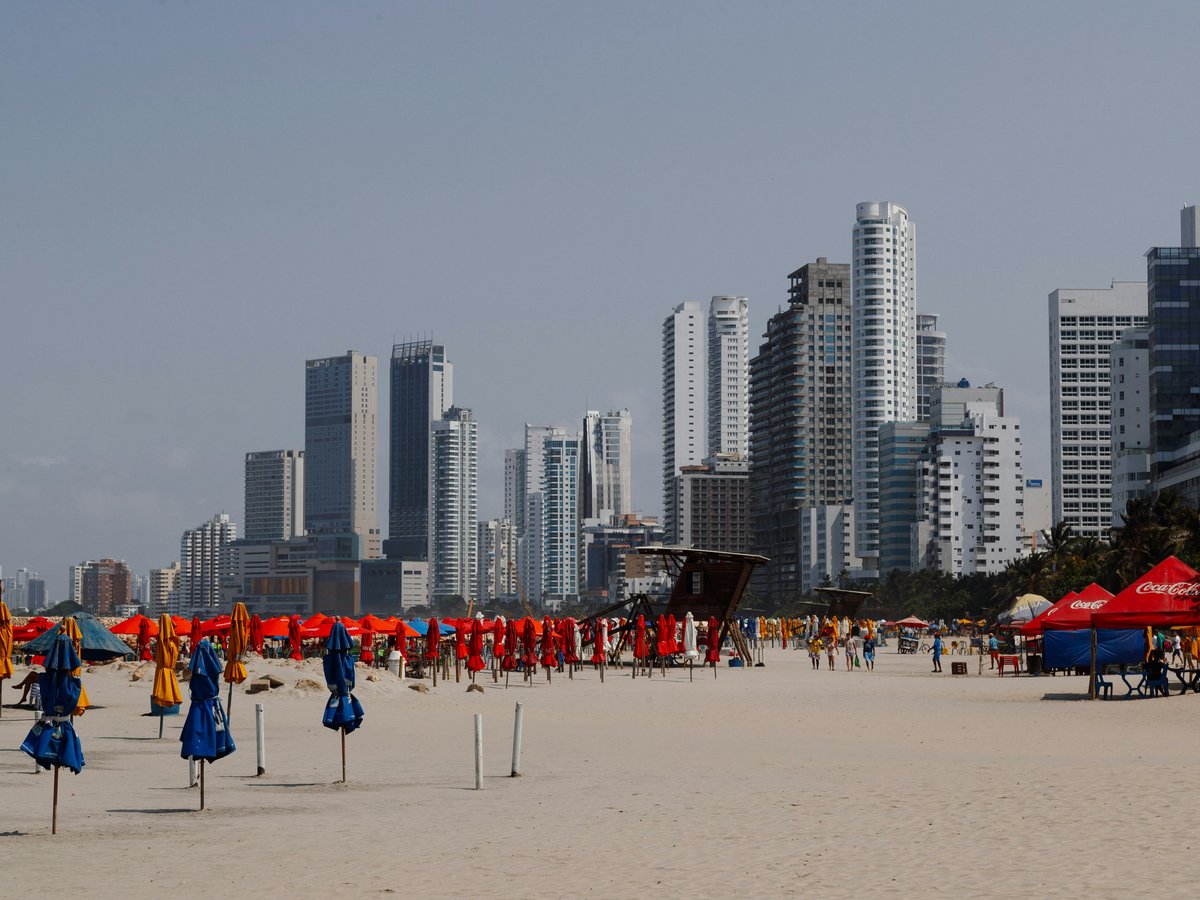
Best Time to Visit Cartagena, by Season
Cartagena's 12-month temperature range spans only 3.5°C from peak to trough, but at Caribbean humidity that narrow band separates comfortable walking weather from endurance-test heat. This guide maps each month's verified averages against likely crowd and pricing patterns to name the single best window for five kinds of traveller.
Published · Updated
1 Cartagena Swings 3.5 Degrees All Year, and That Changes Everything About Timing
The heat hits you before the taxi door closes at the airport. Thick, wet air, the kind that fogs your sunglasses the moment you step from the terminal's air conditioning. That first breath tells you something the guidebooks tend to bury. Cartagena does not really have seasons. Not in the way that matters to your suitcase.
The average daily high in November, the coolest month by the numbers, sits at 29.1°C. In March, the hottest, it reaches 32.6°C. That is a total annual swing of 3.5°C in daily highs. For perspective, that is less variation than most cities see between Monday and Thursday in a given week. The lows tell a similar story. January's overnight average drops to 24.0°C, while July's stays at 25.4°C, a difference of 1.4°C you would struggle to feel without a thermometer.
So why does the month you visit matter? Because that 3.5°C gap between November's 29.1°C and March's 32.6°C is the difference between walking the walled city in something approaching comfort and walking it in a steam room. The months where temperatures dip below 30°C, from May through November, tend to carry lower hotel rates and thinner crowds. The months above 30°C, December through April, draw the peak-season swells. February's average high of 32.3°C and January's 32.0°C sit right in the hot, expensive, crowded window. October, at 29.4°C, and September, at 30.0°C, occupy the opposite end.
The difference between booking December at 30.8°C and March at 32.6°C adds up over a full week of walking cobblestone streets in direct Caribbean sun.
The total annual swing is 3.5°C in daily highs. That is less variation than most cities see between Monday and Thursday.
2 December Through February Sells the Fantasy, but March at 32.6°C Delivers the Furnace
You hear the December crowds before you see them. Rolling suitcases clatter on cobblestones in the old town, competing reggaeton bleeds from rooftop bars, and the splash of infinity pools cuts through the thick air at boutique hotels that sat empty two months earlier. December through February is when Cartagena performs its postcard version of itself. The price of admission is heat.
December opens the peak season with an average high of 30.8°C and a low of 24.6°C. It is, by temperature alone, the mildest of the peak-season months. January pushes to 32.0°C during the day and 24.0°C at night. February climbs again to 32.3°C by day, 24.3°C after dark. The upward trend is steady. From December's 30.8°C to February's 32.3°C, you gain 1.5°C in average daily heat across the quarter.
Then March arrives. Its 32.6°C average high makes it the hottest month on the calendar, yet it still trades on its dry-season reputation. April, at 31.8°C, starts to ease off, but its overnight low of 25.0°C is warmer than January's 24.0°C. The city never fully cools between midnight and dawn.
If you want dry-season energy and have some flexibility, December at 30.8°C is roughly 2°C cooler than March at 32.6°C. That gap is noticeable at Caribbean humidity levels. To be fair, December is likely the most expensive month of the four, but you are buying the coolest peak-season nights at 24.6°C. January at 32.0°C with 24.0°C overnight is the middle path. February at 32.3°C suits travellers who tolerate heat well and want peak-season crowds without March's quieter tail end.
March at 32.6°C is the month for budget-conscious visitors who want dry weather and do not mind reaching for a third shirt by 2 PM.
3 May Through July Drop Below 31°C, and Cartagena Becomes a Different City
The shift happens in May. You step outside your guesthouse in Getsemaní and the air still wraps around you like a warm towel, but something has changed. The oppressive edge, the feeling that the heat has physical weight, has backed off a notch.
May's average high drops to 30.8°C, a full 1.8°C below March's peak of 32.6°C. The overnight low rises slightly to 25.3°C, which means the diurnal range narrows. Days feel cooler, but nights do not cool down as much as they do in January, when the low reaches 24.0°C. June pushes further in the right direction with a daytime average of 29.9°C, the first month to break below 30°C. Its overnight low of 25.1°C holds steady.
July complicates the picture. The average high bounces back to 30.9°C, a full degree warmer than June's 29.9°C. This is the mid-year spike that catches people off guard. July's nighttime low of 25.4°C is the warmest overnight reading of any month in the calendar, warmer than August at 25.2°C and April at 25.0°C. If you are planning around cooler nights, July is not the month you might assume.
The three-month window from May to July averages roughly 30.5°C in daily highs, compared to the December-through-February average of roughly 31.4°C. That 0.9°C drop sounds small on paper. It feels larger when you are walking the colonial walls under direct sun.
June at 29.9°C is the standout of this quarter for daytime comfort. May at 30.8°C suits travellers who want the transition period, when peak-season pricing has likely eased but the city has not yet shifted into its quieter rhythm. July at 30.9°C brings the warmest nights of the year at 25.4°C, which matters if your room relies on ceiling fans.
4 August and September Share Identical 30.0°C Highs, and They Are Cartagena's Forgotten Months
There is a particular quiet in Cartagena's plazas at 10 AM in September. A few tourists gather around the street vendors selling arepas de huevo, but the crowd is half the size of the January huddle. The food is the same. The pigeons are the same. The difference is the breathing room.
August and September post identical average highs of 30.0°C. Their overnight lows match at 25.2°C. No other two consecutive months in Cartagena's calendar share the same numbers this precisely. The flat line makes planning simple. Pick either month and the temperature experience will be effectively the same.
That 30.0°C figure sits 2.6°C below March's yearly high of 32.6°C and 0.9°C above November's yearly low of 29.1°C. It is the statistical middle ground, warm enough that you are unmistakably in the Caribbean, mild enough that a walking day through the old town does not require hourly retreats into air conditioning.
September has one advantage over August for the temperature-minded planner. It leads directly into October, which posts a 29.4°C high and a 24.8°C low, beginning the year's coolest stretch. A two-week trip spanning late September into October gives you the 30.0°C stability of September followed by the 29.4°C relief of October, a declining curve that feels gentler each passing day.
August, by contrast, follows July's 30.9°C and its record overnight warmth of 25.4°C. Coming from July, August at 30.0°C feels like a tangible improvement. If you are choosing between August and September in isolation, the numbers are identical. The tiebreaker is what comes next on the calendar.
Worth noting, these two months tend to be among the least trafficked of Cartagena's year. They sit well past the dry-season pull of January at 32.0°C and February at 32.3°C.
August and September post identical average highs of 30.0°C. No other two consecutive months share the same numbers this precisely.
5 October and November Average Below 30°C. For Heat-Sensitive Travellers, This Is the Window
The breeze coming off the Caribbean at Bocagrande in late October carries a different quality. Still warm, still humid, but there is a looseness to it that January's stiff, hot gusts do not have. The palms along the waterfront sway. You notice because you have stopped squinting.
October's average high of 29.4°C is the second-coolest reading in Cartagena's calendar. November goes further, posting 29.1°C, the lowest daytime average of any month. The pair forms the only window when typical afternoon temperatures remain consistently below 30°C. Every other month, all ten of them, averages at or above that line.
The overnight picture is worth examining. October's low of 24.8°C is 0.4°C cooler than September's 25.2°C. November drops again to 24.6°C. Those numbers approach January's overnight low of 24.0°C, the coolest nighttime reading of the year, without the daytime penalty that January carries at 32.0°C. November gives you 24.6°C nights paired with 29.1°C days. January gives you 24.0°C nights paired with 32.0°C days. The nighttime difference is 0.6°C. The daytime difference is 2.9°C. The arithmetic clearly favors November for overall thermal comfort.
Mind you, this window comes with trade-offs the temperature data alone does not show. October and November sit deep in the wet season. Rain in Cartagena tends to arrive in intense afternoon bursts rather than all-day drizzle, but the humidity and cloud cover are real. November's 29.1°C average likely involves more overcast mornings than January's 32.0°C, which benefits from persistent Caribbean sunshine.
For the heat-sensitive traveller who would rather dodge a rain shower than endure March's 32.6°C, the October-to-November window is the clear pick. November at 29.1°C edges out October's 29.4°C by the slimmest of margins. December at 30.8°C follows immediately, beginning the climb back toward January's 32.0°C.
November gives you 24.6°C nights paired with 29.1°C days. January gives you 24.0°C nights paired with 32.0°C days. The nighttime gap is 0.6°C. The daytime gap is 2.9°C.
6 December at 30.8°C Is the Compromise Month, Not Perfect, and That Is the Point
The first thing you notice when Cartagena flips from November to December is the sky. The clouds that sat over the bay for weeks thin out, and the late-afternoon light turns the colonial facades from flat ochre to deep gold. The air temperature rises. The mood in the streets rises faster.
December's average high of 30.8°C sits 1.7°C above November's 29.1°C. The overnight low of 24.6°C matches November's exactly. This is the month where Cartagena transitions from its coolest phase into its warmest, and both sides of that line are still visible. You get drier mornings than October at 29.4°C or September at 30.0°C, but cooler afternoons than January at 32.0°C or February at 32.3°C.
The 30.8°C figure places December 1.2°C below January and 1.8°C below March's peak of 32.6°C. That gap means something at noon on a walking tour through the old town. It means less at midnight, when December and November share the same 24.6°C overnight low.
December is also the hinge between pricing tiers. It likely marks the beginning of peak demand that runs through February and into March. Booking early December, before the holiday weeks, probably captures the weather shift without the full premium that late December and January carry. By the second week, the temperature is already averaging 30.8°C. By the third, the crowd density has likely caught up.
For the planner who wants a single month that balances heat, dryness, and the energy of a Caribbean city entering its high season, December at 30.8°C is the pick. It is not the coolest month. November at 29.1°C claims that. It is not the deepest into the dry season. February at 32.3°C and January at 32.0°C sit further into the rain-free window.
April at 31.8°C with a low of 25.0°C makes the runner-up case, catching the tail of dry weather on the other side of peak season.
7 The Single Best Month for Five Kinds of Traveller, a Verdict From the Temperature Data
A cold beer sweats through its napkin before you finish ordering a second one, and that is true every month of the year in Cartagena. The difference is whether you are reaching for it to cool down from November's 29.1°C or March's 32.6°C. The 12 months of temperature data produce clear winners depending on what you prioritize.
If your top priority is thermal comfort, November is the month. Its 29.1°C average high is the lowest of the year, 3.5°C below March's 32.6°C peak. The overnight low of 24.6°C means you sleep without issue. The trade-off is rain and cloud cover in the wet season's final stretch.
If you want dry weather and can handle heat, January at 32.0°C sits in the core of the dry season with an overnight low of 24.0°C, the coolest nighttime reading of any month. February at 32.3°C is the alternative for travellers who find January's crowds and likely prices too steep. March at 32.6°C is the budget play in the dry season, hottest but probably cheapest of the three.
If you want to spend the least while still experiencing reasonable weather, October at 29.4°C with a low of 24.8°C is likely the quietest month. September at 30.0°C runs a close second. Both sit well below the dry-season heat and well outside the peak pricing window.
If you want the best single compromise, December at 30.8°C with a low of 24.6°C captures the start of drier weather without the full heat of January or February. It is the last month before the calendar tips past 31°C.
If you have a two-week window rather than a full month, the late-September-into-October span, from 30.0°C declining to 29.4°C, gives you the gentlest sustained temperatures in Cartagena's year. The opposite span, late February into March, from 32.3°C climbing to 32.6°C, delivers the harshest. June at 29.9°C and July at 30.9°C sit between the two poles for travellers whose calendars do not bend to the optimal windows.
The difference between November at 29.1°C and March at 32.6°C, at full Caribbean humidity, is the difference between a city you walk and a city you endure.
Last verified by automated review (v1.7.0_onboard-cartagena-flagship-2026-06-23) on . What is automated review?