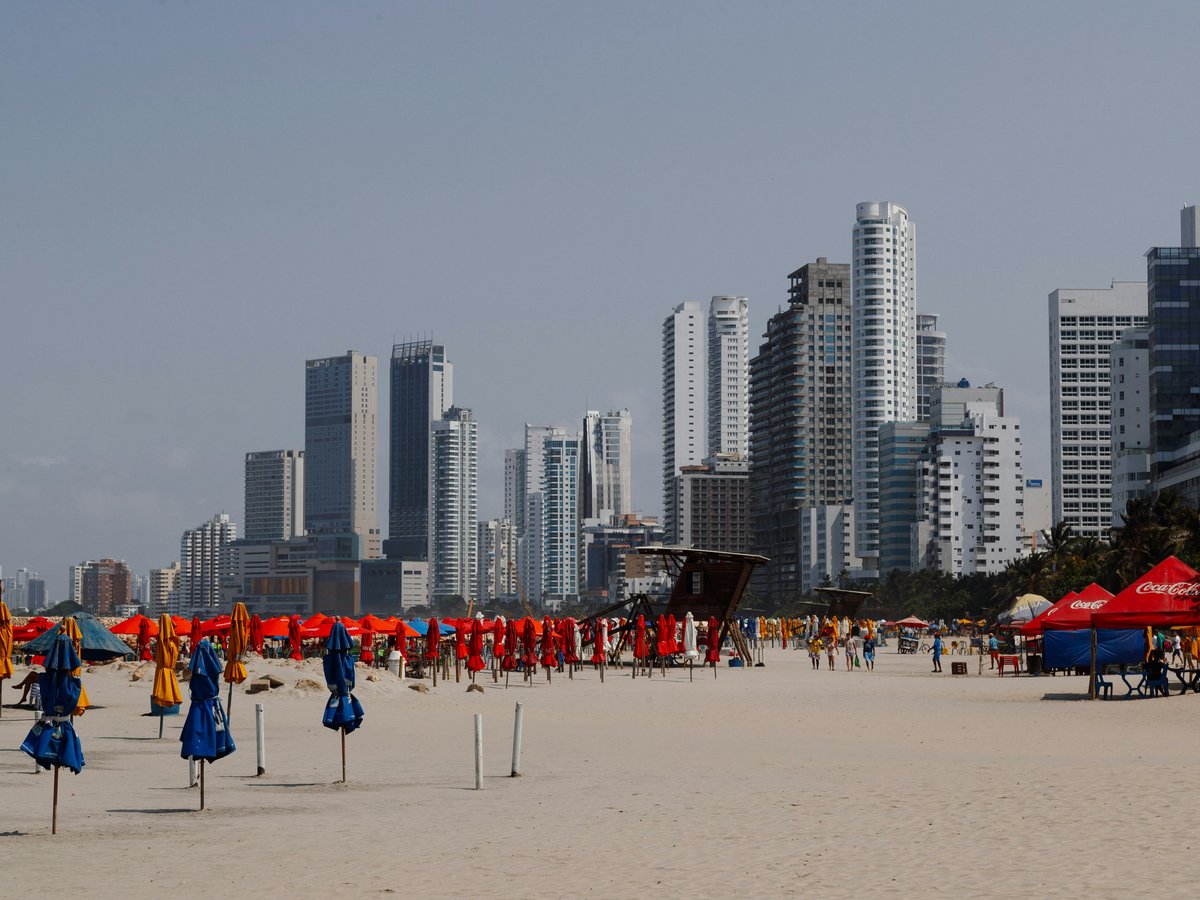
Cartagena sits on Colombia's Caribbean coast at roughly 10°N latitude, where the humidity tends to hover near 80% year-round and daytime temperatures stay between 28°C and 33°C. The city spreads across a mix of peninsulas, islands, and a large coastal lagoon called Ciénaga de la Virgen. To the south, the Barú peninsula and the Islas del Rosario archipelago offer coral reefs within a 45-minute boat ride. Inland, about 30 minutes by car, the foothills around Turbaco bring a slight drop in temperature and denser tropical dry forest. The dry season runs from roughly December through April, and that window is when most outdoor activities become more comfortable. Mind you, even the wet season (May through November) rarely produces all-day rain. Showers tend to arrive in late afternoon bursts, 30 to 90 minutes of heavy downpour followed by clearing skies. The Caribbean trade winds pick up between January and March, which makes those months particularly good for water sports. Cartagena is not a mountain city. The terrain is flat to gently rolling, with the 150-meter Cerro de la Popa as the highest point in the immediate area. Your outdoor options lean toward water, mangroves, and coastal ecosystems rather than alpine trails.
Outdoor activities
-
Mangrove Kayaking in La Boquilla
La Boquilla sits about 15 minutes north of the walled city, at the edge of Ciénaga de la Virgen. Local fishermen run kayak and canoe tours through the mangrove channels that line the lagoon's northern shore. The water is calm and shallow, rarely more than a meter deep, and the mangrove roots form narrow corridors where herons, iguanas, and fiddler crabs are everywhere. Morning trips starting around 6:30 AM tend to have better bird activity and cooler air. Tours typically run 1.5 to 2 hours and cost between 40,000 and 80,000 COP per person depending on the operator. The mangrove canopy blocks most direct sun, but reflected glare off the water still gets you.
- Difficulty
- Easy
- Duration
- 1.5 to 2 hours
- Best season
- December through April (dry season), though available year-round
-
Scuba Diving at Islas del Rosario
The Rosario Islands sit about 35 kilometers southwest of Cartagena's harbor, inside a national marine park. Dive sites around the archipelago range from 5 to 25 meters depth, with soft corals, sea fans, and occasional nurse sharks. Visibility fluctuates between 8 and 20 meters depending on recent rainfall and currents. Most dive operators run day trips departing from the Muelle de la Bodeguita around 7:30 AM, with 2 dives included. A two-tank day trip typically runs 350,000 to 500,000 COP. Water temperature stays around 27°C to 29°C, so a 3mm shorty is plenty. Worth noting, the reef health has declined over the past two decades, but conservation efforts through Parque Nacional Natural Corales del Rosario y de San Bernardo have stabilized several sites.
- Difficulty
- Beginner to intermediate (depending on site depth)
- Duration
- Full day (7:30 AM to 4:00 PM typically)
- Best season
- January through April for best visibility
-
Cycling the Barú Peninsula Road
The road from Pasacaballos to Playa Blanca stretches roughly 20 kilometers along the Barú peninsula. It was paved in recent years, making it rideable on a road bike, though patches of loose gravel still appear after heavy rains. The route is flat, running through small villages like Ararca and Santa Ana, with mango trees lining sections of the road. You'll smell wood smoke from roadside fish vendors along the way. Starting early, around 5:30 AM, is non-negotiable in this heat. The route has minimal shade for long stretches, and midday temperatures on exposed pavement can feel like 40°C with the humidity. Several Cartagena shops rent decent mountain bikes for around 50,000 to 80,000 COP per day.
- Difficulty
- Moderate (flat but hot)
- Duration
- 3 to 5 hours round trip depending on pace and stops
- Best season
- December through March, when rain is least likely and winds provide some cooling
-
Kitesurfing off Tierra Bomba and Manzanillo del Mar
Manzanillo del Mar, about 20 minutes north of the walled city, gets consistent Caribbean trade winds between December and March. Wind speeds during those months average 15 to 22 knots, enough for solid kite sessions. The beach has a mix of sandy bottom and shallow reef, so booties help. A few local schools operate out of Manzanillo offering IKO-certified instruction, with beginner courses running about 800,000 to 1,200,000 COP for 6 to 9 hours of lessons. The vibe is low-key compared to spots like Salinas del Rey further up the coast. That said, April through November sees the wind drop off significantly, and the spot becomes more of a swimming beach.
- Difficulty
- Intermediate (beginners should take lessons)
- Duration
- 2 to 4 hours per session
- Best season
- December through March (trade wind season)
-
Volcán del Totumo Mud Bath
About 45 minutes northeast of Cartagena, this 15-meter-tall mud volcano sits in the village of Santa Catalina near the town of Galerazamba. You climb a wooden staircase to the crater, then lower yourself into warm, dense mud that is buoyant enough that you float without effort. The sensation is strange at first. Thick, silky, body-temperature mud up to your chest. Locals inside the crater offer massages for tips. Afterward, you rinse in a nearby lagoon where village women help wash the mud off for a small fee. Entrance costs around 15,000 to 20,000 COP. The whole experience takes about 30 to 45 minutes in the mud itself, though the trip with transport eats a half day.
- Difficulty
- Easy
- Duration
- Half day including transport
- Best season
- Year-round, though the access road can get muddy in wet season
Day hikes
-
Cerro de la Popa
The highest point in Cartagena at about 150 meters above sea level. The hill is topped by the Convento de Santa Cruz, a 17th-century Augustinian monastery. The walk up follows a paved road from the base through a residential neighborhood, gaining elevation gradually over roughly 1.5 kilometers. The final approach to the monastery offers a 360-degree view of the city, the bay, Bocagrande's skyline, and the industrial port of Mamonal to the south. The climb is short but steep enough to feel it in the heat. Going with a local guide or in a group is recommended, as the lower sections of the hill have had safety concerns in the past. Entry to the monastery grounds costs around 15,000 COP.
- Difficulty
- Easy to moderate (short but steep, and the heat is a real factor)
- Duration
- 1 to 1.5 hours round trip on foot
- Best season
- December through April, ideally early morning before 8 AM
-
Sendero Ecológico in Jardín Botánico Guillermo Piñeres
The trail system inside the Turbaco botanical garden offers a loop through tropical dry forest with well-maintained paths and some stone steps on steeper sections. The canopy keeps temperatures manageable, and the route passes through different forest zones from lowland swamp to drier hillside. The forest floor smells like wet leaves and rich earth, especially during the wet months. You might spot agoutis, a large rodent species, along quieter sections in the early morning. The trails are well-marked and family-friendly.
- Difficulty
- Easy
- Duration
- 1 to 2 hours for the full loop
- Best season
- Year-round, though trails are less muddy December through April
-
Coastal Walk from Bocagrande to Castillogrande
A flat waterfront walk along the malecón that traces Bocagrande's western shoreline south toward the Castillogrande neighborhood and the old Club Naval. The route is about 3 kilometers one way along paved sidewalks and a beach path. In the morning, you pass joggers, fishermen casting from the rocks, and vendors setting up beach chairs. The sea breeze is strongest along this stretch because it faces the open Caribbean. At the southern tip of Castillogrande, a rocky jetty extends into the bay mouth, and you can watch container ships entering the port of Cartagena from close range.
- Difficulty
- Easy (flat and paved)
- Duration
- 1 to 1.5 hours one way at a walking pace
- Best season
- December through April, early morning or late afternoon to avoid peak heat
-
Galerazamba Salt Flats and Flamingo Lagoon
About an hour north of Cartagena near the village of Galerazamba, a series of salt flats and shallow lagoons attract flocks of Caribbean flamingos, particularly between November and March. The walk around the lagoon edges is flat and exposed, across sandy and crusty salt terrain. There are no formal trail markers, and a local guide from the village is the practical way to navigate. The flamingos tend to feed in the early morning, and their pink feathers against the white salt crust and turquoise water is worth the early alarm. The salt pans have been worked by locals for generations. Some sources suggest the flamingo population in this area can reach several hundred during peak season.
- Difficulty
- Easy (flat, but fully exposed to sun)
- Duration
- 2 to 3 hours for the lagoon walk, plus 1 hour each way for transport
- Best season
- November through March for flamingo presence
Water activities
-
Snorkeling at Isla Grande (Islas del Rosario)
Isla Grande is the largest island in the Rosario archipelago and the most accessible for day-trippers. Boats depart from Muelle de la Bodeguita or the main port. Snorkeling spots around the island's western side have shallow reefs in 2 to 5 meters of water, with parrotfish, sergeant majors, and occasional barracuda. The coral is a mix of brain coral and sea fans. Visibility varies, on a good dry-season day you might get 15 meters, while a rainy-season trip can drop to 5 or 6. Most tours include snorkel gear, lunch on the island, and a stop at the Oceanario (a small marine aquarium). Full-day tour prices start around 80,000 to 150,000 COP from the dock.
- Difficulty
- Easy (calm, shallow water)
- Duration
- Full day (8 AM to 4 PM)
- Best season
- January through April for best underwater visibility
-
Swimming at Playa Blanca (Barú)
Playa Blanca sits on the northern tip of the Barú peninsula, about an hour from central Cartagena by boat or 1.5 hours by road. The beach has fine white sand and calm, shallow turquoise water that stays waist-deep for 30 to 40 meters out. It gets crowded with day-trippers by mid-morning, especially on weekends and holidays. Arriving by 8 AM or staying overnight in one of the beachfront hammock camps gives you a quieter window. Vendors patrol the sand constantly selling ceviche, fried fish, beer, and coconut rice. The water temperature sits around 28°C. A fresh-grilled red snapper plate from the beach vendors runs about 35,000 to 50,000 COP.
- Difficulty
- Easy
- Duration
- Half day to full day
- Best season
- December through April for calmest water and clearest skies
-
Sunset Kayaking in Cartagena Bay
Several operators run guided kayak trips through Cartagena's inner bay, paddling past the city walls, the naval base, and toward Tierra Bomba island as the sun drops. The bay is generally calm and sheltered from open-ocean swells, though boat wakes from cargo traffic can rock a kayak. Evening trips typically depart around 4:30 PM and run about 2 hours. The light on the walled city's stone fortifications turns golden in the last hour before sunset, and pelicans dive-bomb the surface around you. Prices run roughly 100,000 to 150,000 COP per person. Paddling fitness is not a major concern since the distances are short, but the afternoon heat still demands hydration.
- Difficulty
- Easy to moderate
- Duration
- 2 hours
- Best season
- December through April for calmer seas and less rain, though available year-round
-
Stand-Up Paddleboarding at Castillogrande
The sheltered water on the bay side of Castillogrande, near the old Club Naval, offers flat conditions for SUP. A few rental outfits operate from the small beach there, charging around 40,000 to 60,000 COP per hour. Morning sessions before 9 AM get glassy water and tolerable temperatures. The bay side is protected from Caribbean swells by the peninsula itself, so even beginners can stay upright. You paddle along the seawall with views of the old city across the water. Pelicans perch on the rocks and largely ignore you.
- Difficulty
- Easy
- Duration
- 1 to 2 hours
- Best season
- December through March, early morning
Parks & gardens
-
Jardín Botánico Guillermo Piñeres
Located in Turbaco, about 30 minutes southeast of central Cartagena by car, this botanical garden covers roughly 9 hectares of tropical dry forest. It was founded in 1978 and contains over 300 labeled plant species. The temperature drops a few degrees compared to coastal Cartagena, which makes a walk here feel like relief. A trail loop of about 1.5 kilometers winds through the forest, passing a freshwater spring where you can hear the water running over mossy rocks. The canopy is dense enough that most of the path stays shaded even at noon. Howler monkeys are sometimes audible in the surrounding forest. Entry costs around 18,000 COP for adults.
Highlights: The freshwater spring and swimming area, the orchid collection, the ceiba trees with buttress roots taller than a person, and the marked medicinal plant section
-
Parque Centenario
FreeThis park occupies a full block between the walled city and Getsemaní, shaded by massive old trees. It feels different from the polished tourist areas. Iguanas, some over a meter long, drape themselves on branches and wander across the paths. Street vendors sell fresh mango with lime and salt from carts along the perimeter. The park can feel lively during the day and quieter at dusk, though it is best visited during daylight hours. It sits right next to the Centro Comercial Getsemaní entrance, making it a natural pause between neighborhoods.
Highlights: The resident iguana colony (dozens of them, completely habituated to people), the shaded benches under mature tropical trees, and the people-watching at the edges where Getsemaní meets the old city
-
Parque de Bolívar
FreeThe main plaza in the walled city, flanked by the Catedral de Santa Catalina de Alejandría and the Palacio de la Inquisición. The square is lined with tall palm trees and has a bronze statue of Simón Bolívar at its center. Palenqueras in traditional dress sell fruit from bowls balanced on their heads. The square gets hot by mid-morning, no shade reaches the center. That said, early morning and late afternoon bring a breeze off the bay and fewer crowds. The Museo del Oro Zenú sits one block south.
Highlights: The Catedral facade (dating to the late 16th century), the Palenquera fruit sellers (a living cultural tradition from San Basilio de Palenque), and the Palacio de la Inquisición's courtyard
-
Parque Espíritu del Manglar
FreeA newer ecological park along the edge of Ciénaga de la Virgen in the southeastern part of the city. It features raised wooden boardwalks through mangrove habitat, with interpretive signs about the lagoon's ecosystem. The park was built as part of Cartagena's effort to protect the ciénaga's remaining mangrove buffer. Bird activity is good early in the morning, with species like tricolored herons and ringed kingfishers. The humidity under the mangrove canopy is intense, so bring water.
Highlights: The elevated boardwalk over water, morning birdwatching for wading birds and kingfishers, and the interpretive trail explaining the ciénaga ecosystem
Practical tips
- Sun Protection
- Cartagena sits at 10°N latitude with a UV index that regularly hits 11 to 13. Sunscreen alone is not enough for a full day outside. Wear a wide-brimmed hat and a lightweight long-sleeve UPF shirt. Reapply SPF 50+ every 90 minutes, more often if you are swimming. Lip balm with SPF is easy to forget and worth carrying. The reflected glare off water and white sand compounds the exposure significantly.
- Hydration
- Plan for at least 1 liter of water per hour of outdoor activity in Cartagena's heat. The combination of 32°C air temperature and 80% humidity means you lose fluids faster than you feel thirsty. Carry a reusable bottle and refill at tiendas, where a 600ml bottled water costs about 2,000 to 3,000 COP. For longer outings, electrolyte packets (available at Farmatodo and Olímpica pharmacies across the city) help replace salt loss.
- Footwear
- For beach and boat activities, reef shoes or sport sandals with a strap protect against sea urchins and rocky entry points. The Islas del Rosario have coral rubble shorelines where bare feet are a mistake. For urban walking and Cerro de la Popa, any comfortable closed-toe shoe works. The botanical garden in Turbaco has muddy sections in wet season where trail runners with grip are better than sandals.
- Timing Your Day
- Start any outdoor activity by 6:00 to 7:00 AM. By 10:30 AM the heat becomes genuinely oppressive, and between noon and 3:00 PM even locals stay indoors. Late afternoon, after 4:00 PM, brings a second usable window with softer light and slightly lower temperatures. This pattern applies to everything from kayaking to city walks. Afternoon rain showers in wet season (May through November) typically arrive between 2:00 and 4:00 PM and clear within 1 to 2 hours.
- Safety on Trails
- Cerro de la Popa and areas around Ciénaga de la Virgen are best visited with a local guide or in a group, not solo. The trails themselves are not technical, but some neighborhoods on the approaches have had reported mugging incidents. Tour operators and hotel concierges can arrange guides who know the safe routes. For island trips and boat excursions, confirm that the vessel carries life jackets and has a working radio. The standard is improving but not universal among cheaper boat operators.
- Gear Rentals
- Snorkel gear, kayaks, and SUP boards are available through tour operators and beachfront rental shops, so you do not need to pack your own unless you are particular about fit. Dive operators provide full gear. Bicycle rentals are available from shops near the walled city for 50,000 to 80,000 COP per day, mostly mountain bikes. For kitesurfing, the schools in Manzanillo del Mar rent complete kite setups to certified riders.
FAQ
What is the best time of year for outdoor activities in Cartagena?
The dry season from December through April offers the most comfortable conditions. Temperatures still reach 32°C, but lower humidity and rare rainfall make prolonged outdoor time more manageable. January through March also brings the strongest trade winds, which is the window for kitesurfing and sailing. The wet season (May through November) is not a write-off, though. Rain usually falls in short afternoon bursts, so morning activities still work well. November through March is the period for flamingos at Galerazamba.
Is it safe to swim in the ocean around Cartagena?
The beaches at Bocagrande, Castillogrande, Playa Blanca, and the Rosario Islands are generally safe for swimming. Currents are mild in the sheltered bay areas. Open Caribbean beaches north of the city, like Manzanillo del Mar, can have stronger currents and occasional rip tides, so pay attention to local advice. Jellyfish appear seasonally, more common in the warmer months. Ciénaga de la Virgen (the large lagoon east of the city) is not suitable for swimming due to water quality issues.
Do I need to book outdoor tours in advance or can I arrange them on arrival?
Most activities can be arranged on short notice. Kayak tours in La Boquilla, boat trips to Islas del Rosario, and Volcán del Totumo excursions run daily and accept walk-up bookings. Scuba diving is worth booking 1 to 2 days ahead, especially during the December-to-April high season, since boat spots and dive guides fill up. Kitesurfing lessons during peak wind season (January through March) should be reserved a few days in advance. For everything else, your hotel front desk or a walk along the Muelle de la Bodeguita will turn up options quickly.
How much should I budget per day for outdoor activities in Cartagena?
Budget around 100,000 to 200,000 COP (roughly 25 to 50 USD) per person for a single guided activity like mangrove kayaking, a Totumo visit, or a boat trip to Playa Blanca. Scuba diving day trips run higher, around 350,000 to 500,000 COP. Kitesurfing courses cost 800,000 to 1,200,000 COP for a multi-session package. Free or low-cost options include the Bocagrande coastal walk, Parque Centenario, and Parque de Bolívar. Entrance to the botanical garden in Turbaco is about 18,000 COP.
What fitness level do I need for outdoor activities around Cartagena?
Most activities are accessible to average fitness levels. The terrain is flat to gently hilly, with Cerro de la Popa (150 meters) being the steepest climb you will encounter near the city. The real physical challenge is the heat and humidity, not the terrain. Kayaking tours in La Boquilla are calm-water paddles suitable for beginners. Snorkeling requires basic swimming ability. Cycling the Barú road demands more endurance due to the 20-kilometer distance in tropical heat. Scuba diving requires a basic medical clearance but no exceptional fitness.
Are there any outdoor activities suitable for families with young children?
Mangrove kayaking in La Boquilla works for families, as children can ride in tandem kayaks and the water is shallow and calm. The Jardín Botánico in Turbaco has shaded, paved paths suitable for strollers on the main route. Playa Blanca has gentle, shallow water that stays wadeable for dozens of meters. The Volcán del Totumo mud bath is a novelty that kids tend to enjoy, though the staircase up is steep for very small children. Parque Centenario's iguanas are a reliable hit with young visitors. Avoid midday for any outdoor family activity, as the heat is hard on children.
Outdoor experiences in Cartagena
 Free cancellation
 Cartagena ATV Tour
Outdoor experience: 2.5 hours, free cancellation.
via Viator Free cancellation
 Full Day Tour of 5 Must-See Places in the Rosario Islands
Outdoor experience: 7.5 hours, free cancellation.
via Viator Free cancellation
 Island Hopping Party Boat Tour: 5 Stops with Lunch, Cholon & Baru
Outdoor experience: 7 hours, free cancellation.
via Viator Free cancellation
 Cartagena VIP Boat Tour: Rosario Islands & Snorkel
Outdoor experience: 8 hours, free cancellation.
via Viator Free cancellation
 ATV Half-Day Tour in Cartagena
Outdoor experience: 2.5 hours, free cancellation.
via Viator Free cancellation
 Cartagena : Full day 3 private islands
Outdoor experience: 6 hours, free cancellation.
via Viator Free cancellation
 Full Day Tour of Five Premium Islands in Cartagena
Outdoor experience: 7 hours, free cancellation.
via Viator Free cancellation
 Tour a san Basilio de Palenque desde cartagena
Outdoor experience: free cancellation.
via Viator Free cancellation
 Walking Tour in Walled City and Getsemani Cartagena
Outdoor experience: 2.5 hours, free cancellation.
via Viator Free cancellation
 The Jaguar´s Footprint: Hike and Music Day Trip from Cartagena
Outdoor experience: 11 hours, free cancellation.
via Viator Free cancellation
 Magical Full-Day Tour Through The Mangroves And The Beach In Isla de Barú
Outdoor experience: free cancellation.
via Viator Free cancellation
 5 Island Tour with Lunch Snorkel in Cartagena Rosario Island
Outdoor experience: 7 hours, free cancellation.
via ViatorLast verified by automated review (v1.7.2) on . What is automated review?