Cartagena With Kids: What Works
Cartagena earns a 7.2 out of 10 for family-friendliness. That 2.8 gap is almost entirely heat and one fortress. Here is the day-shape that actually works with kids under 7, the sight to skip until they're older, and the one that redeems everything.
Published · Updated
1 The 7.2 Score and What the Gap Is Made Of
The smell hits you at Puerta del Reloj before anything else. Fried cheese, horse sweat, and diesel from the bus lane on Avenida Venezuela. Your 4-year-old grabs your leg. This is Cartagena's front door, and it tells you something the family_friendly_score of 7.2 already quantified. The city is willing to work with you. It is not going to make it easy.
A 7.2 puts Cartagena above most of Latin America's colonial cities for families. It is not the 8.5 of a purpose-built resort town. It is not the 6 of somewhere you'd avoid with toddlers entirely. The number reflects a city founded in 1533 that has genuinely invested in walkable plazas, shaded arcades inside the Ciudad Amurallada, and a waterfront along the Bahía de Cartagena calm enough for small boats. It also reflects 32-degree heat from January to December, cobblestones that defeat every stroller wheel ever manufactured, and a fortress built to repel British naval sieges that now functions as a toddler siege on parents.
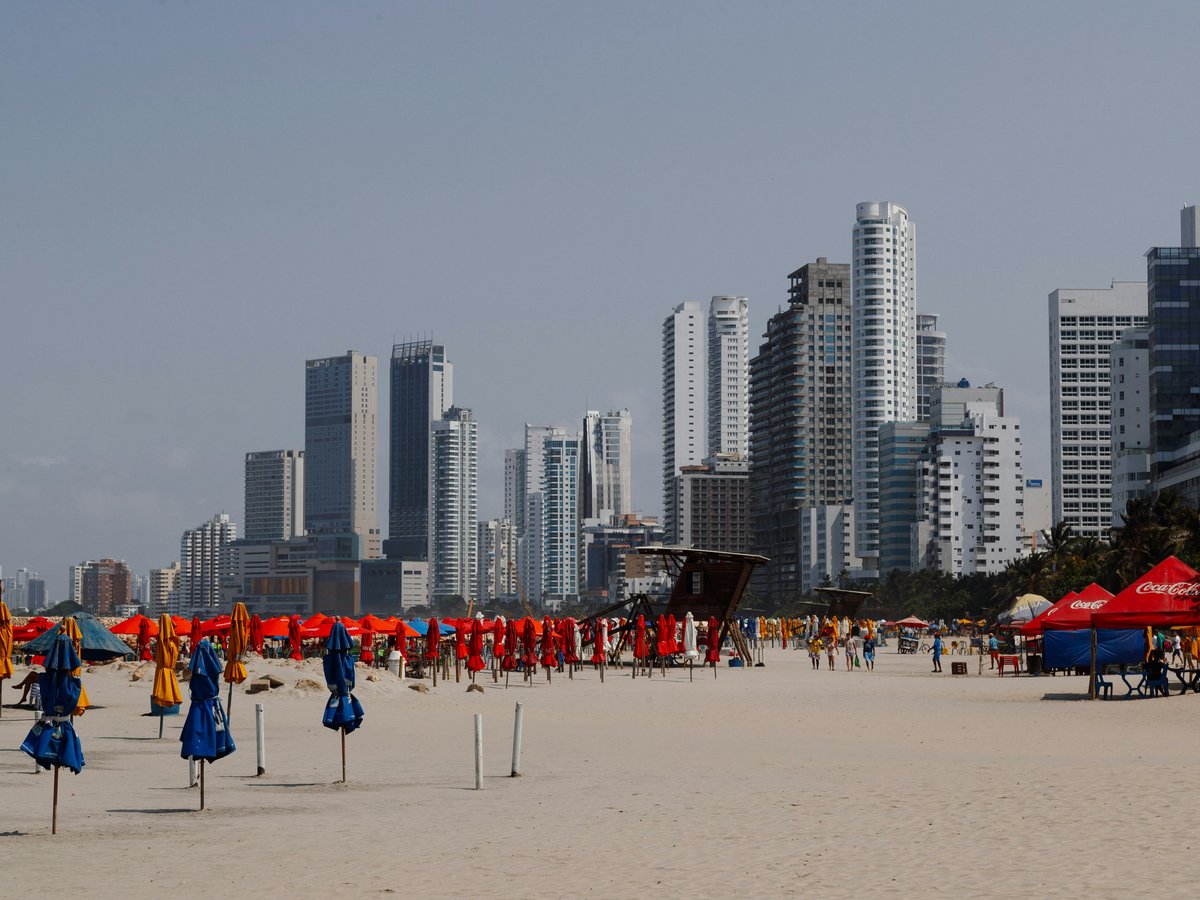
The 7.2 breaks into two halves. The Walled City and its immediate surroundings, including Getsemaní, score well above that average. The infrastructure is there. The plazas (Plaza Santo Domingo, Plaza de la Trinidad, and Plaza San Pedro Claver) give you flat ground, shade trees, and ice cream vendors every 40 metres. The colonial arcades along Calle de los Santos de Piedra provide continuous shade for two full blocks, which matters more than any museum when you have a child in a carrier. Bocagrande's beachfront hotels add pool access and air conditioning for the collapse hour between 1 PM and 3 PM when the heat index climbs past 38 degrees.
The drag on the score comes from three specific sources: Castillo San Felipe de Barajas, which is exposed and steep and shadeless; the midday heat window between 11 AM and 3 PM that eliminates outdoor activity for small children; and the transit logistics required to reach the Islas del Rosario. These are solvable problems, and solving them is what separates the families who love Cartagena from the ones who spend the week hiding in the hotel pool. The city rewards you for working with its rhythms rather than against them. Locals eat lunch at noon and reappear at 4 PM. Families who adopt that schedule find a city that opens up in the golden hours like nowhere else in the Caribbean.
2 Skip Castillo San Felipe Until They Are Eight
Castillo San Felipe de Barajas is the single biggest trap for families with young children in Cartagena. Every guidebook lists it first. Every hotel concierge recommends it. It is genuinely one of the most impressive military fortifications in the Americas, a UNESCO World Heritage component that took the Spanish Empire two centuries to complete, and it is almost perfectly designed to make children under 7 miserable.
The problems are structural and cannot be managed away. The fortress sits on the Cerro de San Lázaro, a 40-metre hill with no shade cover on the approach ramp. The ramp itself is roughly 150 metres of exposed stone at a gradient steep enough that strollers roll backward. The tunnel system, which is the genuinely fascinating part, is dark enough to frighten most toddlers and narrow enough that you cannot carry a child through the lower passages while another adult passes in the opposite direction. The battlements have low walls. The interior courtyards have no water fountains. The closest bathroom is at the ticket office, which means a 10-minute walk back down the ramp with a child who needed it 10 minutes ago.
None of this means Castillo San Felipe is a bad sight. For children 8 and older, the tunnel network is extraordinary and the views from the top are worth the climb. But for the under-7 cohort, it consumes 90 minutes of prime morning energy, delivers 45 minutes of active distress, and leaves you with a dehydrated family at 11 AM needing a taxi back to the Walled City. That taxi ride, incidentally, is roughly 2 kilometres through traffic that does not move between 10 AM and noon on the stretch of Avenida Pedro de Heredia between the fortress and the Centro Histórico.
The opportunity cost matters more than the experience itself. Those 90 minutes, spent instead at the Museo Naval del Caribe inside the Walled City, give you air conditioning, ship models children can examine closely, a ground-floor cafe with cold drinks, and a bathroom on every level. The naval museum is not world-class. It does not need to be. It needs to be cool, flat, and interesting enough for 45 minutes, and it is all three. The remaining 45 minutes goes to walking the ramparts of the city wall itself, specifically the stretch between the Baluarte de Santo Domingo and the Baluarte de San Francisco Javier, which delivers the same views as San Felipe at one-tenth the physical effort and with shade from the afternoon angle.
3 The Three-Block Day That Cartagena's Heat Demands
The day-shape that works in Cartagena with young children is not intuitive, because it requires you to do almost nothing between 11 AM and 3 PM. North American and European families fight this. They have paid for flights and hotels and they want to see things. Cartagena's heat does not care what you have paid for. The wet-bulb temperature between December and March regularly exceeds 28 degrees Celsius in the early afternoon, which means sweat stops cooling you effectively and children overheat before they can articulate that they are overheating.
The shape that works is three blocks. Block one runs from 7 AM to 10:30 AM. This is the productive window, and it is longer than you expect because Cartagena's mornings are genuinely pleasant. The humidity is lower, the cobblestones are cool, and the Walled City is nearly empty before 9 AM. Start with breakfast at a panadería in Getsemaní, walk through the Walled City while the plazas still have shade on both sides, and finish at the Museo Naval or the Palacio de la Inquisición before the heat builds. The Inquisición museum, despite its grim subject, has a courtyard with a functioning fountain and benches that children gravitate toward while you read the colonial-era displays at your own pace.
Block two is the hotel. From 10:30 AM to 3 PM, you are in air conditioning. Pool, lunch, nap. This is not wasted time. This is the structural requirement of the climate. Families who push through this window arrive at dinner exhausted, sunburned, and resentful of a city that was trying to tell them something.
Block three runs from 3:30 PM to 7:30 PM, and it is the best four hours Cartagena offers. The light turns golden on the colonial facades. The plazas fill with local families doing exactly what you are doing. Street performers appear in Plaza Santo Domingo. The wall walk from Café del Mar toward the Clock Tower catches the sunset over the Caribbean. Dinner in the Walled City starts at 7 PM, which is early by Colombian standards but perfectly timed for children who woke at 6:30 AM. By 8 PM you are walking back through streets that feel cooler, safer, and more alive than they did at noon.
4 The Rosario Islands Redeem Everything If You Solve the Logistics
The Islas del Rosario are the experience that redeems Cartagena for families, and the logistics almost prevent you from having it. The islands sit roughly 45 kilometres southwest of the city in the Parque Nacional Natural Corales del Rosario y de San Bernardo, a protected marine area with water clarity that the harbour-adjacent beaches of Bocagrande cannot approach. The snorkelling is real. The sand is white. The water is calm enough for toddlers to wade without anxiety. This is what families imagine when they book Cartagena, and it exists, but not where the hotel is.
The standard tourist boat leaves from the Muelle de la Bodeguita at 8 AM and returns at 4 PM. The ride takes 60 to 90 minutes depending on sea state and engine. On a calm day with a fast boat, a 3-year-old will manage. On a choppy day with a slow boat, you will spend 90 minutes holding a vomiting child in diesel fumes while waves hit the hull at a frequency designed to maximize nausea. There is no way to know which day you will get until you are on the water.
The solve is a private boat charter through your hotel or a local operator, departing at 7:30 AM before the harbour traffic builds, targeting Isla Grande or one of the smaller private islands rather than the overcrowded Isla del Rosario main dock. A private charter costs roughly 600,000 to 900,000 COP for a boat that holds six to eight people. Split between two families, that is 150,000 COP per adult, roughly 35 USD at current exchange rates. For that price you get departure time control, the ability to turn back early if a child is struggling, and a captain who will anchor in a sheltered cove rather than at the main pier where 200 day-trippers compete for shade.
Bring reef-safe sunscreen, water shoes for the coral rubble at the waterline, and twice as much drinking water as you think you need. The island vendors sell fried fish and coconut rice, and children eat both without complaint. Return by 2 PM. You will be back at the hotel before the afternoon heat block, and your children will have had the single best day of the trip.
5 Getsemaní After Dark With Small Children
Getsemaní is the neighbourhood that most family travel guides either skip or describe as edgy. It was edgy fifteen years ago. Today it is the most walkable, most interesting, and most child-friendly evening neighbourhood in Cartagena, provided you understand its geography. The core of family Getsemaní is a triangle formed by Plaza de la Trinidad, Calle de la Sierpe, and Calle del Guerrero. Inside that triangle, the streets are pedestrianised after 6 PM, the murals hold a child's attention better than any museum, and the street food carts sell arepas de huevo for 3,000 COP each.
Plaza de la Trinidad is where the evening starts. Local families are already there when you arrive. Children play on the church steps. Teenagers practice dance routines in the corner. Vendors sell mango biche with salt and lime, which is the single best snack in Cartagena and costs 2,000 COP. Your children will eat it. They will not eat the ceviche from the cart on the southeast corner, which is fine because that ceviche is for you.
The walk from Plaza de la Trinidad through the mural streets to the Walled City gate at Torre del Reloj takes roughly 20 minutes at child pace. Every surface is painted. The art is dense, political, sometimes bewildering, and children respond to the colour and scale without needing the context. This walk replaces the museum visit you were going to force on a day when the schedule collapsed. It is free. It works at any hour between 5 PM and 8 PM. It ends at the Walled City, where you can pivot to dinner or walk the ramparts in the last light.
The only caution is geographic. South of Calle del Arsenal and east of Avenida del Pedregal, the character changes. The streets are darker, less trafficked, and not where you take a family at night. Stay inside the triangle. The triangle is enough.
6 What Cartagena Teaches You About Travelling With Children
Cartagena is not a city that accommodates children by flattening itself into something easy. There is no children's museum. There is no zoo worth the taxi fare. The aquarium on the Islas del Rosario is a concrete tank operation that exists to extract entrance fees from captive day-trip audiences, and you should not go. What Cartagena offers instead is a set of conditions (heat, beauty, rhythm, food) that reward the family willing to adapt.
The adaptation is the lesson. A child who learns to rest in the middle of the day and explore in the golden hours has learned something about paying attention to where they are. A child who eats arepas de huevo from a street cart in Getsemaní because that is what is available has learned something about food that a resort buffet cannot teach. A child who walks the ramparts of a 400-year-old wall at sunset and sees the Caribbean turn orange has a memory that will outlast every theme park queue they will ever stand in.
The 7.2 is honest. Cartagena is not the easiest city to visit with young children. The heat is real. The cobblestones are real. The fortress is a trap. But the city behind that number is also real: a place where the plazas fill with families every evening, where the food is cheap and good and served without condescension, where the architecture rewards attention at every scale, and where the Caribbean is 45 minutes away in water clear enough to see the bottom.
Bring the stroller but plan not to use it. Bring the carrier instead. Walk the Walled City before 10 AM. Sleep through the heat. Return to the streets when the light goes gold. Take the boat to the islands on a calm day. Eat in Getsemaní. Watch your children watch the murals. The 2.8 points Cartagena loses are the price of a city that is still itself. The 7.2 it earns is the reward for going anyway.
Last verified by automated review (v1.7.0_onboard-cartagena-flagship-2026-06-23) on . What is automated review?