Stay in Cartagena in January
80 hotels in the Trip.com pool for Cartagena, from US$11 a night.
Opens Trip.com on Fri 1 Jan to Sun 3 Jan 2027; change the dates there.
January is the driest month on Cartagena's calendar, and that single fact shapes everything else. Expect daytime highs around 32°C (90°F) with lows near 24°C (75°F) and roughly 17mm of rain for the entire month, spread across maybe 2 days. The northeast trade winds, called los alisios, pick up noticeably in January and push through the narrow streets of the Walled City. They do not eliminate the 74% humidity, but they make the difference between oppressive and manageable. You will feel the salt air on your skin the moment you step onto the ramparts above Bocagrande.
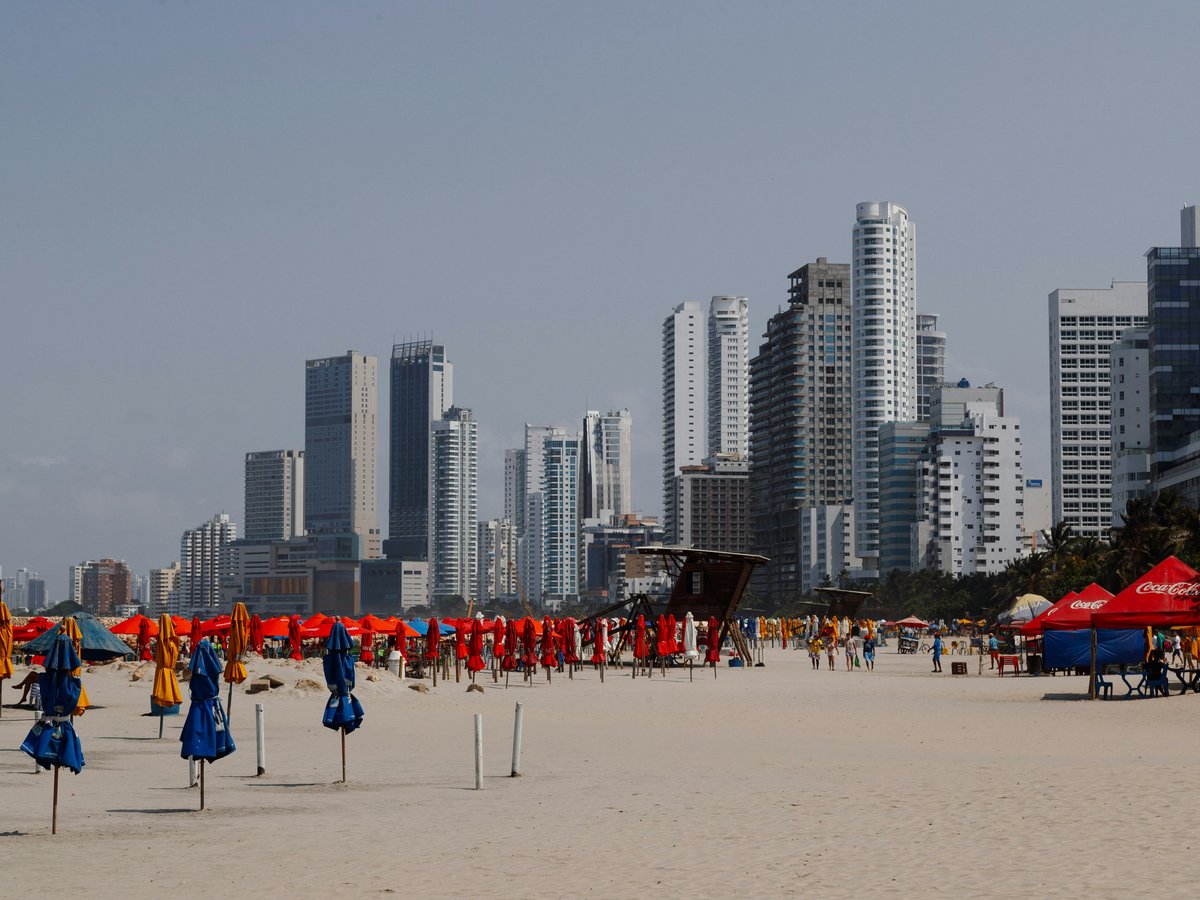
That said, you will not be alone in figuring this out. January falls squarely in temporada alta, Colombia's high season. Colombian school holidays run through mid-January, domestic tourists fill Bocagrande's beachfront towers, and international visitors arrive steadily from North America and Europe. The Walled City's plazas, particularly Plaza de Santo Domingo and Plaza de la Trinidad in Getsemaní, feel noticeably fuller than they would in September or October. Hotel rates in Centro Histórico tend to run 40-60% above the annual average, especially during the first two weeks.
The cultural calendar is genuinely strong this month. The Festival Internacional de Música de Cartagena, a classical music festival running since 2007, typically fills the first two weeks with concerts in colonial churches and courtyards like the Teatro Adolfo Mejía. The Hay Festival Cartagena, an offshoot of the Welsh literary festival, usually anchors the last week of January with author talks, panels, and performances scattered across Getsemaní and the Walled City. Between the weather and these two festivals, January likely ranks as the 2nd-best month to visit, edged out only by February, which keeps identical weather but sheds the holiday-season price premium.
Why visit in January
- Driest month of the year at 17mm of rainfall, with only February (14mm) coming close. You can plan outdoor activities, island day trips, and walking tours with near-certainty they will not be rained out.
- The Caribbean trade winds provide natural cooling through the Walled City's grid of streets, making rooftop dining and sunset drinks at spots like Café del Mar comfortable from late afternoon onward.
- Two international festivals overlap this month. The Festival Internacional de Música and the Hay Festival Cartagena deliver classical concerts in 400-year-old churches and literary panels in colonial courtyards. No other month matches this cultural density.
- Peak conditions for day trips to the Islas del Rosario and Playa Blanca on Barú. Calm seas and clear water make January one of the best months for snorkeling within an hour of the city.
Worth knowing
- This is the most expensive month of the year. Hotel rates in the Walled City and Bocagrande run 40-60% above the off-season average, and popular restaurants in San Diego and Getsemaní may need reservations 2-3 days out.
- Crowds in the Walled City are at their annual peak. The narrow streets around Torre del Reloj and Plaza de los Coches get congested by mid-morning, and the horse-drawn carriages on Calle de la Iglesia add to the bottleneck.
- Daytime heat of 32°C (90°F) with 74% humidity limits comfortable outdoor time between roughly 11am and 3pm. Midday walking tours without shade and water are genuinely unpleasant.
Best for
Think twice if
January is Cartagena's dry season at its peak. Expect warm, steady Caribbean weather with highs around 32°C (90°F) and lows near 24°C (75°F). Rain is scarce at 17mm across about 2 days for the entire month. Humidity holds around 74%, which is noticeable but offset considerably by the northeast trade winds that strengthen in January. Mornings tend to be calm and warm, with the breeze picking up by early afternoon. Evenings on the ramparts or at rooftop terraces feel genuinely pleasant, with temperatures dropping into the mid-to-upper 20s and a consistent sea breeze.
Seasonal caution
- UV index in Cartagena in January typically reaches 11-12 on clear days, rated 'extreme' on the WHO scale. Unprotected skin can burn in under 15 minutes, especially on boat trips to the Rosario Islands where water reflection intensifies exposure. Reef-safe SPF 50+ reapplied every 90 minutes and a hat with full brim coverage are not optional.
Year-round climate
Averages from the last 5 years.
| Month | Avg high (°C) | Avg low (°C) | Rainfall (mm) |
|---|---|---|---|
| Jan | 32 | 24 | 17 |
| Feb | 32 | 24 | 14 |
| Mar | 33 | 25 | 22 |
| Apr | 32 | 25 | 79 |
| May | 31 | 25 | 159 |
| Jun | 30 | 25 | 202 |
| Jul | 31 | 25 | 142 |
| Aug | 30 | 25 | 171 |
| Sep | 30 | 25 | 150 |
| Oct | 29 | 25 | 207 |
| Nov | 29 | 25 | 191 |
| Dec | 31 | 25 | 35 |
Holidays and festivals in January
Public holidays
- New Year's Day(Año Nuevo)1 January 2027
- Epiphany(Día de los Reyes Magos)11 January 2027
Headline events
Festival Internacional de Música de Cartagena
Early to mid-January (roughly January 3-14)
A classical and world music festival running since 2007 that fills Cartagena's colonial churches, courtyards, and the Teatro Adolfo Mejía with performances by international and Colombian musicians. Over 10 days, the program spans orchestral concerts, chamber music, jazz crossovers, and free outdoor performances in the Walled City's plazas. It is the most significant classical music event on Colombia's Caribbean coast.
Hay Festival Cartagena
Late January (typically the last week, around January 25-29)
An international literary and ideas festival, the Latin American edition of the Welsh Hay Festival, bringing authors, journalists, filmmakers, and musicians to venues across Getsemaní and the Walled City. Panels, book launches, and conversations typically run across 4-5 days in intimate colonial settings. Gabriel García Márquez was instrumental in bringing the festival to Cartagena, and the program tends to reflect the city's Caribbean literary identity.
Best things to do in January
Day trip to Islas del Rosario
natureA 45-minute to 1-hour boat ride from Muelle de la Bodeguita takes you to the Rosario Islands archipelago, a national park with coral reefs, clear water, and small beach islands. Snorkeling, swimming, and a seafood lunch on one of the inhabited islands make up the typical day. The water visibility in January is among the best of the year.
January's calm seas and minimal rainfall produce the clearest snorkeling visibility. Wave heights in the dry season drop to 0.3-0.5m, making the crossing smoother and the reef more visible than in October or November.Booking tipBook 3-5 days ahead during January. Morning departures (8-9am) fill first. Weekday trips are less crowded than Saturday or Sunday.
Festival Internacional de Música concerts
culturalAttend performances ranging from full orchestral concerts at the Teatro Adolfo Mejía to intimate chamber music sessions in colonial courtyards and churches throughout the Walled City. The festival's free outdoor concerts in plazas draw mixed crowds of locals and visitors. The acoustics inside 17th-century churches like Iglesia de San Pedro Claver add a dimension that a concert hall cannot replicate.
The festival runs only in the first two weeks of January. There is no equivalent event in any other month.Booking tipHeadliner concerts sell out online in December. Free plaza performances need no tickets but arrive 30 minutes early for a seat.
Hay Festival author talks and panels
culturalHear international and Colombian authors, journalists, and filmmakers speak in intimate colonial venues across Getsemaní and Centro Histórico. Panel discussions, book launches, and evening performances span 4-5 days. The scale is smaller and more accessible than the London or New York equivalents.
The Hay Festival Cartagena runs only in late January, typically the last week. It does not repeat in other months.Booking tipCheck the Hay Festival website in early January when the full program is released. Popular English-language talks sell out within days of being listed.
Sunset drinks on the Walled City ramparts
leisureWalk the ramparts from Café del Mar along the Baluarte de Santo Domingo section as the sun drops into the Caribbean. The stone walls radiate the day's stored heat, the breeze carries salt and the smell of fried empanadas from the vendors below, and the sky turns from copper to violet over the water. Several bars and informal vendors set up along different sections of the wall.
January's trade winds cool the ramparts by late afternoon while the dry season guarantees clear sunsets. During wet-season months, afternoon storms frequently cancel the experience entirely.Booking tipCafé del Mar does not take reservations. Arrive by 5pm for a table with an unobstructed view.
Morning visit to Mercado de Bazurto
foodCartagena's largest public market is loud, dense, and not designed for tourists. It sells everything from fresh fish to electronics. The produce section in January overflows with corozo fruit, green mangoes, sapote, and guanábana. The prepared food stalls serve fried fish with arroz con coco and patacones for 12,000-15,000 COP. The smell of frying oil and ripe fruit is thick by 9am.
January is peak season for corozo and early-season mango biche. The market's fruit vendors have the widest selection this month, and the dry weather makes the outdoor stall sections more navigable than during the rains.Booking tipNo booking needed. Go before 9am to beat the heat and get the freshest fish. Take a taxi or ride app rather than walking from the Walled City.
Kayaking through La Boquilla mangroves
natureGuided kayak tours through the mangrove channels near the fishing village of La Boquilla, about 20 minutes north of the Walled City. The channels are narrow and shaded, and you will likely see herons, crabs, and schools of juvenile fish in the roots. Tours run 1.5-2 hours and include a stop in the village.
Dry season means clearer water in the channels, fewer mosquitoes, and a more pleasant paddle. The mangroves are still green and full but the insect pressure drops significantly compared to October or November.Booking tipBook through a local guide in La Boquilla rather than a Walled City tour agency. Prices are roughly half and the money stays in the village.
Evening walk through Getsemaní
nightlifeThe neighborhood of Getsemaní, south of the Walled City across the Torre del Reloj, comes alive after 7pm. Street art covers the facades on Calle de la Sierpe and Callejón Angosto. Plaza de la Trinidad fills with groups sitting on the steps, street performers, and food vendors selling arepas and empanadas. The bar scene on Calle del Porvenir and Calle de la Media Luna runs late.
January's dry, warm evenings bring the outdoor social life to its peak. During rainy-season months, the open-air plaza gatherings and street performances are frequently interrupted or cancelled.Booking tipNo booking needed. Restaurants on Calle San Andrés and Calle del Porvenir may need a reservation on Friday and Saturday evenings in January.
Boat trip to Playa Blanca on Isla Barú
beachA 45-minute boat ride or 1-hour drive from the city reaches Playa Blanca, a stretch of white sand on the Barú peninsula with calm, shallow Caribbean water. The beach has basic infrastructure (shade rentals, food vendors, hammocks) and the sand genuinely lives up to the name. The water is warm enough to stay in for hours without getting cold.
January's minimal rainfall and calm seas make Playa Blanca's conditions close to ideal. The water clarity peaks in the dry months, and the reduced chance of afternoon storms means you can stay for a full day without watching the sky.Booking tipWeekday trips avoid the worst weekend crowds. The overland route via Pasacaballos is cheaper than the boat but adds 30 minutes and the last stretch is a rough road.
What to eat in January
On menus now
Ceviche cartagenero
Cartagena's version uses shrimp or white fish cured in lime juice, mixed with raw onion, and served in a small plastic cup from street carts. January's calm Caribbean seas mean the catch arriving at Bazurto's fish section tends to be the freshest of the year. The ceviche vendors along the Walled City ramparts use the same morning supply.
Arroz con coco
Coconut rice made by cooking rice in coconut milk until the bottom caramelizes into a crunchy layer called the titote. It appears alongside fried fish at lunch spots across Getsemaní and Bazurto year-round, but January's fresh coconut harvest gives it a noticeably richer flavor. The titote is the part worth asking for.
Street food peaks
Mango biche con sal
Green, unripe mango sliced and served with salt, lime, and sometimes a drizzle of suero costeño. Early mango season starts on the Caribbean coast in January, and street vendors appear with carts of the fruit near Torre del Reloj and along the Bocagrande waterfront. The crunch and sourness are a different experience from ripe mango entirely.
Cocadas
Coconut confections in white, brown, and mixed varieties, sold by palenqueras near Las Bóvedas and the Clock Tower. January's coconut harvest keeps supply high, and the dry heat makes the chewy-sweet texture hold better than in humid wet-season months. The brown cocadas have a deeper caramel flavor from longer cooking.
What to drink
Jugo de corozo
A tart, deep-red juice made from the corozo palm fruit (Bactris guineensis), which fruits along Colombia's Caribbean coast from November through February. Street vendors sell it ice-cold from large glass jugs near the ramparts and at Mercado de Bazurto. The flavor sits somewhere between cranberry and hibiscus. Peak availability in January.
Regular events in January
Día de los Reyes Magos (Epiphany)Free
A national holiday in Colombia celebrating the Three Kings. In Cartagena, the day is marked by family gatherings, special church services, and children receiving gifts. Some neighborhoods in Getsemaní and the outskirts organize small processions. Businesses and banks close for the day.
January 6New Year's Day celebrationsFree
January 1 carries the tail end of Cartagena's New Year festivities. The Walled City's plazas still have a celebratory atmosphere through the first 2-3 days of January, with live music at some bars and restaurants. Bocagrande's beachfront sees fireworks on New Year's Eve, and the energy carries into the first day.
January 1Free concerts and cultural programming (festival spillover)Free
Both the Music Festival and Hay Festival program free events in public plazas and parks during their respective runs. These include outdoor concerts in Plaza de la Aduana, poetry readings in Getsemaní courtyards, and film screenings. The schedule is published on each festival's website, usually a week before the events begin.
Throughout January, concentrated in the first and last weeksBest places this January
Castillo San Felipe de Barajas
historical siteThe largest Spanish-built fortress in the Americas, sitting on Cerro de San Lázaro about a 15-minute walk from the Walled City. January's dry weather lets you explore the full network of underground tunnels without the flooding or puddles that affect them in the rainy months. The view from the top covers the Walled City, Bocagrande, and the port. Go before 10am to beat both the tour groups and the midday heat.
San LázaroPlaza de la Trinidad
plazaGetsemaní's central plaza and the neighborhood's social heart. On dry January evenings, the steps of the Iglesia de la Santísima Trinidad fill with locals and visitors. Street performers set up by 8pm. Food vendors sell arepas de huevo and empanadas from carts at the edges. The atmosphere is more local than anything in the Walled City proper.
GetsemaníMercado de Bazurto
marketCartagena's main public market, sprawling across several blocks south of the Walled City. Not a tourist attraction in any polished sense, but it is where the city shops and eats. January brings peak corozo and mango biche season to the fruit stalls. The fried-fish lunch counters serve the best-value Caribbean food in the city. The sensory overload of fish, fruit, frying oil, and cumbia from phone speakers is real.
BazurtoLas Bóvedas
shoppingTwenty-three arched vaults built into the Walled City's northeastern rampart in the late 18th century, originally used as military storage and dungeons. Now they house artisan shops selling hammocks, ceramics, leather goods, and Colombian textiles. January's dry weather makes browsing the outdoor stalls set up alongside them comfortable, and the afternoon light on the stone archways is worth seeing even if you do not buy.
Centro HistóricoIglesia de San Pedro Claver
church and museumA 17th-century Jesuit church and museum honoring Pedro Claver, who spent 40 years ministering to enslaved Africans arriving at Cartagena's port. The courtyard has a quiet, shaded quality even in peak-season January. The museum's collection of colonial-era artifacts and Claver's personal belongings occupies the former cloister. The contrast with the tourist noise outside the walls is striking.
Centro HistóricoCafé del Mar
bar and viewpointA bar perched on a section of the old city wall at Baluarte de Santo Domingo, overlooking the Caribbean. January sunsets here benefit from clear skies, the trade wind breeze, and warm stone underfoot. The drink prices reflect the location, not the complexity of the cocktails, but the 270-degree view at golden hour is hard to match anywhere in the city.
Centro HistóricoLa Boquilla
village and natureA fishing village about 20 minutes north of the Walled City, known for its mangrove channels and quieter beaches. January's dry season makes the kayaking tours through the mangroves more pleasant, with clearer water and fewer insects. The village's beachfront restaurants serve fresh fried fish at prices well below the tourist zones. The pace here is the opposite of the Walled City.
La Boquilla
Your packing checklist
Tick items off as you pack. Your progress saves in this browser.
All packed — have a great trip.
Insider tips
Mercado de Bazurto is where cartageneros eat. A full lunch of fried fish, arroz con coco, and patacones runs roughly 12,000-15,000 COP there. The same plate in the Walled City costs 45,000-60,000 COP. Go before 10am when the heat is still tolerable and the fish is freshest.
The northeast trade winds in January blow strongest in the afternoon. If you are choosing between a morning and an afternoon walking tour of the Walled City, the afternoon is more comfortable despite starting warmer, because the breeze picks up around 2-3pm and cools the narrow streets noticeably.
For the Hay Festival and Music Festival, free events tend to outnumber ticketed ones. Check the festival programs online a week before arrival. The free talks and smaller courtyard concerts are often more intimate and engaging than the headliner events in formal seated venues.
Take the boat to the Rosario Islands on a weekday. Weekend boats from Muelle de la Bodeguita fill to capacity, and the popular beaches on Isla Grande get genuinely packed. A Tuesday or Wednesday trip feels like a different destination entirely.
The palenqueras, Afro-Colombian women who sell fruit and cocadas near the Clock Tower and in San Diego, are one of Cartagena's cultural symbols. They will often pose for photos, but asking first and buying something is the respectful approach. A bag of cocadas costs around 5,000 COP.
Avoid these mistakes
- Scheduling a full walking tour of the Walled City between 11am and 2pm. The midday sun in January, combined with 74% humidity and limited shade in the plazas, makes this genuinely unpleasant and risks heat exhaustion. Start at 8am or wait until 4pm when the trade winds have picked up.
- Only eating inside the Walled City. The tourist-facing restaurants on Plaza de Santo Domingo and Calle del Arsenal charge 3-4 times what you would pay for the same Caribbean dishes in Getsemaní or at Bazurto. The food at Bazurto is often better because the turnover is higher.
- Skipping the Rosario Islands because the beach at Bocagrande looks convenient. Bocagrande's beach is urban, heavily trafficked by vendors every 30 seconds, and the water quality does not compare. The 45-minute boat ride to the islands is worth the effort and the 80,000-120,000 COP.
- Not booking accommodation at least 4-6 weeks ahead. January is peak season, and the best-located hotels and guesthouses in the Walled City and Getsemaní sell out. Last-minute arrivals end up in Bocagrande's beachfront high-rises, which have a completely different atmosphere from the colonial center.
Practical tips for January
January 1 (New Year's Day) and January 6 (Día de los Reyes Magos) are national holidays in Colombia. Banks, government offices, and some smaller shops close on both days. Restaurants and tourist-facing businesses stay open but may run adjusted hours. Taxis in Cartagena rarely use meters. Agree on a fare before getting in, or use InDriver or Uber for transparent pricing. Within the Walled City, most distances are walkable in 10-15 minutes. Both the Festival Internacional de Música and the Hay Festival open online ticket sales in late November or December. Headliner concerts and popular author talks sell out before January begins. Check festival websites and buy specific events early rather than waiting. Dress codes for churches, including Iglesia de San Pedro Claver and the Catedral de Santa Catalina de Alejandría, require covered shoulders. Carry a light shirt or shawl if you plan to enter. Colombian pesos are the only practical currency. Some tourist shops accept USD but at unfavorable rates. ATMs inside the Walled City dispense pesos, though the machines near Torre del Reloj can run out of cash on holiday weekends. The Manga and Pie de la Popa neighborhoods have less-trafficked ATMs.
FAQ
Is January a good time to visit Cartagena?
January is one of the two best months to visit Cartagena, alongside February. It falls in the heart of the dry season with only 17mm of rainfall, average highs of 32°C (90°F), and the northeast trade winds at their strongest. The Festival Internacional de Música and Hay Festival add cultural weight that no other month matches. The main trade-off is price. January is peak season, so hotels and flights cost 40-60% more than off-season months like September or October. If your budget allows for it, January is an excellent choice.
What is the weather like in Cartagena in January?
Warm and dry. Average highs reach 32°C (90°F), lows stay around 24°C (75°F), and humidity sits at 74%. Rainfall for the entire month is typically 17mm, spread across roughly 2 days. The northeast trade winds provide a consistent breeze, especially from mid-afternoon onward. Expect clear mornings and occasional high clouds in the afternoon. It rarely rains for more than 30-40 minutes on the days it does rain. This is the opposite of the wet season months from May through November, when rainfall can reach 150-200mm.
Is Cartagena crowded in January?
Yes, noticeably. January is the most visited month alongside December. Colombian school holidays run through mid-January, and international tourists arrive for the dry season and the festivals. The Walled City and Getsemaní are busier than in low-season months like September or October. Restaurants may need reservations, island day trips fill up, and hotel availability tightens. That said, the crowds thin somewhat after January 15 when the domestic holiday period ends. Weekdays are consistently less congested than weekends.
How far in advance should I book hotels for Cartagena in January?
At least 4-6 weeks ahead for hotels in the Walled City or Getsemaní, the two neighborhoods most visitors prefer. These areas have limited room stock relative to demand in January. Bocagrande has more high-rise hotel inventory but a very different character. For the Rosario Islands day trips and festival tickets (Music Festival or Hay Festival), 2-3 weeks ahead is usually sufficient, though headliner concerts sell out earlier.
Is it safe to visit Cartagena in January?
Cartagena's main tourist areas, including the Walled City, Getsemaní, Bocagrande, and the islands, are generally safe for visitors. Police presence increases during peak season in January. Standard precautions apply. Avoid displaying expensive jewelry or electronics on less-trafficked streets, use registered taxis or ride apps like InDriver or Uber, and stay aware of your surroundings at night outside the main tourist zones. Petty theft, particularly phone snatching and pickpocketing, is the primary concern rather than violent crime. The Walled City after midnight on weekends has the highest concentration of opportunistic theft reports.
Things to Do in Cartagena in January
 Free cancellation
 Cartagena 5 Island Hop Tour: Lunch, Snorkel, Beach Clubs, & More
Day trip: 7 hours, free cancellation.
via Viator Free cancellation
 Tour De Palenque, Road to Emancipation.
Day trip: free cancellation.
via Viator Free cancellation
 Private Walking Tour in Cartagena Walled City & Getsemaní
Day trip: free cancellation.
via Viator Free cancellation
 Cartagena's Rosario Islands 5-Site Boat Tour with Lunch & Snorkel
Day trip: 7 hours, free cancellation.
via Viator Free cancellation
 Cartagena ATV Tour
Outdoor experience: 2.5 hours, free cancellation.
via Viator Free cancellation
 Full Day Tour of 5 Must-See Places in the Rosario Islands
Outdoor experience: 7.5 hours, free cancellation.
via ViatorFind a flight to Cartagena
Live fares to Cartagena appear here once cookies are accepted.
Last verified by automated review (v1.7.2) on . What is automated review?