Stay in Cartagena in August
80 hotels in the Trip.com pool for Cartagena, from US$11 a night.
Opens Trip.com on Fri 6 Aug to Sun 8 Aug 2027; change the dates there.
August in Cartagena means rain. Expect afternoon downpours on roughly 23 of 31 days, with 171mm of total rainfall that turns the colonial streets of Centro Histórico into temporary streams for 20 to 40 minutes at a stretch. Temperatures sit around 30°C (86°F) during the day and settle near 25°C (77°F) at night, with 85% humidity that coats your skin the moment you step outside. This is the deep wet season on Colombia's Caribbean coast.
The rhythm is workable, though. Mornings tend to stay clear until early afternoon, giving you 4 or 5 solid hours to walk the Walled City, explore Getsemaní's street murals, or catch a boat to Islas del Rosario before the clouds build. By late afternoon the downpour passes, the air cools a few degrees, and Cartagena turns golden as the wet cobblestones of San Diego catch the low sun. Hotel rates in Bocagrande and the Old City drop 30-40% from the December-through-March peak, and restaurants in the Walled City that need reservations in January will seat you on the spot.
Two national holidays fall in August, creating back-to-back puentes (long weekends) that fill domestic flights and bump hotel prices for 3-4 days around each. Batalla de Boyacá lands on August 7, and the Asunción de la Virgen is observed the Monday nearest August 15. Outside those windows, August is one of the year's quietest months, with fewer tour groups on Calle de la Universidad and shorter lines at Castillo San Felipe de Barajas.
Why visit in August
- Hotel rates across Bocagrande and Centro Histórico drop 30-40% from peak season (December through March), with some boutique properties in Getsemaní offering additional low-season discounts on stays of 3 or more nights.
- Fewer tourists at major sites. The line at Castillo San Felipe de Barajas, which can stretch 45 minutes in January, typically runs under 10 minutes in August.
- The rain follows a predictable afternoon pattern, leaving mornings dry and evenings pleasantly cooled. Sunrise temperatures around 26°C (79°F) make early walks through the Walled City genuinely comfortable.
- Two national holiday weekends (August 7 and the Monday after August 15) bring Colombian domestic visitors and a festive atmosphere with live music in Plaza de Bolívar and food stalls in Getsemaní, without the international-tourist crush of peak season.
Worth knowing
- Rain on 23 of 31 days is not a misprint. You will get rained on, likely hard, at least once per day in the afternoon. Outdoor plans after 1pm need a backup.
- 85% humidity makes the 30°C (86°F) heat feel closer to 37°C (99°F). The combination is physically draining between 11am and 3pm, especially on exposed walks.
- Boat trips to Islas del Rosario and Playa Blanca get cancelled or shortened when afternoon squalls roll in. Choppy seas on the 45-minute return crossing are common.
- Some rooftop bars and outdoor restaurants in the Old City close their terraces during heavy rain, pushing everyone inside and limiting dinner options on the wettest evenings.
Best for
Think twice if
August sits in the middle of Cartagena's wet season, which runs from May through November. The 171mm of rainfall arrives almost entirely in sharp afternoon bursts rather than all-day drizzle. Mornings tend to be hazy and warm, with temperatures climbing from 25°C (77°F) at dawn to 30°C (86°F) by midday. Humidity hovers around 85% through the day and rarely dips below 80% even after dark. The Caribbean breeze off Bahía de Cartagena provides some relief along the waterfront in Bocagrande, but the interior streets of the Walled City trap the moist air. You might get 2 or 3 fully dry days in the entire month. The rest follow the same pattern. Clear morning skies, clouds building around noon, a heavy downpour between 2pm and 4pm, then a cooler, sometimes breezy evening.
Seasonal caution
- The combination of 30°C heat and 85% humidity creates a heat index near 37°C (99°F) during midday. Drink water constantly, especially when walking the hillside approach to Convento de la Popa or the exposed ramparts of Castillo San Felipe de Barajas.
- Sudden downpours flood the lower streets of Getsemaní and parts of La Matuna within minutes. The drainage in some colonial-era blocks cannot handle the volume, and ankle-deep water is common on Calle de la Media Luna during heavy storms.
- August falls within the Caribbean hurricane season (June through November). Cartagena sits at roughly 10°N latitude, below the typical hurricane track, but tropical storm remnants can bring 2-3 days of continuous rain and rough seas perhaps once every few years.
Year-round climate
Averages from the last 5 years.
| Month | Avg high (°C) | Avg low (°C) | Rainfall (mm) |
|---|---|---|---|
| Jan | 32 | 24 | 17 |
| Feb | 32 | 24 | 14 |
| Mar | 33 | 25 | 22 |
| Apr | 32 | 25 | 79 |
| May | 31 | 25 | 159 |
| Jun | 30 | 25 | 202 |
| Jul | 31 | 25 | 142 |
| Aug | 30 | 25 | 171 |
| Sep | 30 | 25 | 150 |
| Oct | 29 | 25 | 207 |
| Nov | 29 | 25 | 191 |
| Dec | 31 | 25 | 35 |
Holidays and festivals in August
Public holidays
- Battle of Boyacá(Batalla de Boyacá)7 August 2027
- Assumption of Mary(La Asunción)16 August 2027
Best things to do in August
Morning walk along the Walled City ramparts
sightseeingStart at Torre del Reloj by 7am, before the heat peaks, and follow the perimeter walls north toward Baluarte de Santo Domingo. The morning light on the pastel colonial facades along Calle de la Universidad is at its best in the wet season, with overnight rain leaving the stone surfaces clean and saturated in color. By 8:30am you'll reach Plaza de Bolívar, still quiet enough to photograph without tour groups filling the frame.
Morning dry windows in August are the most comfortable time to walk. The rain-washed facades and empty plazas between 7am and 10am offer a version of Centro Histórico that peak-season visitors never see.Booking tipNo booking needed. Start early to beat the heat and the first tour buses, which arrive around 9:30am.
Mercado Bazurto food tour
foodCartagena's largest public market sprawls across several blocks south of Centro Histórico. The covered sections stay dry during downpours, making this a strong rainy-afternoon activity. Stalls sell whole fish, tropical fruit, arepas, and jugos naturales. The noise, the smell of frying empanadas, the shouts of vendors calling prices. It is overwhelming and entirely real. Guided food tours run about 3 hours and typically include 6-8 tastings.
August rain makes outdoor attractions unreliable after 1pm. Bazurto is covered, operates rain or shine, and draws fewer international tourists during the wet season.Booking tipBook a guided tour at least 3 days ahead. Going alone is possible, but the market layout is disorienting and a local guide knows which vendors offer the best quality.
Afternoon museum circuit in Centro Histórico
cultureWhen the rain arrives around 2pm, duck into the Palacio de la Inquisición on Plaza de Bolívar, then cross to the Museo del Oro Zenú, which houses pre-Columbian gold and ceramic artifacts from the Sinú and Zenú cultures. A 10-minute walk south brings you to the Iglesia y Claustro de San Pedro Claver, where the attached museum displays colonial-era religious art. The three sites take about 3 hours total.
August's afternoon rain creates a natural rhythm for indoor activities. The museums are noticeably emptier than in peak season, and the cool interiors provide relief from the 85% humidity outside.Booking tipNo advance booking needed. Combined entry for the Inquisition Palace and Gold Museum runs about 45,000 COP. San Pedro Claver charges a separate 20,000 COP.
Sunset drinks at Café del Mar
nightlifeThe bar sits on the old defensive wall in the Santo Domingo section of Centro Histórico, facing west over the Caribbean. After an August downpour clears, usually by 5pm, the sky over the water turns pink and orange against the remaining storm clouds. The contrast between dark cloud banks and sunset color is more dramatic in wet season than in the uniformly clear skies of January or February.
Post-rain Caribbean sunsets in August produce more vivid color than dry-season clear skies. The bar is also less packed than during December through March, so you can get a table along the wall edge.Booking tipArrive by 5pm to secure a wall-side table. No reservations accepted. Cocktails run 30,000-50,000 COP.
Day trip to Islas del Rosario
outdoorThe archipelago of 27 coral islands sits about 45 minutes southwest of Cartagena by speedboat. Snorkeling in the protected reef areas, swimming from the small beaches, and eating fried fish at one of the island lunch spots fills a full day. Water temperature hovers around 28°C (82°F) in August.
Fewer boats in August means calmer mooring areas and less churned-up water for snorkeling. Coral visibility tends to be reasonable if you pick a morning with calm seas.Booking tipBook a morning departure (8am or 9am) to maximize island time before afternoon weather. Expect 150,000-250,000 COP per person for a full-day group trip including lunch. Private boats run 800,000+ COP.
Getsemaní street art walking tour
cultureThe neighborhood south of the Walled City has become one of Latin America's densest open-air mural galleries. Calle de la Sierpe and the blocks around Plaza de la Trinidad feature large-scale works by Colombian and international artists. The murals rotate, with new pieces appearing every few months. A guided 2-hour walk covers 15-20 works with context on the artists and the neighborhood's history.
Fresh paint from recent wet-season restoration means the murals look sharper than in the dusty dry months. Morning tours before 10am avoid both the heat and the rain.Booking tipSeveral operators run morning tours starting at 9am from Plaza de la Trinidad. Book 2-3 days ahead. Prices range from 60,000 to 100,000 COP per person.
Colombian cooking class
foodSeveral culinary schools in Centro Histórico and Getsemaní offer half-day classes focused on Caribbean Colombian cuisine. A typical session includes a market visit to Bazurto followed by preparation of ceviche cartagenero, arroz con coco, and patacones. Classes run 3-4 hours and include the meal you prepare.
A structured indoor activity that fills the rainy afternoon window from 1pm to 5pm. Smaller class sizes in August (6-8 people versus 12-15 in peak season) mean more hands-on time.Booking tipBook 1 week ahead. Half-day classes range from 180,000 to 350,000 COP per person depending on the operator and whether a Bazurto visit is included.
What to eat in August
In season: fruit
Mango de azúcar
The tail end of mango season still delivers ripe fruit to Bazurto's stalls in early August. This small, intensely sweet Caribbean coast variety is worth seeking out before the season tapers off by mid-month.
On menus now
Cazuela de mariscos
A creamy coconut-milk seafood stew loaded with shrimp, squid, and fish from the morning catch at the Bazurto market docks. It works as comfort food during August's rainy afternoons. Restaurants in San Diego serve generous bowls for 35,000-55,000 COP.
Street food peaks
Arepa de huevo
Cartagena's signature fried corn pocket filled with egg appears year-round, but the rainy-morning street carts in Plaza de la Trinidad seem to multiply in August. The best ones have a crisp shell that shatters into the soft egg inside. Vendors start around 7am.
Patacón con todo
Flattened and twice-fried green plantain topped with shredded beef, cheese, and pink sauce. The crunch of the plantain against the warm toppings feels particularly right after an August downpour. Street carts in Getsemaní sell them for 8,000-12,000 COP.
What to drink
Jugo de corozo
The small red corozo palm fruit peaks along the Caribbean coast from July through September. Street vendors across Getsemaní and near Bazurto blend it into a tart, deep-red juice that tastes somewhere between cranberry and hibiscus. A glass typically costs 3,000-5,000 COP.
Limonada de coco
Lime juice blended with coconut milk and ice. The combination cuts through August's humidity in a way plain water does not. Nearly every restaurant in Bocagrande and the Walled City serves a version for 8,000-15,000 COP.
Regular events in August
Batalla de BoyacáFree
Colombia's national holiday marking the 1819 battle that sealed independence from Spain. In Cartagena, the day brings military parades along Avenida Venezuela, flag ceremonies at the Monumento a la Bandera in Bocagrande, and a general festive atmosphere. Most businesses close. The holiday creates a puente (long weekend) that fills flights from Bogotá and Medellín.
August 7Asunción de la VirgenFree
A national religious holiday observed on the Monday nearest August 15 under Colombia's ley de puentes system. Churches across Centro Histórico hold special masses, and the long weekend draws domestic visitors for a second consecutive puente. Plaza de Bolívar and the surrounding streets typically host food vendors and occasional live music through the evening.
Monday nearest August 15Puente cultural programming in the plazasFree
During both August long weekends, the Alcaldía de Cartagena organizes free live music, dance performances, and food fairs in Plaza de Bolívar and surrounding squares of Centro Histórico. Expect vallenato, champeta, and cumbia acts performing from early evening through midnight. The August 7 puente tends to draw more organized municipal programming than the August 15 weekend.
Evenings around August 7-10 and August 15-18, varying by yearBest places this August
Castillo San Felipe de Barajas
historic siteThe largest Spanish colonial fortress in the Americas, perched on the Cerro de San Lázaro. The network of underground tunnels stays cool during August's midday heat, making the lower galleries worth exploring when the ramparts above become oppressive. Visit before 9am to walk the top in relative comfort before the humidity peaks. The hilltop catches more breeze than the streets below.
San LázaroMercado Bazurto
marketCartagena's working-class market is covered and operates through the worst downpours. The fruit section alone is worth the trip in August, with corozo, mango, and guanábana piled on tables. The fish hall, where the morning catch arrives around 6am, smells strong but delivers the freshest seafood in the city.
BazurtoPlaza de la Trinidad
public squareThe social heart of Getsemaní, where locals gather on the church steps every evening. In August's quieter weeks the plaza feels more like a neighborhood than a tourist attraction. Street vendors sell empanadas and beer for under 10,000 COP, and the surrounding blocks are some of the safest for evening walking.
GetsemaníConvento de la Popa
historic siteThe 17th-century Augustinian monastery sits at the highest point in the city, roughly 150 meters above sea level. The views of the bay and the Walled City on a clear August morning, before afternoon haze builds, are worth the steep taxi ride up. Go before 9am.
La PopaLas Bóvedas
shoppingA row of 23 arched vaults built into the city wall in the late 18th century, now converted into craft shops. The covered arcades make this a reliable rain-proof browsing spot on wet afternoons. Shops sell hammocks, leather goods, and Wayúu mochilas (woven bags) from the Guajira peninsula.
Centro HistóricoMuseo del Oro Zenú
museumA small but well-curated branch of Bogotá's Museo del Oro, housed in a colonial building on Plaza de Bolívar. The collection focuses on the gold and filigree traditions of the Zenú and Sinú peoples of the Caribbean lowlands. Air-conditioned, free entry, and rarely crowded in August.
Centro HistóricoPlaya de Bocagrande
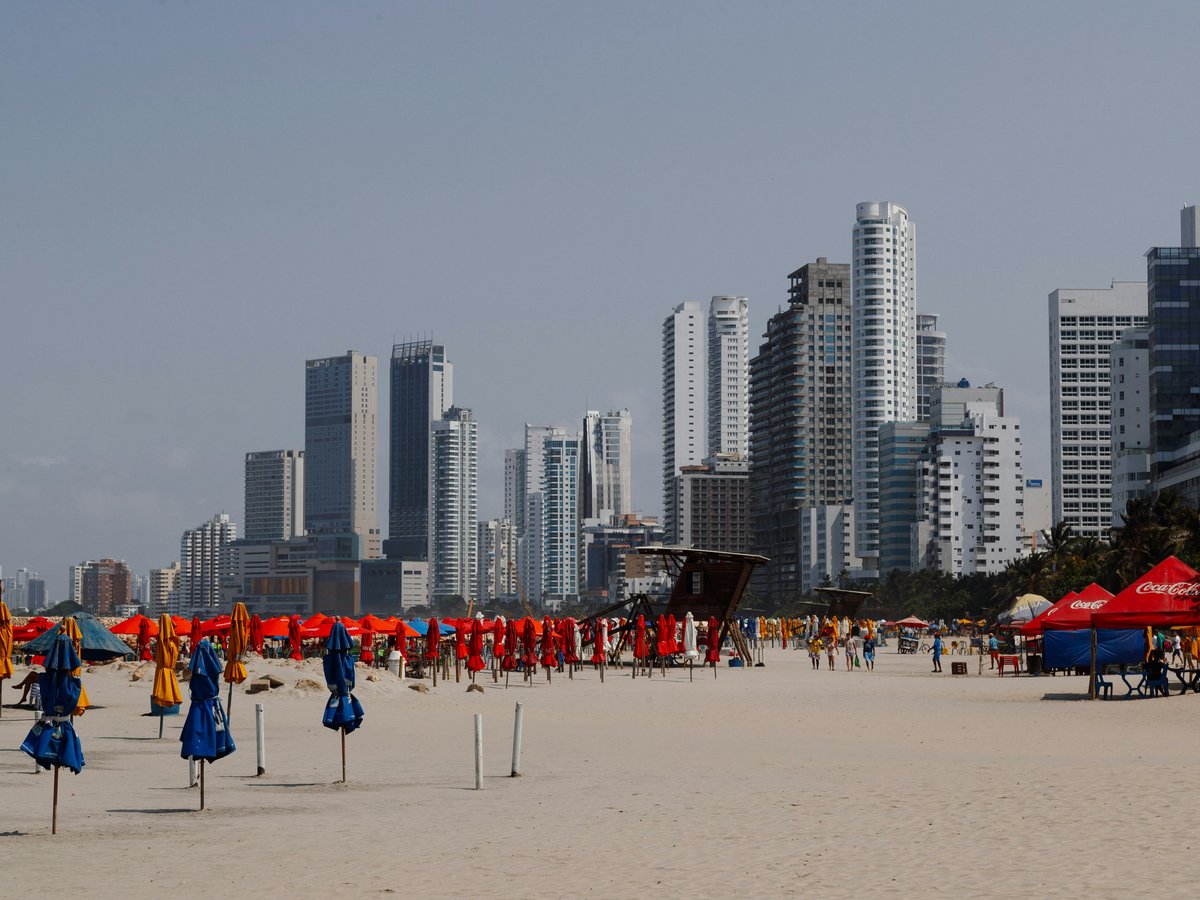
beachThe main urban beach running along the Bocagrande peninsula. Not Cartagena's prettiest stretch of sand, but August's thinner crowds mean more space between the vendor umbrellas. Early morning swims before 8am are pleasant at 28°C (82°F) water temperature. Skip it after 2pm when rain makes the beach pointless.
Bocagrande
Your packing checklist
Tick items off as you pack. Your progress saves in this browser.
All packed — have a great trip.
Insider tips
The cheapest and freshest fruit juices in Cartagena are from the Palenquera vendors near Puerta del Reloj, not at the sit-down restaurants inside the Walled City. A glass of jugo de corozo or maracuyá runs 3,000-4,000 COP from a street vendor versus 15,000-18,000 COP at a restaurant 2 blocks away.
During the puente weekends around August 7 and 15, hotel prices spike and flights from Bogotá double. If your dates are flexible, fly in on a Tuesday after the long weekend ends. You'll likely find the lowest rates of the entire year.
The afternoon rain is so predictable that locals schedule around it. Plan indoor activities (museums, cooking classes, long lunches) for 1pm to 4pm, and save outdoor walks, rooftop bars, and plazas for before 11am or after 5pm. Respecting this rhythm will improve the trip noticeably.
Taxi drivers in Cartagena do not use meters. Agree on the fare before getting in. A ride from the airport to Centro Histórico should cost 20,000-25,000 COP. Within the tourist zone, Bocagrande to the Walled City runs about 10,000-15,000 COP. Uber and InDriver both operate here and tend to be 20-30% cheaper.
The Walled City smells different after the rain. Damp stone releases a mineral-earthy scent that mixes with the frangipani trees along the walls. The 30 minutes right after a downpour, when the streets are briefly empty and the air cools, is the most atmospheric window for walking Centro Histórico.
Avoid these mistakes
- Booking an all-day outdoor beach excursion to Playa Blanca or Islas del Rosario without checking the marine forecast first. August swells from the north can make the return crossing rough enough to ruin the day, and some operators will not tell you until you are already at the dock. Check sea conditions that morning before committing.
- Scheduling an outdoor rooftop dinner reservation for 7pm without a rain backup. August storms sometimes extend past 6pm, and several rooftop restaurants in Centro Histórico will not honor reservations if the terrace is flooded. Confirm indoor seating availability when you book.
- Walking Castillo San Felipe de Barajas at midday. The fortress has almost no shade on its upper ramparts, and the combination of 30°C heat, 85% humidity, and sun-baked stone creates a heat-island effect that can cause genuine heat exhaustion. The tunnels below are cool, but the exposed walk above is brutal between 11am and 3pm. Go at 8am.
- Packing only one pair of shoes. Whatever you wear on day 1 in August will likely be soaked by day 2. Bring at least one pair of quick-dry sandals and one pair of closed shoes, and alternate them to allow each pair to dry.
Practical tips for August
Book accommodation for midweek dates (Tuesday through Thursday) outside the two puente weekends for the best August rates. Some boutique hotels in Getsemaní and Centro Histórico offer walk-in discounts of 10-20% during empty weekdays, though this is harder to count on than booking ahead. Reservations at restaurants are rarely needed in August except at the most popular spots near the Iglesia de Santo Toribio in San Diego. Air conditioning quality varies widely in colonial-era buildings. If AC matters to you, confirm the system type before booking. Modern hotels in Bocagrande have standard split units, while some converted colonial houses in the Walled City rely on fans or window units that struggle against 85% humidity. Credit cards are accepted at most tourist-facing restaurants and hotels. Bazurto and street vendors operate cash-only. Withdraw pesos from ATMs inside shopping centers (Centro Comercial Caribe Plaza has several) rather than street-facing machines, which carry higher skimming risk. Most museums and historic sites close on Mondays. The Palacio de la Inquisición and Museo del Oro Zenú both follow this schedule, so plan your rainy-afternoon museum days for Tuesday through Sunday.
FAQ
Is August a good time to visit Cartagena?
It depends on what matters to you. August is firmly in the wet season, with rain on 23 of 31 days and 171mm of total rainfall. The trade-off is clear. You get 30-40% lower hotel prices, shorter lines at sites like Castillo San Felipe de Barajas, and a less tourist-saturated Walled City. But you lose reliable outdoor weather after 1pm on most days. If you can structure your days around morning activities and indoor afternoons, August works well. If your trip revolves around beach days and outdoor dining, December through March is a better fit.
What is the weather like in Cartagena in August?
Hot and humid with daily rain. Average highs reach 30°C (86°F) with lows around 25.2°C (77°F), and humidity sits at 85%. The rainfall pattern is consistent. Mornings are typically clear and warm, clouds build through midday, and heavy downpours hit between 1pm and 4pm. The rain is intense but usually passes within 30-40 minutes, leaving cooler, sometimes breezy evenings. You might get 2 or 3 fully dry days in the entire month.
Is Cartagena crowded in August?
Less than peak season, with two exceptions. The Batalla de Boyacá weekend around August 7 and the Asunción weekend around August 15 bring Colombians from Bogotá and Medellín on short domestic trips. During those 3-4 day windows, flights cost more and popular hotels fill up. The rest of August is noticeably quieter than December through March, with reduced lines at major sites and easier restaurant access throughout the Walled City.
Should I book Islas del Rosario tours in advance in August?
Book 2-3 days ahead, mainly to secure a morning departure time (8am or 9am) before afternoon weather builds. The boats run with fewer passengers in August, so you are unlikely to be shut out entirely. The bigger risk is same-day cancellation due to weather. Choose operators that offer flexible rebooking rather than strict no-refund policies, since August seas can turn rough enough to cancel crossings altogether.
What should I wear in Cartagena in August?
Light, breathable fabrics. Cotton and linen work for the heat, but synthetic quick-dry materials handle the humidity and sudden rain better. Avoid jeans, which absorb water and take a full day to dry at 85% humidity. Pack a rain jacket or poncho. For shoes, waterproof sandals with grip for the wet cobblestones of Centro Histórico, plus one closed pair for evenings. The dress code at most Walled City restaurants is casual, though a few spots in San Diego expect long pants for men at dinner.
Things to Do in Cartagena in August
 Free cancellation
 Cartagena 5 Island Hop Tour: Lunch, Snorkel, Beach Clubs, & More
Day trip: 7 hours, free cancellation.
via Viator Free cancellation
 Tour De Palenque, Road to Emancipation.
Day trip: free cancellation.
via Viator Free cancellation
 Private Walking Tour in Cartagena Walled City & Getsemaní
Day trip: free cancellation.
via Viator Free cancellation
 Cartagena's Rosario Islands 5-Site Boat Tour with Lunch & Snorkel
Day trip: 7 hours, free cancellation.
via Viator Free cancellation
 Cartagena ATV Tour
Outdoor experience: 2.5 hours, free cancellation.
via Viator Free cancellation
 Cartagena VIP Boat Tour: Rosario Islands & Snorkel
Outdoor experience: 8 hours, free cancellation.
via ViatorFind a flight to Cartagena
Live fares to Cartagena appear here once cookies are accepted.
Last verified by automated review (v1.7.2) on . What is automated review?