Stay in Shanghai in March
96 hotels in the Trip.com pool for Shanghai, from US$14 a night.
Opens Trip.com on Fri 5 Mar to Sun 7 Mar 2027; change the dates there.
March in Shanghai sits in that awkward stretch between winter grey and genuine spring. Daytime temperatures reach about 16.5°C (62°F), which looks reasonable enough on paper, but the persistent dampness and 75% humidity lend a chill that the thermometer does not fully capture. Mornings hover around 7°C (45°F), cold enough that you will want a proper jacket before stepping out in Jing'an or along the Bund.
The month does have a quiet appeal if your timing is right. Magnolias start opening along Wukang Road in the French Concession by mid-March, and the cherry trees at Gucun Park in Baoshan district typically peak during the final week. Hotel rates sit well below October's Golden Week prices, and the major museums operate without summer queues. The Power Station of Art on the Huangpu waterfront tends to launch its spring exhibition cycle around this time.
The trade-off is real, though. Expect roughly 10 rainy days producing about 90mm of rainfall, mostly as extended drizzle rather than dramatic storms. Grey skies can stretch for 3 or 4 days running. But this is also when Shanghai's spring food season begins in earnest. Spring bamboo shoots appear in wet markets across Xuhui, and the pre-Qingming specialty qingtuan, those green glutinous rice balls filled with sweet bean paste, show up at bakeries city-wide from early March onward.
Why visit in March
- Cherry blossoms peak at Gucun Park in late March, drawing photographers and families from across the Yangtze Delta region. Over 12,000 trees across 87 hectares make it Shanghai's largest single-site bloom.
- Spring bamboo shoot season and qingtuan (green rice balls) create a brief, genuinely seasonal food window that you will not find in October or July. The ingredients appear in markets for roughly 4-5 weeks.
- Hotel rates run 25-35% below Golden Week (October) prices, and walkable neighborhoods like the French Concession and Jing'an are noticeably less crowded than peak months.
- Major exhibition spaces like the Power Station of Art and Long Museum West Bund typically launch new spring shows in March with attendance at a fraction of summer levels.
Worth knowing
- About 10 rainy days and 90mm of precipitation, mostly as persistent drizzle that can wash out 2-3 consecutive days of outdoor plans.
- Morning temperatures around 7°C (45°F) with 75% humidity feel colder than the numbers suggest. The damp cold gets into your bones in a way that dry 7°C simply does not.
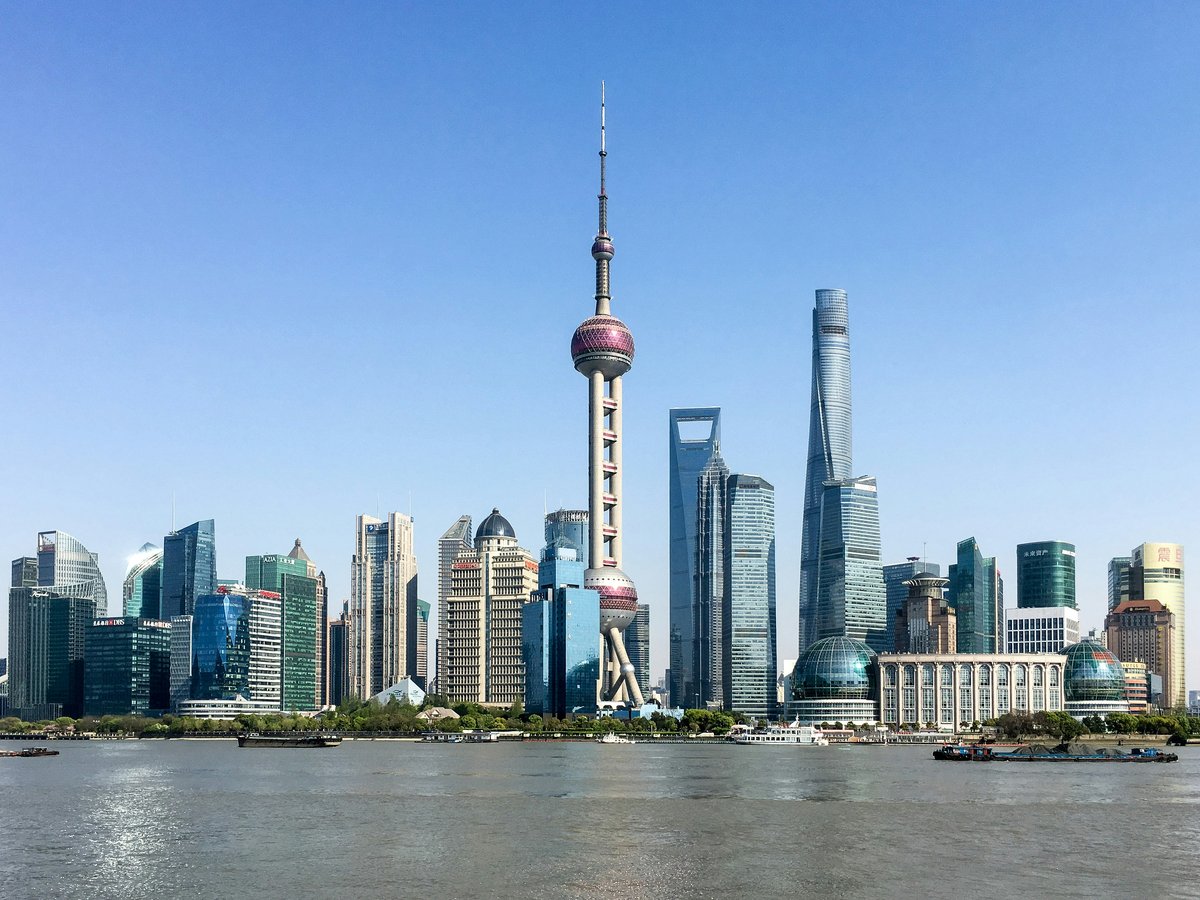
- Grey, overcast skies dominate many days, which limits the dramatic Pudong skyline photography from the Bund that draws many first-time visitors.
- Air quality can dip during early March as regional industrial output ramps back up after the Lunar New Year slowdown.
Best for
Think twice if
March marks Shanghai's slow turn from winter to spring, though the word 'spring' oversells it for the first half. The first week often still feels like February, with highs around 12-14°C and grey skies. By mid-month, temperatures climb toward 16-17°C, and the final week occasionally pushes past 20°C on sunny days. Nighttime lows sit around 7°C, and the 75% humidity makes both ends of the thermometer feel more extreme than they read. Rain comes as light, steady drizzle rather than heavy downpours, accounting for about 10 wet days and 90mm total. You might get a stretch of 3-4 consecutive grey days, then a burst of sunshine that reminds you why people like Shanghai in spring.
Seasonal caution
- Early March cold snaps can briefly drop nighttime temperatures to 2-3°C (36-37°F), especially in the first week. One properly warm layer is worth packing if you arrive before March 10.
- The damp cold at 75% humidity feels significantly colder than dry cold at the same temperature. Wind chill along the Huangpu River waterfront, which is largely unshielded, intensifies this further on breezy days.
Year-round climate
Averages from the last 5 years.
| Month | Avg high (°C) | Avg low (°C) | Rainfall (mm) |
|---|---|---|---|
| Jan | 10 | 1 | 43 |
| Feb | 11 | 3 | 69 |
| Mar | 17 | 8 | 90 |
| Apr | 22 | 12 | 104 |
| May | 25 | 16 | 111 |
| Jun | 29 | 21 | 252 |
| Jul | 33 | 26 | 248 |
| Aug | 34 | 26 | 109 |
| Sep | 29 | 23 | 190 |
| Oct | 24 | 17 | 64 |
| Nov | 18 | 10 | 72 |
| Dec | 11 | 3 | 21 |
Best things to do in March
Cherry blossom viewing at Gucun Park
natureGucun Park in Baoshan district holds over 12,000 cherry trees across roughly 87 hectares, making it the largest cherry blossom site in Shanghai. The park hosts its annual Shanghai Cherry Blossom Festival during the bloom period, drawing well over a million visitors across the 2-3 week window. Multiple garden zones feature different varieties at different stages.
Early-blooming Kawazu cherry varieties open in late February, but the main display peaks in the last 10 days of March. Timing shifts by 5-7 days year to year depending on February temperatures.Booking tipVisit on a weekday morning before 10am. Weekend crowds after mid-March are substantial, with queues at the Metro Line 7 Gucun Park station stretching 15-20 minutes.
Magnolia walks along Wukang Road and Fuxing Road
natureThe French Concession's plane tree-lined streets are famous in autumn, but March brings a different spectacle. White and pink magnolias bloom along Wukang Road, Fuxing West Road, and in the grounds around the Wukang Mansion (Normandie Apartments). The trees typically flower before their leaves appear, creating a stark contrast against the grey March sky and the early-20th-century facades.
Magnolias in Shanghai bloom in a narrow 2-3 week window starting mid-March. By early April, most petals have dropped and the display is finished until next year.Spring wet market tours in Xuhui and Jing'an
foodShanghai's neighborhood wet markets shift dramatically in March as spring produce arrives. Wuzhong Road Market in Xuhui and Jiangning Road Market in Jing'an are two of the most accessible for visitors. You will find fresh bamboo shoots still crusted with dirt, bundles of shepherd's purse, river shrimp, and the first spring garlic shoots. The smell of fresh greens mixes with the sound of cleavers on wooden blocks, a sensory contrast to any supermarket.
March is the brief window when spring-only ingredients like chun sun, jicai, and malantou are all available simultaneously. By late April, the earliest of these have passed their peak.Booking tipGo before 9am for the best selection. Vendors at smaller markets start packing up by 11am.
Spring exhibitions at Power Station of Art
cultureChina's first state-run contemporary art museum, housed in the former Nanshi Power Plant on the Huangpu riverfront, typically launches its spring exhibition cycle in March. The 42,000 square meter space, anchored by its 165-meter smokestack, hosts installations that benefit from the building's industrial scale. Admission is free.
March exhibition openings coincide with the Shanghai art world's spring season. Attendance is a fraction of summer levels, giving you space to experience large-scale installations properly.Booking tipFree admission, no booking required. Allow 2-3 hours. The rooftop terrace offers Huangpu River views on clear days.
Chenshan Botanical Garden spring bloom
natureThis 207-hectare garden in Songjiang district, about 50 minutes by Metro Line 9, features one of the largest magnolia collections in eastern China with over 100 varieties. March brings camellias, magnolias, plum blossoms (finishing), and early cherry species into simultaneous bloom. The sunken quarry garden adds unusual geology to the botanical displays.
The overlapping camellia-magnolia-cherry bloom window happens only in March. By April, camellias are finished and the display narrows to later cherry varieties alone.Booking tipWeekday visits avoid the crowds that build on Saturday afternoons.
Longhua Temple Fair
cultureOne of Shanghai's oldest folk traditions, the Longhua Miaohui takes place in the grounds of Longhua Temple in Xuhui district, the oldest and largest Buddhist temple in Shanghai. The fair includes traditional handicrafts, street food stalls selling tangyuan and scallion pancakes, folk performances, and the Longhua peach blossoms. The temple's pagoda dates to a Song Dynasty reconstruction.
The temple fair runs annually in late March through mid-April, timed to the peach blossom season in the temple grounds. The tradition goes back over 700 years.Booking tipThe fair grounds outside the temple are free to enter. Visit on a weekday to avoid weekend crowds.
Gallery hopping in M50 Art District
cultureM50, a cluster of over 100 galleries and artist studios in former cotton mills on Moganshan Road in Putuo district, works well on Shanghai's grey March days. The converted industrial spaces house contemporary Chinese art, photography exhibitions, and working studios. The narrow alleys between buildings create an intimate atmosphere. Suzhou Creek runs alongside, adding mist and atmosphere on damp mornings.
March's frequent grey and drizzly days make indoor cultural activities practical rather than fallback. Many galleries refresh their exhibitions for the spring season, and reduced visitor numbers mean you can talk with gallery staff and sometimes artists directly.Booking tipFree entry to most galleries. Some studios close on Mondays. Allow 2-3 hours for a full walk through.
What to eat in March
On menus now
Jicai hundun (shepherd's purse wontons)
Wild shepherd's purse peaks in March across the Yangtze Delta. Shanghai wonton shops fold it into pork-and-jicai fillings that taste distinctly grassy and slightly peppery. The flavor only lasts a few weeks before the plant flowers and turns bitter. Neighborhood wonton shops in Hongkou and Yangpu serve some of the best versions.
Yan du xian (cured pork and bamboo shoot soup)
This Shanghainese spring soup combines fresh bamboo shoots, salted pork belly, fresh pork ribs, and tofu knots in a milky broth simmered for hours. It only appears on restaurant menus when fresh bamboo shoots arrive in March. The broth should taste clean and faintly sweet, not heavy.
Malantou (Indian aster cold salad)
A cold-dressed spring wild green that appears at market stalls and restaurant tables across Shanghai in March. The leaves are blanched, chopped fine, and mixed with pressed tofu and sesame oil. The flavor is herbal and slightly astringent, working as a palate cleanser between richer Shanghainese dishes.
In markets
Chun sun (spring bamboo shoots)
The single most anticipated spring ingredient in Shanghainese cooking. Fresh spring bamboo shoots appear in wet markets across Xuhui and Jing'an starting early March, with peak quality around mid-month. The taste is sweeter and more tender than winter shoots. Look for them stir-fried with greens, braised in soy, or in the classic yan du xian soup.
Festival food
Qingtuan (green rice balls)
Bright green glutinous rice balls that take over Shanghai bakeries from early March through early April as a pre-Qingming Festival tradition. The color comes from mugwort or barley grass juice mixed into the rice dough, filled traditionally with sweet red bean paste. Modern fillings like salted egg yolk with pork floss have become equally popular. Lines at established bakeries like Xinghua Lou on Fuzhou Road can stretch 30-40 minutes on weekends.
Regular events in March
Shanghai Literary Festival
An annual English-language literary festival typically held in early to mid-March, featuring author readings, panel discussions, and book signings at venues across the city. The festival has run since 2003 and has featured international and China-based writers across fiction, nonfiction, and journalism.
Early to mid-March (dates vary by year)Shanghai Cherry Blossom Festival at Gucun Park
The annual cherry blossom festival in Baoshan district's Gucun Park, featuring themed garden areas, photography competitions, and food stalls among the 12,000+ cherry trees. Draws well over a million visitors during the bloom period.
Late March through mid-April (varies with bloom timing)Longhua Temple Fair (Longhua Miaohui)
Traditional folk fair at Shanghai's oldest Buddhist temple in Xuhui district, featuring handicrafts, folk performances, temple food stalls, and the famous Longhua peach blossoms. The tradition dates back to the Ming Dynasty period.
Late March through mid-AprilInternational Women's Day celebrationsFree
March 8 is a half-day public holiday for women in China, observed widely in Shanghai with department store promotions, company events, and restaurant specials. Shopping districts like Nanjing Road and Huaihai Road see increased foot traffic that day.
March 8Best places this March
Gucun Park (顾村公园)
parkShanghai's premier cherry blossom site, with over 12,000 trees across 87 hectares in Baoshan district. The late March bloom transforms the park into a sea of pink and white. Multiple cherry garden zones offer different varieties and density levels. The Youren Lake area tends to have the densest concentration. Metro Line 7, Gucun Park station.
BaoshanWukang Road (武康路)
streetThe French Concession's most photographed street shifts character in March as white magnolias bloom above the art deco and Spanish-style facades. The Wukang Mansion at the road's southern tip, with its distinctive flatiron shape, is framed by magnolia branches in mid-to-late March. The street runs about 1.2 kilometers and is best walked slowly.
French ConcessionLonghua Temple (龙华寺)
templeShanghai's oldest and largest Buddhist temple in Xuhui district. The temple grounds feature peach trees that bloom in late March, and the adjacent Longhua Pagoda dates to a Song Dynasty era reconstruction. The annual temple fair adds folk culture and street food to the spiritual setting. The sound of bells and the smell of incense cut through the damp March air.
XuhuiPower Station of Art (上海当代艺术博物馆)
museumFree-admission contemporary art museum in a converted coal power plant on the Huangpu waterfront. The 165-meter chimney is visible across the river. March's spring exhibitions launch to small audiences before the summer influx. The industrial-scale galleries accommodate installations that smaller museums cannot.
HuangpuYu Garden (豫园)
gardenThe 16th-century classical garden in the Old City feels less frantic in March than during October's crush. Plum blossoms in the rockery sections finish their season in early March, while the surrounding bazaar area stays lively with qingtuan vendors and tea shops. The pond reflections on grey days have their own quiet quality.
HuangpuChenshan Botanical Garden (辰山植物园)
gardenA 207-hectare garden in Songjiang district featuring over 100 magnolia varieties, extensive camellia collections, and a sunken quarry garden carved from an old stone pit. March brings the peak overlap of camellia, magnolia, and early cherry bloom. About 50 minutes from central Shanghai via Metro Line 9 to Chenshan Botanical Garden station.
SongjiangM50 Art District (莫干山路50号)
art districtOver 100 galleries and studios in converted cotton mills on Moganshan Road. Suzhou Creek runs alongside, and the grey March weather gives the industrial architecture a moody quality that somehow suits the contemporary art inside. The spring exhibition refresh brings new work to many galleries.
PutuoJing'an Sculpture Park (静安雕塑公园)
parkA compact urban park adjacent to the Natural History Museum in central Jing'an district. March magnolias and early cherry blossoms frame the permanent outdoor sculptures. The park is free, well-maintained, and far less crowded than Gucun Park for a gentler bloom experience. Jing'an Temple sits nearby for an architectural contrast.
Jing'an
Your packing checklist
Tick items off as you pack. Your progress saves in this browser.
All packed — have a great trip.
Insider tips
The best qingtuan in Shanghai come from traditional bakeries, not the tourist-oriented shops near Yu Garden. Xinghua Lou on Fuzhou Road and Wang Jia Sha on Nanjing West Road both have dedicated qingtuan counters starting in March. Expect a 20-30 minute line on weekends. Worth noting, the salted egg yolk and pork floss filling outsells the traditional red bean among younger Shanghainese.
If you visit Gucun Park for cherry blossoms, take Metro Line 7 to Gucun Park station and enter through the south gate. Most tour groups use the main east entrance, so the south side is noticeably quieter. The Youren Lake area tends to have the densest bloom concentration.
Shanghai's dao chun han (倒春寒, or late spring cold snap) is a real phenomenon. A warm week in mid-March followed by a sudden 8-10°C temperature drop catches visitors off guard every year. Check the 3-day forecast before committing to outdoor-heavy itinerary days.
For wet market visits, Wuzhong Road Market in Xuhui is walkable from the French Concession and still functions as a genuine neighborhood market rather than a tourist attraction. Go before 9am on a weekday. The vendors selling chun sun will peel and slice the bamboo shoots for you if you ask.
The Bund is dramatically less crowded in March than in October. If you want the classic Pudong skyline photograph without hundreds of tourists in frame, a March weekday evening around 6-7pm gives you a window that Golden Week never offers. The buildings light up, and the crowds have not yet gathered.
Avoid these mistakes
- Packing for spring warmth based on the 16°C average high. March mornings start at 7°C with 75% humidity, and the damp cold feels closer to 3-4°C on exposed skin. Visitors in light jackets and thin sneakers are visibly uncomfortable on the metro by mid-morning.
- Planning 3-4 consecutive outdoor sightseeing days without a rain backup. With 10 rainy days in March, the odds of hitting a 2-3 day grey stretch are high. Have indoor options like the Power Station of Art, Long Museum West Bund, or M50 ready to go.
- Visiting Gucun Park on a Saturday or Sunday during peak bloom (last week of March) without arriving before 9am. Weekend afternoon crowds have reached over 100,000 visitors in a single day. At that density, the experience becomes more about crowd management than cherry blossom appreciation.
- Assuming Shanghai taxis and ride-hails work smoothly during rain. Didi demand spikes 3-4 times during drizzly evenings, and wait times in central areas can stretch to 30-40 minutes. Keep the metro map accessible as a backup. Lines 1, 2, and 10 cover most tourist areas.
Practical tips for March
Book accommodations in the French Concession or Jing'an for the best walkability during March's changeable weather. Both neighborhoods cluster restaurants, galleries, and metro stations within short distances, reducing exposure to drizzle. The Shanghai Metro handles garden day trips efficiently (Line 7 to Gucun Park, Line 9 to Chenshan Botanical Garden), running from roughly 5:30am to 10:30pm. Most temples and gardens close by 4:30-5pm in March, earlier than summer hours, so plan morning visits for outdoor sites. If you are targeting cherry blossoms at Gucun Park, monitor the Shanghai Cherry Blossom Festival social media accounts on WeChat for bloom progress reports starting mid-March. Restaurant reservations at popular Shanghainese spots are advisable for Friday and Saturday dinners, but weekday walk-ins are generally fine in March. WeChat Pay and Alipay have expanded foreigner access in recent years, but carry some cash for wet markets and smaller temple fair vendors who may not have digital payment set up.
FAQ
Is March a good time to visit Shanghai?
March is a fair but not ideal time. You get shoulder-season hotel pricing at 25-35% below October peaks, thinner crowds at major sites, and the start of spring bloom season with cherry blossoms at Gucun Park and magnolias in the French Concession. The trade-off is persistent dampness, grey skies on roughly half the days, and morning temperatures around 7°C (45°F) that feel colder due to 75% humidity. If you prioritize fewer crowds and seasonal spring food over guaranteed sunshine, March works. If weather reliability matters to you, October or November are stronger choices.
What is the weather like in Shanghai in March?
Expect average highs of 16.5°C (62°F) and lows of 7.4°C (45°F), with about 90mm of rainfall spread across 10 days. Humidity sits around 75%, which amplifies the chill. Rain tends to arrive as extended drizzle rather than heavy downpours. The first week of March can still feel like winter, with occasional cold snaps dropping nighttime temperatures toward 2-3°C. By the last week, sunny days can briefly push past 20°C. Pack layers and waterproof gear.
Is Shanghai crowded in March?
Crowd levels in March are low by Shanghai standards. The Bund, Yu Garden, and Nanjing Road are noticeably quieter than during Golden Week in October or the summer holiday months of July and August. The one exception is Gucun Park during cherry blossom peak in the final week of March, where weekend visitor numbers can exceed 100,000 per day. Museums and galleries operate at comfortable capacity throughout the month.
What should I wear in Shanghai in March?
Layers are essential. A medium-weight jacket for mornings, a lighter layer for milder afternoons, a waterproof shell for the frequent drizzle, and waterproof shoes for wet sidewalks. A scarf helps against the damp river wind along the Bund. Early March visitors should bring one thermal base layer for cold snaps. Shanghai's indoor spaces are well-heated, so avoid heavy coats that become difficult to carry when you step inside.
Are the cherry blossoms out in Shanghai in March?
Typically yes, with peak bloom in the last 7-10 days of March, though timing shifts by 5-7 days depending on late-winter temperatures. Gucun Park in Baoshan district is the main site, with over 12,000 trees. Early-blooming Kawazu cherry varieties may start in late February, but the main display concentrates in late March. Chenshan Botanical Garden in Songjiang also has cherry displays alongside magnolias and camellias for a broader spring bloom experience.
Things to Do in Shanghai in March
 Free cancellation
 Authentic Local Food Tour in Central Shanghai
City tour: 3 hours, free cancellation.
via Viator Free cancellation
 Private Shanghai Full Day City Tour with Old and New Highlights
Day trip: free cancellation.
via Viator Free cancellation
 Zhujiajiao Water Town and Shanghai City Private Day Tour
Day trip: 8 hours, free cancellation.
via Viator Free cancellation Shanghai Private Tour: Zhujiajiao Water Town and Boat Ride
Day trip: free cancellation.
via Viator Free cancellation
 Private Full-Day Tour: Incredible Shanghai Highlights
Day trip: 8 hours, free cancellation.
via Viator Free cancellation
 Shanghai City Guided Walking Tour | China's 1st and Best Rated
City tour: 4 hours, free cancellation.
via ViatorFind a flight to Shanghai
Live fares to Shanghai appear here once cookies are accepted.
Last verified by automated review (v1.7.2) on . What is automated review?