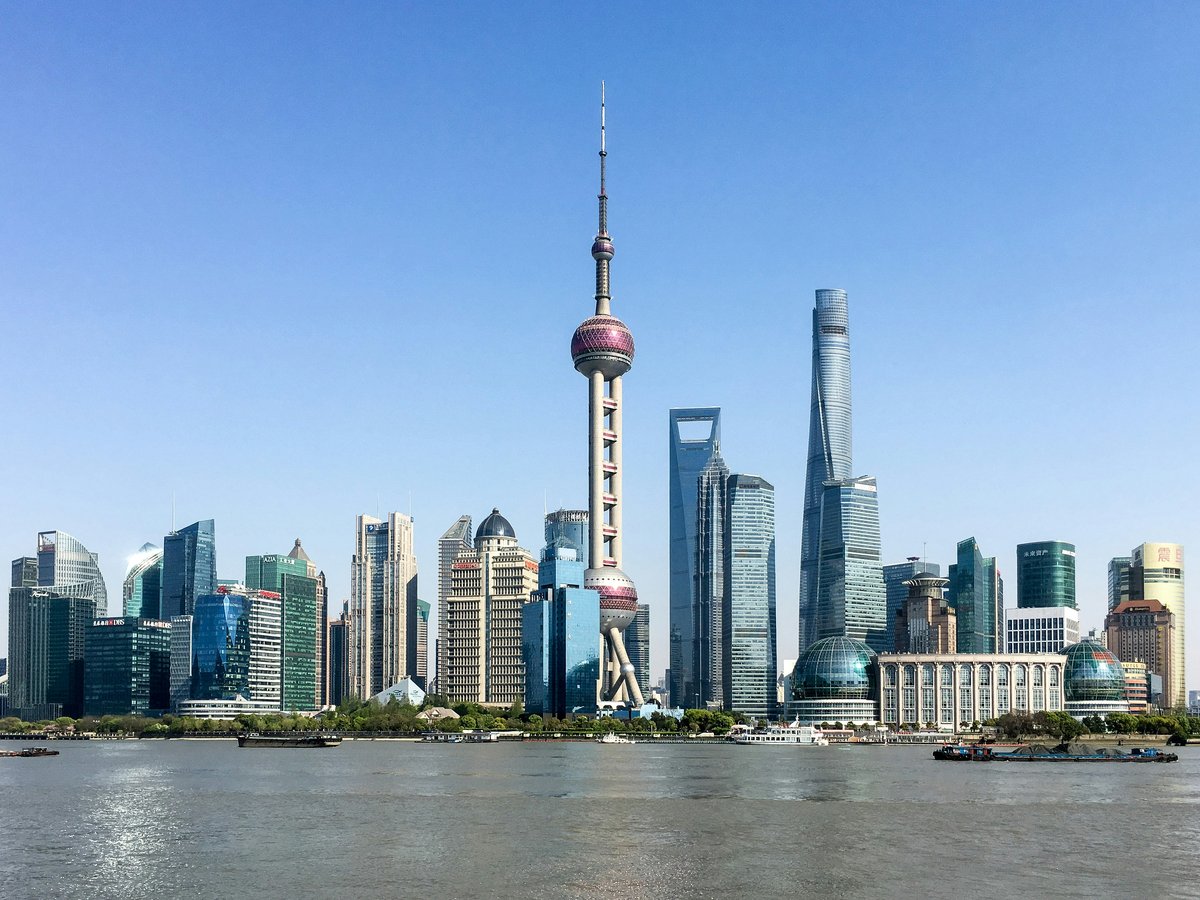
Stay in Shanghai in February
96 hotels in the Trip.com pool for Shanghai, from US$14 a night.
Opens Trip.com on Fri 5 Feb to Sun 7 Feb 2027; change the dates there.
February in Shanghai is defined by one thing above all else. Chinese New Year, or Spring Festival (Chunjie), typically falls in late January or early February, and the city transforms. For roughly 7 to 10 days around the holiday, Shanghai becomes a ghost town. Millions of migrant workers who power the restaurants, construction sites, and delivery networks head home to provinces like Anhui, Jiangsu, and Sichuan. You might walk down streets in Putuo or Minhang that normally teem with scooter traffic and find them eerily quiet. Many smaller restaurants, shops, and services simply close their shutters until the holiday ends.
The weather compounds the challenge. Expect daytime highs around 10.4°C (51°F) and overnight lows near 3.0°C (37°F), with a damp chill that cuts through layered clothing in a way that dry cold at the same temperature never would. Shanghai's buildings, many without central heating south of the Yangtze line, can feel colder inside than outside. Humidity sits at 76%, and the grey overcast that settles over the Huangpu River in winter tends to linger for days. February typically sees 69mm of rain across 9 days, mostly as a fine persistent drizzle rather than dramatic downpours.
That said, there is a genuine reason to come. If you time your visit to overlap with the Lantern Festival at Yu Garden (Yuyuan) or catch the first days when the city reopens and Spring Festival decorations still hang from every lamppost along Nanjing Road, you'll see a side of Shanghai that the October and April crowds never do. The city feels intimate. The few restaurants that remain open are full of families. Temple fairs at Longhua Temple and Jade Buddha Temple draw worshippers burning incense in the cold morning air. It is not Shanghai at its most comfortable, but it might be Shanghai at its most honest.
Why visit in February
- Chinese New Year celebrations offer cultural experiences unavailable at any other time of year, from temple fairs at Longhua Temple to the elaborate Yu Garden Lantern Festival
- Tourist crowds at major sites like The Bund, Shanghai Tower, and the Shanghai Museum drop to annual lows outside of the CNY holiday week itself
- Hotel rates for non-holiday dates in February run 25-35% below the autumn peak season average
- Indoor cultural venues like the Power Station of Art and Long Museum West Bund are less crowded, making weekday visits genuinely relaxed
- The post-CNY return period (roughly February 20 onward) offers a sweet spot of reopened restaurants with lingering holiday menus and thin crowds
Worth knowing
- The damp cold at 3-10°C (37-51°F) with 76% humidity feels more penetrating than the numbers suggest, and most buildings lack central heating
- Up to 60% of smaller restaurants, street food stalls, and independent shops close for 7-14 days around Spring Festival
- Grey overcast skies persist for stretches of 4-5 consecutive days, limiting photography conditions and outdoor sightseeing energy
- Air quality tends to worsen in February, with AQI readings above 100 on roughly 8-12 days due to reduced wind dispersal and regional heating emissions
Best for
Think twice if
February in Shanghai is the tail end of winter. The damp Yangtze Delta cold sits at a persistent 10°C (51°F) during the day, dropping to 3°C (37°F) at night. The humidity, averaging 76%, makes the air feel several degrees colder than the thermometer reads. Rain falls on roughly 9 days, totaling 69mm, usually as drizzle rather than storms. Fog along the Huangpu River is common in early mornings. Sunshine hours average only 4-5 per day. The wind off the river adds a cutting edge on The Bund, where gusts can make 8°C feel closer to 2°C.
Seasonal caution
- Wind chill along the Huangpu River and elevated areas like the Shanghai Tower observation deck can push the feels-like temperature below 0°C (32°F) on windy days
- Indoor heating is inconsistent. Many restaurants, older hotels, and public transit stations lack adequate heating, so dress for cold even indoors
Year-round climate
Averages from the last 5 years.
| Month | Avg high (°C) | Avg low (°C) | Rainfall (mm) |
|---|---|---|---|
| Jan | 10 | 1 | 43 |
| Feb | 11 | 3 | 69 |
| Mar | 17 | 8 | 90 |
| Apr | 22 | 12 | 104 |
| May | 25 | 16 | 111 |
| Jun | 29 | 21 | 252 |
| Jul | 33 | 26 | 248 |
| Aug | 34 | 26 | 109 |
| Sep | 29 | 23 | 190 |
| Oct | 24 | 17 | 64 |
| Nov | 18 | 10 | 72 |
| Dec | 11 | 3 | 21 |
Holidays and festivals in February
Public holidays
- Chinese New Year (Spring Festival)(春节)6 February 2027
Headline events
Chinese New Year (Spring Festival / Chunjie)
Late January to mid-February (varies by year; 2026 date is February 17)
The most important holiday in China. Shanghai transforms with temple fairs, firework displays in suburban districts, family gatherings, and red lanterns strung across every commercial street. The flip side is widespread closures of restaurants and shops for 7-14 days. The date shifts yearly based on the lunar calendar.
Yu Garden Lantern Festival (Yuyuan Lantern Fair)
CNY Eve through Lantern Festival (roughly 2-3 weeks in January-February)
Shanghai's signature Spring Festival spectacle. Elaborate hand-crafted lantern installations fill the Yu Garden bazaar area in Huangpu district, drawing nightly crowds of 50,000-80,000 during peak evenings. The displays run from CNY Eve through the Lantern Festival (15th day of the lunar new year), with each year featuring a different zodiac animal theme. Expect queues of 30-60 minutes for entry on weekend evenings.
Best things to do in February
Yu Garden Lantern Festival evening walk
culturalThe Yuyuan commercial district transforms into a sea of illuminated silk and wire-frame lanterns, some reaching 5-6 meters tall. Each year follows the Chinese zodiac. The surrounding lanes fill with street food vendors, sugar painters, and paper-cut artists. The reflection of lanterns in the zigzag bridge pond is the iconic shot.
The lantern installations only run during the Spring Festival period through Lantern Festival night, typically 2-3 weeks in late January to mid-February.Booking tipEntry tickets (around 80 RMB during peak nights) sell out on weekends. Buy online via the Yuyuan official WeChat mini-program 2-3 days ahead. Weeknight visits have 50% shorter queues.
Temple fair hopping (Longhua Temple and Jade Buddha Temple)
culturalShanghai's Buddhist temples hold their largest ceremonies of the year during Spring Festival. Longhua Temple in Xuhui, the city's oldest, fills with incense smoke and the sound of the bronze bell (108 rings on New Year's Eve). Jade Buddha Temple in Jing'an draws queues for blessing ceremonies. The sensory experience is intense. Clouds of sandalwood incense, the rustle of red prayer ribbons, cold stone underfoot.
CNY temple fairs are a once-a-year event. The opening ceremonies, prayer services, and special vegetarian banquets only happen during the first 5 days of the lunar new year.Booking tipArrive before 8 AM on the first day of the new year for the most atmospheric experience. No booking needed, but expect 20-30 minute entry queues at Longhua Temple.
Shanghai Museum winter exhibitions
culturalThe relocated Shanghai Museum East in Pudong (opened 2024) schedules its highest-profile temporary exhibitions for the winter holiday period, when domestic visitor numbers peak. The permanent collection spans 5,000 years of Chinese bronzes, ceramics, and calligraphy. The building stays warm, making it a genuine refuge from the cold.
Blockbuster exhibitions launch specifically for the CNY holiday audience. February is also when tourist-site crowds are at their thinnest outside the 7-day holiday, giving you uncrowded gallery time during the non-holiday weeks.Booking tipFree entry but reservation required on the official website or WeChat. Book 3-5 days ahead for holiday-week slots. Non-holiday weekdays rarely sell out.
Suzhou Creek art district walk
artThe converted warehouses along Suzhou Creek in Putuo and Jing'an districts house galleries like M50 Creative Park. The bare winter plane trees and grey sky create the kind of moody industrial atmosphere that photographs well in black and white. Most galleries remain open through CNY with special exhibitions.
Stripped-back winter light and leafless trees reveal the industrial architecture's bones. The district is quiet enough in February to have extended conversations with gallery owners who have time between visitors.Hot spring day trips to Nantong or Kunshan
wellnessThe cold weather makes the natural hot spring resorts within 1-2 hours of Shanghai genuinely appealing rather than merely pleasant. Nantong's Bihai Hot Spring (90 minutes by train from Shanghai Hongqiao) has outdoor pools where the temperature contrast between 40°C water and 5°C air produces dramatic steam clouds.
February's cold makes the thermal contrast between 40°C (104°F) spring water and near-freezing air genuinely therapeutic. In warmer months, the experience loses its edge.Booking tipWeekend packages sell out 1-2 weeks ahead during CNY. Weekday visits need no reservation.
Winter dumpling-making class in the Former French Concession
foodSeveral cooking schools in the Former French Concession (along Yongkang Road and Wukang Road) run CNY-themed classes teaching hand-folded jiaozi and Shanghai-style tangbao (soup dumplings). Groups are small (6-8 people) and classes run 2-3 hours, ending with eating everything you made.
Jiaozi (dumplings) are the symbolic CNY food in northern China, and Shanghai's cooking schools capitalize with special holiday-themed classes. The cold weather outside makes a warm kitchen with fresh dumplings particularly satisfying.Booking tipBook at least 1 week ahead. Classes fill faster during the CNY holiday week itself.
Night walk along The Bund
photographyThe Pudong skyline light show runs nightly, and February's clear cold evenings (when the overcast lifts) produce sharper visibility than humid summer nights. The crowds thin dramatically compared to October's National Day holiday. The wind off the Huangpu River is bitter, but 10 minutes of unobstructed skyline photography without tourist elbows makes it worthwhile.
February's low tourist numbers mean you can photograph the Oriental Pearl Tower and Shanghai Tower without tripod-jostling crowds. Cold dry nights (when they occur) produce crisper long-exposure shots than the humid haze of summer.Power Station of Art contemporary exhibitions
artShanghai's largest contemporary art museum (a converted coal power station on the Huangpu River in Huangpu district) typically runs its Shanghai Biennale exhibition through February in biennale years. The cavernous 42,000 square meter space stays cool but dry. Free entry makes it one of the best value cultural stops in the city year-round.
Shanghai Biennale runs November through March in even-numbered years. The February timeframe catches the exhibition's final months before closure, often with added programming and artist talks.Booking tipFree entry, no reservation needed on weekdays. Weekend afternoons can fill the smaller galleries.
What to eat in February
On menus now
Ba Bao Fan (eight-treasure rice pudding)
A steamed glutinous rice dome studded with red dates, lotus seeds, dried longans, and candied winter melon, served as a dessert at CNY reunion dinners. Shanghai's version tends sweeter than northern variants, with a layer of red bean paste inside. Available at traditional Shanghainese restaurants in Huangpu and Xuhui throughout February.
Yangchun noodles
Shanghai's minimalist winter comfort food. A clear soy-based broth, thin wheat noodles, a spoonful of lard, and a scatter of chopped scallion. At 8-12 RMB a bowl in old-town noodle shops, this is what locals eat at 7 AM on a cold February morning. The lard adds a richness that cuts through the chill.
Hot pot (huoguo)
February is peak hot pot season in Shanghai. The Sichuan-style mala version dominates in Jing'an and Changning districts, while Cantonese-style clear-broth places cluster around Xuhui. Wait times at popular spots like Haidilao on Nanjing Road can hit 90 minutes on post-CNY weekends when everyone emerges from the holiday.
Street food peaks
Sugar-coated haws (tanghulu)
Skewers of hawthorn berries dipped in crackled sugar syrup appear from street vendors throughout the winter months. February is the tail end of the season. You'll find them around temple fairs at Longhua Temple and near tourist areas for 10-15 RMB per stick.
Festival food
Tangyuan (glutinous rice balls)
Filled with black sesame, red bean, or peanut paste, these are eaten on Lantern Festival night (Yuanxiao Jie). The Ningbo-style version at shops along Chenghuangmiao near Yu Garden uses a hand-rolled technique that produces a thinner skin. Sold everywhere from 8-15 RMB for 6 pieces during the holiday period.
Niangao (sticky rice cake)
Pan-fried Shanghai-style niangao appears on nearly every restaurant's CNY menu. The local preparation slices it thin and stir-fries it with pork and napa cabbage (rou si chao niangao). The name is a homophone for 'higher year,' making it a prosperity symbol.
Regular events in February
Lantern Festival (Yuanxiao Jie)Free
The 15th day of the lunar new year marks the official end of Spring Festival celebrations. Families eat tangyuan, children carry paper lanterns, and riddle-guessing games run in parks and commercial areas across the city. Yu Garden's celebrations reach their peak on this night.
15th day of lunar new year (varies; falls in February or early March)Longhua Temple New Year Bell-Ringing CeremonyFree
On Chinese New Year's Eve, Longhua Temple in Xuhui rings its bronze bell 108 times at midnight, a Buddhist tradition symbolizing the release from worldly worries. Thousands gather in the cold to listen. The temple grounds fill with incense and candlelight.
Chinese New Year's Eve (late January or February, depending on lunar calendar)Shanghai Spring Festival Flower MarketFree
A traditional flower market selling auspicious plants for CNY decoration (kumquat trees, orchids, plum blossoms, narcissus bulbs) operates in multiple locations including Hongkou and Pudong. Prices for kumquat trees range from 50-300 RMB depending on size.
5-7 days before Chinese New Year through New Year's DayPlum Blossom viewing at Century Park
Shanghai's plum trees (meihua) begin blooming in mid-to-late February. Century Park in Pudong and Gucun Park in Baoshan have the largest collections. The pale pink and white blossoms on bare branches are the first sign of spring.
Mid-to-late February through early MarchBest places this February
Yu Garden (Yuyuan Garden)
gardenThe 16th-century classical garden is atmospheric year-round, but the surrounding bazaar becomes Shanghai's CNY epicenter during the Lantern Festival. The traditional architecture provides a backdrop for the lantern displays that no modern venue can match. Visit the garden itself on a weekday morning before the lantern-viewing crowds arrive in the evening.
HuangpuLonghua Temple
templeShanghai's oldest and largest temple complex dates to 242 AD. The February temple fair fills the grounds with incense smoke, the sound of wooden prayer beads, and vendors selling red paper couplets (chunlian). The attached pagoda (closed for interior visits) is visible from throughout the complex. Wear warm shoes. The stone courtyard radiates cold upward.
XuhuiFormer French Concession (tree-lined streets)
neighborhoodThe area bounded roughly by Huaihai Road, Hengshan Road, and Fuxing Road reveals its Parisian-style architecture best in winter, when the deciduous plane trees lose their canopy and expose the 1920s-30s facades. Walking Wukang Road or Anfu Road on a grey February afternoon, with the smell of coffee drifting from lane-house cafes, is a particular kind of quiet pleasure.
Xuhui /徐汇M50 Creative Park
art districtA cluster of converted textile factories along Suzhou Creek at 50 Moganshan Road in Putuo. Around 100 galleries and studios remain active, with several hosting CNY-themed exhibitions in February. The industrial concrete spaces stay cold, but the art compensates. ShanghART Gallery and island6 Arts Center are the anchors.
PutuoPower Station of Art
museumFree entry to Shanghai's contemporary art museum, a decommissioned power station on the Huangpu riverfront. The 165-meter chimney is a Huangpu district landmark. In biennale years, the February programming includes artist talks and film screenings in the ground-floor auditorium.
HuangpuJade Buddha Temple (Yufo Si)
templeBuilt in 1882 to house two jade Buddha statues brought from Burma, this active temple in Jing'an conducts its most-attended ceremonies during CNY. The smaller scale compared to Longhua makes it more intimate. The smell of incense and the rhythmic chanting from morning services (starting at 4:30 AM) carry through the cold air.
Jing'anTianzifang
shopping districtThe converted shikumen (stone-gate house) lanes near Taikang Road in the Former French Concession area. In February, the narrow alleys block the wind, making it slightly more comfortable than open streets. Many shops close for CNY week, but the ones that stay open offer better browsing without the usual sardine-tin crowds. The small cafes inside are warm refuges.
Huangpu / Xuhui borderCentury Park plum blossom grove
parkShanghai's largest park (140 hectares) in Pudong's Lujiazui area has a dedicated plum blossom (meihua) section. Late February typically sees early blooms. The pale flowers against bare dark branches, with the Pudong skyline in the background, make for a distinctly Shanghai composition.
Pudong
Your packing checklist
Tick items off as you pack. Your progress saves in this browser.
All packed — have a great trip.
Insider tips
The 3-5 days immediately AFTER the CNY holiday ends (when workers start returning but tourists have left) is a sweet spot. Restaurants reopen with fresh holiday ingredients, the city is still decorated, and you'll have major sites like The Bund nearly to yourself on weekday mornings.
Download the WeChat app and set up WeChat Pay before arrival. In February, many smaller shops that stay open during CNY accept ONLY mobile payment. Cash and foreign credit cards are increasingly difficult outside international hotels and chain stores.
For the Yu Garden Lantern Festival, enter from the Fuyou Road side rather than the main Jiuqu Bridge entrance. The queue is typically 60% shorter, and you approach the displays from an angle that most photography guides miss.
Shanghai's 'heating line' policy means public buildings south of the Yangtze get no mandated central heating. Bring your warm layers INTO restaurants, museums, and metro stations. The inside/outside temperature difference is sometimes only 3-5°C.
The plum blossoms at Gucun Park in Baoshan district (Metro Line 7 to Meilan Road station) are less famous than Century Park's but bloom 3-5 days earlier in most years and attract a fraction of the visitors. The park's 3,000+ plum trees make it Shanghai's largest collection.
Avoid these mistakes
- Booking a short trip (3-4 days) that overlaps entirely with CNY week without realizing that 50-60% of restaurants, shops, and services will be closed. Check the exact lunar calendar dates before finalizing travel dates. The closure period varies from 5 to 14 days depending on the business.
- Packing for the temperature number (10°C / 51°F) without accounting for Shanghai's humidity and lack of indoor heating. Many visitors from drier climates are shocked that they feel colder inside a Shanghai restaurant than walking outside in a European city at the same temperature.
- Attempting to use ride-hailing apps (Didi) during the first 3 days of CNY. Driver availability drops 70-80% as most drivers are migrant workers who've gone home. The metro runs on a reduced holiday schedule but remains reliable. Plan routes around Line 1, 2, and 10.
- Assuming clear skies for Pudong skyline photography. February averages only 4-5 sunshine hours per day, and grey overcast can persist for 4-5 consecutive days. Build flexibility into your schedule and be ready to shoot when brief clear spells appear, often just after rain clears in late afternoon.
Practical tips for February
Book accommodation in Jing'an or Huangpu districts for February visits. These central areas have the highest concentration of restaurants and services that stay open through CNY, and direct metro access to all major sites. Confirm restaurant opening hours individually via Dianping (China's Yelp equivalent) during the CNY period, as Google Maps listings are unreliable for holiday closures. The metro system runs on reduced frequency (every 6-8 minutes instead of 3-4) during the holiday week. International ATMs at ICBC and Bank of China branches near The Bund and Nanjing Road remain operational throughout. Consider an eSIM from China Unicom rather than relying on hotel WiFi, as VPN reliability drops during politically sensitive periods that sometimes coincide with early February.
FAQ
Is February a good time to visit Shanghai?
February is a fair-to-mixed time to visit. The cold damp weather (3-10°C / 37-51°F with 76% humidity) and widespread CNY closures make it inconvenient for general sightseeing. However, if you specifically want to experience Chinese New Year traditions, temple fairs, and the Yu Garden Lantern Festival, February offers something no other month can. The non-holiday weeks also deliver Shanghai's thinnest crowds and lowest hotel rates outside of January.
What is the weather like in Shanghai in February?
Cold and damp. Average highs reach only 10.4°C (51°F) with lows around 3.0°C (37°F). Humidity stays near 76%, making the cold feel more penetrating than the numbers suggest. Expect about 9 rainy days totaling 69mm of precipitation, mostly as drizzle. Grey overcast skies dominate, with only 4-5 hours of sunshine per day on average. Wind chill near the Huangpu River can push feels-like temperatures below freezing.
Is Shanghai crowded in February?
It depends on the exact dates. During the 3-4 peak days of CNY (New Year's Eve through day 3), iconic sites like Yu Garden and The Bund draw large domestic crowds. But for the rest of February, Shanghai is at its emptiest. Many residents leave the city entirely, tourist numbers are at annual lows, and you can walk into museums and restaurants that normally require advance booking. The Yu Garden Lantern Festival evenings are the main exception, drawing 50,000-80,000 visitors nightly.
What is there to do in Shanghai during Chinese New Year?
Temple fairs at Longhua Temple and Jade Buddha Temple run for the first 5 days of the lunar new year, with incense ceremonies, vegetarian banquets, and traditional performances. The Yu Garden Lantern Festival runs from New Year's Eve through the Lantern Festival (15 days later). The Bund and Nanjing Road are decorated with red lanterns and light installations. Many hotels and remaining restaurants offer special reunion dinner menus (nianye fan) on New Year's Eve, typically 800-2000 RMB per person.
Should I avoid Shanghai during Chinese New Year?
Not necessarily, but go in with realistic expectations. If you want Shanghai's full dining scene, nightlife, and shopping, yes, avoid the 7-10 day holiday period. If you want cultural immersion and don't mind limited restaurant options, the temple ceremonies, lantern displays, and festive atmosphere make it a genuinely memorable experience. The practical compromise is arriving 2-3 days before the holiday ends, catching the tail of celebrations while the city begins reopening.
Things to Do in Shanghai in February
 Free cancellation
 Authentic Local Food Tour in Central Shanghai
City tour: 3 hours, free cancellation.
via Viator Free cancellation
 Private Shanghai Full Day City Tour with Old and New Highlights
Day trip: free cancellation.
via Viator Free cancellation
 Zhujiajiao Water Town and Shanghai City Private Day Tour
Day trip: 8 hours, free cancellation.
via Viator Free cancellation Shanghai Private Tour: Zhujiajiao Water Town and Boat Ride
Day trip: free cancellation.
via Viator Free cancellation
 Private Full-Day Tour: Incredible Shanghai Highlights
Day trip: 8 hours, free cancellation.
via Viator Free cancellation
 Shanghai City Guided Walking Tour | China's 1st and Best Rated
City tour: 4 hours, free cancellation.
via ViatorFind a flight to Shanghai
Live fares to Shanghai appear here once cookies are accepted.
Last verified by automated review (v1.7.2) on . What is automated review?