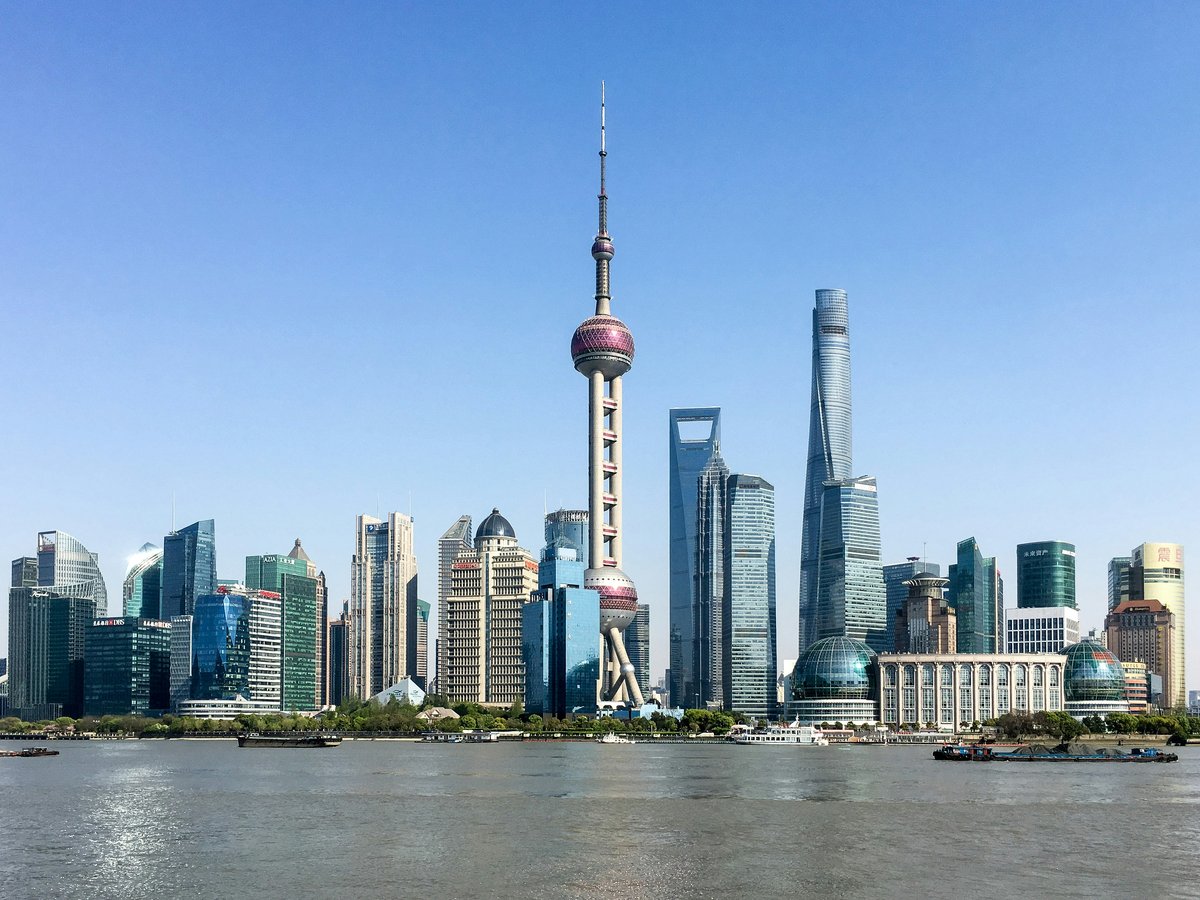
Stay in Shanghai in September
96 hotels in the Trip.com pool for Shanghai, from US$14 a night.
Opens Trip.com on Fri 25 Sep to Sun 27 Sep 2026; change the dates there.
September in Shanghai sits at an awkward crossroads between summer's worst and autumn's best. The average high drops to 29.4°C (85°F) from August's 34°C (93°F), which sounds like relief until 81% humidity reminds you that thermometers only tell half the story. You'll sweat through your shirt on the 400-meter walk from Jing'an Temple station to your hotel. The real challenge is water. September delivers around 190mm of rain across 15 days, which makes it Shanghai's second-wettest month after June's 252mm plum-rain deluge. Typhoons tracking up the East China Sea from the Philippines remain a genuine possibility through the month.
That said, September offers things July and August cannot. The Shanghai Tourism Festival typically opens in mid-September with its Huaihai Road float parade, a tradition running since 1990 that draws tens of thousands of spectators into the Former French Concession. Hairy crab season begins its first tentative weeks at restaurants along Shouning Road and Julu Road. Mid-Autumn Festival, which falls in September some years depending on the lunar calendar, fills bakeries on Nanjing East Road with fresh mooncakes and lights Yu Garden's zigzag bridge with hundreds of paper lanterns. The city feels notably calmer than it will after October 1, when Golden Week floods every attraction with domestic tourists.
If you tolerate humidity well and don't mind building your days around afternoon downpours, September rewards you with moderate hotel rates, the opening of Shanghai's best eating season, and a cultural calendar waking up from summer's lull. Be honest with yourself about heat tolerance, though. If 29°C (85°F) at 81% humidity sounds miserable to you, October is 5 degrees cooler with a third of the rain.
Why visit in September
- Hairy crab season opens in late September. Restaurants across Jing'an and Xuhui begin serving Yangcheng Lake female crabs with golden roe weeks before the October rush, and early-season crabs carry real social currency among Shanghai locals.
- The Shanghai Tourism Festival's opening week typically offers half-price admission to over 70 attractions, including the Oriental Pearl Tower, Shanghai Ocean Aquarium, and Jinmao Tower observation deck. Savings of 50-150 RMB per site add up fast.
- Hotel rates in September sit 20-30% below October's Golden Week peak. A room near the Bund that costs 1,200 RMB per night during Golden Week might run 800-900 RMB in mid-September.
- Osmanthus trees bloom across the city in September. Guilin Park in Xuhui holds over 1,000 osmanthus trees, and the sweet, apricot-like scent fills entire blocks around the park on warm afternoons.
- Evening temperatures drop to around 23°C (73°F). After-dark walks along the Bund and through the plane tree-lined streets of the Former French Concession become comfortable for the first time since May.
Worth knowing
- 190mm of rainfall across roughly 15 rainy days. September is Shanghai's second-wettest month, and the rain tends to arrive in sudden, heavy afternoon bursts that can strand you indoors for 30-60 minutes at a time.
- Typhoon season runs through September. Even storms that don't make direct landfall on Shanghai can bring 50-80mm of rain in a single afternoon and cause localized flooding around Suzhou Creek and low-lying parts of Pudong.
- 81% average humidity paired with 29°C highs makes outdoor sightseeing between 11am and 3pm genuinely unpleasant. The Lujiazui financial district, with its wide plazas and minimal tree cover, is particularly punishing at midday.
- The last week of September sees hotel prices, train tickets, and domestic flight fares spike as Golden Week approaches. Anything booked for September 28-30 often carries October-level rates.
Best for
Think twice if
September feels like summer making a reluctant concession toward autumn. Mornings start warm and sticky around 23°C (73°F). Afternoons climb to 29.4°C (85°F) with humidity sitting at 81%, and sudden downpours tend to roll in between 2pm and 6pm. The 190mm of monthly rainfall spreads across 15 rainy days, though the distribution is uneven. You might get 3 dry days followed by a 40mm storm. By late September, evening temperatures occasionally dip to 20-21°C (68-70°F), hinting at October's relief. Cloud cover is frequent, cutting UV intensity on some days but trapping moisture close to the ground on others. The air smells like wet concrete and osmanthus in equal measure.
Seasonal caution
- Typhoon season. The East China Sea typhoon corridor runs through September, with an average of 1-2 storms affecting the Yangtze Delta region per year during this month. Even near-misses can bring sustained winds of 60-80 km/h and dump 80-120mm of rain in 24 hours. Monitor the China Meteorological Administration forecasts and avoid the Bund waterfront during storm warnings.
- Sudden urban flooding. Shanghai's drainage system handles steady rain well but struggles with the intense bursts that September typhoon feeder bands produce. Low-lying underpasses near Suzhou Creek and parts of northern Pudong can flood to ankle or knee depth within 30 minutes of a heavy downpour.
- UV index remains moderate-to-high at 6-8 on clear September days despite the lower temperatures. Cloud cover can be deceptive. Sunscreen is still necessary for extended outdoor time at places like Century Park or the Lujiazui riverside walk.
Year-round climate
Averages from the last 5 years.
| Month | Avg high (°C) | Avg low (°C) | Rainfall (mm) |
|---|---|---|---|
| Jan | 10 | 1 | 43 |
| Feb | 11 | 3 | 69 |
| Mar | 17 | 8 | 90 |
| Apr | 22 | 12 | 104 |
| May | 25 | 16 | 111 |
| Jun | 29 | 21 | 252 |
| Jul | 33 | 26 | 248 |
| Aug | 34 | 26 | 109 |
| Sep | 29 | 23 | 190 |
| Oct | 24 | 17 | 64 |
| Nov | 18 | 10 | 72 |
| Dec | 11 | 3 | 21 |
Holidays and festivals in September
Public holidays
- Mid-Autumn Festival(中秋节)25 September 2026
Headline events
Mid-Autumn Festival (中秋节)
Varies by lunar calendar, falling between September 8 and October 8 each year. Check the specific year before booking.
One of China's three most important traditional holidays, tied to the lunar calendar and falling in September or early October depending on the year. Yu Garden transforms with elaborate lantern installations along the zigzag bridge and Nine-Turn Corridor. Bakeries across Shanghai sell fresh mooncakes for weeks before the date. Families gather in parks along the Huangpu River for moon-watching on the festival evening. The day is a national public holiday, so government offices and some businesses close, though tourist-facing shops and restaurants stay open.
Best things to do in September
Hairy crab season opening dinners
foodLate September marks the unofficial start of hairy crab season, when restaurants across Shanghai begin serving the first Yangcheng Lake crabs of the year. The ritual is specific. You eat the female crabs first, prized for their roe, cracking the shell with specialized eight-piece crab tool sets, dipping each piece in ginger-black vinegar, and washing it down with warm Shaoxing wine. Shouning Road in Huangpu has a concentration of seafood restaurants that compete on crab quality each autumn. The smell of steaming crab and ginger fills the narrow street.
The first Yangcheng Lake hairy crabs arrive in late September. Early-season crabs carry social currency among locals, and restaurants feature them prominently before the October rush crowds the supply chain.Booking tipReserve weekend dinner tables 3-5 days ahead at popular spots. Weekday lunches are typically walk-in.
Shanghai Tourism Festival half-price attraction week
sightseeingThe opening week of the Shanghai Tourism Festival, typically starting around September 14-15, offers half-price tickets to over 70 attractions across the city. The Oriental Pearl Tower, Shanghai Tower's observation deck, Shanghai Wild Animal Park, Jinmao Tower, and the Shanghai Ocean Aquarium all participate. The first night features a float parade along Huaihai Middle Road in the Former French Concession, with illuminated floats and performance troupes from 20+ countries. The parade route runs roughly 2km between Shaanxi South Road and Xizang South Road.
The Tourism Festival runs in September only, a tradition since 1990. Half-price tickets save 50-150 RMB per attraction. This is the cheapest week of the year for sightseeing in Shanghai.Booking tipThe Huaihai Road parade draws large crowds. Arrive 90 minutes early and position yourself between Shaanxi South Road and Ruijin Road for the best sightlines.
Evening Bund walks and Pudong skyline viewing
sightseeingSeptember evenings cool to around 23°C (73°F). The 2.6km Bund promenade becomes walkable without the suffocating heat of July and August. The Pudong skyline across the Huangpu River, with the Shanghai Tower (632m), Oriental Pearl Tower, and Jinmao Tower all lit up, looks sharpest on nights after a rain shower has cleared the haze. Walk from the Waibaidu Bridge at the north end past the former HSBC Building (1923) and Custom House clock tower heading south. The stone is still warm underfoot from the day's heat, and the river breeze smells faintly of salt and diesel.
September's cooler evenings (23°C lows vs August's 26°C) make the full 2.6km walk comfortable. Post-rain clarity improves skyline visibility compared to the persistently hazy July and August nights.Osmanthus viewing at Guilin Park
natureGuilin Park (桂林公园) in Xuhui was built in 1929 and holds over 1,000 osmanthus trees of 23 varieties. The bloom fills the park with a sweet, apricot-like fragrance strong enough to notice from the street outside the gate. The park is small, only 3.55 hectares, and rarely crowded on weekday mornings. Locals bring thermoses of tea and sit on stone benches reading newspapers under the osmanthus canopy. Entry costs 2 RMB.
Osmanthus trees bloom for a 3-4 week window starting in mid-September, triggered by the drop in nighttime temperatures below 22°C. The bloom is brief and weather-dependent.Booking tipNo booking needed. Go before 9am on weekdays for the quietest experience. The park opens at 6am.
Mid-Autumn Festival at Yu Garden
cultureYu Garden's lantern displays during Mid-Autumn Festival transform the 2-hectare classical garden and surrounding Old City bazaar into one of Shanghai's most atmospheric evening scenes. Paper lanterns line the zigzag bridge, and the reflection pools mirror hundreds of colored lights. Vendors in the bazaar sell fresh mooncakes, osmanthus sweets, and tang yuan (glutinous rice balls). The main viewing night is the festival eve, when families gather for moon-watching. The scent of roasted chestnuts and osmanthus sugar mixes with incense from the City God Temple next door.
Mid-Autumn Festival falls in September some years, depending on the lunar calendar. The Yu Garden lantern tradition dates to the Ming Dynasty and draws both tourists and local families for the peak display evening.Booking tipYu Garden entry is typically free during the festival evening, but arrive by 5pm to avoid the heaviest crowds. The surrounding bazaar stays open until 10pm.
Shanghai Fashion Week previews at Xintiandi
cultureShanghai Fashion Week, typically held in late September through early October, centers on the Xintiandi neighborhood in Huangpu. The main runway shows require invitations, but the surrounding events are more accessible. Independent designers set up pop-up shops along Xintiandi's shikumen lanes. The MODE exhibition at Shanghai Exhibition Center is open to the public with free registration. Nearby Huaihai Middle Road's department stores run concurrent fashion promotions.
Shanghai Fashion Week's Spring/Summer collection shows are scheduled for late September through early October. This is the one window when the city's fashion infrastructure opens up to public-facing events.Booking tipRegister for the MODE exhibition 1-2 weeks ahead at the official Shanghai Fashion Week website. Free registration, but capacity is limited per time slot.
Fall gallery openings in M50 and the West Bund corridor
cultureShanghai's art calendar restarts in September after summer's quiet. M50 Art District on Moganshan Road in Putuo hosts a cluster of opening nights in the second and third weeks of September. The West Bund art corridor in Xuhui, anchored by the Long Museum, Yuz Museum, and the West Bund Art Center, schedules major fall exhibitions during this period. The Power Station of Art in Huangpu, China's first state-run contemporary art museum, typically opens its fall program in mid-to-late September. Free admission at the Power Station makes it an easy rainy-afternoon destination.
September marks the start of Shanghai's fall art season. Galleries time major openings to coincide with Fashion Week and the pre-Golden Week tourist influx. This is the densest exhibition-opening period of the year.Booking tipMost M50 gallery openings are free. Long Museum and Yuz Museum charge 50-100 RMB per exhibition. The Power Station of Art is always free.
Sunset Huangpu River cruise
sightseeingThe 45-60 minute Huangpu River cruise between the Bund and Nanpu Bridge runs year-round, but September's lower evening humidity and post-storm clarity make it noticeably more pleasant than summer months. The route passes the former British consulate, Waibaidu Bridge, the Pudong skyline, and Nanpu Bridge. Departures leave from Shiliupu Wharf near the southern end of the Bund. The open deck catches a river breeze that feels 3-4 degrees cooler than the streets.
September evenings sit at 23°C, down 3°C from August, with slightly better visibility after rain clears the haze. The open-deck experience at 23°C and 75% evening humidity feels significantly different from July's 26°C and 85%.Booking tipBook the 5:30pm or 6pm departure for sunset views. Tickets run 100-150 RMB for the standard route. Weekday sailings are less crowded.
What to eat in September
On menus now
Hairy crab (大闸蟹)
Yangcheng Lake's female hairy crabs, prized for their golden roe, start appearing on Shanghai menus in late September. The season peaks in October and November, but September's first-catch crabs carry real excitement among locals. Restaurants on Shouning Road in Huangpu and around the City God Temple near Yu Garden specialize in them. Expect 150-300 RMB per crab at reputable restaurants. Pair with warm Shaoxing wine and ginger-black vinegar dipping sauce.
Osmanthus glutinous rice cake (桂花糕)
Osmanthus trees bloom across Shanghai in September, and the tiny golden flowers end up in sweets within days of opening. Guilin Park in Xuhui, named for its osmanthus trees, sometimes has vendors near the entrance selling fresh osmanthus-flavored treats. Traditional pastry shops on Nanjing East Road also produce osmanthus wine (桂花酒) and sugar pastries during this brief 3-4 week window.
Beggar's chicken (叫花鸡)
This Hangzhou-origin dish traditionally marks the start of autumn dining in the Yangtze Delta. A whole chicken is wrapped in lotus leaves and clay, then slow-roasted for 4-6 hours. Several Benbang (Shanghai-style) restaurants in Hongkou and along Sichuan North Road serve it as a September seasonal feature. It typically requires 2-3 hours advance order.
Street food peaks
Water chestnuts (荸荠)
Freshwater water chestnuts from the Yangtze Delta hit peak season in September and October. The fresh version, peeled and eaten raw or stir-fried, bears little resemblance to the canned variety sold overseas. Street vendors in the Old City near Yu Garden sell them peeled in small bags for 5-10 RMB. Crunchy, subtly sweet, and good for cutting through the lingering September heat.
In markets
Fresh lotus root (莲藕)
The autumn harvest from Yangtze Delta wetlands brings crisp, sweet lotus root to Shanghai markets in September. You'll find it sliced raw into salads, stir-fried with pork, or stuffed with glutinous rice and steamed (糯米藕). Look for the shorter, fatter segments at wet markets in Jing'an and Xuhui, which tend to be sweeter than the long, thin ones.
Festival food
Fresh-meat mooncakes (鲜肉月饼)
Shanghai-style mooncakes appear 3-4 weeks before Mid-Autumn Festival. The local version uses flaky shortcrust pastry rather than the dense Cantonese style. The fresh-meat mooncake from Guang Ming Cun bakery on Huaihai Middle Road draws queues of 30-50 people during peak weeks. Egg-yolk and red bean paste remains the traditional sweet filling, though salted egg custard has gained ground since around 2018.
Regular events in September
Shanghai Tourism Festival (上海旅游节)Free
Shanghai's largest annual tourism event, running since 1990. The festival spans roughly 2-3 weeks from mid-September. It features the Huaihai Road float parade on opening night, half-price tickets to 70+ major attractions during the first week, and food festivals and cultural performances across multiple districts. The parade typically includes floats and performers from over 20 countries.
Mid-September start, usually around September 14-15, running for 2-3 weeksShanghai Fashion Week
China's leading fashion event centered on Xintiandi, with runway shows, the MODE trade exhibition at Shanghai Exhibition Center, and pop-up designer shops across the Former French Concession and Jing'an. Runway shows are invitation-only, but the MODE exhibition accepts public registration.
Late September through early October, spanning 8-10 daysShanghai International Music Fireworks FestivalFree
Part of the Tourism Festival programming, this fireworks display is typically held over the Huangpu River or at Century Park in Pudong. The 30-45 minute show synchronizes fireworks with orchestral and pop music. The exact venue shifts year to year depending on municipal scheduling.
Mid-to-late September, exact date announced annuallyConfucius Birthday Ceremony at Shanghai Confucian TempleFree
The Shanghai Confucian Temple (文庙) in Huangpu holds an annual ceremony on September 28, the traditional birthday of Confucius. The event includes traditional music performances, ritual offerings, and readings from the Analects. The temple was originally built in 1294. A small book market runs on the surrounding streets during the weekend closest to the ceremony.
September 28Best places this September
Yu Garden (豫园) and City God Temple area
gardenThe 2-hectare Ming Dynasty garden is worth visiting year-round, but September adds Mid-Autumn Festival lantern displays (in years when the festival falls this month) and mooncake vendors throughout the surrounding bazaar. The Huxinting Teahouse on the zigzag bridge dates to 1855 and serves osmanthus tea during bloom season. Yu Garden charges 40 RMB entry. The surrounding bazaar is free.
Huangpu (Old City)Guilin Park (桂林公园)
parkThis 3.55-hectare park in Xuhui was built in 1929 as a private garden. It holds over 1,000 osmanthus trees that bloom in September, producing a fragrance strong enough to smell from the street. Locals bring thermoses and sit on stone benches under the canopy. Entry is 2 RMB. Worth noting, the park is small enough to see in 30-40 minutes, which makes it easy to pair with lunch in the surrounding Xuhui neighborhood.
XuhuiThe Bund (外滩) promenade
landmarkThe 2.6km waterfront from Waibaidu Bridge south past Zhongshan East Road is best walked in September after 5pm, when temperatures drop from 29°C to the low 20s. The 52 heritage buildings along the western side include the former HSBC Building (1923) and the Fairmont Peace Hotel (1929). September's post-rain visibility tends to be better than July or August, which sharpens the Pudong skyline across the river.
HuangpuFormer French Concession (Fuxing Road and Wukang Road area)
neighborhoodThe plane tree-lined streets between Fuxing Park and Wukang Road form Shanghai's most walkable neighborhood. September is too early for autumn leaves (that peaks in November), but the canopy provides critical shade during humid midday hours. Fuxing Park hosts morning tai chi groups and evening moon-watching gatherings during Mid-Autumn Festival. The cafes on Yongkang Road and Wukang Road offer air-conditioned retreats between outdoor walks.
Xuhui (Former French Concession)M50 Art District (莫干山路50号)
artConverted textile warehouses on Moganshan Road in Putuo house over 100 galleries, studios, and design shops. September's fall gallery openings make this one of the best months to visit, with opening-night receptions that typically include free wine. The complex is free to enter. ShanghART Gallery and Island6 Arts Center anchor the west end. Most galleries close on Mondays.
PutuoPower Station of Art (上海当代艺术博物馆)
museumHoused in the former Nanshi Power Station in Huangpu, this 42,000 square meter museum opens its fall exhibition program in September. The 165m smokestack is visible from the Bund. Free admission, always. September exhibitions sometimes preview works for the November Shanghai Biennale. The building itself is worth seeing for the industrial architecture alone.
Huangpu (South Bund)Century Park (世纪公园)
parkPudong's largest park at 140 hectares sits adjacent to the Shanghai Science and Technology Museum metro station. September mornings before 9am offer comfortable temperatures for the 5km loop around the central lake. A small osmanthus grove in the western section blooms alongside Guilin Park's trees. Entry is 10 RMB. The park's wide lawns and lake breezes provide some relief from the city's humidity.
PudongTianzifang (田子坊)
marketThis network of renovated shikumen lanes off Taikang Road fills with pop-up shops and designer markets during Shanghai Fashion Week in late September. The narrow alleys provide shade and channel occasional breezes. Mid-September weekday mornings see lighter foot traffic than the weekend crush. Several rooftop cafes offer views over the low-rise traditional roofscape of terracotta tiles and washing lines.
Xuhui (Former French Concession)
Your packing checklist
Tick items off as you pack. Your progress saves in this browser.
All packed — have a great trip.
Insider tips
The best early-season hairy crabs come from restaurants that keep live crabs in tanks, not frozen stock. Shouning Road in Huangpu has a row of seafood restaurants where you can pick your crab from the tank. Locals judge these places by whether they offer warm Shaoxing wine alongside the crab, not beer.
September rain in Shanghai follows a loose daily pattern. Mornings tend toward clear or partly cloudy skies, with storms building between 2pm and 6pm. Schedule outdoor sightseeing for before noon. Save museums, malls, and indoor dining for the afternoon storm window.
The Tourism Festival's half-price attraction week is well-known to domestic tourists but often missed by international visitors. The Shanghai Tower observation deck (top floor, 632m) normally costs 180 RMB. At half price, it becomes one of the best-value skyscraper views in Asia.
For Mid-Autumn Festival moon-watching, skip the Bund. It gets overcrowded with obstructed sightlines. Locals head to Binjiang Avenue on the Pudong side of the Huangpu River, between Lujiazui and the Cool Docks. The view back toward the Bund's heritage buildings with the moon rising over Puxi is better than the reverse.
If a typhoon warning goes up, use the downtime for the Shanghai Museum near People's Square (free, closes at 5pm) or the Long Museum on the West Bund (50-100 RMB). Both are fully indoor and can absorb 3-4 hours. The metro runs normally during all but the most severe typhoon warnings.
Avoid these mistakes
- Booking travel out of Shanghai for the last 3 days of September. Golden Week (October 1-7) is the largest mass travel event on earth, moving over 600 million domestic trips annually. Train tickets and flights from Shanghai sell out by mid-September. If you plan to leave the city during that window, book 3-4 weeks ahead.
- Assuming a sunny morning means a dry afternoon. September's convective storms build quickly over the Yangtze Delta, and the shift from blue sky to downpour can happen in under 90 minutes. Always carry rain gear, even when you wake up to clear skies.
- Planning midday outdoor tours in Lujiazui or along the Bund between 11am and 3pm. At 29°C and 81% humidity, the wide-open plazas and the Bund's unshaded 2.6km promenade become genuinely unpleasant. Go at dawn or after 5pm instead.
- Ignoring typhoon forecasts because the storm center isn't hitting Shanghai directly. Peripheral typhoon bands regularly dump 50-80mm on the city while the eye makes landfall in Zhejiang or Fujian province, 200-400km to the south. Check the China Meteorological Administration app daily.
Practical tips for September
Book accommodation by mid-September to avoid the late-month Golden Week price surge. Hotels within 1km of the Bund see the sharpest increases, often 50-80% above mid-September rates by September 28. The Shanghai metro (20 lines, 508 stations) runs from approximately 5:30am to 10:30pm and handles rain well since all stations are underground or covered. Download Baidu Maps or Amap rather than Google Maps, which works poorly in mainland China without a VPN. Didi (ride-hailing) operates in English and accepts international credit cards. Restaurant dress codes are minimal even at higher-end spots, though Xintiandi's Fashion Week pop-ups may enforce guest lists. For typhoon updates, the Shanghai Meteorological Service issues color-coded warnings. Blue and yellow mean prepare and carry rain gear. Orange and red mean some outdoor venues and transport links will close. Carry 200-300 RMB in cash despite China's mobile-payment dominance. Street vendors, some taxis, and small neighborhood restaurants in Hongkou and the Old City still prefer cash. Most museums close on Mondays, including the Shanghai Museum, Power Station of Art, and most M50 galleries. Mid-Autumn Festival brings 1-3 days of government office closures, but tourist-facing infrastructure stays fully open.
FAQ
Is September a good time to visit Shanghai?
September ranks roughly 7th out of 12 months for visiting Shanghai. The worst summer heat has broken (29°C highs vs July's 33°C), but 190mm of rain, 81% humidity, and typhoon risk make outdoor sightseeing unreliable on any given day. The real draws are cultural. The Shanghai Tourism Festival brings half-price attraction tickets to over 70 venues. Hairy crab season opens. Mid-Autumn Festival (some years) adds lantern displays at Yu Garden and mooncake culture citywide. If weather is your priority, October is the clear winner at 24°C and only 64mm of rain. But mid-September offers lower prices than Golden Week and a stronger events calendar than any summer month.
What is the weather like in Shanghai in September?
Hot, humid, and wet, but improved from the July-August peak. Average highs reach 29.4°C (85°F) with lows around 23°C (73°F). Humidity sits at 81%, which makes the air feel heavier than the temperature alone suggests. Total rainfall averages 190mm across 15 days, typically falling in sudden afternoon storms rather than all-day drizzle. Typhoons remain possible but not guaranteed. Late September evenings occasionally dip to 20-21°C (68-70°F). Pack for rain and humidity above all else.
Is Shanghai crowded in September?
Medium crowds through most of the month, rising sharply in the last 3-4 days as Golden Week (October 1-7) approaches. The Shanghai Tourism Festival parade on Huaihai Road draws large crowds on its opening night, typically in mid-September. Popular attractions can be busier during the half-price ticket week. Mid-Autumn Festival, when it falls in September, creates a 1-3 day holiday that increases domestic tourism at sites like Yu Garden. Overall, September is less crowded than October or the May Day holiday period.
When does hairy crab season start in Shanghai?
The first Yangcheng Lake crabs typically appear on Shanghai restaurant menus in late September, around the third or fourth week. Female crabs, prized for their golden roe, arrive first. Male crabs with larger claws and richer paste peak later in October and November. September's early-season crabs cost more and tend to be smaller than peak-season specimens, but locals value the first-of-the-year ritual. The season runs through December, so October and November visitors get better value per crab.
Should I worry about typhoons in Shanghai in September?
Typhoons are a real but manageable risk in September. Shanghai sits on the northern edge of the typhoon corridor, and direct hits are uncommon. More frequent are peripheral effects from storms making landfall in Zhejiang or Fujian provinces to the south, which bring heavy rain and gusty winds to Shanghai for 1-2 days. The city's infrastructure handles these events well. The metro runs during all but the most severe warnings, and hotels and malls provide shelter. Check the China Meteorological Administration forecasts 5-7 days before your trip, and keep 1-2 flexible days in your itinerary for weather disruptions.
Things to Do in Shanghai in September
 Free cancellation
 Authentic Local Food Tour in Central Shanghai
City tour: 3 hours, free cancellation.
via Viator Free cancellation
 Private Shanghai Full Day City Tour with Old and New Highlights
Day trip: free cancellation.
via Viator Free cancellation
 Zhujiajiao Water Town and Shanghai City Private Day Tour
Day trip: 8 hours, free cancellation.
via Viator Free cancellation Shanghai Private Tour: Zhujiajiao Water Town and Boat Ride
Day trip: free cancellation.
via Viator Free cancellation
 Private Full-Day Tour: Incredible Shanghai Highlights
Day trip: 8 hours, free cancellation.
via Viator Free cancellation
 Shanghai City Guided Walking Tour | China's 1st and Best Rated
City tour: 4 hours, free cancellation.
via ViatorFind a flight to Shanghai
Live fares to Shanghai appear here once cookies are accepted.
Last verified by automated review (v1.7.2) on . What is automated review?