Stay in Shanghai in July
96 hotels in the Trip.com pool for Shanghai, from US$14 a night.
Opens Trip.com on Fri 2 Jul to Sun 4 Jul 2027; change the dates there.
July in Shanghai is the month the city sweats. Average highs reach 33°C (91°F) with overnight lows that barely drop below 26°C (79°F), and humidity sits at a persistent 80%. The first two weeks tend to overlap with the tail of méiyǔ, the annual plum rain season. That means roughly 248mm of rainfall across 17 days, mostly in heavy afternoon bursts that can drop 30mm in an hour. You feel the moisture before you see the clouds. The air carries a physical weight the moment you step out of Pudong International or Hongqiao.
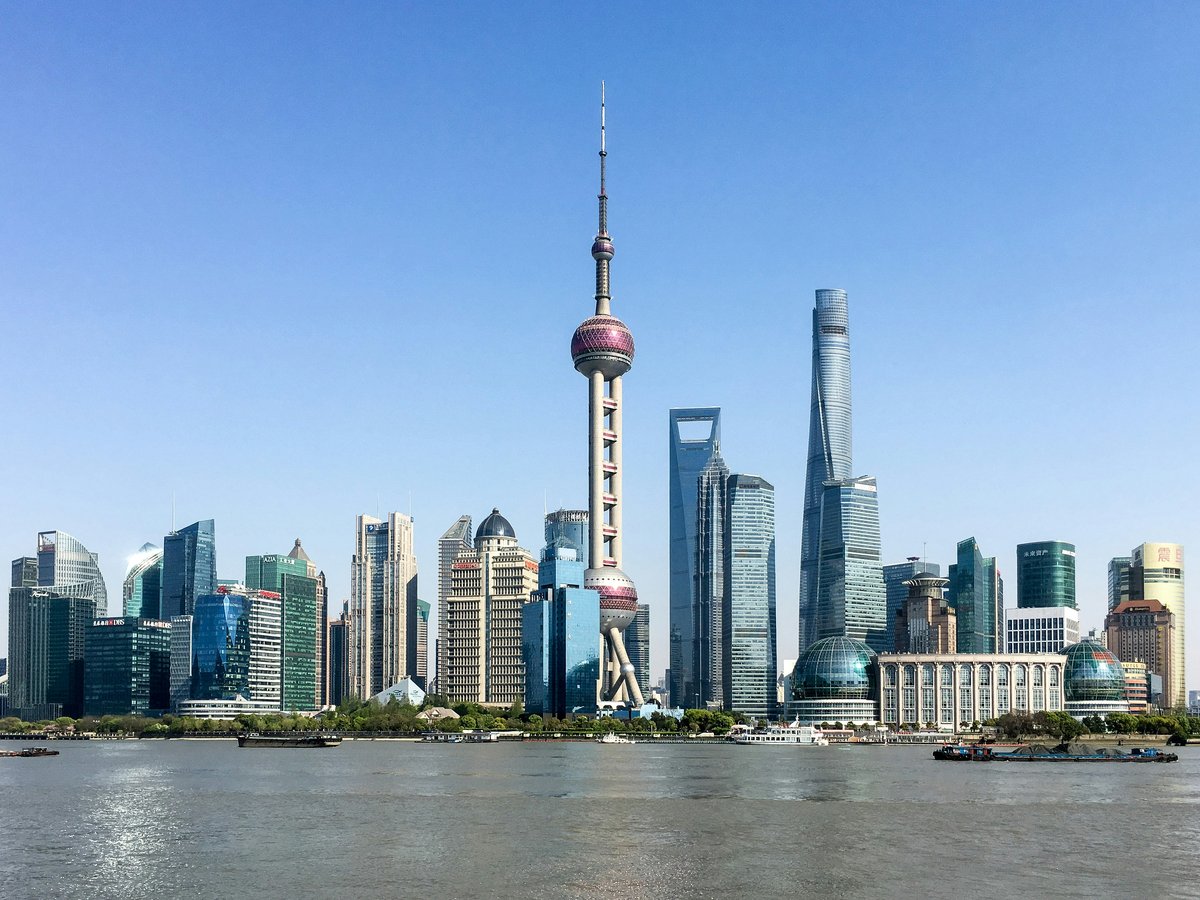
That said, Shanghai's 25 million residents don't pause for the weather. The air-conditioned malls in Jing'an and Lujiazui stay packed. Gallery openings along the Suzhou Creek corridor carry on. The Bund fills with domestic families on school holiday, replacing the shoulder-season photography crowds you'd see in October. After sunset, the city finds its stride. Temperatures settle to around 28-29°C by 21:00, rooftop bars in Huangpu fill up, and the Pudong skyline sharpens in the cleared evening air.
If you can tolerate subtropical humidity and structure your days around afternoon cloudbursts, July is manageable. It is not the month to attempt a packed walking itinerary through Lujiazui or along the Bund at noon. It is the month to linger in a Former French Concession café with cold noodles, duck into the Power Station of Art when the rain hits, and save the outdoor walks for early morning or after dark.
Why visit in July
- Domestic summer holidays keep restaurants and cultural venues on extended hours, with many staying open until 22:00 or later in Jing'an and Xuhui
- Rooftop bar season peaks in July, with venues like Flair at the Ritz-Carlton Pudong and Vue Bar at the Hyatt on the Bund operating at full capacity during the longest daylight hours of the year
- Summer fruit season brings Nanhui water peaches (南汇水蜜桃) and Zhejiang yangmei to neighborhood wet markets at a fraction of export prices, typically 15-25 RMB per jin
- International visitor numbers drop compared to the October Golden Week peak, meaning shorter queues at Shanghai Museum and Yu Garden on weekday mornings
- ChinaJoy, one of Asia's largest gaming and digital entertainment expos, draws over 300,000 attendees to the Shanghai New International Expo Centre in late July
Worth knowing
- The 80% average humidity combined with 33°C highs creates a heat index that regularly feels above 40°C (104°F), making extended outdoor walking genuinely dangerous between 11:00 and 16:00
- 248mm of monthly rainfall, concentrated in heavy afternoon downpours, can flood low-lying streets in older parts of Huangpu and Hongkou within 30 minutes
- Typhoon season runs July through September. Storms rarely make direct landfall on Shanghai, but peripheral bands can cancel flights at both airports and close the Bund promenade for 1-2 days with limited warning
- Air quality tends to dip as heat and humidity trap pollution near ground level, with AQI readings in the Pudong and Baoshan corridors occasionally exceeding 150
Best for
Think twice if
July sits at the transition between Shanghai's plum rain season and true summer furnace. The first 10-15 days still carry méiyǔ moisture, with overcast skies and sudden heavy rain. After mid-month, the rain eases but temperatures climb higher. Average highs reach 33°C (91°F) and lows hold at 26°C (79°F), with 80% humidity pushing the felt temperature closer to 40°C. Rainfall totals around 248mm across 17 days, falling mostly in concentrated afternoon and evening bursts rather than all-day drizzle. The UV index runs high, typically 8-10 at midday. Mornings before 9:00 and evenings after 18:30 are the most tolerable windows for outdoor activity.
Seasonal caution
- Typhoon season is active July through September. Shanghai rarely takes a direct hit, but outer bands from storms tracking toward Zhejiang or Fujian can bring 100mm+ of rain in a single day, cancel flights at Pudong and Hongqiao, and close the Bund promenade. Monitor the Shanghai Meteorological Bureau forecasts and keep 1-2 flexible days in your itinerary.
- Heat index regularly exceeds 40°C (104°F) in the afternoon. Shanghai's municipal government issues yellow, orange, and red heat warnings through summer. On red-warning days, some outdoor attractions limit operating hours. Carry water constantly, seek shade, and avoid midday outdoor exposure between 11:00 and 16:00.
- Urban flooding occurs during heavy cloudbursts. Shanghai's older drainage infrastructure in parts of Huangpu, Hongkou, and Jing'an can be overwhelmed quickly. Water can rise 10-20cm on low-lying streets within 30 minutes of a downpour. Avoid underpasses and sunken roads during heavy rain.
Year-round climate
Averages from the last 5 years.
| Month | Avg high (°C) | Avg low (°C) | Rainfall (mm) |
|---|---|---|---|
| Jan | 10 | 1 | 43 |
| Feb | 11 | 3 | 69 |
| Mar | 17 | 8 | 90 |
| Apr | 22 | 12 | 104 |
| May | 25 | 16 | 111 |
| Jun | 29 | 21 | 252 |
| Jul | 33 | 26 | 248 |
| Aug | 34 | 26 | 109 |
| Sep | 29 | 23 | 190 |
| Oct | 24 | 17 | 64 |
| Nov | 18 | 10 | 72 |
| Dec | 11 | 3 | 21 |
Best things to do in July
Evening Bund walk and Pudong skyline viewing
sightseeingThe Bund promenade stretches roughly 1.5km along the Huangpu River in Huangpu district, facing the Lujiazui skyline. In July, sunset falls around 19:00 and the Pudong lights switch on by 19:30. The temperature drops to around 28-29°C after dark, making it the most comfortable outdoor window of the day. The stretch between the Waibaidu Bridge and the former HSBC Building is the densest section for both colonial architecture and skyline framing.
Summer's late sunset creates a golden-to-blue-hour transition over Pudong between 19:00 and 20:30, a window that doesn't exist during Shanghai's 17:00 winter sunsetsBooking tipNo booking needed. Arrive by 18:30 to claim a railing spot near the Customs House clock tower before the after-dinner crowds.
West Bund museum and gallery circuit
cultureThe West Bund (Xuhui Binjiang) cultural corridor concentrates the Long Museum, Yuz Museum, West Bund Museum (a Centre Pompidou partnership), and the Start Museum within a 2km riverside stretch in Xuhui. All are air-conditioned. You can spend a full day moving between them with lunch at one of the riverside cafés. Admission ranges from free to 150 RMB depending on the exhibition.
July's heat makes outdoor sightseeing miserable from 11:00 to 16:00. The West Bund cluster gives you 5+ hours of climate-controlled culture in one walkable corridor, and summer exhibition rotations launch in late June or early July.Booking tipThe West Bund Museum often requires advance booking via its WeChat mini-program, especially on weekends. Book 2-3 days ahead.
Early morning walk through the Former French Concession
walkingThe tree-lined streets between Fuxing Road and Huaihai Road in the old French Concession (Xuhui/Huangpu border) are at their best before 8:00 in July. The plane trees provide deep shade and the humidity hasn't fully built yet. A route along Wukang Road past the Normandie Apartments, through Ferguson Lane, and down to Fuxing Park covers about 3km of the neighborhood's best 1920s-1930s architecture.
July's early sunrise around 5:00 creates a 3-hour window of tolerable outdoor temperatures before the heat index climbs past 35°C. The plane tree canopy on these streets cuts direct sun significantly.Rooftop bar evening at Flair or Vue Bar
nightlifeShanghai's rooftop bar scene operates year-round but peaks in July when warm evenings and long daylight hours draw crowds. Flair at the Ritz-Carlton Pudong sits on the 58th floor with direct Bund and river views. Vue Bar at the Hyatt on the Bund occupies the 32nd and 33rd floors in Hongkou, looking back toward Pudong. Cocktails run 120-180 RMB. The outdoor terraces at both are only fully usable from May through October.
July's warm, long evenings with sunset at 19:00 and comfortable outdoor temperatures until 23:00 are the peak season for outdoor rooftop terraces that close or enclose in Shanghai's cold winters.Booking tipReserve a terrace table 3-5 days ahead for Friday and Saturday evenings. Weeknights are typically walk-in friendly before 20:00.
Power Station of Art afternoon
cultureShanghai's contemporary art museum occupies a converted power station on the south bank of Suzhou Creek in Huangpu district, near the Nanpu Bridge. Admission is free. The building holds 42,000 square meters of exhibition space across 7 floors, with the 165-meter chimney standing as a city landmark. Summer exhibitions tend to rotate in late June and early July.
Free admission, strong air conditioning, and fresh summer exhibition rotations make this the ideal July afternoon escape when an afternoon downpour hits. The building absorbs 3-4 hours easily.Booking tipFree entry but passport is required for foreign visitors. No advance booking needed on weekdays. Weekend mornings can have a short queue.
Huangpu River night cruise
sightseeingThe standard Huangpu River cruise runs about 45-60 minutes, departing from Shiliupu Pier near the southern end of the Bund. The route heads north past Lujiazui, under the Yangpu Bridge, and back. The breeze off the water drops the felt temperature by 4-5°C compared to street level. Evening departures between 19:30 and 21:00 catch both the lit-up Bund facades and the Pudong skyline.
The river breeze makes this the coolest outdoor activity available in July Shanghai. That 4-5°C temperature drop on the water feels dramatic after a day at 33°C and 80% humidity.Booking tipTickets run 100-180 RMB depending on the operator. Buy at the pier or through Ctrip. The 19:30 weekend departures fill first.
Wet market food tour in Jing'an or Xuhui
foodShanghai's neighborhood wet markets are at their most colorful in July, when summer produce floods the stalls. Kangding Road Market in Jing'an and Wulumuqi Road Market in the Former French Concession are two of the most photogenic. Expect bins of Nanhui water peaches, stacks of watermelon, bundles of water spinach, and tanks of live eels and crabs. Most markets open by 6:00 and wind down by 11:00. The surrounding streets usually have breakfast stalls selling shengjianbao (pan-fried pork buns) for 8-12 RMB for four pieces.
July is peak harvest for Shanghai's signature Nanhui water peaches, yangmei, and summer greens. The wet markets overflow with seasonal produce you won't find in October or April.Booking tipGo before 9:00 for the best selection. No booking needed. Bring cash for the older vendors who don't accept mobile payment.
Day trip to Zhujiajiao water town
day tripZhujiajiao sits about 50km west of central Shanghai in Qingpu district. The town dates to the Ming Dynasty, roughly 400 years old, with stone bridges, canal-side houses, and narrow alleyways. The 17-arch Fangsheng Bridge is the main landmark. Buses from Shanghai Stadium long-distance station take about 90 minutes. Entry to the town is free, though individual attractions inside charge 10-30 RMB each.
The canals and covered walkways provide shade and reflected coolness from the water. Leave early with a 7:00 departure to explore before the heat builds. The town is noticeably less crowded in July than during October's Golden Week, when visitor numbers can triple.Booking tipTake the first bus of the day. By noon the heat is oppressive and the tour groups have arrived. A round-trip taxi costs roughly 300-400 RMB and cuts travel time to about 50 minutes.
What to eat in July
In season: fruit
Nanhui water peaches (南汇水蜜桃)
Shanghai's own peach variety from the Nanhui district in Pudong reaches peak ripeness in July. The flesh is so soft it practically dissolves on your tongue. You'll find them at wet markets in Jing'an and Xuhui for 15-25 RMB per jin (500g). The supermarket ones are fine, but the market fruit, still warm from the crate, is a different experience entirely.
Yangmei (杨梅)
Chinese bayberry arrives from Zhejiang province in late June, and the season typically runs into the first week or two of July. The fruit is deeply red-purple, about the size of a large grape, with a tart sweetness that stains your fingers. By mid-July the supply dries up. Wet markets and fruit vendors along Huaihai Road in Xuhui carry them while they last.
On menus now
Cold noodles (冷面)
Shanghainese-style cold noodles peak in July when every neighborhood noodle shop switches its summer menu. The noodles are served with a sweet peanut sauce and shredded cucumber, sometimes with a sharp vinegar kick. Wujiang Road food street in Jing'an has several reliable spots, most charging under 20 RMB per bowl.
Cold jellyfish salad (凉拌海蜇)
A Shanghainese summer appetizer found at nearly every local restaurant. Shredded jellyfish tossed with vinegar, sesame oil, and sometimes shredded cucumber. The texture is a cool, firm crunch, refreshing in the humidity. Typically 30-50 RMB as a cold starter.
What to drink
Mung bean soup (绿豆汤)
The traditional Shanghai summer coolant. Served cold from thermoses at street stalls and convenience stores across the city. In traditional Chinese medicine it is considered a cooling food. Most families make it at home, but wet market stalls sell cups for 5-8 RMB. The version with lily bulb and lotus seed is worth seeking out.
Sour plum juice (酸梅汤)
Brewed from smoked plums, hawthorn, and rock sugar, this traditional summer drink appears at street stalls and convenience stores across Shanghai every July. Served ice-cold, usually 8-15 RMB at stalls. The homemade versions at older Shanghainese restaurants tend to have more depth than the bottled commercial ones.
Regular events in July
ChinaJoy (China Digital Entertainment Expo & Conference)
One of the largest gaming and digital entertainment expos in Asia, drawing over 300,000 attendees across 4 days at the Shanghai New International Expo Centre in Pudong. Game publishers, cosplay competitions, indie showcases, and hardware demos fill multiple exhibition halls. Day tickets run about 150 RMB.
Late July, typically the last Thursday through SundayShanghai Symphony Orchestra summer season
The Shanghai Symphony Hall in Xuhui hosts its summer concert programming through July, with performances ranging from full orchestral works to chamber music and occasional crossover events. The hall, designed by Arata Isozaki, is one of the best acoustically in China. Tickets range from 80 to 680 RMB depending on the performance.
Various dates throughout JulyJing'an International Sculpture Park summer installationsFree
The sculpture park in Jing'an district, adjacent to the Shanghai Natural History Museum, typically rotates its outdoor installation program in summer with new works appearing from late June through July. The park is free to walk through and sits between the Jing'an Temple metro station and the museum.
Ongoing through JulyBest places this July
Power Station of Art (上海当代艺术博物馆)
museumShanghai's largest contemporary art museum. Free admission with new summer exhibitions typically installed by early July. The 7-floor converted power station along the Huangpu riverbank is fully air-conditioned and absorbs 3-4 hours. The 165-meter smokestack is visible across the southern half of the city.
HuangpuYu Garden (豫园)
historic gardenThe 16th-century classical garden in Huangpu's Old City area is best visited at opening time, 8:30, in July. The rockeries, koi ponds, and covered corridors provide shade, and the morning light through the lattice windows is worth the early start. Admission is 40 RMB. The surrounding bazaar area gets extremely crowded and hot by midday.
HuangpuFuxing Park (复兴公园)
parkThe only French-style garden in Shanghai, laid out in 1909 in the heart of the Former French Concession. On July mornings before 7:00, locals practice tai chi, fan dancing, and ballroom dancing under the plane trees. The sound of erhu and accordion drifts across the lawns. By evening the benches fill with residents escaping apartment heat. Free entry. The surrounding streets, especially Sinan Road, have some of the best cafés in the neighborhood.
Huangpu (Former French Concession)M50 Art District (莫干山路50号)
art districtA cluster of contemporary art galleries in converted textile mills on Moganshan Road in Putuo, near Suzhou Creek. Most galleries are air-conditioned and free to enter. The space is compact enough to see in 2-3 hours. July tends to be quieter than autumn, so you might get time to talk with gallery owners about the work.
PutuoShanghai Natural History Museum (上海自然博物馆)
museumThe museum in Jing'an Sculpture Park houses over 10,000 specimens across 45,000 square meters. The building itself, designed by Perkins+Will with a spiral green-roof form, is worth visiting for the architecture alone. Admission is 30 RMB. On rainy July afternoons, this is one of the best options in the city. Allow 2-3 hours minimum.
Jing'anWukang Road (武康路) and Wukang Mansion
historic streetThe 1.2km Wukang Road in the Former French Concession is lined with plane trees and 1920s-1930s residential architecture. The Normandie Apartments building (Wukang Mansion) at the northern end, shaped like a ship's prow at a five-way intersection, is the most photographed residential building in Shanghai. Walk this street before 8:00 in July to avoid both the heat and the selfie crowds that gather at the Mansion from mid-morning.
XuhuiLong Museum West Bund (龙美术馆西岸馆)
museumOne of the anchor institutions of the West Bund cultural corridor in Xuhui. The building, designed by Liu Yichun, uses raw concrete arches over a dramatic vaulted interior. Summer exhibitions rotate in June and July. Admission is typically 100-150 RMB depending on the show. The museum café overlooks the Huangpu River.
Xuhui (West Bund)Tianzifang (田子坊)
shopping districtA warren of narrow lanes and repurposed shikumen (stone-gate) houses in Xuhui, off Taikang Road. The alleys provide shade and the shops are small enough to be air-conditioned. It is tourist-oriented, but the underlying lane-house architecture is genuine and dates to the 1930s. Worth about 1-2 hours. More bearable in July than the open-air sights.
Xuhui
Your packing checklist
Tick items off as you pack. Your progress saves in this browser.
All packed — have a great trip.
Insider tips
The metro is your lifeline in July. Shanghai's 20-line system is air-conditioned to about 22°C and covers almost every neighborhood a visitor would want. A day pass costs 18 RMB. Taxis and ride-hails via Didi are air-conditioned too, but wait times during sudden rainstorms in Jing'an and Huangpu can reach 30-40 minutes as everyone calls for a car at once.
Eat lunch early, by 11:00 if possible. Shanghainese restaurants in the Former French Concession and Jing'an start filling at 11:15. By 11:45, popular spots like the Yang's Dumplings on Huanghe Road have 20-30 minute waits. Eating at 11:00 sidesteps the rush and gets you indoors before the worst afternoon heat.
The Bund is nearly empty at 6:00 in July mornings. Most tourists arrive after dinner, between 19:00 and 21:00, to see the Pudong lights. But the morning light on the colonial facades is better for photography, and you'll have the promenade almost to yourself. The humidity makes the river shimmer in the early sun.
Download Amap (高德地图) before you arrive. Google Maps works in Shanghai but its transit routing and walking directions are unreliable for the metro system. Amap's English-language mode is functional, its bus and metro routing is accurate, and it shows real-time rain radar overlays, useful for timing your outdoor moves in July.
Shanghai's convenience stores, FamilyMart, Lawson, and 7-Eleven, sell onigiri, cold noodle packs, frozen drinks, and ice cream. In July, they function as informal cooling stations. Duck in for 10 minutes of air conditioning and a 5 RMB iced coffee when the heat overwhelms you between metro exits.
Avoid these mistakes
- Scheduling a full-day outdoor walking itinerary. The heat index above 40°C between 11:00 and 16:00 in July makes this dangerous, not merely uncomfortable. Plan indoor activities for midday and save outdoor exploration for before 9:00 or after 18:00. Tourists who push through midday heat at Yu Garden or along the Bund risk genuine heat exhaustion.
- Ignoring typhoon forecasts because Shanghai rarely takes a direct hit. Peripheral bands from storms tracking toward Zhejiang or Fujian can dump 100mm of rain in hours, flood metro entrances, and cancel flights at both airports. Check the Shanghai Meteorological Bureau's WeChat account 3-5 days out and keep one day in your itinerary flexible.
- Packing only summer clothes and no layer for air conditioning. The temperature difference between a 33°C street and a 19°C mall or museum is severe enough to cause chills when you're in sweat-damp clothing. Without a light layer, you alternate between overheating and shivering all day. This catches nearly every first-time July visitor.
- Booking a Zhujiajiao or Qibao water town day trip with a 10:00 departure. Tour operators default to this timing, which means you arrive at peak midday heat with minimal shade. Take the 7:00 bus instead, explore for 3 hours, and leave by 10:30 before the temperature and the tour groups both peak.
Practical tips for July
Book accommodations in Jing'an or the Former French Concession, where plane tree-lined streets provide more shade than Pudong's glass-and-steel towers. Most restaurants and attractions accept WeChat Pay and Alipay, and setting up a foreign credit card on WeChat Pay now works for most international Visa and Mastercard holders. July's school holiday means domestic family tourism picks up, so book weekend museum tickets for the Shanghai Natural History Museum and Shanghai Science and Technology Museum 3-5 days ahead via their WeChat mini-programs. Temple visits to Jing'an Temple and Longhua Temple are best at opening, around 7:30, before tour groups arrive. Pharmacies (大药房) carry oral rehydration salts, cooling patches, and heatstroke remedies over the counter. If you take the Maglev from Pudong Airport, the 8-minute ride is air-conditioned but the queuing area and the platform are not. Summer restaurant hours in central Shanghai typically run 11:00 to 14:00 and 17:00 to 22:00, with many spots in Xintiandi and the Bund area staying open until 23:00 on weekends.
FAQ
Is July a good time to visit Shanghai?
Honestly, not particularly. July ranks around 10th out of 12 months, mainly because of the combination of 33°C (91°F) heat and 80% humidity, plus 248mm of rainfall. October and November are the best months, with comfortable temperatures around 18-24°C and low rainfall. That said, July is far from impossible if your schedule is fixed. The indoor cultural scene, the museums, galleries, and restaurants, doesn't depend on weather, and both rooftop bar season and summer food peak this month. You can have a good trip by planning around the heat and keeping midday hours indoors.
What is the weather like in Shanghai in July?
Hot, humid, and wet. Average highs reach 33°C (91°F) and lows only drop to 26°C (79°F), so there is little overnight relief. Humidity averages 80%, which pushes the felt temperature above 40°C (104°F) regularly. Expect about 248mm of rain across 17 days, mostly in heavy afternoon downpours that last 30-90 minutes rather than all-day drizzle. The first half of July often overlaps with the tail of the plum rain season (méiyǔ), when overcast skies and drizzle can persist for days. The second half tends to be hotter but with more distinct storm-and-clear patterns.
Is Shanghai crowded in July?
Medium crowds. Domestic tourism picks up because of the school holiday period, so family-oriented sites like the Shanghai Natural History Museum, Shanghai Disneyland in Pudong, and the Bund get busier on weekends. But international tourist numbers are well below the October Golden Week peak and the April spring surge. Weekday mornings at most museums and gardens remain manageable. Restaurant waits in popular areas like Xintiandi and the Former French Concession run about 15-20 minutes at peak lunch, compared to 30-45 minutes in October.
Do I need to worry about typhoons in Shanghai in July?
Worth keeping in mind, though the risk is proportional. Typhoon season runs July through September, and Shanghai sits on the east coast where storms occasionally track. Direct hits are rare, perhaps once every several years. More common are peripheral effects from typhoons making landfall in Zhejiang or Fujian provinces to the south. These can bring 1-2 days of heavy rain, flight cancellations at Pudong and Hongqiao airports, and temporary closures of the Bund waterfront. Monitor forecasts via the Shanghai Meteorological Bureau and build 1 flexible day into your itinerary.
What should I eat in Shanghai in July?
July is the season for cold dishes in Shanghainese cuisine. Cold noodles (冷面) with sweet peanut sauce appear at every neighborhood noodle shop for under 20 RMB. Mung bean soup (绿豆汤) and sour plum juice (酸梅汤) are the traditional cooling drinks, found at street stalls for 5-15 RMB. For fruit, Nanhui water peaches (南汇水蜜桃) from Pudong district are at peak ripeness and cost 15-25 RMB per jin at wet markets. Yangmei (Chinese bayberry) from Zhejiang has a very short window running into early July. Cold jellyfish salad (凉拌海蜇) is a classic summer appetizer at most local Shanghainese restaurants, typically 30-50 RMB.
Things to Do in Shanghai in July
 Free cancellation
 Private Shanghai Full Day City Tour with Old and New Highlights
Day trip: free cancellation.
via Viator Free cancellation
 Zhujiajiao Water Town and Shanghai City Private Day Tour
Day trip: 8 hours, free cancellation.
via Viator Free cancellation Shanghai Private Tour: Zhujiajiao Water Town and Boat Ride
Day trip: free cancellation.
via Viator Free cancellation
 Private Full-Day Tour: Incredible Shanghai Highlights
Day trip: 8 hours, free cancellation.
via Viator Free cancellation
 Shanghai City Guided Walking Tour | China's 1st and Best Rated
City tour: 4 hours, free cancellation.
via Viator Free cancellation
 Half-Day Bike Tour of Shanghai Old Town with Food Tasting
City tour: 4 hours, free cancellation.
via ViatorFind a flight to Shanghai
Live fares to Shanghai appear here once cookies are accepted.
Last verified by automated review (v1.7.2) on . What is automated review?