Stay in Shanghai in June
96 hotels in the Trip.com pool for Shanghai, from US$14 a night.
Opens Trip.com on Fri 4 Jun to Sun 6 Jun 2027; change the dates there.
June in Shanghai means one thing above all else. The plum rains arrive. Called méiyǔ (梅雨) in Mandarin, this annual monsoon pattern typically settles over the Yangtze Delta around mid-June and persists until mid-July, delivering roughly 252mm of rainfall across 17 rainy days. Daytime highs reach about 29°C (84°F) with lows around 21°C (70°F), which sounds manageable until you factor in 82% humidity. The air feels heavy, almost tactile. Your shirt sticks to your back within 10 minutes of leaving any air-conditioned space on Nanjing East Road.
That said, June has genuine rewards for travelers willing to carry an umbrella everywhere. The Dragon Boat Festival (端午节) falls in this period, bringing longboat races to Suzhou Creek and the bamboo-leaf scent of fresh zongzi to neighborhood lanes across Huangpu and Jing'an. The Shanghai International Film Festival, one of only 15 FIAPF-accredited A-category festivals worldwide, typically opens in mid-June with screenings at venues across Xuhui and Jing'an districts. Hotel rates sit well below October's Golden Week peak, and the domestic summer travel rush has not yet reached July-August levels.
To be fair, you will need a high tolerance for dampness. Some days the rain falls in sharp afternoon bursts, other days it is a persistent grey drizzle from morning to night. The French Concession's plane trees are in full green canopy, which is lovely when the sun breaks through, but the sidewalks stay slick. If you strongly prefer blue-sky sightseeing, October or November will serve you far better. If you can handle the wet, hotel rates in Jing'an and the French Concession run 20-30% below their October peaks.
Why visit in June
- Hotel rates in Jing'an and Xuhui run 20-30% below October Golden Week pricing, making June one of the more affordable windows for central Shanghai stays
- Dragon Boat Festival (端午节) brings longboat racing on Suzhou Creek, zongzi-making workshops, and a 3-day public holiday atmosphere
- The Shanghai International Film Festival screens 400+ films across 30+ venues over 10 days, many with English subtitles
- Fewer international tourists than autumn, meaning shorter waits at Yu Garden and the Shanghai Museum
- Seasonal bayberry (杨梅) and loquats reach peak ripeness at fruit stands along Wulumuqi Road and throughout local wet markets
Worth knowing
- The plum rain season (梅雨) delivers 252mm of rain across roughly 17 days, making outdoor sightseeing plans unreliable
- 82% average humidity creates a persistent clammy feeling, and mold can develop on leather goods left in hotel rooms without dehumidifiers
- The 3-day Dragon Boat Festival holiday draws heavy domestic travel, with train tickets on the Shanghai-Beijing and Shanghai-Hangzhou routes selling out weeks in advance
- Air quality dips during humid stagnant periods, with PM2.5 readings occasionally exceeding 100 in the Pudong and Hongkou areas
Best for
Think twice if
June marks the start of Shanghai's plum rain season (梅雨), the wettest period of the year. Warm temperatures around 29°C (83°F) are paired with 82% humidity that makes the air feel several degrees hotter. Rain falls on roughly 17 of 30 days, sometimes as brief afternoon downpours, sometimes as all-day drizzle that does not lift. Morning fog along the Huangpu River is common in early June. Evenings stay warm at around 21°C (70°F), and the temperature rarely drops below 19°C even after midnight. You might get 3-4 consecutive dry days mid-month, but planning around them is a gamble.
Seasonal caution
- The plum rain season (梅雨) brings 252mm of rainfall in June, the highest monthly total of the year. Localized street flooding occurs in low-lying areas of Huangpu and Jing'an during sustained downpours, particularly near Suzhou Creek.
- Typhoon season officially begins in June. While direct hits on Shanghai are more common in July through September, peripheral rain bands from storms in the East China Sea can intensify existing plum rain conditions with little warning.
- Heat index regularly exceeds 35°C (95°F) on humid days despite the air temperature reading 29°C (83°F). Hydration and sun protection matter more than the thermometer suggests.
Year-round climate
Averages from the last 5 years.
| Month | Avg high (°C) | Avg low (°C) | Rainfall (mm) |
|---|---|---|---|
| Jan | 10 | 1 | 43 |
| Feb | 11 | 3 | 69 |
| Mar | 17 | 8 | 90 |
| Apr | 22 | 12 | 104 |
| May | 25 | 16 | 111 |
| Jun | 29 | 21 | 252 |
| Jul | 33 | 26 | 248 |
| Aug | 34 | 26 | 109 |
| Sep | 29 | 23 | 190 |
| Oct | 24 | 17 | 64 |
| Nov | 18 | 10 | 72 |
| Dec | 11 | 3 | 21 |
Holidays and festivals in June
Public holidays
- Dragon Boat Festival(端午节)9 June 2027
Headline events
Dragon Boat Festival (端午节, Duānwǔ Jié)
5th day of 5th lunar month, typically falling between late May and mid-June
China's 2,000-year-old festival honoring the poet Qu Yuan fills Suzhou Creek and Dishui Lake with competitive longboat races while neighborhoods across the city sell freshly wrapped zongzi (sticky rice dumplings in bamboo leaves). The 3-day public holiday makes it a citywide celebration with performances at Yu Garden and along the Bund waterfront.
Shanghai International Film Festival (SIFF, 上海国际电影节)
Mid-June, usually running 10 days from the second or third week
One of only 15 FIAPF-accredited A-category film festivals in the world, SIFF screens over 400 films from 50+ countries across 30+ theaters over roughly 10 days. The festival draws industry professionals from across Asia, and public tickets for popular screenings sell out within minutes of release on the Taopiaopiao app.
Best things to do in June
Catch a SIFF screening at the Shanghai Film Art Center
cultureThe Shanghai Film Art Center in Xuhui is the festival's flagship venue, hosting premieres and retrospectives during the 10-day event. Screenings run from morning to late evening, with restored classics and Asian premieres filling the schedule. The atmosphere in the lobby between showings feels like a condensed version of a European film festival. Tickets go live on the Taopiaopiao app about a week before opening day.
SIFF runs exclusively in mid-June, with 400+ films screened nowhere else in mainland China this yearBooking tipSet an alarm for the ticket release on Taopiaopiao. Popular screenings sell out in under 60 seconds.
Watch Dragon Boat races on Suzhou Creek
festivalTeams of 20 paddlers race narrow longboats along the stretch of Suzhou Creek near Changhua Road in Putuo district. The smell of freshly steamed zongzi from vendors along the banks mixes with the rhythmic drum beats that pace each crew. Races typically run in the morning, and the best viewing spots fill early.
Dragon Boat Festival falls in late May or early to mid-June, and the Suzhou Creek races only happen on the festival weekendBooking tipNo tickets needed. Arrive by 8am to secure a spot along the Changhua Road embankment.
Walk the French Concession under full canopy
walkingThe plane trees lining Wukang Road, Fuxing West Road, and Anfu Road reach their thickest foliage in June. The leaf cover creates a natural tunnel effect on overcast days, and after rain the wet bark and damp leaves give off a distinctive green, earthy scent. Wukang Road's 1930s-era apartment buildings look particularly photogenic against the dense greenery. The sidewalks are quieter on weekday mornings.
June's warmth and rain produce the densest leaf canopy of the year, and tourist numbers are still moderate compared to OctoberExplore the West Bund Museum and Long Museum corridor
cultureThe 8.4km West Bund waterfront in Xuhui district clusters several major art venues within walking distance. The West Bund Museum, a collaboration with Centre Pompidou that opened in 2019, sits next to the Long Museum West Bund and the Tank Shanghai art space. On rainy June afternoons, you can spend 4-5 hours moving between exhibitions without much outdoor exposure.
Rainy days make an indoor art corridor more appealing, and June exhibition calendars tend to feature new shows timed to SIFF audiencesVisit the Power Station of Art during its summer exhibitions
cultureShanghai's contemporary art museum occupies a converted 1897 power plant on the south bank of the Huangpu River in Huangpu district. The 42,000 sq meter building hosts the Shanghai Biennale in even years and rotates large-scale installations year-round. The building's industrial scale, with its 165-meter smokestack visible from the Bund, makes it feel more like a Tate Modern than a typical Chinese museum. Entry is free.
Summer exhibition openings coincide with SIFF, and the free admission plus indoor setting makes it ideal during plum rain daysBrowse the seasonal fruit stalls at Wulumuqi Road wet market
foodWulumuqi Road's wet market in the French Concession hits peak variety in June, with yangmei from Zhejiang, loquats from Suzhou's Dongshan, and early-season peaches from Nanhui piled in bamboo baskets. The vendors let you sample before buying. The market is busiest before 9am, when neighborhood residents do their daily shopping.
June is the narrow overlap window when both yangmei and loquats are available fresh, a combination that lasts only about 2 weeksTake the Bund waterfront walk at dusk
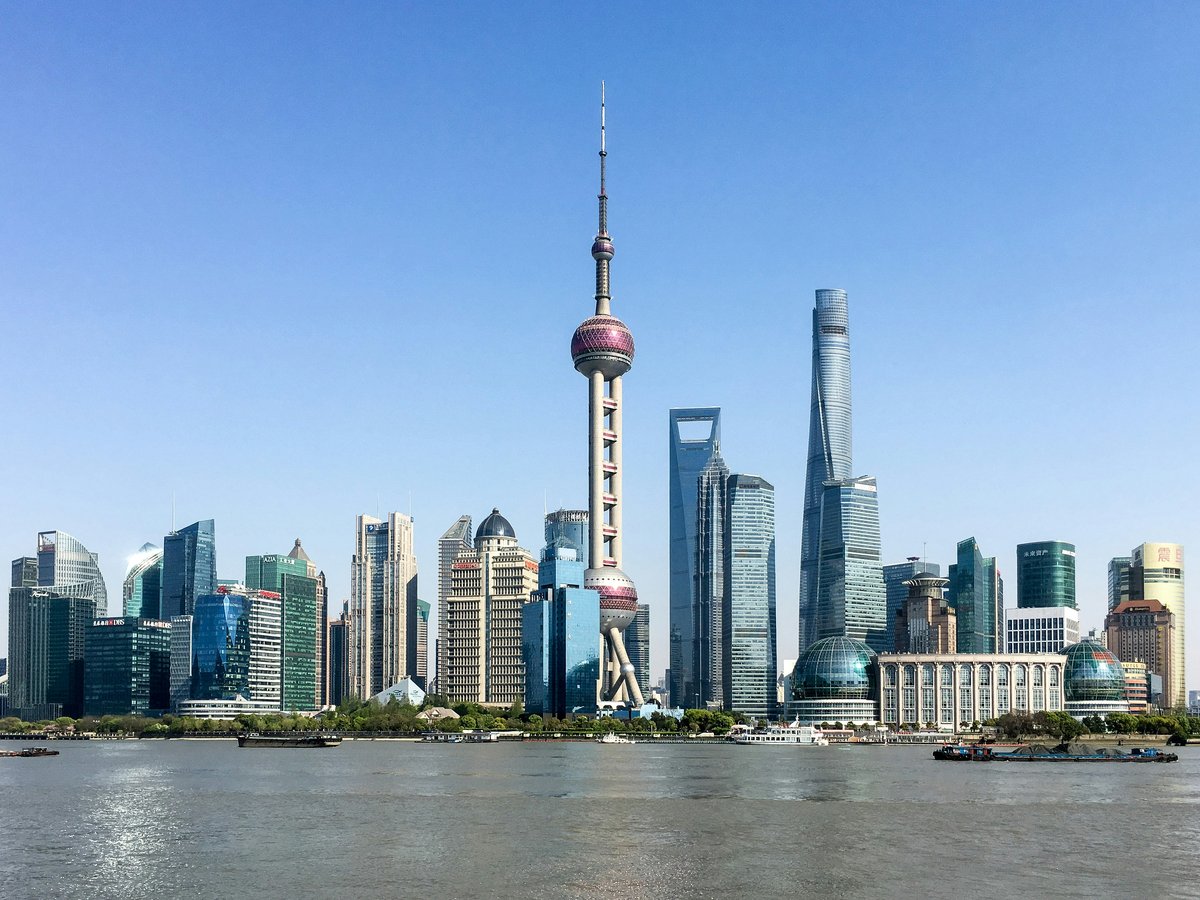
sightseeingOn evenings when the rain clears, the Bund's 1.5km promenade between Waibaidu Bridge and the Meteorological Signal Tower offers Pudong's skyline reflected in the still, humid air. The Shanghai Tower (632m), Jin Mao Tower (421m), and Shanghai World Financial Center (492m) light up progressively after 6:30pm. The wet pavement catches the reflections on post-rain nights.
June's occasional clear evenings after daytime rain produce some of the year's best atmospheric conditions for Pudong skyline views, with moisture softening the lightWhat to eat in June
In season: fruit
Yangmei (杨梅, Chinese bayberry)
These dark-red, grape-sized berries appear at fruit stalls and wet markets across Shanghai from late May through June. They bruise easily and spoil within a day or two of picking, so freshness matters. The best ones come from Xianju County in Zhejiang Province, about 400km southwest of Shanghai. Locals also steep them in baijiu to make yangmei wine, which you'll find at neighborhood fruit shops in the French Concession.
Loquats (枇杷)
Suzhou's Dongshan and Xishan loquat orchards, about 90 minutes west of Shanghai by car, reach peak harvest in early to mid-June. The Bailusha variety has pale, almost translucent flesh with a honey-sweet taste. You'll find them at wet markets in Changning and Xuhui, typically sold in small baskets. The season is short, rarely lasting past the third week of June.
On menus now
Xialongxia (小龙虾, crayfish)
June is peak crayfish season in Shanghai. The mala (numbing-spicy) preparation with Sichuan peppercorn and dried chili dominates, though garlic-butter and shisanxiang (thirteen-spice) versions are common too. Shouning Road in Huangpu has been Shanghai's unofficial crayfish street since the early 2000s, with dozens of open-air stalls operating from late afternoon into the early morning hours.
Festival food
Zongzi (粽子)
Shanghai's version leans savory, with fatty pork belly and salted egg yolk wrapped in glutinous rice and steamed inside bamboo leaves. The Jiaxing-style (嘉兴粽子) sold at shops along Nanjing East Road and in the Old City near Yu Garden tends to be the local favorite. Peak availability runs from 2 weeks before Dragon Boat Festival through the holiday itself.
Regular events in June
Shanghai Pride (ongoing community events)Free
Shanghai's LGBTQ+ community organizes film screenings, art exhibitions, and social gatherings throughout June, often in venues across Xuhui and the French Concession. Events are typically announced through WeChat groups rather than public listings.
Various dates throughout JuneZhangjiang Science City open daysFree
Several research institutions and tech campuses in the Pudong New Area Zhangjiang zone hold public open days in June, offering tours of labs and innovation centers. The Shanghai Synchrotron Radiation Facility has historically participated.
Mid-June, typically one weekendBest places this June
Yu Garden (豫园)
historic_siteThis 2-hectare Ming Dynasty garden from 1559 in Huangpu's Old City is less crowded in June than during October's Golden Week. The rain amplifies the moss on the rockeries and dragon wall, and the sound of water on the pond pavilion's tile roof adds to the atmosphere. The surrounding bazaar sells seasonal zongzi during Dragon Boat Festival week.
HuangpuThe Bund (外滩)
landmarkThe 1.5km row of 52 buildings spanning Art Deco, Neoclassical, and Beaux-Arts styles along Zhongshan East 1st Road faces Pudong's modern skyline across the Huangpu River. June's overcast skies and occasional fog create a moodier backdrop than the usual postcard-blue. The Customs House clock tower (1927) and Fairmont Peace Hotel (1929) are the standout facades.
HuangpuPower Station of Art (上海当代艺术博物馆)
museumFree-admission contemporary art museum in a converted 1897 coal power plant. The 165-meter smokestack is a Huangpu River landmark. The 42,000 sq meter interior hosts rotating large-scale installations and the Shanghai Biennale. Worth a half-day visit on a rainy June afternoon.
HuangpuWest Bund Art Corridor
cultural_districtAn 8.4km stretch of Xuhui's waterfront that concentrates the Long Museum West Bund, West Bund Museum (Pompidou collaboration, opened 2019), and Tank Shanghai within walking distance. The riverside path connects them, though in heavy rain the indoor route through each building is more practical.
XuhuiTianzifang (田子坊)
neighborhoodA warren of narrow shikumen (石库门) laneways off Taikang Road in the former French Concession. The converted lane houses hold small galleries, ceramic studios, and tea shops. June's drizzle and the low, overhanging eaves create an intimate atmosphere in the alleys. The lanes are narrow enough that many sections stay relatively dry under awnings.
XuhuiJing'an Temple (静安寺)
templeThis 1,800-year-old Buddhist temple sits on one of Shanghai's busiest intersections at West Nanjing Road and Huashan Road. The current structure, rebuilt in teak and gilded in 2010, looks striking against grey June skies. The Mahavira Hall's camphor-wood interior has a distinctive warm scent that contrasts with the damp air outside.
Jing'anZhujiajiao Water Town (朱家角)
day_tripLocated 48km west of central Shanghai in Qingpu district, this 1,700-year-old water town has 36 stone bridges spanning its canals. June rain raises the water levels, which makes the canal-boat rides more atmospheric but can also flood lower walkways during heavy downpours. The Fangsheng Bridge, a 5-arch stone span from 1571, is the town's most photographed structure. Worth noting that heavy rain days can close some waterside paths.
Qingpu District
Your packing checklist
Tick items off as you pack. Your progress saves in this browser.
All packed — have a great trip.
Insider tips
SIFF tickets for the most popular screenings sell out within 60 seconds of going live on the Taopiaopiao (淘票票) app. Create your account beforehand, add a payment method, and have your selections ready. The app occasionally crashes at release time, so having a second phone logged in helps.
The best zongzi during Dragon Boat Festival come from neighborhood shops, not the tourist-facing stalls near Yu Garden. Locals in the Jing'an and Changning districts line up at specific family-run shops that have been wrapping zongzi for decades. Ask your hotel concierge for a nearby recommendation.
Shanghai's metro system (currently 20 lines, 508 stations) runs air-conditioned trains and is the most comfortable way to move around the city in June. The walk between metro exits and your destination is typically the only outdoor exposure. Lines 2, 10, and 12 connect most visitor-relevant areas.
If you're visiting Zhujiajiao water town, check the weather forecast for 2 consecutive dry days. The first dry day after rain still has wet paths, but the second day offers the best combination of high canal water and dry walkways.
The Wulumuqi Road wet market opens around 6am, and the yangmei vendors there typically sell out of the best Xianju-sourced berries by mid-morning. Yangmei bruise if you stack them, so buy a flat basket rather than a bag.
French Concession walking is best in the early morning before 9am, when humidity feels lower and the plane tree canopy traps cooler overnight air. By noon, the trapped moisture under the canopy makes these streets feel more humid than open areas.
Avoid these mistakes
- Packing only an umbrella and no rain jacket. June squalls in Shanghai come with sideways wind that renders umbrellas useless. Most seasoned visitors carry both.
- Assuming the Dragon Boat Festival weekend is a quiet holiday. It is a 3-day national holiday, and domestic tourists flood Shanghai's attractions. Train tickets from Beijing, Hangzhou, and Nanjing sell out weeks ahead.
- Leaving leather goods or camera gear in the hotel closet without moisture protection. At 82% humidity, mold can appear on leather within 2-3 days. Use silica packets or ask the hotel for a dehumidifier.
- Planning a tight outdoor itinerary. June rain is unpredictable in duration, and trying to hit 4-5 outdoor sites in a single day leads to frustration. Build indoor alternatives into every day's plan.
- Skipping sunscreen on overcast days. The UV index in Shanghai reaches 8-9 even through cloud cover in June, and the grey skies create a false sense of protection.
Practical tips for June
Carry a lightweight rain jacket and a compact umbrella every time you leave the hotel, regardless of the morning forecast. June weather in Shanghai shifts without much warning, and a clear morning can become a downpour by noon. The Shanghai Metro is your best friend in plum rain season. With 20 lines and 508 stations, most major attractions sit within a 10-minute walk of a station, and the air-conditioned cars offer relief from the humidity. Download the Metro Dàdūhuì (大都会) app for QR-code entry at turnstiles. For SIFF screenings, set up the Taopiaopiao (淘票票) app with a Chinese payment method before ticket release day. Hotel concierges at international-branded properties can sometimes assist with ticket purchases if the app gives you trouble. If you plan to visit Zhujiajiao or other water towns, watch the 3-day forecast and go on the second consecutive dry day for the best conditions. Book Dragon Boat Festival period train tickets at least 3 weeks in advance on the 12306 app or website, and be aware that popular routes to Hangzhou and Suzhou may sell out even earlier.
FAQ
Is June a good time to visit Shanghai?
June is a fair time to visit, not ideal. The plum rain season (梅雨) brings roughly 252mm of rain across 17 days, paired with 82% humidity. That said, hotel rates run 20-30% below the October peak, and events like the Shanghai International Film Festival and Dragon Boat Festival provide genuine reasons to visit. If you prioritize indoor cultural activities over outdoor sightseeing, June works well. If you need dry weather, October or November is a better bet.
How bad is the rain in Shanghai in June?
It rains on roughly 17 of 30 days. The pattern varies. Some days bring a sharp 30-minute afternoon downpour followed by clearing. Other days deliver a steady grey drizzle from morning to evening. You might get 3-4 consecutive dry days, but predicting when those fall is difficult. The rain is warm, not cold, and rarely reaches the intensity of a tropical storm. Localized flooding near Suzhou Creek and in lower-lying parts of Huangpu can occur during sustained heavy rain.
What should I wear in Shanghai in June?
Lightweight, breathable fabrics like linen or moisture-wicking synthetics work best in 29°C heat with 82% humidity. Waterproof shoes are more important than you might expect, as sidewalk puddles form quickly and linger. Bring a rain jacket with a hood. Also carry a light layer for aggressively air-conditioned interiors. Shanghai restaurant and mall AC can drop indoor temperatures to around 20°C.
Can I still enjoy Shanghai if it rains the whole time?
Yes, with adjustment. Shanghai has extensive indoor attractions. The West Bund art corridor (Long Museum, West Bund Museum, Tank Shanghai) can fill a full day. The Power Station of Art offers free admission in a 42,000 sq meter converted power plant. SIFF screenings run morning to night during the festival. The Shanghai Museum in People's Square and the China Art Museum in the former 2010 Expo China Pavilion are both major rainy-day options. The metro connects most of these without significant outdoor walking.
How do I get Dragon Boat Festival zongzi in Shanghai?
Zongzi are everywhere in Shanghai during the 2 weeks surrounding Dragon Boat Festival. Wet markets in Jing'an, Changning, and Xuhui stock both Jiaxing-style (savory pork and salted egg yolk) and Shanghainese sweet versions. Neighborhood shops that specialize in zongzi draw the longest lines. The Yu Garden bazaar area has tourist-facing vendors, but locals tend to favor the smaller family-run shops in residential neighborhoods. Your hotel concierge will likely know the nearest well-regarded spot.
Things to Do in Shanghai in June
 Free cancellation
 Private Shanghai Full Day City Tour with Old and New Highlights
Day trip: free cancellation.
via Viator Free cancellation
 Zhujiajiao Water Town and Shanghai City Private Day Tour
Day trip: 8 hours, free cancellation.
via Viator Free cancellation Shanghai Private Tour: Zhujiajiao Water Town and Boat Ride
Day trip: free cancellation.
via Viator Free cancellation
 Private Full-Day Tour: Incredible Shanghai Highlights
Day trip: 8 hours, free cancellation.
via Viator Free cancellation
 Shanghai City Guided Walking Tour | China's 1st and Best Rated
City tour: 4 hours, free cancellation.
via Viator Free cancellation
 Half-Day Bike Tour of Shanghai Old Town with Food Tasting
City tour: 4 hours, free cancellation.
via ViatorFind a flight to Shanghai
Live fares to Shanghai appear here once cookies are accepted.
Last verified by automated review (v1.7.2) on . What is automated review?