Stay in Shanghai in January
96 hotels in the Trip.com pool for Shanghai, from US$14 a night.
Opens Trip.com on Fri 1 Jan to Sun 3 Jan 2027; change the dates there.
January in Shanghai is defined by a damp, penetrating cold that feels worse than the thermometer suggests. Daytime highs hover around 9.9°C (50°F) and nights drop to 1.2°C (34°F), which sounds mild compared to Beijing or Seoul, but Shanghai's 72% humidity turns that single-digit cold into something that settles in your bones. Most residential buildings south of the Yangtze lack central heating, and you'll feel this in older hotels, restaurants in the French Concession, and certainly while walking the Bund at dusk. The wind off the Huangpu River in January carries a particular wet chill that no amount of layering fully solves.
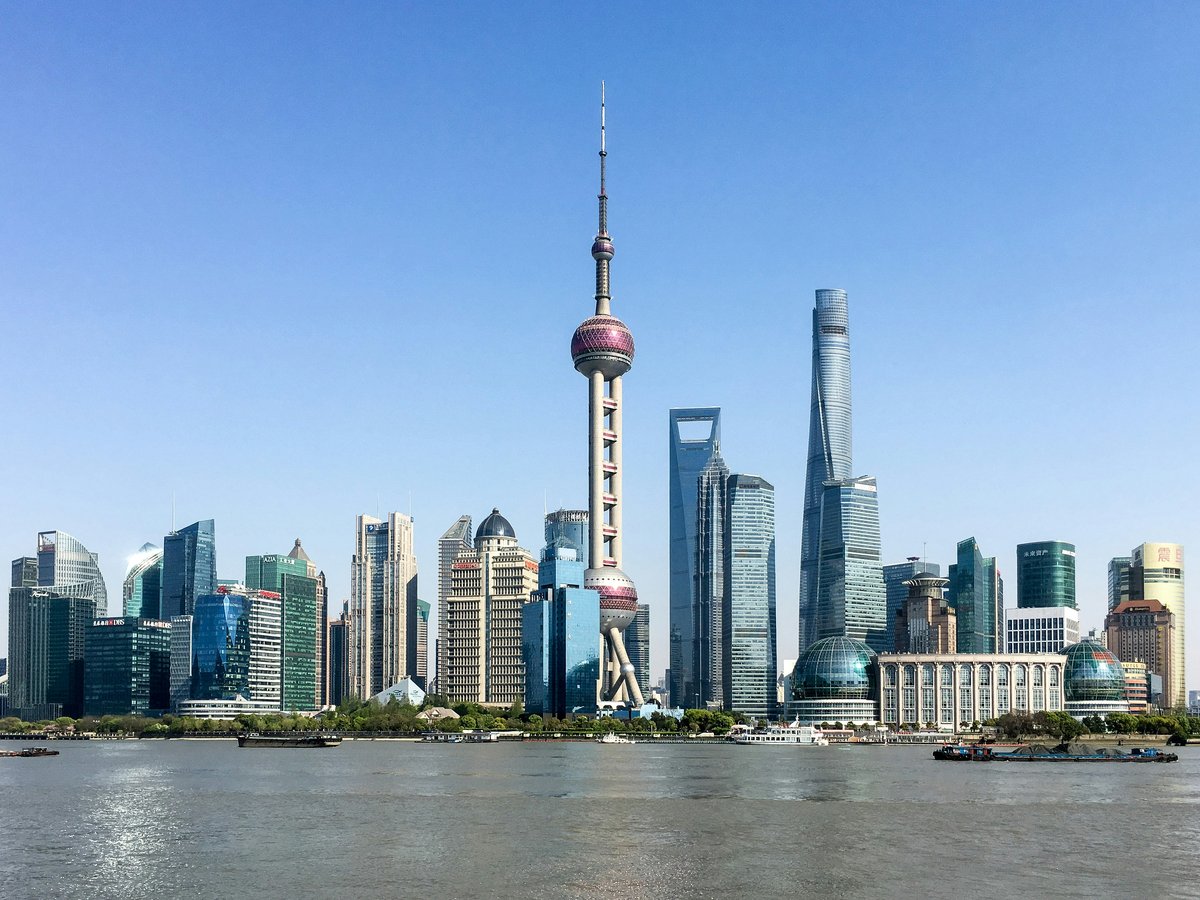
That said, January is genuinely quiet. The summer and Golden Week crowds are months away. You can walk into the Shanghai Museum on People's Square without a queue, get a table at restaurants in Xintiandi that need 2-hour waits in October, and photograph the Pudong skyline from the Bund promenade with maybe a dozen other people instead of hundreds. Hotel rates in Jing'an and Huangpu districts drop 30-40% from their October peaks. If Chinese New Year falls in late January (it shifts yearly between mid-January and mid-February), the final week transforms entirely. Shops along Nanjing Road hang red lanterns, Yu Garden launches its annual lantern festival, and the city takes on a festive, slightly frantic energy as 24 million residents prepare to travel home for the holiday.
The trade-off is real, though. Grey skies dominate. Sunset arrives before 17:15. Many smaller shops and family-run restaurants close early or shut entirely in the 2 weeks before Spring Festival as owners return to their home provinces. You're visiting a winter city, not a warm escape.
Why visit in January
- Hotel rates in central Huangpu and Jing'an drop 30-40% from autumn peak, with 4-star rooms regularly available under 600 RMB per night
- Major museums and galleries (Power Station of Art, Long Museum West Bund, Shanghai Museum) have minimal queues, with weekday visits often under 20 people per hall
- The Yu Garden Lantern Festival typically opens in mid-to-late January, displaying 50+ elaborate silk lantern installations across the Old City area
- Winter food culture peaks with street vendors selling roasted sweet potatoes, tang yuan, and fresh-fried spring rolls along Yunnan Road and in Qibao Ancient Town
- Air quality in January averages better than summer months, with PM2.5 readings typically 40-60% lower than June through August
Worth knowing
- The damp cold at 72% humidity penetrates layers in a way that dry cold at the same temperature does not, making extended outdoor walks uncomfortable after 45 minutes
- Grey overcast skies persist for roughly 20 of 31 days, limiting photography opportunities and affecting mood for visitors expecting the glossy skyline shots
- Many family-run restaurants and smaller shops in neighborhoods like Tianzifang and along Yongkang Road close 1-2 weeks before Chinese New Year as owners travel home
- Daylight is limited to roughly 10.5 hours, with sunset around 17:10, cutting short afternoon sightseeing at open-air sites like Zhujiajiao water town
Best for
Cold and damp with persistent overcast skies. The humidity makes 10°C feel closer to 5°C on exposed skin. Rain comes in light, drizzly spells rather than downpours, typically lasting a few hours at a time. Wind off the Huangpu adds a biting edge on the waterfront. Snow is rare but not impossible, occurring perhaps once every 3-4 years. Fog occasionally settles over Pudong in early mornings, obscuring the skyline until mid-morning.
Seasonal caution
- Temperatures occasionally drop below 0°C (32°F) at night, with wind chill along the Huangpu River waterfront making exposed skin feel significantly colder. Frostbite risk is low but ear and hand coverage is necessary for extended Bund walks after dark.
- Dense fog occasionally reduces visibility to under 200 meters in Pudong and along elevated highways, causing flight delays at both Pudong International (PVG) and Hongqiao (SHA) airports, particularly in the first 2 weeks of January.
Year-round climate
Averages from the last 5 years.
| Month | Avg high (°C) | Avg low (°C) | Rainfall (mm) |
|---|---|---|---|
| Jan | 10 | 1 | 43 |
| Feb | 11 | 3 | 69 |
| Mar | 17 | 8 | 90 |
| Apr | 22 | 12 | 104 |
| May | 25 | 16 | 111 |
| Jun | 29 | 21 | 252 |
| Jul | 33 | 26 | 248 |
| Aug | 34 | 26 | 109 |
| Sep | 29 | 23 | 190 |
| Oct | 24 | 17 | 64 |
| Nov | 18 | 10 | 72 |
| Dec | 11 | 3 | 21 |
Holidays and festivals in January
Public holidays
- New Year's Day(元旦)1 January 2027
Headline events
Yu Garden Lantern Festival (Yuyuan Lantern Fair)
Mid-to-late January through early March (opens roughly 2 weeks before Chinese New Year's Eve)
Shanghai's largest traditional lantern display fills the Yu Garden commercial area and surrounding Old City streets with over 50 handcrafted silk lantern installations, some reaching 8 meters tall. The event draws 200,000+ visitors on peak nights and has run continuously since 1995. It opens in mid-to-late January (timing linked to the lunar calendar) and continues through the Lantern Festival in February or early March.
Best things to do in January
Walk The Bund promenade at dusk without crowds
sightseeingThe 1.5-kilometer waterfront stretch from Waibaidu Bridge to the old Meteorological Signal Tower is typically packed shoulder-to-shoulder in October and during Golden Week. In January, you might share a section with fewer than 30 people. The Pudong skyline lights activate around 17:30, and the Art Deco facades along Zhongshan East Road glow under their own illumination. Cold but atmospheric.
Tourist numbers drop to annual lows. Photography without hundreds of heads in frame is only possible November through February.Booking tipNo booking needed. Dress for wind chill off the river, which makes 5°C feel like -2°C.
Explore the Yu Garden Lantern Festival opening weeks
culturalThe Old City around Yu Garden transforms with dozens of large-scale silk lantern installations, many themed around the incoming Chinese zodiac animal. Crowds build toward Chinese New Year's Eve but the first week after opening is significantly calmer. The lanterns reflect off the zigzag bridge pond, and the surrounding bazaar stalls sell fresh tang yuan, fried spring rolls, and osmanthus cakes.
The lantern festival opens in mid-to-late January depending on the lunar calendar. Early-visit weeks avoid the crushing CNY-week crowds.Booking tipEvening visits (after 17:00) offer the best illumination. Buy tickets online through Meituan or Dazhong Dianping to skip the ticket-window queue.
Spend a full day in West Bund Museum District
cultureThe 8.4-kilometer West Bund waterfront in Xuhui concentrates the Long Museum, Yuz Museum, Tank Shanghai art center, and the Centre Pompidou x West Bund Museum within walking distance. January means empty galleries where you can stand alone with a Cai Guo-Qiang installation or examine a Zhang Xiaogang canvas without elbows. The indoor heated spaces are a welcome break from the cold.
Low season means no queues and uncrowded galleries. Winter group exhibitions often launch in January before the Spring Festival break.Booking tipCheck Pompidou x West Bund opening hours around CNY. Some galleries close for 5-7 days during the holiday.
Day trip to Zhujiajiao for winter canal atmosphere
day tripThis 1,700-year-old water town 48 km west of central Shanghai is beautiful in winter mist. The stone bridges over narrow canals, the smoke from charcoal grills selling grilled rice cakes, and the relative emptiness compared to summer weekends create a contemplative atmosphere. Keep the visit to 3-4 hours to manage the cold.
Summer and Golden Week draw 40,000+ daily visitors. January weekdays see a fraction of that, letting you photograph Fangsheng Bridge and the canal houses without crowds.Booking tipTake Metro Line 17 to Zhujiajiao station (50 minutes from central Shanghai). Arrive by 09:30 before tour buses from 10:00.
Hot pot dinner crawl through Jing'an or Huangpu
foodShanghai's hot pot restaurants peak in popularity from December through February. Haidilao on Nanjing West Road, Dezhuang in the Raffles City basement, and dozens of smaller Sichuan and Chongqing spots along Wujiang Road serve broths ranging from mild bone-marrow to face-numbingly spicy ma la. The warmth, the social ritual of cooking at the table, and the heavy protein make this January's defining meal.
Hot pot is a cold-weather ritual. Restaurants stock winter-specific ingredients like lamb, winter melon, and fresh-cut winter bamboo shoots only from November through February.Booking tipPopular spots fill by 18:30 on weekends. Book via Dazhong Dianping app 1-2 days ahead or arrive before 17:30.
Visit Shanghai Museum on a weekday morning
cultureThe Shanghai Museum on People's Square holds 120,000 pieces across bronze, ceramic, jade, calligraphy, and painting galleries. Its ancient Chinese bronze collection is considered the finest in the world. In January, weekday mornings see as few as 200 visitors across 4 floors, a stark contrast to the 8,000 daily cap reached by 10:00 in peak months.
Annual-low visitor numbers mean you can examine individual pieces without being pushed along by crowds. The new East building in Pudong also runs January exhibitions.Booking tipFree entry but reservation required through the museum's WeChat mini-program. Book 1-3 days ahead for flexibility.
Photography walk through the Former French Concession
photographyThe plane trees lining Wukang Road, Fuxing West Road, and Hengshan Road shed their leaves by early January, revealing the Art Deco and Spanish-style villa architecture usually hidden behind summer canopy. The bare branches against grey sky and European facades create a moody, cinematic aesthetic that draws local photography groups. The Wukang Mansion (Normandie Apartments) at the intersection of Wukang and Huaihai is the signature shot.
Bare plane trees expose architectural details invisible under summer foliage. Low-angle winter light (when sun breaks through) creates long shadows down the narrow lanes.Booking tipNo booking needed. Start at Wukang Road Metro (Line 11) and walk south. Best light on clear days between 15:00 and 16:30.
New Year's concert at Shanghai Symphony Hall
performanceShanghai Symphony Hall on Fuxing Middle Road in Xuhui hosts its annual New Year's concert series in early January, typically featuring the Shanghai Symphony Orchestra performing Strauss waltzes and Chinese orchestral pieces. The 1,200-seat hall designed by Arata Isozaki has acoustics rated among Asia's finest. Tickets for the main concert sell out weeks ahead.
The New Year's concert is a January tradition dating back decades. Early January performances are the cultural highlight before the city shifts focus to Spring Festival preparations.Booking tipTickets go on sale in late November through the Shanghai Symphony Orchestra WeChat account. Prices range from 180 to 1,280 RMB. Dress smart-casual.
What to eat in January
On menus now
Shepherd's purse wontons (ji cai da huntun)
Wild shepherd's purse (荠菜) reaches peak season in the Yangtze Delta through January. Shanghai-style large wontons stuffed with pork and chopped ji cai have a peppery, slightly earthy flavor distinct from summer fillings. Available at most neighborhood wonton shops and notably at Lao Ban Zhai near Yu Garden.
Street food peaks
Roasted sweet potatoes from street carts
Charcoal-drum roasters appear on corners throughout Jing'an, Xuhui, and the French Concession from November through February. The smell of caramelizing skin carries half a block. A medium potato costs 8-12 RMB and warms cold hands as much as it fills the stomach.
In markets
Cured meats (la rou, la chang)
Families across Shanghai hang pork belly and sausages from balconies and window frames to air-cure in the dry January cold. Restaurants in Hongkou and along Sichuan North Road serve sliced la rou steamed over rice. The fatty, slightly sweet sausages pair with winter greens.
Winter bamboo shoots (dong sun)
Harvested from December through February in the hills around Hangzhou and Anji, 90 minutes from Shanghai. The shoots are smaller, more tender, and sweeter than spring bamboo. Stir-fried with cured pork (yan du xian) or braised with soy sauce, they appear on nearly every Shanghainese restaurant menu in January.
Festival food
Tang yuan (glutinous rice balls)
Freshly made rice balls filled with black sesame, red bean, or pork appear at street stalls and restaurants across the city in January as families prepare for the New Year. Ningbo-style tang yuan with lard-enriched sesame filling are the local favorite, sold at Wangjiasha on Nanjing West Road since 1945.
Spring rolls (chun juan)
Shanghai-style spring rolls with julienned pork and shepherd's purse or yellow chive filling are a traditional January and New Year food. Deep-fried in small batches at home or bought crisp from shops along Yunnan Road and in Qibao Ancient Town. The thin, shatteringly crisp wrappers distinguish them from Cantonese versions.
Regular events in January
Shanghai New Year's Day Countdown (The Bund)Free
Tens of thousands gather along the Bund waterfront on the evening of December 31 for the countdown to January 1, with light shows projected onto the Pudong skyline buildings. Heavy police presence manages crowd flow along Zhongshan East Road.
December 31 evening through January 1, 00:30Shanghai Book Fair Winter Edition (Shanghai Exhibition Center)
A smaller winter counterpart to the August Shanghai Book Fair, held at the Shanghai Exhibition Center on Nanjing West Road in Jing'an. Publishers offer winter discounts of 20-50% on Chinese and English-language titles. Author signing events draw queues.
Mid-January (varies yearly, typically 5-7 days)Jing'an Sculpture Park winter exhibitionsFree
The outdoor sculpture park adjacent to Jing'an Temple rotates large-scale installations with a January opening for winter-themed works. Free to walk through at any hour. The bare plane trees and grey winter light give the sculptures a different character from summer showings.
January through March (permanent collection always accessible)Shanghai International Arts Festival winter programming
Spillover performances from the main October-November festival continue into early January at smaller venues across the city, including the Shanghai Dramatic Arts Center in Xuhui and the 1862 Theatre in Pudong. Contemporary dance, experimental theatre, and chamber music at reduced ticket prices.
First 2 weeks of JanuaryBest places this January
The Bund (Waitan)
waterfrontThe 1.5 km waterfront promenade offers unobstructed views of the Pudong skyline and a walk past 52 buildings spanning Gothic, Baroque, Art Deco, and Beaux-Arts styles. January cold keeps crowds minimal, especially on weekday mornings. The Peace Hotel jazz bar at No. 20 offers a warm refuge with nightly performances.
HuangpuYu Garden (Yuyuan) and Old City
gardenThe 2-hectare classical garden dates to 1559 and contains 40 scenic spots across pavilions, rockeries, and ponds. In January, the surrounding commercial area hosts the annual lantern festival installations. The Huxinting Tea House on the zigzag bridge is atmospheric in winter mist, with hot longjing tea served in lidded cups.
HuangpuM50 Art District
art districtA cluster of 120+ galleries and artist studios in converted cotton mills along Moganshan Road in Putuo. January is exhibition-changeover season, with many galleries launching fresh shows. ShanghART Gallery (the city's first contemporary art gallery, founded 1996) anchors the complex. Free entry to most spaces.
PutuoPower Station of Art
museumChina's first state-run contemporary art museum, housed in a converted 1897 power plant on the Huangpu riverbank. The 42,000-square-meter space hosts the Shanghai Biennale in odd-numbered years (running through January) and large solo exhibitions year-round. The 165-meter smokestack is visible across the river. Free admission.
HuangpuQibao Ancient Town
historic townA Song Dynasty-era water town inside Shanghai's Minhang district, reachable in 35 minutes via Metro Line 9. The old street along the canal sells traditional Shanghainese snacks at lower prices than central tourist zones. January visitors find the steaming lamb-bone soup shops and fried spring-roll vendors without the 2-hour queues of summer weekends. Entry to the town is free (individual attractions charge 5-30 RMB).
MinhangWukang Road Historic Area
historic streetA 1.2 km tree-lined street in the former French Concession containing 14 designated historic buildings including the Normandie Apartments (1924), the former residence of Ba Jin, and numerous restored lane houses. In January, the bare platanus trees reveal wrought-iron balconies and terracotta roof tiles normally obscured by foliage. Cafes along the street serve as warming stations.
XuhuiJing'an Temple
templeA 780 CE Buddhist temple rebuilt in Song Dynasty style, now surrounded by Jing'an district's glass towers. The contrast between incense smoke rising from bronze censers and the office buildings visible above the roof tiles is particularly stark against grey January skies. Morning visits (before 09:00) find fewer than 20 visitors in the main hall.
Jing'anLong Museum West Bund
museumBillionaire collector Liu Yiqian's private museum designed by Atelier Deshaus, holding over 10,000 works spanning traditional Chinese art to contemporary installations. The concrete vault-ceiling architecture channels winter light dramatically through clerestory windows. January exhibitions often feature major contemporary Chinese artists in solo shows. Entry 100 RMB.
Xuhui
Your packing checklist
Tick items off as you pack. Your progress saves in this browser.
All packed — have a great trip.
Insider tips
The Bund promenade is best visited between 06:30 and 08:00 in January. You'll share it with tai chi groups and a handful of joggers. By 10:00, even in low season, tour groups arrive with megaphones. The predawn skyline against a pink-grey winter sky at 06:45 is worth the early alarm.
Shanghai's metro system runs shorter hours during the 2 weeks before Spring Festival as maintenance crews prepare for the holiday rush. Last trains on Lines 1, 2, and 10 shift from 22:30 to 22:00. Check the Shanghai Metro WeChat account for adjusted schedules after January 15.
The heated indoor food courts in mall basements (B1 and B2 levels) offer better variety and lower prices than ground-floor restaurants on the same block. Raffles City, IAPM Mall in Xuhui, and Jing'an Kerry Centre each have 30+ stalls with seating. Locals eat lunch here daily.
Book restaurants through Dazhong Dianping (the Chinese Yelp/OpenTable hybrid) rather than walking in. Even in January low season, popular spots like Fu 1088 on Zhenning Road and Jesse Restaurant on Tianping Road fill their 18:00 seatings by noon. The app shows real-time availability.
If Chinese New Year falls in late January, the 3-5 days before New Year's Eve are the worst time for logistics. Half the city's service workers have already left for their hometowns. Didi wait times triple, convenience stores run low on stock, and restaurant closures accelerate daily. Either visit in early January or time arrival for New Year's Eve itself when festivities peak.
Avoid these mistakes
- Packing for the numbers alone. Visitors read '10°C high' and bring an autumn jacket, then spend 4 days shivering because Shanghai's 72% humidity makes 10°C feel like 5°C. The dampness defeats thin layers that would handle dry 10°C elsewhere. Dress for at least 5 degrees below the reported temperature.
- Planning a full outdoor itinerary as if it were autumn. A 6-hour walking day through Pudong, the Bund, and Yu Garden that works perfectly in October becomes miserable in January. Build your day around 2-3 hour outdoor blocks separated by indoor warming stops at museums, malls, or cafes.
- Arriving in the final week of January without checking the Chinese New Year calendar. In years when Spring Festival falls January 28-31, that last week sees mass restaurant closures, stripped-down museum hours, and a partially shut-down city. The week AFTER New Year's Eve is similarly affected. Check the lunar calendar before booking.
- Skipping the Bund because it looks cold and grey in photos. January's moody, misty atmosphere along the waterfront produces more interesting photography than blue-sky October, and you can compose a shot without 200 tourists in frame. Layer up and go at dusk.
Practical tips for January
Book accommodations in Jing'an or the French Concession (Xuhui) rather than Pudong to minimize cold outdoor transfers. The metro is heated and efficient, covering all major sights. Download WeChat and Alipay before arrival since cash acceptance has dropped below 30% at most urban businesses, though a 2024 regulation now requires shops to accept foreign Visa and Mastercard at terminals. Carry your passport at all times for hotel check-ins, SIM card purchases, and occasional police spot-checks. Most museums require advance booking through WeChat mini-programs (not walk-up). If visiting during the Spring Festival period, book all restaurant meals 3-5 days ahead and confirm opening hours directly via phone (not website, which may not update). The 144-hour visa-free transit policy applies to 54 nationalities at Pudong and Hongqiao airports, valid for Shanghai municipality and surrounding Jiangsu and Zhejiang provinces. Apply at the dedicated transit counter on arrival with proof of onward travel within 144 hours.
FAQ
Is January a good time to visit Shanghai?
January is a fair time to visit. It is not ideal due to cold, damp weather (averaging 10°C with high humidity) and grey overcast skies on 20+ days. However, it offers genuine advantages. Tourist numbers hit annual lows, hotel prices drop 30-40% from autumn peaks, and major museums like the Shanghai Museum and Power Station of Art can be enjoyed without crowds. The Yu Garden Lantern Festival often opens in late January, providing a genuine cultural highlight. If you prioritize low costs, empty galleries, and atmospheric winter photography over sunshine and warm outdoor dining, January works.
What is the weather like in Shanghai in January?
Cold and damp. Average daytime highs reach 9.9°C (50°F) with overnight lows around 1.2°C (34°F). Humidity sits at 72%, which makes the cold penetrate more than dry climates at the same temperature. Rainfall is relatively light at 43mm across roughly 5 rainy days, arriving as drizzle rather than heavy downpours. Fog occasionally settles over the city in early mornings. Snow is rare (perhaps once every 3-4 years) but possible. Expect grey overcast skies more often than sun.
Is Shanghai crowded in January?
No. January is among Shanghai's quietest months for tourism. Domestic visitors are at work between New Year's Day and the Spring Festival break. International tourism is at annual lows. Major attractions like The Bund, Yu Garden (outside lantern festival nights), and Pudong observation decks operate well below capacity. The one exception is the 2-3 days immediately before Chinese New Year when domestic travel surges and transit hubs become extremely busy, though that rush is people leaving Shanghai, not arriving.
What should I wear in Shanghai in January?
Dress in warm, windproof layers with moisture-wicking base layers beneath. A quality insulated coat rated to -5°C, thermal underlayers, a neck-covering scarf, gloves, and waterproof shoes form the minimum kit. The key challenge is the temperature swing between cold outdoor environments (5-10°C) and heated indoor spaces (malls, metro at 20-22°C). Layers you can easily add and remove prevent overheating indoors and freezing outdoors. Avoid cotton underlayers as they trap moisture from both humidity and sweat.
Does Shanghai celebrate Chinese New Year in January?
Sometimes. Chinese New Year (Spring Festival) falls between January 21 and February 20 depending on the lunar calendar. In years when it lands in late January, Shanghai's celebrations are extensive. The Yu Garden Lantern Festival opens 2-3 weeks before New Year's Eve, temples like Longhua and Jing'an hold prayer ceremonies, and fireworks (restricted to designated areas since 2016) mark midnight. However, much of the city empties as migrant workers (roughly 40% of the population) return to home provinces. Many restaurants, shops, and services close for 5-10 days spanning the holiday.
Things to Do in Shanghai in January
 Free cancellation
 Authentic Local Food Tour in Central Shanghai
City tour: 3 hours, free cancellation.
via Viator Free cancellation
 Private Shanghai Full Day City Tour with Old and New Highlights
Day trip: free cancellation.
via Viator Free cancellation
 Zhujiajiao Water Town and Shanghai City Private Day Tour
Day trip: 8 hours, free cancellation.
via Viator Free cancellation Shanghai Private Tour: Zhujiajiao Water Town and Boat Ride
Day trip: free cancellation.
via Viator Free cancellation
 Private Full-Day Tour: Incredible Shanghai Highlights
Day trip: 8 hours, free cancellation.
via Viator Free cancellation
 Shanghai City Guided Walking Tour | China's 1st and Best Rated
City tour: 4 hours, free cancellation.
via ViatorFind a flight to Shanghai
Live fares to Shanghai appear here once cookies are accepted.
Last verified by automated review (v1.7.2) on . What is automated review?