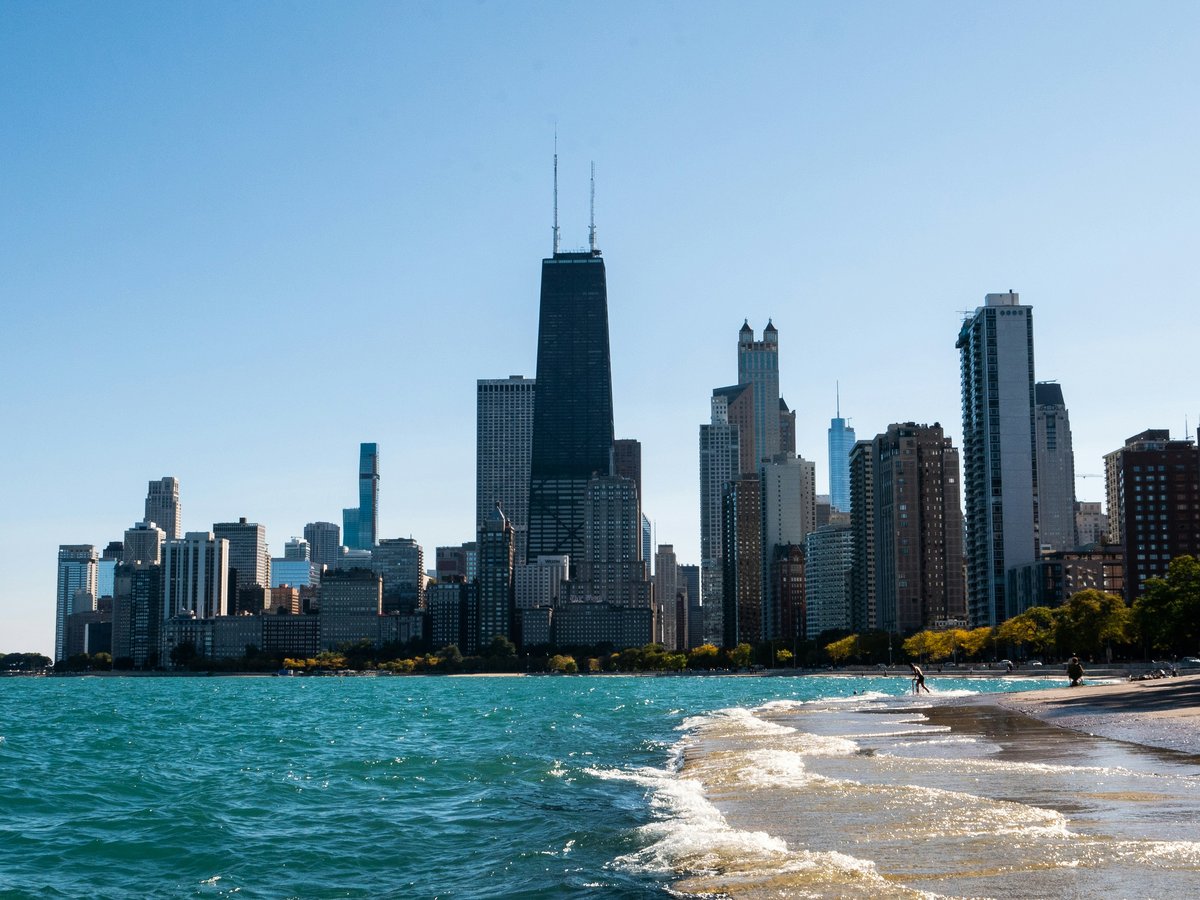
Stay in Chicago in March
94 hotels in the Trip.com pool for Chicago, from US$33 a night.
Opens Trip.com on Fri 5 Mar to Sun 7 Mar 2027; change the dates there.
March in Chicago is defined by one thing above all else. St. Patrick's Day. The city dyes the Chicago River a startling shade of green, typically on the Saturday before March 17, and the celebrations ripple through the Loop, River North, and the South Side for days. Outside of that week, though, March is a coin flip. Temperatures average around 9°C (48°F) during the day and drop to 0.4°C (33°F) at night, but those averages hide wild swings. You might get a 18°C (65°F) afternoon that pulls half the city onto the Lakefront Trail, followed by a snowstorm two days later. Chicagoans call it "fool's spring" for a reason.
To be fair, March has its quiet appeal if you can handle the cold. The Art Institute of Chicago and the Field Museum are easier to enjoy without summer crowds. Hotel rates sit well below peak. Lincoln Park Conservatory and Garfield Park Conservatory offer warm, green escapes when the wind off Lake Michigan feels like it's cutting through your coat. But you should know what you're signing up for. The lake effect keeps the eastern neighborhoods noticeably colder than the western ones, and 97mm of precipitation across about 12 days means rain, sleet, or wet snow is likely to interrupt at least a few of your plans. If you're coming specifically for St. Patrick's Day weekend, March is worth the trip. If you're looking for comfortable weather to walk the city, April or May will treat you better.
Why visit in March
- St. Patrick's Day celebrations are among the largest in the United States, with the river dyeing, the downtown parade, and the separate South Side Irish Parade drawing hundreds of thousands over two weekends
- Museum and gallery crowds are thin compared to June through August, so you'll be able to stand in front of Seurat's 'A Sunday on La Grande Jatte' at the Art Institute without being shoulder-to-shoulder
- Hotel rates tend to run 20-30% below summer peak, and midweek availability in the Loop and River North is generally strong
- The Chicago Flower & Garden Show at Navy Pier signals the end of winter with indoor garden displays, a welcome sight after months of grey
- Late March occasionally delivers those first genuinely warm afternoons, 15-18°C (60-65°F), when the whole city seems to exhale and every patio in Wicker Park opens at once
Worth knowing
- The cold is real. Wind chill along the lakefront can push perceived temperatures well below freezing, especially in the first two weeks of March
- 97mm of precipitation across roughly 12 days arrives as rain, sleet, or snow depending on the day, and forecasts more than 3 days out are unreliable
- Lake Michigan's grey, flat expanse under overcast skies lacks the sparkle of summer. The skyline views from the Lakefront Trail still work, but the light is often flat and cold
- Outdoor dining, rooftop bars, and boat tours are mostly still closed for the season. The Chicago Architecture Center boat tours on the river typically don't resume until April
Best for
Think twice if
March in Chicago is late winter pretending to be early spring. The month typically starts with temperatures close to freezing and ends somewhere in the low teens Celsius, but the progression is not linear. A 16°C afternoon can give way to a 0°C morning with sleet 48 hours later. Lake Michigan keeps the neighborhoods east of the Kennedy Expressway a few degrees colder than inland areas like Logan Square or Pilsen. Wind is the constant. The city earned its reputation honestly, and March gusts off the lake regularly hit 40-50 km/h (25-30 mph). You'll feel the 72% humidity most on damp, grey days when the cold seems to settle into your bones. Precipitation falls about 12 days out of the month, totaling around 97mm, and it arrives as rain, freezing rain, or heavy wet snow depending on the week.
Seasonal caution
- Temperatures regularly drop below 0°C (32°F) during the first half of March, and wind chill along the lakefront can push the felt temperature to -10°C (14°F) or lower on gusty days
- Lake-effect snow squalls can develop with little warning, dropping 5-10cm (2-4 inches) in a few hours, particularly on the South Side and near the lakeshore
- Freezing rain in early March creates hazardous sidewalk conditions. The city salts major walkways, but side streets and residential sidewalks in neighborhoods like Hyde Park and Bridgeport can stay icy for days
Year-round climate
Averages from the last 5 years.
| Month | Avg high (°C) | Avg low (°C) | Rainfall (mm) |
|---|---|---|---|
| Jan | 0 | -7 | 68 |
| Feb | 2 | -6 | 52 |
| Mar | 9 | 0 | 97 |
| Apr | 14 | 5 | 83 |
| May | 19 | 11 | 91 |
| Jun | 27 | 17 | 102 |
| Jul | 27 | 19 | 164 |
| Aug | 27 | 19 | 102 |
| Sep | 24 | 16 | 83 |
| Oct | 18 | 10 | 111 |
| Nov | 10 | 2 | 55 |
| Dec | 4 | -3 | 67 |
Holidays and festivals in March
Public holidays
- Good Friday(Good Friday)26 March 2027
Headline events
Chicago St. Patrick's Day Parade and River Dyeing
Saturday before March 17 (river dyeing and downtown parade); Sunday of the same weekend or the following Sunday (South Side Irish Parade in Beverly)
The city dyes the Chicago River a luminous green using a vegetable-based dye near the Michigan Avenue bridge, typically the Saturday before March 17. The downtown parade follows on Columbus Drive, and the separate South Side Irish Parade in Beverly draws tens of thousands. The green river is genuinely surreal to see in person.
Best things to do in March
Watch the Chicago River dyeing
eventsThe Plumbers' Union Local 130 has been dyeing the Chicago River green since 1962. They pour the vegetable-based dye from boats near the Michigan Avenue bridge, and the color spreads downstream over about 45 minutes. The riverwalks on both sides of the main branch fill up early, so arriving by 9am is typical for a good vantage point.
The river dyeing happens once a year, the Saturday before March 17, and nowhere else in the world does this at this scale.Booking tipNo tickets needed. The Riverwalk and surrounding bridges are free and open to the public.
Explore the Art Institute of Chicago without summer crowds
cultureThe Art Institute holds over 300,000 works across 11 curatorial departments. March means you can linger in the Impressionist galleries, stand alone with Edward Hopper's 'Nighthawks,' and read the placards in the Thorne Miniature Rooms without someone bumping your elbow.
Attendance in March runs well below the June-August peak, making the experience noticeably more comfortable.Booking tipWeekday mornings, especially Tuesday through Thursday, tend to be the quietest.
Visit the Field Museum
cultureSue the T. rex, the largest and most complete Tyrannosaurus rex skeleton ever found, lives on the second floor. March crowds are thin enough that you can photograph the skull without 15 strangers in frame. The Evolving Planet exhibit traces 4 billion years and takes a solid 90 minutes if you read everything.
Low-season crowds make the museum far more enjoyable than summer, when school groups dominate the halls.Walk the Lakefront Trail on a mild day
outdoorsThe 30km paved trail runs from Ardmore Avenue on the North Side to 71st Street on the South Side, hugging Lake Michigan the entire way. On one of March's surprise warm afternoons, the stretch between North Avenue Beach and the Museum Campus fills with runners, cyclists, and people who seem to be celebrating the sun's return. The skyline view from the path near Shedd Aquarium is one of the finest urban panoramas in the country.
Those intermittent warm spells in late March, when temperatures reach 15-18°C, make this trail feel revelatory after months of winter.Garfield Park Conservatory
natureOne of the largest conservatory complexes in the United States, spread across roughly 8,000 square metres of indoor gardens. The Palm House is warm and humid, thick with the smell of wet soil and tropical green. The Fern Room's misting system creates a fog that makes the whole space feel like a different climate entirely.
March is still grey and cold outside, so the conservatories serve as a genuine escape. The contrast between the 2°C wind outside and the 25°C humidity inside is visceral.Catch a Bulls or Blackhawks game at United Center
sportsThe NBA and NHL regular seasons are winding down in March, which tends to mean meaningful games with playoff implications. United Center holds 20,917 for basketball and 19,717 for hockey. The energy in the building during a close March game has a different edge than the early-season atmosphere.
March games often carry playoff-race intensity, and tickets tend to be more available than the holiday-season home stands.Browse the Chicago Architecture Center
cultureThe center on Michigan Avenue covers 130 years of Chicago's architectural evolution, from the 1871 fire rebuild through the current skyline. The scale model of the city on the main floor takes a good 30 minutes on its own. March is too early for the outdoor walking tours, but the indoor exhibits are the real substance.
The outdoor architecture boat tours don't start until April, but the indoor center is open year-round and easier to enjoy when tourist volume is low.Explore Pilsen's murals and galleries
cultureThe 18th Street corridor in Pilsen is lined with large-scale murals, many dating back decades and some refreshed regularly by local artists. The National Museum of Mexican Art on 19th Street holds a permanent collection of over 10,000 works and charges no admission. On a cold March day, the museum is warm and the galleries are quiet.
Low tourist traffic means you'll likely have the National Museum of Mexican Art's galleries largely to yourself, and the neighborhood's taquerias are perfect cold-weather fuel.What to eat in March
On menus now
Corned beef and cabbage
Every Irish pub and half the delis in Chicago serve corned beef plates through March. The concentration along the stretch of Western Avenue in Beverly and around the South Side is particularly dense during parade weekends. Worth noting that Chicago's version tends to lean heavily on mustard and rye bread rather than the boiled-dinner style.
Italian beef sandwich
Not seasonal in the strict sense, but March weather is the kind of cold, damp grey that makes a hot, dripping Italian beef from a spot in Little Italy or on Taylor Street feel like medicine. The giardiniera adds the heat your body is asking for when the wind cuts through you on Michigan Avenue.
Deep dish pizza
Again, not seasonal, but the long, dark March evenings lend themselves to the kind of heavy, cheesy warmth that Lou Malnati's on State Street or Pequod's in Lincoln Park deliver. The wait times are noticeably shorter than summer, when tour groups fill every table by 6pm.
What to drink
Irish coffee and hot toddies
Bars across River North and the Loop lean into the St. Patrick's Day spirit with Irish coffee variations through the month. The warmth of whiskey and coffee on a 2°C evening after walking the Magnificent Mile is hard to argue with.
Regular events in March
Chicago Flower & Garden Show
Held at Navy Pier, typically in mid-to-late March. Indoor garden displays, landscaping exhibits, and flower competitions fill the venue. After months of grey lakefront, the color and the smell of soil and blooms feel almost disorienting.
Mid-to-late MarchSouth Side Irish ParadeFree
Beverly's Western Avenue hosts one of the largest neighborhood St. Patrick's Day parades in the country. The crowd skews local, the atmosphere is noticeably less commercial than the downtown parade, and the pubs along Western Avenue are packed from noon onward.
Sunday before or after March 17Chicago Wolves hockey
The AHL affiliate plays home games at Allstate Arena in Rosemont through March. The atmosphere is more relaxed and family-oriented than a Blackhawks game, and the arena is accessible via the Blue Line to Rosemont station.
Multiple dates throughout MarchBest places this March
Art Institute of Chicago
museumOver 300,000 works spanning 5,000 years. The Impressionist wing alone warrants 2 hours. March means room to breathe in the galleries.
LoopField Museum
museumNatural history museum on the Museum Campus. Home to Sue the T. rex and the Evolving Planet exhibit. Significantly quieter in March than summer months.
Museum CampusGarfield Park Conservatory
natureRoughly 8,000 square metres of tropical and desert plant houses. The Palm House humidity feels restorative after the March wind outside. Free admission.
East Garfield ParkLincoln Park Conservatory
natureSmaller than Garfield Park but closer to downtown. Three main display houses with rotating seasonal shows. Also free admission, and the surrounding Lincoln Park grounds show the first signs of green in late March.
Lincoln ParkNational Museum of Mexican Art
museumOver 10,000 works in the permanent collection. One of the few major museums in Chicago with free admission year-round. The 18th Street corridor outside is lined with murals worth an hour of walking.
PilsenChicago Riverwalk
outdoorsThe 2km pedestrian path along the main branch of the Chicago River is still quiet in March. Most of the restaurant patios are closed, but the walk itself, especially the section between State Street and Lake Shore Drive, frames the architecture from a perspective you can't get from street level.
LoopWillis Tower Skydeck
attractionThe 103rd-floor glass-bottom ledges sit 412 metres above street level. March visibility tends to be better on clear days than the hazy summer months, and the wait for the Ledge boxes is notably shorter.
LoopMillennium Park
outdoorsCloud Gate (the Bean) still draws crowds even in March, though the crowds are smaller. The park's Crown Fountain is typically off for the season, but the Pritzker Pavilion and the Lurie Garden show early signs of spring plantings in the final days of the month.
Loop
Your packing checklist
Tick items off as you pack. Your progress saves in this browser.
All packed — have a great trip.
Insider tips
The best view of the river dyeing on St. Patrick's Day isn't from Michigan Avenue. The less-crowded east side of the Columbus Drive bridge offers a cleaner sightline and more room to stand without being crushed against the railing.
If you're visiting the Art Institute, the Modern Wing entrance on Monroe Street tends to have shorter lines than the main Michigan Avenue entrance, and it puts you right next to the contemporary galleries.
The Metra Electric line from Millennium Station to the Museum Campus (one stop) saves you a 20-minute walk in the cold. Locals use it constantly, but most visitors don't know it exists.
Fulton Market restaurants that need 3-week reservations in July are often available with a day or two of notice in March. The neighborhood's restaurant density on Randolph Street between Halsted and Ogden makes it easy to pivot if your first choice is full.
The 606 elevated trail in Wicker Park and Bucktown is a good alternative to the Lakefront Trail when lake wind is too aggressive. It's sheltered by buildings on both sides and runs 4.3km east to west.
Avoid these mistakes
- Underestimating the wind chill. The forecast might say 7°C, but with 40 km/h gusts off the lake, the felt temperature along the Magnificent Mile can be closer to -2°C. Dress for the wind chill, not the thermometer.
- Booking a river architecture boat tour in March. The Chicago Architecture Center's boat tours on the Chicago River typically don't begin until April. Check the schedule before assuming they're running.
- Assuming the weather will stay stable. A sunny 16°C Tuesday can become a grey, sleeting Thursday. Packing only for one scenario leaves you stranded.
- Skipping the South Side entirely. The South Side Irish Parade in Beverly, the museums on the Museum Campus, and the murals in Pilsen are some of the best March experiences in the city, and most tourists never leave the Loop and River North.
- Trying to walk the full Lakefront Trail in March. The 30km path is rewarding in summer, but in March the wind exposure along the open stretches near Montrose Beach and 31st Street Beach can turn a pleasant walk into an endurance test. Pick a sheltered segment instead.
Practical tips for March
Pack for two seasons in one suitcase. March in Chicago genuinely requires layers for near-freezing mornings and the occasional mid-teens afternoon. The CTA 'L' trains and buses run frequently and cover most tourist areas. A Ventra card or contactless payment works on all CTA and Metra services. For St. Patrick's Day weekend, book your hotel well in advance, as downtown availability tightens and rates climb for that Saturday night. The Green and Pink lines connect the Loop to Pilsen and the West Side neighborhoods, while the Red Line runs north-south through Wrigleyville, Lincoln Park, and the Gold Coast. If the wind off the lake is too much, duck into the underground Pedway system that connects several Loop buildings and CTA stations. It's not well-signed, but entrances at Millennium Park and the Cultural Center are the easiest to find.
FAQ
Is March a good time to visit Chicago?
It depends on what you're after. St. Patrick's Day weekend is genuinely one of the city's most distinctive events, and the river dyeing is unlike anything else in the country. Outside of that, March is cold, grey, and unpredictable. Museums and indoor attractions are at their least crowded, and hotel rates sit below summer levels, so it works well for a culture-heavy trip. But if you want outdoor dining, boat tours, or beach weather, you should wait until May or June.
How cold does Chicago get in March?
Daily highs average around 9°C (48°F) and lows sit near 0°C (32°F), but those numbers don't tell the full story. Wind chill along the lakefront and Michigan Avenue can push the felt temperature well below freezing, especially during the first two weeks. Late March occasionally delivers afternoons in the 15-18°C (60-65°F) range, but a snowstorm two days later is entirely possible.
What should I wear in Chicago in March?
Layers are non-negotiable. Start with a warm base layer, add a fleece or wool mid-layer, and top it with a waterproof, windproof shell. Waterproof boots with traction handle the slush and puddles on sidewalks. A warm hat, lined gloves, and a scarf for the lakefront wind round out the essentials. You'll likely add and remove the mid-layer several times per day as temperatures swing.
When is the Chicago River dyed green for St. Patrick's Day?
The river dyeing typically happens on the Saturday before March 17. The Plumbers' Union Local 130 pours a vegetable-based dye into the river near the Michigan Avenue bridge, usually starting around 9am. The color spreads downstream over about 45 minutes and stays visible for several hours. The downtown parade on Columbus Drive follows later that morning.
Are the Chicago architecture boat tours running in March?
Typically not. The Chicago Architecture Center's boat tours on the Chicago River usually begin in April, weather permitting. The indoor exhibits at the Architecture Center on Michigan Avenue are open year-round, though, and the scale model of the city is worth visiting on its own.
Things to Do in Chicago in March
 Free cancellation
 Chicago River 90-Minute Architecture Tour
Cruise: 1.5 hours, free cancellation.
via Viator Free cancellation
 Chicago River 45-Minute Architecture Tour from Magnificent Mile
Cruise: 45 minutes, free cancellation.
via Viator Free cancellation
 Original Chicago Architecture Interiors Tour: Dazzling Interiors
City tour: 2 hours, free cancellation.
via Viator Free cancellation
 Chicago's Delicious Downtown Donut Tour with 8 Amazing Tastings
City tour: 2 hours, free cancellation.
via Viator Free cancellation
 Chicago Architectural River Cruise
Cruise: 1.5 hours, free cancellation.
via Viator Free cancellation
 Chicago's Chinatown Food and Walking Tour
City tour: 3 hours, free cancellation.
via ViatorFind a flight to Chicago
Live fares to Chicago appear here once cookies are accepted.
Last verified by automated review (v1.7.2) on . What is automated review?