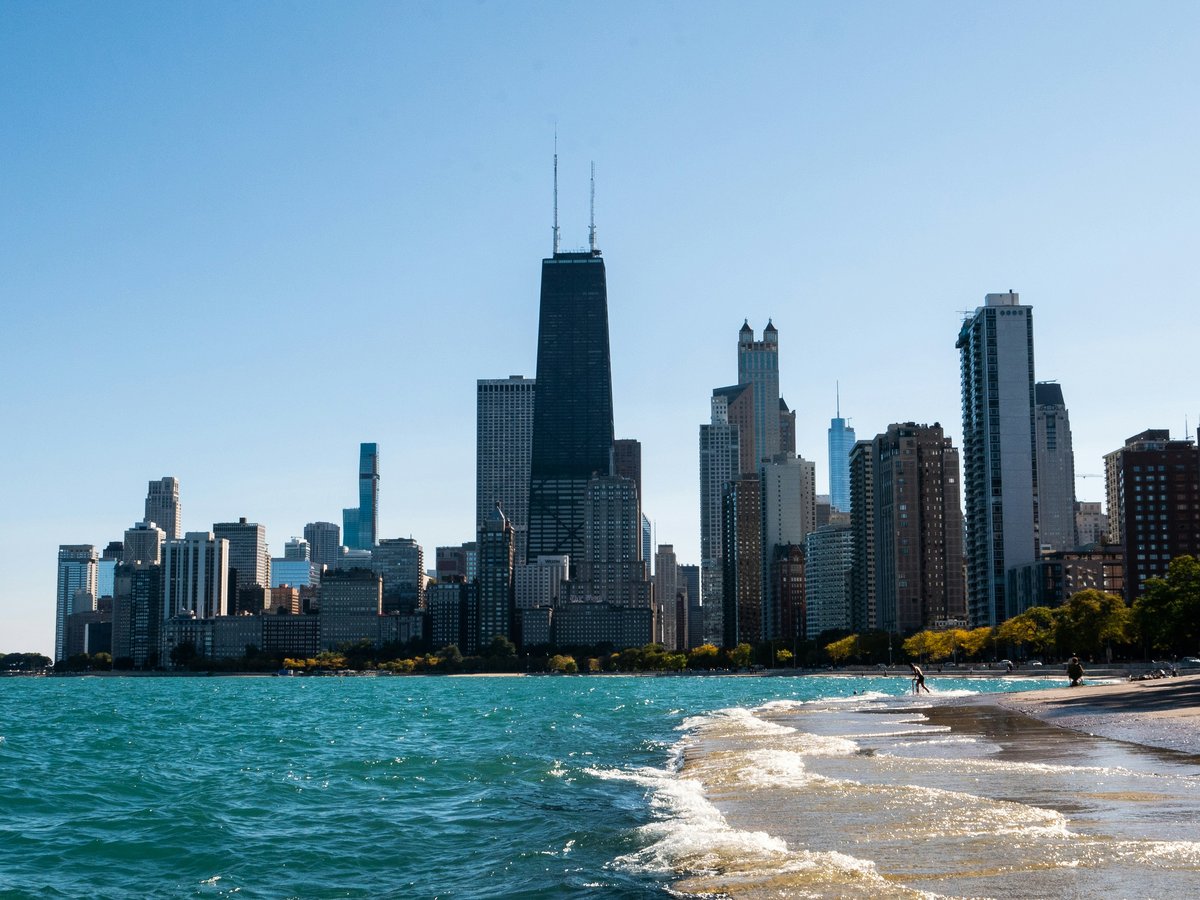
Chicago tends to run on a different clock than most American cities. Illinois law allows bars to serve until 2 AM on weeknights and 3 AM on Saturdays, but the city issues 4 AM and 5 AM late-night licenses too. That means a Thursday night in Wicker Park might still be going strong at 3:30 AM, something you won't find in most of the Midwest. The culture here leans democratic. You'll find finance workers from the Loop standing next to stagehands at the same dive bar in Logan Square, ordering Old Style tallboys and Malört shots. Malört, if you haven't encountered it, is a wormwood-based liqueur produced by CH Distillery on the Near West Side. It tastes like grapefruit peel soaked in gasoline. Locals will buy you one as a hazing ritual. The city's nightlife personality is shaped by weather, too. Summers push everything outdoors onto rooftops and patios along the Chicago River. Winter drives people into basement speakeasies and back-room jazz clubs where the warmth of a crowd becomes the whole point. Chicago doesn't try to compete with New York or Los Angeles for glamour. It drinks cheaper, stays out later, and tends to care more about whether you're having a good time than what you're wearing.
The Bar Scene, from Craft Cocktails to Corner Taverns
Chicago's cocktail bar scene has been seriously good since the early 2010s, when the West Loop and Logan Square started filling up with bartenders who'd trained under the Violet Hour's original crew in Wicker Park. The Violet Hour still operates on North Damen Avenue and still doesn't have a sign on the door. You'll know it by the line of people standing against a plain wall. Reservations help. Drinks there aren't cheap, but they're priced in line with other top-tier cocktail bars in the city. The West Loop has a dense concentration of upscale spots along Randolph Street, where cocktail menus lean toward mezcal and agave spirits and the food scene within walking distance is some of the best in North America. Dive bars are the backbone here. Chicago has more corner taverns per capita than most cities this size, holdovers from the days when every neighborhood had a Polish, Irish, or Italian local. In Bridgeport, the bars still open early for third-shift workers. In Pilsen, you'll find cantina-style spots where a beer and a shot together cost less than a single cocktail downtown. Old Town has bars that have been pouring since the 1960s. Rooftop bars come alive from May through September, roughly a 5-month window before the lake wind makes it unbearable. The bar at the top of the London House hotel on North Michigan Avenue offers a direct view of the river and the Wrigley Building lit up after dark. Hotel rooftops in River North tend to charge a premium for the views, so expect to pay noticeably more per drink than at street-level bars. Worth noting, the rooftop at Cindy's in the Chicago Athletic Association building on South Michigan Avenue looks directly over Millennium Park and the Bean. It fills up fast on summer Fridays by 6 PM. Wine bars are quieter but growing. The Fulton Market neighborhood has drawn a few natural wine spots in recent years. Pilsen and Logan Square also have small wine bars where a glass of something unusual from central Europe might show up on the list. The crowd tends to skew toward people in their late 20s to 40s who've moved past the shot-and-a-beer phase.
The Club Scene, Electronic Music, Hip-Hop, and Latin Nights
Chicago invented house music. That's not civic pride talking, it's historical record. Frankie Knuckles started spinning at the Warehouse on South Jefferson Street in 1977, and the genre that emerged from those nights spread to Detroit, London, and Berlin. The city still has a deep house and techno scene, though it's less centralized than it was in the 1990s. Venues in the West Loop and Near West Side host weekend-long electronic events, and underground parties in warehouse spaces pop up in Pilsen and Back of the Yards with some regularity. You'll find these through Instagram flyers and word of mouth more than through traditional listings. Mainstream clubs cluster in River North, roughly between Chicago Avenue and Grand Avenue along State Street and Clark Street. These tend toward hip-hop, Top 40, and bottle-service formats. Dress codes at River North clubs often require collared shirts for men and prohibit athletic shoes. Lines form by 11 PM on Fridays and Saturdays, and things peak between midnight and 2 AM. Cover charges at these spots vary, but expect to pay more on weekends and for special events. Mind you, a lot of locals skip River North entirely and head to Wicker Park or Logan Square instead. Latin dance nights are a big part of the scene in Pilsen, Little Village, and Humboldt Park. Salsa, bachata, cumbia, and reggaeton rotate through various venues on weekends. Some of the best nights happen at smaller halls where admission is affordable and the dancing goes past 3 AM. The crowd at these events tends to be warmer and more welcoming to newcomers than the velvet-rope spots downtown. Drag shows and LGBTQ+ nightlife center on Boystown along North Halsted Street in Lakeview, which has been the city's primary queer nightlife corridor since the 1970s. Andersonville, a few miles north, offers a slightly more relaxed alternative. Sunday brunch drag and weeknight cabaret draw steady crowds in both neighborhoods.
Live Music, Blues Roots and Beyond
Chicago's live music identity starts with the blues. The Great Migration brought Black musicians from Mississippi and the Delta to the South Side in the 1940s and 1950s, and the city became the birthplace of electric blues. Muddy Waters, Howlin' Wolf, and Buddy Guy all built their careers here. Buddy Guy's Legends operated on South Wabash Avenue for decades before closing in early 2025 after Guy's retirement announcement. The blues scene persists, though. South Side venues and North Side clubs still host working blues musicians 6 or 7 nights a week. Kingston Mines on North Halsted in Lincoln Park runs two stages simultaneously and stays open until 4 AM on Saturdays. Blues tends to draw a mixed crowd of tourists and regulars, and Monday or Tuesday nights are often less crowded with better sightlines. Jazz has deep roots here too. The Green Mill on North Broadway in Uptown has been open since 1907 and still hosts the Uptown Poetry Slam on Sunday nights, a tradition that's been running since the late 1980s. The room itself is a time capsule. Low ceilings, curved leather booths, and a sound that wraps around you in a space that seats maybe 130 people. Weeknight jazz sets at the Green Mill rarely have much of a cover, and the vibe stays intimate even when the room fills up. Indie rock and punk have a strong presence in neighborhoods like Logan Square, Pilsen, and Avondale. The Empty Bottle on North Western Avenue has been booking underground and experimental acts since 1993. Thalia Hall in Pilsen, a 19th-century Czech community building on South Allport Street, hosts everything from folk to electronic to hip-hop in a 900-capacity room with remarkable acoustics. For larger touring acts, the Chicago Theatre on North State Street (capacity around 3,600), the Riviera Theatre in Uptown (around 2,500), and the Salt Shed in the North Branch corridor (around 3,400) cover the mid-size range. Metro in Wrigleyville has been a proving ground for alternative bands since 1982.
Nightlife neighborhoods
-
Wicker Park and Bucktown
The post-gentrification version of what was once Chicago's scrappiest arts district. The bars along Milwaukee Avenue and Division Street still lean creative, but the crowd has shifted from broke painters to tech workers in vintage denim. Loud on weekends, good on Wednesdays.
- Best for
- People who want cocktail bars, late-night tacos from the taco trucks on Division, and a 2 AM walk past street art without feeling unsafe
- Standouts
- The Violet Hour for cocktails, the Flat Iron for a reliable corner-bar experience, and Subterranean for live music on 2 floors
-
Logan Square
Still feels like it belongs to musicians, bartenders, and the creative class, even as rents have climbed. The stretch of Milwaukee Avenue between Fullerton and Diversey has a density of small bars and restaurants that rewards wandering. The crowd skews late 20s to mid-30s, and the energy picks up after 10 PM most nights.
- Best for
- People who like craft cocktails in unfussy settings, mezcal bars, and live music without the tourist factor
- Standouts
- Lost Lake for tiki drinks, the Whistler for DJ nights and art shows, and Scofflaw for gin-focused cocktails
-
River North
Chicago's bottle-service and velvet-rope zone. Flashier, louder, and more dressed-up than anywhere else in the city. The crowd runs younger on weekends, heavy on bachelorette parties and suburban groups coming in for a big night. You'll hear more Top 40 than house music here.
- Best for
- Groups looking for a full-production club night with DJs, VIP sections, and late-night energy that peaks around 1 AM
- Standouts
- The Underground for electronic music in a basement space, and Boss Bar for a hip-hop-heavy weekend lineup
-
Pilsen
A historically Mexican-American neighborhood on the Lower West Side where cantinas sit alongside newer cocktail spots and art galleries. Murals cover entire building facades along 18th Street. The nightlife here tends to start later and run quieter than River North, but the Latin dance nights can get lively past midnight.
- Best for
- Anyone drawn to Latin music nights, affordable drinks, gallery openings that turn into after-parties, and live music at Thalia Hall
- Standouts
- Thalia Hall for concerts in a stunning 19th-century building, Punch House for a basement punch-bowl bar, and Skylark for a neighborhood standby
-
Boystown and Andersonville
North Halsted Street in Lakeview has been the center of LGBTQ+ nightlife since the 1970s. The block between Belmont and Addison is the densest stretch, with drag shows, dance floors, and karaoke bars within a short walk. Andersonville, about 3 miles north along Clark Street, draws a slightly older, more relaxed crowd.
- Best for
- LGBTQ+ nightlife, drag performances, dance clubs with good sound systems, and a neighborhood where the energy is welcoming to everyone
- Standouts
- Sidetrack for video bar nights, Berlin for late-night dancing, and Big Chicks in Andersonville for a neighborhood-bar feel
-
West Loop and Fulton Market
The restaurant-district-turned-nightlife-corridor along Randolph Street and Fulton Market. Converted meatpacking warehouses now hold high-end restaurants, cocktail bars, and a handful of clubs. The after-dinner crowd spills into bars around 10 PM. The streets smell like charred steak and cold concrete on winter nights.
- Best for
- People who want to combine a serious dinner with drinks afterward, or who prefer upscale cocktail bars over dive-bar culture
- Standouts
- Aviary for Grant Achatz's cocktail-lab concept, and Lone Wolf for a more grounded neighborhood option on the western end of the strip
Safety after dark
Chicago's nightlife neighborhoods are generally safe when you stick to main commercial corridors, but standard city awareness applies. Use rideshare apps or the CTA rather than walking long distances alone after 2 AM, especially in less-trafficked areas between neighborhoods. The Red and Blue CTA lines run 24 hours, though wait times stretch past 15 minutes late at night. Keep your phone in a front pocket on crowded dance floors. Drink spiking happens, same as any major city, so watch your glass and don't accept open drinks from strangers. If you're bar-hopping in River North on a weekend, be aware that the post-closing crowd between 2 AM and 3 AM can get rowdy near the intersection of Hubbard and State. Cabs are still common and can be hailed on the street in most nightlife districts. In winter, dress warmer than you think you need to, because waiting for a rideshare at 2 AM in a January wind chill of negative 10°F is genuinely miserable.
Practical tips
- Tipping
- Bartenders in Chicago expect a tip on every drink. A dollar per beer or simple pour and around 20% on cocktails is standard. Tipping below that will get you noticed, and not in a good way. Tabs left open on a card sometimes have gratuity added automatically for groups.
- Last Call Timing
- Most bars in Chicago call last call at 1:30 AM on weeknights and 2:30 AM on Saturdays. Bars with late-night licenses serve until 4 AM or 5 AM, and these are scattered across Wicker Park, Logan Square, River North, and a few other neighborhoods. Check ahead if staying out past 2 AM matters to your plans.
- Getting Around After Dark
- The CTA Blue Line and Red Line run all night, connecting O'Hare, the Loop, Wicker Park, Logan Square, and the North Side. Rideshare prices tend to spike between 1:30 AM and 2:30 AM when the standard-license bars close and everyone requests at once. If you can wait 20 minutes or grab the L, you'll likely save a good amount on the fare.
- Dress Codes
- Most Chicago bars have no dress code at all. River North clubs are the exception, where collared shirts, closed-toe shoes, and no athletic wear is standard for men. Wicker Park and Logan Square lean toward whatever you feel like wearing. In winter, most venues have a coat check, usually a few dollars, and you'll want it because hauling a parka around a packed bar is miserable.
- Reservations and Lines
- High-end cocktail bars like the Violet Hour and Aviary typically take reservations and you should use them, especially on Fridays and Saturdays. Most dive bars and mid-range spots are walk-in. Club lines in River North form by 11 PM, and guest-list spots through promoters can sometimes help, though the reliability of that varies.
FAQ
What time do bars close in Chicago?
Standard closing time is 2 AM Sunday through Friday and 3 AM on Saturday nights. However, Chicago issues late-night licenses that allow some bars to serve until 4 AM or 5 AM. These late-license spots are scattered across several neighborhoods, with a concentration in Wicker Park, Logan Square, and River North. The 5 AM bars tend to get a second wave of energy after the 2 AM crowd migrates over.
Is Chicago's nightlife safe for tourists?
The main nightlife corridors in Wicker Park, Logan Square, River North, the West Loop, Lakeview, and Lincoln Park are generally safe, especially on busy weekend nights when the streets are full of people. Standard precautions apply, the same ones you'd follow in New York or any other large city. Use rideshare or the CTA late at night, stay on well-lit commercial streets, and keep aware of your surroundings. The 24-hour Red and Blue CTA lines are reliable options for getting home.
What is Malört and do I have to drink it?
Malört is a wormwood-based liqueur with Scandinavian roots that became a Chicago institution. CH Distillery on the Near West Side produces it now. The flavor is intensely bitter, somewhere between grapefruit peel and something vaguely chemical. Locals will likely offer you a shot as a kind of initiation. You don't have to drink it, but refusing tends to generate more attention than grimacing through it.
Where should I go for a late night out past 2 AM?
Look for bars with 4 AM or 5 AM licenses. Wicker Park and Logan Square have several, and the crowd that shows up after 2 AM tends to be locals who know the scene well. Some River North clubs also hold late licenses. Kingston Mines in Lincoln Park stays open until 4 AM on Saturdays with live blues on two stages. The Green Mill in Uptown is another late-night option with jazz sets that run well past midnight.
What is the best neighborhood for a first-time visitor's night out?
Wicker Park is likely the easiest starting point. The stretch along Milwaukee Avenue and Division Street has cocktail bars, dive bars, live music, and late-night food within a few blocks of each other. It's well-served by the Blue Line, and the energy on a Friday or Saturday night is high without feeling overwhelming. Logan Square, one stop further on the Blue Line, offers a similar range with a slightly more local feel.
Last verified by automated review (v1.7.2) on . What is automated review?