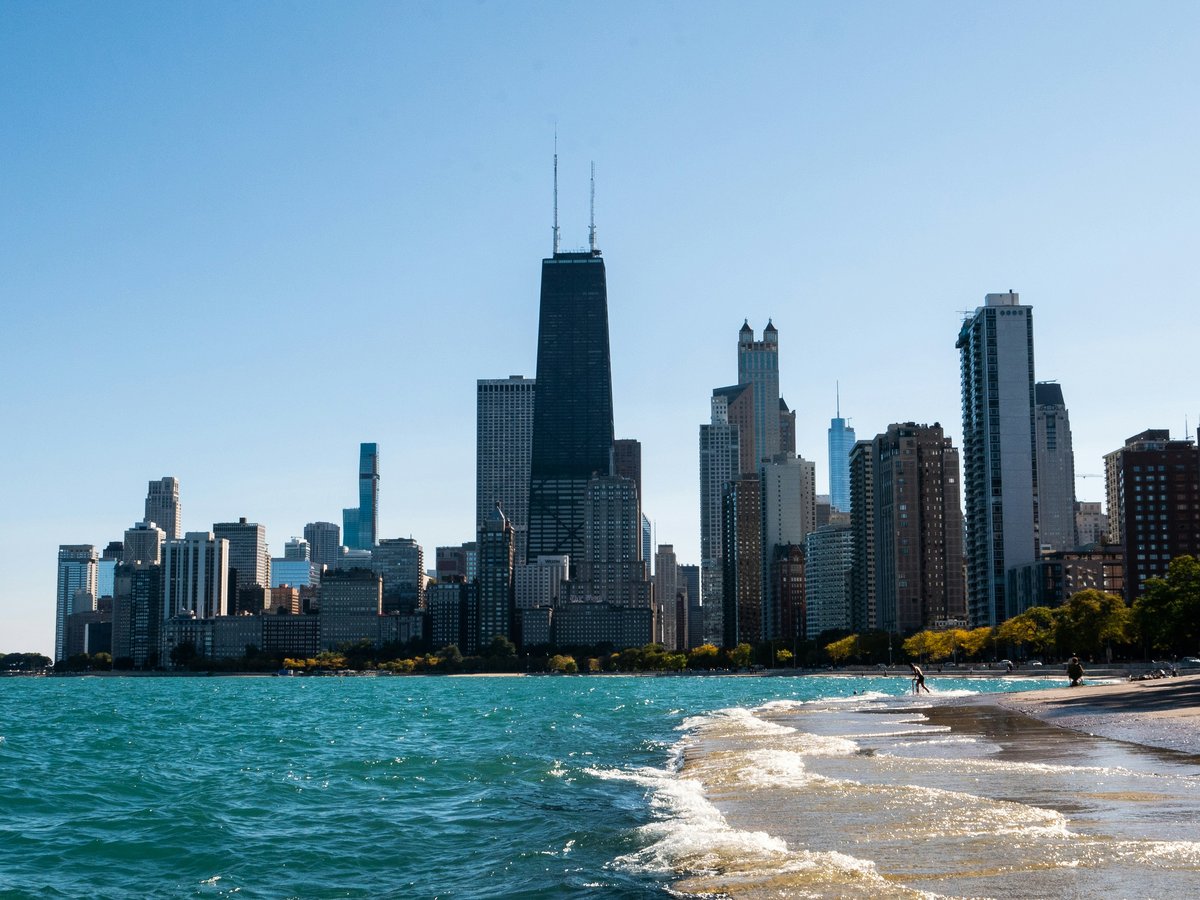
12 packing essentials every Chicago visitor brings in 2026
A windproof shell jacket tops this list because Chicago's Lake Michigan gusts cut through cotton and fleece even on 75°F summer days. The tie-breaker over a standard rain jacket is wind resistance. Chicago's CTA platforms and the Riverwalk funnel lake air at 20-30 mph, and a shell that blocks wind keeps you comfortable where layering alone fails.
Scoring weights destination-specific usefulness at 50%, quality per dollar at 30%, and frequency-of-regret-if-missing from traveller forums at 20%. Chicago's weather is the dominant variable here. The city sits at the southwestern tip of Lake Michigan, and the lake-effect creates temperature swings of 15-20°F within a single afternoon. A sunny morning in the Loop can shift to sideways rain by the time you reach Lincoln Park Zoo, about 4 miles north. Items that handle wind and layering score higher in Chicago than in most North American cities because the lakefront microclimate differs from what the forecast app shows. The Blue Line from O'Hare International Airport drops you at open-air CTA platforms where wind chill matters even in June. That open exposure at stations like Jackson or Washington hits your first packing decision before you even reach your hotel.
The most common packing mistake is treating Chicago like a standard Midwest summer city. Visitors from Dallas or Phoenix arrive in July with one pair of shorts and flip-flops, then spend $40 on an emergency sweatshirt at a tourist shop near Water Tower Place on the Magnificent Mile. The second mistake is overpacking heavy winter gear for shoulder-season trips in April or October. Chicago in mid-April might hit 65°F one day and 38°F the next, so rigid seasonal packing fails. A better approach is modular layers you can strip down on the Riverwalk or pile on for a night game at Wrigley Field. The Red Line from the Addison station to the Loop takes about 30 minutes, and the temperature can drop 8-10°F in that window as lake air funnels between the downtown towers. Mind you, even locals get caught by this.
The windproof shell is not the right top pick for visitors staying exclusively indoors. If your Chicago trip centers on the Art Institute on Michigan Avenue, the Field Museum at the Museum Campus, and restaurant reservations in Fulton Market, you'll spend most of your time in climate-controlled spaces where a light cardigan does the work. The shell also tends to run warm if you're visiting during a genuine July heat wave, when highs reach 95°F and humidity sits around 70%. In that narrow 2-3 week window, breathability matters more than wind protection. That said, even summer visitors who plan one evening walk along the lakefront path near North Avenue Beach will likely feel the wind shift and wish they had something with a sealed front zipper. Worth noting, you can pick up a decent shell at the REI on State Street if you arrive without one.
The full list
-
Windproof shell jacket
Lake Michigan pushes 20-30 mph gusts down the Magnificent Mile and across open CTA platforms like the Blue Line's O'Hare branch. A sealed-zip shell blocks that wind where a fleece or hoodie lets it cut straight through.
Shop Windproof shell jacket -
Broken-in walking shoes with ankle support
The Museum Campus loop from the Field Museum to the Shedd Aquarium alone covers 2+ miles on mixed pavement and gravel. New shoes on Chicago's uneven sidewalks in Wicker Park and Pilsen tend to produce blisters by day two.
Shop Broken-in walking shoes with ankle support -
Compact wind-resistant umbrella
Standard umbrellas invert within minutes on Michigan Avenue. Chicago averages 36 inches of rain annually, and the wind-tunnel effect between Loop skyscrapers will destroy anything rated below 55 mph wind resistance.
Shop Compact wind-resistant umbrella -
Merino wool mid-layer
Temperatures along the lakefront near Oak Street Beach tend to run 10-15°F cooler than a few blocks inland in the Gold Coast. Merino regulates across that range without the bulk of a fleece, and it handles the humidity in July better than synthetics.
Shop Merino wool mid-layer -
SPF 50 broad-spectrum sunscreen
The lakefront trail from Navy Pier to Montrose Harbor runs about 8 miles with almost no shade. Lake Michigan reflects UV at levels that catch visitors off guard, especially on overcast days when the clouds are thin enough to burn through.
Shop SPF 50 broad-spectrum sunscreen -
Insulated reusable water bottle
Chicago has 50+ public water fountains along the lakefront trail and in Millennium Park. Tap water from Lake Michigan is clean and cold. A 20 oz insulated bottle keeps your water from warming in the 90°F July humidity.
Shop Insulated reusable water bottle -
Portable battery pack (10,000 mAh minimum)
A full day from the Riverwalk through Chinatown to Hyde Park drains most phones by 3 PM, especially with GPS navigation on the CTA bus system. Cell signal drops in the Blue and Red Line subway tunnels downtown, which forces your phone to hunt for signal and burn battery faster.
Shop Portable battery pack (10,000 mAh minimum) -
Moisture-wicking socks (3+ pairs)
Chicago's summer humidity sits around 65-75% and your feet notice it first. Walking from the Loop through Grant Park and down to the Museum Campus in cotton socks leads to hot spots and blisters. Merino or synthetic blends dry roughly 3x faster.
Shop Moisture-wicking socks (3+ pairs) -
Crossbody bag with front zip closure
Crowded CTA trains during rush hour on the Red and Brown Lines, plus summer festival crowds at Grant Park and Millennium Park, make backpacks a liability. A crossbody sits in your line of sight and clears the narrow turnstiles at CTA stations faster.
Shop Crossbody bag with front zip closure -
Packable down vest
Evening temperatures at Wrigley Field in April and October regularly drop into the low 40s°F. A down vest packs to the size of a Nalgene bottle, layers under your shell, and handles the 20-degree swings between a sunny afternoon in Lincoln Park and a night game.
Shop Packable down vest -
Neck gaiter or buff
The wind off Lake Michigan hits your neck and ears first, especially on the open stretches between Navy Pier and the Adler Planetarium. A merino gaiter doubles as a light scarf, ear cover, or sweat wipe during summer sightseeing.
Shop Neck gaiter or buff -
Packable daypack (15-20L)
The Art Institute alone can occupy 4-5 hours, and you'll want water, a layer, and sunscreen before walking to Buckingham Fountain and the lakefront. A 15L pack compresses flat in your luggage and expands for full-day loops from the Loop through Pilsen or Chinatown.
Shop Packable daypack (15-20L)
Last verified by automated review (v1.7.2) on . What is automated review?