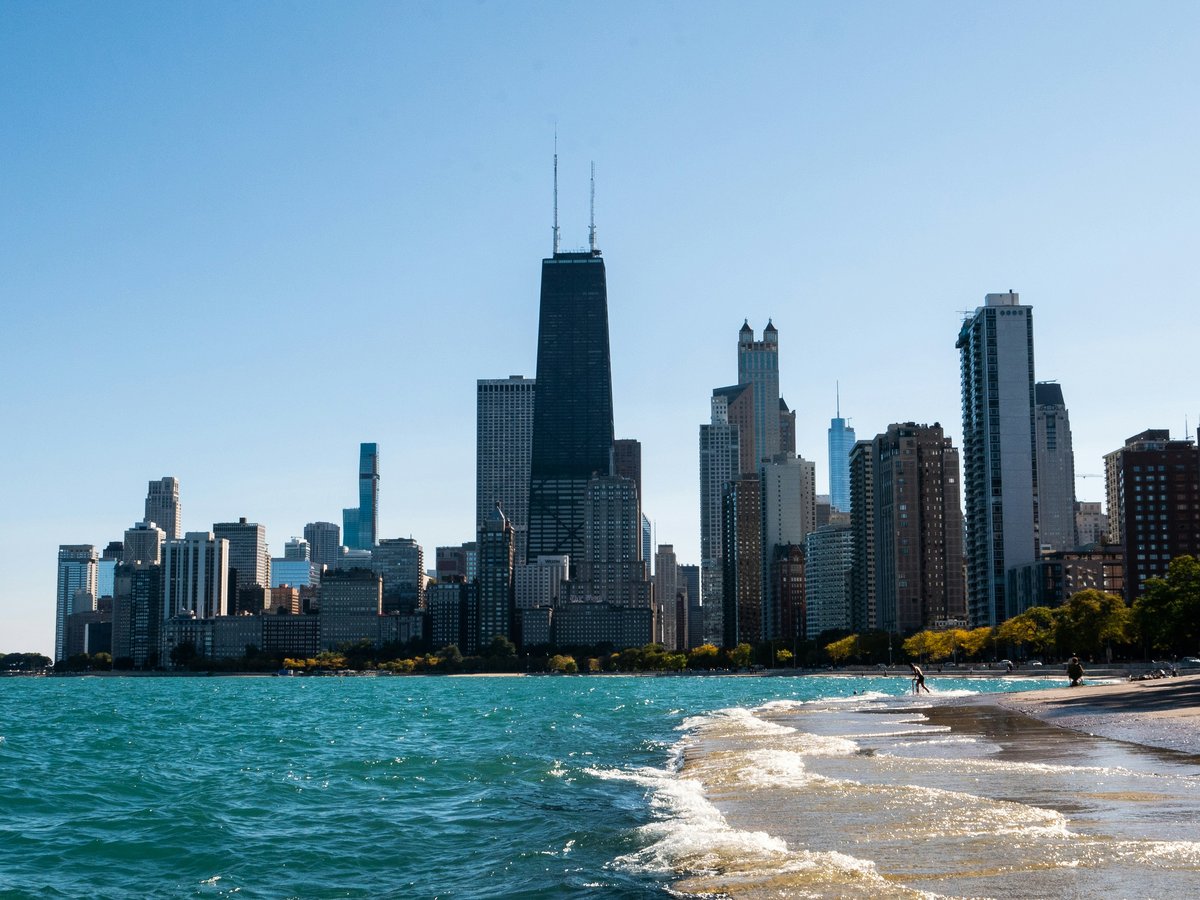
Chicago is a grid city. That matters more than anything else for getting around. State and Madison mark the 0/0 point downtown, and from there the numbered streets count upward as you head south or west. North Side, South Side, West Side. Those three words carry real weight here, and locals will orient everything around them. The Loop sits at the center, a rectangle of elevated train tracks that gave the downtown core its name. The CTA L lines fan out from there like spokes, and each line tends to define the neighborhoods it passes through. You can stay in a glossy River North hotel and walk to Millennium Park in 10 minutes, or you can post up in Logan Square and ride the Blue Line 20 minutes into the Loop. The lake is always east. If you can see the water, you know which way you're facing. Worth noting, the neighborhoods here aren't gentle gradients. You'll cross a street and the architecture, the language on the shop signs, the smell from the kitchens, all of it shifts. Chicago has roughly 77 official community areas, but about a dozen matter most for visitors deciding where to sleep and eat.
Neighborhoods
-
The Loop
The Loop is Chicago's downtown core, bounded by the rattling rectangle of elevated L tracks on Lake, Wabash, Wells, and Van Buren. During weekday lunch hours, the sidewalks on Dearborn and Clark move at a near-jog. By 7 PM on a Tuesday, whole blocks go quiet. The architecture is the draw here. The Rookery Building at 209 S LaSalle still has its Frank Lloyd Wright-redesigned lobby from 1905. The Marquette Building at 140 S Dearborn has Tiffany mosaics in the vestibule that most people walk past without looking up. The Art Institute sits at the south end on Michigan Avenue, and the Modern Wing's Nichols Bridgeway crosses over Monroe Street into Millennium Park. Street-level noise tends to be constant, a low hum of buses on State Street and the periodic screech of the L rounding the curve at Lake and Wabash.
- Best for
- Architecture fans, business travelers, first-time visitors who want a central base within walking distance of Millennium Park and the lakefront
- Key streets
- State Street for the old department store buildings and the Chicago Theatre marquee. Dearborn Street between Adams and Jackson for the Federal Center plaza designed by Mies van der Rohe. Michigan Avenue along the east edge for the cliff of buildings facing Grant Park.
-
River North
River North sits immediately above the Loop, north of the Chicago River between Michigan Avenue and the Kennedy Expressway. It was a warehouse district through the 1970s and the old brick industrial buildings still line streets like Hubbard and Kinzie, though most now hold restaurants with $22 cocktails. The gallery scene that defined the area in the 1980s has mostly migrated to the West Loop, but a few holdouts remain on Superior and Franklin. The restaurants here skew toward steakhouses and high-volume spots. RPM Italian on the corner of Kinzie and Clark typically has a 90-minute wait on Saturday nights. The Merchandise Mart, a full city block of building on the river's north bank, anchors the western edge. The smell of grilled meat from the cluster of steakhouses around Ontario and Dearborn is genuinely constant after 5 PM.
- Best for
- Couples or groups looking for a dense restaurant and bar scene within walking distance of downtown, visitors who want to be close to the Mag Mile shopping on North Michigan Avenue
- Key streets
- Hubbard Street between LaSalle and Wells for the densest bar strip. Clark Street heading north toward the river for steakhouses. Wells Street for smaller, slightly less corporate restaurants.
-
Lincoln Park
Lincoln Park stretches along the lakefront from North Avenue up to Diversey, and inland to the Kennedy. The housing stock is mostly brick three-flats and greystones from the 1890s-1920s, with some blocks near Armitage and Halsted now fully renovated into single-family homes that sell north of $2 million. It feels residential in a way that River North does not. The park itself runs along the lake for over 1,200 acres, and the Lincoln Park Zoo, free since 1868, sits in the middle of it. Mornings here smell like lake water and cut grass. DePaul University's campus along Fullerton brings a college-town feel to the blocks around Sheffield and Belden. The noise level drops noticeably west of Halsted, where the side streets are lined with old trees and parked Subarus.
- Best for
- Families with kids who want the free zoo and beach access, couples who prefer a quieter residential feel over a bar-heavy district, visitors staying more than 3 nights who want a neighborhood routine
- Key streets
- Armitage Avenue between Halsted and Racine for independent boutiques and coffee shops. Clark Street between Diversey and Fullerton for restaurants and bars. Fullerton Parkway heading east into the park toward the Nature Boardwalk.
-
Wicker Park and Bucktown
These two neighborhoods blur together around the six-cornered intersection of Milwaukee, North, and Damen. This intersection is still the center of gravity. Wicker Park sits south and west of it, Bucktown north and west. In the 1990s this area was the center of Chicago's indie rock and art scene. Rents have risen sharply since then, and the flat-front workers' cottages and brick two-flats now sit next to $800,000 new-construction condos. The feeling is dense and walkable. Milwaukee Avenue runs diagonally through both neighborhoods and is the main commercial spine, lined with restaurants, bars, and shops. The 1-acre triangular park at Wicker Park itself, bounded by Schiller, Wicker Park Avenue, and Damen, fills up on summer weekends with dogs and picnics. Noise on Division Street between Damen and Western picks up significantly after 10 PM on Fridays.
- Best for
- Visitors in their 20s and 30s who want walkable restaurants and nightlife without the corporate sheen of River North, anyone who wants to browse independent shops and record stores
- Key streets
- Milwaukee Avenue from the six-corners intersection northwest toward California for the longest stretch of shops and restaurants. Division Street between Damen and Western for bars. Damen Avenue heading north into Bucktown for brunch spots and coffee.
-
Logan Square
Logan Square sits northwest of Wicker Park along the Blue Line, centered on the wide formal boulevard that circles the Illinois Centennial Monument, a tall marble column erected in 1918. The boulevards here, Palmer and Kedzie in particular, are lined with large greystones from the early 1900s, many with intact leaded glass and carved limestone facades. The neighborhood has changed significantly since 2010, with the Milwaukee Avenue corridor between California and Kedzie filling in with restaurants and cocktail bars. Longman and Eagle at 2657 N Kedzie won a James Beard Award in 2012 and still does a whiskey-heavy brunch on weekends. The residential streets west of Kedzie Boulevard remain quieter, with a mix of Polish, Mexican, and Puerto Rican families who have been here for decades. The smell of fresh tortillas from the small mills along Fullerton is still a morning constant.
- Best for
- Food-focused travelers willing to stay 15 minutes from downtown by L train, visitors who prefer a residential neighborhood with a strong restaurant scene over a tourist district
- Key streets
- Milwaukee Avenue between California and Kedzie for the densest concentration of restaurants and bars. Kedzie Boulevard from the monument north for the best greystone architecture. Fullerton Avenue heading west for taquerias and panaderias.
-
West Loop and Fulton Market
The West Loop runs along the western edge of the Loop, centered on Randolph Street and the old Fulton Market meatpacking district. This area changed faster than any other part of Chicago between 2010 and 2020. The meatpacking warehouses along Fulton and Lake streets are now restaurants, tech offices, and boutique hotels. Randolph Street between Halsted and Racine is sometimes called Restaurant Row. Girl and the Goat at 809 W Randolph, Stephanie Izard's spot, still draws 2-hour waits without a reservation. The neighborhood smells like a dozen different kitchens at once in the evenings. Google's Midwest headquarters occupies the old Fulton Market Cold Storage building at 1000 W Fulton. The Nobu and Soho House hotels opened here within a few blocks of each other. During the day, the streets feel more like a construction zone than a neighborhood. The residential population is still growing into the new high-rises along Halsted.
- Best for
- Serious restaurant-goers who want to eat at top-tier places nightly without cabbing across town, business travelers with meetings in the West Loop tech corridor
- Key streets
- Randolph Street between Halsted and Racine for the flagship restaurant strip. Fulton Market Street for newer openings and rooftop bars. Green Street between Randolph and Lake for smaller spots.
-
Old Town
Old Town is a compact neighborhood wedged between Lincoln Park to the north and the Gold Coast to the south, running roughly from Division up to Armitage between Clark and the lake. It is quieter than its neighbors and has a slightly older, more settled feeling. The Second City comedy theater at 1616 N Wells has been here since 1959, and the surrounding blocks on Wells Street have a low-key bar and restaurant scene that hasn't been completely turned over by new development. The residential streets between Sedgwick and LaSalle have some of the oldest surviving houses in Chicago, Victorian cottages and workers' homes that predate the 1871 fire because this area was on the edge of the burn zone. The Twin Anchors at 1655 N Sedgwick has been serving baby back ribs since 1932. Saturday afternoons in the Old Town Art Fair, held each June, still draw crowds of several thousand to the triangle park on Lincoln and Wisconsin.
- Best for
- Comedy fans planning a Second City evening, visitors who want a walkable residential neighborhood close to both the lake and downtown without the noise of River North
- Key streets
- Wells Street between Division and North Avenue for restaurants, bars, and Second City. Sedgwick Street for quiet residential blocks with pre-fire architecture. North Avenue heading east toward the lakefront and North Avenue Beach.
-
Hyde Park
Hyde Park sits on the South Side, about 7 miles south of the Loop along the lakefront, anchored by the University of Chicago campus. The architecture is genuinely different from the North Side. The campus has Gothic revival limestone buildings that look transplanted from Oxford, and the surrounding blocks have large brick apartment buildings and single-family homes from the 1920s. The Museum of Science and Industry, housed in the old 1893 World's Fair Palace of Fine Arts, sits in Jackson Park at the neighborhood's eastern edge. Barack Obama's house is on Greenwood Avenue, still guarded by the Secret Service. The neighborhood feels quieter and more cerebral than most of Chicago. The bookstores are dense. Seminary Co-op at 5751 S Woodlawn has been underground in a basement for decades, with narrow aisles of academic titles stacked to the ceiling. You'll hear more languages spoken on 53rd Street than on Michigan Avenue.
- Best for
- Museum visitors making a day trip to the Museum of Science and Industry, University of Chicago visitors, travelers interested in South Side history and architecture who don't mind being a 25-minute Metra ride from downtown
- Key streets
- 53rd Street between Woodlawn and Lake Park for restaurants and bookstores. 57th Street between Kimbark and Dorchester for the campus-adjacent commercial strip. The Midway Plaisance, the wide grassy boulevard connecting Washington and Jackson Parks, for a walk.
-
Pilsen
Pilsen sits on the Lower West Side, roughly bounded by 16th Street to the north, the Chicago River's south branch to the east, and Western Avenue to the west. It was a Czech neighborhood in the late 1800s, then predominantly Mexican-American from the 1960s onward. The murals are the first thing you'll notice. Entire building facades along 18th Street and on side streets like Ashland and Halsted are covered in large-scale painted murals, some dating to the 1970s Chicano art movement. The National Museum of Mexican Art at 1852 W 19th Street is free and holds over 10,000 works. The food scene on 18th Street still leans heavily Mexican, with panaderias, taquerias, and sit-down spots. Don Pedro Carnitas at 1113 W 18th has been slow-cooking whole pigs in copper pots since the early 1970s. The neighborhood has seen significant gentrification pressure since the Pink Line made it a quick commute to the Loop, and rents have risen about 40% since 2015 by some estimates.
- Best for
- Art and food travelers who want a neighborhood with real street-level visual culture, visitors interested in Mexican-American Chicago, budget-conscious travelers who want to eat extremely well for $10-15 a meal
- Key streets
- 18th Street between Halsted and Western for the main commercial corridor, murals, restaurants, and bakeries. Halsted Street heading north toward the UIC area. The alleyways between 18th and 19th for hidden murals that aren't on any walking tour.
-
Andersonville
Andersonville is a North Side neighborhood centered on Clark Street between Foster and Bryn Mawr, about 5 miles north of the Loop. It was historically Swedish, and the Swedish American Museum at 5211 N Clark and a few Scandinavian shops remain, though the neighborhood is now more broadly known as a center of Chicago's LGBTQ+ community. The commercial strip on Clark Street has an independent, small-business feel that has held on stubbornly. The Hopleaf at 5148 N Clark has been pouring Belgian ales and serving steamed mussels since 1992. Women and Children First bookstore at 5233 N Clark is one of the last feminist bookstores in the country. The side streets are lined with brick three-flats and the occasional single-family bungalow. Summer evenings here tend to be quiet enough to hear the conversations from restaurant patios a block away. The Swedish bakery at 5348 N Clark closed in 2018 after 88 years, and the locals still bring it up.
- Best for
- LGBTQ+ travelers looking for a welcoming neighborhood base, visitors who prefer independent shops and restaurants over chains, anyone who wants a quieter North Side alternative to Lakeview or Wicker Park
- Key streets
- Clark Street between Foster and Bryn Mawr for the full commercial strip. Catalpa Avenue heading east toward the lake for residential architecture. Argyle Street, technically in the neighboring Uptown area about 8 blocks south, for a dense Vietnamese and Thai restaurant cluster.
FAQ
What neighborhood should I stay in if I'm visiting Chicago for the first time?
The Loop or River North will keep you within walking distance of Millennium Park, the Art Institute, and the lakefront. The Loop tends to be quieter at night. River North has more restaurants and bars open late. Both are on multiple L lines, so getting to other neighborhoods takes 15-25 minutes. Hotel rates in both areas typically run $180-350 per night depending on season, with July and August at the high end.
Is Chicago's public transit good enough to skip renting a car?
For the North Side and downtown, yes. The Blue Line runs 24 hours and connects O'Hare to the Loop, Wicker Park, and Logan Square. The Red Line runs 24 hours and connects the Loop to Lincoln Park, Lakeview, Andersonville, and the South Side. A single ride costs $2.50 with a Ventra card. For Hyde Park, the Metra Electric line from Millennium Station is faster and more reliable than the bus. You'll want a rideshare for Pilsen unless you're on the Pink Line. Parking downtown runs $30-50 per day in a garage, so the math tends to favor transit.
Which Chicago neighborhoods have the best food scenes?
The West Loop and Fulton Market have the highest concentration of nationally recognized restaurants, with at least 8-10 spots that have received James Beard nominations or Michelin recognition. Pilsen is the strongest for Mexican food at accessible prices, with most meals running $8-15. Logan Square has the best mix of mid-range sit-down restaurants and casual spots. Andersonville and Lincoln Park are stronger for brunch and casual dining. Chinatown, south of the Loop along Wentworth Avenue, is worth the trip for dim sum at places like MingHin at 2168 S Archer Avenue.
Are there neighborhoods I should avoid as a tourist in Chicago?
The neighborhoods listed in this guide are all regularly visited by tourists and residents alike. Chicago's crime statistics vary significantly by neighborhood and even by block. The South and West Sides have areas with higher rates of violent crime, mostly concentrated in residential blocks far from typical tourist destinations. Standard city precautions apply everywhere. The Loop, River North, Lincoln Park, and the lakefront path are generally busy with foot traffic from early morning through late evening. Late-night CTA rides on less-trafficked lines warrant normal awareness.
When is the best time of year to visit Chicago?
Late May through early October gives you usable outdoor weather, with average highs reaching 84°F in July. Summer weekends bring street festivals to different neighborhoods nearly every week, with the Taste of Chicago in Grant Park typically held in July. September and early October tend to have milder temperatures around 65-75°F, thinner crowds, and lower hotel rates than peak summer. Winter is genuinely cold. January averages around 22°F, and the wind off Lake Michigan drops the wind chill further. That said, hotel rates in January and February can fall below $120 per night downtown, and the museums are nearly empty.
How far apart are Chicago's neighborhoods, and can I walk between them?
Many North Side neighborhoods connect on foot. You can walk from the Loop through River North to Old Town to Lincoln Park along Clark Street in about 75 minutes, roughly 3.5 miles. Wicker Park to Logan Square along Milwaukee Avenue is about 1.5 miles, a 30-minute walk. Hyde Park is isolated from the North Side by distance, about 7 miles south of the Loop, and Pilsen sits about 2 miles southwest. For those longer trips, the L train or a 15-minute rideshare is more practical. The lakefront trail runs 18 miles from Ardmore on the north to 71st Street on the south and connects several neighborhoods along the water.
Last verified by automated review (v1.7.2) on . What is automated review?