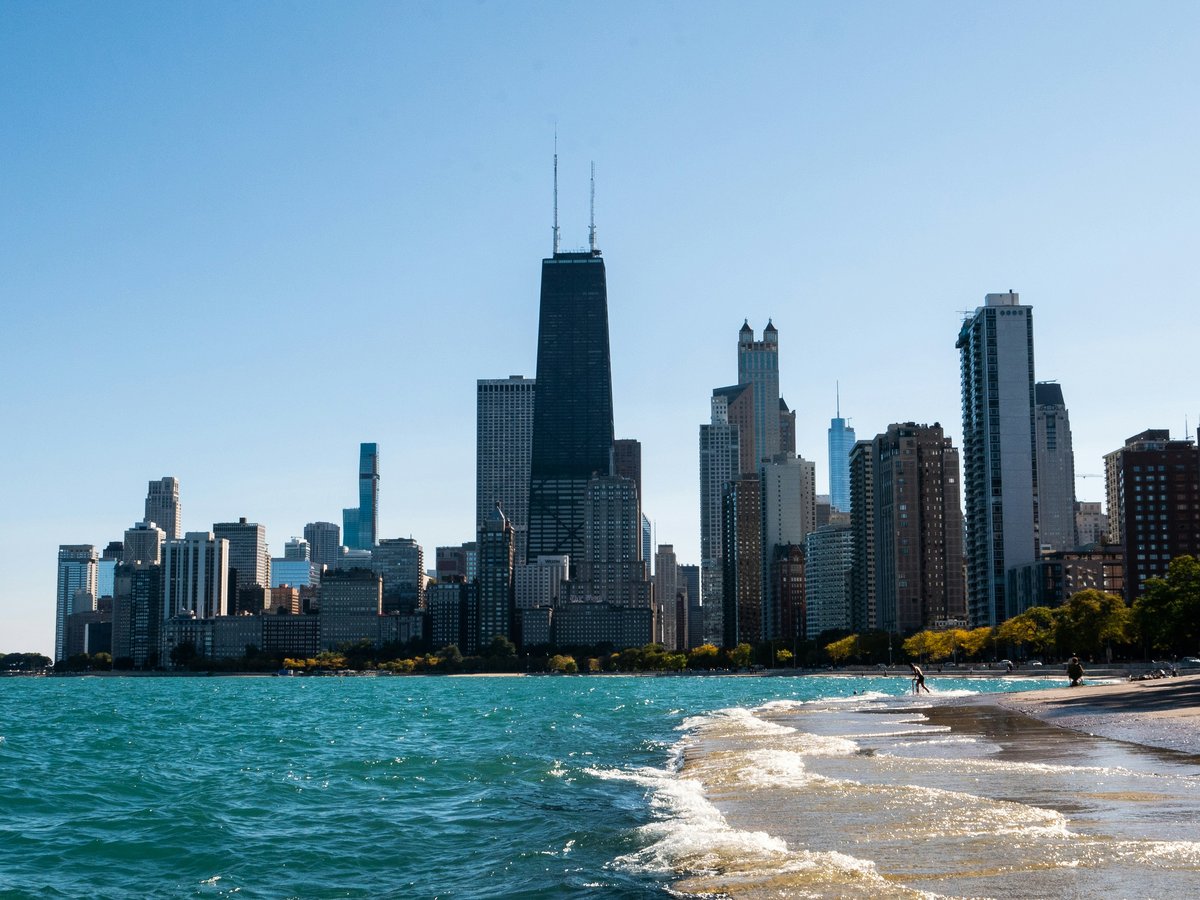
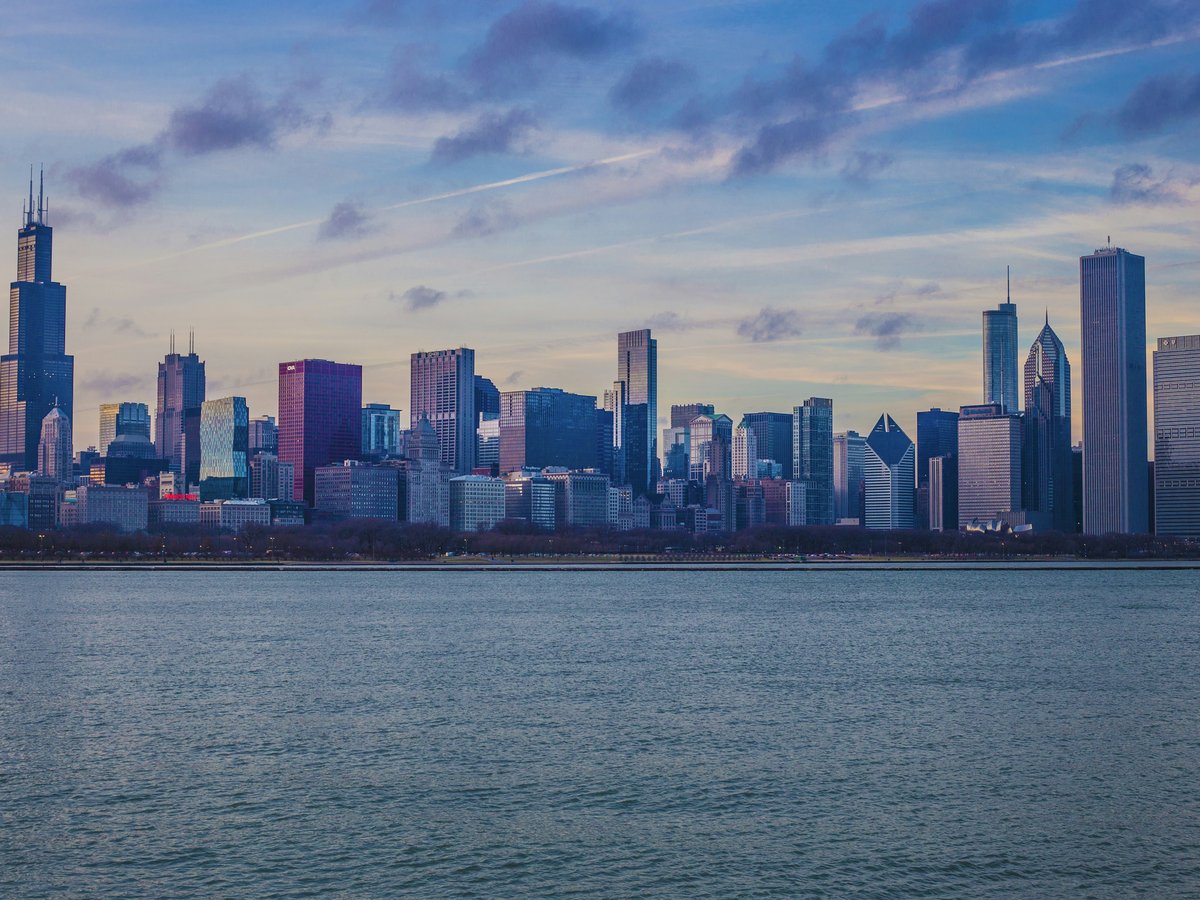
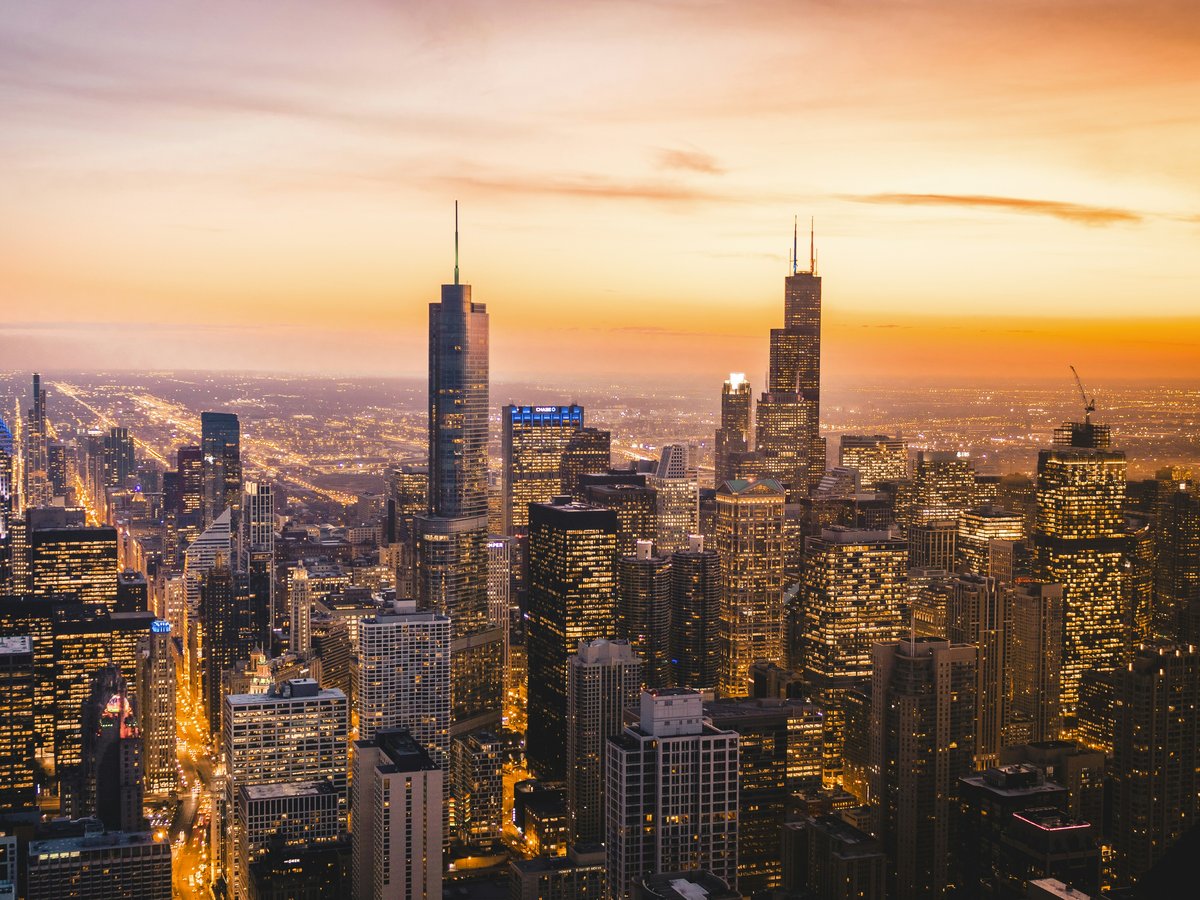
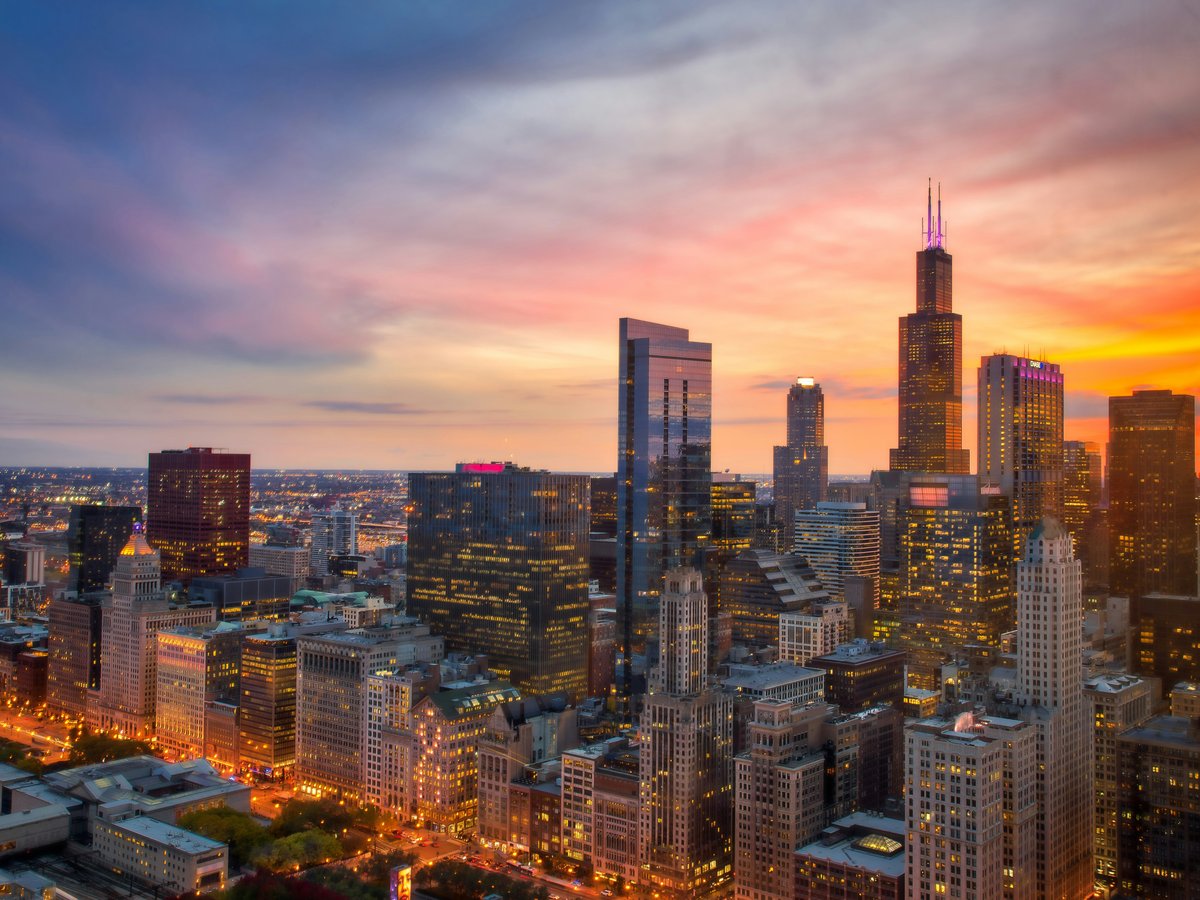
Chicago sits on the southwestern shore of Lake Michigan, a fact that sounds like geography-class filler until you stand at the edge of it: the lake stretches to the horizon like an inland sea, and the wind off that water is why locals own three weights of jacket for every season. The city grew from a marshy portage point between the Great Lakes and the Mississippi watershed into the rail hub that processed the country's grain and livestock, and that industrial confidence still shows in the architecture: the Loop's canyon of early skyscrapers, including the Rookery and the Monadnock, invented the modern office building after the 1871 fire leveled the old city and left architects with steel-frame engineering and a blank slate. A first visit starts along the Lakefront Trail, the eighteen-mile path that threads through Grant Park past the Field Museum, but the city reveals itself better in its neighborhoods. Pilsen's murals and panaderías sit twenty minutes south of the Loop by Pink Line. Logan Square's wide boulevard and ornate greystones feel nothing like the bungalow blocks of Beverly on the far South Side. Wicker Park, once a Polish enclave, now runs on coffee shops and vintage stores, while Hyde Park wraps around the University of Chicago campus and the Museum of Science and Industry in Jackson Park. The food answers to no single tradition: Italian beef at Al's on Taylor Street, jibarito sandwiches born in Humboldt Park, deep-dish at Lou Malnati's that locals will argue is superior to Giordano's with real heat. Winter is genuinely harsh, with lake-effect wind chills that earned the city its nickname, and summer is compensation: free concerts in Millennium Park, beaches that feel implausible for a Midwestern city, and rooftop bars where the skyline at dusk earns every postcard ever printed of it.
Chicago in photos
Chicago right now
Answers about Chicago
-
Airport to city
Take the CTA Blue Line from O'Hare (ORD) to downtown Chicago. It costs $5, runs 24 hours a day, and reaches the Loop in about 45 minutes. From Midway (MDW), the Orange Line costs $2.50 and takes 25 minutes to the Loop. Both trains beat taxis on price and, during rush hour, on speed.
Read the full answer → -
Best time to visit
Late May through mid-October is when Chicago works best for a first visit. September and early October bring the clearest skies, temperatures around 18-24°C (65-75°F), and lower hotel rates than summer. June is the backup pick if you want longer daylight and Lake Michigan warm enough to tolerate. Avoid January and February, when wind chill regularly drops to -20°C.
Read the full answer → -
Cost per day
Budget Chicago runs about $70 per day on a hostel dorm ($38-48), CTA day passes, and $3 tacos in Pilsen. Midrange sits near $175 with a three-star hotel in River North plus two sit-down meals. Luxury starts at $450, anchored by a lakefront room at The Langham and the tasting menu at Alinea.
Read the full answer → -
Cultural etiquette
Chicago runs on Midwestern directness wrapped in genuine friendliness. Tip 18-20% at restaurants without exception. Never call the lake an ocean. Learn to order an Italian beef properly (say "wet" or "dipped, sweet peppers" at Al's #1 on Taylor Street). Small talk with strangers is normal here, not suspicious.
Read the full answer → -
Best day trips
Indiana Dunes National Park, 80 km southeast, is the best car-free day trip from Chicago. The South Shore Line from Millennium Station takes 75 minutes, about $8 each way. Milwaukee is 90 minutes north by Amtrak Hiawatha from Union Station, $25-30 each way, with 7 daily trains. Starved Rock State Park, 160 km southwest, needs a car but has 18 sandstone canyons with seasonal waterfalls.
Read the full answer → -
Digital nomads
Chicago works well for nomads from May through October, but the November-through-March winters are genuinely rough. AT&T Fiber and Xfinity deliver 300-500 Mbps in most North Side apartments renting at $1,400-1,700/month. Coworking at 1871 in the Merchandise Mart runs around $400/month hot desk. Monthly all-in budget sits around $3,400. No US digital nomad visa exists, and ESTA caps tourist stays at 90 days.
Read the full answer → -
Family-friendly
Chicago scores 8.5/10 for family friendliness (see the TTDI Family-Friendliness Index). The Museum of Science and Industry, Lincoln Park Zoo (free admission year-round), and Maggie Daley Park's 3-acre climbing playground are genuine full-day draws for ages 2 through 14. Flat lakefront paths handle strollers well. Summer humidity and winter wind are the real asterisks, not the city itself.
Read the full answer → -
Food culture
Chicago's food identity runs on the Chicago-style hot dog (Vienna beef, poppy seed bun, seven fixed toppings, no ketchup), deep-dish pizza from Lou Malnati's and Pequod's, and Italian beef dipped in jus from Al's #1 on Taylor Street. The real depth sits in neighborhood kitchens across Pilsen, Devon Avenue, and Argyle Street, where Mexican, Pakistani, and Vietnamese families have been cooking for decades.
Read the full answer → -
Getting around
The CTA L train is Chicago's transit backbone. Eight color-coded lines cover most visitor destinations, and the Blue and Red lines run 24 hours. A Ventra card costs $5 and loads with pay-per-ride at $2.50 per train trip. Uber and Lyft fill the gaps after dark and for neighborhoods the L misses.
Read the full answer → -
How to get there
Chicago has two airports. O'Hare International (ORD), 27 km northwest of the Loop, handles most domestic and all long-haul flights on United and American. Midway (MDW), 16 km southwest, is Southwest Airlines territory. Nonstop from New York takes 2.5 hours at $120-250 round-trip. From London, 8.5 hours on BA or United at $600-900. Amtrak's Union Station connects 30+ US cities by rail.
Read the full answer → -
Is it safe?
Chicago scores 5.8 out of 10 for solo-traveler safety (see the TTDI Solo-Safety Index). Crime concentrates on the South and West Sides, away from tourist zones. The North Side neighborhoods visitors frequent, Lincoln Park, Lakeview, the Loop, carry risk comparable to other large US cities. Stay on well-traveled CTA corridors after dark and budget for rideshares past 11 PM. Emergency: 911.
Read the full answer → -
Layover guide
O'Hare's CTA Blue Line reaches the Loop in 45 minutes for $5, running 24 hours. With immigration taking 30-60 minutes on arrival and a 2-hour return buffer, 7 hours is the honest floor for leaving the airport. That gives you about 3 hours downtown for Millennium Park, one meal, and the Riverwalk.
Read the full answer → -
LGBTQ-friendly
Chicago is 9/10. Illinois legalized same-sex marriage in June 2014, a full year before the federal Obergefell ruling. Northalsted, still called Boystown by most locals, has been an officially designated gay village on North Halsted Street since 1997. Andersonville runs a parallel queer scene 2 miles north. Same-sex couples hold hands freely anywhere in central Chicago.
Read the full answer → -
Where locals go
Logan Square's Milwaukee Avenue on a Tuesday night, Pilsen's 18th Street any weekday afternoon, Andersonville's Clark Street corridor after 6pm. Chicago's real local life runs along the Blue, Pink, and Red Line corridors in neighborhoods where tourists have no particular reason to go. The Whistler in Logan Square and Maria's Packaged Goods in Bridgeport are the two strongest entry points.
Read the full answer → -
Must-see
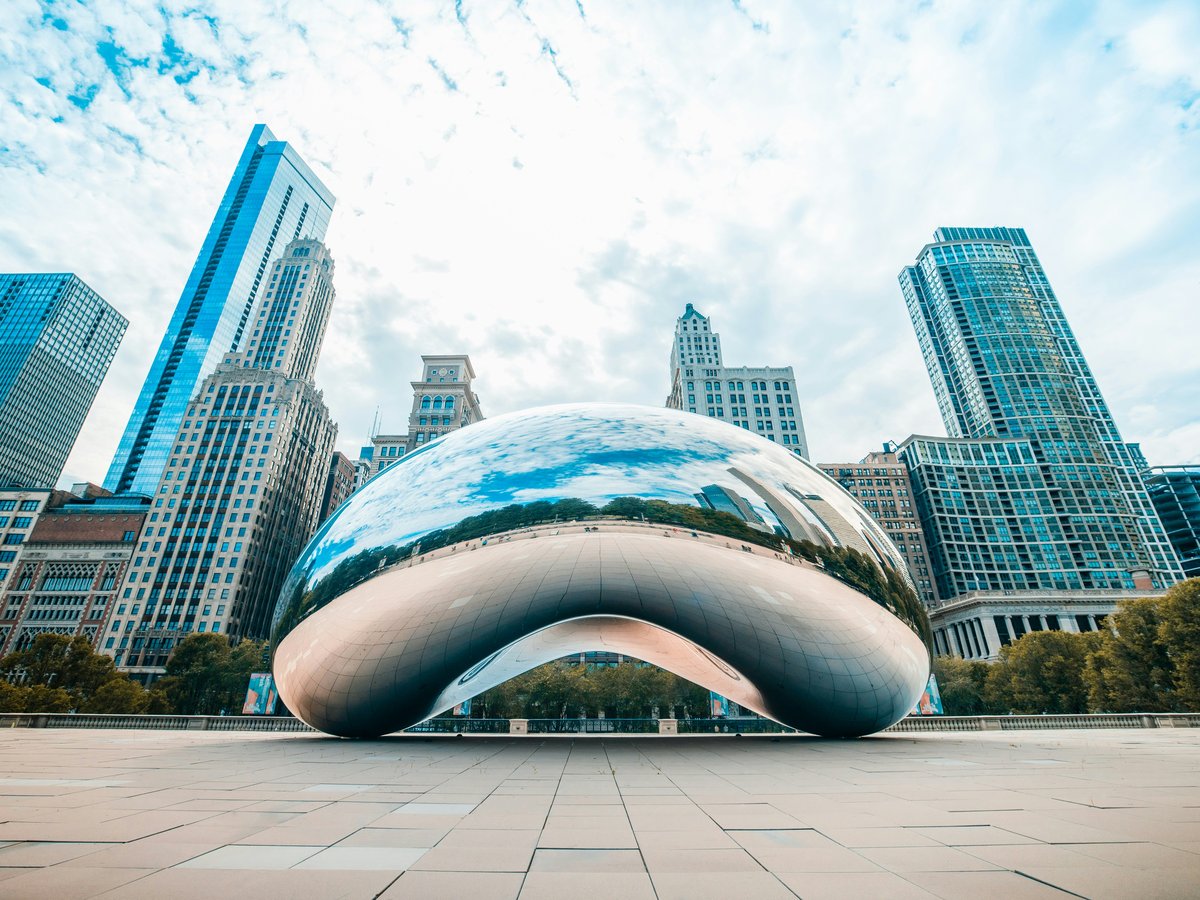
The Art Institute of Chicago, founded in 1879, holds the largest Impressionist collection outside France. Start in Gallery 240 with Seurat's 'A Sunday on La Grande Jatte.' General admission is $35, and the museum sits at the south edge of Millennium Park on Michigan Avenue, so Cloud Gate is a 5-minute walk from the exit.
Read the full answer → -
Solo travel
Chicago is one of the strongest solo-travel cities in the US. The CTA L train runs 24 hours on 2 lines, single-occupancy hotel rates match doubles in the Loop, and counter seating at Au Cheval and Girl & the Goat means dining alone feels normal. Safety concerns exist on the South and West sides, but the tourist corridor from Lincoln Park to Wicker Park is comfortable after dark.
Read the full answer → -
This week
Chicago this week runs hot and humid, with temperatures near 28°C and afternoon thunderstorms likely 3-4 days. Lakefront beaches peak on weekday mornings before the crowds arrive by noon. Green City Market sets up Wednesdays and Saturdays in Lincoln Park. Blues and jazz play nightly across Lincoln Park and Uptown. Most major museums stay open 7 days in summer.
Read the full answer → -
3-day itinerary
Day 1 covers the Loop and lakefront, from Cloud Gate at 8:30 AM through the Art Institute and Field Museum. Day 2 heads north to Lincoln Park, Old Town, and Wrigleyville. Day 3 crosses west to Pilsen and the West Loop food corridor. About 28 kilometres of walking total, with CTA L trains connecting neighborhoods.
Read the full answer → -
What to avoid
Skip Navy Pier beyond a 10-minute walk-through, avoid taxis from O'Hare when the Blue Line runs downtown for $5, and don't wait 90 minutes for Willis Tower's Skydeck when 360 Chicago on Michigan Avenue has shorter lines and a better north-facing skyline view. Deep-dish at the downtown Giordano's means a 45-minute wait for pizza you can get in 15 minutes at the Lincoln Park location.
Read the full answer → -
What to pack
Pack layers for Chicago's lake-driven temperature swings. A June morning at 18°C in Lincoln Park can hit 30°C by noon in the Loop. Bring a packable rain jacket for May-September afternoon storms, broken-in walking shoes for the Magnificent Mile's 1.6 km of concrete, and SPF 50 sunscreen for the 30-km Lakefront Trail. Moisture-wicking shirts over cotton. Skip toiletries. Walgreens stores appear every 4 blocks downtown.
Read the full answer → -
Where to stay
River North for a first trip to Chicago. You're 12 minutes on foot from Millennium Park, 15 from the Art Institute on Michigan Avenue, and the Brown and Red L lines connect you to the rest of the city. Budget $180-280 per night for a four-star hotel. The Loop's business hotels drop to $120-170 on weekends.
Read the full answer →
Deep guides for Chicago
-
Chicago With Kids: What Works
Chicago scores 8.5 for families, but the default tourist loop collapses by noon. The itinerary that survives nap schedules, the marquee sight that is a meltdown trap, and the free park that quietly saves every day.
Read the guide → -
Best Time to Visit Chicago, by Season
Five-year daily observation averages from the Open-Meteo archive clarify the trade-off between weather, crowds, and price. September's 24.0°C highs and 16.0°C nights win for most travelers, but January's -7.0°C lows bring the cheapest hotel rooms of the year.
Read the guide →
Curated lists for Chicago
accommodation
-
Best boutique hotels
Chicago sorts its hotels along two axes: the lakefront and the L tracks. Most visitors default to the Magnificent Mile corridor, but the city's strongest accommodation value often sits one or two stations away, where the same nightly rate buys a suite instead of a standard king. The river divides the downtown core; River North trades on gallery energy and late dining, the Loop anchors around theater marquees and commuter rail, and Dearborn Park stretches south into quieter residential blocks. Chinatown keeps its own rhythm a short walk further, with the lowest nightly rates of any neighborhood close to the core. On the North Side, Lake View and Northalsted reward travelers who want neighborhood restaurants and residential streets over tourist density. Two clusters serve the O'Hare corridor for early departures and late arrivals. Oak Street Beach bridges the Magnificent Mile's retail buzz and Lincoln Park's green edge. Price tiers spread across all of these pockets, and the L connects most of them without a transfer.
See the picks → -
Best luxury hotels
Chicago's luxury hotels concentrate in three downtown corridors: the Loop, the Financial District, and Jewelers Row. Within a few square miles, the properties on this list cover the full range, from business-forward addresses that leave the budget open for the city itself, to full-amenity towers with pools, spas, and nightlife built into the building. Nightly rates span from just over USD 200 to more than USD 600, and Trip.com guest ratings run from 8.1 to 9.4 across the properties that carry them. This is not a ranking of the most expensive rooms in the city. It is a curated selection of 12 properties that each earn a specific slot: the value booking, the amenity-deep stay, the location play, the score-to-rate outlier. Every claim below is grounded in verified data, and every recommendation carries editorial judgment about which property fits which traveler.
See the picks → -
Where to stay
Chicago sorts itself by the river. North of the water, dining and gallery density runs highest between the Merchandise Mart and the lake. South, the Loop's elevated train grid boxes in the theater and financial blocks where hotel rates drop midweek. East of Michigan Avenue, a quieter lakefront strip holds high-floor rooms with water views and not much street life after dark. West of the Kennedy Expressway, pricing falls fast and so does walkability. The ten neighborhoods below cover that full spread, from hostel bunks at $51 a night in the Loop to riverfront suites at $724 in River North. On a first visit, what matters most is which side of the river you wake up on and how far you'll walk for the L. The Magnificent Mile and Streeterville share a zip code but serve different travelers: one wants retail, the other wants quiet. O'Hare is its own logic, useful only for connections. Read each area for the walking radius, not the star count.
See the picks →
attractions
-
Best museums
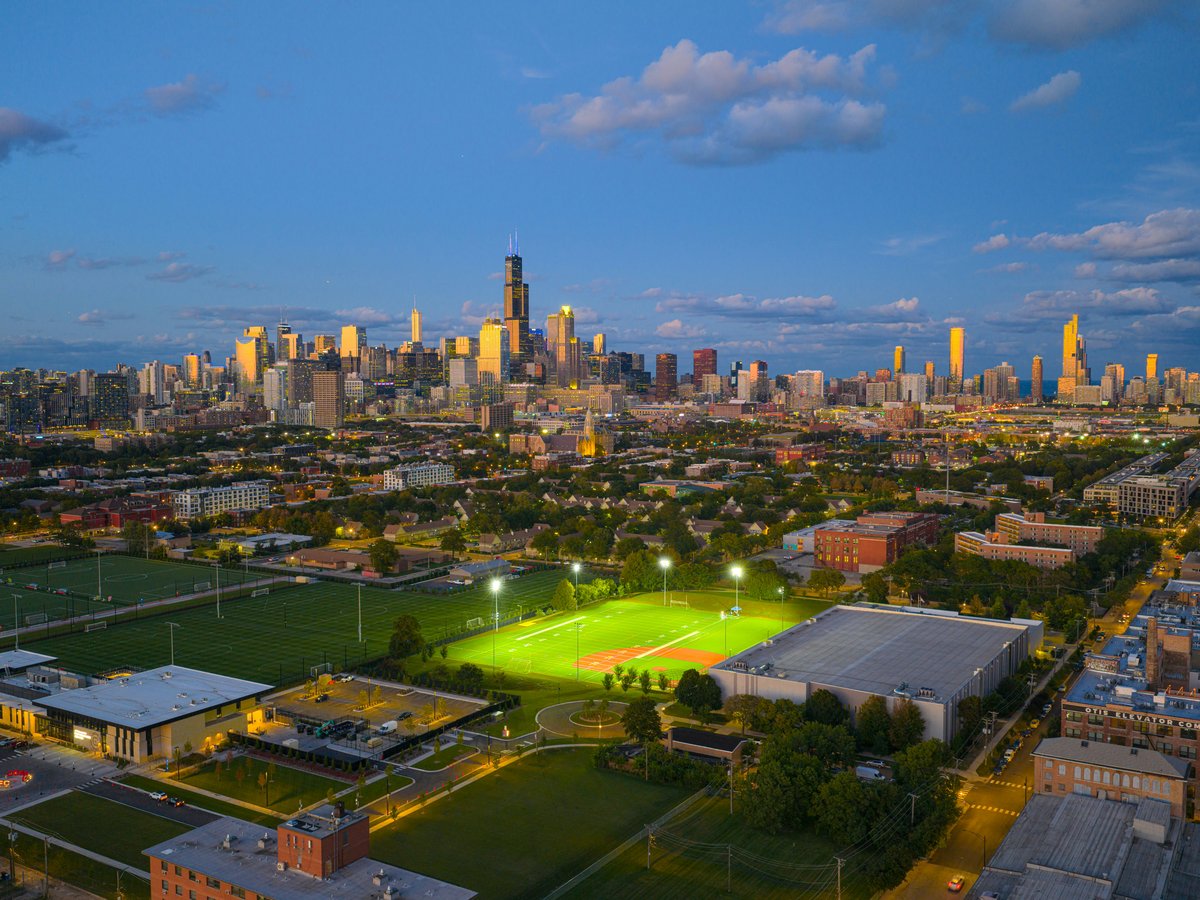
Chicago's museum stock is unusually deep for a single American city, and the twelve that follow are the ones a local editor sends visitors to first. Two of them, the Field Museum of Natural History and the Kenneth C. Griffin Museum of Science and Industry, anchor the natural-science end. Two more, the Art Institute of Chicago and the Museum of Contemporary Art, cover the split between the historical canon and the living one. The rest fan out into specialisms: a planetarium on the lake, a settlement house on Halsted, an archaeology museum on the University of Chicago campus, a military library on South Michigan, a broadcast museum near the river, a photography museum inside a college, a Greek-American museum in Greektown, and an architecture center on Wacker. Skip the day-pass hop between the marquee three and pick the four that match your interests; a single museum done properly beats three done fast.
See the picks → -
Must-see attractions
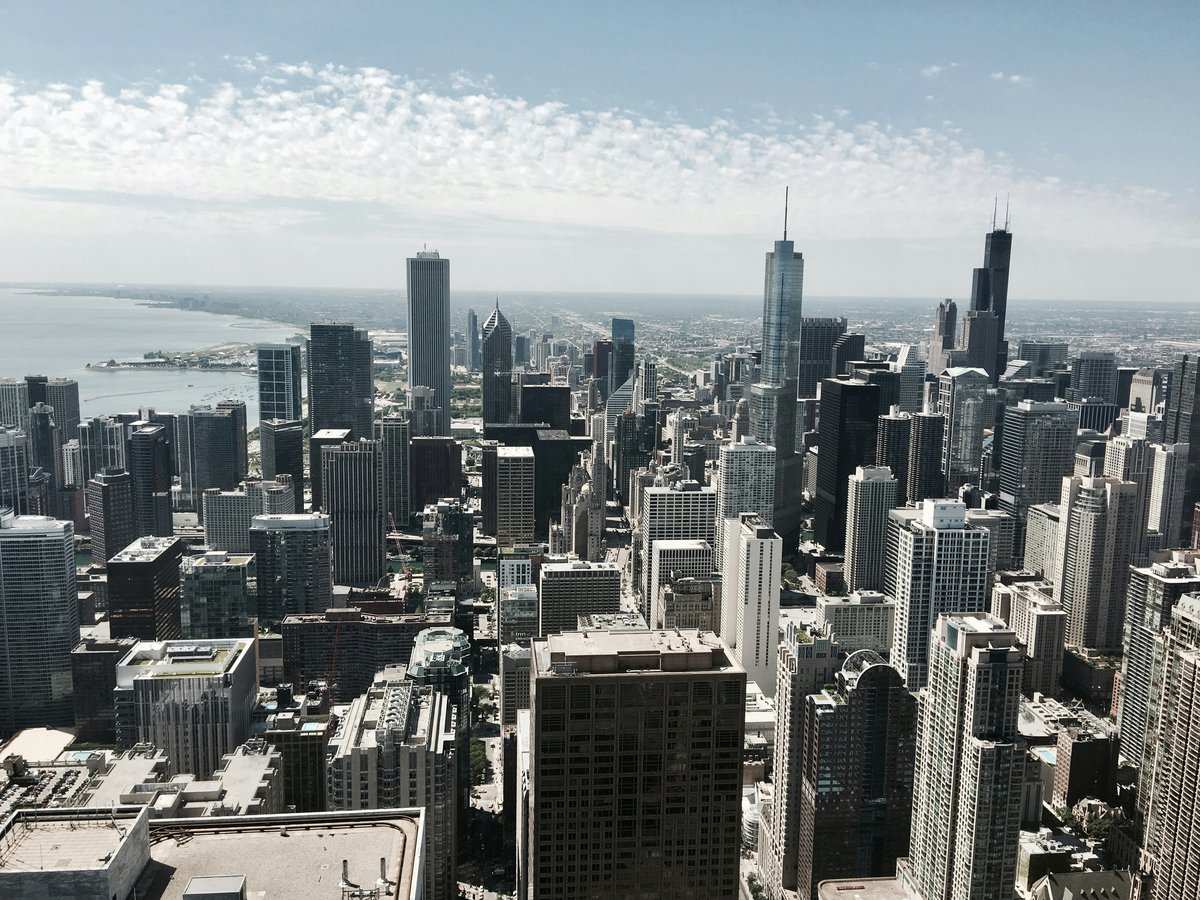
Chicago's must-see list is not a parade of postcards; it is a working city's architecture, faith, art and stagecraft standing shoulder to shoulder across a few walkable miles of the Loop and the Near North Side. What follows is twelve places that reward a visitor who wants to understand the city rather than tick it: a skyscraper that redefined the skyline, a cathedral that anchors a whole archdiocese, a mirrored sculpture that made a public square a stage, four working theatres, two more houses of worship at opposite ends of Michigan Avenue, a shopping tower, a Loop landmark of glass and steel, and the pier the lake was built around. Some are free, some cost, all are open to the public. Read them in this order and you will have walked the argument Chicago has been making for itself for more than a century.
See the picks →
food
-
Best cafes
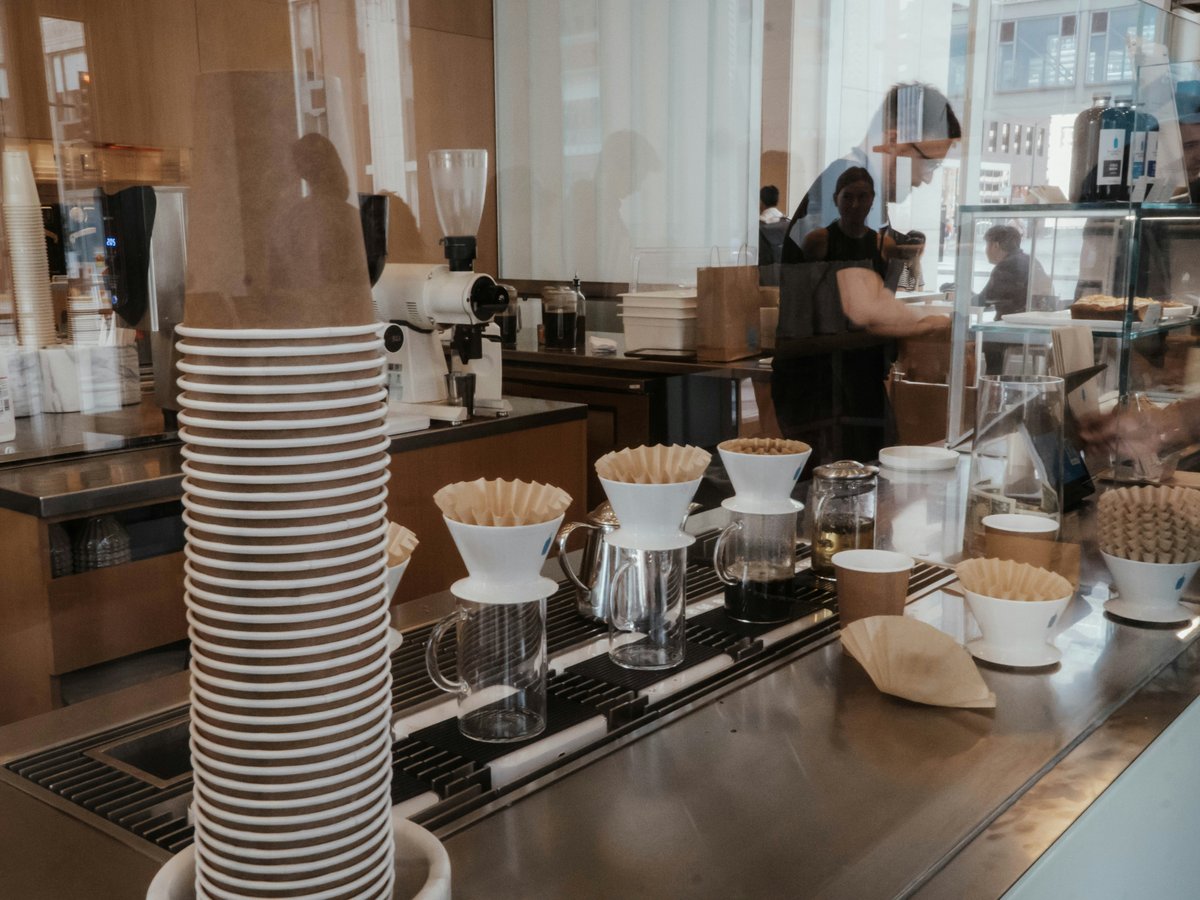
Chicago's coffee culture is a working city's coffee culture: it wakes up early, sits close to the train lines, and does not romanticise the cup. The twelve rooms below are all inside the Loop and its immediate ring, most of them within a ten-minute walk of Union or Ogilvie, and they range from a national roaster's flagship counter on Randolph to a Taiwanese tea kitchen on South Wabash. A few are pastry-first, a few are donut-first, and one is a Greek bakery that stays open until after midnight; the thread that ties them together is that each earns its address rather than borrowing prestige from a neighbourhood. Skip the lobby-coffee reflex at the nearest hotel bar: the operators here open before the offices do, close when the last commuter train has pulled out, and price a cortado at the counter, not at a concierge markup. Use this list the way a downtown regular would: pick the one closest to where your day starts, and let the hours decide the order.
See the picks → -
Best restaurants
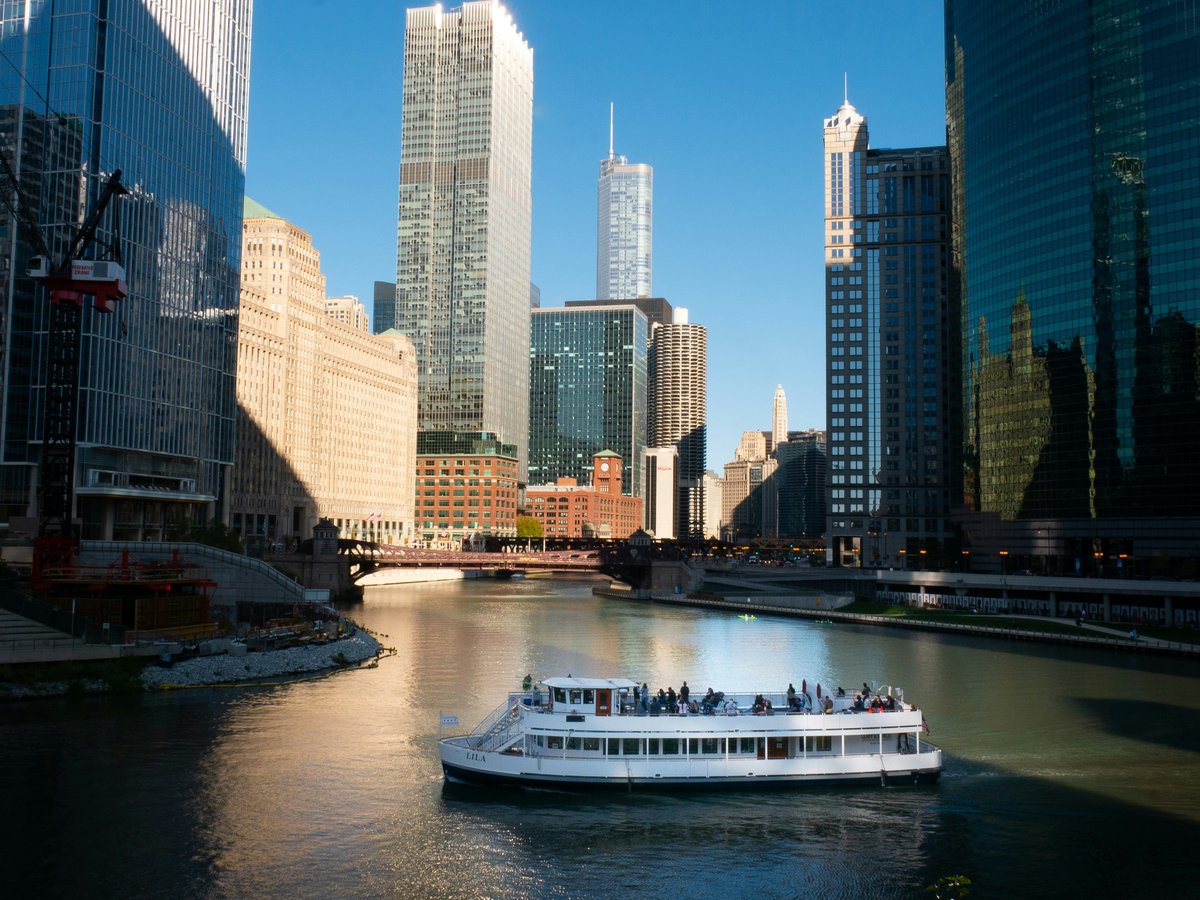
Chicago's Loop is not where most food writers send you, and that is exactly the reason to eat here. The dozen rooms below sit within a few blocks of one another between Adams, Monroe, Madison and Jackson, close enough that you could walk the whole list in a lunch hour and still argue about which door to open first. The mix is honest to what the neighborhood is: a century-old German dining room, two deep-dish counters that made the city's name, a hotel dining room built for people who want breakfast at 07:00, a couple of quick Middle Eastern and Asian counters wired for the lunch rush, and a handful of Italian rooms that hold the evening after the offices empty. Skip the tourist mile on Michigan and eat in the working Loop instead; the food is better, the addresses are easier to find, and the hours line up with a real day of walking. Every claim below (every street number, every closing time, every cuisine) is cited to a verifiable source. Use the phone numbers to book; use the addresses to walk.
See the picks →
Browse by traveler type
Book experiences in Chicago
 Free cancellation
 Chicago Architecture River Cruise
Cruise: free cancellation.
via Viator Free cancellation
 Chicago River 90-Minute Architecture Tour
Cruise: 1.5 hours, free cancellation.
via Viator
Chicago Architecture Center River Cruise aboard First Lady
Cruise: 1.5 hours.
via Viator Free cancellation
 Chicago River 45-Minute Architecture Tour from Magnificent Mile
Cruise: 45 minutes, free cancellation.
via Viator Free cancellation
 Chicago River 90-Minute Architecture Boat Tour
Cruise: 1.5 hours, free cancellation.
via Viator Free cancellation
 Original Chicago Architecture Interiors Tour: Dazzling Interiors
City tour: 2 hours, free cancellation.
via Viator Free cancellation
 Chicago's Delicious Downtown Donut Tour with 8 Amazing Tastings
City tour: 2 hours, free cancellation.
via Viator Free cancellation
 Lake Michigan Skyline Cruise in Chicago
Cruise: free cancellation.
via Viator Free cancellation
 Chicago Architectural River Cruise
Cruise: 1.5 hours, free cancellation.
via Viator Free cancellation
 Chicago's Chinatown Food and Walking Tour
City tour: 3 hours, free cancellation.
via Viator Free cancellation
 Chicago Bike & Classic Food Tour: Bikes, Bites & Views - Adults
City tour: 4.5 hours, free cancellation.
via Viator Free cancellation
 Chicago City Tour with Architecture River Cruise Option
Cruise: free cancellation.
via ViatorBrowse by interest
Compare Chicago with
Find a flight to Chicago
Live fares to Chicago appear here once cookies are accepted.
Last verified by automated review (v1.7.2) on . What is automated review?