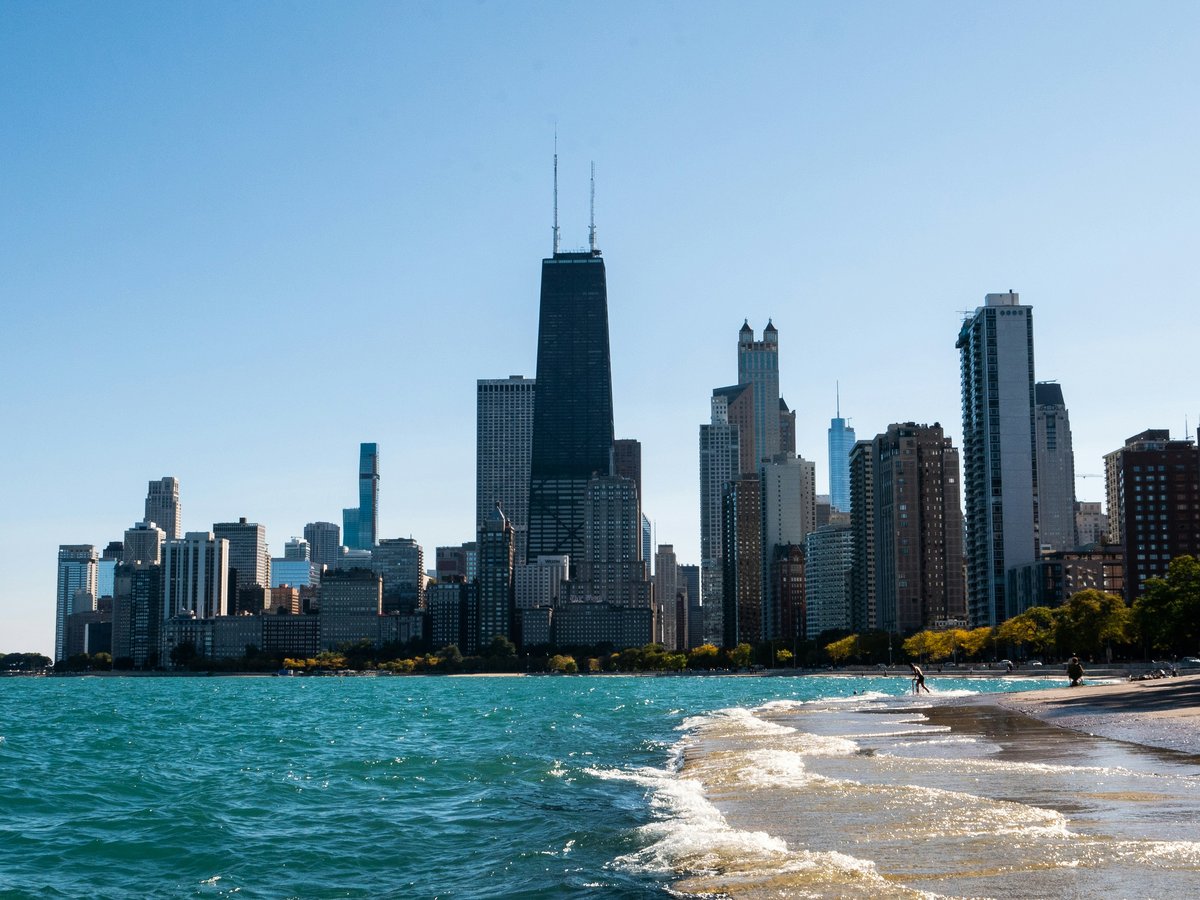
Best Time to Visit Chicago, by Season
Five-year daily observation averages from the Open-Meteo archive clarify the trade-off between weather, crowds, and price. September's 24.0°C highs and 16.0°C nights win for most travelers, but January's -7.0°C lows bring the cheapest hotel rooms of the year.
Published · Updated
1 September's 24°C Highs and 16°C Nights Beat Every Other Month in Chicago
The wind off Lake Michigan still carries warmth in the second week of September. You feel it walking north along the lakefront, the water flat under lower sun, the air dry enough that your shirt stays unstuck past noon. September in Chicago averages a high of 24.0°C and a low of 16.0°C. Those figures look modest next to July's 27.1°C peak. That 3-degree gap is the whole point.
July and August bring average highs of 27.1°C and 26.8°C, with overnight lows of 19.2°C and 19.1°C that keep the concrete radiating heat well past sunset. Lake Michigan humidity compounds every degree. Chicago hotel rates track the thermometer upward. Restaurant patios fill by 6 PM.
September's 24.0°C average high sits in a narrow window where you can walk for hours without overheating or layering up. The 16.0°C overnight low means a light jacket after dark. Nothing more. Compare that to October, when the average high drops to 17.6°C and nights fall to 9.9°C. September is the last month where Chicago functions as a full outdoor city without qualification.
Crowds thin noticeably once Chicago schools reopen in early September. Families disappear from the downtown museums. The major galleries, packed shoulder-to-shoulder in July's 27.1°C heat, have breathing room. Park lawns open up. Restaurants ease off peak-season pricing. You get weather close to June's 26.4°C average without June's density, at lower cost.
One caveat for September visitors is rain. Lake Michigan pushes storms through fast. But the temperature floor of 16.0°C means even a wet day stays comfortable compared to the 0.4°C average low that March delivers. September's 24.0°C average high sits 3 degrees below July's 27.1°C, and visitor traffic tends to follow the temperature down.
September's 24.0°C is the last month where Chicago works as a full outdoor city.
2 January Hits -7°C at Night and Hotel Rates Drop to Their Yearly Floor
The first thing you notice stepping outside at O'Hare in January is the air itself. It has texture. A dry, metallic cold that bites exposed skin within seconds and makes your eyes water before you reach the curb. January's average low of -7.0°C is the coldest reading in Chicago's yearly cycle, and the average high of -0.2°C means many days never cross above freezing.
February improves marginally. The average high rises to 2.2°C and the low to -6.3°C. You still need serious cold-weather gear for any walk longer than 10 minutes in either month. December sits between the two extremes, averaging 3.8°C during the day and -2.9°C at night.
The trade works like this. From December through February, Chicago becomes one of the cheapest major US cities to visit. Hotel rates reach their annual floor. Flights from most domestic hubs cost a fraction of summer pricing. Restaurants that need reservations weeks in advance during July's 27.1°C peak season have open tables on weeknights.
Chicago does not shut down. The museum campus operates year-round. The L trains keep running in every direction. Deep-dish pizza tastes the same at January's -0.2°C as it does at July's 27.1°C. The lakefront in winter has its own stark appeal, the frozen stretches of shoreline quiet in a way the summer crowds never allow.
The target traveler is someone who prioritizes budget over outdoor comfort and plans to spend most of their time inside. A week in January at -0.2°C average highs costs dramatically less than the same week in September at 24.0°C, and the cultural offerings are identical. February's 2.2°C average high and -6.3°C low make any sustained outdoor walking an endurance test. December's -2.9°C low is the mildest of the three winter months, though holiday pricing offsets some of the weather advantage.
A week in January at -0.2°C costs dramatically less than September at 24.0°C, and the cultural offerings are identical.
3 March Averages 9.1°C and April Hits 14°C. Spring in Chicago Is a Negotiation.
There is a morning in late March, usually around the third week, when the breeze off Lake Michigan loses its edge. The air smells different. Damp and mineral, like wet soil after months of frozen ground. March in Chicago averages a high of 9.1°C and a low of 0.4°C. That 0.4°C low means frost is still a regular companion at dawn. The 9.1°C high means afternoons might feel almost pleasant with a warm coat.
April improves the picture considerably. The average high reaches 14.0°C and the low climbs to 4.9°C. That is a 5-degree jump from March in both directions. Flowers appear along the parks by mid-April. Cafe owners start dragging tables onto the sidewalks, though you might notice most sit empty until late afternoon when the sun has done its work.
The spring question for visitors is whether April's 14.0°C is warm enough. If you want to walk the lakefront comfortably, 14.0°C with a layer works. If you want to sit outside for a full dinner, you are likely still cold. May's 19.3°C average high is the more honest threshold for outdoor dining, and May's 10.4°C low means evenings stay tolerable.
The gap between March's 9.1°C high and May's 19.3°C is over 10 degrees in a span of 8 weeks. That speed of change catches visitors off guard. A trip planned for early March based on calendar optimism arrives to 0.4°C mornings. A trip in late April hits 14.0°C. Close enough to pleasant.
March and April hotel rates typically sit between January's floor and July's ceiling. You get moderate pricing with moderate weather. Worth noting that neither month is a safe bet for outdoor-focused visits compared to September's 24.0°C, but both offer a city in transition that has its own energy. April's 4.9°C lows still call for a jacket after sunset.
4 May's 19.3°C Average High Is the Last Quiet Window Before Peak Season
The smell of charcoal grills drifts across the parks in late May. It is the first month where outdoor cooking feels right, where the breeze off Lake Michigan carries warmth instead of a chill. The average high of 19.3°C and the low of 10.4°C create a window where you can wear a t-shirt by noon and need only a light layer by 9 PM. The city's mood shifts. People linger.
May sits in a gap that is hard to replicate later in the year. June's average high of 26.4°C arrives with a 7-degree jump and, with it, the start of peak tourist season. Everyone books June. Everyone books July at 27.1°C. May's 19.3°C attracts fewer visitors, and that pricing gap between spring and summer tends to hold through the month.
The 10.4°C overnight low in May is the key number for evening plans. It is warm enough to eat outside past sunset without retreating indoors. Compare that to April's 4.9°C average low, which sends most people inside by 8 PM. That 5.5-degree difference between April and May nights changes the entire shape of a Chicago evening.
For walking tours along the river and through the neighborhoods, May's 19.3°C is close to ideal. You move through the city at a pace that July's 27.1°C heat discourages. You can cover more ground before fatigue sets in.
The honest comparison against September, which averages 24.0°C during the day and 16.0°C at night, is that September wins on raw temperature. September days are warmer by nearly 5 degrees and its nights are 6 degrees more comfortable than May's 10.4°C. May's 19.3°C average high comes 7 degrees below June's 26.4°C, with October's 17.6°C as the nearest match on the other side of the summer peak.
5 June Through August Lock Between 26.4°C and 27.1°C. Everyone Arrives at Once.
By mid-June the heat sits on the city like a hand. You feel it radiating off the sidewalks, off the glass towers along the river, off every surface that spent the morning absorbing sun. June averages a high of 26.4°C and a low of 17.0°C. July peaks at 27.1°C with a 19.2°C low. August holds at 26.8°C high and 19.1°C low. The three months form a plateau. Less than a degree separates July from August at the top of the range.
This is when Chicago fills up. The summer months are peak tourist season by a wide margin. Festival programming fills the parks along the lakefront. The north-side beaches hit capacity on weekends. Hotel rates and airfares reach their annual ceiling.
The humidity is the part the temperature numbers do not fully capture. June's 26.4°C with Great Lakes moisture feels heavier than the same reading in a drier climate. By July, at 27.1°C and 19.2°C overnight, the concrete retains enough heat that nights offer limited relief. August's 19.1°C low is functionally identical to July's 19.2°C. You sleep warm whether you want to or not.
That said, the case for summer is real. If you have school-age children, June through August may be your only option. Chicago commits its full outdoor programming to these 3 months. Free concerts and lakefront events run continuously from mid-June through Labor Day. June's 17.0°C floor is comfortable enough for evening events without heavy layers.
The question is whether the experience is worth the premium. September at 24.0°C and 16.0°C delivers comparable warmth with fewer crowds and lower rates. The 3-degree difference between July's 27.1°C peak and September's 24.0°C is a trade most adults would take. For families locked into school calendars, June tends to offer the best value within the summer window. July at 27.1°C and August at 26.8°C bring slightly more heat and considerably more competition for the same rooms.
Less than a degree separates July's 27.1°C from August's 26.8°C at the top of the range.
6 October Averages 17.6°C by Day. November Drops to 9.5°C. That Gap Is the Whole Story.
The leaves along the lakeshore start turning in mid-October. Reds and golds against the steel-blue water of Lake Michigan. The air carries a crispness that the summer months never deliver, a clean cold you feel in your lungs with each breath. October in Chicago averages a high of 17.6°C and a low of 9.9°C. Sweater weather, genuinely.
This is the shoulder season few visitors target. September gets the attention, and for good reason, with its 24.0°C highs. But October's 17.6°C is still comfortable for walking, and the 9.9°C low is manageable with a medium jacket. The city has not emptied out, but the peak-season pressure has released.
November tells a different story. The average high drops to 9.5°C and the low falls to 2.3°C. That is a decline of over 8 degrees from October's 17.6°C daytime high in a single month. The speed of the fall-to-winter transition catches visitors off guard more than almost any other shift in Chicago's calendar. A trip planned for late October at 17.6°C and another for mid-November at 9.5°C feel like visits to two different cities.
October works for the traveler who finds September's 24.0°C slightly too warm for sustained walking, or who prefers fall colors to late-summer greens. The 17.6°C average high keeps you comfortable through the river corridors and park paths. Mornings start at 9.9°C and afternoons peak at 17.6°C, so you are adjusting layers throughout the day.
The practical cutoff for outdoor-focused visits appears to land around the last week of October. Once November's 2.3°C lows arrive, the equation flips to winter gear. December's average low of -2.9°C confirms the direction. October hotel rates tend to sit between September's moderate level and the approaching winter discounts. November's 9.5°C highs and 2.3°C lows start pushing rates lower, though not yet to January's -0.2°C floor.
7 The Single Best Window for Budget Travelers, Families, and Architecture Fans
Stand anywhere along the Chicago lakefront for 10 minutes and your body calibrates to the month. The wind off Lake Michigan hits differently at January's -7.0°C than at September's 24.0°C. Twelve months, twelve trade-offs.
Budget travelers should book January or February. January's -0.2°C average high and -7.0°C low make it the coldest month in the cycle, and hotel rates respond accordingly. February's slight improvement to 2.2°C highs and -6.3°C lows changes little about the outdoor experience. December at 3.8°C high and -2.9°C low is milder but holiday demand inflates rates. Of the three winter months, January likely delivers the deepest discounts.
Families with school-age children are typically limited to June, July, or August. Among those, June's 26.4°C high and 17.0°C low offers the best balance. It is the opening of the summer plateau rather than its peak. July at 27.1°C and August at 26.8°C bring marginally more heat and noticeably more competition for the same hotel rooms.
Architecture and walking enthusiasts should target May or September. May averages 19.3°C high and 10.4°C low. September averages 24.0°C and 16.0°C. Both sit in the zone where sustained outdoor movement along the river and through the neighborhoods feels natural. September is warmer and quieter post-summer. May is cooler but carries the momentum of a city waking from a winter that bottomed at -7.0°C. The choice depends on whether you prefer 19.3°C or 24.0°C as your walking temperature.
Couples and food-focused travelers should choose September. The 24.0°C days and 16.0°C nights make evening walks and outdoor dining comfortable without the density of July's 27.1°C peak.
The single best all-purpose window is September 10 through October 5. September's 24.0°C average high eases toward October's 17.6°C through those weeks. Nights shift from September's 16.0°C toward October's 9.9°C. You need layers but not winter gear. November's 9.5°C average high marks the outdoor season's end. From there, the decline to January's -0.2°C takes 8 weeks.
Last verified by automated review (v1.7.0_onboard-chicago-flagship-2026-06-16) on . What is automated review?