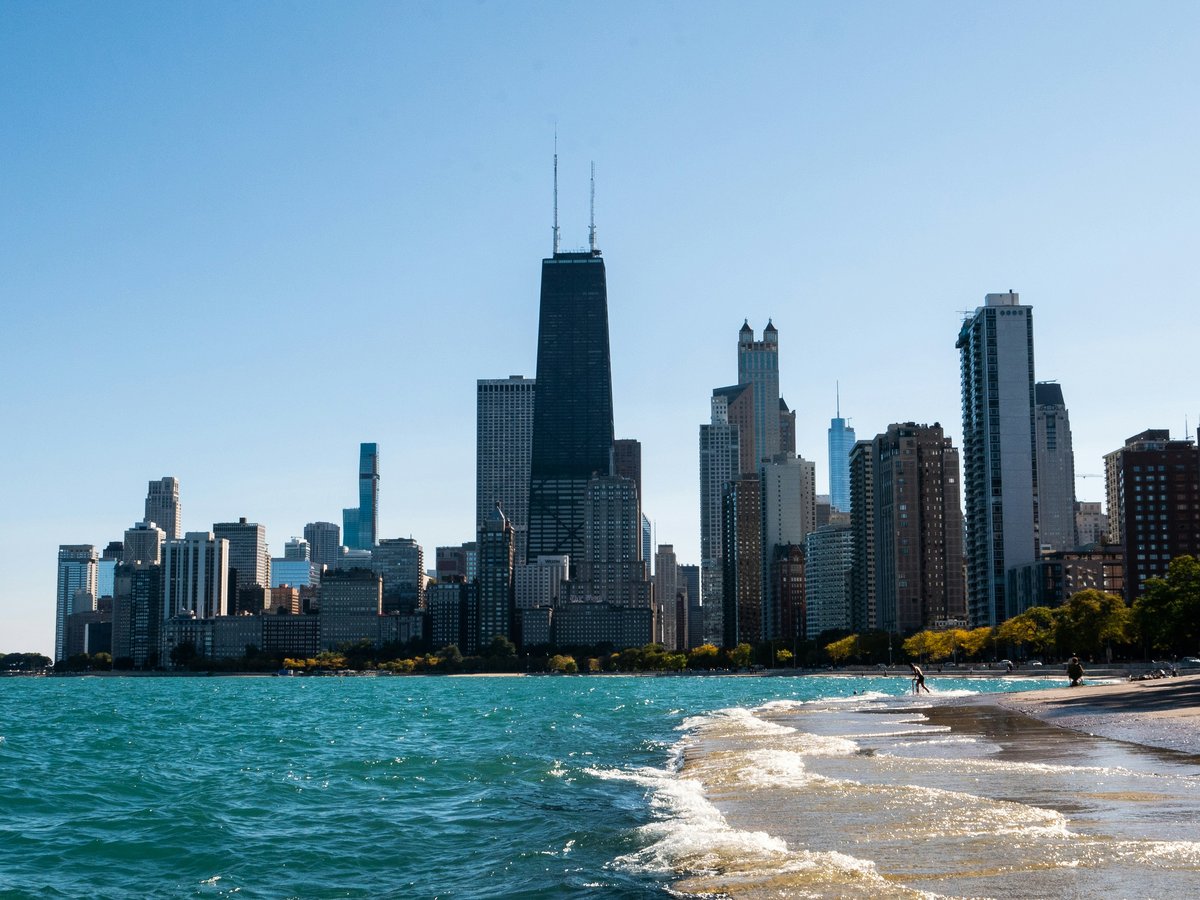
Chicago With Kids: What Works
Chicago scores 8.5 for families, but the default tourist loop collapses by noon. The itinerary that survives nap schedules, the marquee sight that is a meltdown trap, and the free park that quietly saves every day.
Published · Updated
1 Chicago's 8.5 Family Score Is Earned, but the Default Tourist Loop Breaks Before Lunch
The first sound you hear at Millennium Park on a Saturday morning is not the splash of Crown Fountain's video faces. It is a toddler wailing at the warped reflection in Cloud Gate. That 33-foot, 110-ton sculpture draws roughly 12.5 million visitors per year to Millennium Park, and about half of them seem to be families operating on 4 hours of sleep and a single hotel-lobby croissant.
Chicago scores an 8.5 out of 10 for family-friendliness, and the number holds up under scrutiny. The city has a free major zoo at Lincoln Park Zoo, a children's museum at Navy Pier, a park system covering more than 8,800 acres, and a museum campus that puts the Field Museum, Shedd Aquarium, and Adler Planetarium within a 10-minute walk of each other. On paper, this is a top-5 family city in the United States.
In practice, the default tourist route packs 4 high-stimulation destinations into 8 hours, and with kids under 6, that itinerary collapses around destination number two. Families book the Willis Tower Skydeck at 10 AM, walk 25 minutes south to the Museum Campus, push through Shedd Aquarium for 2 hours, and then wonder why nobody can hold it together for Navy Pier at 3 PM. The problem is not the attractions themselves. The problem is the shape of the day.
This guide is built around a different principle. One big thing in the morning, a long decompression at midday, one easy thing in the afternoon. That rhythm survives nap schedules, stroller logistics, and the attention span of a 3-year-old. The 8.5 score reflects a city with genuine raw material for families. Lincoln Park Zoo, Maggie Daley Park, and the Museum of Science and Industry are all within 4 miles of each other, and two of the three cost nothing to enter.
2 Navy Pier Is Chicago's Marquee Family Trap, and the $18 Ferris Wheel Is the Least of It
The Centennial Wheel at Navy Pier stands 196 feet above Lake Michigan, and from the top on a clear day you can see into 4 states. None of that registers with a 4-year-old who has been standing in a 35-minute line in full sun. Navy Pier draws about 9 million visitors annually, making it the most visited single attraction in the Midwest. It is also, by a wide margin, Chicago's biggest family meltdown zone.
The problems begin with the layout. Navy Pier stretches half a mile along the lakefront, with minimal shade for much of that distance. The rides cluster at the east end, so you walk 10 minutes before reaching anything a child wants to do. The Centennial Wheel runs about $18 per person. The carousel is $7. Ride tickets add up fast, and the food court prices track accordingly. A family of 4 can spend $150 in 90 minutes without touching the Chicago Children's Museum, which charges its own $17 admission.
To be fair, the Chicago Children's Museum is strong for kids under 7. The Tinkering Lab on the third floor is the highlight, and the water play area on the first floor gives toddlers a solid 45 minutes. But the museum sits inside the pier complex. To reach it, you walk past carnival games, cotton candy stands, and a gift shop density that requires active negotiation with any child old enough to point and want.
What locals do instead is skip Navy Pier entirely and walk 12 minutes north to Maggie Daley Park. It costs nothing. It was designed for children. It does not require navigating a corridor of $8 lemonade stands. If your kids are over 8 and specifically want carnival rides, the seasonal Pier Park has limited hours and closes in winter. Check the schedule before you go. The Lakefront Trail runs directly past the pier entrance, and Maggie Daley Park is that same 12-minute walk north along the water.
A family of 4 can spend $150 at Navy Pier in 90 minutes without touching the Chicago Children's Museum.
3 Maggie Daley Park Wins the Day, Every Day, and It Costs Nothing
The climbing walls at Maggie Daley Park stand 40 feet high, shaped like the skyline of some impossible storybook city. On a June morning around 9 AM, before the school groups arrive, you can hear the specific sound of a 5-year-old discovering she is braver than she thought she was. The park opened in 2015 on 20 acres between Millennium Park and the lakefront. It has quietly become the best family destination in Chicago, and most visiting families have never heard of it.
The Play Garden is the centerpiece. It divides by age, with a toddler section separated from the bigger-kid structures by low walls and soft ground cover. The Enchanted Forest area has rope bridges and hollow log tunnels. The Slide Crater is a hillside with built-in slides at varying heights. The Wave Lawn gives kids open grass to sprint in circles until they collapse. None of it costs anything. No ticket, no timed entry, no reservation.
The Skating Ribbon runs November through March and charges $16 for adults and $10 for kids for skate rental. It is not a standard oval rink. It is a winding, quarter-mile path through the park landscaping. Even a 4-year-old who cannot really skate will shuffle along it happily for 20 minutes. In summer, the same path becomes a mini-golf course at $14 per round.
Maggie Daley Park works because it inverts the museum model. Kids control the pace. Parents sit on benches within sightlines. There are no guided tours, no lines, no gift shops between you and the exit. A family can spend 3 hours here without spending a dollar, and the kids will sleep in the stroller on the walk back to Michigan Avenue.
The park connects to Millennium Park via the BP Pedestrian Bridge, a 925-foot serpentine walkway designed by Frank Gehry. That 5-minute crossing puts you at Cloud Gate for a photo. The No. 151 bus stop on Michigan Avenue is a 3-minute walk from the park's south entrance.
A family can spend 3 hours at Maggie Daley Park without spending a dollar.
4 The Museum of Science and Industry Rewards the 9 AM Arrival and Nothing Else
The U-505 submarine sits in a dim hall on the lower level of the Museum of Science and Industry, and when you walk through its narrow corridor, your 6-year-old will go quiet for what might be the first time all trip. The boat is a captured German Type IX-C submarine from 1944, 252 feet long, and the guided interior tour costs an extra $7 beyond general admission. It is the single best exhibit for kids over 5 in any Chicago museum.
The Museum of Science and Industry sits in Hyde Park, about 20 minutes south of the Loop by car or 30 minutes on the Metra Electric line from Millennium Station. General admission runs $21.95 for adults and $12.95 for children 3 to 11. The building served as the Palace of Fine Arts during the 1893 World's Columbian Exposition, and it is enormous. More than 400,000 square feet of exhibit space across 3 floors.
The approach that works with young kids is simple. Arrive at 9:30 AM when doors open. Head directly to the Science Storms exhibit on the main floor, where a 40-foot tornado vortex and a Tesla coil hold kids under 8 for 30 to 45 minutes. Then move to the Transportation Gallery for the model railroad and the 727 aircraft you can walk through. By 11:30 AM, energy is fading. Leave.
The mistake is staying past noon. The building's scale turns against tired legs. The walk from Science Storms to the far wing takes 8 minutes for an adult, and you can double that with a stroller. The cafeteria fills between 11:30 AM and 1 PM, and the food is unremarkable. Pack sandwiches instead and eat them in Midway Plaisance park across 57th Street.
Worth noting. The Museum of Science and Industry offers free admission days for Illinois residents, typically on select weekdays. Check the calendar before booking full-price tickets. On free days, arrive at 9:15 AM. By 10 the line tends to reach the sidewalk.
5 Lincoln Park Zoo Is Free, Open Year-Round, and Better Than Brookfield for Small Kids
The smell inside the Regenstein African Journey building at Lincoln Park Zoo is warm, humid, composted earth. It hits you the moment you walk through the double doors, and it is the kind of sensory detail your 3-year-old will remember 10 years from now when somebody mentions Chicago. Lincoln Park Zoo has been free since 1878. It is open 365 days per year. It covers about 35 acres, which means a family can walk the entire grounds in 90 minutes without anyone asking to be carried.
That compact size is the point. Brookfield Zoo, Chicago's other major zoo, sits 14 miles west in the suburbs, covers 216 acres, and charges $29.95 for adults and $20.95 for children 3 to 11. Getting there requires a car or a 45-minute Metra ride from downtown. For families with kids under 6, Brookfield's scale is the problem. The walk from the entrance to the dolphin show takes 15 minutes through a parking lot and two open plazas. Lincoln Park Zoo's main entrance on Cannon Drive puts you at the lion house in 3 minutes.
The Pritzker Family Children's Zoo, a separate area on the Lincoln Park Zoo campus, is designed for toddlers. It has a climbing structure, a small pond with turtles, and a tree-canopy walk at about 8 feet of elevation. Kids under 5 tend to spend 45 minutes here without protest. The Nature Boardwalk behind the zoo loops around South Pond. On summer mornings you might spot great blue herons fishing from 20 feet away.
The Cafe at Wild Things inside the zoo handles a quick lunch. A grilled cheese and fries runs about $9. But the better move is a 5-minute walk south to the Patio at Cafe Brauer, which overlooks South Pond and serves stronger food at similar prices inside a 1908 Prairie-style boathouse designed by Dwight Perkins.
Lincoln Park Zoo earns its place in the 8.5 family score because a bad weather day, a short attention span, or a sudden nap emergency does not cost you $90 in unused tickets. You walk in for 40 minutes, leave, and return the next morning. Admission has been free for nearly 150 years.
Lincoln Park Zoo has been free since 1878 and open 365 days per year.
6 Shedd Aquarium Is Worth One Visit If You Arrive at 9 AM, and the Field Museum Is a Harder Call
The beluga whales at Shedd Aquarium press their white foreheads against the glass in the Abbott Oceanarium, and toddlers press back. For about 90 seconds, it is better than anything at Navy Pier. Then a school group of 60 rounds the corner, and the moment is gone.
Shedd Aquarium sits on the Museum Campus next to the Field Museum and Adler Planetarium. It draws about 2 million visitors per year. General admission runs around $41.95 for adults and $32.95 for children 3 to 11. A family of 4 pays roughly $150 before parking, which costs $29 in the nearby east lots. That is a significant investment, and it performs unevenly with young children.
The aquarium opens at 9 AM. Be at the door by 8:45. The first 45 minutes, before the school buses unload, are when Shedd delivers on its price tag. The Caribbean Reef, a 90,000-gallon circular tank near the entrance, holds a green sea turtle and nurse sharks that your kids will want to circle 4 times in 10 minutes. The Wild Reef on the lower level has a floor-to-ceiling shark tunnel that holds even a 2-year-old's attention.
After 10:30 AM, the main halls fill to gridlock. Stroller navigation drops to a crawl. The aquatic show at the Abbott Oceanarium runs on a fixed schedule, and seating fills 15 minutes before showtime. Miss the first morning show, and you wait in a loud, crowded gallery with no seating for 40 minutes. Plan around the show time, not around the exhibit map.
The Field Museum sits next door and presents a harder question for families with kids under 7. SUE the T. rex in Stanley Field Hall is genuinely impressive. The rest of the museum leans toward text-heavy exhibits that lose small children in minutes. If you have one Museum Campus day and your kids are under 6, Shedd is the pick. Over 8, the Field Museum is likely stronger. The CityPASS bundle covers both Shedd Aquarium and the Field Museum for about $98 per adult, but with young kids, you probably will not have the stamina for both in one day.
7 The Two-Nap Itinerary That Survives Kids Under Five in Chicago
The lobby of the Palmer House Hilton at 17 East Monroe Street smells like the brownies they claim to have invented for the 1893 World's Columbian Exposition. If you are staying downtown with a toddler, this gilded lobby bears no resemblance to the day ahead of you. The distance between a hotel room and a productive family morning is about 30 minutes of stroller assembly, snack negotiation, and arguments about shoes. The itinerary that survives this reality has two non-negotiable rest breaks built into its structure.
The morning block runs 9 AM to 11:30 AM. One attraction, arrived at early. The Museum of Science and Industry if you have a car or the Metra Electric from Millennium Station. Lincoln Park Zoo if you are on the CTA, since the No. 151 bus from Michigan Avenue reaches the zoo entrance in about 15 minutes. Shedd Aquarium if this is your only Chicago trip and you want the marquee Museum Campus experience. Pick one. Not two. The families who try for two morning attractions are the families who never make it to the afternoon.
The midday gap runs 11:30 AM to 2:30 PM. This window is sacred. Return to the hotel. Lunch, nap, reset. The families who push through with a museum cafeteria meal and try to squeeze in a second stop are the same families you see in tears on Michigan Avenue at 4 PM. The temptation to optimize is the enemy of the nap schedule, and the nap schedule is the only itinerary that matters.
The afternoon block runs 2:30 to 5 PM. This is Maggie Daley Park, every single day, regardless of what you did in the morning. The park is free, requires no timed entry, and forgives late arrivals. If the weather turns, the Chicago Cultural Center at 78 East Washington Street is a 10-minute walk north. Admission is free. The Tiffany dome on the third floor spans 38 feet in diameter, and it buys you 20 minutes of genuine awe while your kid runs circles on the marble floor.
Dinner with kids works best early in Chicago. Lou Malnati's on State Street takes walk-ins before 5:30 PM and serves a kids' cheese deep-dish for about $15. Portillo's on Ontario Street is faster and louder, which is sometimes what a family with a melting toddler needs. Both restaurants sit within 10 minutes of Millennium Park on foot.
Pick one morning attraction. Not two.
Last verified by automated review (v1.7.0_onboard-chicago-flagship-2026-06-16) on . What is automated review?