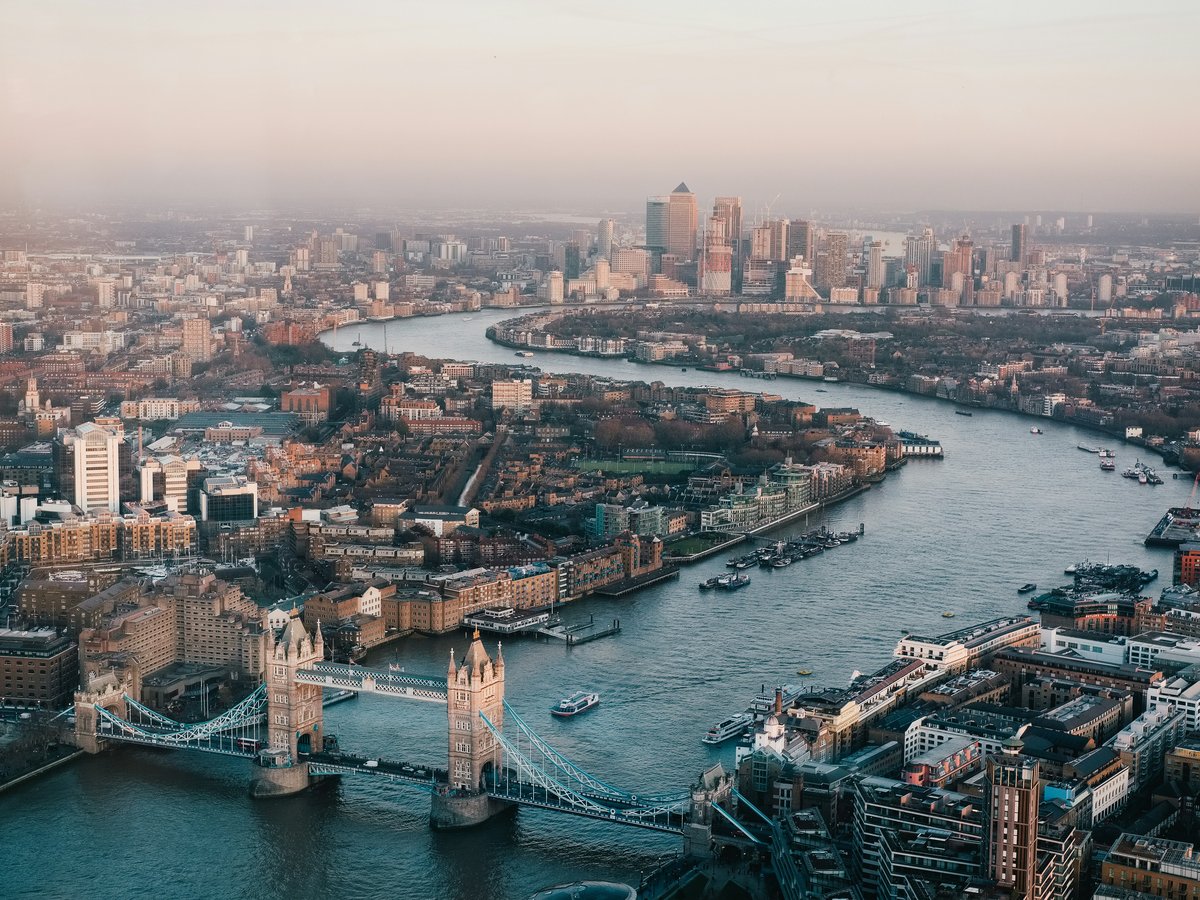
London doesn't really have a centre, not in the way most cities do. There's a rough cluster of tourist landmarks between Westminster and the City, but the actual life of the place happens in dozens of distinct neighborhoods that sprawl outward from the Thames in every direction. The river is your orienting line: north of it holds most of what visitors come for, while south London has been quietly becoming the more interesting half for food and nightlife over the past decade or so. The tube map flattens everything into a neat diagram, but distances can be deceptive. Shoreditch to Notting Hill is a solid hour door-to-door, and they might as well be different cities. Each neighborhood tends to have its own high street, its own pub culture, its own particular smell: fried chicken shops and diesel in one, sourdough and wet plane trees in another. Worth noting: London rewards you for picking a base and getting to know a few streets deeply rather than hopping across the map trying to tick off postcodes. The city is best absorbed at walking pace, one neighborhood at a time.
Neighborhoods
-
Soho
Packed tight, a little grubby in the best way. Soho still carries the residue of its seedier past: peep show signs next to Michelin-starred restaurants, old Italian delis beside cocktail bars that charge fifteen quid a drink. The streets are narrow, the buildings are Georgian and soot-stained, and by Thursday evening the pavements are so crowded you end up walking in the road. It smells like garlic and spilled beer. The pace is fast but not aggressive: people are here to eat, drink, and be out. There's a density of life per square metre here that nowhere else in London quite matches.
- Best for
- First-time visitors who want to be in the thick of it, theatre-goers, anyone who eats late and likes having thirty restaurant options within a five-minute walk
- Key streets
- Old Compton Street is the spine: coffee shops, bars, and the heart of London's gay scene. Berwick Street still has a few market stalls and some of the best independent record shops left in the city. Frith Street and Dean Street run parallel and hold most of the serious restaurants. Wardour Street connects Chinatown at the south end to Oxford Street at the north.
-
Southwark and Bankside
This stretch along the south bank of the Thames has a peculiar energy: part tourist corridor, part working neighbourhood that's still figuring out what it wants to be. The Tate Modern anchors the western end in a massive converted power station, and Borough Market sits at the eastern end under Victorian railway arches that shake every time a train passes overhead. Between them, you get cobblestone alleys, brutalist council estates, and converted warehouses. The light reflecting off the river on a clear afternoon makes the whole area feel slightly cinematic. It's louder than you'd expect: buskers, construction, the rumble of trains on the bridge above.
- Best for
- Families with older kids who want walkable culture without the West End crowds, food-focused travellers who want Borough Market on their doorstep, architecture nerds
- Key streets
- The riverside walk from Westminster Bridge to Tower Bridge is genuinely one of the best urban walks in Europe: about three miles, flat, with the whole north bank skyline across the water. Bermondsey Street, running south from the market, has quietly become one of London's better restaurant rows. Flat Iron Square, tucked under the railway arches near Southwark station, has street food stalls and live music most weekends.
-
Shoreditch and Hoxton
Shoreditch had its moment about fifteen years ago and never quite stopped having it. The warehouse conversions and street art are still here, but so are the tech offices and the boutique hotels that followed the artists in. It's a neighbourhood that tries very hard, which can be either appealing or exhausting depending on your tolerance for curated dishevelment. That said, the food scene is legitimately strong: Turkish ocakbasi grills on Kingsland Road, Vietnamese places on the same stretch, and more specialty coffee roasters per block than anywhere else in the country. The architecture is a jumble: Victorian terraces, glass-fronted new builds, and old industrial buildings with loading bays converted into bar entrances. Noisy at night, especially around Shoreditch High Street.
- Best for
- Under-35s who want nightlife and street food, design and fashion people, anyone who'd rather eat pho at midnight than find a pub that serves a roast
- Key streets
- Brick Lane runs south from here into Spitalfields and is still worth walking for the Sunday market and the bagel shops at the north end, though the curry houses are largely tourist traps now. Redchurch Street has the independent shops. Columbia Road is residential and quiet six days a week, then transforms into a packed flower market every Sunday morning: the sellers start shouting deals around 2pm as they try to shift the last bunches.
-
Kensington and South Kensington
Stucco-fronted townhouses, wide streets, and a kind of moneyed quiet that makes the rest of London feel like a different country. South Ken in particular has a museum district: the V&A, Natural History Museum, and Science Museum are all within a few hundred metres of each other, which is convenient but means the pavements around Exhibition Road are thick with school groups during term time. The residential streets west of Gloucester Road have that slightly eerie perfection of neighbourhoods where the money is old and the curtains are always drawn. It smells like nothing at all, which is unusual for London. The pace is slow, unhurried. People dress well.
- Best for
- Families with museum-age children, visitors who value calm and proximity to Hyde Park, anyone whose idea of a good afternoon is the V&A followed by tea somewhere with tablecloths
- Key streets
- Exhibition Road connects the museums to Hyde Park and has been pedestrianised into a shared-surface boulevard. Kensington High Street has the shops: a John Lewis, a Whole Foods, and a scattering of mid-range chains. Kensington Church Street climbs north toward Notting Hill and has antique dealers in every other shopfront. Thurloe Street, the little road between South Ken station and the V&A, has a cluster of French patisseries.
-
Camden Town
Camden hits you with noise and smell before anything else: the food stalls by the canal pump out clouds of smoke from grills, the market tannoys compete with buskers, and the whole stretch between the tube station and the lock has a carnival energy that can feel exhilarating or overwhelming depending on the day. The market itself has shifted over the years from genuine punk and counterculture to something more performative, but the bones are still there. The canal towpath heading east toward King's Cross is a different world: narrow boats, herons, and a quiet that seems impossible given what's happening two streets over. North of the market, the residential streets are surprisingly calm. Victorian terraces, corner pubs, and the occasional whiff of something herbal drifting from an upstairs window.
- Best for
- Budget-conscious younger travellers, music fans who want live venues within walking distance, anyone who finds the West End too polished
- Key streets
- Camden High Street from the tube to the Lock is the main artery: loud, crowded, lined with shops selling leather jackets and band t-shirts. Chalk Farm Road continues north past the Roundhouse, which is one of London's best live music venues in a converted railway engine shed. Inverness Street has a small daily market and some pubs that are more local than tourist. The canal towpath itself is free to walk and connects Camden to Regent's Park in one direction and King's Cross in the other.
-
Westminster and St James's
This is the London of postcards and Parliament broadcasts: Big Ben, Westminster Abbey, Buckingham Palace, the Mall lined with Union Jacks. It feels like a film set, which is both the appeal and the problem. The streets are wide, the buildings are imposing, and there's very little here that feels like a neighbourhood where people live. St James's, north of the park, is quieter and older in feel: gentlemen's clubs with no signage, hat shops, wine merchants that have been trading since the 1700s. The smell is diesel from the buses on Whitehall and cut grass from St James's Park. It's impressive but slightly sterile. You come here to see things, not to linger.
- Best for
- First-time visitors on a short trip who want the iconic landmarks walkable from their hotel, history and politics enthusiasts, anyone who'd rather look at palaces than eat at interesting restaurants
- Key streets
- Whitehall runs from Trafalgar Square to Parliament Square and passes Downing Street: you can see the famous door from behind the gates, though there's not much to it. The Mall connects Buckingham Palace to Trafalgar Square through St James's Park and is genuinely beautiful on a spring morning. Jermyn Street in St James's is the old-money shopping street: shirtmakers, shoemakers, perfumers. Birdcage Walk along the south side of St James's Park is the quieter alternative to the Mall and has pelicans in the park, which still surprises people.
-
Notting Hill and Bayswater
Notting Hill has been living off its film reputation for over twenty years now, and the reality is both prettier and more complicated than the movie suggests. The pastel-painted houses on streets like Lancaster Road are genuinely photogenic, and Portobello Road Market on Saturdays is still a good rummage if you start at the antiques end near the Notting Hill Gate tube rather than fighting through the food stalls further north. But this is now one of London's most expensive postcodes, and there's a slightly sanitised quality to some of it. Bayswater, just east, is rougher around the edges and more interesting for it: a mix of Middle Eastern restaurants, budget hotels, and a park-adjacent calm that Notting Hill proper has lost. You can smell shawarma on Queensway from two streets away.
- Best for
- Couples who want a photogenic base near Hyde Park, Saturday market browsers, visitors who want a residential feel without sacrificing access to the centre
- Key streets
- Portobello Road is the draw: the antiques dealers cluster at the southern end, the food stalls are in the middle around the Westway flyover, and the vintage clothing is at the north end past the bridge. Westbourne Grove runs parallel one street south and has the boutiques and brunch spots. Queensway in Bayswater has late-night Middle Eastern restaurants, a bowling alley, and an ice rink in the Whiteleys development. Ledbury Road connects the two areas and has some of London's most ambitious restaurants.
-
Bloomsbury and Fitzrovia
Bloomsbury has the British Museum, the University of London, and a grid of Georgian squares that are some of the most civilized spaces in the city. The pace is academic: quiet during the day, quieter at night. Students and professors dominate the cafes, and the bookshops along Great Russell Street and Museum Street are the kind where you lose an afternoon without meaning to. Fitzrovia, just west across Tottenham Court Road, is warmer and more restaurant-focused: Charlotte Street has been London's casual dining row for decades, and the side streets hold enough pubs and wine bars to keep you busy without ever feeling like you're in a nightlife district. The architecture across both is consistently Georgian: brick, sash windows, iron railings, plane trees. It smells like old books and coffee.
- Best for
- Readers, academics, repeat visitors who've already done the South Bank and Soho and want somewhere calmer, anyone who values being central without being in the tourist current
- Key streets
- Great Russell Street leads to the British Museum's main entrance and is lined with specialist bookshops and print dealers. Russell Square is the largest of the Bloomsbury squares and has a good cafe in the middle. Charlotte Street in Fitzrovia is the restaurant spine: everything from ramen to Peruvian. Store Street, off Tottenham Court Road, has design shops and a daily fruit market that's been running for over a century. Lamb's Conduit Street, east of Russell Square, is one of London's best-kept secrets for independent shops.
-
Greenwich
Getting to Greenwich feels like leaving London, even though it's only twenty minutes on the DLR from Bank. The town centre clusters around the Cutty Sark and the Old Royal Naval College: enormous Baroque buildings that Christopher Wren designed, sitting right on the Thames. The park climbs steeply up the hill behind, and the view from the top, next to the Royal Observatory, is one of those moments where you understand why people settled here. The town itself has a covered market with independent food stalls, second-hand bookshops, and enough pubs to fill a long afternoon. It's quieter than central London, noticeably so. On weekends the market draws crowds, but even then the park absorbs everyone and the pace stays calm. The air smells different: cleaner, with grass and river mud.
- Best for
- Families with kids who like ships and space, anyone who wants a full day trip that doesn't feel like central London, history-focused visitors who'd rather see where time itself was standardised than another palace
- Key streets
- Greenwich Church Street and Nelson Road form the main shopping axis between the pier and the park entrance. The covered market is off Greenwich Church Street and is worth an hour of browsing. King William Walk runs along the Naval College grounds and connects to the Cutty Sark. The path through Greenwich Park up to the Observatory is steep but manageable, and the Flower Garden halfway up is a good excuse to stop and catch your breath.
-
Brixton
Brixton is loud, warm, and unapologetically itself. The market: several interconnected markets running through the railway arches off Electric Avenue: is where you feel it most: West African yams piled next to Jamaican patties next to a natural wine bar that opened last year. The gentrification conversation here is real and ongoing, and you can see both sides of it on the same street: a Nigerian fabric shop next to a craft beer taproom. The music heritage runs deep; the Ritzy cinema, the Academy, and half a dozen smaller venues keep things noisy most nights. The air smells like jerk seasoning and plantain frying. The pace is its own, not the rushed commuter clip of the centre, more of a purposeful stroll with frequent stops to chat.
- Best for
- Music and food lovers, travellers who want to see London beyond the tourist core, visitors who are comfortable with a neighbourhood that's raw and real rather than polished
- Key streets
- Electric Avenue was one of the first shopping streets in London to get electric lighting and still has its market stalls. Coldharbour Lane runs east from the centre and has most of the nightlife: bars, clubs, late-night restaurants. Atlantic Road connects the station to the market entrances. Brixton Village and Market Row are the covered arcade markets under the arches: walk through both, they connect. Acre Lane heading southwest has some of the better Caribbean restaurants, particularly for goat curry and oxtail.
-
Islington
Islington occupies a strange position: solidly north London, historically working class, now thoroughly gentrified but still carrying enough of the old grit to feel honest. Upper Street, the main drag, is a solid mile of restaurants, pubs, gastropubs, and theatres. The Almeida Theatre is one of London's best for new writing, small enough that every seat feels intimate. The side streets are Georgian terraces with those iron railings and window boxes that photograph so well. Camden Passage, despite the name, is in Islington: a narrow lane of antique shops and cafes that predates the Camden Market tourist operation by decades. It smells like pub kitchens and ground coffee. The pace is comfortable: busy enough to feel urban, calm enough to sit and read a paper.
- Best for
- Theatre-goers, couples who want good restaurants without Soho's intensity, repeat visitors looking for a liveable London base with easy tube access to everything
- Key streets
- Upper Street runs from Angel tube station north to Highbury Corner and is the commercial spine: you could eat a different cuisine every night for a month. Camden Passage runs off Upper Street near the Angel end and has the antiques shops and a Wednesday and Saturday market. Cross Street and Liverpool Road, parallel to Upper Street, are quieter and have some of the better neighbourhood restaurants. Chapel Market, off Liverpool Road, is a proper daily street market with fruit and veg stalls that serve the local estate residents.
-
Marylebone
Marylebone sits between the tourist weight of Oxford Street to the south and the green expanse of Regent's Park to the north, and manages to feel like neither. The high street has an almost village quality: independent butchers, a cheese shop, a proper fishmonger, bookshops with chairs outside. The buildings are Georgian and Edwardian, well-maintained, and the streets are clean in that way that signals serious money without shouting about it. It's the kind of area where you find a Michelin-starred restaurant next to a dry cleaner. Quieter than Soho, less sterile than Kensington, more interesting than Mayfair. The Marylebone Farmers' Market on Sundays is small but properly curated: actual farmers, not resellers. It smells like fresh bread and the cold air coming down from the park.
- Best for
- Repeat visitors who want a central location that doesn't feel touristy, food lovers who care about ingredients, anyone who finds Mayfair intimidating and Oxford Street exhausting
- Key streets
- Marylebone High Street is the heart of it: walk it end to end, it takes fifteen minutes and you'll pass Daunt Books, several good restaurants, and a concentration of independent shops that feels increasingly rare in central London. Marylebone Lane curves southwest and has more cafes and a good wine bar or two. New Cavendish Street and Paddington Street run east-west and hold the quieter residential blocks. Chiltern Street, at the east end, has the Chiltern Firehouse and a cluster of fashion and design shops.
FAQ
Which London neighborhood is best for a first-time visitor staying three to four days?
Soho or Bloomsbury, depending on what kind of trip you want. Soho puts you in the middle of everything (theatres, restaurants, Chinatown, the West End) and the density means you waste almost no time travelling between things. It's noisy and you'll pay more for a hotel room the size of a cupboard, but the convenience is hard to argue with. Bloomsbury is ten minutes north, significantly quieter, and still walkable to most central attractions. You get the British Museum on your doorstep and bigger hotel rooms for less money. The trade-off is that you'll tube or walk twenty minutes to get to the South Bank or Soho for dinner. For a first visit, Soho is likely the better call unless you're noise-sensitive or travelling with young children.
Is South London safe and worth visiting for tourists?
South London is broadly safe by any reasonable measure: the same common-sense awareness you'd apply in any major city applies here. Areas like Brixton, Peckham, and Bermondsey have become some of the most interesting food and nightlife destinations in the whole city over the past decade. Borough Market alone justifies crossing the river. The perception gap between north and south London is largely outdated, though it's true that south London is patchier in tube coverage: the Overground, buses, and the Elizabeth Line fill most gaps, but you'll want to plan transport a bit more carefully. Greenwich, Southwark, and Brixton are all well-connected and reward a full afternoon or evening.
Where should I stay in London on a budget without being too far from the centre?
Camden Town and Islington both have hostels and budget hotels that are a straightforward tube ride from central London: Camden is on the Northern line and gets you to Leicester Square in about twelve minutes. Bayswater, next to Notting Hill, has a concentration of budget and mid-range hotels along Queensway and Sussex Gardens that benefit from the area's slightly faded reputation while being a ten-minute walk from Hyde Park and well-connected by the Central and District lines. King's Cross has also become a legitimate budget base since the area's regeneration: several chain hotels offer reasonable rates, and you're on six tube lines plus Eurostar. Avoid anything that bills itself as 'zone one luxury' for under a hundred pounds a night: the rooms will be coffin-sized and the plumbing will be a surprise.
How do London neighborhoods change between daytime and evening?
The shift can be dramatic. Soho goes from office-worker lunch crowds to a packed, noisy nightlife district by about 7pm on any weekday: Thursday through Saturday it stays loud past midnight. The South Bank is a daytime cultural corridor that gets genuinely atmospheric after dark, with the buildings lit up across the river, though the restaurants and bars thin out east of Tower Bridge. Shoreditch barely wakes up before noon but doesn't really start until 9pm on weekends. Westminster empties out almost completely after 6pm: it's eerily quiet once Parliament rises and the tourists leave, which is quite pleasant for a walk. Brixton maintains its energy later than most neighborhoods south of the river, with Coldharbour Lane staying active until the early hours. Camden's market closes by early evening, but the pubs and music venues carry the area well past midnight.
What is the best way to get between London neighborhoods?
The tube is the obvious answer, but it's not always the best one. London's bus network is often faster for short cross-town journeys that would require a tube change: the 38 from Islington to Soho, for instance, takes about twenty minutes on the top deck and you see the city. Walking is underrated: most central neighborhoods are closer together than the tube map suggests. Soho to Covent Garden is five minutes on foot, and Bloomsbury to King's Cross is about fifteen. The Overground connects neighborhoods the tube ignores: Shoreditch to Brixton via the East London Line is a single train with no changes. River buses run between Greenwich, Bankside, Westminster, and Battersea and are still one of London's best-kept transport secrets. An Oyster card or contactless bank card works on everything and caps your daily spend automatically.
Which neighborhoods have the best food scenes in London right now?
Brixton and Peckham currently have the most interesting concentration of independent, affordable food: Caribbean, West African, and Southeast Asian alongside newer openings. Soho remains the density king: more restaurants per square metre than anywhere else, covering everything from Cantonese dim sum on Gerrard Street to omakase counters on Wardour Street. Shoreditch and the Kingsland Road corridor do Turkish and Vietnamese better than almost anywhere in Europe. Marylebone is the quiet achiever: fewer restaurants, but the hit rate is high and the ingredient quality reflects the local purchasing power. Borough Market and Bermondsey Street, technically in Southwark, function as London's food pilgrimage route. That said, the scene shifts fast. Somewhere currently unremarkable will likely be the next place everyone's talking about within a year.
Last verified by automated review (v1.7.2) on . What is automated review?