How do I get around London?
Oyster card or contactless bank card on the Tube covers most of London. The Underground runs 11 lines across 270 stations; buses fill the gaps and run all night. Black cabs are expensive but honest on the meter. Uber works well after midnight. Walking is the best way to connect nearby neighborhoods.
Book the connection
One search across trains, buses & flights: live times and prices for London.
Oyster card or contactless bank card: pick one and forget the rest. A contactless Visa or Mastercard already in your wallet taps on every Tube gate, bus reader, and Overground turnstile at the same price as an Oyster, and it auto-caps your daily spend at £8.10 for Zones 1-2. If your bank charges foreign transaction fees, buy an Oyster at any station machine for a £7 refundable deposit and load £20, which covers roughly three days of moderate Tube use. Paper single tickets cost £6.70 per journey versus £2.80 on contactless: that gap alone justifies sorting your card situation before you leave Heathrow. The Tube runs from roughly 5am to midnight, with Night Tube service on Fridays and Saturdays on the Victoria, Central, Jubilee, Northern, and Piccadilly lines. Trains come every 2-4 minutes at rush hour on the central lines; you rarely need to check a timetable.
Buses are the unglamorous workhorse. They run 24 hours a day, they cost a flat £1.75 per ride regardless of distance, and they take you through neighborhoods the Tube skips entirely: try the 11 from Liverpool Street through the City, along the Strand, past Westminster and Chelsea to Fulham, all from the top deck for the price of a bad coffee. You'll hear the hiss of brakes and the recorded "bus stopping" chime so often it becomes background noise by day two. Cash is not accepted on any London bus. Mind you, buses are slow during rush hour: a journey from Shoreditch to Kensington that takes 25 minutes on the Tube might be 70 on a bus crawling through Holborn. Use them for short hops, scenic routes, and after-midnight travel when the Tube is shut.
Black cabs and Uber split the after-hours work. Black cabs are metered, reliable, and expensive: a 3-mile ride from Soho to King's Cross runs about £12-15 depending on traffic, and the meter ticks upward at every red light with a kind of quiet menace. Hailing one on the street still works in central London; the orange "For Hire" sign on the roof is the signal. Uber tends to be 20-40% cheaper for the same route, and surge pricing at 2am outside a Shoreditch club can flip that math entirely. Download Uber and Bolt before you arrive. Worth noting: neither ridehail app picks up from Heathrow arrivals as smoothly as the Heathrow Express or Piccadilly line; more on that in the airport-to-city guide.
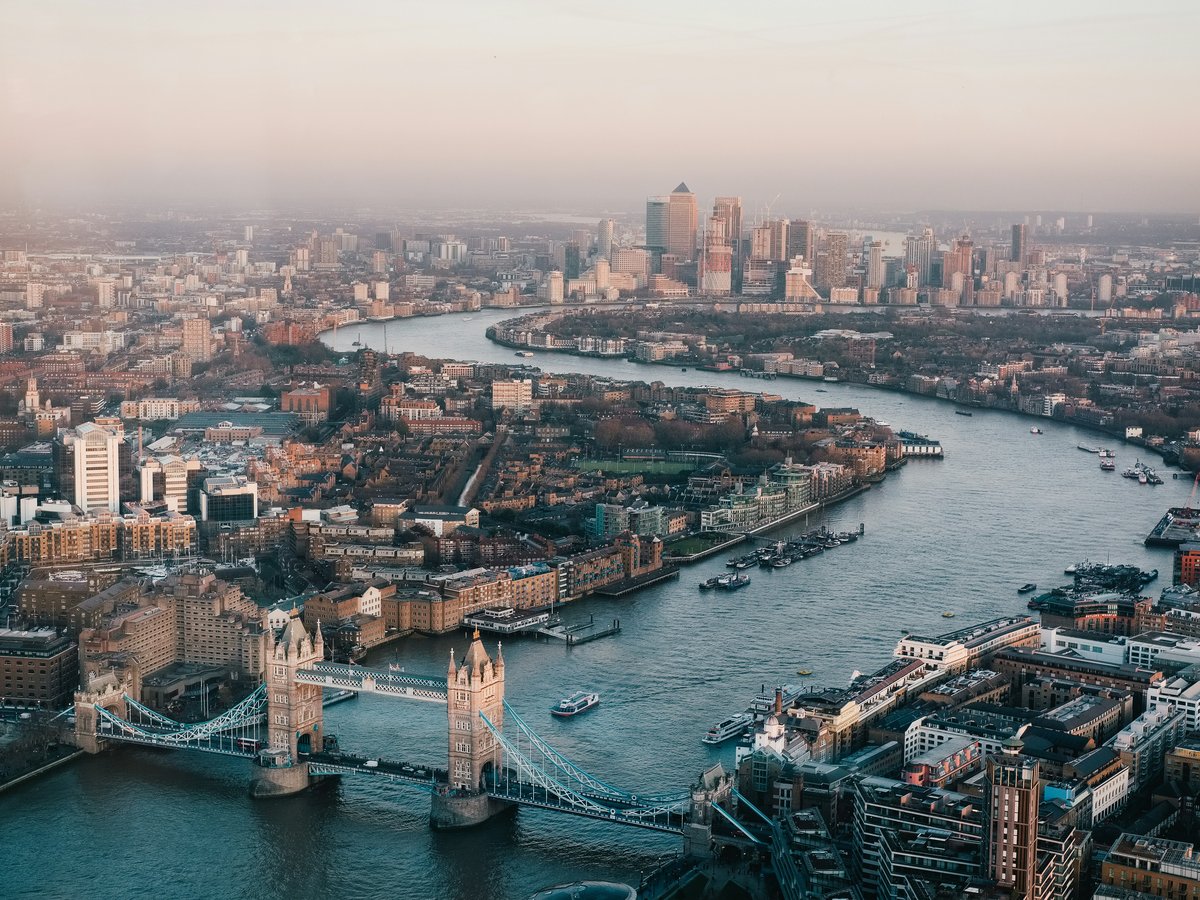
Walking is where London stops being a transit problem and starts being the point. The distance from Covent Garden to the British Museum is 8 minutes on foot. Trafalgar Square to Buckingham Palace is 12. The South Bank from Westminster Bridge to Tower Bridge is a flat 45-minute walk along the Thames, with the smell of roasted chestnuts from the vendors near the National Theatre in colder months and the clatter of skateboarders under the Southbank Centre year-round. Most first-time visitors overestimate how far apart central London landmarks are and burn 40 minutes on a Tube journey that involves two changes when the walk would have taken 15. A rough rule: if the journey is under a mile and you don't have a time constraint, walk it. You'll see more, and the rain is rarely as bad as its reputation: currently it is overcast and about 17°C, which is standard late-May London.
The Elizabeth line is the newest and best-connected route for first-timers. It runs from Heathrow through Paddington, Bond Street, Tottenham Court Road, Liverpool Street, and out to Canary Wharf: essentially threading through every zone a visitor cares about on one line with wide, air-conditioned carriages that feel nothing like the cramped, warm Central line. Google Maps handles London transit well; Citymapper is better. Set it up before you land, let it route you, and trust it over the paper Tube map: the geographic distortion on that map has been fooling visitors into unnecessary changes since 1933.
On-the-ground: metro available · ride-hail apps work.
Primary modes of transit
- Underground (Tube)
- Bus
- Elizabeth line
- Overground
- Black cab
- Uber / Bolt
- Walking
- Thames Clippers river bus
London's network by the timetable
Read from the published timetables, not from memory: 22 operators, 214 routes and 5,140 stops within 37 km of the centre.
- Operators, by routes here
- Red Eagle Buses Ltd (35)
- Arriva Kent Thameside Ltd (30)
- Central Connect Transport Ltd (30)
- Centrebus Ltd (23)
- Carousel Buses (17)
- Sullivan Buses Engineering Ltd (17)
- Universitybus Ltd (17)
- Red Rose Travel Ltd (10)
- and 14 more
- Routes by mode
- 214 Bus
- Weekday service
- 00:00 to 28:54 (04:54 the next morning)
- Fares in the timetable
- not published
- Timetables valid
- 2017-09-05 to 2028-11-01
Read 2026-09-14, from 5 feeds:
- Green Line 702 (the operator's own local feed, Mobility Database source 1937). Licence
- Oxford Bus (the operator's own local feed, Mobility Database source 1947). Licence
- Carousel Buses (the operator's own local feed, Mobility Database source 1932). Licence
- Reading Buses (the operator's own local feed, Mobility Database source 1949). Licence
- Intalink (the operator's own national feed, Mobility Database source 1939). Licence
Catalogued but not read, so the network may be larger than these counts: BODS UK aggregate feed (over the size cap).
Popular connections from London
Lowest fares and fastest times for the most-booked departures, as observed on Omio in August 2025. Live prices vary.
London to Paris
Check times & book on Omio →Mode Fare from Fastest Train from £149.09 2 h 18 min Bus Most booked from £23.49 7 h 55 min Flight from £50.70 1 h 10 min London to Edinburgh
Check times & book on Omio →Mode Fare from Fastest Train from £64.85 4 h 16 min Bus Most booked from £22.09 8 h 16 min Flight from £26.24 1 h 15 min London to Manchester
Check times & book on Omio →Mode Fare from Fastest Train from £23.07 2 h 6 min Bus Most booked from £7.78 3 h 55 min Flight from £44.94 1 h London to Amsterdam
Check times & book on Omio →Mode Fare from Fastest Train from £149.09 3 h 58 min Bus Most booked from £41.59 10 h 35 min Flight from £55.24 1 h Ferry from £51.32 6 h 45 min London to Brussels
Check times & book on Omio →Mode Fare from Fastest Train from £143.02 1 h 57 min Bus Most booked from £34.59 6 h 30 min Flight from £110.72 1 h London to Liverpool
Check times & book on Omio →Mode Fare from Fastest Train from £17.68 2 h 23 min Bus Most booked from £8.22 4 h 50 min
Ready to book the connection?
Compare trains, buses & flights to and around London on Omio: live times & prices in one search.
Compare on Omio →More transport questions
How do I get from the airport to London?
From Heathrow, take the Elizabeth Line: around £5.60 on contactless, 30 minutes to Paddington or straight through to Tottenham Court Road without changing. The Heathrow Express is faster at 15 minutes but £25. After midnight, Uber runs £45-70 to central London. From Gatwick: Thameslink to St Pancras, roughly £12, 35 minutes.
Full answerHow do I get to London?
London has six airports. Heathrow (LHR), 24 km west, handles most long-haul traffic on BA, Virgin Atlantic, American, United, and Delta. Gatwick (LGW), 45 km south, splits between scheduled and budget carriers. From the US East Coast, direct flights run 7-8 hours at $500-900 round-trip. The Eurostar from Paris Gare du Nord takes 2 hours 15 minutes to St Pancras.
Full answerWhat are the best day trips from London?
Bath is the strongest single-day trip from London for couples: 90 minutes by GWR from Paddington, with the Roman Baths for the history partner and Thermae Bath Spa's rooftop pool for the one who wants to decompress. Brighton and Whitstable are strong warm-weather alternatives, both under an hour by train. Oxford and Rye round out the options.
Full answerLast verified by automated review (v1.7.2) on . What is automated review?