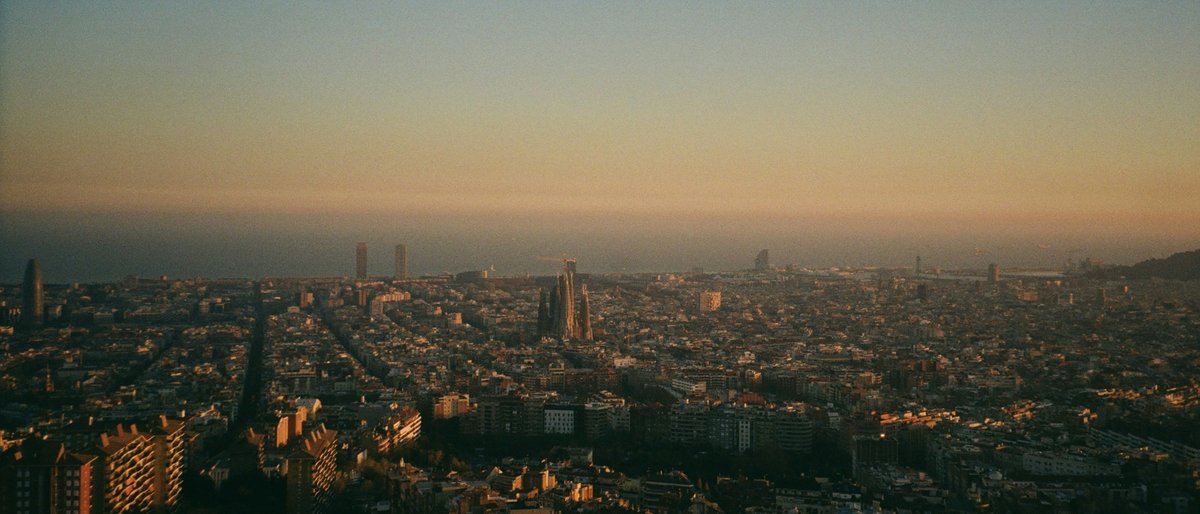
Barcelona is one of those cities where the street life itself feels like the main event. The architecture hits you before you even walk into a museum — Gaudí's facades catch the afternoon light along Passeig de Gràcia, medieval stonework narrows the Gothic Quarter into shadow, and Montjuïc opens up to port views that stretch to the horizon. A lot of what makes this city worth visiting just happens to be outside, in public space, free to anyone paying attention. The Mediterranean climate helps. You can spend a full week here without buying a single ticket, eating cheap pa amb tomàquet from a market stall, walking neighborhoods that each feel like different cities. To be fair, some of the big-name attractions do cost money — Sagrada Família, Casa Batlló, the monumental zone of Parc Güell. But Barcelona has a long tradition of free museum days, public festivals that shut down entire streets, and parks that rival any paid garden in Europe. The city tends to reward curiosity over spending.
Free attractions
-
Bunkers del Carmel (Turó de la Rovira)
Old Civil War anti-aircraft battery site turned into what might be the finest viewpoint in Barcelona. The 360-degree panorama covers the entire city grid of the Eixample, Sagrada Família poking up from the rooftops, the port, Montjuïc, and on clear days the mountains behind. Locals come up here at sunset with wine and bocadillos. The wind can be sharp, mind you — bring a layer. Getting there involves a steep uphill walk from the Carmel neighborhood, but that's part of it.
El CarmelViewpoint -
Parc de la Ciutadella
Barcelona's central park, built on the site of an old military citadel. There's a boating lake, a monumental cascade fountain that Gaudí reportedly helped design as a student, the Catalan Parliament building, and wide gravel paths under mature plane trees. On weekends it fills with drummers, jugglers, families, and people just lying in the grass reading. The light filtering through the trees in late afternoon has a particular golden quality that photographers chase.
Ciutat VellaPark -
Parc Güell (Free Zone)
The famous mosaic terrace and serpentine bench require a ticket, but most of Parc Güell is still free to enter. The free zones include forested paths, stone viaducts with leaning columns that look like petrified trees, and viewpoints over the city that are honestly just as good as the ones from the paid area. The Calvary at the top of the park — three stone crosses on a rocky mound — tends to be quiet even when the lower terraces are packed.
GràciaPark -
Jardins de Mossèn Costa i Llobera
A cactus garden on the slopes of Montjuïc that most visitors walk right past. It holds one of Europe's most significant collections of cacti and succulents — over 800 species from arid zones around the world. The garden terraces face the port, so you get harbor views between the agave plants. The dry heat radiating off the stone paths on a summer afternoon makes it feel like you've left Catalonia entirely.
MontjuïcGarden -
Jardins del Palau de Pedralbes
Tucked behind the old royal palace in the Pedralbes neighborhood, these gardens stay surprisingly quiet. Tall cedars, bamboo groves, a Gaudí-designed parabolic pergola draped in wisteria, and a Hercules fountain also attributed to the young Gaudí. The shade here is dense and cool even in July. You might see students from the nearby university campus studying on the benches.
PedralbesGarden -
Barceloneta Beach
The city's most central beach, a short walk from the old port. The sand is coarse and golden, the water stays warm well into October most years, and the boardwalk stretches for over a kilometer with Frank Gehry's golden fish sculpture glinting at one end. It gets crowded in high summer — arrive before ten in the morning for space. The chiringuito culture is strong here: the smell of grilled sardines drifts from the beachfront bars.
BarcelonetaBeach -
Basílica de Santa Maria del Mar
A fourteenth-century Gothic church in the Born neighborhood, built in just 54 years — remarkably fast for medieval construction. The interior is striking for what it lacks: the austerity of the stone columns and the height of the nave create a sense of volume that the more ornate Barcelona Cathedral doesn't quite match. General entry is currently free, though they charge for rooftop access and guided tours. The light through the rose window in the morning is worth timing your visit around.
El BornChurch -
Montjuïc Castle Exterior and Grounds
Entry to the castle interior costs a few euros, but the surrounding grounds, moat, and ramparts are free to walk. The views from the fortress walls look out over the entire port and south coast. On clear days you can see planes landing at El Prat, container ships stacking up in the harbor, and the Balearic ferries heading out to sea. The walk up from the Jardins de Joan Brossa through pine forest is the best approach — the air smells of resin and warm earth.
MontjuïcViewpoint -
MUHBA Plaça del Rei
The Barcelona History Museum at Plaça del Rei normally charges admission, but it opens for free on the first Sunday of every month and on several city holiday dates. The underground Roman ruins beneath the Gothic Quarter are impressive — you walk along excavated streets, laundry facilities, and fish-sauce production workshops from Barcino, the Roman settlement. Worth planning around the free days.
Barri GòticMuseum (free on certain days) -
Museu Picasso
Free entry on the first Sunday of every month and Thursday evenings from 5pm to 8pm. The collection is strongest on Picasso's formative years in Barcelona and his Las Meninas series. The museum occupies five connected medieval palaces on Carrer Montcada, which are themselves worth seeing for the courtyard architecture. The free days draw long queues, so arrive early or book the free timed slot online if available.
El BornMuseum (free on certain days) -
MNAC (Museu Nacional d'Art de Catalunya)
Free entry on the first Sunday of every month and Saturday afternoons after 3pm. The Romanesque art collection — murals rescued from crumbling Pyrenean churches — is unlike anything you'll see elsewhere. The building itself, the Palau Nacional on Montjuïc, has a wide terrace with views down over the city toward the sea. Even when the museum is closed, the terrace and surrounding gardens are freely accessible.
MontjuïcMuseum (free on certain days)
Free activities
-
Walking the Barri Gòtic
The Gothic Quarter is essentially an open-air museum of medieval architecture. Narrow stone lanes, Roman wall fragments embedded in later buildings, the remnants of the old Jewish quarter (El Call), and small plaças that open up suddenly between buildings. The Cathedral cloister with its thirteen white geese — representing Saint Eulàlia's age at martyrdom — is free to visit during morning hours. You'll hear buskers echoing off stone walls, smell coffee from basement cafés, and feel the temperature drop several degrees as you move from sunlit squares into shaded alleys.
Barri GòticWalking -
Mercat de la Boqueria
Barcelona's central market off La Rambla. Free to enter and browse, and the sensory overload alone is worth it — pyramids of cut tropical fruit, legs of jamón ibérico, bins of olives in every color, fresh fish on crushed ice. The deeper you go past the tourist-facing stalls near the entrance, the more you see locals actually shopping. Early morning is best, before the crowds make the aisles impassable. The smell is a mix of cured meat, ripe melon, and something briny from the seafood section.
El RavalMarket -
Carrer Montcada Art Walk
The street that houses the Picasso Museum is lined with medieval palaces, several of which contain free galleries. The Moco Museum courtyard and the various exhibition spaces in converted noble houses make for a natural art walk. The architecture of the street itself — heavy wooden doors, interior courtyards with stone staircases — tells you something about medieval Barcelona's merchant wealth.
El BornWalking / Art -
Passeig de Gràcia Architecture Walk
You can see the exteriors of Casa Batlló, Casa Amatller, and Casa Lleó Morera (the so-called Manzana de la Discordia) without paying anything. Walk the full length of the boulevard from Plaça Catalunya to Avinguda Diagonal and you'll pass modernista lampposts, mosaic paving tiles designed by Gaudí, and facades that look like they're melting in the heat. La Pedrera's rooftop requires a ticket, but the ground-floor entrance hall with its painted ceiling is visible from the doorway.
EixampleArchitecture -
El Born Neighborhood Stroll
One of the liveliest neighborhoods for wandering without agenda. Former medieval market streets now hold independent boutiques, wine bars, and small galleries. The Passeig del Born — a wide tree-lined promenade — fills with people in the evening. The ruins of the old Born market neighborhood, destroyed in 1714 during the siege, are visible through the glass floor of the Born Centre de Cultura i Memòria, which is free to visit.
El BornWalking -
Poblenou Street Art and Cemetery
The old industrial quarter of Poblenou has been reinventing itself for two decades. Warehouses turned into studios, factory walls covered in large-scale murals, and the Rambla del Poblenou offering a quieter, more local version of the famous Rambla. The Poblenou Cemetery is unexpectedly striking — elaborate nineteenth-century mausoleums, some crumbling, some restored, arranged in tight rows. The Kiss of Death sculpture (El Petó de la Mort) draws visitors who know to look for it.
PoblenouWalking / Street Art -
Carretera de les Aigües
A flat, unpaved path running along the side of Collserola, the mountain range behind Barcelona. It follows an old water channel at about 450 meters elevation, offering continuous views over the entire city below. Popular with runners and cyclists. The light at sunset turns the city pink and gold. Access from the Vallvidrera funicular or by walking up from Sarrià. The breeze up here is cooler than down in the city grid — a relief in summer.
CollserolaHiking / Running -
Sunset at the W Hotel Breakwater
The long stone breakwater extending past the W Hotel at the end of Barceloneta is a popular spot for watching the sun go down over the port. Fishermen cast lines off the rocks, couples sit on the concrete edges, and the sky behind Montjuïc shifts through orange and purple. The salt spray and the sound of waves against the breakwater blocks make this feel oddly removed from the city, despite being a fifteen-minute walk from the metro.
BarcelonetaViewpoint
Free events
-
La Mercè
Late September, typically around September 24Barcelona's largest annual street festival, honoring the patron saint Mare de Déu de la Mercè. Multiple days of free concerts at stages across the city, castellers (human tower builders) performing in Plaça Sant Jaume, correfocs (fire runs) where drummers and devils chase through streets with handheld fireworks, and a massive fireworks display over Montjuïc. The correfocs are intense — sparks bouncing off buildings, the heat and sulfur smell, crowds pressing back and surging forward. Wear old clothes and closed shoes if you get close.
Citywide, main stages at Plaça de la Mercè and along the waterfront -
Festes de Gràcia
Mid-August, typically one week around August 15The Gràcia neighborhood competition where streets spend months secretly decorating their blocks around a theme, then unveil everything simultaneously. Entire streets transformed with handmade installations — fish made from plastic bottles, underwater worlds built from recycled materials, jungle canopies strung between balconies. Live music on small stages, food stalls, and an atmosphere that's more neighborhood block party than official festival. It gets rowdy after midnight.
Gràcia neighborhood, various decorated streets -
Música als Parcs
June through August, typically weekend eveningsA summer concert series held in public parks and gardens across Barcelona. Free performances of jazz, classical, world music, and Catalan folk. The settings are intimate — a bandstand in a garden, chairs set up on grass, families and couples settling in with picnic blankets. The program changes yearly, but the series has been running for decades. Check the Barcelona city council website for the current schedule.
Various parks including Parc de la Ciutadella, Jardins de Pedralbes, Parc del Turó -
Nit dels Museus (Night of Museums)
One Saturday in May, typically mid-monthPart of the Europe-wide International Museum Night. Barcelona's major museums — MACBA, CCCB, MNAC, Fundació Joan Miró, Museu Marítim, and others — open their doors for free from evening until roughly 1am. The queues can be long at the more popular institutions, but there's a festive atmosphere to the whole evening, and seeing art at night changes the experience. Some museums put on special performances or projections for the occasion.
Multiple museums citywide -
First Sunday Free Museum Day
First Sunday of every month, all dayMultiple Barcelona museums offer free entry on the first Sunday of each month. Participating institutions typically include MNAC, Museu Picasso, MUHBA, Jardí Botànic, Museu del Disseny, and the Museu de Ciències Naturals. Some also extend free hours on other dates — MNAC on Saturday afternoons, for instance. Availability and participating institutions can shift, so checking the specific museum's website before going is worth the two minutes.
Various museums -
Castells (Human Tower) Performances
During major festivals (La Mercè, Festes de Gràcia) and at local neighborhood celebrations year-roundHuman tower building is a Catalan tradition recognized by UNESCO. Colles castelleres (tower teams) practice and perform throughout the year, with major performances during city festivals. Watching a nine-level tower go up — the trembling of the structure, the small child climbing to the top, the collective held breath of the crowd, then the eruption when they dismount safely — is moving. Plaça Sant Jaume during La Mercè is the most famous venue, but smaller performances happen at local festes throughout the year.
Plaça Sant Jaume and various neighborhood squares -
Open Gallery Nights in El Born and El Raval
Varies by gallery; many coordinate openings on Thursday evenings, in spring and autumnBarcelona's gallery districts hold periodic open evenings where multiple galleries coordinate late openings, often with wine and conversation. El Born and El Raval have the densest concentration. The events are informal — you drift between small spaces, some showing established Catalan artists, others featuring experimental work. The gallerists are usually present and willing to talk. These aren't on a fixed citywide schedule, so following individual galleries or checking local listings is the best approach.
El Born and El Raval neighborhoods
Free Days at Paid Museums: A Practical Guide
Several of Barcelona's best museums that normally charge admission have regular free windows. The pattern is worth knowing because it can shape your whole itinerary. The Museu Picasso opens free on the first Sunday of every month (all day) and on Thursday evenings from 5pm to 8pm. MNAC is free on the first Sunday and on Saturdays after 3pm. The Museu Marítim at the old Drassanes shipyards tends to offer free entry on Sunday afternoons from 3pm. The Museu del Disseny at Plaça de les Glòries is free on the first Sunday as well. That said, these schedules do change — the city government adjusts them periodically, and some museums have temporarily suspended free days in the past before reinstating them. Always check the museum's own website the week you plan to go. One tactical note: the first-Sunday crowds at the Picasso Museum can be substantial. Arriving when doors open or booking a free timed entry online, where available, saves real frustration.
Montjuïc: A Full Free Day on the Mountain
You could spend an entire day on Montjuïc without paying for anything. Start at Plaça Espanya and walk up past the Font Màgica (the magic fountain runs free light-and-water shows on weekend evenings from spring through autumn — the schedule varies by season). Continue up the grand staircase to MNAC, where the terrace alone justifies the climb. From there, wander through the Jardins de Joan Brossa, a landscaped park with play areas and city views. The Jardins de Mossèn Costa i Llobera cactus garden is a short detour downhill. Continue along the mountain ridge to the castle grounds — the exterior ramparts and surrounding parkland are free, even when the castle interior charges admission. If you still have energy, descend the seaward side through the Jardins del Mirador for sunset views over the port. The whole circuit takes four to five hours at a comfortable pace, more if you stop to read on a bench or watch the paragliders launching from the hillside. Bring water — the mountain has fewer fountains than you'd expect.
Beaches Beyond Barceloneta
Everyone gravitates to Barceloneta, and it earns that attention. But the Barcelona coastline extends northeast through several other beaches that thin out the crowds considerably. Platja del Bogatell is popular with locals — a bit wider, a bit quieter, and the water quality has been consistently good. Further along, Platja de la Mar Bella has a nudist section and a younger, more alternative crowd. Nova Mar Bella and Llevant Beach at the far end near the Fòrum area are the quietest of all, though they can feel more exposed to wind. The entire waterfront from Port Olímpic to the Fòrum is connected by a continuous boardwalk and bike path — a flat, easy walk of about four kilometers. The sea breeze keeps things bearable even in July, and the sound of waves and the grit of sand between your toes are the same whether you're on the crowded beach or the empty one.
Free Water and Font Fountains
Barcelona has an extensive network of public drinking fountains — the old-style cast-iron fonts that you'll see on street corners throughout the city. The water is safe to drink and tastes fine, despite what some locals will tell you. Carrying a reusable bottle and refilling at these fountains saves several euros a day that would otherwise go to bottled water. The most famous is the Font de Canaletes at the top of La Rambla, where legend says anyone who drinks from it will return to Barcelona. Whether or not you believe that, the water is cold and the fountain is easy to spot by the small crowd perpetually gathered around it.
FAQ
Are Barcelona's beaches really free to use?
All of Barcelona's beaches are public and free to access. There's no charge for the sand or the water. You'll find free public showers and foot-washing stations along most of the main beaches. The chiringuitos (beach bars) charge for food and drinks, obviously, and renting a sunbed costs money if any are available, but you can bring your own towel and spend the whole day without spending anything. Lifeguards are on duty during summer months at the main beaches.
Which museums are free on the first Sunday of the month in Barcelona?
The list shifts slightly over time, but the major ones that have consistently offered first-Sunday free entry include MNAC, the Museu Picasso, MUHBA (Barcelona History Museum), the Museu del Disseny, the Jardí Botànic, and the Museu de Ciències Naturals (Museu Blau). Some also have other free windows — MNAC on Saturday afternoons after 3pm, the Picasso Museum on Thursday evenings. It's worth checking each museum's website before your visit, as schedules can change with little notice.
Is it safe to walk around Barcelona at night for free?
Generally, yes — Barcelona is a city where people are out late, restaurants serve dinner at 10pm, and the streets in central neighborhoods stay lively well past midnight. The usual urban precautions apply: watch for pickpockets on La Rambla and in crowded metro stations, keep your phone secure, and stay aware of your surroundings in quieter areas. The Gothic Quarter, El Born, and Gràcia all feel alive and populated at night. The Raval has rougher edges after dark in certain blocks, but it's also home to some of the city's most interesting nightlife. Use normal judgment.
Can I visit Sagrada Família for free?
The Sagrada Família does not currently offer free entry days for general visitors. It's a ticketed attraction and has been for years — the construction is partially funded by admission revenue. However, you can attend Mass on Sundays and some holidays for free, though you'll need to register in advance through the basilica's website and spots fill up quickly. Even from outside, the facades are extraordinary to study, and the small park across the street (Plaça de Gaudí) gives you a clear reflected-pool view of the Nativity facade. That external view alone is worth the walk.
Is the Parc Güell monumental zone free?
No. The monumental zone — the mosaic-covered terrace, the serpentine bench, the Sala Hipòstila with its columns — requires a timed ticket. However, the majority of Parc Güell is free to enter. The free areas include the forested upper sections, stone viaducts, paths with city views, and the Calvary viewpoint at the summit. Many visitors find the free zones just as enjoyable, and they're certainly less crowded. If you want the full mosaic experience without paying, the monumental zone was free before 2013 and there's periodic local debate about restoring free access, but at the moment tickets are still required.
What is the best free viewpoint in Barcelona?
Locals will almost universally point you to the Bunkers del Carmel, formally known as Turó de la Rovira. It's an old Civil War anti-aircraft battery site on a hilltop in the Carmel neighborhood, and the 360-degree panorama is likely the most complete view of Barcelona you'll find anywhere — paid or free. The catch is getting there: it's a steep uphill walk with no metro station nearby, though the bus (V17 or 119) gets you partway. Sunset is the popular time, and it can get busy, but mornings are quiet and the light on the city is just as good. Bring something to sit on — the concrete bunker surfaces are hard and dusty.
Last verified by automated review (v1.7.1) on May 26, 2026. What is automated review?