Stay in Punta Cana in January
4 hotels in the Trip.com pool for Punta Cana, from US$99 a night.
Opens Trip.com on Fri 1 Jan to Sun 3 Jan 2027; change the dates there.
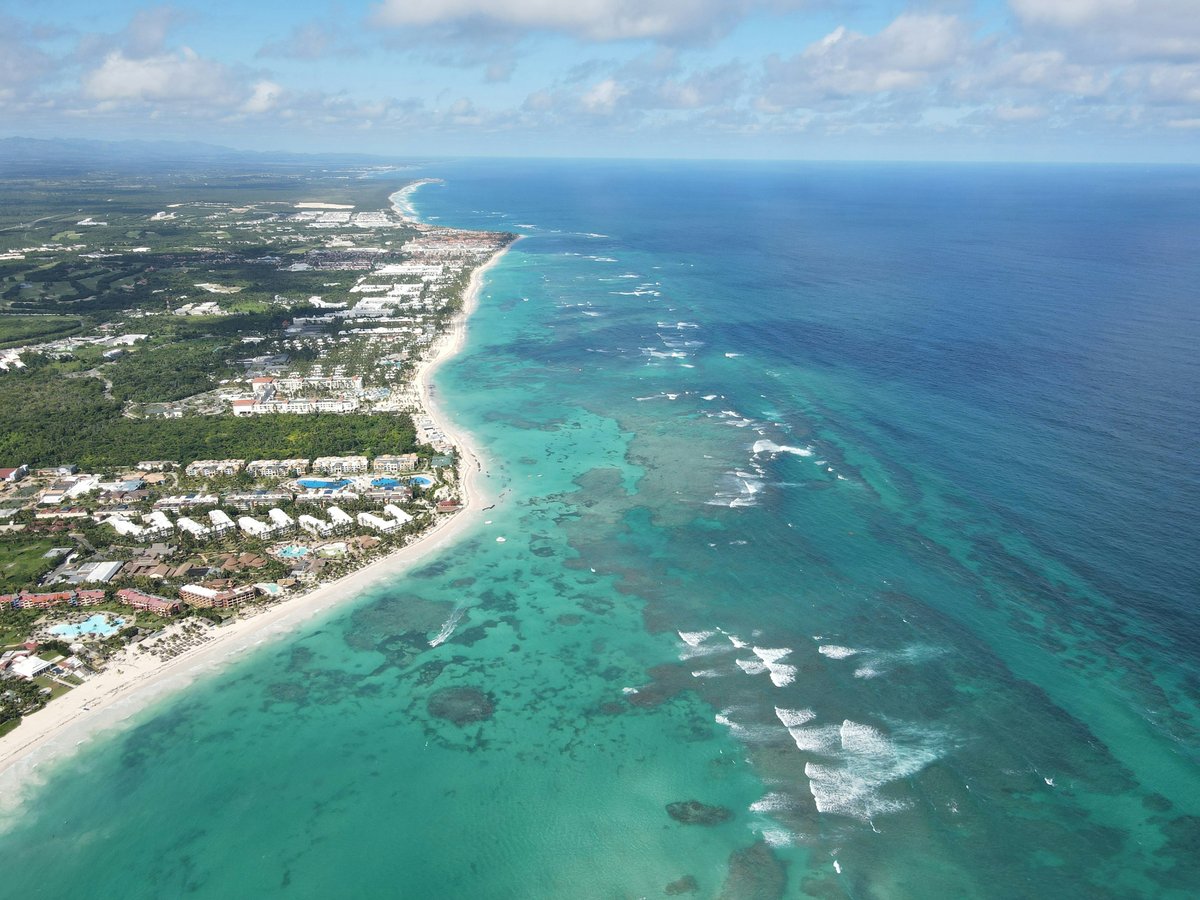
January is when Punta Cana operates at full capacity. The 50 km coastal corridor from Arena Gorda in the north down through Bávaro, El Cortecito, and Cabeza de Toro to Playa Juanillo at Cap Cana fills with travelers from the northeastern United States, eastern Canada, and northern Europe. They come for reliable Caribbean warmth during the coldest weeks back home. Daytime temperatures settle near 27°C (81°F), and evenings drop to around 23°C (74°F). The steady Atlantic trade wind keeps the air from feeling heavy. Rainfall totals roughly 69 mm for the month, well below the annual average.
You pay for the timing. All-inclusive rates at properties along the Bávaro strip hit their annual peak, and the main beach stretches carry more visitors per meter of sand than any other month. That said, you get some of the best beach conditions Punta Cana offers. The turquoise water off Cabeza de Toro stays calm enough for small children. Dry mornings are consistent enough to commit to catamaran excursions through Marinarium or boat trips to Isla Saona without worrying about cancellations. Popular operators still need advance booking.
Three Dominican national holidays fall in January. The biggest is Día de Nuestra Señora de la Altagracia on January 21, when tens of thousands of pilgrims from across the country converge on the Basílica in Higüey, about 40 minutes west of Bávaro by car. Día de los Santos Reyes on January 6 and Día de Duarte on January 26 round out the month. If you make the drive to Higüey around the Altagracia feast, you'll find yourself in the middle of the Dominican Republic's largest annual Catholic pilgrimage.
Why visit in January
- Among the driest months of the year, with roughly 69 mm of rainfall, about half of what October or November brings, which means near-guaranteed beach days along the Bávaro and Cabeza de Toro shoreline.
- The coolest overnight temperatures on the calendar, around 23°C (74°F), make sleep comfortable and evening dining outdoors genuinely pleasant at waterfront spots like La Yola at Marina Cap Cana and the restaurants along El Cortecito.
- Humpback whale migration to Samaná Bay begins in mid-January, opening the year's only window for whale-watching excursions bookable from Punta Cana.
- Three national holidays in a single month, including the Altagracia pilgrimage on January 21, give access to Dominican celebrations and traditions that are largely invisible from inside the all-inclusive zone.
Worth knowing
- The highest accommodation rates of the year. Beachfront all-inclusive properties along the Bávaro strip reach absolute peak pricing, typically 40 to 60 percent above the annual average.
- Beach and pool areas at larger Bávaro resorts fill early. Excursions through popular operators like Marinarium and the Isla Saona catamaran boats sell out days in advance, particularly around the January 6 and January 21 holiday weekends.
- Charter flights from JFK, Newark, Toronto Pearson, Montreal, and Frankfurt pack Punta Cana International Airport (PUJ). Saturday turnovers between 14:00 and 16:00 are noticeably more hectic than in shoulder months.
Best for
Think twice if
January tends to deliver the most temperate conditions on the Punta Cana coast. Daytime highs average 27.1°C (81°F), the lowest peak reading of any month, while overnight lows settle near 23.4°C (74°F). Humidity runs around 76%, perceptible the moment you step off the plane at PUJ but softened by persistent easterly trade winds along the Bávaro shoreline. Rainfall totals roughly 69 mm spread across about 16 days, though most showers arrive as brief late-afternoon pulses that clear within 15 to 20 minutes and leave the air smelling of wet sand and salt. Mornings along Cabeza de Toro and Arena Gorda are almost always bright, with hard tropical sunlight reflecting off flat water. Evenings at the open-air restaurants near Marina Cap Cana feel comfortable without fans.
Seasonal caution
- The UV index in Punta Cana reaches 10 to 11 even in January, strong enough to burn unprotected skin in under 15 minutes at midday. The comfortable air temperature creates a false sense of security, and severe sunburn is the single most common tourist health complaint during peak season.
Year-round climate
Averages from the last 5 years.
| Month | Avg high (°C) | Avg low (°C) | Rainfall (mm) |
|---|---|---|---|
| Jan | 27 | 23 | 69 |
| Feb | 27 | 23 | 72 |
| Mar | 28 | 23 | 56 |
| Apr | 28 | 23 | 108 |
| May | 29 | 25 | 141 |
| Jun | 30 | 26 | 129 |
| Jul | 30 | 26 | 135 |
| Aug | 30 | 26 | 150 |
| Sep | 30 | 26 | 159 |
| Oct | 30 | 25 | 163 |
| Nov | 29 | 25 | 178 |
| Dec | 28 | 24 | 86 |
Holidays and festivals in January
Public holidays
- New Year's Day(Día de Año Nuevo)1 January 2027
- Day of Kings(Día de Reyes)6 January 2027
- Our Lady of Altagracia(Día de Nuestra Señora de la Altagracia)21 January 2027
- Duarte's Birthday(Día del Natalicio de Juan Pablo Duarte)26 January 2027
Best things to do in January
Humpback whale watching at Samaná Bay
natureHumpback whales migrate annually to the warm, shallow waters of Samaná Bay to breed and calve. Punta Cana-based operators run full-day excursions that include the roughly 3-hour drive to the Samaná coast, a boat trip into the bay, and typically a stop on the small island of Cayo Levantado. Sighting rates tend to be good by the last week of January and climb to near-certainty by mid-February. Trips booked directly with operators in Samaná town or Las Terrenas typically cost less than the same excursion sold through resort tour desks in Bávaro.
The whales begin arriving in mid-January and stay through late March. January is the opening of the season, when the first pods appear and boat traffic is lighter than in February or March.Booking tipBook at least 10 days in advance. The drive is roughly 250 km each way, so departures around 6 a.m. are standard. Some operators offer the trip via small aircraft from PUJ, which cuts transit to under an hour.
Snorkeling the reef off Cabeza de Toro with Marinarium
water sportsMarinarium operates catamaran snorkeling excursions to the reef system along the Cabeza de Toro coastline, where the coral sits in shallower water than most Caribbean reef sites. January's reduced rainfall means less sediment runoff from the coast, and the calmer winter swell keeps visibility higher than in the September through November wet months. Expect to see parrotfish, sergeant majors, and brain coral formations at depths of 2 to 5 meters (6 to 16 feet). The water temperature stays a comfortable 26°C (79°F).
Lower rainfall and calmer seas improve underwater visibility. The reef off Cabeza de Toro benefits from reduced sediment compared to the wetter months, and the 26°C water temperature is comfortable without a wetsuit.Booking tipMarinarium's catamaran departures fill fast during the first two weeks of January. Reserve at least 5 days ahead for weekend trips.
Golfing at Corales and La Cana
sportThe Tom Fazio-designed Corales course at Puntacana Resort and Club runs along sea cliffs on the eastern coast. Six holes play directly along the Caribbean, and the back nine hosts the annual PGA TOUR Corales Puntacana Championship. The P.B. Dye-designed La Cana course, also within the resort, offers three interlocking nine-hole loops with ocean views on the Tortuga nine. January's dry conditions keep the fairways firm and fast at both courses.
Low rainfall produces the best turf conditions of the year. Highs near 27°C make a full 18 holes more comfortable than the 32°C summer heat.Booking tipWeekend tee times at Corales fill quickly during January. Reserve at least a week ahead, and request morning slots before the afternoon trade wind picks up. La Cana's three nine-hole loops tend to have more availability.
Day trip to Isla Saona
excursionThe catamaran ride from Bayahíbe or the Cap Cana marina to Isla Saona crosses open Caribbean water to reach a protected island in Parque Nacional del Este. January's gentler seas make the crossing smoother than during the choppier fall months. The island's shallow sandbar near Mano Juan, where starfish cluster in knee-deep water, is the signature stop. Most tours include a rum-punch catamaran ride, a beach lunch, and 2 to 3 hours on the island.
Calmer sea conditions reduce the chances of a rough crossing, and the drier weather means fewer rain interruptions on the island itself.Booking tipIsla Saona tours sell out on peak-season weekends. Book by midweek for Saturday departures. Boats typically leave from Bayahíbe or the Cap Cana marina by 8 a.m.
Swimming the freshwater lagoons at Ojos Indígenas Ecological Park
natureTwelve freshwater lagoons sit within a limestone forest in the Puntacana Resort and Club grounds, connected by flat, shaded trails. Several lagoons allow swimming in cool, clear water surrounded by roots and rock formations. The air under the canopy feels noticeably cooler than the open beach. The first lagoon is the most accessible, while the farther ones see fewer visitors even during peak season.
January's lower humidity and comfortable temperatures make the forest walk pleasant rather than sweltering. Mosquito activity is also lower than in the wetter months from September through November.Booking tipThe park sits within the Puntacana Resort and Club grounds. Outside guests pay an entrance fee. Arrive before 10 a.m. to have the first lagoons mostly to yourself.
Kitesurfing at Playa Macao
water sportsPlaya Macao sits about 20 minutes north of the Bávaro resort zone and receives steady Atlantic trade winds along its open, less-developed shoreline. The beach break produces waist-to-chest-high waves, and several kite schools operate on the sand during high season. No all-inclusive properties line this stretch, which keeps the atmosphere more local and relaxed than Bávaro.
January trade winds blow consistently from the east-northeast at 15 to 20 knots, reliable enough for daily sessions. The beach is less packed than during Dominican holiday weekends in February and March.Booking tipLessons fill during the first two weeks of January when tourist numbers peak. Contact the kite schools on the Macao shoreline before your arrival to lock in a slot.
Visiting the Basílica de la Altagracia in Higüey
cultureThe Basílica Catedral Nuestra Señora de la Altagracia in Higüey is the most important Catholic church in the Dominican Republic. Completed in 1971, its distinctive modernist concrete arch defines the Higüey skyline. The annual pilgrimage on January 21 fills the church and the surrounding streets with tens of thousands of pilgrims, food vendors, and merengue musicians.
The Día de Nuestra Señora de la Altagracia pilgrimage peaks around January 21. Visiting 2 or 3 days before gives a calmer experience while the church is already decorated and preparations are underway.Booking tipHigüey is roughly 40 minutes by car from Bávaro, or under an hour by colectivo minibus. No booking needed, but arrive early on January 21 itself to avoid long queues.
What to eat in January
In season: fruit
Mamey sapote
The creamy red-fleshed sapote peaks from December through March on the island. Street vendors near El Cortecito sell them sliced or blended into thick batidos. The flavor sits somewhere between sweet potato and apricot, with a denser, grainier texture than mango.
Chinola (passion fruit)
Dominican chinola reaches its winter peak with thicker pulp and sharper tartness than the summer harvest. Resort breakfast buffets serve it as juice, while local kitchens turn it into chinola mousse and tart glazes for grilled seafood.
On menus now
Sancocho de siete carnes
The seven-meat stew is traditionally prepared for Dominican New Year celebrations and keeps appearing on tables through January. It combines beef, pork, chicken, goat, longaniza sausage, and root vegetables into a dense, slow-cooked pot. Colmados around El Cortecito tend to serve a heartier version than the resort buffets.
Street food peaks
Lechón asado
Whole-pig roasters still line the highway toward Higüey through the first week of January, extending the holiday tradition through Día de los Santos Reyes on January 6. The pork is slow-roasted over wood and charcoal, developing a shattering crust that smells of smoke and citrus from sour orange marinades.
What to drink
Guarapo de caña
Sugarcane harvest on the Dominican east coast runs roughly December through June. January marks the early-season press, and roadside stands squeeze fresh stalks on the spot. The cold, grassy-sweet juice is at its freshest along the road between Bávaro and Higüey.
Regular events in January
Día de los Santos Reyes (Three Kings Day)Free
The Dominican celebration of Epiphany features gift-giving for children, community processions, and family gatherings. Resorts in the Punta Cana corridor sometimes organize small events for guests, but the authentic celebrations happen in the towns, particularly around Higüey's central plaza.
January 6Día de Nuestra Señora de la AltagraciaFree
The Dominican Republic's patron saint day draws tens of thousands of pilgrims to the Basílica in Higüey. Religious processions, music, and food vendors fill the surrounding streets. It is a national public holiday, so expect some resort and restaurant staff schedules to shift.
January 21Día de DuarteFree
A national holiday honoring Juan Pablo Duarte, one of the founding fathers of the Dominican Republic. Government offices and banks close. The day is observed with civic ceremonies in town centers, though tourist areas operate mostly as normal.
January 26Best places this January
Playa Bávaro (Arena Gorda to El Cortecito stretch)
beachThe main public stretch of the Bávaro coast runs from Arena Gorda in the north down to El Cortecito. January's calm water and steady breeze make it ideal for long mornings on the sand, though the sections nearest the all-inclusive entrances fill before 9 a.m. The El Cortecito end has independent restaurants, including the beachfront Jellyfish, and draws a more mixed crowd of tourists and Dominicans.
BávaroOjos Indígenas Ecological Park
nature reserveTwelve freshwater lagoons connected by shaded limestone-forest trails within the Puntacana Resort and Club grounds. January's dry conditions keep the paths firm and the mosquito population lower than in the rainy months. Several lagoons permit swimming in water that stays cool and clear year-round.
Puntacana Resort and ClubMarina Cap Cana
marinaThe upscale marina complex at Cap Cana houses waterfront restaurants, charter fishing boats, and a boardwalk. La Yola, the Grupo Puntacana restaurant on the water here, serves grilled seafood with a view of the moored yachts. January evenings bring comfortable temperatures for lingering over dinner outdoors. The marina is also a departure point for some Isla Saona excursions.
Cap CanaHoyo Azul cenote at Scape Park
natural attractionA natural limestone cenote at the base of a cliff in Cap Cana. The turquoise water sits about 14 meters (46 feet) below the trail, reached by a staircase carved into the rock. January's dry weather tends to keep the water at its clearest.
Cap CanaPlaya Macao
beachA less-developed public beach about 20 minutes north of Bávaro that receives open Atlantic swell. The sand is coarser than Bávaro's fine powder, and the waves are stronger, which draws surfers and kitesurfers rather than resort sunbathers. No all-inclusive properties line this stretch.
MacaoBasílica Catedral Nuestra Señora de la Altagracia
religious siteThe modernist church in Higüey, completed in 1971, with a distinctive concrete arch that dominates the skyline. In January, the pilgrimage atmosphere around the January 21 feast day adds a cultural dimension entirely absent from the resort zone. A short drive west of Bávaro.
HigüeyEl Cortecito beachfront strip
neighborhoodThe walkable commercial stretch where independent restaurants like Jellyfish, souvenir shops, and beach bars cluster along the sand. This is the closest thing Punta Cana has to a town center. In January, the restaurants fill with tourists escaping their all-inclusive and Dominicans celebrating the tail end of the holiday season.
El CortecitoPlaya Juanillo
beachA south-facing beach near the Cap Cana marina that stays calmer than the east-facing Bávaro shoreline when January's trade winds pick up. The sand is white and fine, the water shallow for a long way out, and the beach is less developed than Bávaro. A handful of restaurants and a beach club operate near the marina end.
Cap Cana
Your packing checklist
Tick items off as you pack. Your progress saves in this browser.
All packed — have a great trip.
Insider tips
El Cortecito is the one stretch of Playa Bávaro where you can eat, drink, and swim without a resort wristband. Jellyfish Restaurant sits right on the sand, serving grilled lobster and ceviche to a mix of tourists and locals. Walk about 200 meters south from the main cluster to find less congested sand and beachfront colmados with cold Presidente and grilled seafood.
The trade winds in January blow consistently from the east. If you want the calmest water for small children or snorkeling, Playa Juanillo near the Cap Cana marina faces south and stays sheltered from the wind chop that builds along the east-facing Bávaro shoreline by midday.
The Basílica in Higüey draws enormous crowds on January 21 itself, but arriving 2 or 3 days before gives you a quieter visit while the church is already decorated and preparations are underway. A colectivo from Bávaro takes about 45 minutes and costs a fraction of a resort-booked transfer.
Whale-watching excursions to Samaná sold through resort tour desks in Bávaro typically run noticeably higher than the same trip booked directly with operators in Samaná town or Las Terrenas. If you rent a car for the drive, you keep flexibility on timing and skip the markup.
Marinarium's earliest morning departure to the reef off Cabeza de Toro carries fewer passengers than the afternoon catamaran circuit. The morning light gives better underwater visibility before afternoon wind chop stirs the sediment.
Avoid these mistakes
- Underestimating the UV because air temperatures feel mild. At Punta Cana's latitude the UV index reaches 10 to 11 in January, strong enough to burn unprotected skin in under 15 minutes even through light cloud cover. The breeze masks the heat on skin, and tourists who skip reapplication after swimming end up with severe burns by early afternoon, especially on open-boat excursions to Isla Saona or the Cabeza de Toro reef.
- Leaving whale-watching excursions to Samaná Bay until the last minute. January is both the opening of the migration window and the peak of tourist season. Week-of availability with established operators in Samaná is rare, and day-of booking is nearly impossible.
- Staying inside the all-inclusive for an entire week without exploring El Cortecito or the drive to Higüey. The resort zone is comfortable, but it screens out the Dominican food, celebrations, and street life that give January here a character distinct from any other Caribbean beach resort. Jellyfish Restaurant on the El Cortecito sand is 15 minutes from most Bávaro resorts.
- Attempting the drive to Samaná for whale watching as a casual morning decision. The route covers roughly 250 km (155 miles) each way through winding roads. Departing after 8 a.m. turns a full-day excursion into an exhausting round trip that arrives after the morning boats have left.
Practical tips for January
January is high season for airport traffic at Punta Cana International (PUJ), which handles a surge of direct charter and commercial flights from gateways including JFK, Toronto Pearson, and Frankfurt. Allow extra time for immigration and baggage claim on arrival, particularly Saturdays when resort turnovers peak between 14:00 and 16:00. Most visitors arrive on packages that include airport transfers, but if you arrange your own, confirm the vehicle type in advance because standard sedans struggle with luggage for families of four or more. Rental cars are available at PUJ from companies including Avis and Budget, though fleets thin out in January and advance reservations are advisable. The road from PUJ to the Bávaro resort zone is well-paved, but the route west to Higüey carries heavy truck traffic. Mind you, the three national holidays on January 6, 21, and 26 mean bank branches close on those dates, so withdraw Dominican pesos (DOP) beforehand if you plan to eat or shop outside the resort zone. ATMs in the Bávaro commercial plazas dispense DOP reliably. Most restaurants add a 10 percent service charge plus 18 percent ITBIS tax to the bill. Resort staff generally appreciate tips in either DOP or USD. Cell coverage from Claro and Altice is strong in the Bávaro and Cap Cana areas but drops on the mountain road toward Samaná.
FAQ
Is January a good time to visit Punta Cana?
It ranks third out of twelve months, behind March and February. The beach weather is nearly identical across all three, with 27°C highs, gentle water along the Bávaro coast, and rain that rarely lasts beyond a 20-minute afternoon squall. The trade-off is simple. January carries the highest prices of the year and the biggest crowds, particularly in the first two weeks when US and Canadian holiday travel overlaps with European charter season at PUJ. If peak-season pricing doesn't bother you, and you book excursions to Samaná Bay and Isla Saona at least 10 days ahead, it is a strong month for a resort-based beach trip. February and March deliver similar conditions with slightly thinner crowds and lower rates.
What is the weather like in Punta Cana in January?
Warm, but not the sticky, sweat-through-your-shirt warmth of August. Highs sit near 27°C (81°F) and lows around 23°C (74°F). Humidity runs about 76%, noticeable the moment you step off the plane at PUJ, though the persistent easterly trade wind along the Bávaro shoreline takes the edge off by midday. Rain falls on roughly 16 days of the month, but most showers are brief late-afternoon pulses that clear in 15 to 20 minutes and leave the air smelling of wet sand and salt. Mornings along Cabeza de Toro and Arena Gorda are almost always bright, with hard tropical sunlight reflecting off flat water. Worth noting, evenings cool enough that the waterfront tables at La Yola near Marina Cap Cana feel comfortable without fans.
Is Punta Cana crowded in January?
The busiest month of the year. Direct flights from JFK, Newark, Toronto Pearson, Montreal, and Frankfurt fill the resorts along Bávaro and Cap Cana to near capacity. Pool loungers at the larger properties tend to be claimed before 9 a.m., and popular excursions through operators like Marinarium sell out days ahead. The PUJ immigration hall moves slowest on Saturday turnovers between 14:00 and 16:00. Advance booking for both accommodation and activities is not optional. If you want a quieter beach day mid-trip, Playa Macao sits about 20 minutes north of the hotel zone and draws a fraction of the Bávaro foot traffic.
Is Punta Cana safe for solo travelers in January?
Punta Cana scores 6.2 out of 10 for solo-traveler safety (see the TTDI Solo-Safety Index). The resort corridor from Bávaro through Cap Cana is well-patrolled and generally feels secure. Exercise normal caution if you venture outside the tourist zone into Higüey or along the less-traveled roads toward Macao. Petty theft and taxi overcharging are the most reported concerns rather than violent crime. January's high tourist volumes mean more people around, which can feel either reassuring or a bit impersonal depending on your travel style. Worth noting, the colectivo minibuses between Bávaro and Higüey are a cheap, safe option for daytime travel.
Can you see whales from Punta Cana in January?
Not from the beaches directly, but humpback whale watching at Samaná Bay is the premier January wildlife excursion in the region. Tour operators run full-day trips that include the roughly 3-hour overland transfer to the Samaná coast, 2 to 3 hours of boat time in the bay, and typically a lunch stop on the small island of Cayo Levantado. The whales begin arriving in mid-January and stay through late March. Sighting rates tend to be good by the last week of January and climb to near-certainty by mid-February. Trips booked directly with operators in Samaná town or Las Terrenas typically cost less than the same excursion sold through resort tour desks in Bávaro.
Things to Do in Punta Cana in January
 Free cancellation
 Full-Day Santo Domingo City Tour from Punta Cana
Day trip: free cancellation.
via Viator Free cancellation
 Monkeyland and Plantation Safari Tour from Punta Cana
Day trip: 6 hours, free cancellation.
via Viator Free cancellation
 Punta Cana Dune Buggy Adventure and Amazing Water Cave
Outdoor experience: 4 hours, free cancellation.
via Viator Free cancellation
 Half-Day Adventure 4x4 ATV, Water Cave and Dominican Culture
Outdoor experience: 4 hours, free cancellation.
via Viator Free cancellation
 ATV Adventure to Water Cave and Macao Beach in Punta Cana
Outdoor experience: 4 hours, free cancellation.
via Viator Free cancellation
 Punta Cana Airport to or from Hyatt Cap Cana
Day trip: 20 minutes, free cancellation.
via ViatorLast verified by automated review (v1.7.2) on . What is automated review?