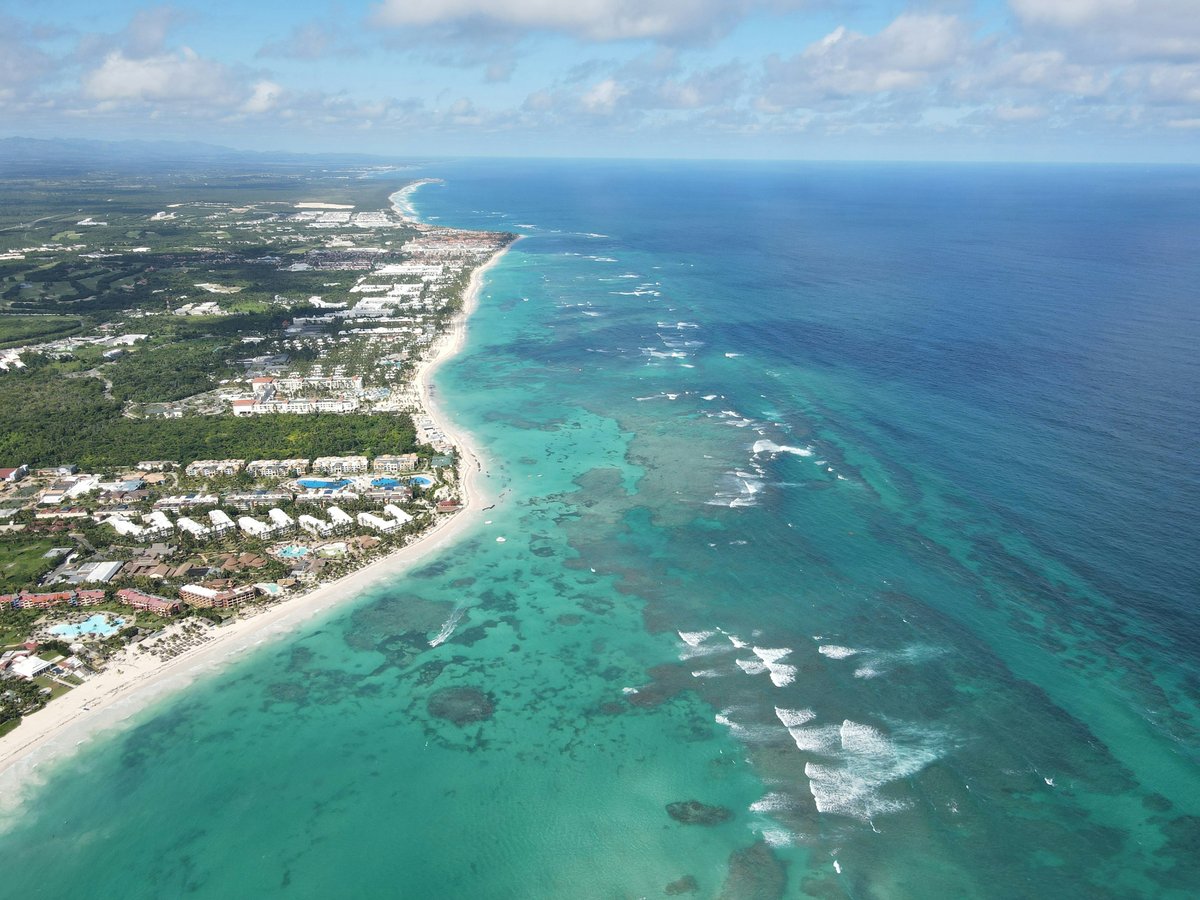
Punta Cana sits at the eastern tip of the Dominican Republic, where the Caribbean Sea meets the Atlantic Ocean at Cabo Engaño. The coastline runs about 50 km from Macao Beach in the north down past Juanillo Beach in the south. Most of the terrain is flat limestone covered in coconut palms and low scrub, with inland pockets of subtropical dry forest. It tends to feel more like a coastal savanna than a tropical jungle. The wet season runs roughly May through November, and September temperatures hover around 28 to 30°C with humidity in the mid-70s. Wind patterns shift noticeably between the Caribbean and Atlantic sides, which matters for water sports. Worth noting, Punta Cana is not a hiking destination in the traditional sense. The region's outdoor appeal lives in its water, its reef systems, and its ecological reserves rather than mountain trails. Solo travelers will find a safety score of 6.2/10 here (see the TTDI Solo-Safety Index), which reflects the resort-corridor reality. You are generally fine within the tourist zones but should stay aware beyond them. For families, the area scores 6.8/10 for friendliness (see the TTDI Family-Friendliness Index), largely because the all-inclusive infrastructure makes logistics simple for groups with kids.
Outdoor activities
-
Zipline canopy tour at Anamuya Mountain
About 25 minutes inland from the resort strip, Anamuya Mountain has several zipline operators running cables through the subtropical canopy. The longest lines stretch over 400 meters. You fly above the Anamuya River valley with views of palm plantations below. The platforms sit between 15 and 50 meters off the ground. Most tours take 2 to 3 hours and include a short hike between stations. The ascent up the mountain road gives you the only real elevation change you will get near Punta Cana.
- Difficulty
- Moderate (requires comfort with heights)
- Duration
- 2 to 3 hours
- Best season
- December through April, when rain is less likely to shut down operations
-
Horseback riding along Macao Beach
Macao Beach sits about 20 minutes north of the main resort zone and remains one of the few public beaches in the area. Several stables run morning and late-afternoon rides along the sand and into the surrounding coconut groves. The horses are typically Paso Fino crosses, calm and steady on sand. Rides last 60 to 90 minutes. Mornings tend to be cooler and less crowded. The surf at Macao is rougher than the Caribbean side, so you will hear real waves. Expect to pay around 2,500 to 4,000 DOP per person.
- Difficulty
- Easy, suitable for beginners
- Duration
- 60 to 90 minutes
- Best season
- Year-round, though December to March offers the mildest heat
-
Buggy and ATV tours through the countryside
Guided ATV routes head inland from the resort corridor through unpaved roads, sugarcane fields, and small farming communities outside Veron. The dust in dry season is relentless. After rain, the trails turn to thick mud, which some riders prefer. Most tours stop at a cenote-like sinkhole called Hoyo Azul or at a local finca for fresh cacao and coffee tasting. The round trip covers roughly 30 to 40 km depending on the operator. Wear clothes you do not mind throwing away.
- Difficulty
- Easy to moderate, depending on trail conditions
- Duration
- 3 to 4 hours
- Best season
- October through April for varied trail conditions
-
Mountain biking the Macao corridor
The unpaved roads and trails between the town of Veron and Macao Beach offer about 15 km of rideable terrain through low scrub forest and coconut plantations. The ground is flat limestone with loose sand in patches, which makes traction inconsistent. A few operators in Bavaro rent fat-tire bikes suited to the terrain. Early morning is the only comfortable window. By 10:00 the heat index climbs past 35°C in summer months.
- Difficulty
- Moderate, due to sand and heat rather than elevation
- Duration
- 2 to 3 hours
- Best season
- December through March, when temperatures stay below 30°C
-
Reef snorkeling at Cabeza de Toro
The reef system off Cabeza de Toro, between Bavaro and the Cap Cana marina, sits in relatively shallow water, 2 to 5 meters deep. You will see elkhorn coral, sea fans, parrotfish, and the occasional nurse shark resting on the sandy bottom. Boat operators depart from the Cabeza de Toro pier. Visibility varies with wind and current but tends to be best in the morning before afternoon chop builds. Trips run about 90 minutes.
- Difficulty
- Easy, suitable for confident swimmers
- Duration
- 90 minutes
- Best season
- February through June, when seas are calmest
Day hikes
-
Parque Nacional del Este (Cotubanama) coastal trail from Bayahibe
Parque Nacional Cotubanama (formerly Parque Nacional del Este) begins about 90 minutes southwest of Punta Cana near the town of Bayahibe. The coastal trail runs along limestone cliffs above the Caribbean, passing through dry forest with cactus and lignum vitae trees. The Padre Nuestro section includes a freshwater spring and Taino cave with petroglyphs. The trail itself is flat but rocky underfoot, with exposed coral limestone that will tear up thin-soled shoes. You can hike 6 to 8 km as an out-and-back in about 3 hours. Park entry is approximately 200 DOP. Bring all your water, there is no potable source on the trail.
- Difficulty
- Easy to moderate. Flat terrain but rough, uneven limestone surface.
- Duration
- 3 to 4 hours round trip
- Best season
- December through April, when heat and humidity are lower
-
Hoyo Azul sinkhole walk at Scape Park
Scape Park in Cap Cana operates a maintained trail that descends into a limestone sinkhole with a turquoise pool at the bottom. The walk in takes about 20 minutes on a wooden staircase and boardwalk with handrails. The pool sits roughly 14 meters below the cliff rim. Swimming in the sinkhole is the reward. It is short and controlled, more of a nature walk than a hike, but the geological formation is distinctive. Admission is part of the Scape Park package, which runs around 5,000 DOP.
- Difficulty
- Easy. Stairs and boardwalk the entire way.
- Duration
- 1 to 1.5 hours including swimming
- Best season
- Year-round, though morning visits avoid the midday tour-bus crowds
-
Sendero Los Haitises from Sabana de la Mar
Los Haitises National Park sits about 3 hours northwest of Punta Cana, reachable via the Sabana de la Mar access point. The park's mogote karst landscape, dense with rainforest and mangrove channels, feels like a different country from Punta Cana's flat coast. Boat-based excursions enter the mangrove tunnels, but foot trails near the ranger station wind through primary rainforest for 2 to 4 km. The terrain is muddy and rooted, with steep short sections. Bird density is high. You might hear the Ridgway's hawk, one of the Caribbean's most endangered raptors. This is a full day trip from Punta Cana, and an early start is non-negotiable.
- Difficulty
- Moderate. Slippery clay soil, root tangles, no maintained surface.
- Duration
- Full day including 3-hour drive each way
- Best season
- January through March for drier trail conditions
Water activities
-
Kayaking the mangrove channels of La Vacama
The lagoon and mangrove system at La Vacama, south of Cap Cana, offers sheltered flatwater paddling through red mangrove tunnels. The channels are narrow in places, maybe 3 meters wide, with root arches overhead. Herons, egrets, and juvenile barracuda are common in the shallows. Guided tours typically last 2 hours and launch from small docks near the Cap Cana marina. The water is brackish and warm, around 27°C. Morning sessions avoid the afternoon wind that makes the return paddle harder.
- Difficulty
- Easy. Flatwater, sheltered from ocean swell.
- Duration
- 2 hours
- Best season
- November through May, when wind is lighter in the mornings
-
Stand-up paddleboarding off Bavaro Beach
The reef shelf that parallels Bavaro Beach creates a protected lagoon with water 1 to 2 meters deep extending 200 to 400 meters offshore. This makes it one of the better spots in the Caribbean for beginner SUP sessions. Rental boards are available from several beach vendors along the Bavaro strip for around 1,500 DOP per hour. Early morning, before 8:00, offers glassy conditions. By midday the trade wind chop makes balancing harder. You will paddle over sea grass beds and occasionally spot a ray gliding underneath.
- Difficulty
- Easy in morning conditions, moderate once wind picks up
- Duration
- 1 to 2 hours
- Best season
- December through April for consistently calm mornings
-
Surf lessons at Macao Beach
Macao is the only beach near Punta Cana with consistent surf. The beach break produces 1 to 2 meter waves most of the year, with bigger swells arriving from the north between November and February. Several surf schools operate directly on the sand. Lessons run about 90 minutes and cost around 2,000 to 3,000 DOP. The bottom is sandy with no reef underneath, which makes wipeouts forgiving. The current runs parallel to shore here, so staying in front of the flags matters. Experienced surfers will find the waves small but fun for longboarding.
- Difficulty
- Easy for lessons, moderate for independent surfing due to current
- Duration
- 90 minutes per lesson
- Best season
- November through February for larger north swells
-
Swimming at Playa Juanillo
Playa Juanillo, inside the Cap Cana development, has calmer water than Bavaro thanks to a protective reef closer to shore. The sand is fine white calcium carbonate, and the water stays shallow for a long way out. A few beach restaurants (including the well-known Playa Blanca) serve grilled seafood and cold Presidente beers within steps of the waterline. Public access exists but the road in passes through the Cap Cana gate, which sometimes requires showing ID. The swimming conditions here are consistent and mellow year-round.
- Difficulty
- Easy. Shallow, sheltered water.
- Duration
- As long as you want
- Best season
- Year-round, with the calmest conditions from January through June
-
Deep-sea fishing charters from Cap Cana Marina
Cap Cana Marina runs sport-fishing charters into the Mona Passage, where the Atlantic shelf drops off sharply. Target species include blue marlin, mahi-mahi, wahoo, and yellowfin tuna. Half-day trips (4 hours) start around 25,000 DOP for a shared boat. Full-day charters push further offshore toward the drop-off, roughly 15 to 20 nautical miles out. The marlin season peaks from March through July. Mind you, the open-water crossing can be rough when the wind is up, so motion sickness preparation is worth considering.
- Difficulty
- Easy (you sit in a chair), but rough seas demand a strong stomach
- Duration
- 4 to 8 hours
- Best season
- March through July for marlin, year-round for mahi-mahi
Parks & gardens
-
Indigenous Eyes Ecological Park (Reserva Ecológica Ojos Indígenas)
This 600-acre private reserve sits within the Puntacana Resort grounds and protects one of the last stretches of subtropical forest on the eastern coast. Twelve freshwater lagoons fed by underground rivers dot the property. Five of the lagoons are open for swimming, and the water stays a cool 18 to 20°C year-round, which feels genuinely cold after walking in the heat. The trails are flat, well-maintained crushed limestone paths totaling about 5 km. You might spot the Hispaniolan woodpecker, rhinoceros iguana, and hutia if you stay quiet and visit early. Admission runs around 3,000 DOP for non-resort guests (roughly 50 USD at current rates).
Highlights: Freshwater lagoons for swimming, rhinoceros iguana habitat, Hispaniolan woodpecker sightings, a small biodiversity station
-
Puntacana Ecological Foundation and Biodiversity Center
Adjacent to Indigenous Eyes, the Foundation's grounds include a petting zoo, an iguana breeding program, and a small botanical garden focused on native Caribbean species. The real draw is the coral nursery and reef restoration exhibit. Staff run guided tours explaining their offshore coral transplant work along the Bavaro reef. The facility sits near the Puntacana Village area and takes about 45 minutes to walk through.
Highlights: Coral reef restoration exhibit, iguana breeding enclosure, native orchid collection
-
Mangrove trails near Boca de Yuma
FreeAbout 50 minutes south of Punta Cana, the mangrove channels near the mouth of the Rio Yuma provide a different landscape from the resort zone. Red mangroves line the tidal channels, and you can walk along informal fishermen's paths that follow the waterline. The area is unmanicured, with mud and mosquitoes to match. Brown pelicans, frigate birds, and the occasional manatee sighting make it worthwhile. Free to access, though you will want a car or hired driver to get there.
Highlights: Red mangrove ecosystem, pelican and frigate bird nesting areas, river-mouth views
Practical tips
- Sun protection
- The UV index in Punta Cana regularly exceeds 11 between 10:00 and 15:00, even on overcast days like today's cloud cover. SPF 50+ reef-safe sunscreen is mandatory if you plan to snorkel or swim near coral. Reapply every 90 minutes in the water. A long-sleeve rash guard does more than any lotion. Hats with neck coverage help on the exposed Cotubanama trail where there is almost no shade.
- Hydration
- Carry at least 2 liters per person for any activity lasting more than an hour. Tap water in Punta Cana is not safe to drink. Buy sealed bottles from Colmado shops in Veron or Bavaro, where a 1.5-liter bottle costs about 30 to 50 DOP. The combination of 76% humidity and near-30°C heat means you lose water faster than you feel thirsty. For full-day trips to Los Haitises or Cotubanama, pack 3 liters minimum.
- Footwear
- The exposed limestone in Parque Nacional Cotubanama and along the Macao trails will shred sandals and thin sneakers. Closed-toe hiking shoes with stiff soles are the right call for anything off the resort paths. For water activities, reef shoes with rubber soles protect against sea urchin spines in the shallows near Cabeza de Toro.
- Currency and payments
- The Dominican Peso (DOP) trades at roughly 59 to 1 USD as of September 2026. Beach vendors and local guides in Macao and Veron prefer cash in pesos. Resort-based activity desks accept cards and often quote in USD. You will get a better rate exchanging at a Banco Popular or BanReservas branch in Bavaro than at any hotel front desk. ATMs dispense pesos in multiples of 500 or 1,000.
- Trail conditions and timing
- September falls in the wet season, so expect afternoon rain showers almost daily and muddy trails at Los Haitises. Start any outdoor activity before 8:00 to get 2 to 3 good hours before the heat peaks. The dry season from December through April offers the most reliable conditions for hiking and cycling. Hurricane season runs June through November, and September is statistically the most active month. Check local weather reports the night before any boat trip or offshore excursion.
- Safety outside resort zones
- Punta Cana's tourist corridor is well-patrolled by CESTUR (tourist police), but the safety profile changes once you leave it. Solo exploration in unfamiliar rural areas after dark is not advisable, consistent with the area's overall solo-safety profile noted above. For trips to Cotubanama or Los Haitises, hiring a local guide adds both navigation help and a layer of personal security. Keep valuables locked in your hotel safe, not in a parked car at a trailhead.
FAQ
What is the best time of year for outdoor activities in Punta Cana?
December through April offers the driest weather, lowest humidity, and temperatures in the 26 to 29°C range. This period aligns with the dry season and sits outside the June-to-November hurricane window. Water sports and beach activities work year-round, but hiking and cycling are notably more comfortable in the cooler months.
Are there real hiking trails near Punta Cana?
Punta Cana itself is flat coastal lowland with no significant elevation. The closest proper hiking is at Parque Nacional Cotubanama, about 90 minutes southwest near Bayahibe, where limestone coastal trails run through dry forest. Los Haitises National Park, roughly 3 hours northwest, has rainforest trails with more varied terrain. Neither requires technical gear, but both demand early starts and ample water.
Can I access beaches and parks independently without a resort tour?
Macao Beach and parts of Bavaro Beach are public access. Indigenous Eyes Ecological Park charges its own admission fee and does not require a resort stay. Parque Nacional Cotubanama is a government park with separate entry fees. Most activities can be booked directly with local operators in Bavaro or Veron, often at lower prices than resort-desk markups. Having your own transport, even a rented scooter, opens up considerably more options.
Is Punta Cana suitable for families with young children who want outdoor time?
The sheltered reef lagoon at Bavaro makes it one of the calmer swimming beaches in the Caribbean for small children. Several parks, including the Ecological Foundation facility, cater to families with guided nature walks and animal exhibits. The area's family-friendliness profile reflects this infrastructure. That said, full-day excursions to Los Haitises or Cotubanama involve long drives on rough roads and limited facilities, so those work better for older kids.
What water temperature can I expect for swimming and snorkeling?
Caribbean-side water temperatures at Punta Cana range from about 26°C in January to 29°C in August and September. A wetsuit is unnecessary. The freshwater lagoons at Indigenous Eyes run cooler, around 18 to 20°C, which can be a shock after the tropical air. Visibility for snorkeling varies but typically sits between 10 and 25 meters depending on wind and recent rainfall.
Do I need to worry about currents or marine hazards?
The reef at Bavaro breaks most ocean swell, keeping the swimming zone relatively calm. Macao Beach has a lateral current that pulls parallel to shore, so swim between the flags. Sea urchins inhabit rocky patches near Cabeza de Toro, reef shoes help there. Jellyfish appear sporadically between July and October. The offshore waters beyond the reef shelf are open Atlantic, and conditions can change quickly. Always check with local boat operators about sea state before booking any offshore trip.
Outdoor experiences in Punta Cana
 Free cancellation
 Punta Cana Dune Buggy Adventure and Amazing Water Cave
Outdoor experience: 4 hours, free cancellation.
via Viator Free cancellation
 Half-Day Adventure 4x4 ATV, Water Cave and Dominican Culture
Outdoor experience: 4 hours, free cancellation.
via Viator Free cancellation
 ATV Adventure to Water Cave and Macao Beach in Punta Cana
Outdoor experience: 4 hours, free cancellation.
via Viator Free cancellation
 Caribbean Escape: An Adults-Only Ocean Experience (15+) Premium
Outdoor experience: 4 hours, free cancellation.
via Viator Free cancellation
 Punta Cana Buggy or ATV Tour with Macao Beach, Cave and Tastings
Outdoor experience: 4 hours, free cancellation.
via Viator Free cancellation
 5 tours in 1 (Eco Farm/Horseback/City Tour/Buggy/Zipline)
Outdoor experience: 8 hours, free cancellation.
via Viator Free cancellation
 Small Group: Saona Island Full Day Tour
Outdoor experience: 9 hours, free cancellation.
via Viator Free cancellation
 La Hacienda Park: 7 in 1 Zipline, Buggy, Horseback & Chairlift
Outdoor experience: free cancellation.
via Viator Free cancellation
 Buggy Adventure Tour with Chocolate and Coffee in Punta Cana
Outdoor experience: 4 hours, free cancellation.
via Viator Free cancellation
 Small Group Buggy Tour to Water Cave and Macao Beach
Outdoor experience: 3.5 hours, free cancellation.
via Viator Free cancellation
 El Limón Eco Adventure: Horseback Ride & ATV Tour
Outdoor experience: 9 hours, free cancellation.
via Viator Free cancellation
 Off Road Buggy Adventure
Outdoor experience: 4 hours, free cancellation.
via ViatorLast verified by automated review (v1.7.2) on . What is automated review?