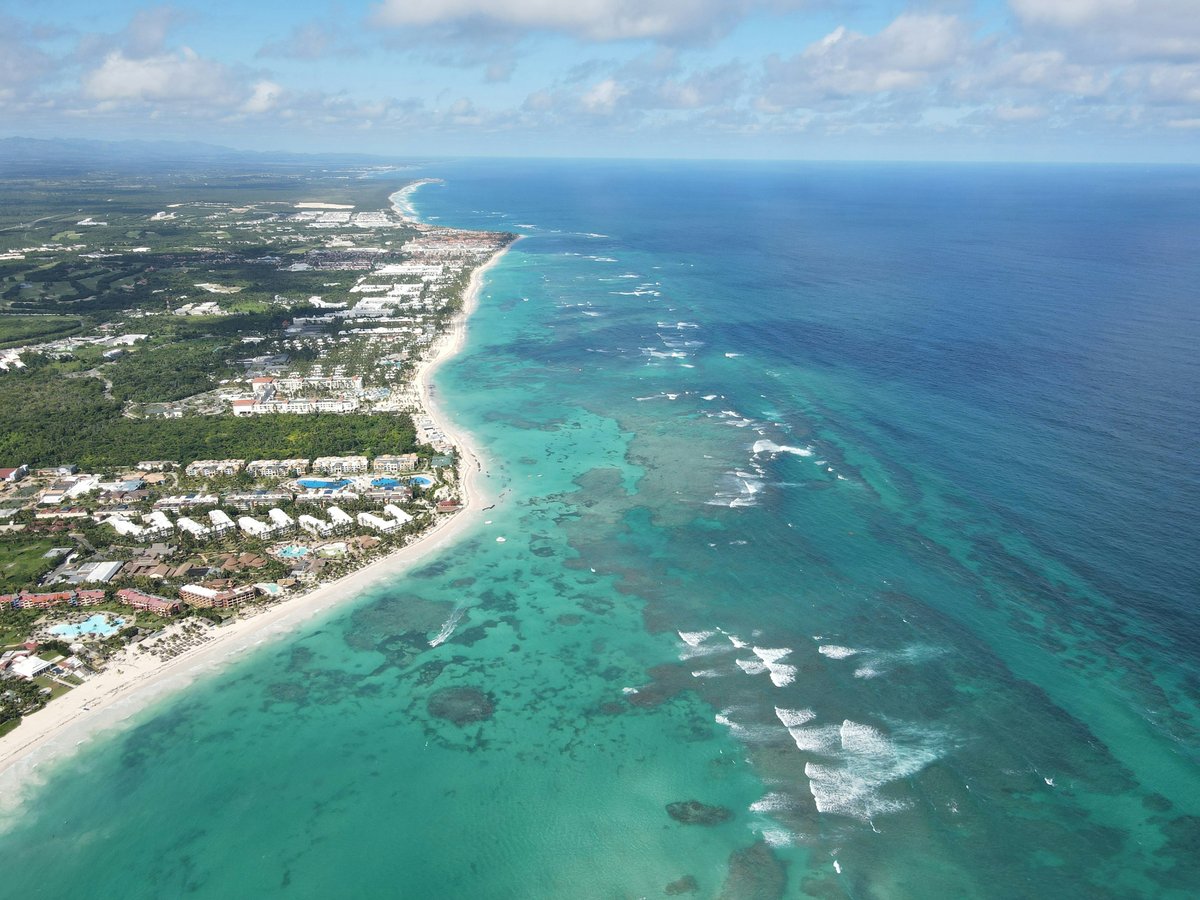
Punta Cana is not a city. It is a 50-kilometer resort corridor along the Dominican Republic's eastern coast, connected by Boulevard Turístico del Este, a four-lane highway that runs a few kilometers inland from the water. Most visitors fly into Punta Cana International Airport (PUJ), which sits roughly in the center of the strip. The coast runs north to south, from the secluded resorts of Uvero Alto down through Arena Gorda and Bávaro, past Cabeza de Toro, and into the gated grounds of Cap Cana. Inland, about 10 minutes by car, sits Verón, the working town that staffs the hotels. At the time of writing, the air reads 28.6°C with 76% humidity, and it feels closer to 32.5°C on your skin. The heat and the absence of sidewalks along the highway mean nobody walks between zones. Where you book your bed determines your trip, because a 20-minute taxi ride separates the open-air bars of Bávaro from the private marina at Cap Cana.
Neighborhoods
-
Bávaro
Bávaro is the commercial center of the Punta Cana strip, and it shows. Low-rise concrete buildings line the roads, housing grocery stores, pharmacies, and Dominican restaurants. The smell of pollo asado drifts from the street-side rotisseries near Palma Real Shopping Village. Colmado corner shops seem to appear every 200 meters, blasting merengue from tinny speakers. It is louder and rougher around the edges than the beachfront zones, with motoconchos weaving between cars. That said, restaurant prices here run about half of what the hotel zones charge. The pace feels more like Santiago de los Caballeros than Cancún.
- Best for
- Budget-conscious travelers, foodies who want to eat where locals eat, anyone who needs a pharmacy or bank without a 500-DOP taxi ride
- Key streets
- Boulevard Turístico del Este cuts through the middle of Bávaro. Palma Real Shopping Village anchors the commercial core with air-conditioned stores and restaurants. San Juan Shopping Center, about 2 kilometers north, forms the second commercial cluster. The side roads between these two plazas hold the best Dominican food in the area.
-
El Cortecito
El Cortecito is the closest thing Punta Cana has to a walkable beach neighborhood. It is a short strip of open-air seafood restaurants, souvenir stalls, and small guesthouses right on the sand. Fishing boats still pull up on the beach each morning, and you can buy the catch before it reaches a restaurant kitchen. The buildings are mostly single-story concrete with painted wood accents. Music from competing speakers overlaps along the beachfront. The sand is the same white coral powder as the resort beaches, but the crowd skews more Dominican and European than the all-inclusive zones to the north. Mind you, the souvenir vendors can be persistent, and haggling is expected on items priced above 500 DOP.
- Best for
- Independent travelers who want beach access without an all-inclusive wristband, couples on a mid-range budget, anyone who likes choosing their own dinner spot
- Key streets
- The beachfront lane runs about 400 meters along the sand, lined with restaurants and souvenir stalls. The main cluster of seafood spots sits between the fishing boat landing area and the path leading south to Los Corales.
-
Los Corales
Los Corales sits directly behind El Cortecito's beach strip and feels like a low-rise residential area that happens to be 200 meters from the Caribbean. The buildings are mostly 3-to-5-story condominiums and small apartment complexes, many listed on Airbnb. A few minimarkets and casual restaurants line the main road. It is quieter than El Cortecito and less manicured than the resort zones. Wi-Fi tends to be unreliable in the older buildings, which matters if you plan to work remotely. Punta Cana scores 3.5/10 for digital-nomad suitability (sourced from TTDI's editorial rubric), and the patchy cell signal in Los Corales illustrates why.
- Best for
- Self-catering visitors, longer stays of a week or more, anyone who wants a kitchen and a grocery run instead of a resort buffet
- Key streets
- The main road through Los Corales connects to El Cortecito's beach in about a 5-minute walk. Small supermarkets sit within walking distance for daily groceries. The area covers roughly 6 to 8 blocks of condo buildings, most of them built after 2010.
-
Arena Gorda
Arena Gorda is mega-resort territory. The Hard Rock Hotel & Casino Punta Cana dominates the shoreline here, alongside properties from Riu and Iberostar that each hold over 1,000 guests. The architecture runs large, with lobby atriums, swim-up pool bars, and artificial waterfalls at every property. You will hear poolside DJs from mid-morning onward. Beyond the resort fences, there is nothing to walk to for several kilometers. Punta Cana scores 6.8/10 for family friendliness (see the TTDI Family-Friendliness Index), and Arena Gorda's kids' clubs and waterslide parks are the primary reason that number holds up.
- Best for
- Families with children under 12, all-inclusive seekers, casino players who want the Hard Rock's gaming floor steps from the pool
- Key streets
- Boulevard Turístico del Este runs along the inland side of the resorts. Most properties have their own internal road networks that feel like small villages. The Hard Rock sits at the center of this 5-kilometer stretch, roughly 25 minutes north of the airport by car.
-
Downtown Verón
Verón is where Punta Cana's workforce of roughly 100,000 people lives, set back from the coast on the inland side of Boulevard Turístico del Este. The streets through central Verón mix paved roads with packed dirt. Comedores, colmados, hardware stores, and motorcycle repair shops line every block of Verón's main avenue. A plate of la bandera, the local staple of rice, red beans, and stewed chicken, costs 200-250 DOP at the comedores here, roughly 4 USD at the current rate of 1 USD to 59.19 DOP. Motoconcho drivers wait on every corner, charging 30-50 DOP for rides within town. Bachata from a dozen storefronts competes with the rattle of passing motoconchos on the main road. The air along Verón's central avenue smells like diesel and frying plantains.
- Best for
- Travelers on a tight budget, anyone who wants Dominican food cooked by Dominican families, Spanish speakers comfortable in a non-tourist setting
- Key streets
- The main commercial avenue runs through central Verón for about 2 kilometers, lined with shops and food stalls. The public market sits near the center of town and is busiest between 7 and 10 AM. Side streets branch off into residential blocks.
-
Cabeza de Toro
Cabeza de Toro occupies a 3-kilometer stretch between Bávaro and the Puntacana Resort & Club development. It is the quietest section of the coast. The resorts here tend to be mid-size properties from brands like Catalonia, set back from the road behind walls of tropical vegetation. The beach is narrower than at Arena Gorda, which means fewer people on the sand. The water stays shallow for 50 to 100 meters out at low tide, forming natural wading pools. Outside the resort gates, you will not find a commercial building within 2 kilometers. If you leave the property, you are on Boulevard Turístico del Este with nothing to walk to.
- Best for
- Couples seeking a quieter resort, honeymoons, visitors who plan to stay on property for most of the trip
- Key streets
- Boulevard Turístico del Este is the only real road through this section. A few short access roads branch off toward individual resorts. The area sits about 15 minutes south of the main Bávaro commercial strip by car.
-
Cap Cana
Cap Cana is a gated resort and residential development about 15 minutes south of the airport. The architecture leans Mediterranean, with terracotta roofs and stone facades around a full-service marina. Playa Juanillo, the public-access beach inside the development, has calm turquoise water and fewer people than any stretch in Bávaro. Marina Cap Cana hosts charter fishing boats and a handful of restaurants where a seafood dinner for two runs 3,000 to 5,000 DOP. Scape Park, an adventure attraction with zip lines and the limestone cenote called Hoyo Azul, sits on the development's edge and draws day-trippers from the northern resorts. Punta Espada Golf Course, designed by Jack Nicklaus, occupies the southeastern corner.
- Best for
- Luxury travelers, golfers, anyone who prioritizes exclusivity and calm water over convenience and nightlife
- Key streets
- The main entrance gate off Boulevard Turístico del Este leads to a paved internal road network. Marina Cap Cana sits at the eastern edge, about 5 minutes from the gate. Playa Juanillo is a further 10-minute drive from the marina along the coastal road.
-
Uvero Alto
Uvero Alto sits about 45 minutes north of the airport, past Arena Gorda, where the tourist infrastructure thins out. The resorts here lean toward adults-only properties like Excellence Punta Cana. The beach is wider and less developed than Arena Gorda's, with coconut palms growing close to the waterline. Between the resorts, you can walk 500 meters of empty coastline where the salt air hits stronger than anywhere on the developed strip. Outside the resort gates in Uvero Alto, there are no shops, restaurants, or services. The drive to the nearest pharmacy takes 30 minutes, and the nearest independent restaurant sits about 50 minutes south in Bávaro.
- Best for
- Adults-only getaways, honeymoons, visitors who want an all-inclusive experience without the density of Arena Gorda
- Key streets
- A two-lane road branches off Boulevard Turístico del Este and runs along the coast for about 15 kilometers. Each resort has its own access road. There is no town center, no commercial strip, and no public transit in the Uvero Alto corridor.
FAQ
Is Punta Cana safe for solo travelers?
Punta Cana scores 6.2/10 for solo-traveler safety (see the TTDI Solo-Safety Index). Inside the resort zones and along the main tourist beaches, you are unlikely to face serious problems during the day. Verón and the inland areas require more awareness after dark, particularly on unlit side streets. Petty theft and taxi overcharging are the most common issues reported by visitors. Negotiate fares before getting in, keep valuables off the beach, and avoid walking the highway after sunset.
Is Punta Cana welcoming for LGBTQ+ visitors?
Punta Cana scores 3/10 for LGBTQ+ friendliness (sourced from TTDI's editorial rubric). The Dominican Republic has no legal recognition of same-sex partnerships, and public attitudes outside the resort fences tend to be conservative. Inside the all-inclusive properties in Bávaro and Arena Gorda, staff are generally professional regardless of guest orientation. That said, public displays of affection between same-sex couples in local areas may draw unwanted attention. The adults-only resorts in Uvero Alto tend to offer the most privacy and discretion.
What is the best way to get between neighborhoods in Punta Cana?
Taxis are the default for moving between Punta Cana's zones. There is no public bus connecting the beach areas. A ride between Bávaro and Cap Cana costs roughly 1,000 to 1,500 DOP one way. Compact rental cars through agencies along Boulevard Turístico del Este run about 2,500 to 3,500 DOP per day. Uber technically operates in the area but driver availability tends to be spotty outside Bávaro. Most resorts offer shuttle services to specific attractions and shopping plazas.
Which area should a first-time visitor choose as a base?
For a first trip, the Bávaro to El Cortecito stretch offers the widest range of options within practical distance of each other. You get beach access at El Cortecito, Dominican restaurants in Bávaro, and commercial services at Palma Real without being locked into an all-inclusive wristband. If you want the full resort experience without thinking about logistics, Arena Gorda's large properties handle everything from airport transfers to nightly entertainment. Cap Cana suits repeat visitors who already know they want quiet over convenience.
Last verified by automated review (v1.7.2) on . What is automated review?