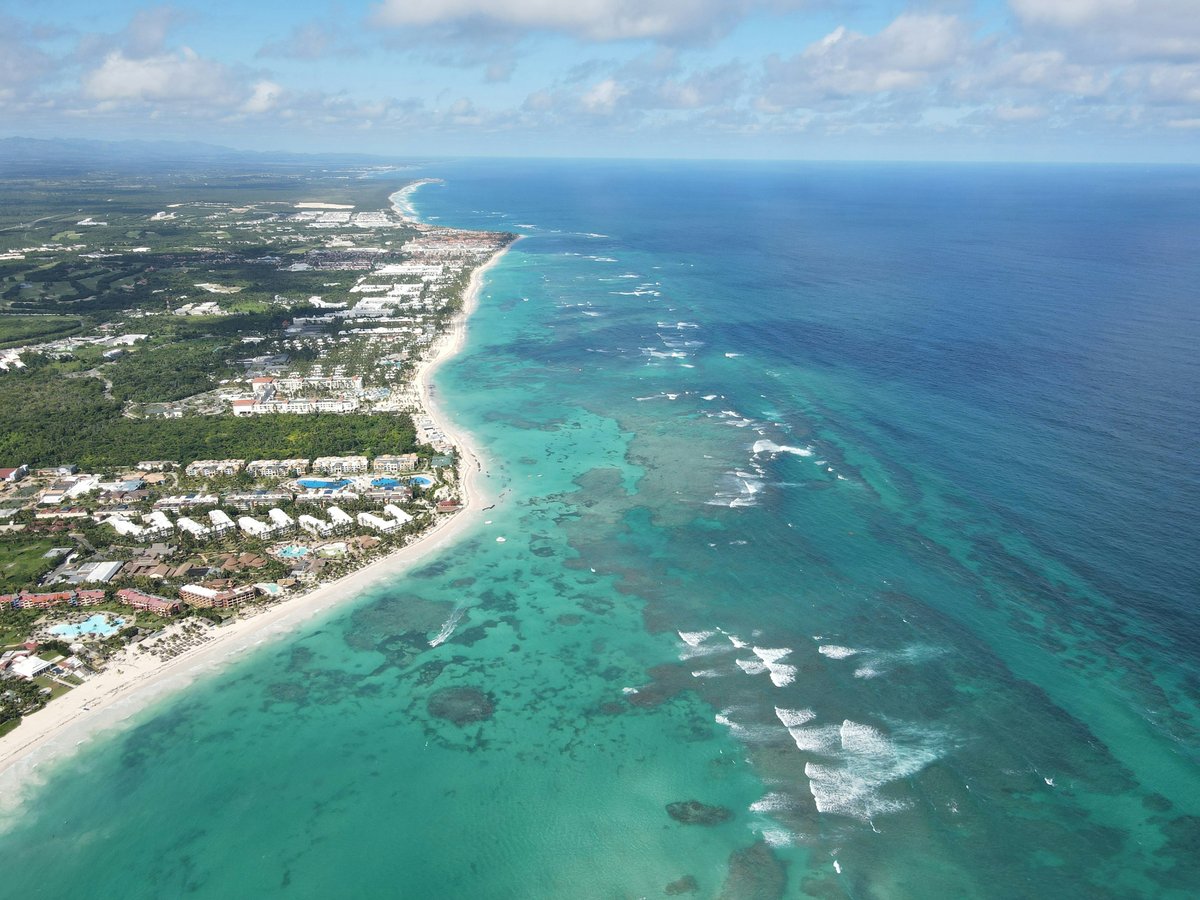
Punta Cana is a resort corridor first and a shopping destination second. Most visitors never leave the all-inclusive bubble, which means the commercial landscape caters heavily to captive tourist traffic. You'll find polished open-air malls anchored along Boulevard Turístico del Este in Bávaro, vendor stalls clustered near every major beach entrance, and a handful of newer mixed-use developments trying to build something more permanent. The genuinely local goods worth seeking out are larimar, Dominican amber, hand-rolled cigars, cacao products, and mamajuana. Larimar is a blue pectolite found only in the Sierra de Bahoruco range in the southwest of the Dominican Republic. That single geological fact makes it the one souvenir you literally cannot source anywhere else on Earth. Mind you, quality varies wildly between vendors, and the beach-stall version often turns out to be dyed howlite. For everyday goods and a sense of how Dominicans shop, the city of Higüey sits about 45 minutes west and has a proper municipal market. The Dominican peso (DOP) trades at roughly 59.19 to the US dollar, though most tourist-facing shops in Bávaro price in USD and give change in pesos at a rate that tends to favor them.
Shopping districts
-
Boulevard Turístico del Este, Bávaro
mid-range to highThe main commercial artery running through the resort zone, lined with plazas, souvenir shops, and restaurant clusters. This stretch between Bávaro and El Cortecito concentrates most of what tourists encounter when they step outside their hotels. Sidewalk vendors sell paintings and wood carvings under thatched shelters. The smell of fried empanadas mixes with sunscreen. Foot traffic peaks between 10 a.m. and 1 p.m., then again after 6 p.m. when the heat loosens its grip. Prices assume a tourist audience, so expect to pay 30-50% more than you would in Higüey or Santo Domingo for comparable items.
Best for: Convenience shopping without leaving the resort corridor
-
Palma Real Shopping Village
mid-range to upscaleThe largest open-air mall in the Bávaro area, with around 120 retail units spread across a manicured walkway. International brands sit alongside Dominican jewelry shops and cigar retailers. Air conditioning in the anchor stores feels like a revelation after the coastal humidity. The second floor has a food court and a small cinema. This is where resort workers come on their days off, which tells you something about the price calibration. It skews upmarket for the region but stays well below Santo Domingo luxury pricing.
Best for: Brand shopping, jewelry, and cigars in air-conditioned comfort
-
Blue Mall Punta Cana
upscaleA newer, more deliberately upscale mall that opened as part of the area's push toward year-round resident services. It sits closer to the Punta Cana Village area and draws a wealthier clientele, including expats and condo owners. The tenant mix leans toward fashion, cosmetics, and electronics. Foot traffic is lighter than Palma Real, which means fewer crowds but also fewer bargains. Worth noting if you need a specific brand or want to browse without the souvenir-stall pressure.
Best for: High-end retail and electronics for expats and upscale visitors
-
San Juan Shopping Center
budget to mid-rangeA more utilitarian mall that serves both tourists and local residents. The ground floor has a supermarket, which is the real draw. Dominican rum, locally roasted coffee from Barahona or Jarabacoa, hot sauces, and cacao nibs all cost a fraction of what the souvenir shops charge. The upper level has clothing shops and a pharmacy. It feels less polished than Palma Real but more honest about its prices. Locals come here for groceries and phone top-ups.
Best for: Supermarket finds, local food products, and everyday goods at resident prices
-
Downtown Punta Cana
mid-rangeA mixed-use development near the airport that has been growing steadily since its first phase opened. It combines retail, dining, and residential in a walkable layout. The shops tend toward lifestyle brands, home goods, and Dominican designer labels. It feels more like a small town center than a tourist mall. A farmers' market operates on select weekends, though the schedule shifts seasonally. The clientele is mostly local professionals and expat families.
Best for: Dominican designer brands, lifestyle goods, and weekend farmers' market browsing
-
Higüey City Center
budgetThe provincial capital sits about 45 minutes west of Bávaro by car. The streets around the Basílica Catedral Nuestra Señora de la Altagracia hum with small shops, colmados, and street vendors. Prices here reflect local wages, not resort markups. You'll find leather goods, knock-off clothing, and household items. The atmosphere is noisy, a little chaotic, and entirely Dominican. Motorcycle taxis weave through foot traffic. The smell of roasting pork and diesel hangs in the air. It is not curated, but it is real.
Best for: Experiencing Dominican street commerce and buying at local prices
Markets
-
Bávaro Artisan Market (El Cortecito Beach Area)
artisanA cluster of vendor stalls near El Cortecito beach, where sellers display paintings, wood carvings, faceless Dominican dolls, and larimar jewelry on folding tables and makeshift shelves. The quality ranges from genuine hand-carved mahogany pieces to mass-produced imports from Haiti. Bargaining is expected. Start at about half the asking price and settle somewhere around 60-70%. The stalls closest to the beach tend to price highest. Walk deeper into the cluster for better deals. Morning visits, before the tour buses arrive, tend to yield friendlier negotiations.
Daily, roughly 9 a.m. to 6 p.m., though individual vendors set their own hours
-
Mercado Municipal de Higüey
food and general goodsThe main public market in Higüey draws farmers, fishmongers, and small-goods vendors from across La Altagracia province. You'll find heaps of plantains, yuca, avocados the size of softballs, and fresh-caught fish on beds of crushed ice. The noise level is considerable. Vendors call out prices in rapid Dominican Spanish that might challenge even intermediate speakers. Produce prices can run 3-4 times cheaper than what the resort supermarkets charge. The market building itself is worn but functional, with a tin roof that amplifies the midday rain into a roar.
Daily, busiest mornings from 6 a.m. to noon, especially Saturdays
-
Flea Market Stalls Along Bávaro Beach
fleaInformal vendor setups appear along the sand and the access roads to Bávaro Beach. Sellers offer Dominican rum, counterfeit sunglasses, braided bracelets, and coconut oil in recycled bottles. The atmosphere is relaxed, and the sellers generally accept a polite 'no gracias' without heavy pressure. Prices are negotiable on everything. The coconut oil, often pressed locally, tends to be decent quality if you can confirm it has not been sitting in the sun for days. These stalls appear and disappear depending on the season and local enforcement.
Irregular, most active from mid-morning to late afternoon during high season (December through April)
-
Plaza Bávaro Weekend Market
artisan and foodA semi-organized weekend market that sets up in the Plaza Bávaro parking area. Local vendors bring homemade hot sauces, honey from Hato Mayor province, Dominican chocolate bars, and handmade soaps. It has a more curated feel than the beach stalls, and the vendors tend to be small-batch producers rather than resellers. You might find a woman selling cassava bread she baked that morning, still warm and wrapped in banana leaves. The market pulls a mix of expats, resort staff, and curious tourists who heard about it from a taxi driver.
Saturdays, roughly 8 a.m. to 2 p.m., though frequency varies by season
Souvenirs worth bringing home
Larimar is the signature purchase, a pale blue stone mined only in the Dominican Republic's Bahoruco mountains. Genuine pieces have a cool, waxy texture and natural color variation. Dominican amber, often containing preserved insects millions of years old, ranks as the other geological keepsake. The amber from the northern Cordillera Septentrional is renowned among collectors. For consumables, consider Barceló or Brugal rum, both distilled in the DR, or cacao products from regions like San Francisco de Macorís. Dominican cigars from the Cibao Valley compete with Cuban tobacco in blind tastings. Mamajuana, a bark-and-herb infusion traditionally steeped in rum and red wine, comes in ready-to-steep kits. The faceless Dominican doll, a ceramic or fabric figure without features, represents the country's mixed Taíno, African, and European heritage. Hand-carved guira gourds, used as percussion instruments in merengue, make distinctive gifts. Avoid mass-produced items stamped with 'Punta Cana' that were likely manufactured in China. A useful test for larimar authenticity is temperature. Real larimar feels cool against the skin even in the tropical heat, while dyed substitutes warm quickly.
Practical tips
- Bargaining
- Haggling is standard at beach stalls, artisan markets, and street vendors. It is not customary in malls or shops with printed price tags. A reasonable opening offer sits around 50% of the asking price, and you'll typically settle near 60-70%. Staying friendly matters more than being aggressive. If a seller won't budge, walk away slowly. You'll often hear a revised number before you reach the next stall.
- Payment methods
- US dollars are widely accepted in the tourist corridor, though change typically comes back in Dominican pesos. Credit cards work at malls and larger shops. Beach vendors and market stalls deal in cash only. ATMs in the Bávaro area dispense pesos, and some offer a USD withdrawal option. Carry small bills in both currencies. A 1,000-peso note can be hard to break at a street stall.
- Opening hours
- Mall shops in Bávaro generally open around 10 a.m. and close between 9 and 10 p.m. daily, including Sundays. Street vendors and artisan stalls keep looser schedules, often shutting down during the hottest midday hours and reopening around 4 p.m. Supermarkets open early, sometimes by 8 a.m., and are worth visiting before the heat builds. In Higüey, many small shops close between noon and 2 p.m. for an informal siesta.
- Tax refunds
- The Dominican Republic does not currently operate a VAT refund program for tourists. The 18% ITBIS (the local value-added tax) is baked into shelf prices at most retail shops. Some duty-free stores operate at Punta Cana International Airport (PUJ), where you can buy rum, cigars, and larimar after clearing security. Prices there tend to be comparable to the malls, occasionally lower on spirits.
- Safety while shopping
- Punta Cana scores 6.2 out of 10 on solo-traveler safety (see the TTDI Solo-Safety Index). Petty theft is the main concern in crowded market areas. Keep your phone in a front pocket and avoid flashing large amounts of cash. Taxi drivers sometimes receive commissions from specific shops, so the store they suggest might not offer the best price. If you take a taxi to Higüey, agree on a round-trip fare before departing.
- Shipping purchases home
- Larger items like paintings or carved furniture can be shipped through DHL or FedEx offices in Bávaro. Some jewelry shops at Palma Real offer insured shipping for larimar and amber pieces. Expect shipping costs to start around 2,000-3,000 DOP for small packages to the US. For anything fragile, pack it yourself or watch it being packed. Dominican postal service (INPOSDOM) exists but is slow and unreliable for valuables.
FAQ
Is it cheaper to buy larimar in Punta Cana or Santo Domingo?
Santo Domingo's Zona Colonial has a higher concentration of established larimar dealers, and prices tend to run 15-25% lower than Bávaro resort shops for comparable quality. That said, the best value often comes from the mining region itself near Barahona in the southwest. In Punta Cana, your best bet is comparing pieces at Palma Real jewelry shops against the artisan stalls, where you can negotiate.
Can I bring mamajuana through US customs?
The prepared liquid version (already steeped in alcohol) is subject to standard duty-free alcohol limits, typically 1 liter per returning US resident. The dry herb-and-bark kits, which you steep yourself at home, pass through agricultural inspection more easily since they contain dried botanical matter. Declare everything on your customs form. The dry kits weigh less and survive the suitcase better, which makes them the more practical option for most travelers.
What are the best Dominican cigars to buy in Punta Cana?
Look for brands produced in the Cibao Valley, the country's main tobacco-growing region. La Aurora, founded in Santiago de los Caballeros in 1903, is the oldest Dominican cigar maker. Arturo Fuente and Davidoff also produce heavily in the DR. Avoid buying cigars from beach vendors, as storage conditions on the sand ruin the tobacco's moisture balance. Shops with walk-in humidors, like those at Palma Real, store their stock properly.
Do shops in Punta Cana accept US dollars?
Nearly all shops in the Bávaro tourist corridor accept US dollars, and many post prices in both currencies. The exchange rate applied at the register often favors the merchant by 2-5% compared to the official rate. For significant purchases, paying in pesos withdrawn from a local ATM typically saves money. Malls and chain stores give more accurate conversions than independent vendors.
Is bargaining acceptable everywhere in Punta Cana?
Bargaining is normal at beach stalls, artisan markets, and independent street vendors. It is not expected at malls, branded stores, or supermarkets where prices are fixed. A good rule is to look for printed price tags. If there are none, the price is negotiable. Stay relaxed about it. Dominican vendors generally enjoy the back-and-forth, and humor goes further than hardball tactics.
What time do shops open and close in the resort area?
Most mall retailers in Bávaro operate from around 10 a.m. to 9 or 10 p.m. seven days a week. Beach vendors and outdoor stalls keep flexible hours, often taking a break during the 1-3 p.m. heat window and returning for the late afternoon crowd. Supermarkets tend to open earliest, by 8 a.m. in many cases. If you want the calmest shopping experience, early weekday mornings draw the smallest crowds.
Last verified by automated review (v1.7.2) on . What is automated review?