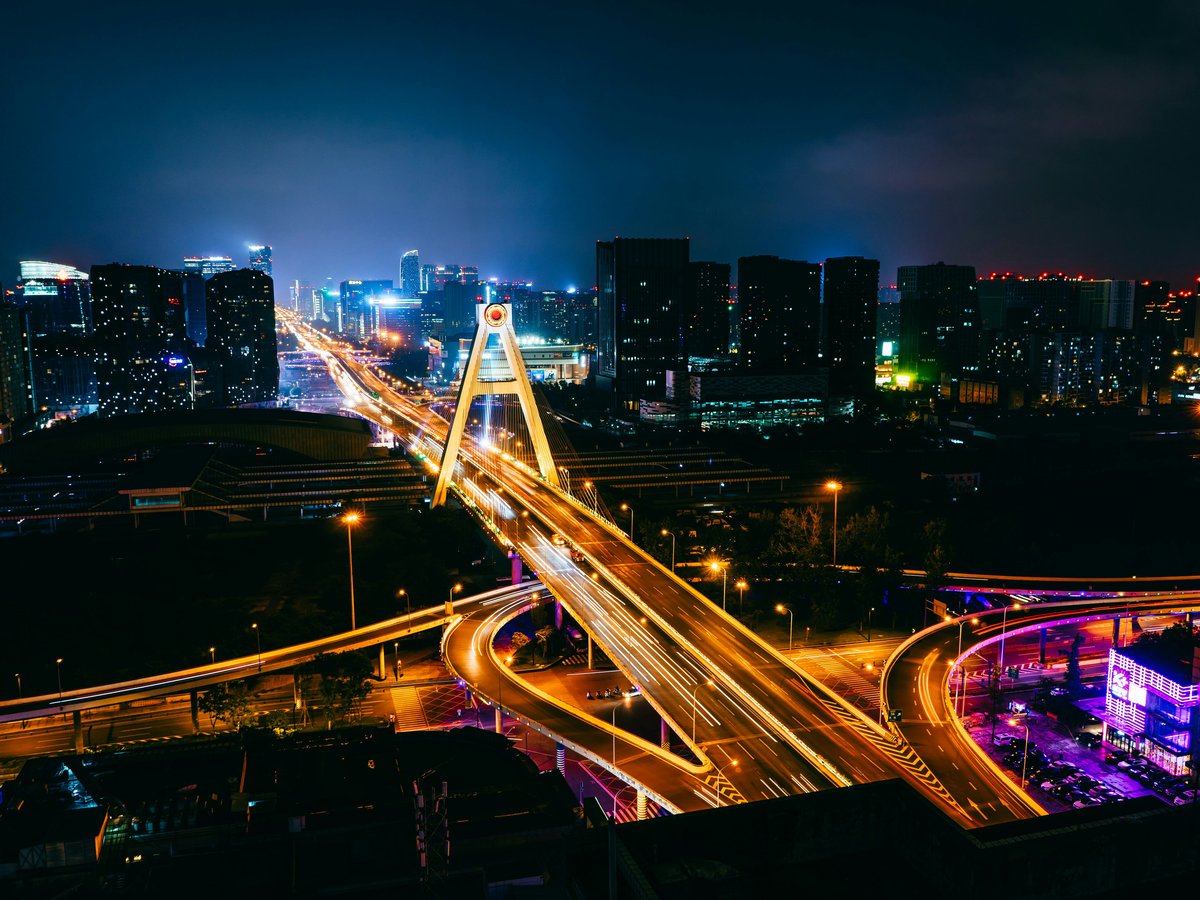
Stay in Chengdu in February
92 hotels in the Trip.com pool for Chengdu, from US$5 a night.
Opens Trip.com on Fri 5 Feb to Sun 7 Feb 2027; change the dates there.
February in Chengdu revolves around Spring Festival. Chinese New Year lands somewhere between late January and mid-February on the lunar calendar, and the entire city pivots for roughly two weeks around it. Expect temple fairs on the grounds of Wuhou Shrine, red lanterns strung across storefronts on Chunxi Road, and the sharp, peppery scent of la rou (cured pork belly) drifting from apartment balconies in Yulin. Daytime temperatures typically sit around 13°C (55°F), dropping to about 6°C (42°F) after dark, with Chengdu's trademark grey overcast keeping the sun hidden for days at a stretch.
That cloud cover is February's defining atmospheric feature. The Sichuan Basin traps moisture through winter, and you might go an entire week without seeing direct sunlight. The saving grace is that rainfall stays light, roughly 27mm across 8 days, so you can walk the city without getting soaked. The bigger disruption is the holiday itself. During Spring Festival week, Chengdu fills as one of China's top 5 domestic travel destinations. Popular spots like the Research Base of Giant Panda Breeding (founded 1987) can reach capacity before midmorning. Outside that window, the city empties noticeably. Some independent restaurants and family-run shops close for up to two weeks while owners return to their hometowns.
For international visitors, February presents a genuine trade-off. The cultural spectacle of Spring Festival is real. Temple fairs, lion dances through the Kuanzhai Xiangzi alleys, the crackle of firecrackers echoing off apartment towers at midnight on New Year's Eve. But the grey skies, the holiday-week crowds, and the thinned dining options when many neighborhood spots shutter require careful timing and honest expectations.
Why visit in February
- Spring Festival transforms the city for about two weeks, with temple fairs, lantern displays, and nightly fireworks you will not find in any other month.
- Cool basin air makes the pandas at the Research Base noticeably more active than in summer. They eat and play for longer stretches instead of retreating to indoor enclosures.
- One of the driest months in Chengdu's calendar, so outdoor walks through temple grounds and older neighborhoods are rarely interrupted by rain.
- Post-holiday weeks offer some of the year's quietest sightseeing, as domestic tourist numbers drop sharply once workers return to their cities.
Worth knowing
- Chengdu's winter overcast is relentless. The Sichuan Basin traps cloud and haze, and sunny breaks are rare enough that clear-sky photography is difficult to plan around.
- Up to 40% of independent restaurants and small shops close for Spring Festival week as owners travel home, limiting dining options during the holiday itself.
- The Panda Base and Jinli Ancient Street fill to capacity on peak Spring Festival dates. Without advance booking, you may be turned away at the gate.
- Basin air quality reaches its annual worst in winter, particularly on windless days when haze settles across the city.
Best for
Think twice if
Chengdu in February feels colder than the thermometer suggests. The basin's 75% humidity cuts through fabric in a way that dry winter cold does not. Overcast skies persist for the majority of the month, broken by occasional pale sunshine that rarely lasts a full afternoon. The air sits heavy and still, particularly along the Jinjiang River where morning fog lingers until noon. Wind is minimal, which keeps the chill from turning biting but also allows haze to settle across the basin floor. By the month's final week, temperatures begin a slow climb toward spring.
Seasonal caution
- Winter temperature inversions in the Sichuan Basin can trap pollutants, occasionally pushing AQI into the 100-150 range for consecutive days. Check daily readings on a local air quality app and carry filtering masks for hazy stretches.
Year-round climate
Averages from the last 5 years.
| Month | Avg high (°C) | Avg low (°C) | Rainfall (mm) |
|---|---|---|---|
| Jan | 11 | 4 | 17 |
| Feb | 13 | 6 | 27 |
| Mar | 19 | 10 | 43 |
| Apr | 24 | 14 | 96 |
| May | 27 | 18 | 95 |
| Jun | 31 | 22 | 115 |
| Jul | 32 | 23 | 249 |
| Aug | 32 | 24 | 207 |
| Sep | 28 | 20 | 131 |
| Oct | 21 | 16 | 70 |
| Nov | 17 | 10 | 20 |
| Dec | 12 | 5 | 11 |
Holidays and festivals in February
Public holidays
- Chinese New Year (Spring Festival)(春节)6 February 2027
Headline events
Chinese New Year (Spring Festival)
Late January to mid-February depending on the lunar calendar, with celebrations running approximately 15 days from New Year's Eve
China's most important holiday transforms Chengdu for roughly two weeks. Families gather for reunion dinners on New Year's Eve, fireworks light up the skyline at midnight, and public celebrations extend through the Lantern Festival on the 15th night of the lunar new year. The entire rhythm of the city shifts around the holiday.
Chengdu Grand Temple Fair (Da Miaohui)
Lunar New Year's Eve through the 15th day of the first lunar month
Chengdu's signature Spring Festival event fills the grounds around Wuhou Shrine with folk art performances, paper lantern tunnels, and well over 100 food stalls serving regional street food. The fair draws both local families and domestic tourists across roughly 15 days, making it the city's single biggest cultural gathering each year.
Best things to do in February
Explore the Grand Temple Fair at Wuhou Shrine
culturalNavigate the sprawling fair grounds from the north entrance toward the food corridor along the south wall. The main stage runs Sichuan opera face-changing performances every 2 hours starting at 10:00. The lantern tunnel along the eastern path is most photogenic after dark, when the reflections play off the wet flagstones.
The fair operates only during Spring Festival, typically from New Year's Eve through the Lantern Festival.Booking tipBuy tickets online through WeChat mini-programs to skip the hour-long queue at the main gate on peak days. Evening entry after 17:00 is often less crowded than daytime.
Early morning panda feeding at the Research Base
natureThe giant pandas eat their morning bamboo between 7:30 and 9:00, and February's cool weather keeps them active and playful outdoors rather than hiding in air-conditioned indoor enclosures. The red panda enclosures are also quieter at this hour.
Cool temperatures extend the pandas' outdoor activity window. Post-holiday weekday mornings have the thinnest crowds of any winter period.Booking tipBook entry tickets 3 or more days ahead during Spring Festival. For post-holiday visits, 1-day advance booking is typically sufficient.
Wintersweet viewing at Du Fu Thatched Cottage
natureLa mei (wintersweet) trees in the park's gardens bloom from late January through February, filling the paths with a sweet, waxy fragrance that cuts through the cold air. The Tang dynasty literary heritage and quiet midweek mornings make this one of Chengdu's most atmospheric winter walks.
Wintersweet bloom peaks in January and February. By March, the flowers are spent and the trees return to bare branches.Hot pot crawl through Yulin
foodYulin's residential grid holds one of the densest concentrations of neighborhood hot pot restaurants in the city. February's cold, damp evenings make the numbing, spicy broth feel restorative. The clatter of chopsticks, the roiling steam, and the tingling afterburn of Sichuan peppercorn are winter in Chengdu distilled into one meal.
Winter is peak hot pot season in Sichuan. The contrast between the basin's cold air and the rolling boil of a red oil broth is part of the ritual.Booking tipCheck Dianping for holiday operating hours. Many family-run spots close for 5-10 days around the holiday but reopen for the post-holiday stretch.
New Year's Eve incense at Wenshu Monastery
culturalLocals queue from late evening on New Year's Eve to offer the first incense of the lunar year at Chengdu's largest Buddhist temple. The smell of sandalwood smoke hangs thick in the cold air, and the crowd is mostly local families rather than tourists.
The first-incense tradition happens only on lunar New Year's Eve, which falls in late January or February.Booking tipArrive by 22:00 to secure a reasonable position in the queue. It can stretch beyond 3 hours by 23:00.
Lantern viewing along the Jinjiang River
sightseeingThe city government installs large-scale lantern displays along sections of the Jinjiang River during Spring Festival. The reflections on the water after dark, combined with the smoky aroma from nearby street food vendors, make this February's most photogenic evening walk.
Lantern installations run only during the Spring Festival period, typically removed within a week after the Lantern Festival closes the celebrations.Day trip to Qingcheng Mountain
natureA UNESCO World Heritage Daoist site about 65km (40 miles) west of central Chengdu, Qingcheng Mountain sees thin crowds in February compared to the autumn peak. The misty winter atmosphere on the trail through ancient cypress trees feels more aligned with the mountain's contemplative tradition than clear-sky tourist season suggests.
Cool, misty conditions create atmospheric hiking without summer's heat or holiday-weekend crowds. The 2-hour summit trail is comfortable at these temperatures.Booking tipTake the high-speed rail from Chengdu East to Qingcheng Mountain station, roughly 30 minutes. Avoid lunar New Year's Day itself, when domestic visitors fill the trails.
What to eat in February
On menus now
Sichuan hot pot
The city's defining dish reaches peak satisfaction in winter. The numbing tingle of Sichuan peppercorn in a rolling red oil broth cuts through the damp chill. Neighborhood spots serve a spicier, heavier broth than the tourist-facing chains.
Zhangcha ya (tea-smoked duck)
A Sichuan banquet staple that appears on nearly every reunion dinner table during the holiday. The bird is marinated in rice wine and Sichuan pepper, then smoked slowly over camphor wood and tea leaves until the skin turns deep amber.
Street food peaks
Ye'er ba
Leaf-wrapped glutinous rice parcels filled with either savory pork or sweet bean paste, steamed until the bamboo leaf imparts a faint grassy aroma. Street vendors near Wenshu Monastery sell them from tall bamboo steamers through the holiday period.
Festival food
Tangyuan
Chewy glutinous rice balls filled with black sesame paste, served swimming in warm sweet broth. Lai Tangyuan, one of Chengdu's oldest and most recognized makers, is the local benchmark. Every household prepares these for the Lantern Festival.
La rou and xiang chang
Sichuan peppercorn-cured pork belly and air-dried sausages hung from apartment balconies across the city in the weeks before Spring Festival. The meat develops an intensely savory, lightly smoky flavor in the cool basin air. A defining sight, smell, and taste of February in Chengdu.
Niangao
Sticky rice cake sliced and pan-fried until golden and slightly crisp at the edges, eaten during Spring Festival as a symbol of rising fortune. Chengdu vendors often serve it with a dusting of ground soybean flour (huang dou fen).
Regular events in February
Lantern Festival (Yuanxiao Jie)Free
The closing night of Spring Festival celebrations. Red lantern displays line the Jinjiang River and Tianfu Square, families eat tangyuan, and riddle-solving games hang from lantern strings in public parks. The largest displays draw tens of thousands of evening viewers.
15th day of the first lunar month, usually falling in mid-February to early MarchQingyang Palace Spring Festival temple fairFree
Chengdu's oldest Daoist temple hosts prayer ceremonies, calligraphy exhibitions, and vegetarian feasts during the opening days of the lunar new year. The courtyard fills with sandalwood incense smoke and the rhythmic sound of wooden prayer clappers.
First 5 days of the lunar new yearWintersweet and plum blossom exhibition at Du Fu Thatched Cottage
The park hosts its annual winter flowering display, drawing calligraphy and painting enthusiasts who sketch under the la mei trees. Local horticultural societies set up temporary displays of potted wintersweet cultivars alongside the permanent garden plantings.
Late January through late FebruaryBest places this February
Wuhou Shrine (Temple of Marquis Wu)
templeThe shrine grounds host the Grand Temple Fair during Spring Festival. Even outside the fair dates, the red-walled corridors and bonsai gardens have a quiet winter elegance that the autumn tourist crush does not allow.
WuhouJinli Ancient Street
streetThe pedestrian lane beside Wuhou Shrine fills with red lanterns, sugar painting vendors, and skewered rabbit head stalls during the holiday. February evenings here have a warm, orange-lit glow from the overhead lanterns that photographs well against the grey winter sky.
WuhouDu Fu Thatched Cottage
parkWintersweet trees bloom in the park's gardens through February, their waxy yellow flowers releasing fragrance along the gravel paths. The reconstructed cottage of the Tang-era poet sits in a bamboo grove that stays green through winter.
QingyangWenshu Monastery
templeChengdu's largest Buddhist temple is the focal point for New Year's Eve incense traditions. The adjoining Wenshu Fang pedestrian street has teahouses and vegetarian restaurants that stay open through the holiday when surrounding businesses close.
QingyangJinsha Site Museum
museumA strong indoor option for grey February days. The museum displays roughly 3,000-year-old Shu civilization artifacts, including the Sun Bird gold foil that was adopted as Chengdu's official city emblem.
QingyangPeople's Park (Renmin Gongyuan)
parkThe covered tea garden fills with mahjong-playing locals on February afternoons, the clack of tiles carrying across the damp air. The park's matchmaking corner (xiangqin jiao) draws parents posting their adult children's profiles on weekends.
QingyangTianfu Square and the Mao Zedong Statue
landmarkThe 30-meter statue erected in 1968 anchors Chengdu's central square. On rare clear February afternoons, locals fly kites in the open expanse around its base. The square also serves as the transit hub for Metro Lines 1 and 2.
Jinjiang
Your packing checklist
Tick items off as you pack. Your progress saves in this browser.
All packed — have a great trip.
Insider tips
Download and configure WeChat Pay or Alipay before you arrive. During Spring Festival, many street vendors and temple fair stalls accept only mobile payment. Foreign-card setup on WeChat currently takes 2-3 business days to process.
For the Panda Base, plan to arrive at opening. The animals are liveliest during the first 90 minutes of the morning. Late-February weekday mornings see a fraction of the holiday crowds, and the walk from enclosure to enclosure is almost peaceful.
The la rou and xiang chang hanging from apartment balconies in older residential blocks are peak-February visual culture. The densest displays appear in the lanes between the second and third ring roads, away from the tourist-facing streets. If you are a photographer, these are more interesting than anything on Jinli.
Chengdu's teahouse tradition does not pause for the holiday. While restaurants shutter, traditional open-air teahouses keep operating at their usual pace and at the same prices. For the first week of the holiday, a teahouse may be your most reliable sit-down option outside of hotel dining rooms.
Avoid these mistakes
- Planning a restaurant-heavy itinerary for Spring Festival week without checking Dianping for holiday hours. Independent restaurants close in waves, and the closures hit hardest in the first 5-7 days of the lunar new year. Hotel restaurants and chain operations are the safe fallbacks.
- Visiting the Panda Base during Spring Festival week without pre-booked tickets. The park caps daily entry, and walk-up availability during the holiday is essentially zero. Online booking through the official WeChat mini-program is the only reliable method.
- Packing for the listed temperatures without accounting for Chengdu's damp cold. The basin's humidity makes the mid-single-digit lows feel significantly colder than the same reading in a dry climate like Beijing or Seoul. Visitors from dry-cold regions consistently underestimate how many layers they need.
- Assuming Didi or taxi availability will be normal during Spring Festival week. Many drivers return to their hometowns for the holiday, and wait times can double or triple compared to a regular week, especially after 21:00.
Practical tips for February
February bookings in Chengdu divide into two distinct windows. During Spring Festival week, book accommodation at least 3 weeks ahead, as the city fills with domestic travelers. Panda Base tickets should be secured through the official WeChat mini-program well in advance for holiday dates. After the holiday rush subsides, availability opens up and walk-in dining becomes easy again. International ATMs cluster around the Chunxi Road and Taikoo Li area. Ride-hailing through Didi works normally outside the holiday, but becomes unreliable during it as many drivers return home. The Metro runs on a modified schedule during Spring Festival, with reduced late-night frequency but extended service on New Year's Eve itself. Dress in layers, because indoor heating quality varies sharply between modern hotels and older buildings. You may walk from a heated shopping mall at 25°C into an unheated temple hall within the same block.
FAQ
Is February a good time to visit Chengdu?
February is a fair choice that depends heavily on your priorities. If you want to witness Chinese New Year temple fairs, lantern displays, and reunion-dinner culture, February offers a cultural intensity you will not find at any other time of year. If you prioritize sunny weather, wide restaurant availability, and comfortable outdoor temperatures, the spring months or the September-to-November autumn window are stronger picks. The grey overcast and holiday closures are genuine drawbacks that some travelers find frustrating.
What is the weather like in Chengdu in February?
Cool, damp, and persistently overcast. The Sichuan Basin traps cloud cover through winter, and consecutive grey days are common. Rainfall is light compared to the summer monsoon months, so you will not get drenched, but you may not see the sun for extended stretches. The humidity makes temperatures feel several degrees colder than the reading suggests. Layered clothing and a waterproof shell are essential.
Is Chengdu crowded in February?
During Spring Festival week, very much so. Chengdu ranks among China's most popular domestic travel destinations for the holiday, and sites like the Panda Base and the Grand Temple Fair draw dense crowds. The final 10 days of the month, after the holiday winds down, are notably quieter. Late-February weekday sightseeing can feel almost sleepy compared to peak-holiday intensity.
Can I see giant pandas in Chengdu in February?
Yes, the Research Base operates year-round. February's cool weather makes the pandas more active outdoors than they are in summer, when they mostly sleep in air-conditioned enclosures. The challenge is visitor volume during Spring Festival. Pre-booking online is essential for holiday dates, while post-holiday weekday mornings combine active pandas with manageable crowds.
What should I pack for Chengdu in February?
Warm, layerable clothing that handles damp cold. The basin's humidity amplifies the chill, so a waterproof jacket over a thermal base layer works better than a single heavy coat. Bring an umbrella for sporadic drizzle, closed-toe shoes with grip for slippery temple paths, and air-filtering masks for days when winter haze settles over the city. A portable battery pack is practical since cold weather drains phone batteries faster.
Things to Do in Chengdu in February
 Free cancellation
 Dujiangyan Panda Volunteering Experience with Lunch
Day trip: 8 hours, free cancellation.
via Viator Free cancellation
 One Day Trip to Chengdu Panda Base and Leshan Buddha Tour
Day trip: free cancellation.
via Viator Free cancellation
 Giant Panda and Buddha 1 day tour
Day trip: 9 hours, free cancellation.
via ViatorLast verified by automated review (v1.7.2) on . What is automated review?