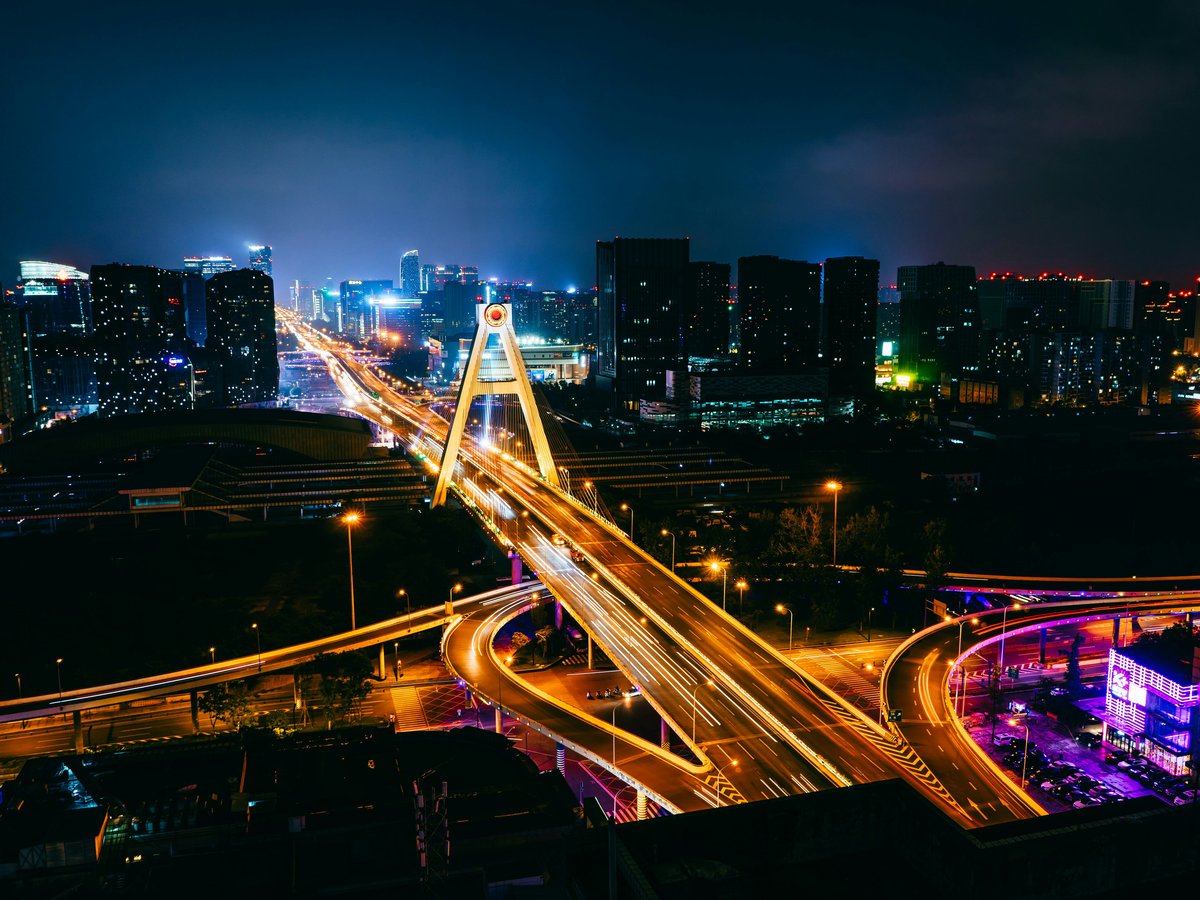
Chengdu has been a trading center on China's southwestern trade routes for over 2,000 years. That commercial history still shows in a retail scene that splits between international fashion along Chunxi Road and regional craft goods in the old-quarter markets. Taikoo Li and IFS pull the city's brand-conscious younger shoppers toward luxury labels, while places like Songxianqiao deal in antiques, traditional textiles, and Sichuan food products that have been traded here for centuries. The city currently scores 7.2 out of 10 for solo-traveler safety (see the TTDI Solo-Safety Index), so walking the commercial districts alone is a reasonable prospect. Most shopping zones cluster within a 5-kilometer radius of Tianfu Square, connected by Metro Lines 1 and 2, which intersect beneath the 1968 Mao Zedong Statue.
Shopping districts
-
Chunxi Road
mid-rangeChunxi Road has served as Chengdu's main pedestrian shopping street since it was laid out in 1924. The central stretch runs roughly 700 meters and links to several indoor malls. On weekends, the foot traffic here rivals major shopping streets in Shanghai. You'll find mid-range Chinese brands like Li-Ning and Anta alongside international fast fashion. The surrounding lanes near Yanshikou add smaller boutiques and local snack vendors selling grilled rabbit heads, bowls of dan dan mian, and sticks of chuan chuan xiang that fill the air with the oily tingle of Sichuan pepper.
Best for: Chinese fashion brands, casual shopping, street food between stores
-
Taikoo Li Chengdu
luxuryTaikoo Li is a joint venture between Swire Properties and Sino-Ocean Group, built around the preserved Daci Temple. The complex uses low-rise buildings in an open-air layout that feels nothing like a conventional Chinese mall. Gucci, Hermès, and Louis Vuitton anchor the luxury end. The temple courtyard still functions as an active Buddhist site, so the warm drift of incense mixes with espresso from the surrounding cafes. On Friday and Saturday evenings, the central courtyard fills with Chengdu's younger professional crowd.
Best for: International luxury labels, open-air architecture, evening people-watching
-
Chengdu IFS
luxuryChengdu IFS sits directly across from Taikoo Li on the east side of Hongxing Road. The building is best known for the large panda sculpture on its exterior, now one of the city's most-photographed spots. Inside, cosmetics counters dominate the ground floor, with fashion labels spread across the upper levels. A rooftop garden offers views toward the Qingcheng Mountains on clear days. Foot traffic peaks between 18:00 and 21:00.
Best for: High-end fashion, beauty counters, rooftop views on clear evenings
-
Kuanzhai Xiangzi (Wide and Narrow Alleys)
mid-range to tourist-premiumThree parallel lanes rebuilt on the foundations of Qing dynasty garrison quarters, completed around 2008. Kuan Alley, Zhai Alley, and Jing Alley now hold tea houses, small craft shops, and street food vendors. Prices tend to run 30 to 50 percent higher than comparable goods elsewhere in the city, and Chengdu locals will tell you as much. That said, the ear-cleaning services performed by street-side craftspeople remain genuinely local. The quiet metallic scraping is audible from steps away. Sichuan opera face-changing performances in the courtyards draw steady crowds too. Weekday mornings before 10:00 see the thinnest foot traffic, mostly local tea drinkers rather than tour groups.
Best for: Qing dynasty atmosphere, traditional crafts, Sichuan tea culture
-
Jinli Ancient Street
budget to mid-rangeJinli runs along the east side of the Temple of Marquis Wu, rebuilt in 2004 to evoke late-Qing commercial architecture. Most shops sell souvenir-grade goods, from panda plush toys to calligraphy scrolls and Sichuan pepper gift sets. The food stalls tend to be better than the retail. San da pao (glutinous rice balls), bo bo ji (cold skewered meats in chili oil), and Zhong dumplings are all available for modest prices along the 350-meter strip. After 19:00, red lanterns switch on above the wooden storefronts, and the food stalls stay open until roughly 22:00.
Best for: Souvenirs, street snacks, evening atmosphere near Wuhou Temple
Markets
-
Songxianqiao Antique Market
antique and fleaHundreds of stalls spread across covered halls and open courtyards near the Du Fu Thatched Cottage park, in the west of the city. Vendors sell calligraphy, old coins, Mao-era memorabilia, jade carvings, and Tibetan jewelry. The quality varies wildly. Genuine pieces do surface, but so do skilled reproductions. Opening prices from vendors are often 3 to 5 times what they will accept, so be prepared to haggle. Weekend mornings between 08:00 and 11:00 draw the most serious collectors, and the sound of haggling over porcelain and bronze fills the halls.
Daily, roughly 09:00 to 18:00, busiest on weekend mornings
-
Yulin Neighborhood Wet Markets
food and produceThe wet markets scattered through Yulin, in south-central Chengdu, are where residents do their daily grocery shopping. Vendors sell fresh Sichuan peppercorns, dried chili varieties including Erjingtiao and Facing Heaven peppers, fermented doubanjiang in ceramic jars, and seasonal produce from surrounding Sichuan counties. The air carries the numbing tingle of ground huajiao from 50 meters away. Most stalls wind down by 14:00, and the surrounding Yulin lanes have some of Chengdu's best small restaurants for a post-market lunch.
Daily, roughly 06:00 to 14:00, busiest before 09:00
-
Hehuachi Market Complex
wholesaleOne of the largest wholesale market areas in southwest China, spread across multiple buildings north of the city center. Goods range from textiles and clothing to electronics and household items, all at wholesale pricing. This is not a tourist destination. You'll hear more Sichuanese dialect than Mandarin, and the energy is commercial rather than scenic. Signage is in Chinese only. Basic garments start from around CNY 20.
Daily, roughly 07:00 to 17:00
-
Wenshu Fang
artisan and foodA commercial street complex next to Wenshu Monastery in northern Chengdu. The layout mixes traditional architecture with small shops selling Buddhist art, calligraphy supplies, tea sets, and local snacks. This is one of the better spots to find zhangfei niurou, a Sichuan dried-beef specialty named after the Three Kingdoms general Zhang Fei. The monastery operates a vegetarian restaurant where the warm scent of tofu braised in soy drifts into the shopping street. Prices here tend to run 20 to 30 percent lower than comparable goods in Jinli or at the Wide and Narrow Alleys.
Daily, roughly 09:00 to 21:00
Souvenirs worth bringing home
Shu embroidery (蜀绣) is Chengdu's signature textile craft, recognized as one of China's Four Great Embroideries. Quality pieces with panda or carp motifs start from around CNY 200 for small framed works, with master-level commissions running well into the thousands. Shu brocade (蜀锦) has been woven in the city since the Han dynasty, and the Chengdu Shu Brocade and Embroidery Museum sells authenticated pieces with provenance records. Pixian doubanjiang, the fermented chili-bean paste from Chengdu's Pixian district, might be the most practical souvenir. A 500-gram jar of traditionally fermented doubanjiang, its deep red-brown paste visible through the glass, costs CNY 15 to 30 and keeps well in a suitcase. Dried Sichuan peppercorns pack flat and weigh almost nothing. Bamboo-woven handicrafts from the Qingcheng Mountain area travel well and look unlike anything from a generic souvenir rack. The Chengdu Research Base of Giant Panda Breeding, which opened in 1987, operates a gift shop with licensed panda merchandise that is a step above the generic versions found elsewhere. Sichuan tea is worth considering too. Mengding Ganlu from nearby Ya'an and Zhuyeqing (竹叶青) from Mount Emei are both regional teas with long histories and reasonable price tags.
Practical tips
- Bargaining
- Bargaining is standard at traditional markets and street stalls across Chengdu, but not in malls or branded shops. A reasonable opening offer sits around 40 to 50 percent of the quoted price, with most negotiations settling near 60 to 70 percent. Tourist-oriented streets tend to have the least flexible vendors, while wholesale and antique traders expect the back-and-forth.
- Payment Methods
- WeChat Pay and Alipay handle the vast majority of retail transactions in Chengdu. Since 2023, both platforms support international credit card linking through Visa and Mastercard, so foreign visitors can set up mobile payments before arriving. Cash in CNY is still accepted at markets and smaller shops. Worth noting, at the current rate of roughly 6.71 CNY per USD, a red CNY 100 note is worth about USD 15. International credit cards work at major malls but are rarely accepted at market stalls.
- Tax Refunds
- China's departure tax refund covers goods from participating stores displaying the tax-free logo, with refunds of 11 percent on purchases over CNY 500 per transaction. Bring your passport when making qualifying purchases. Claims are processed at airport refund counters after check-in. Both Chengdu Shuangliu International Airport and the newer Tianfu International Airport, which opened in 2021, have refund desks past immigration.
- Opening Hours
- Major malls typically open from 10:00 to 22:00 daily. Markets start much earlier, often by 06:00 or 07:00, and wind down by late afternoon. Tourist streets keep later hours, with food stalls sometimes running past midnight on weekends.
- Language and Communication
- English is limited outside luxury malls in Chengdu. A translation app helps considerably at markets, and vendors typically punch prices into a calculator to show the screen during negotiations. Chengdu's local dialect differs noticeably from standard Mandarin, so even Mandarin speakers from other Chinese cities sometimes find the accent thick.
FAQ
How can I tell authentic Shu embroidery from machine-made copies?
Genuine Shu embroidery has slight variations in stitch tension and a soft, raised texture on the fabric surface. Machine-made versions look perfectly uniform and feel flat to the touch. Ask to see the reverse side. Hand-stitched pieces show neat, consistent backing, while machine work leaves tangled thread patterns underneath. Shops that sell certified work typically provide provenance documentation, so ask for it before committing to higher-priced pieces.
Which Sichuan food products can I bring through international customs?
Dried peppercorns, sealed jars of chili-bean paste, dried chili flakes, and packaged tea generally clear most customs regimes without trouble. Fresh produce and unsealed liquids will likely be confiscated. Vacuum-sealed beef jerky stands a better chance than loose-wrapped varieties, though meat products face restrictions entering the US, EU, and Australia. Check your destination country's import rules before packing.
Is bargaining considered rude at Chengdu's markets?
Not at traditional markets or independent stalls, where negotiation is part of the social interaction and both sides expect it. In department stores, malls, or branded retail shops, it is not done and would be awkward. At tourist streets, vendors typically price for negotiation, so paying the first quoted figure likely means overpaying by 30 to 50 percent.
What is the best time of day to visit Chengdu's shopping streets and markets?
For food and produce markets, early morning offers the freshest selection and the widest variety. The antique market in western Chengdu is a weekend-morning affair, when serious dealers display their finds before midday. Tourist streets are most pleasant either before the mid-morning tour group arrival or after 19:00, when temperatures cool and the evening atmosphere settles in.
Last verified by automated review (v1.7.2) on . What is automated review?