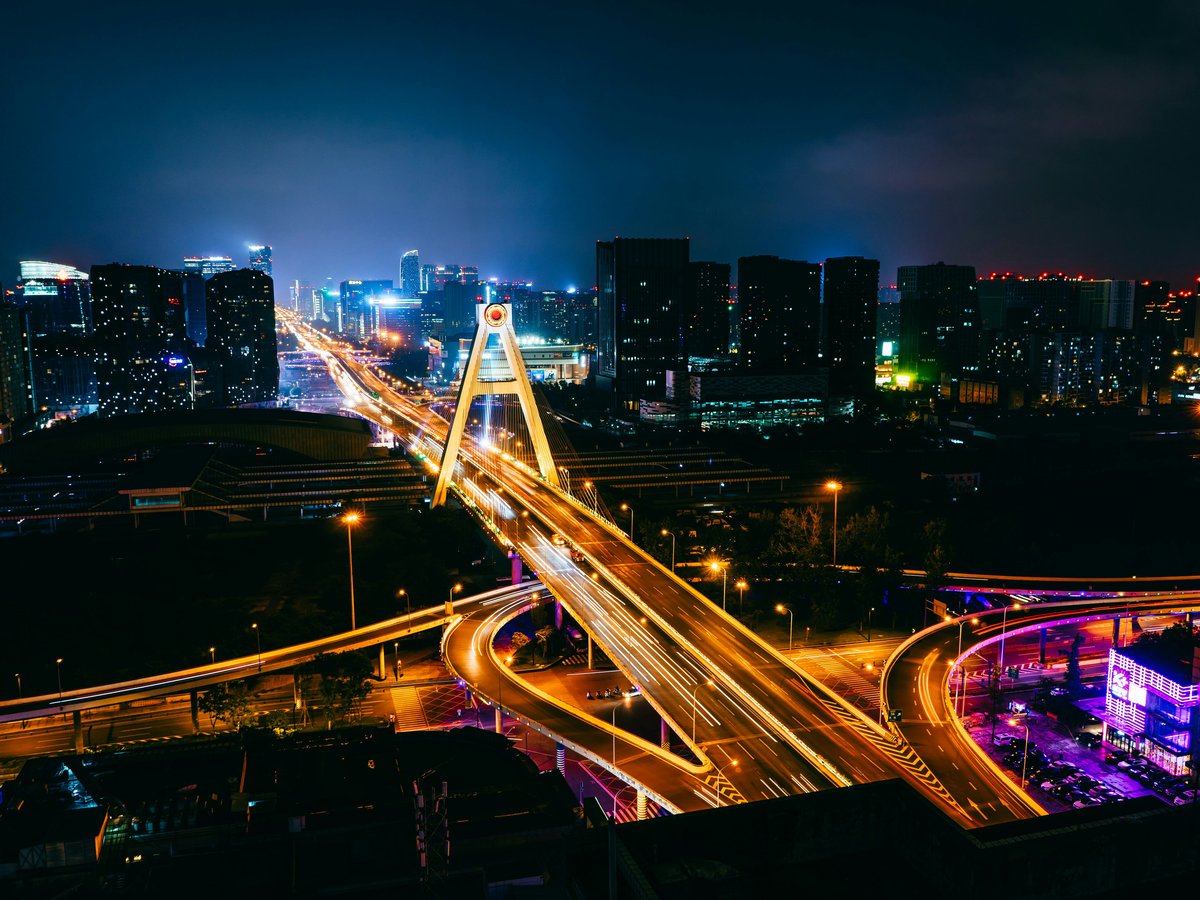
Chengdu rewards visitors on a tight budget because the city's social life plays out in its public spaces. Morning starts early at People's Park. Bamboo chairs creak under the weight of retirees, the click of mahjong tiles carries across paved courtyards, and professional ear-cleaners advertise their trade with the ping of metal tuning forks. Sichuan's capital holds several museums that charge nothing for entry and a Buddhist monastery with free admission. The Qing-dynasty walking streets cost nothing to browse. Sichuan pepper hits hot oil in the alley stalls, and the smell fills the evening air. September brings overcast skies and temperatures near 21°C with humidity around 88%, standard conditions for a city in the Sichuan Basin. The 21 million people who live here have shaped their weekends around free parks, riverfront walks, and cheap tea.
Free attractions
-
Sichuan Museum (四川博物院)
Sichuan Province's main museum holds more than 260,000 items spanning the Ba-Shu bronze age through the modern era. The Zhang Daqian painting gallery on the upper floors holds one of China's largest collections of his work, and the ceramics halls carry pieces from multiple Sichuan kiln sites. Free with a passport or Chinese ID card. Closed on Mondays. Plan 2 to 3 hours for the permanent collection alone. The building sits on Huanhuaxi Road in western Chengdu, a short walk from Huanhuaxi Park.
QingyangMuseum -
Chengdu Museum (成都博物馆)
The current building opened in 2016 on the west side of Tianfu Square. Five floors of permanent exhibitions trace the city's roughly 4,500 years of continuous settlement, with particular strength in Han-dynasty stone carvings and traditional Shu brocade textiles. Temporary exhibitions rotate every few months and sometimes draw long queues on weekends. Free with a passport or Chinese ID card. Closed on Mondays. Allow at least 2 hours for the permanent collection.
QingyangMuseum -
Tianfu Square and Mao Zedong Statue (天府广场)
The city's central public square sits above the interchange of Metro Lines 1 and 2. The Mao Zedong statue was erected in 1968 and faces south over a space that fills with kite-flyers on windy evenings and dancing groups after dark. The Sichuan Science and Technology Museum borders the square's north end and is also free to enter. To be fair, the square reads more as a transit hub during the daytime rush. After 6 PM, when the evening crowd arrives, the space around the statue opens up considerably.
JinjiangLandmark -
People's Park (人民公园)
Chengdu's most popular free park dates to 1911, when it opened as Shaocheng Park. A Monument to the Railway Protection Movement from the same year stands inside the grounds. The covered-bowl tea houses charge around 15 to 25 CNY per sitting, but the park itself, its lake, and its bamboo groves are permanently free. Weekend mornings bring the matchmaking corner, where parents pin their unmarried children's resumes on umbrellas and wait for interested parties to approach. The park sits between Shaocheng Road and Xiyu Street, about 600 meters west of Tianfu Square.
QingyangPark -
Huanhuaxi Park (浣花溪公园)
The largest open-access green space in central Chengdu stretches along the Huanhua Stream for about 2 kilometers. Paths wind through cool shade under nan tree groves, past a poetry wall inscribed with Tang-dynasty verse, and along a carp-filled stream where the water runs surprisingly clear for an urban park. The park connects to the grounds of the Du Fu Thatched Cottage, though that museum charges separate admission. Early risers find the trails nearly empty before 7 AM.
QingyangPark -
Wangjianglou Park (望江楼公园)
The park's grounds along the south bank of the Jinjiang River are free to enter. More than 100 species of bamboo grow in the gardens, planted in tribute to the Tang-dynasty poet Xue Tao, who lived nearby and made her own paper from the river's reeds. The rustle of bamboo leaves in even a light breeze is the park's signature sound. Her well and a small memorial hall sit inside the grounds. The four-story Wangjiang Tower itself charges about 20 CNY for interior access, but you can photograph its exterior from the bamboo paths. The park opens at 6 AM.
JinjiangPark -
Baihuatan Park (百花潭公园)
A quiet park along the western stretch of the Jinjiang River, south of Qingyang Palace. The bonsai garden inside holds miniature landscapes crafted by local artists, and a rockery pavilion overlooks the water. To be fair, Baihuatan lacks the famous tea-house scene of People's Park, but that keeps the paths calm. Early mornings bring the rhythmic thud of shuttlecocks from badminton circles and the sound of dizi flutes from practice groups. Permanently free, open roughly 6 AM to 10 PM.
QingyangPark -
Wenshu Monastery (文殊院)
The largest and best-preserved Buddhist monastery in Chengdu sits on Wenshu Yuan Street in the north of the old city. The smell of sandalwood incense meets you at the gate. The current structures date mainly to a 1681 reconstruction during the Kangxi reign. Free to enter, which is unusual for Chinese temples of this scale. Incense sticks sold inside run 5 to 15 CNY if you want to participate. The vegetarian restaurant Xiangji Chu (香积厨) inside the grounds serves affordable lunch sets. The surrounding Wenshu Fang pedestrian block is also free to browse, with teahouses, calligraphy shops, and street food stalls.
QingyangTemple -
Immaculate Conception Cathedral (平安桥天主教堂)
This Catholic cathedral near Ping'anqiao in western Chengdu has stood since 1897 and serves as the seat of the Roman Catholic Diocese of Chengdu. The Gothic Revival structure with its pointed arches required significant repairs after the 2008 Wenchuan earthquake but remains in active use. Free to enter during open hours. The interior holds stained glass and rows of carved wooden pews. Non-Catholic visitors are welcome to look around quietly between services, and mass schedules are posted near the entrance.
QingyangCathedral
Free activities
-
Kuanzhai Xiangzi (宽窄巷子, Wide and Narrow Alleys)
Three parallel alleys, Kuan Xiangzi (Wide Alley), Zhai Xiangzi (Narrow Alley), and Jing Xiangzi (Well Alley), trace their layout to a Manchu garrison settlement from around 1718. The alleyways were heavily restored in the early 2000s and reopened in 2008, with courtyard houses converted into tea shops, galleries, and snack vendors. Browsing costs nothing, and the people-watching on a Saturday evening makes the walk worth repeating. The scent of jasmine tea competes with grilled rabbit kidneys from the street stalls near the south entrance. That said, you'll find the alleys less crowded on weekday mornings before 10 AM.
QingyangWalking route -
Jinli Ancient Street (锦里古街)
A 550-meter pedestrian street alongside the Wuhou Temple compound recreates a Shu-Han-era commercial lane. You pay nothing to walk it. Sichuan opera face-painting booths and shadow puppet stages line the passage, though those performances charge a small fee. The street is busiest after 6 PM, when red lanterns switch on and the smell of dan dan noodles drifts from the stalls. The lane runs east from the Wuhou Temple outer wall; the temple itself requires a separate ticket.
WuhouWalking route -
Eastern Suburb Memory (东郊记忆)
A former state-owned electronics factory east of the city center, converted into Chengdu's main art and music district around 2012. The outdoor grounds are free and hold large-scale murals, rusted industrial sculptures, and repurposed factory halls. Some exhibitions inside the halls charge entry; others do not. The complex preserves smokestacks, rail spurs, and Soviet-influenced brick workshops from its factory years. Several of Chengdu's indie live-music venues operate here, and weekend afternoons bring street performers to the central courtyard.
ChenghuaArt district -
Jinjiang River Greenway (锦江绿道)
A paved walking and cycling path follows the Jinjiang River through urban Chengdu. The section from Hejiangting, where the Fu and Nan rivers converge, south past Jiuyanqiao Bridge covers roughly 10 kilometers and passes under willow canopy, through bankside parks, and past evening fishing spots where the occasional splash of carp breaks the surface. Hejiangting tends to be one of the better sunset viewpoints when the clouds break. The full greenway system extends well beyond the urban core, but the central stretch between those two landmarks is the most walkable after dark.
JinjiangWalking and cycling route -
Songxianqiao Antique Market (送仙桥古玩市场)
Chengdu's main antique and curio market sits near the Du Fu Thatched Cottage area. Vendors spread jade carvings, calligraphy brushes, Mao-era badges, old coins, and wooden Buddhist figures on cloth sheets across the pavement. Browsing is free, and the haggling around you is half the entertainment. The market runs daily but expands on weekend mornings, when additional sellers claim sidewalk space east of the bridge. Mind you, most of the 'antiques' are reproductions, and small jade pendants or carved seals start around 20 to 50 CNY.
QingyangMarket
Free events
-
Morning Park Exercises (晨练)
Daily, roughly 5:30 AM to 8 AMTai chi groups, fan dancers, and sword practitioners gather every morning in Chengdu's free parks. Groups of 10 to 40 people form before sunrise and practice through about 8 AM. Some of these groups have met at the same spot for decades. Visitors are welcome to follow along. No invitation needed. Wangjianglou Park and Baihuatan Park tend to be quieter choices than the larger parks closer to the city center.
Wangjianglou Park, Baihuatan Park, and most public parks -
Spring Festival Lantern Show at Wuhou Temple (武侯祠大庙会)
Late January to mid-February, roughly two weeksThe Wuhou Temple area and adjacent Jinli street host one of Chengdu's largest temple fairs during Chinese New Year, with folk performances, Sichuan opera excerpts, and large-format lantern displays extending along the street. The outdoor lantern display and street performances outside the temple walls are free to watch, though the temple's regular admission still applies inside. The fair typically runs from the first to the fifteenth day of the first lunar month.
Jinli Ancient Street and Wuhou Temple area -
Evening Square Dancing (广场舞)
Daily, roughly 7 PM to 9:30 PM in summer, earlier in winterGroups of mostly middle-aged and older women gather after sunset at public squares and park entrances across Chengdu to dance to amplified pop and folk music. Tianfu Square, the plaza outside the Sichuan Science and Technology Museum, and the open areas of Culture Park (文化公园) are common locations. Watching is free, and joining is welcome if you can follow the choreography. Groups typically dissolve by about 9:30 PM.
Tianfu Square, Culture Park, and park entrances citywide -
Gallery Exhibition Openings at Eastern Suburb Memory
Monthly, schedule varies by galleryThe galleries and studios inside the Eastern Suburb Memory complex host free opening-night events on a rolling schedule throughout the year, sometimes with drinks and live music. The complex's WeChat public account (东郊记忆) posts upcoming exhibition dates. Worth noting that Chengdu's gallery scene skews young and experimental compared to Beijing or Shanghai, and these openings reflect that energy.
Eastern Suburb Memory (东郊记忆), Chenghua District
Ticketed Attractions Worth Knowing About
Several of Chengdu's best-known attractions charge admission and do not appear in the free list above. The Chengdu Research Base of Giant Panda Breeding, founded in 1987, runs around 55 CNY. The Du Fu Thatched Cottage, a park and museum dedicated to the Tang-dynasty poet, costs about 50 CNY. The Temple of Marquis Wu (Wuhou Temple), honoring the Three Kingdoms strategist Zhuge Liang, also costs about 50 CNY, though the adjacent Jinli street described above is free to walk. The Tomb of Wang Jian, resting place of the Former Shu emperor, charges about 20 CNY. The Jinsha Site Museum, built over an archaeological dig that unearthed Shu-kingdom gold and jade artifacts, runs about 80 CNY and needs at least 2 hours for a proper visit. The West Pearl Tower, Sichuan's main broadcasting and observation tower since 2006, charges separately for its upper viewing deck. Wikivoyage's broader attraction overview at https://en.wikivoyage.org/wiki/Chengdu#See covers these and others in more detail.
Practical Tips for a Zero-Budget Day
Drinking water is free from hot-water dispensers at Metro stations and most public buildings; bring a refillable bottle. The Metro itself is not free, but single rides run 2 to 7 CNY depending on distance. Most free museums and Wenshu Monastery require either a Chinese ID card or a passport for entry, so carry yours. Museum hours generally run 9 AM to 5 PM with last entry at 4 PM. Sunscreen matters even on overcast September days when UV still penetrates the cloud layer. Public restrooms in parks and tourist areas are free and generally clean, though carrying tissue is safer than relying on supply. WeChat Pay and Alipay dominate daily transactions in Chengdu, and some vendors accept nothing else. Foreign visitors can now link international Visa or Mastercard cards to either app. For more on currency and phone setup, Wikivoyage covers practical matters at https://en.wikivoyage.org/wiki/Chengdu#Cope.
Further Reading
Wikivoyage's Chengdu guide covers transport from Shuangliu and Tianfu airports at https://en.wikivoyage.org/wiki/Chengdu#Get_in, and local Metro, bus, and bike options at https://en.wikivoyage.org/wiki/Chengdu#Get_around. For a primer on the food scene, including how to navigate Sichuan spice levels on menus, see https://en.wikivoyage.org/wiki/Chengdu#Eat. Tea-house and bar culture is covered at https://en.wikivoyage.org/wiki/Chengdu#Drink.
FAQ
Are the free museums in Chengdu genuinely free, or do I need to book ahead?
Sichuan Museum and Chengdu Museum are both genuinely free for walk-in visitors. You'll need to show a passport at the entrance counter. Popular temporary exhibitions at Chengdu Museum sometimes require a timed reservation through the museum's WeChat mini-program, but no money changes hands. Arrive before 10 AM on any open day to avoid the school-group crowds that fill both buildings by midday.
Is Chengdu safe for solo travelers exploring on foot?
Chengdu scores 7.2 out of 10 for solo-traveler safety (see the TTDI Solo-Safety Index). The parks, museums, and walking streets listed in this guide are all in well-trafficked areas with good lighting after dark. Standard crowd precautions apply at busy markets like Songxianqiao, where pickpocketing can happen during the weekend rush. The Metro runs until about 11 PM on most lines. For a fuller picture, see https://en.wikivoyage.org/wiki/Chengdu#Stay_safe.
What is the best time of year for free outdoor activities in Chengdu?
March through May and September through November tend to be the most comfortable months for extended walking. Summer from June through August brings temperatures above 30°C with heavy humidity. Winter stays mild by northern Chinese standards, rarely dropping below 3°C, but persistent drizzle and gray skies make all-day park visits less appealing. Spring is the strongest season for Huanhuaxi Park and Baihuatan Park, when plum and cherry trees bloom along the paths.
How much does getting around cost if I am focused on free attractions?
At the current exchange rate of 1 USD to roughly 6.71 CNY, a single Metro ride costs between 2 and 7 CNY. Most of the free attractions cluster in the Qingyang and Jinjiang districts, reachable on Metro Lines 1, 2, or 4. City buses run a flat 2 CNY per ride. Shared bikes from services like Meituan or Hello cost about 1.5 CNY per 30 minutes. Wikivoyage's transit guide at https://en.wikivoyage.org/wiki/Chengdu#Get_around covers routes in more detail. The walk from Wenshu Monastery to Kuanzhai Xiangzi takes about 20 minutes on foot.
Is Chengdu a good city for families visiting on a budget?
Chengdu scores 7.2 out of 10 for family friendliness (see the TTDI Family-Friendliness Index). The parks are spacious and safe for children, and Sichuan Museum has exhibition halls that keep younger visitors engaged. Wenshu Monastery's shaded courtyard offers a calm resting spot between walks. The main challenge for families with small children is the distance between attractions, though the Metro covers most of those gaps for a few CNY per ride. The walk between People's Park and Chengdu Museum takes under 10 minutes.
Can I visit the giant pandas for free?
No. The Chengdu Research Base of Giant Panda Breeding charges admission and requires advance booking through the base's WeChat mini-program during peak season from April through October. Daily visitor caps fill quickly on holidays and weekends. The base sits about 10 kilometers north of the city center, reachable by Metro Line 3 to Panda Avenue (熊猫大道) station plus a short shuttle or taxi from the exit.
Last verified by automated review (v1.7.2) on . What is automated review?